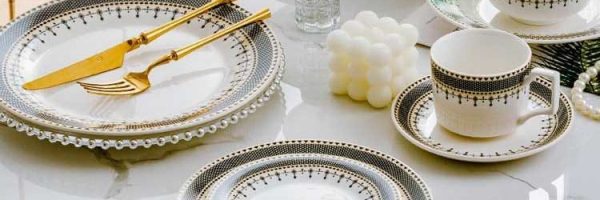
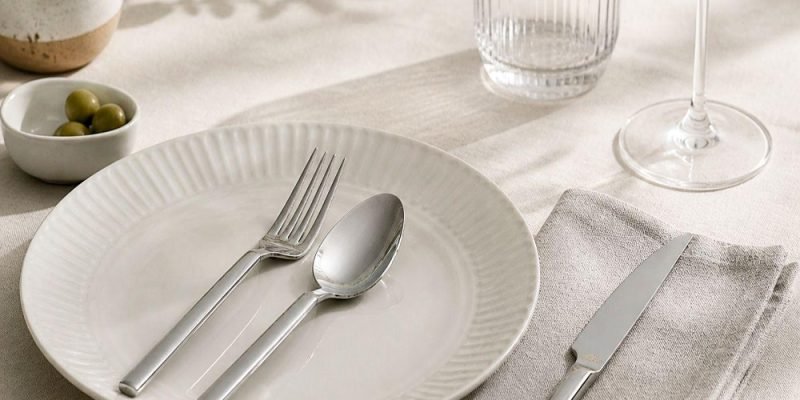
Crockery refers to the ceramic tableware, comprising plates, bowls, cups, saucers, and other utensils, as well as serving dishes. If you searched for what crockery is because your supplier or tender used the name, then the first paragraph is for you.
For a hotel or restaurant, the more useful question is which crockery to buy. This guide explains what crockery is, what it’s made from, how it’s made, and how to choose the best crockery material for your outlet. In addition, you can now browse our ceramic dinnerware range while reading this article.
Crockery is ceramic tableware, such as plates, bowls, cups, saucers, and serving dishes, made from fired clay. For most hotels and restaurants, the best crockery material is fully vitrified porcelain, because it’s dense, dishwasher-safe, and easy to replace. Bone china suits fine dining, and stoneware suits casual service.
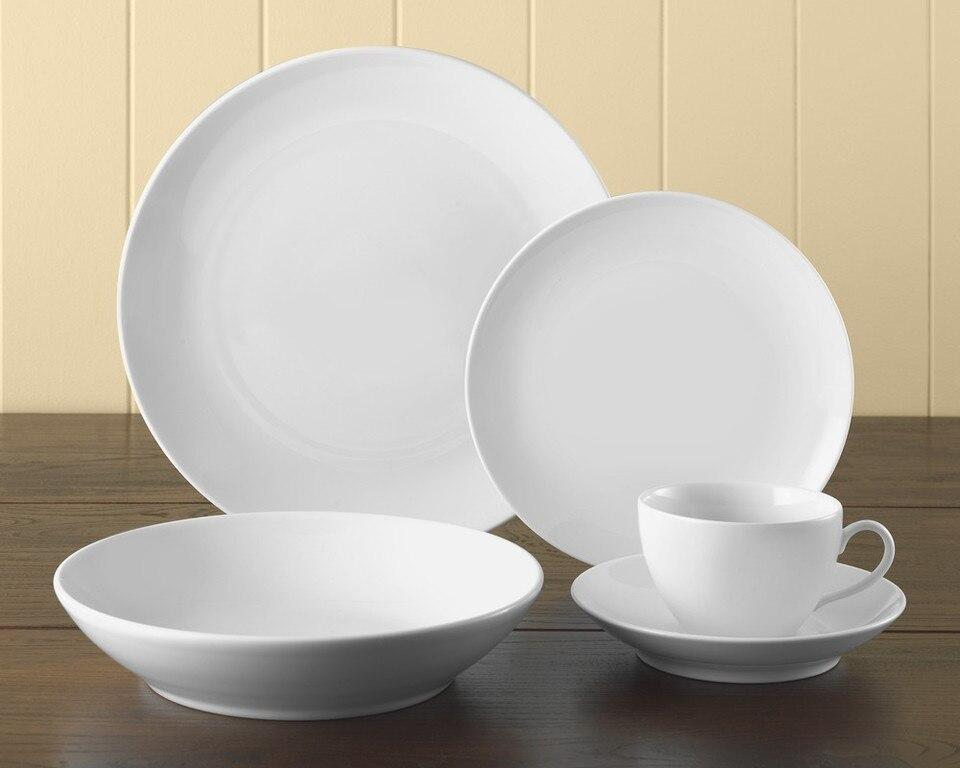
Table of Contents
Crockery Meaning: A Simple Definition
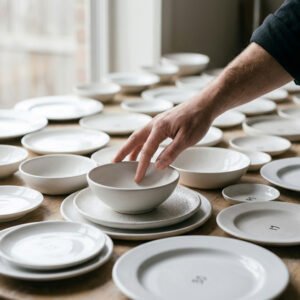
Crockery is ceramic tableware, including plates, bowls, cups, saucers and serving dishes, made from fired clay. That’s the crockery definition and crockery meaning. A fork, a wine glass, and a tablecloth are not crockery.
The term has a range of applications. Some people use the word to describe everyday ceramic ware, leaving fine china for special occasions. In hotels and restaurants, the word usually covers all ceramic tableware, from a simple porcelain side plate to a bone china cup.
In a hotel, it is used for breakfast, à la carte, banquets, tea and coffee, and room service.
Counts as crockery | Doesn’t count as crockery |
Dinner plates, side plates, dessert plates | Forks, knives, and spoons |
Soup bowls, pasta bowls, cereal bowls | Wine glasses and tumblers |
Cups, mugs, and saucers | Tablecloths and napkins |
Teapots, jugs, and creamers | Melamine or plastic plates |
Ceramic serving platters and dishes | Stainless steel serving pieces |
What Is Crockery Made Of?
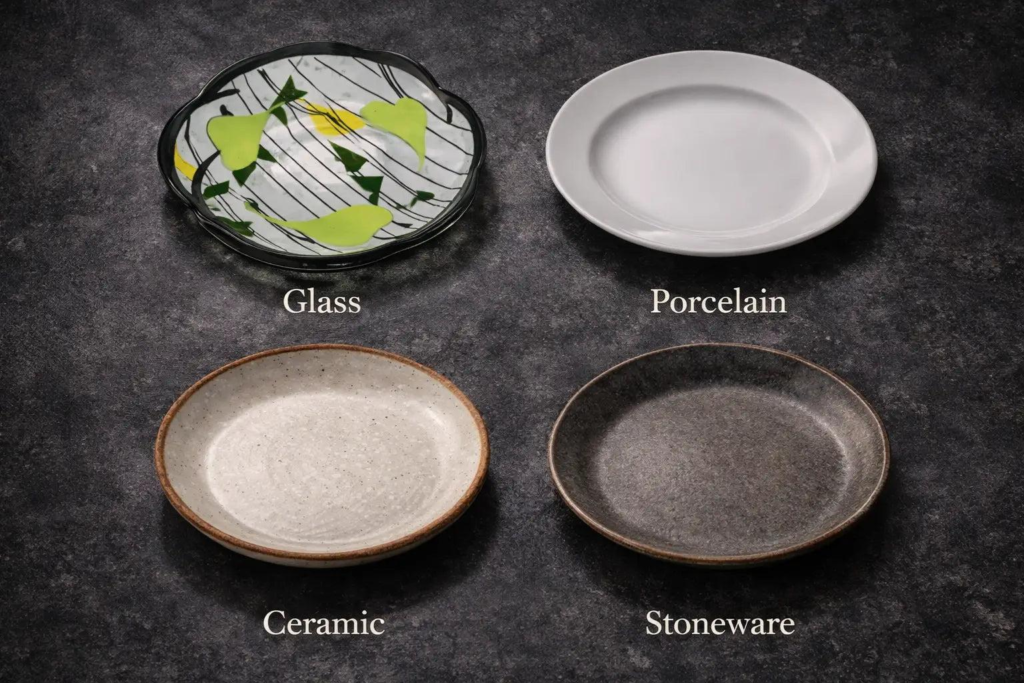
Crockery is made from clay, but the recipe determines how it will look. Kaolin clay, feldspar, and silica are the three components of porcelain. Bone china contains bone ash to make it thinner, lighter, and more translucent. Stoneware is fired hard and is a denser clay. Earthenware is produced from less hard clay and is more porous.
In commercial ceramics, the key word to watch for is the word “vitrified”. It implies that the body was heated sufficiently to have attained a dense and non-porous condition, which is approximately 1200 to 1400°C. The water absorption range of fully vitrified porcelain is 0-0.5%, which prevents stains and withstands multiple dishwasher cycles. Our guide about what vitrified porcelain is covers how to check it on a spec sheet.
How Crockery Is Made
A factory controls every step, which is why batch consistency matters when you reorder.
Step | What happens |
1. Mixing | Clay, feldspar, and other raw materials are blended into a smooth body |
2. Forming | The body is pressed or cast into plates, bowls, and cups |
3. First firing | The shaped pieces are fired to harden them before glazing |
4. Glazing | A glass-like coating is applied for shine and a sealed surface |
5. Glaze firing | A second, hotter firing fuses the glaze and vitrifies the body |
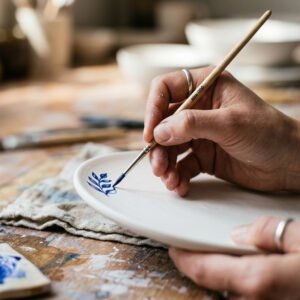
6. Decoration and checks | Logos or patterns are added and fired on, then pieces are inspected |
Best Crockery Material for Hotels and Restaurants
The best crockery material depends on how it will be used. The table below compares the main options.
Material | Strengths | Watch out for |
Vitrified porcelain | The professional standard for hotels, and the most widely used ceramic in commercial kitchens | Thin edges can chip during rush stacking, though it’s easy to replace |
Bone china | Light and refined, with the lowest rim chip rates when staff are trained and volume is controlled | Costs more, and suits controlled service best |
Stoneware | Handles everyday knocks well and gives a handmade look | Heavier, and it can crack from sudden temperature changes. Often best as an accent |
Melamine (not ceramic) | Lightweight and shatter-resistant for outdoor and poolside service | Scratches over time, and it isn’t crockery in the strict sense |
Here’s how that works out by outlet.
Outlet | Best material |
Fine dining restaurant | Bone china or fine porcelain |
Hotel restaurant and banquet | Vitrified porcelain |
Casual restaurant and brunch | Vitrified porcelain, or stoneware as an accent |
Poolside and outdoor service | Melamine |
Our restaurant dinnerware buying guide goes deeper on chip rates, durability, and cost by service style.
How to Tell Good Crockery From Poor Crockery
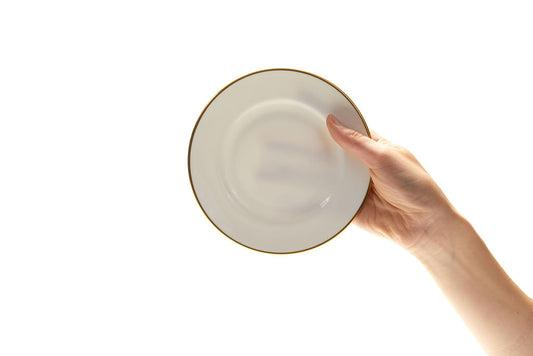
You don’t need a lab to spot most problems. Check samples before you place a bulk order. Our hotel tableware sample approval guide covers the full set of tests.
Check | What to look for |
Light test | Hold a piece to a bright window. Bone china should glow evenly, not only at the edge |
Tap test | A clear, ringing sound suggests a well fired body. A dull sound can mean under-firing |
Glaze | Smooth and even, with no pinholes, bubbles, or rough patches |
Rim | Even thickness, and a rolled or reinforced edge on commercial pieces |
Water absorption | A stated figure below 0.5 percent for fully vitrified porcelain, with a test report |
Certificates | Food contact documents such as SGS or LFGB, matched to the product you’re buying |
Crockery vs Dinnerware vs Tableware vs Cutlery
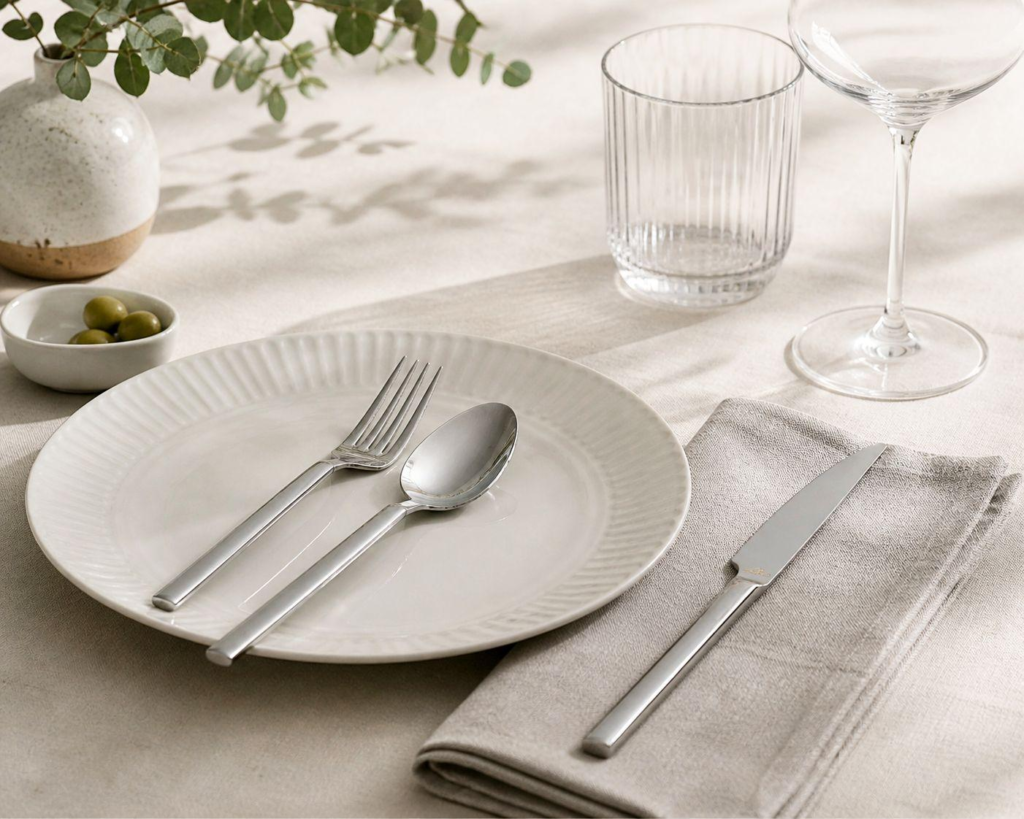
The most common question buyers ask is crockery vs dinnerware. In reality, they are almost the same. Crockery is used for ceramics, and dinnerware can also be glass or melamine plates.
Term | What it covers | Where you’ll see it |
Crockery | Ceramic plates, bowls, cups, saucers, and serving dishes | UK and other British English markets |
Dinnerware | Plates, bowls, and cups, often sold as sets, sometimes in glass or melamine | US supplier catalogs |
Tableware | Everything on the table: dinnerware, cutlery, glassware, and serving pieces | All markets, as the umbrella term |
Flatware | Metal eating utensils (forks, knives, spoons) | US supplier catalogs |
Cutlery | Metal eating utensils, and sometimes knives only | UK and other British English markets |
Most products are registered by suppliers under the US words. If you look for crockery and don’t find anything, look for dinnerware as well. If it is a tender, write both, e.g. ‘porcelain crockery (dinnerware)’. The trade sector HoReCa is for hotels, restaurants, and catering.
One more catch: in some ceramic factories, flatware means flat pieces like plates, while in most catalogs it means metal utensils. If an order mixes both, write “stainless steel flatware” or “ceramic plates”. For how all three categories should match on the table, see our guide on matching dinnerware, flatware, and glassware.
Types of Crockery by Item
When people ask about types of crockery, they usually mean the items in a set. These are the most common crockery examples.
Item | Typical use |
Dinner plate | Main courses |
Side or bread plate | Bread, butter, small sides |
Dessert plate | Desserts and pastries |
Soup bowl | Soups and stews |
Pasta bowl or shallow bowl | Pasta, risotto, and saucy dishes |
Cup and saucer | Tea and coffee service |
Mug | Casual hot drinks and breakfast service |
Teapot, jug, and creamer | Table service for tea, coffee, and milk |
Serving platter and dish | Sharing plates and buffets |
Plates also come in several shapes, such as rimmed, coupe, and square. Our guide to the different types of dinner plates explains how they differ.
How to Write Crockery Into an RFQ
The line “white crockery, 500 pieces” allows for speculation. Identify the object, material, and dimension. Our hotel tableware procurement checklist is for the entire process and the table below is for tableware lines.
Spec line | Example wording |
Item and material | Porcelain dinner plate, fully vitrified |
Size | 270 mm overall diameter, with an agreed tolerance |
Water absorption | Below 0.5 percent, with a test report |
Decoration | Plain white, or a named glaze or logo |
Quantity and spares | Order quantity plus a breakage allowance |
Certificates | Food contact documents such as SGS or LFGB |
Looking After Crockery in a Busy Kitchen
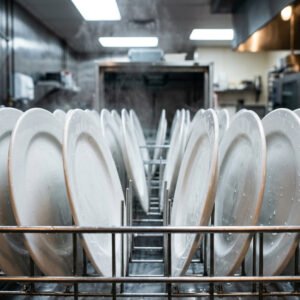
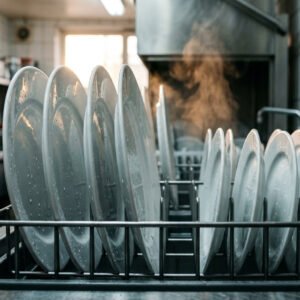
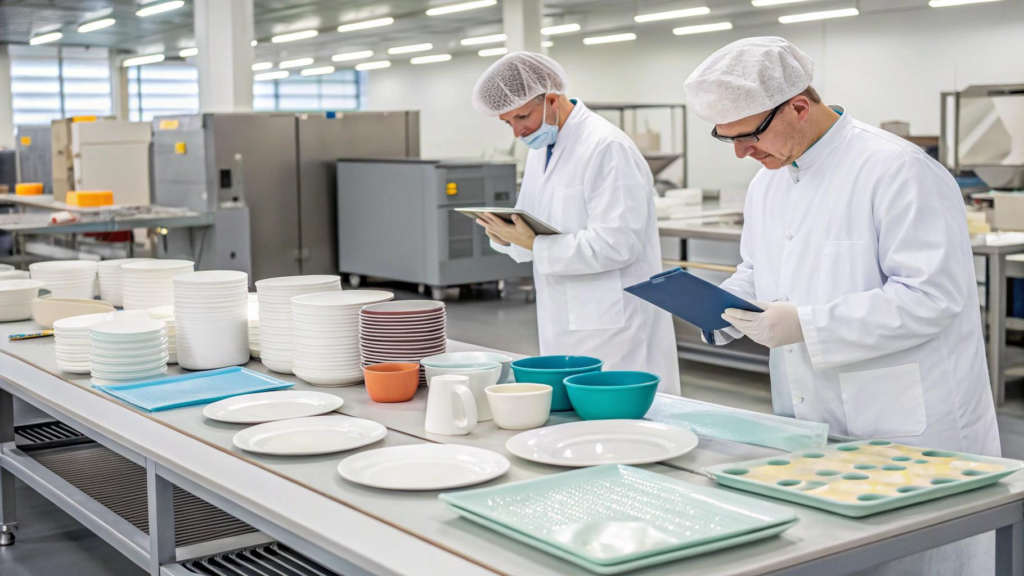
There are a few habits that will help good ceramic tableware last longer. Do NOT subject them to sudden temperature changes, e.g., move plates immediately from a hot wash cycle to a cold store. Another cause of hairline cracks is thermal shock.
Store in smaller quantities and away from light-sensitive items. Make sure to use racks that fit your plates; otherwise, the plates will bang into each other in the dishwasher.
Typically, chips begin at the border, where pieces connect. A chipped plate is typically removed from service, so a little thought in designating a plate to be used for stacking will save money over the course of a year.
Common Mistakes When Buying Crockery
The first being that crockery equals cheap everyday ware. If it’s a hotel order, the word covers all ceramic, so include the material.
The second is choosing crockery by appearance alone. There can be differences between the densities, rim strength, and water absorption for two identical white plates.
The third mistake is confusing the two meanings of flatware. In some ceramic factories, it refers to flat items such as plates, while in most supplier catalogs, it means metal utensils such as forks, knives, and spoons.
The fourth one is to search for a single word. If there doesn’t seem to be much success with crockery, look for dinnerware and tableware instead.
How Brett Supports Crockery Orders
Our porcelain dinnerware, bone china dinnerware, stoneware, melamine, flatware, and glassware allow a hotel to place its dinnerware and glassware order from a single source. All our dinnerware is certified to SGS and TUV standards and conforms to EC No.1935/2004. Please share your list of items and sizes, and we will match them to a range!
Frequently Asked Questions
What is crockery?
Crockery is ceramic tableware that is fired clay, for example, plates, bowls, cups, saucers and serving dishes, such as porcelain, bone china, stoneware or earthenware.
What is the best material for crockery?
Fully vitrified porcelain is used in most hotels and restaurants. It is very dense, easy to replace, and fits commercial dishwashers. Bone china is good for fine dining, and stoneware is good for casual service.
What is crockery made of?
Fired clay. Kaolin, feldspar, and silica are the raw materials used in porcelain. Bone china is thickened with bone ash. A harder, denser clay is used for stoneware, while a softer, more porous clay is used for earthenware.
Is crockery the same as dinnerware?
Mostly, yes. Crockery points to ceramic and is the usual British English word. Dinnerware is the common US word, and it can also include glass or melamine plates.
What is the difference between crockery and cutlery?
Crockery is ceramic tableware such as plates and bowls. Cutlery is the metal eating utensils, such as forks, knives, and spoons.
What is the difference between crockery and china?
Fine china is a high-grade type of crockery made from porcelain or bone china. Crockery is the wider word and also covers stoneware and everyday ceramic ware.
Is flatware the same as cutlery?
In most catalogs, yes. Flatware is the US word and cutlery is the British word for metal eating utensils. In some ceramic factories, flatware means flat pieces like plates, so state which one you mean.
Conclusion
So, what is crockery? This is the ceramicware you use on your table – plates, bowls, cups, saucers and serving dishes. Together, these are all referred to as dinnerware; the whole table is called tableware, and the metal is cutlery or flatware.
The material determines the longevity for a hotel or a restaurant. For most outlets, it is best to use vitrified porcelain; for fine dining, it is best to use bone china; and for accents, it is best to use stoneware. Take samples, inquire about the water absorption and record sizes in mm; have all suppliers use the same crockery material.
Crockery for hotels and restaurants is supplied and is accompanied by SGS, TUV, EC No. 1935/2004, FDA, LFGB, ISO 9001, BSCI and Sedex documentation on request. Need crockery for your hotel, restaurant, or catering project?
Explore Brett’s ceramic dinnerware collection for porcelain, bone china, and stoneware, with custom designs and bulk order options. Contact us at ann@chinabrett.com or WhatsApp +86 13535413512 to discuss your requirements.