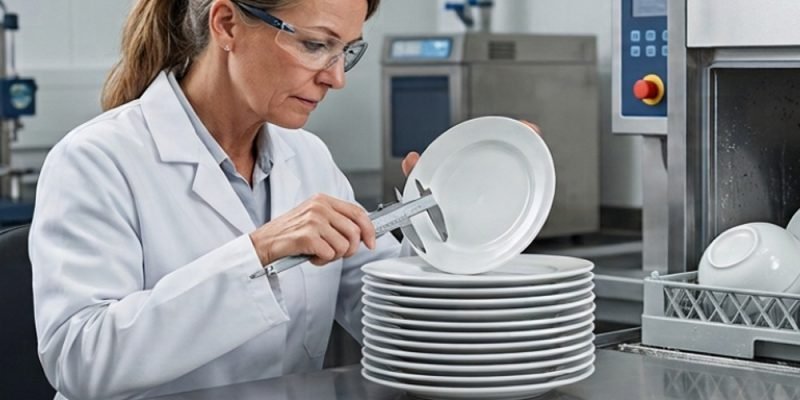
When approving a hotel tableware sample for production, confirm that the sample has completed the stacking fit test, has been processed 50 times or more in the production dishwashers. A visual check of the glaze on the sample has been tested for chipping and edge damage in your commercial dishwashers, and the sample was not an experimental batch but rather the same glaze used on your commercial dishwashers was used in the sample. Never approve images or 3D renderings; always approve physical samples.
In the last two decades, we have taken hundreds of people through this hotel tableware sample approval process, and it’s almost by the time you finish the order that you realize you left something off the list because you’ll regret it when you get it in your restaurant.
In this guide, we will explain the procedure for hotel sample approval, the guidelines for the hotel tableware sample deadline before mass production, and the inspection standards for tableware qualification before mass production.
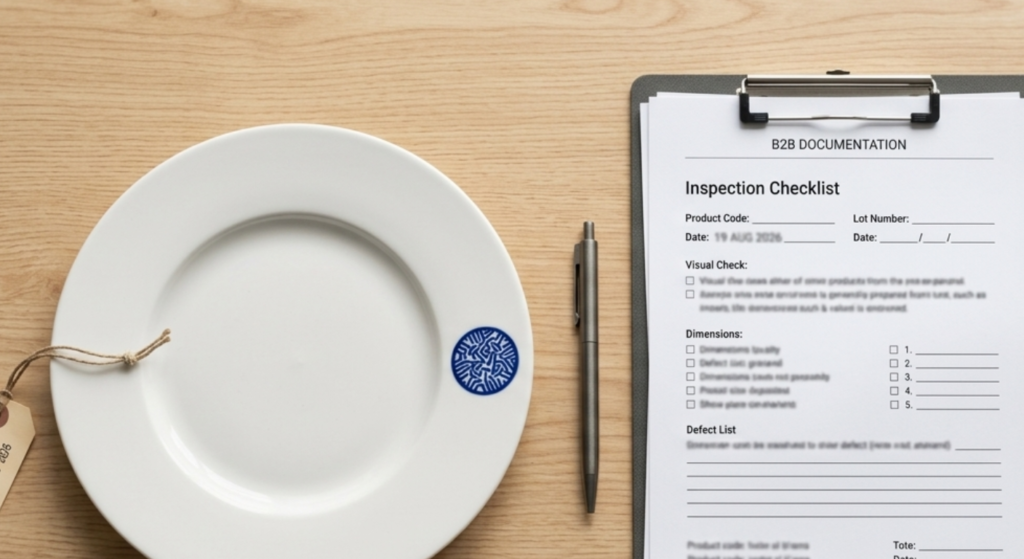
Table of Contents
What Is Hotel Tableware Sample Approval?
A sample of tableware to be approved and signed by an approved supplier before manufacture of the product, by the hotel or a hotel in the F&B sector. This is an important procedure because it is the last stage in the process of approval, and if the buyer fails to approve, the buyer’s sample deposit would be forfeited.
The approved sample becomes the criteria for the quality of all production. This is the biggest factor that might not be obvious to many buyers, which is why sample approval is a factor.
Why Sample Approval is the most critical step in the Order
Hotels with poor sample approval practices may have a different breakage rate and/or a very different replacement rate in the program life cycle. The difference in replacement costs between specification and non-specification procurement can be more than 15,000 to 40,000 US Dollars a year for a fully integrated 200-room hotel, with the additional consideration of a table presentation that is not attractive to the guest.
Many times, the benefit of the additional two weeks in the sample process is easily outweighed by plate service life. Once the container has been sent out, it will cost more to correct an error than it will when it is first passed through the sample stage, not to mention the damage to the brand.
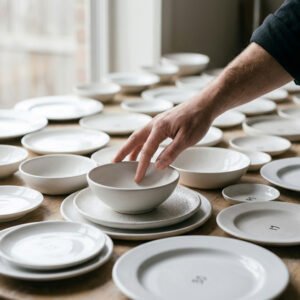
The sample plate allows the Buyer to examine all porcelain samples on the table in detail. The sample plate enables the Buyer to see in detail all porcelain samples on the table.
Photos and 3D Renders are NOT Sample Approval
Never accept tableware from a picture or 3D model! Photographs and renders are not necessarily to scale in terms of colour, glaze, or weight. The only means of confirmation is to rely on actual samples.
Digital Proofs Can Accelerate Color & Place Decisions First
If you are buying a logo or decorating a full shape, you should be able to get a digital mock-up of the design back within 2-3 days from the supplier’s design team (the design team should be able to do the photorealistic mock-up of the design). This will help with the determination of color and positioning before approval of a physical sample, but in the end, a physical sample should follow the digital sample.
What to Test Before Approving a Hotel Tableware Sample
Samples collected from the hotel tableware are tested. These tests are the tests that we conduct with the buyers before granting them a sample. Here you’ll need no special equipment – most of it is common sense anyway, and you probably already have it in your kitchen/dish washing area.
Stacking and Storage Fit
Place the sample on top of the existing stock or on top of the entire pattern, if it is new. Look for wobble, gaps between pieces, and whether it suits you and your current dish dolly and storage system.
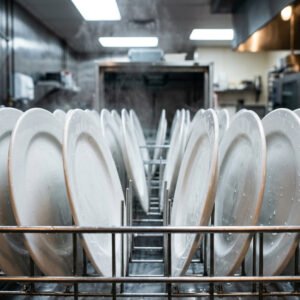
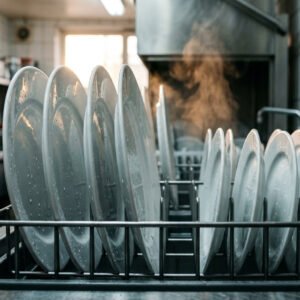
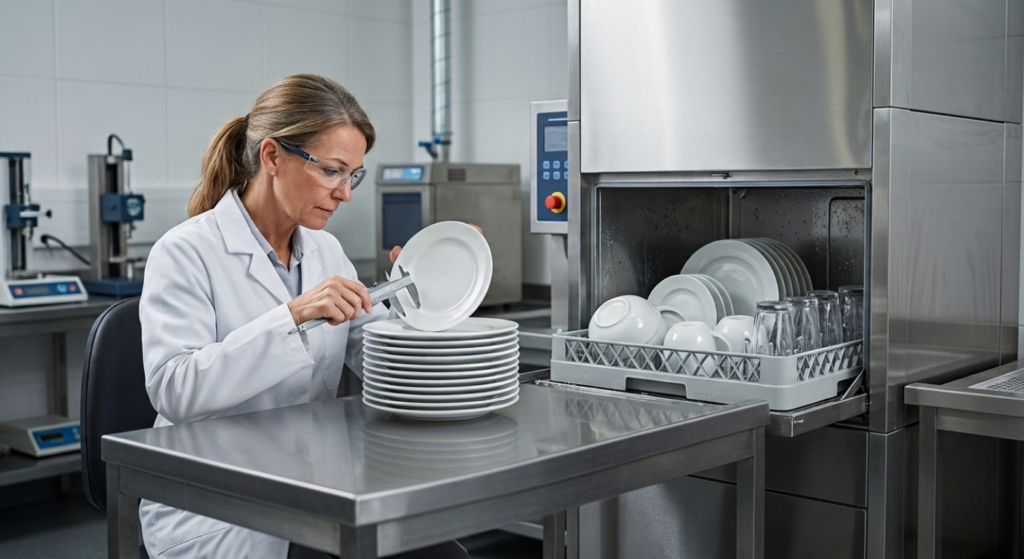
Commercial Dishwasher Testing
Run them in a commercial dishwasher for a total of 50 cycles, looking for any dullness, cloudiness, or tiny scratches in the glaze. After 50 cycles, it was observed that the glaze performance was quite different after years of washing in a commercial kitchen.
The Consistency of the Glaze
Wash one sample and compare with an unwashed sample. Shine/difference – the color difference that will take place as the glaze ages.
Chip and Edge Resistance
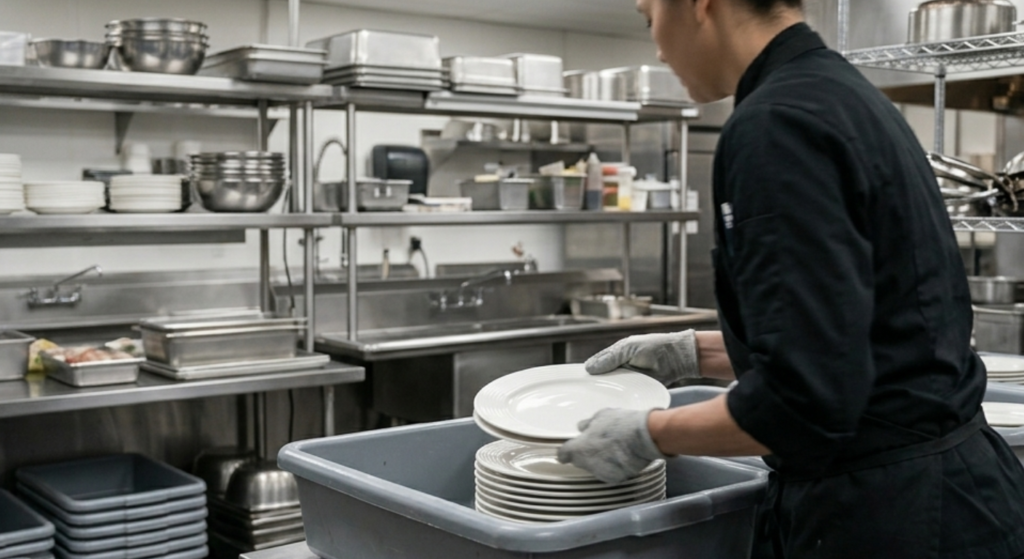
Test on your bus tubs, trays, or dish return equipment, not soft test surfaces. When your staff begins to stack plates in a certain manner in the bus tub, try that one out. In the end, testing on the real will be able to reveal the weak points that cannot be identified in a lab.
Weight and Balance in Hand
Grasp the plate as your staff holds it and consider weight and balance. How a plate feels when it is stacked is different than when it is being carried solo for an hour at the end of a dinner service.
Color Match Under Real Lighting
Compare the sample to an approved reference piece in the lighting of your dining room, not on a table in the warehouse.
Underglaze vs On-Glaze Decoration Durability
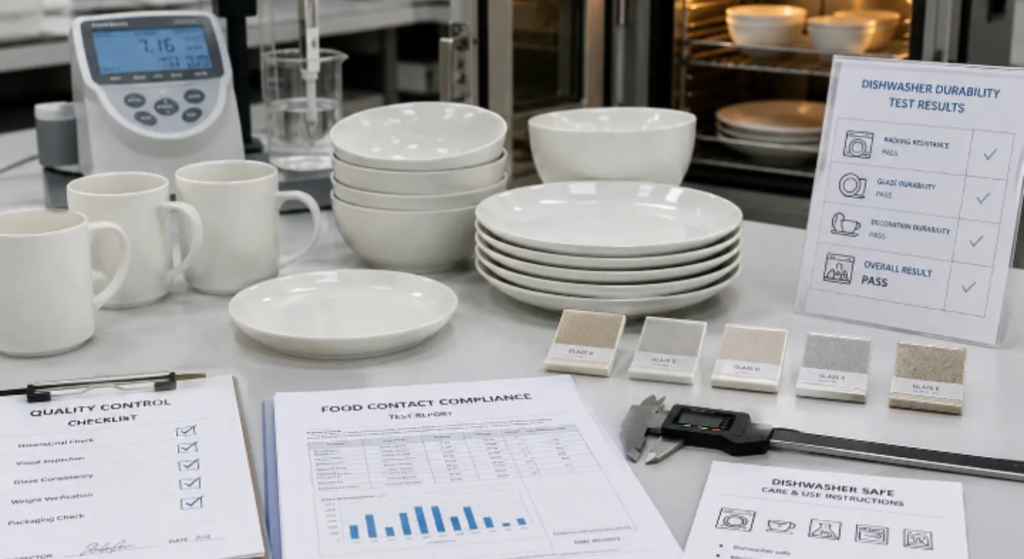
Ask whether any design elements are painted on the bisque (underglaze) or painted on the glazed piece (on-glaze). Underglaze pottery is fired twice, and the painting is sealed during the glaze firing. This makes the decoration much more durable, able to withstand 1,000+ washes in a commercial dishwasher. On-glaze pottery is painted on the finished piece and is much more delicate. Designs painted on-glaze will often begin to fade after only 200-500 dishwasher cycles (roughly a year in a hotel dishwasher). Specify underglaze decorations for all pottery that must be washed regularly.
Request Samples From Actual Production Runs, Not Pre-Production Only
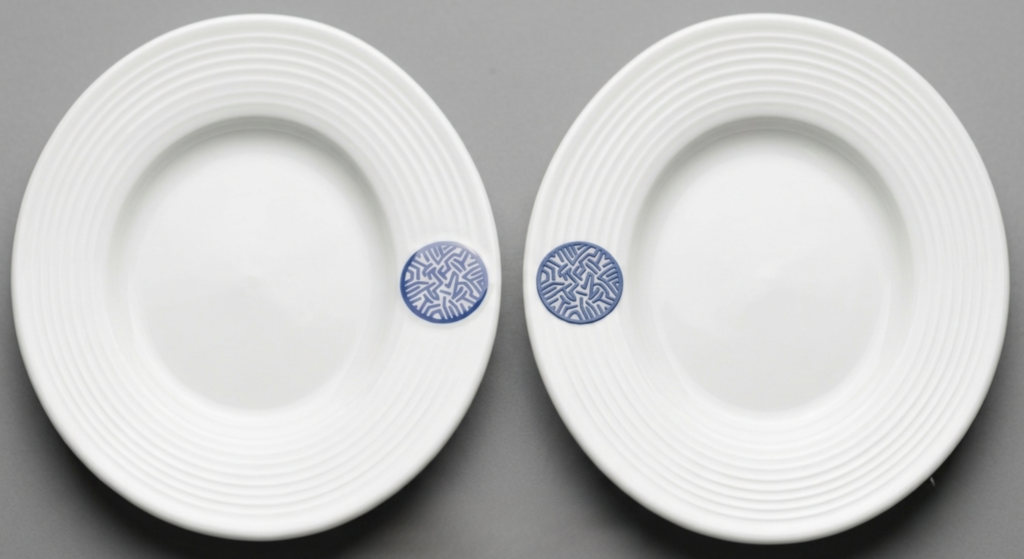
Ask yourself whether the sample you are considering comes from an actual production run or was made by hand outside of regular production for your evaluation as a pre-production sample. Hand-finished pre-production samples often feature far better quality than any regular production run, making them unfalsifiable in terms of what a given production run will be able to consistently deliver.
The issue is especially pertinent in categories featuring exceptionally high breakage rates such as buffet serveware. Our article explains how choosing tableware for hotel buffets can help determine which specific tests should be prioritized when it comes to samples.
Setting Your Internal Approval Timeline
Sample approvals are the single point of the entire hotel tableware procurement timeline that is firmly in the hands of the hotel itself, and it often takes significantly longer than most people realize. While most factories will be able to provide you with a revised sample within 5 working days at most, internal approvals within the hotel often take anywhere between 3-4 weeks. It usually involves the design team, F&B director, GM, and/or ownership depending on the hotel chain.
Pre-Authorize Your Approval Matrix
Before samples arrive, establish clearly who has the authority to approve them and set a firm review period (5 business days is standard). Having this agreement in writing before approving or shipping samples is the best way to avoid delays in the entire order.
Why Internal Approval Matters More Than Factory Lead Time
A 3-week internal approval delay not only creates a 3-week delay in the production start but also shifts the buyer’s opening date if the order requires a specific freight schedule. Buyers who fix their own approval matrix before the samples are approved tend to open on time, while others ask the factory to shorten the production timeline to compensate for the lost days
Defect Rate and Inspection Criteria to be Used
Approval of the samples fixes one’s quality standard for future reference, but one also needs to stipulate what standard to use when inspecting a production batch for compliance.
AQL Sampling Standards for Tableware
Request an inspection according to AQL (Acceptable Quality Limit) standards, specifically ISO 2859-1.
Sampling inspection. Usually, for tableware products, the inspection is conducted on the basis of the following: 0% critical, 2.5% major, and 4.0% minor defects. Make sure to request an independent third-party inspection rather than a factory one, as the factory has a natural bias to pass a shipment.
Industry Standard Defect Rate Benchmarks
Ask your supplier for a defect rate report from similar hotel orders. The industry standard for commercial hotel tableware is under a 3 percent defect rate on delivery. A supplier who can’t produce this history for you is asking you to be their first real test case.
Retaining Your Approved Sample as a Benchmark
Once approved, take photos of the sample from different angles and always keep the actual sample in your possession, not in the factory. The sample stored by you serves as an independent standard for your suppliers in the future, for example, for sample repeats. This is especially important for custom shapes and logos.
Protection of Custom Shapes and Logos
In this case, it is necessary to clearly indicate in the purchase contract that the tools, molds, and designs handed over to the supplier as payment for goods belong exclusively to the buyer. In addition, for significant projects, it is possible to register the design with the China National Intellectual Property Administration. However, this procedure is quite time-consuming and takes six to twelve months, which must be borne in mind when planning the launch.
Time Frame After Sample Approval
The time required to manufacture the ordered inventory after the sample has been approved is 25-35 days. In addition, 5-7 days are needed for the final inspection and packing. If we add to this the previously described 7-15 day sampling procedure, the total time from the start to the end of manufacturing will be 37-57 days. For more complex shapes, which require the development of molds, the preparation time may be even longer.
Our hotel tableware procurement checklist covers what to confirm with your supplier before this stage even begins.
Sample Approval Checklist
Here’s the structure every buyer goes through before finalizing a purchase of a hotel tableware sample.
Test Category | What to Check Before Approving |
Stacking and storage fit | Sample stacks cleanly with existing inventory, no wobble or excess gap |
Dishwasher performance | Run 50 commercial wash cycles, inspect glaze for dulling or clouding |
Chip and edge resistance | Test rim and edge with your actual bus tub or tray handling equipment |
Weight and balance | Hold and compare to existing service ware, check for awkward balance |
Color match | Compare to approved reference under natural light and service lighting |
Decoration durability | Confirm underglaze application if logo or pattern is applied |
Production run source | Confirm sample was pulled from an actual production batch, not a one-off |
Defect rate agreement | Written AQL level agreed, with 0 tolerance for critical defects |
Sign-off and retention | Sample formally signed, photographed and retained as benchmark |
Common Sample Approval Mistakes
The most expensive error is approved from a picture, not a sample. The second most expensive error is testing the sample, not actual usage in dishwashers and service. The third is requesting a handmade, one-of-a-kind sample, and not a production run sample. The fourth is failure to define an internal approval matrix until samples have already been received. (How does a five-day factory decision become a four-week hotel delay?) The fifth is not having a written AQL agreement, therefore determining quality standards after the fact and not against an agreed-upon standard.
How Brett Supports Your Hotel Tableware Sample Approval
We have been supplying hotel ceramic tableware to premier restaurant and hotel properties in over 80 countries since 1998. Every order has been through a documented sample approval process, and we have developed a step-by-step hotel procurement process guide for multi-outlet groups navigating the sample approval process for the first time.
For a more detailed understanding of what should be negotiated before samples are even received, we have also created a commercial dinnerware buyer’s guide detailing specification and material considerations. In addition, our hotel tableware procurement checklist assists with the entire process from initial inquiry to final delivery.
FAQ
What should I check before approving the hotel sample?
You should always test for stacking fit, at least 50 commercial dishwashing cycles with glaze inspection, chipping or edge damage resistance on your commercial equipment if applicable, visual weight or balance by hand, color accuracy on your commercial lighting, and decoration durability if a logo is involved.
Can I approve the tableware sample based on pictures or video?
You should not rely on pictures or videos to approve the hotel tableware sample for mass production, since colors, glaze, and weight may appear distorted. You can request a sample based on pictures or video for initial logo color and position approval, but you should only approve full production after a physical sample has been visually inspected.
What is AQL and why does it matter?
AQL stands for Acceptable Quality Level according to the ISO 2859-1 standard. Normally, it applies to 0% for critical defects, 2.5% for major defects, and 4% for minor defects. This should be controlled by an independent third-party inspector to avoid conflicts of interest.
What is the average time needed to approve a hotel tableware sample?
Factories usually give a decision based on the sample inspection within 5 working days. The sample approval process itself takes the longest, typically 3-4 weeks inside the hotel procurement system, unless the hotel approval matrix has been established in advance.
What is the average percentage of hotel tableware defects allowed?
In commercial tableware, the industry standard is lower than 3% of defective products upon delivery. Ask your supplier to provide a defect report for similar hotel tableware orders as a reference before approving your sample.
Can I take a copy of the approved sample?
It is always advisable to make a reference sample and take pictures of it instead of relying solely on the copy held at the supplier’s factory. This will serve as the tableware sample approval for all future orders and modifications.
Conclusion
A sample is the final chance to stop a costly production error from becoming a full-blown, container-level error. Testing the stackability, dishwashability, lead edge strength, and color fastness of samples before approval may cost you a few days and a small fee, but failure to do so could cost you much more once production is underway.
We recommend defining your internal approval matrix before samples are received, requesting AQL-based third-party inspections, and keeping a reference sample on file as an independent source for every order received after the initial sample approval.
Our team will help hotel procurement managers to establish the approved sample procedure for their tableware orders, backed by FDA, ISO 9001, BSCI, and Sedex certification, with inspection reports upon request. Contact cbhoreca or WhatsApp us at +86 13535413512 today to arrange your hotel tableware sample approval before mass production starts.