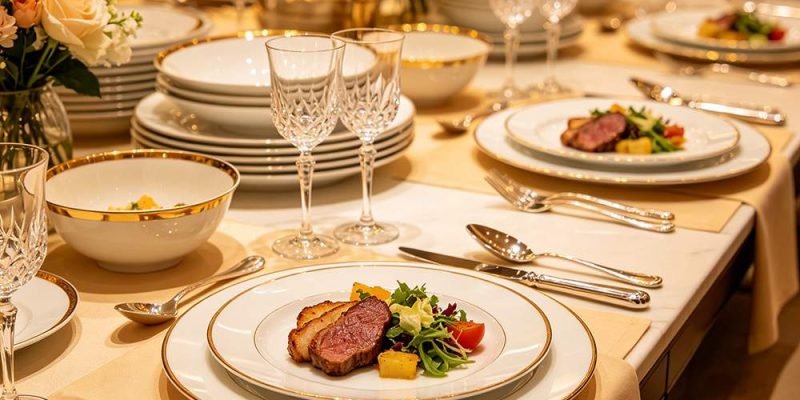
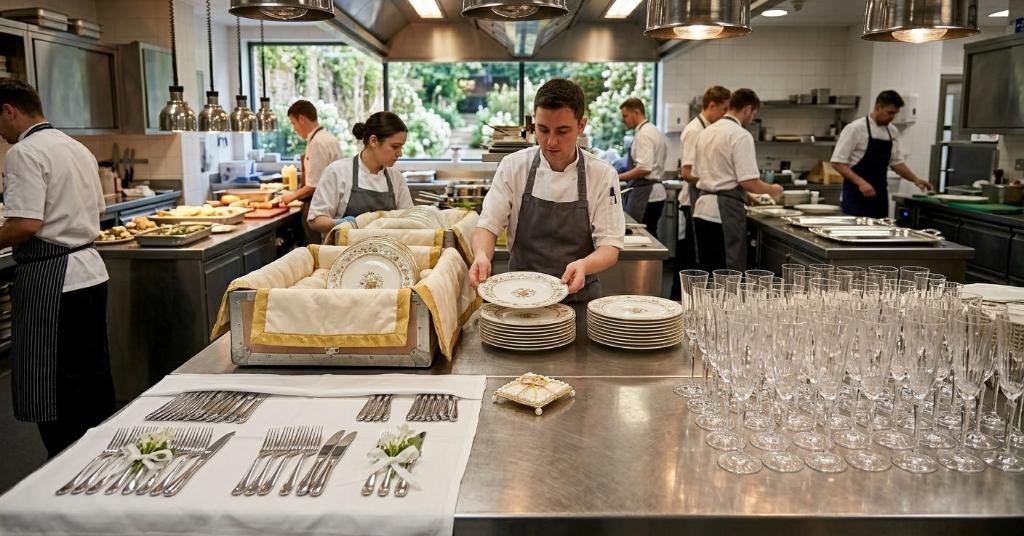
One of the most challenging tableware settings in the hotel sector is a hotel buffet. In a la carte establishments, the server regulates what plates get moved, while at a buffet, all of your tableware is on display and continuously passed among the hundreds of patrons serving it over a hundred times a day. The plates stack up and come down dozens of times per service. The serving plates are sent on a fast-moving cycle from the kitchen to the station and back. There is no place to make a wrong choice on the hotel buffet tableware, because it’s not just a matter of your budget; it’s a matter of your guest experience, your staff efficiency, and your brand every morning.
Table of Contents
What Makes Hotel Buffet Tableware Different
The only difference between hotel buffet tableware and the regular restaurant tableware is volume stress.
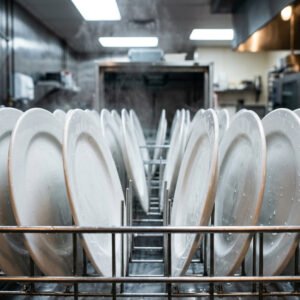
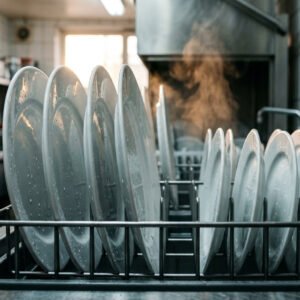
With a plated dining room, each plate could move four times during one service cycle: from the kitchen to the table, from the table to the dishwasher, from the dishwasher to the plate storage, and finally, from the plate storage to the kitchen. That same breakfast plate is used several dozen times before noon at a 300-person capacity hotel breakfast buffet. It’s stacked by kitchen employees, picked up by guests, taken by cleaning crews, and put through the dishwasher three times before lunch is served.
The tableware that remains in this kind of environment is not always the most beautiful — it’s the most structurally stable, most chip-resistant at the rim, and the most uniform in shape to promote easy stacking. These are the guidelines used when making hotel buffet tableware purchases, which vary from the criteria used for a la carte tableware purchases.
Choosing the Right Plate Material for Your Buffet
The most important choice that a hotel buffet tableware buyer must make is the selection of materials. The incorrect material creates replacement expenses that build up monthly.
Choosing the Right Plate Material for Your Buffet
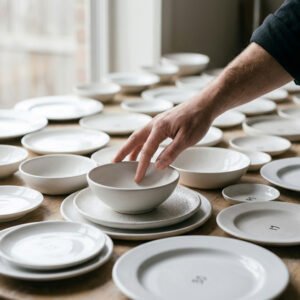
The standard breakfast and lunch buffet item for most hotels. It is dense and non-porous, resisting chipping better than thin materials; its white surface photographs well; it is subject to high-temperature commercial dishwasher cycles buffeted by operations throughout the day. Modern hotel-grade porcelain that is certified to comply with the ISO 9001 standard and FDA is capable of being run through thousands of dishwasher cycles without any surface degradation.
Bone China
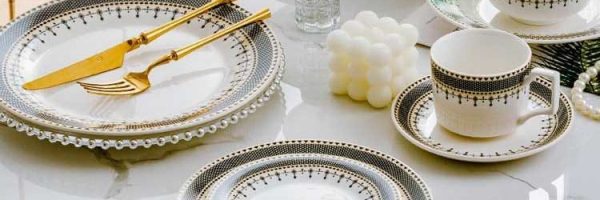
Ideal for high-end buffet service operations such as luxury hotel brunch services, high-end catering events, and luxury hotel breakfast service, for which visual quality is an important part of the guest’s experience. Guests appreciate its lightness when self-serving of Bone china, and the translucent quality signals that the guest’s first impression of the quality of the bone china is correct.
Melamine
Ideal for outdoor breakfasts, poolside buffets, and casual food stations, where breakage can be highest. It is almost indestructible, easy to carry, and comes in styles that closely resemble ceramic. The restriction is heat: melamine can’t be placed under heat lamps or in microwaves, thus eliminating it from use in heated food stations.
The best hotel buffet plans feature a multi-level structure. Porcelain or bone china (hotel-style) for indoor formal breakfast and brunch. Terrace and poolside outdoor melamine. This helps to lessen the total expense of replacement while preserving the visual quality where guests are paying the most attention.
How Many Plates Do You Need for a Hotel Buffet?
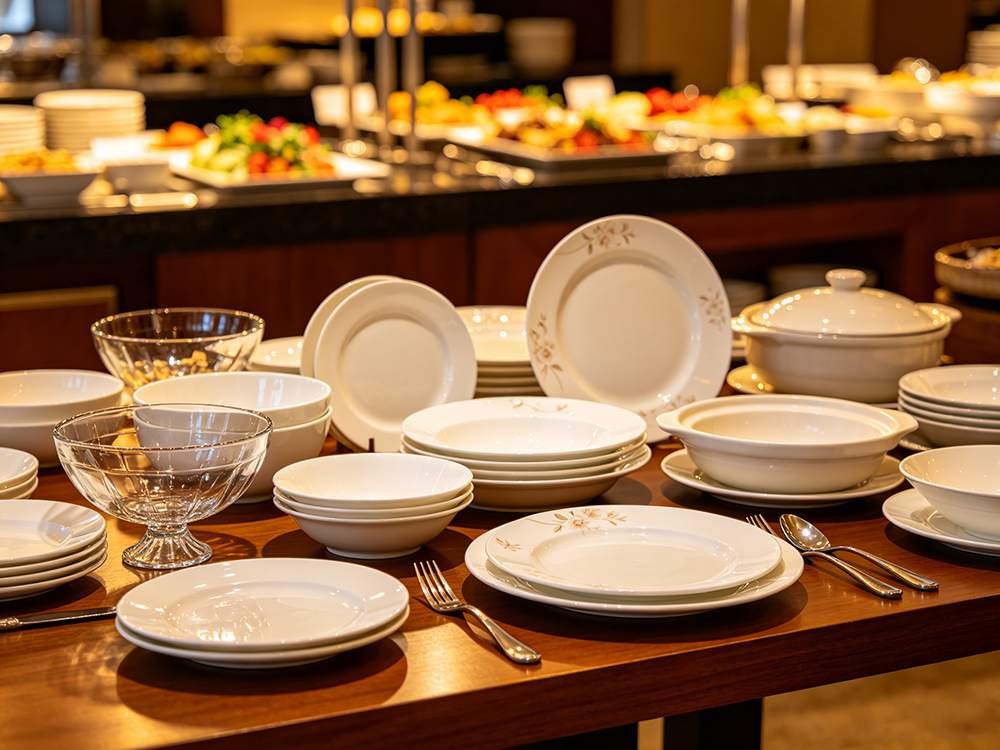
One of the more frequent and expensive errors in hotel buffet tableware ordering is under-ordering. The rule of thumb in the industry is that you should have three plates for every guest you think you will serve at maximum attendance at your restaurant. One plate is currently being used on the buffet line or by a guest. One is in the dishwasher. One is in reserve storage.
If the hotel has a breakfast buffet serving 200 people and a double service rotation is employed:
- Minimum of 200 guests x 3 plates = 600 dinner plates.
- Determine opening inventory (720 plates) by adding a 20 percent breakage buffer.
Use the same calculation for side plates, soup bowls, and dessert plates. You should use a 3:1 inventory calculation for each category, based on the actual number of covers per customer and the rotation rate.
Choosing Serving Pieces for Hotel Buffets
Hotel buffet serving pieces are where most procurement teams underinvest. The presentation at the station is the most important part of a buffet — and the serving items are the first thing that gets noticed, even before the food.
Serving Platters
Process the heaviest use in any buffet. They are continuously carried, replenished, and washed during service operations. Where there is a need to use a lot of platters, as in a hotel buffet, this type of “hotel grade” porcelain is the most reliable — dense enough to withstand repeated use and consistent in color and appearance throughout the years.
Soup Tureen and Ladles
Purpose-built soup and hot food stations must be robust enough to hold hot food for long periods without being affected by the heat, have good heat retention properties, and be sufficiently heavy in order to be stable on the buffet when used by guests. Stainless steel flatware, ladles, and tongs in 18/10 stainless steel are the professional standard — they do not rust, they clean easily in commercial dishwashers, and they last for years under daily buffet use.
Serving Tongs and Spoons
No matter how many buffet stations there are, each has to have its own serving utensils for every food item. In a mirror or satin finish, stainless steel serving tongs and spoons will remain pristine during continuous commercial dishwashing and will signal quality to guests throughout service.
Chafing Dishes and Chafer Inserts
For Hot Buffet stations, Chafing dishes maintain food at a safe serving temperature for long periods of time. The most effective hotel buffet operations employ stainless steel chafer frames fitted with porcelain or ceramic inserts. A combination of the strength of steel and the warmth of the ceramic food presentation.
Flatware Selection for Buffet Operations
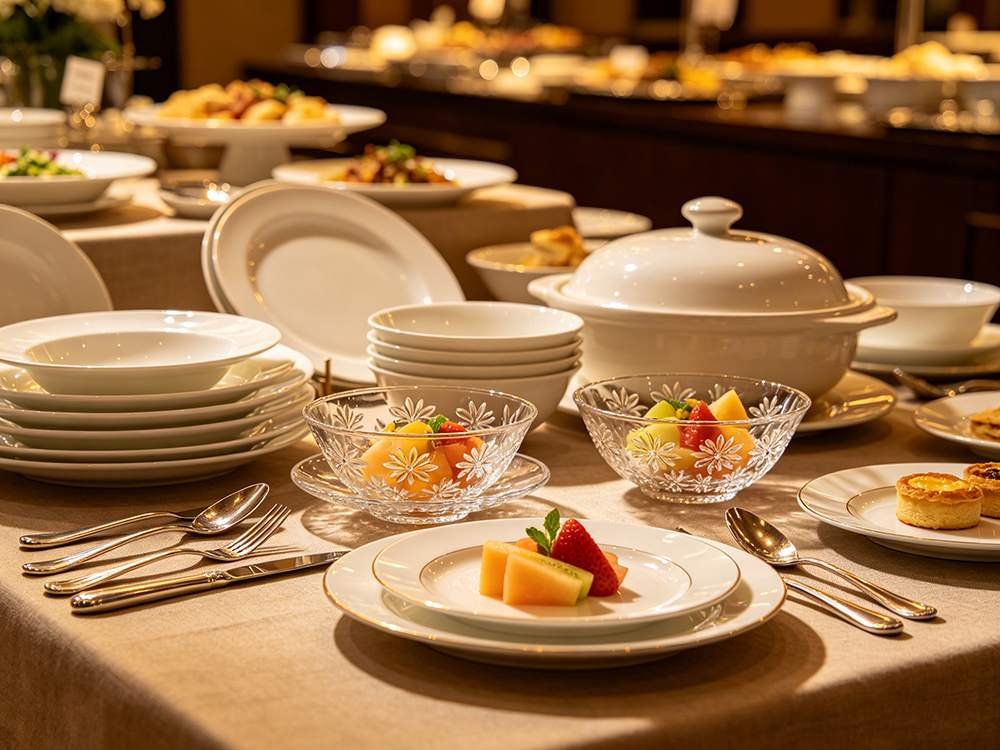
The drop resistance of buffet flatware is different from that of la carte flatware. It is kept in open boxes from which guests pick dozens, from which they try to find what they want. It is dropped on hard surfaces. It flows through the service dishwasher throughout the service.
18/10 stainless steel flatware is the only option for the professional choice in buffet service for hotel use. It’s 18 percent chromium and 10 percent nickel for superior corrosion resistance and a bright finish that will look great after each commercial dishwashing cycle, plus the weight that conveys quality to the guests.
Mirror Finish
The traditional hotel breakfast buffet option. Bright, shiny, and easily cleaned. Mirror finish flatware will display fingerprints more than other finish options, especially if you’re offering a premium buffet-style service. Take into consideration buffet polishing time during service.
Satin or Tumble Finish
Gaining in popularity today for modern hotel buffet facilities. The brushed surface will minimize fingerprints and water marks that can be seen, resulting in less polishing time during set-up and a clean look throughout service.
If a buffet inventory quantity is used, use the 3:1 ratio for plates. A 200-cover buffet requires 600 forks, 600 knives, and 600 spoons on hand, plus a 20 percent breakage/loss allowance.
Glassware for Hotel Buffets
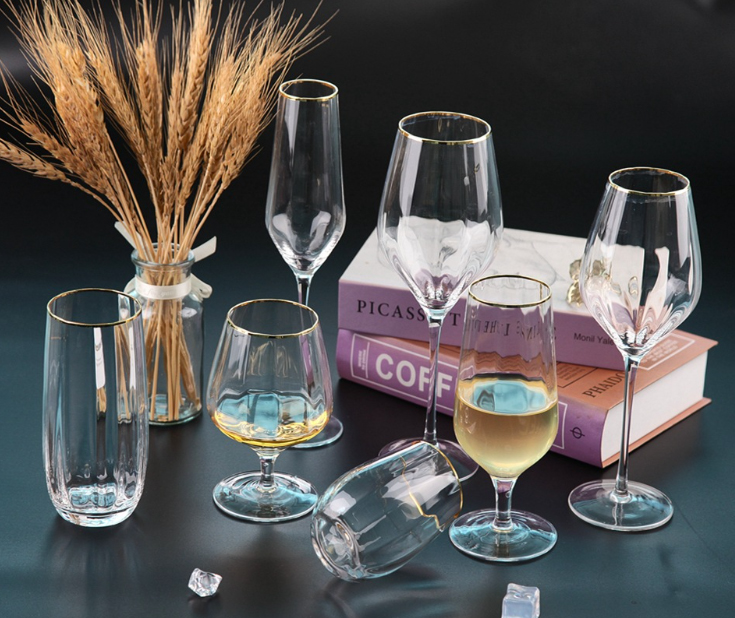
The problem with buffet glassware is that the guests don’t have a server to watch over them, and that means there’s a certain amount of knockabout abuse going on compared to what would happen in a dine-in setting.
The hotel’s glassware used for buffet service should be strong, stable, and simple, rather than decorative. This thick, reinforced, tempered glass water goblet with a sturdy base is in much better shape than a thin decorative glass designed for formal dinner service after a hectic breakfast buffet service!
Water Goblets
The most popular glassware at any hotel buffet. Water goblets are used and changed throughout service for guests. Maintain a stock ratio of 3:1 with the highest number of covers and make sure your supplier has the capability to offer reliable batch matching for re-stocking orders.
Juice Glasses
Breakfast buffets will often have a separate cup of juice in addition to the water cup. A smaller, wider design will not be as likely to be knocked over as a tall, thin glass on a self-service counter.
Coffee Cups and Saucers
Hotel-grade porcelain coffee cups and saucers, with a consistent white glaze, complete a tableware program for buffets with table-side or counter coffee service, and lend to the visual cohesiveness between the coffee service and the rest of the buffet presentation.
The 3:1 Rule — Managing Buffet Tableware Inventory
The 3:1 rule is the foundation of professional hotel buffet tableware inventory management. For every guest at peak capacity, you need three of every piece — one in use, one in the wash, one in reserve.
Here is a practical inventory calculation for a 150-cover hotel breakfast buffet:
- Dinner plates: 150 x 3 + 20% = 540 pieces
- Side plates: 150 x 3 + 20% = 540 pieces
- Soup bowls: 150 x 3 + 20% = 540 pieces
- Dessert plates: 150 x 2 + 20% = 360 pieces
- Dinner forks: 150 x 3 + 20% = 540 pieces
- Dinner knives: 150 x 3 + 20% = 540 pieces
- Dinner spoons: 150 x 3 + 20% = 540 pieces
- Water goblets: 150 x 3 + 20% = 540 pieces
- Juice glasses: 150 x 2 + 20% = 360 pieces
- Coffee cups and saucers: 150 x 2 + 20% = 360 sets
This is your opening inventory. Build in an annual restock budget of 10 to 15 percent of total inventory value to cover normal breakage and loss rates in a high-volume buffet operation.
How to Evaluate a Hotel Buffet Tableware Supplier
Choosing the right hotel buffet tableware supplier is a long term decision. Here is what actually matters. These are the key elements to consider when deciding which producer to hire.
Production Scale
Large opening orders and a steady supply of restocks are essential for a buffet operation. Collaborate with manufacturers that can meet the demands of your first order as well as your reorder needs quickly, given that they have production capacity of tens of millions of units.
Batch Consistency
If you need to replace items after they have been broken, all the replacement items should be exactly like the ones you already have in stock. A sample that’s not in harmony on a buffet station is instantly noticed by guests. Only work with suppliers who keep records of production for all current customer specifications.
Certifications
Your supplier must have FDA compliance in terms of food contact safety, ISO 9001 for quality management, and BSCI or Sedex for ethical supply chain management, at a minimum. These certifications will be checked by third-party organizations; they are your assurance that the tableware your guests eat from is safe and consistently produced.
Lead Times and Minimum Order Quantities
The ordering of the restock items should be flexible in buffet operations. A supplier that offers flexible minimum order quantities (MOQs) provides you with the ability to order just the one or two broken parts you need instead of an entire order for a category. Ensure that lead time is verified before the first order — during peak seasons, restocking requires a supplier to be able to deliver on time to your operation.
How Brett Supports Hotel Buffet Operations
Running hotel buffets is as much a logistics challenge as a hospitality challenge. The table service needs to be consistent, reliable, and easy to replace in case of breakage — you never know when something else will break.
For more than 20 years, Brett has been creating tableware for worldwide hotel chains and retail stores. With a capacity of over 60 million pieces a year at our South China plant, we don’t treat orders for a buffet restock the same way we treat special requirements, which means they don’t get pushed to the back of the queue for lead times.
We have all the tableware you need for your buffet table at our hotel:
- Hotel-grade porcelain dinnerwareand bone china — made to the standards of the hospitality industry, and reinforced with buffet strength on the rims for hotel use.
- 18/10 stainless steel flatware— in mirror, tumble, and satin finishes for every buffet aesthetic
- Glass drinkware— water goblets, juice glasses, and coffee cups designed for high-volume buffet service
All pieces are BSCI, Sedex, FDA, ISO 9001, ISO 22000, and Global Recycled Standard certified. We have batch consistency records so that the plates you re-stock in Year 2 are the same as the ones you ordered in Year 1.
For hotels developing exclusive buffet collections, our OEM and ODM service covers custom glaze colors, logo engraving, and private label packaging.
FAQ
How many plates do I need for a 200-cover hotel buffet?
To get 600 plates minimum per category, use the 3:1 rule (200 covers x 3 = 600 plates minimum per category). Buy 720 dinner plates and include a 20 percent breakage allowance. Use the same computation for side plates, soup plates, and dessert plates.
What is the best plate material for a hotel buffet?
Most hotel buffet operations are professional-level with hotel-grade porcelain. It is the most durable option for high-volume daily use thanks to its chip resistance, resistance to the dishwasher, and guaranteed white surface. High-quality bone china is suited for high-quality buffet settings. For outdoor and poolside stations, melamine is the preferred material.
How often should I restock the hotel buffet tableware?
Allow 10-15% of the total value of your inventory to be spent each year for restocking. The breakage rate tends to be higher for high-volume buffet restaurants than a la carte restaurants. Analyze monthly and place restock orders 8-12 weeks ahead of peak season based on breakage per category.
What flatware grade should I use for hotel buffets?
The only professional standard for flatware in hotel buffets is 18/10 stainless steel. It is corrosion-resistant, stays finished after constant commercial dishwashing, and carries the weight that conveys quality to the guests. Lower grades are not recommended because they will exhibit rust and surface deterioration at a rapid rate under buffet operating conditions.
How do I ensure my buffet tableware replacement pieces match my existing inventory?
Use only manufacturers that have a complete production history for all customer specifications in use. When making your first order, make sure your supplier will be able to ensure batch consistency for restock orders. Ask for a sample before ordering in bulk.
Conclusion
The tableware can make or break the buffet at a hotel. Plates crack, glassware fogs, and serving pieces become worn. They don’t say a word, but they remember. The right hotel buffet tableware program begins with the right tableware material, the right quantities of buffet tableware, and the right supplier relations.
If you get these three things right, your buffet operation is smooth, visually appealing, and you will spend much less on replacement inventory in the long run. Brett has provided table service for the five-star establishments and global brands in over 80 countries for over 20 years. Get started today by contacting us at cbhoreca.