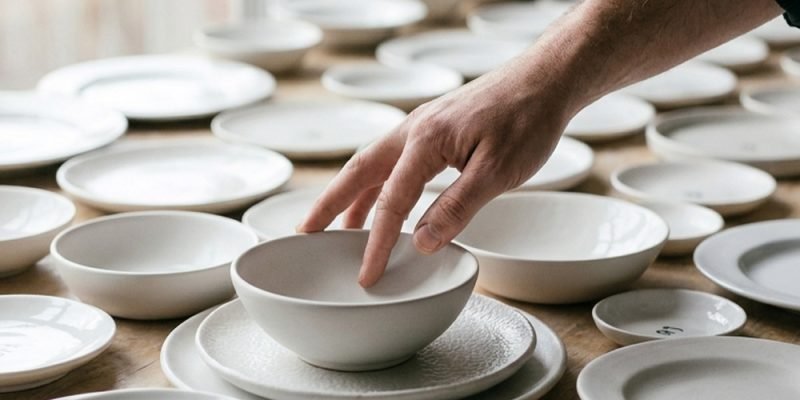
The option that seems too good to be true is for a hotel that has both a fine dining room and a banquet room to look for one of the “premium but durable” tableware specs and reduce the number of vendors and ordering phones to just one. It rarely works. The compromise spec that results is typically too cumbersome and not sweet enough to be used at fine dining counters, and it’s also not strong enough to be used at banquet volume without an excessive breakage rate.
It explains why the ‘universal-spec’ approach fails to work in practice, what banquet and fine dining service really need from tableware and how to design two coordinated programmes that remain visually consistent, but without sacrificing either programme.
Banquet and fine dining tableware require a different set of specs and must NOT be the same set of universal specs. Fine dining requires bone china or fine porcelain, which is translucent and presented at lower volume, whereas banquet service demands vitrified porcelain, which is chip-proof and has low water absorption and is designed for high volume and high turnover. A better idea, though, is two coordinated programs, separate materials for each context, with a common glaze color and logo scheme, and one supplier relationship, instead of one compromise specification.
Table of Contents
Why Hotels Default to One Universal Spec
The rationale for a single spec is typically based on a practical and sound business logic: fewer SKUs, one supplier relationship, one reorder cycle, less administrative overhead. If you have a property that’s just beginning or one that wants to cut back on a too-complicated tableware program, this is the right option. In reality, it yields a piece that’s too heavy and plain for fine dining presentation, while still not durable enough to meet standard banquet chip resistance or stacking tolerance.
What Fine Dining Tableware Actually Needs
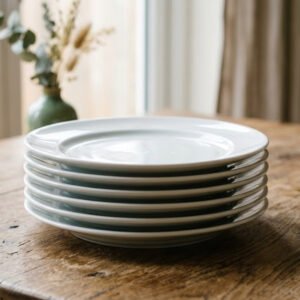
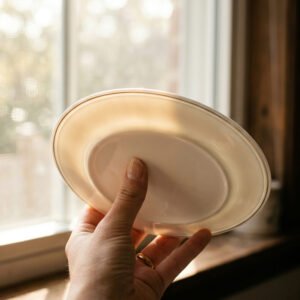
Fine dining service is based on presentation and guest perception at a relatively low volume per service. Bone china or fine china is the perfect material for this because it is translucent, has a good rim shape, and is lighter in weight, which gives the impression of a higher level of service when it is picked up by a guest. A signature restaurant within a 5-star establishment usually will have a much lower cover count per service than a banquet hall, and the tradeoff of a softer material in order to achieve a stronger presentation is quite logical in this case.
In this context, our bone china buying guide provides in-depth details about material selection, as well as verifying quality before investing in a fine dining program.
What Banquet Tableware Actually Needs
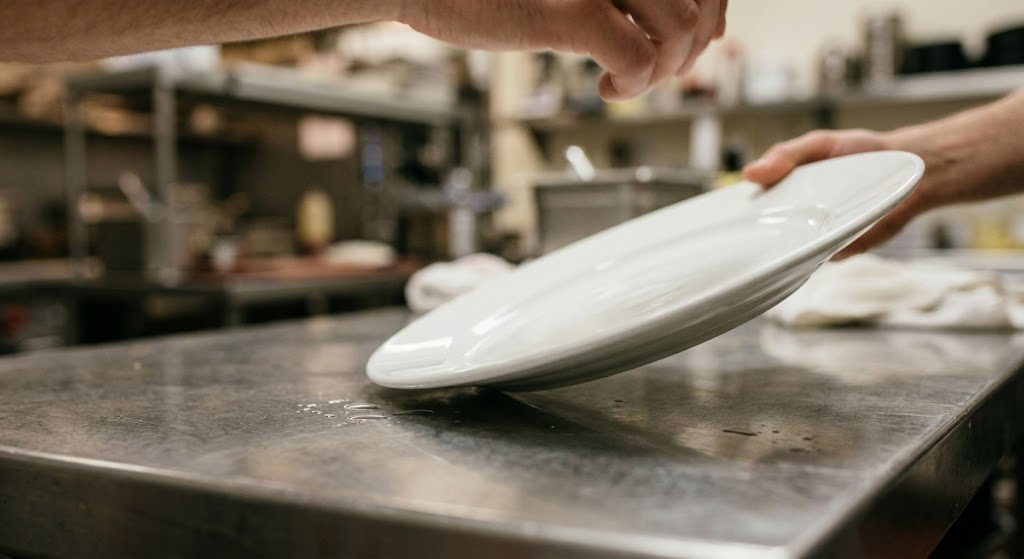
When serving at a banquet, the temper of the individual waiter is quite different – there are a lot more seats, a lot less time between them, and a lot more aggressive pace when setting the table, serving and breaking down. Here the material to be considered is vitrified porcelain that has proven its resistance to chips, e.g., porcelain tested to standards such as EN12875-1, which demand impact resistance and chip resistance; water absorption of less than 0.5 percent. That low absorption level is important because that is what determines whether or not a piece is truly non-porous and will withstand repeated commercial wash cycles during a banquet program’s life, which inevitably lead to hairline cracking and staining from the high temperatures.
This durability is discussed in greater detail in our commercial dinnerware for restaurants guide, where we discuss how to ensure you are getting the proper test documentation from your supplier prior to placing a bulk banquet order.
The Real Numbers: Inventory and Breakage by Program
A typical “rule of thumb” for restaurant inventory planning is about 3 plates per cover of each frequently used type of plate, as well as a buffer of 10-15 percent of the initial order to cover breakage in the first year. The ratio varies from program to program. Since the lower cover count at a fine dining outlet equates to a lower overall order size, the cost of bone china per piece is more critical to inventory planning as it relates to each mistake per order. The cover count of a banquet program is a lot higher, so the 10 to 15 percent buffer is quite significant in terms of stock; the stock should be at least as durable as the item is refined, after all.
Items that are most likely to be found on a banquet’s regular dinner plate or the most popular item on the menu in a fine dining establishment will have a higher level of backup inventory than lower volume specialty items in either program. A common planning error is to not adjust the inventory ratios between the two programs, based on their cover count and price level, and is revealed as either too much fine dining china or too few banquet sets within the first year.
Timing cycles for replacement are also significantly different for the two. A higher volume and larger rotation of staff tends to result in more noticeable attrition within the first 6-12 months of service for a banquet program, and for a fine dining program with lower volume and consistent handling by dedicated wait staff, a greater change in staffing may be noticed in the first 18-24 months of service. The only combination that can go wrong is when they are combined into one reorder cycle — either when the banquet stock is reordered too late, after the mismatches have become visible on the floor, or when the fine dining stock is reordered too early.
When Seasonal or Event Volume Changes the Calculation
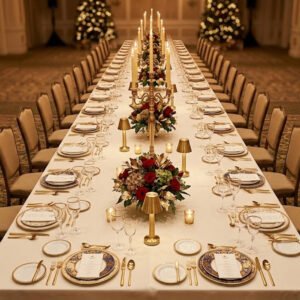
In both programs, a seasonal volume fluctuation also needs to be considered, albeit in different ways. The most hectic weeks in a banquet program are holiday events, wedding season, and corporate conference bookings; these weeks can often have cover counts well above the standard cover count of a fine dining program, which is why this buffer is even more important for banquet material than it is for a fine dining program with a more regular and predictable weekly cover count.
A volume for a fine dining outlet will fluctuate more slowly but is still going to experience dramatic highs and lows around the holidays, special tasting menus, and high-profile private dining bookings. The margin of error for over-ordering for fine dining material is more expensive than the same margin of error is for banquet stock, so the benefit of a more accurate base forecasting is greater for this program than adding to the buffer percentage.
The Better Solution: Two Programs, One Visual Identity
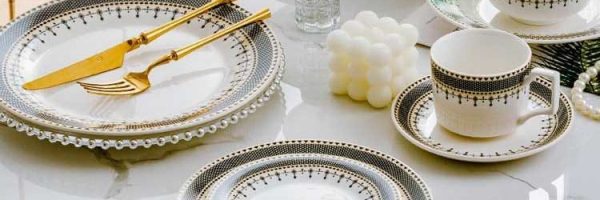
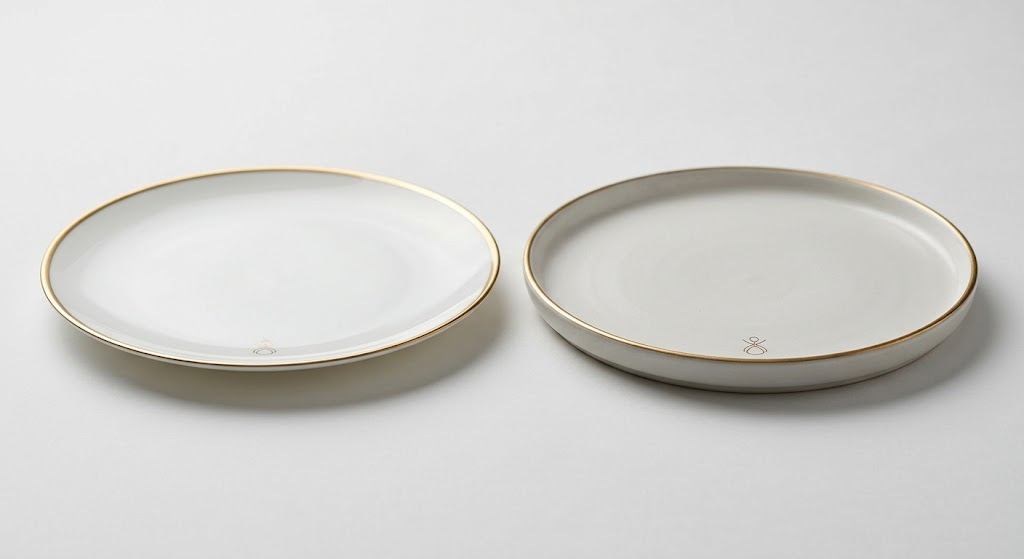
It is not a single entity; it’s two separate material programs with shared glaze colours and logo system and an economic rationale. Although the materials are different, fine dining is on bone china or fine porcelain, and banquets are on vitrified commercial-grade porcelain- the overall visual identity of the property is consistent from room to room, as the brand color palette, logo placement, and rim styling are the same.
How to Manage Two Programs as One Supplier Relationship
That admin benefit which was the first drawcard for one universal spec doesn’t have to go away. Even though both the bone china and vitrified porcelain are materially different, a single manufacturer can run both programs under a single account relationship with them, allowing for glaze color matching across both material lines, and reorders can be consolidated through a single point of contact.
Our hotel tableware procurement checklist covers how to specify this kind of dual-material, single-account arrangement clearly in an RFQ, so a supplier understands you’re requesting coordinated color matching across two distinct product lines rather than one compromise spec. If either program also involves custom branding, our OEM vs ODM guide walks through how to keep logo placement and color consistent across materials sourced through different production processes.
In reality, this translates to getting both product lines to provide glaze colour samples at the same time during the stage of sample approval, instead of sampling each material and finding they don’t match after they are already in production. It also includes coordinating reorder cycles where feasible, although the two programs work on different replacement cycles, to keep the purchase orders, invoicing, and account communication consolidated via one purchase point instead of two separate supplier relationships that share the same property.
Common Mistakes When Running Both Programs
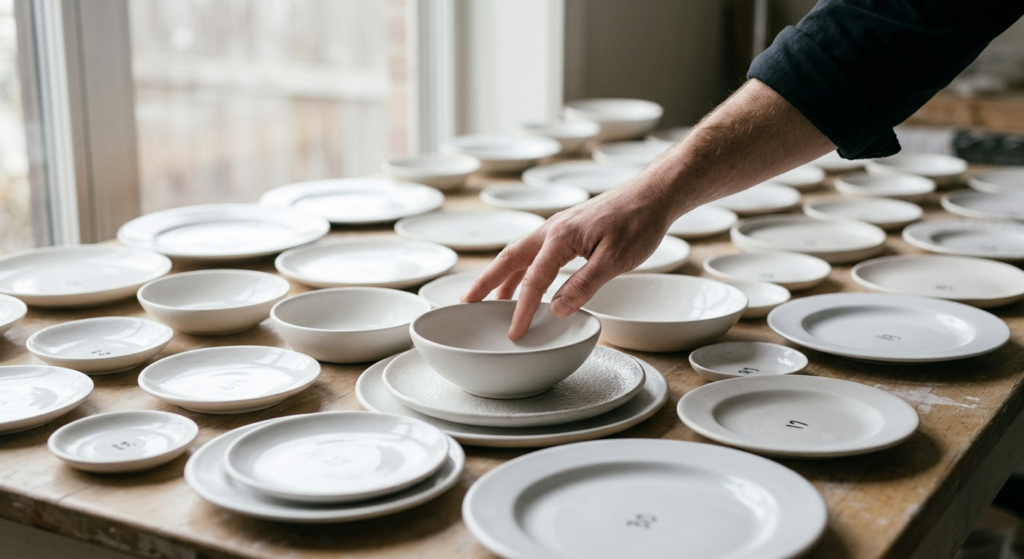
The most frequent error is that this guide started with picking a compromising spec, which is easy to procure but does not meet the program well. The second is coordinating the color and branding loosely, where, say, the color codes for the glaze on the material lines aren’t specified – the banquet plate and the fine dining plate are supposed to appear the same, but visibly aren’t when it comes to light.
The third is that the same buffer percentage is used for both programs without taking into consideration their vastly different cover counts and price per piece. The fourth is using the two programs as completely different supplier relationships when one supplier can provide two types of materials more economically and effectively than two separate suppliers.
How Brett Supports Multi-Program Hotel Tableware
We are in one production relationship for bone china and vitrified commercial porcelain, which allows a hotel with two separate productions, a signature fine dining restaurant and a banquet operation, to coordinate the colour of the glaze, positioning the logo, and when to reorder there, with one supplier instead of managing two different ones. All of our dinnerware carries EC No.1935/2004 certification to SGS and TÜV standards, and we have documentation available of testing for chip resistance and water absorption for dinnerware used in banquets.
Frequently Asked Questions
Can one tableware spec work for both banquet and fine dining service?
Generally no. One compromise spec is too large and too traditional to look presentable in fine dining uses and too flimsy to be used in banquet volume applications.
What is the best material for banquet tableware in particular?
Vitrified commercial-grade porcelain that has been tested to a chip resistance standard such as EN 12875-1 (water absorption of < 0.5 percent) and is designed for high cover counts and fast turnaround.
What is water absorption and why is it important for banquet dinnerware?
Water absorption is the measure of porosity of a fired ceramic article. Less than 0.5 percent means it is truly non-porous and will not crack or stain from the many hot water wash cycles done in the commercial washers.
What to do to maintain the visual continuity between two tableware materials in a hotel?
Outline in the supplier RFQ a common glaze color code and consistent placement of the logo on both material lines, and a fine dining, bone china piece is the same brand as a banquet porcelain piece.
Would the same inventory buffer percentage apply to banquet and fine dining tableware?
The percentage of breakage is about the same, 10-15 percent, but the volume and the dollar impact are very different: banquet’s risk comes from its much higher cover count, while fine dining’s risk comes from its higher cost per piece.
Are banquet tableware and fine dining tableware to be reordered at the same time?
Banquet programs have a high point of attrition (typically 6-12 months) because they are handled more frequently, and fine dining programs may lengthen to 18-24 months because they are handled less often and are managed by trained personnel.
Should hotels have two different suppliers for tableware for banquets and table service?
Not necessarily. One manufacturer that can make both bone china and vitrified porcelain can do so in a way that is usually more effective at coordinating glaze color matching and/or consolidating account management for two unrelated manufacturers.
Conclusion
It seems like a natural choice, and it is, to run tableware for the banquet and fine dining operations under a single universal spec, but it isn’t cost-effective. Fine dinners require bone china or fine porcelain for translucency and presentation value at lower volume, while banquets require vitrified commercial porcelain, which has been tested for chip resistance and low water absorption for heavy use with high volume and high turnover, without incurring too much breakage.
The better way is two material programmes to be co-ordinated, combined under a common glaze colour and logo system, managed by one supplier account instead of two uncoordinated accounts. This retains the visual identity for the property for guests who are moving from one programme to another and allows each programme to have the material properties that it requires.
We provide bone china and vitrified porcelain programmes which are co-ordinated for hotels that operate both fine dining and banquet departments and are supported by SGS, TUV, EC No 1935/2004, FDA, LFGB, ISO 9001, BSCI and Sedex documentation on request. Contact our team for a dual-program specification for your property: ann@chinabrett.com or WhatsApp +86 13535413512.