Brett’s ceramic dinnerware is dishwasher safe. Only bone china with genuine gold or platinum decoration should be washed by hand in warm water. To prevent damage, avoid sudden temperature fluctuations or metal decorations in microwaves and verify the range rating before using the microwave oven or plate warmer.
This page provides information about the use and care of Brett dinnerware in a hotel or restaurant environment. Brett, also known as China Brett and Brett Hotel Supplies, is a hospitality tableware manufacturer with its factory in Fengxi, Chaozhou. Here is the firing temperature for each of the ceramic ranges, dishwasher tips, and practical tips on how to make plates and cups last longer.
See our guide on washing, stains, and storage for a longer walkthrough. This page makes for a quick reference for our own ranges.
Table of Contents
Brett Ceramic Ranges and Firing Temperatures
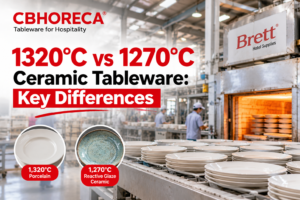
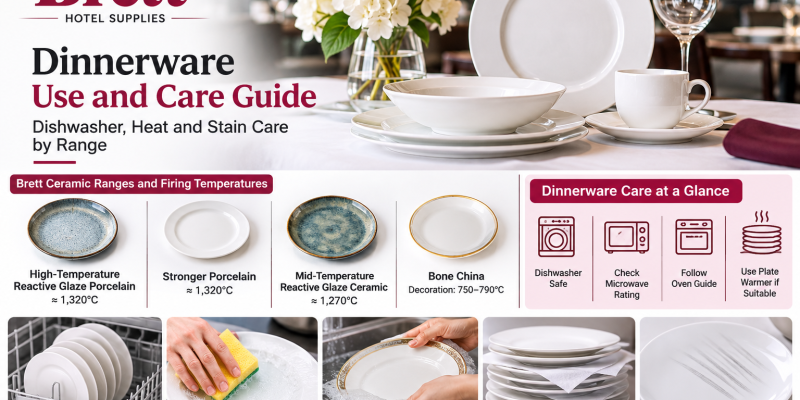
Brett’s ceramic dinnerware is produced in four ranges, each being fired at different temperatures. Below is the table of firing temperatures and a brief description of each.
Range | Firing temperature | What it is |
High-temperature reactive glaze porcelain | Approximately 1,320°C | High-temperature porcelain with reactive glaze colours and gradients |
Alumina-reinforced Stronger Porcelain | Approximately 1,320°C | White porcelain body containing alumina, Brett’s Stronger Porcelain positioning |
Mid-temperature reactive glaze ceramic | Approximately 1,270°C | Mid-temperature ceramic with reactive glaze colours, textures, and effects |
Bone china | Decoration fired at approximately 750 to 790°C | Refined bone china, with decoration applied in a secondary firing. [Body firing temperature: Brett to provide] |
Why does firing temperature matter? A higher firing temperature helps a ceramic body vitrify, which means it becomes dense and less porous. Our guide to vitrified porcelain explains more. But temperature is only one factor, so we judge performance by testing, not by the number alone.
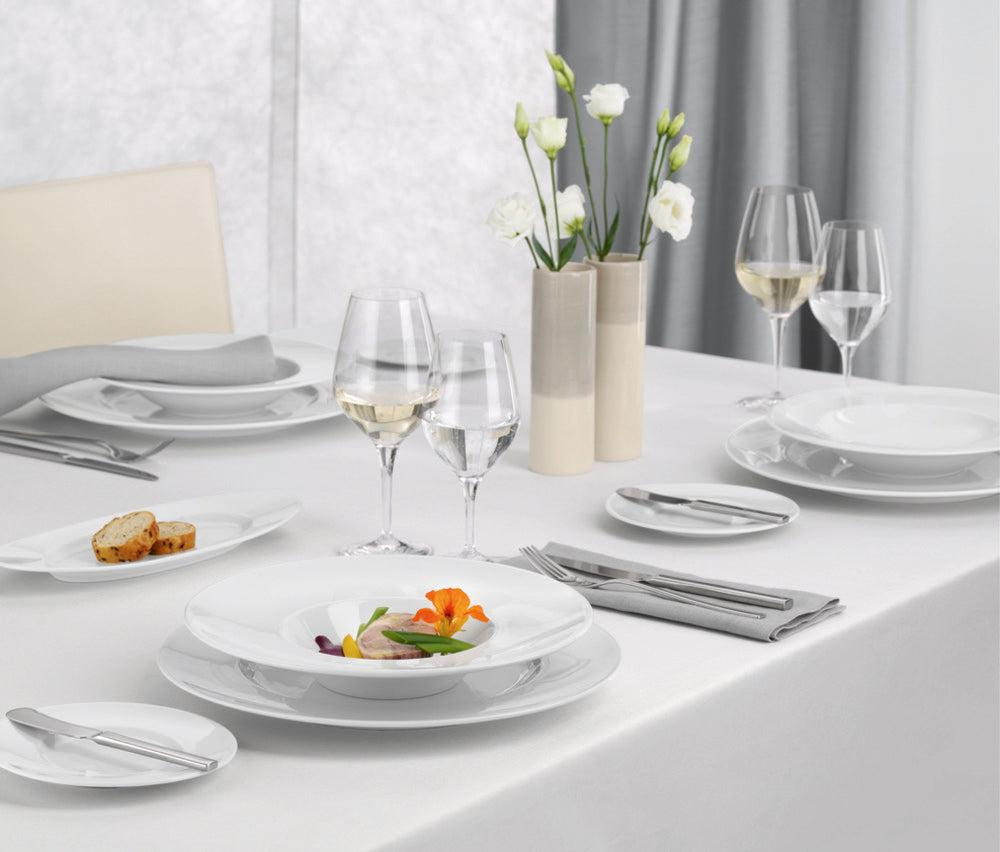
Dinnerware Care at a Glance: Ratings by Range
Use this table as a one-page summary for your kitchen team. Ratings marked for confirmation will be completed as Brett supplies them.
Range | Dishwasher | Microwave | Oven | Plate warmer | Thermal shock |
High-temperature reactive glaze porcelain | Safe | [To confirm] | [To confirm] | [To confirm] | [To confirm] |
Stronger Porcelain | Safe | [To confirm] | [To confirm] | [To confirm] | [To confirm] |
Mid-temperature reactive glaze ceramic | Safe | [To confirm] | [To confirm] | [To confirm] | [To confirm] |
Bone china | Safe, except with real gold or platinum: hand wash recommended | [To confirm] | [To confirm] | [To confirm] | [To confirm] |
Ratings depend on the exact product and decoration. If you need a rating that isn’t listed, ask our team, and we’ll confirm it in writing.
Dishwasher Care for Brett Ceramic Dinnerware
All Brett ceramic ranges are dishwasher safe. These habits help the finish last longer in a commercial machine.
Habit | Why it helps |
Scrape and rinse food off soon after service | Dried sauces and tea stains are harder to remove |
Use a suitable commercial detergent at the recommended dose | Too much can dull the glaze over time |
Use rinse aid in the final rinse | Reduces spotting and helps pieces dry clear |
Load racks evenly and don’t overfill them | Pieces that knock together chip at the rim |
Check pieces for chips and wear after washing | Damaged pieces should leave service |
Can Bone China With Gold or Platinum Go in the Dishwasher?
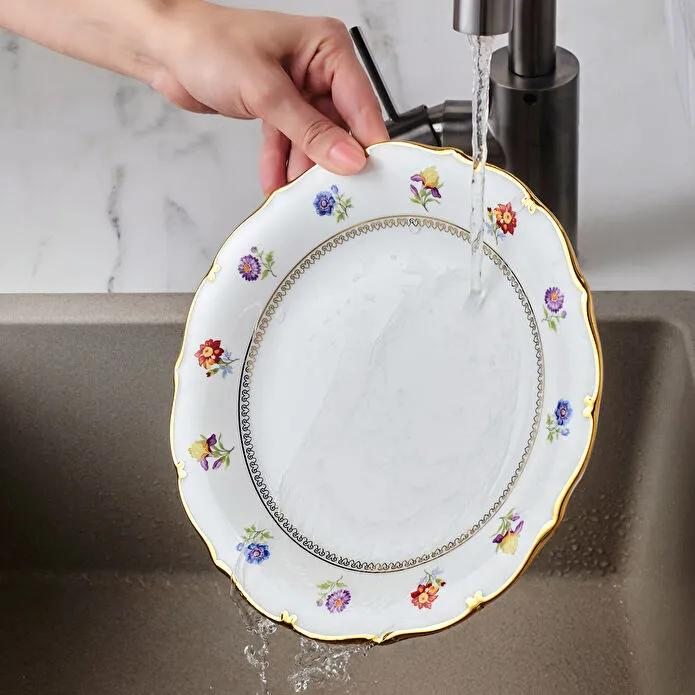
We suggest hand washing bone china in warm water with real gold or platinum decoration. This is a care recommendation to extend the life of the decoration, not a limit of the product.
The decoration is applied on top of the glaze and fired separately, at approximately 750 to 790°C. Use gentle hand washing with a soft cloth and mild detergent to protect it. Avoid rough brushes, steel wool, and strong chemicals.
Metallic decoration also isn’t microwave-safe unless it is marked as such. Our guide on gold-rimmed plates and microwaves explains why. See our comparison of bone china vs porcelain for the material differences.
Heat, Oven, Microwave and Plate Warmer Guidance
Ceramics are good at handling consistent heat. They’re upset by some rapid temperature change, or thermal shock.
Do | Avoid |
Let hot pieces cool before washing | Rinsing a hot plate under cold water |
Preheat ovens before putting rated pieces in | Putting cold plates into a hot oven |
Warm plates gradually in a plate warmer | Overloading a warmer so plates heat unevenly |
Remove chipped or cracked pieces from service | Using damaged pieces near any heat source |
Only use a piece in an oven or plate warmer if its rating says it is suitable.
How to Remove Grey Cutlery Marks and Tea Stains
Most care issues with white dinnerware are the grey stains from utensils and the brown stains from tea and coffee. Both appear to be the same stain, but require different care.
What the marks are is indicated in the table below and a mild approach to attempt is indicated, before trying more forcefully.
Mark | What to try |
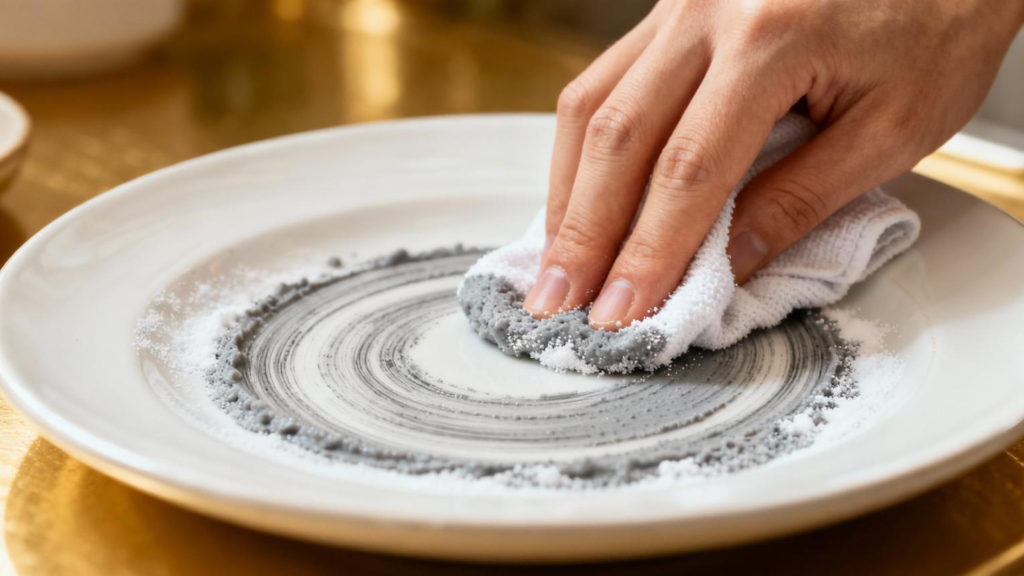
Grey or dark streaks from cutlery | These are usually metal marks on the glaze, not scratches. Try a non-abrasive cleaner and a soft cloth, then rinse |
Tea and coffee stains | Soak in warm water with detergent, then wash normally. Rinse soon after service to prevent staining |
Cloudy film | Often hard water or detergent residue. Check water treatment, detergent dose, and rinse aid |
Do not use steel wool and scouring pads as they can scratch the glaze. Test new cleaner on a small area first and follow the cleaner’s instructions. Worn glaze may result in a mark remaining after cleaning.
Reactive Glaze Dinnerware Care and Natural Variation
Each piece of our reactive glaze will have a slight difference in colour and surface variations due to its firing qualities. This is part of the finish. Care is the same as other ceramic works. Our reactive glaze dinnerware guide covers design, safety, and care.
Storage, Stacking, and Handling
Most of the chips occur during the storage and handling of dinnerware as much as when they’re being washed. There are a few simple habits between services to protect rims and decoration.
Each practice is listed below with its reasons for being listed.
Practice | Why it helps |
Stack in sensible piles, not as high as the shelf allows | Tall stacks put pressure on the bottom pieces |
Use protective pads between decorated pieces | Stops decoration rubbing against itself |
Store cups upright with handles clear | Prevents chipped rims and broken handles |
Don’t slide plates against each other | Rim-to-rim contact is a common cause of chips |
Food Safety Documents
Product-specific test reports and compliance documents are available on request. [Brett to confirm which reports are available for each range, including lead and cadmium release for each body and decoration type.] Our hotel tableware sample approval guide explains how to test samples before you order.
Reordering and Replacements
If you need replacement pieces, send us your product code, a photo, and the quantity you need, and we’ll advise on options.
Frequently Asked Questions
Are Brett ceramic ranges dishwasher safe?
Yes, all Brett Ceramic Ranges are dishwasher safe. This is for bone china only, decorated with real gold or platinum, where washing by hand in warm water is recommended for longer-lasting decorations.
Is gold-rimmed bone china dishwasher safe?
For any bone china that is decorated with true gold or platinum, we advise hand washing in warm water to ensure the decoration will last longer. Other ceramic ranges by the brand, Brett, are dishwasher safe. If you’re not sure, verify the rating for your particular item.
What temperature are Brett ranges fired at?
Our high-temperature reactive glaze porcelain and Stronger Porcelain are fired at about 1320°C, our mid-temperature reactive glaze ceramic at about 1270°C, and our Bone china decoration is fired at about 750 – 790°C.
Are Brett plates microwave safe?
Check the rating for your exact range first. Metallic decoration, such as gold or platinum, isn’t microwave safe unless it is marked as such.
Can I use Brett plates in the oven or a plate warmer?
If the rating for your exact range states so, then do so and do not change the temperature suddenly. [Brett to confirm oven and plate warmer ratings.]
What is the best way to remove grey marks from plates?
Metal marks, such as from cutlery, typically appear as grey streaks. Use a non-abrasive cleaner and a soft cloth to clean and rinse. Don’t use scourer pads that will cause scratches in the glaze.
What is the best way to maintain reactive glaze dinnerware?
Treat it as you would any other Brett ceramic; use a dishwasher or hand wash it, refrain from using steel wool or rapid temperature swings, and read heat use ratings. Color and surface differences from piece to piece are part of the finish.
What are the test reports for my range?
Test reports and compliance documents are available for products upon request. Call our team to let us know which range you are interested in, and we will let you know what reports are available.
Need Help With Care or Ratings?
Our hospitality ranges are manufactured in our own factory. We can detail the manufacturing process, the firing process, and the testing process of each hospitality range. For care advice, ratings, or replacing parts, please contact our team: ann@chinabrett.com or WhatsApp +86 13535413512.