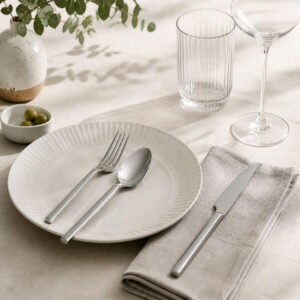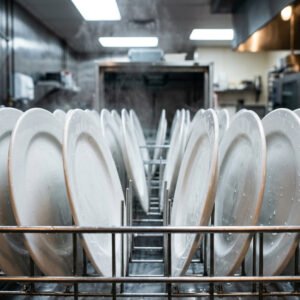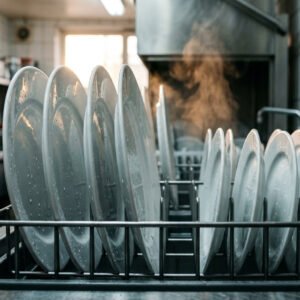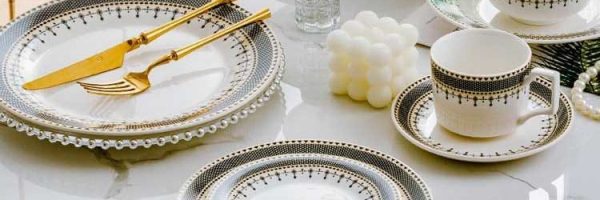
Check the edges and rims to see how well they resist chips. Examine the glaze across all of the samples for evenness. Run your business dishwasher a couple of loads before taking the dishes. Lastly, try them out in actual service with kitchen and floor personnel.
All buying guides exhort you to “order in bulk, get a sample first. They won’t instruct you on what to do with that sample once it’s on top of your pass. You cannot see how a plate will perform by just holding it up to the light for 30 seconds on the 6th day of the nightly service, 4 plates in the middle of a full Friday turn.
This is not a procurement spreadsheet guide; it’s a kitchen guide. It is a practical test process that can be carried out by a chef, kitchen manager, or purchasing team on a sample before placing a complete order for restaurant tableware.

Table of Contents
Why a Photo or Spec Sheet Never Tells the Whole Story
A spec sheet provides you with the dimensions, material, and supplier’s claim of durability. None of that says anything about how it feels in a server’s hand when the plate is in motion, how it sounds as it lands on a tray, or whether the glaze holds its color after fifty trips through your dishwasher instead of the manufacturer’s test lab. Suppliers conduct tests in an ideal, controlled facility and work with trained personnel who are very careful with each item. Your kitchen is not a controlled environment, and plates need to survive real restaurant service, not lab conditions.
This is precisely why sampling exists in the first place and why most buyers don’t get enough of it in the kitchen. A single sample gathering in a drawer in an office for a week reveals not much of value.
Test 1: Stacking Weight and Balance
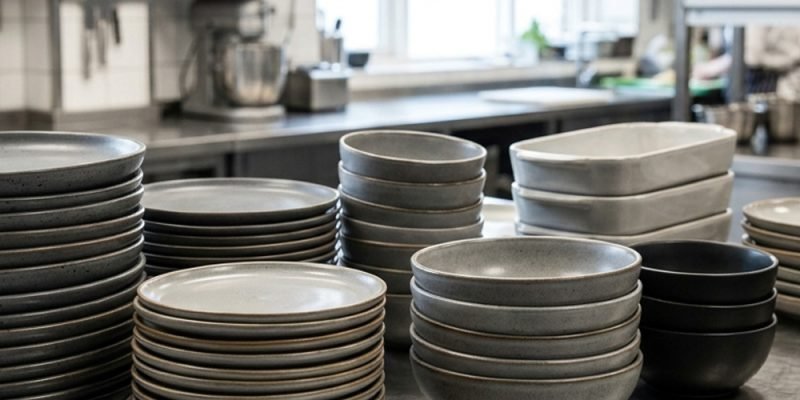
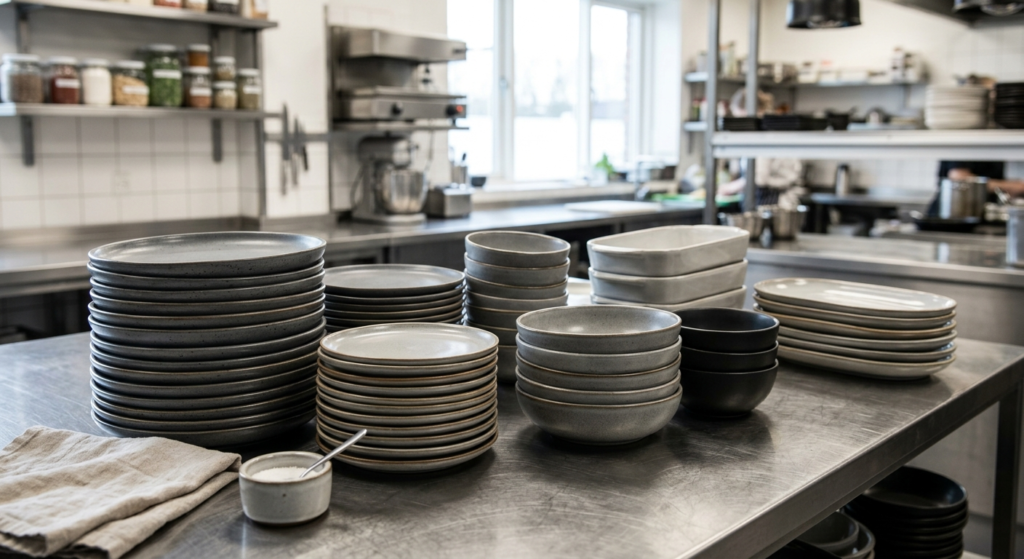
Place the sample plates in the stack as your servers do, not as neatly stacked on a shelf, but as quickly and somewhat hastily as they do when rushed. Look for wobble at four and six plates up, and see if the rim shape allows plates to “lock in” properly or if they “slip” under weight.
If a plate is stable at 2 and wobbles at 6, it is likely to chip in your dish pit in the first month. Weight is a factor here as well. If the plate is heavier, it has to bear more weight than if it’s lighter, and all that weight on one single point is the usual and unobtrusive reason for hairline cracks which don’t appear for several weeks until the next wash cycle.
Test 2: Edge and Rim Chip Resistance
Rims are impacted the most by other plates, trays, and bus tub edges. Perform a basic, repeatable drop test: Keep the plate in a consistent low position, approximately the height it would be dropped from by a server’s hand, and have the rim drop on a hard surface at a few different angles.
You don’t want to destroy it; you want to discover the weakness before a thousand plates discover it when serving you. To ensure that any weakness in the sample you consider is not a fluke, perform the same test on several pieces; a single test on one piece will be missed if the weakness is more prevalent in the other pieces.
Test 3: Glaze Consistency Across the Sample Set
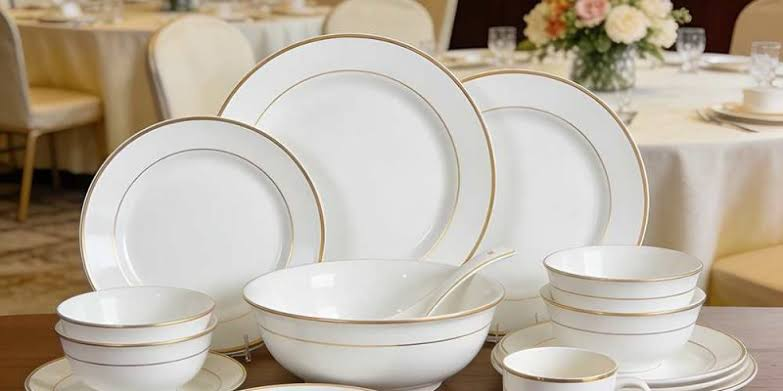
Don’t just inspect one plate; inspect the whole sample batch side by side. Line them up and look for color drift, uneven sheen, or glaze pooling at the rim. A single sample piece can look perfect while the production run behind it varies more than you’d accept.
If they only sent one, ask for 4-6 so you can get a feel for the batch consistency before you order the lot in bulk. Our commercial restaurant dinnerware buyer’s guide will discuss how batch color drift can occur over a broad dinnerware product line, and just how important that becomes when it’s several orders after several orders with a long-term dinnerware supplier.
Test 4: Real Dishwasher Cycles, Not a Single Wash
The single wash provides very little information. Use your own commercial dishwasher, your own dishware, your own dish detergent, and your own water temperature, and run the sample through the dishwasher for at least 25 to 30 cycles a week or two of use, not a laboratory setting.
Pay attention to any dulling, clouding, or softening of a decorated rim or logo. When testing a piece decorated with printing methods, be sure to ask the supplier if it is under- or on-glaze printing because on-glaze printing can lose its effect after a few hundred cycles of commercial washing, whereas underglaze printing is fired under the glaze and lasts for a thousand cycles or more.
Test 5: Weight and Balance in a Server's Hand
Use real floor staff to hold and carry the sample in the way they will during service, either in a stack or single-handed, or carrying food. Anything that fits on a spec sheet could feel slightly out of balance or heavier for a full 6 hours of work.
This is one test that most buyers don’t do, and it may be the one that shows a problem first. On a single plate, a few grams more or less is not such a big deal – but on an entire shift with multiple plates, it also adds up to a real workload and risk of dropping.
Test 6: Heat and Cold Tolerance for Your Actual Service Style
If you are using plate warmers, or if, say, the same plate is moved from a hot pass to a cold walk-in for a banquet, try the set-up with the sample. Not all plates can handle the entire swing your kitchen has on them, and it’s something that is not always mentioned unless you ask so directly.
This is not something to be taken for granted because the piece is made from ceramic, as it can vary significantly from one material to another and even from different glaze types within the same material.
Test 7: A Real Service Simulation, Not a Quiet Inspection
The most helpful test is the most basic one: take the sample run through an actual service, plated, carried, bussed, washed, and reused for at least a couple of shifts! Have your group discuss what they observed. Kitchen and floor staff will also detect awkward stacking, handling quirks and balance issues that no desk inspection will ever be able to find, as they’ll be working with the piece daily.
However, our best restaurant dinnerware material guide includes lots more detail about matching material choice to the service style before sampling, so this is the final test because it’s a piece that already had a good chance of fitting the bill.
What to Do With What You Find
If the sample passes, confirm with your supplier that the production run will be pulled from the same process as the sample, not a hand-finished one-off. Hand-finished pre-production samples can look and perform better than what a production line consistently outputs at volume, so a passing sample isn’t automatically a guarantee for the full order.
Don’t be satisfied with the problem being only on the line; carefully ask if there is a specification-level problem, a thicker rim, a different glaze, or a heavier gauge before pulling out an otherwise good supplier relationship. The majority of durability problems come from one thing that can be fixed, not a problem in the manufacturing itself.
Common Testing Mistakes Restaurants Make
The most frequently made error is to test one item in an order and conclude that the order is all alike. The second is not doing a dishwasher test at all, and taking the supplier’s word for it that the product is durable when that isn’t actually the case for you.
The third one certainly is not placing the sample in the hands of a server during a real service – that’s where the best information is available. The fourth is to take the test as a routine item to finish off quickly instead of the one step that can avoid a bad bulk order when selecting restaurant tableware. When sampling is rushed, it is almost always more time-consuming later on than it is time-saving in the beginning.
Why Choose Brett for Your Restaurant Tableware
Since 1998, we have provided tableware for hotels and restaurants in more than 80 countries, and all of the quotations given are supported by a real, testable sample of our tableware and not by a picture or a spec sheet alone. We can develop a testing plan with your kitchen and purchasing teams that aligns with your kitchen style and service, before you invest in volume.
Our hotel tableware procurement checklist covers what to specify before you even reach the sampling stage, and our restaurant flatware buying guide applies this same sample-testing approach to cutlery, not just dinnerware. We supply commercial restaurant tableware backed by FDA, LFGB, ISO 9001, BSCI, and Sedex documentation on request. Reach our team at ann@chinabrett.com or WhatsApp +86 13535413512 to talk through sample testing for your next order.
Frequently Asked Questions
What is the number of sample pieces I need before placing a bulk order on Tableware?
Ask for at least 4 to 6 pieces instead of just one, so you can see whether the glaze or color varies from piece to piece rather than just within a single piece.
What is the number of cycles for testing a sample of tableware for the dishwasher?
Use your own dishwasher and detergent and run for 25 to 30 real cycles, not just a single cycle or the results of the laboratory tests.
Should kitchen staff be involved in testing the tableware?
Yes. Balance, stacking, and handling problems will be identified by floor and kitchen staff in actual service that will not be detected by a desk inspection.
What is probably the most common error that restaurants make when testing tableware samples?
Does underglaze or on-glaze decoration matter for durability testing? Yes. Underglaze decoration is fired beneath the glaze and holds up for a thousand cycles or more, because it’s protected underneath rather than exposed on the surface. On-glaze decoration sits on top of the glaze and commonly fades within a few hundred cycles of commercial washing.
What should I do if a tableware sample fails the tests?
Before ruling out the entire line of products because the problem cannot be solved at the product level, consult your supplier to see if the problem can be addressed at the product specification level, such as using a thicker rim, different glaze, etc.
What is the total time that it might take to test before a bulk order?
To run all of the above tests, allow for at least 2 to 3 weeks in advance. One of the more common ways that this window is rushed is when it’s not until the full order is in service that issues are missed.
Conclusion
Testing before you buy isn’t a formality; it’s the one step standing between a smooth bulk order and a room full of tableware that fails exactly where your service actually stresses it. A sample that looks fine sitting still on a desk can still wobble under a real stack, chip on a real bus tub edge, or fade under your real dishwasher, and the only way to know is to test it.
Run the full protocol- stacking, chip resistance, glaze consistency, dishwasher cycles, hand feel, temperature tolerance, and a real service simulation- before you commit to volume. It costs you a few days and a handful of sample pieces. Skipping it costs far more once a full order is already in service.
Reach our team at cbhoreca or WhatsApp +86 13535413512 to talk through sample testing for your next order.