
You sprinkle the final garnish onto your signature dish, and it heads to the table in perfect form, looking like a delicacy. The guest leans in, picks up the fork, and notices one tine is slightly bent, and suddenly, he’s questioning the entire experience.
The thing about flatware, unlike tableware or decor, is that it’s not visibly dramatic, but anything off and it’s enough to be noted. Even before the guest takes the first bite, the ambience and service are perceived as low in their minds.
Behind the scenes, another situation is brewing. The procurement manager is struggling with another problem: the flatware loss. The teaspoons are shrinking in number, and during peak service, by the time of dessert, there isn’t a single spoon left to send out.
To avoid these recurring concerns, we need a mindful procurement strategy to buy quality restaurant supply flatware. Being the only tabletop item the guests physically hold and literally put in their mouths, it has more influence than the dinner plates or glassware.
However, unfortunately, restaurant flatware is often treated as an afterthought.
Stainless Steel Flatware Grades: What the Numbers Actually Mean
Most dinnerware procurement teams are misled by the stainless steel flatware grades. There’s the famous 18/10 and 18/8 debate, which is usually perceived as a quality gap. However, in reality, the numbers indicate the content, not the quality.
The first number, 18, refers to the chromium content. Chromium forms an invisible protective layer on the flatware that keeps it rust-free and lasting. In fact, most commercial flatware starts with a chromium content of 18%.
The next number after the slash is nickel. Nickel enhances the shine and improves the corrosion resistance of the spoons and forks.
18/10 vs 18/8
An 18/10 grade flatware contains 10% nickel, and 18/8, 8%. However, in practice, both qualities are made from the same grade 304 stainless steel. Meaning, they both meet the global standard for premium commercial flatware.
As for performance, the difference between the two is hardly noticeable. Both grades provide strong corrosion resistance, durability, and excellent polish retention. However, 18/10 has a slightly higher margin of shine and resistance under demanding conditions.
18/10 also comes with a more efficient price tag and serves best in concepts where the menus lean towards acidic ingredients like citrus, wine, or vinegar.
18/0
18/0 stainless steel has no added nickel in its composition (hence the 0 here) and is manufactured from Grade 430 stainless steel. That makes it comparatively more affordable and suited for high-volume operations. However, flatware without nickel may get dull or develop water spots over time, especially with extensive dishwashing.
13/0
You’ll rarely see any flatware sets with a 13/0 grading. It’s more specific to knife blades. With low chromium and zero nickel content, the material is harder, giving the knife blades a sharper edge.
However, it comes at a cost. Since there’s no added nickel, the blades are susceptible to rusting. However, proper drying and maintenance can enhance the life and prevent rusting. In commercial settings, many knives combine a 13/0 blade with stainless steel handles of 18/0 grade.
The Verdict
Restaurant supply flatware selection isn’t about going with the highest number or grade. It’s about aligning the material performance with your operational needs. For fine dining or premium concepts and hotels, 18/8 and 18/10 grades work best as they have a lasting polish and lead to a premium perception of the brand.
For casual dining and in high turnover venues, 18/0 is the norm for its cost efficiency. However, many concepts go with 18/8 as the sweet spot between durability, looks, and price. Learn more about these grades in our guide: Stainless Steel Flatware Grades Explained: 18/10 vs 18/0
Flatware Weight and Construction: Why Thickness Matters More Than You’d Expect
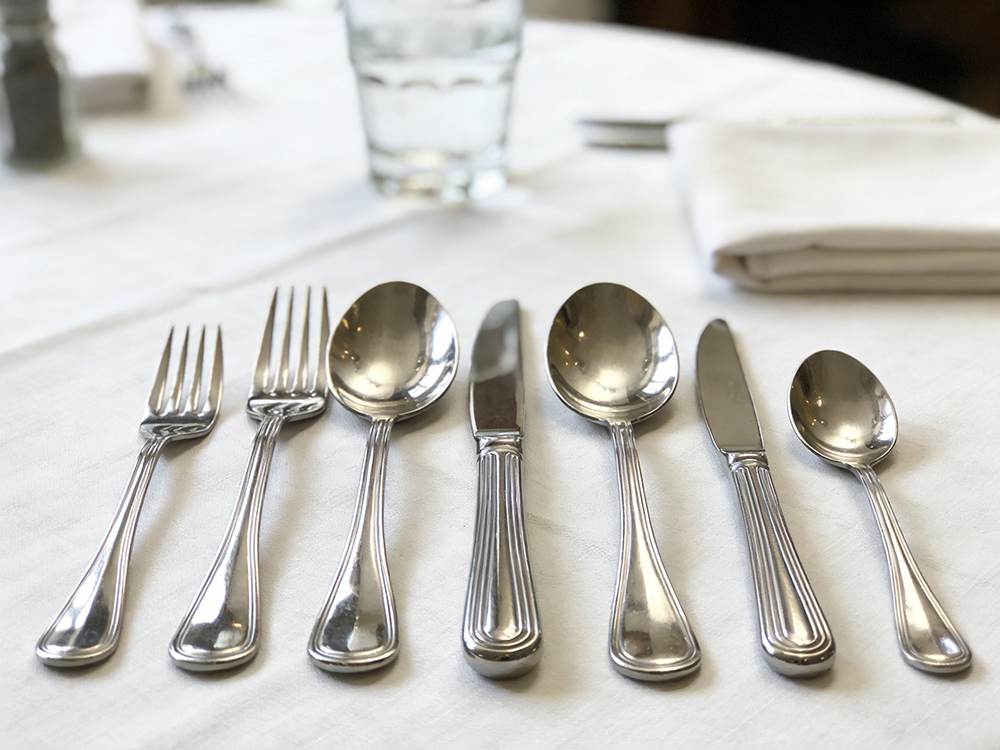
In flatware, weight is a combination of three elements: gauge, mass, and the weight distribution.
- Gauge: It is the metal thickness usually measured in millimeters.
- Mass: Expressed in grams, it is the weight of each flatware piece.
- Weight Distribution: It determines the way the mass is balanced between the handle, neck, and head of the flatware.
You can specify the grade, say 18/10, finish, design, the handles with the most ergonomic grip, and patterns for your flatware supplies, but still end up looking for or replacing forks within months.
This isn’t because your choice of material was wrong, but rather the build wasn’t right for your concept. Most suppliers would discuss with you the grade, but won’t tell you it’s the weight that directly affects the performance of the flatware.
Forged vs. Stamped Flatware
Before we get to the weight categories, it’s important to learn how flatware is commercially produced. There are two ways:
- Forged Flatware: The flatware is formed from a single, thick piece of stainless steel. It’s shaped under pressure but not pressed or cut. It is denser and has a patterned design that runs all the way around the handle.
- Stamped Flatware: Stamped flatware is cut from flat sheets and pressed to shape. It’s easier and quicker to produce, and hence more cost-effective. Heavy-gauge stamped flatware pieces can generally last for years without bending or getting dull.
Commercial Weight Categories
There are four established commercial flatware categories based on weight.
Forged
This is the premium tier category and is immediately felt by diners given its weight and presence. Mostly common in fine dining concepts, the forged flatware leads to an elevated perception of the brand well before the food lands on the table.
These pieces also serve well under extensive serving cycles and dishwashing and have high resistance to high heat, chemical exposure, and handling.
Extra-Heavy Weight
This is the stamped category, but it comes with a thick gauge, which makes it heavy in the hand. It balances the premium feel without the heavy price and is often the preferred choice in upscale casual dining concepts and hotels.
Heavy Weight
Reliable, thick, and resistant to reshaping and bending, heavyweight flatware feels high-quality but comes with a more manageable price point.
Medium Weight
For dining restaurants and hotels with a high turnover, where cost control is a priority, medium-weight flatware works best. With a lighter gauge, it is designed for large-scale operations where flatware disappearance is common.
What does it mean for your guests?
Most diners wouldn’t know (or want to know) the technicalities of flatware. They don’t care about the content or grade, but they will notice the weight and performance of the flatware. Expect them to view a heavy 18/0 fork as feeling premium in their hand compared to a medium-weight 18/10 fork.
In dining, it’s often the gauge, not grade, that counts. Hence, you need an ideal balance of the grade, weight, and construction for making the right procurement decision.
Review our guide: Commercial Flatware Selection Guide: Materials, Weights, and Durability for Restaurants to learn more.
Essential Flatware Pieces Your Restaurant Needs
When you open a supplier catalog, you see multiple pages full of options. There are demitasse spoons, fish forks, pastry servers, and iced teaspoons in up to three lengths! In the books, they look quite impressive, while in reality, they are completely unnecessary for your restaurant.
The Core Set
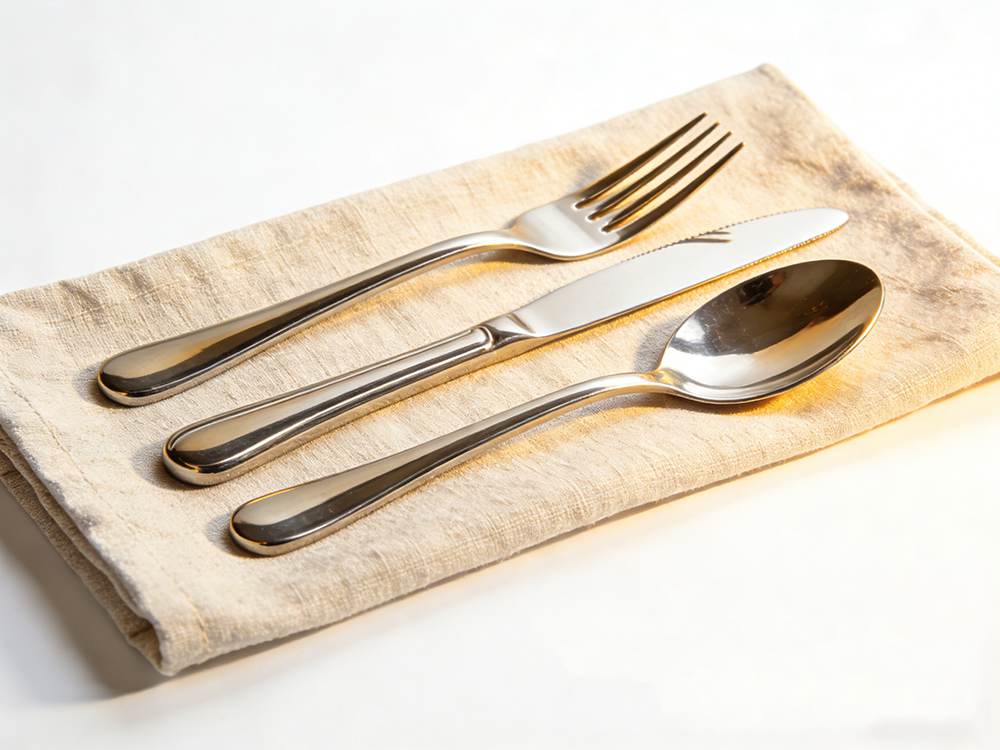
If you’re building your flatware from scratch, the core set is the foundation you’ll need. It must include dinner forks, knives, spoons, teaspoons, and salad/dessert forks. This five-piece setup can cover a majority of Western-style menu, including starters, main servings, desserts, and beverages.
It may feel tempting to buy the extra pieces, but usually, they’ll be sitting in inventory, tying up your capital. While the core restaurant supply flatware sets keep disappearing during service cycles.
Sizing
Flatware comes in three sizes: luncheon size, American size, and continental size. That’s small, standard, and large sizes in order.
Most restaurants opt for the standard size or place-size flatware. It’s easy to hold, goes well with the standard-sized dinner plates, and can work in casual to premium service.
However, for fine dining, European-style table settings, larger continental-sized pieces may be required.
Steak Knives
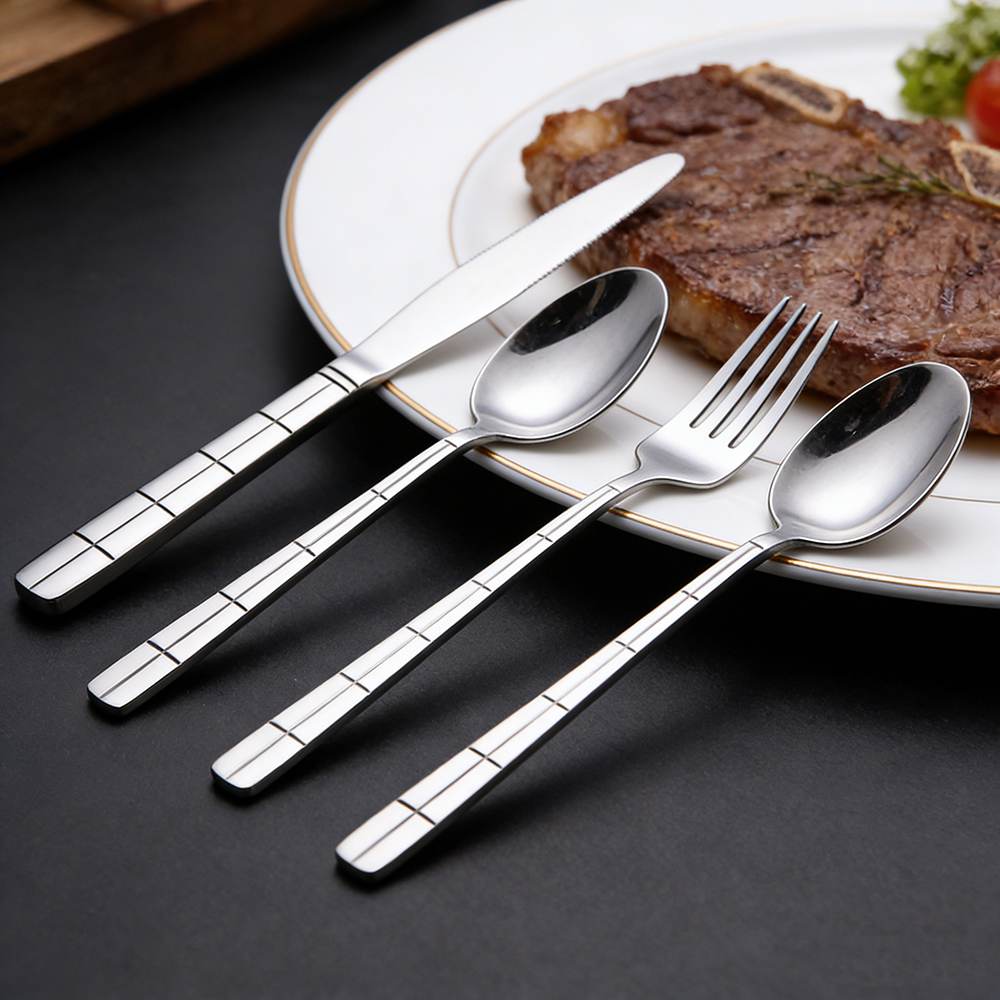
When it comes to steak knives, there are two clear options: serrated vs non-serrated blades. The serrated blades are lasting and stay sharp for longer, hence ideal for a high-volume service. The non-serrated blades with a straight edge have cleaner cuts and feel more premium.
If steak is a core part of your menu, do not underestimate the flatware. A dull or lightweight knife can undermine the entire dish, no matter how well-cooked. Brett’s Sharp Serrated Steak Knife and Fork Set can be a good option for the dish.
Specialty Pieces
You don’t need a complete set of specialty pieces or add-ons. These should only be considered based on what you serve. For instance, buy soup spoons if you serve Asian concepts or broths.
Butter Spreaders only for bakeries, breakfast menus, and oyster forks for seafood-specific dishes.
How Much Flatware to Order for Your Restaurant
Flatware cycles faster than other tabletop items.
The basic rule of thumb is to order 2-3 pieces of each core restaurant supply flatware per seat. This way, if one set is with the guest, one is in the dishwasher, still another one could be making its way back to the kitchen, in reserve, or missing in its entirety.
So, say for a 100-seat restaurant, you’ll need about 200-300 pieces of dinner forks and spoons as the core inventory. However, for other items such as soup spoons and dessert forks, order according to your menu.
Apart from the basic seat count, factor in turnover as well. In high-volume concepts with over 300 covers a day, go for the minimum 3-times per seat quantity. For moderate or low volume, 2-times per seat cover can work.
Since flatware loss is much higher than dinnerware breakage, it’s safe to keep an inventory of 15-20% above your calculated quantity. It’ll cover theft, accidental disposal, and time damage.
The Hidden Cost of Flatware Loss and Theft Nobody Budgets For
As per The Guardian, five million diners admit to stealing items from restaurants. That’s 1-in-10 diners who agree to taking ashtrays, spoons, and even whole chairs.
The shortage also occurs due to misplacements and accidental disposal, especially during busy service periods.
Small teaspoons, knives, and forks often get wrapped up in napkins and are tossed away without a second look. It can happen during rush hours, closing, or even in well-run operations.
These minor losses become real operating costs over time. However, there are ways to manage the losses. Using clear trash bags, for instance, makes it easy to see flatware, so it’s less likely to be tossed away.
Many concepts also invest in magnetic retrievers, which can catch the magnetic 18/0 flatware before it’s disposed of.
Another way to control flatware loss is to implement a nightly count. It doesn’t have to be a full inventory audit, but just a quick recount to identify patterns or variations.
Things to Know Before You Order Restaurant Flatware in Bulk
Ordering flatware may sound easy compared to dinnerware. But procurement of wholesale flatware is just as critical a decision as ordering plates and bowls.
Here’s what you need to do to buy flatware that performs and is consistent with your concept:
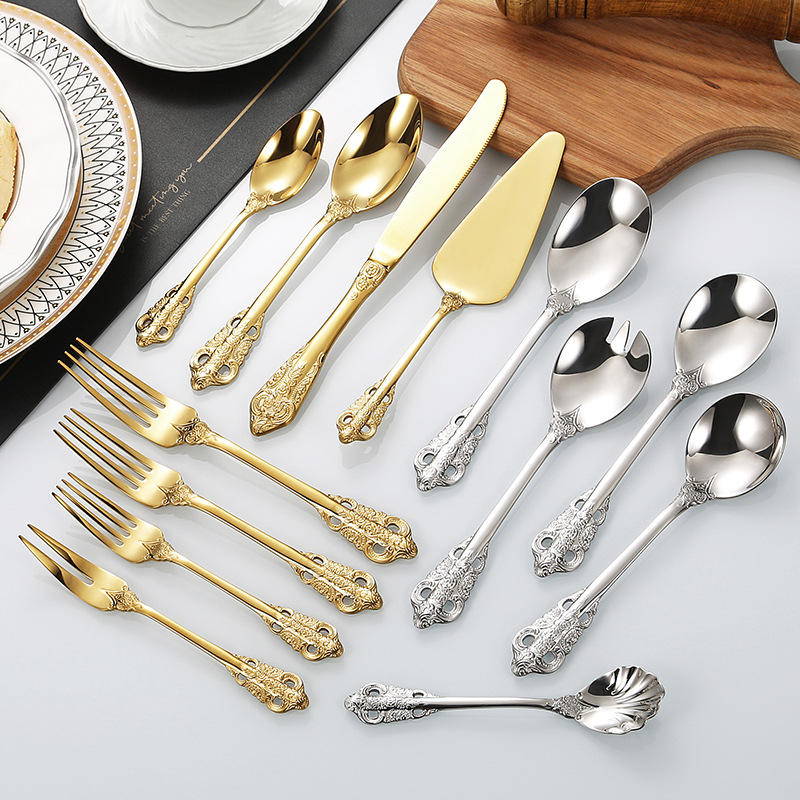
- Coordinate Flatware with Dinnerware: Since the flatware is served along with the tableware, make sure they match. With polished porcelain, opt for the mirror-polished flatware. Such as Brett’s Mirror-Polished Stainless Steel Western Steak Knife Set.
- For rustic style stoneware, Brett’s Custom Acrylic Bamboo 304 Stainless Steel Cutlery Setpairs well with the natural textures.
- Test the Flatware: Before placing the final order, request samples and run them through your dishwasher and service cycle.
- Secure Reordering: Check with the supplier if the same design pattern will be available for reorders years later. Since flatware is highly susceptible to loss, ask if you can reorder specific pieces only instead of ordering bulk every time.
- Diligence:Also, verify food-grade stainless steel compliance, corrosion resistance, and consistent finishing across batches.
Conclusion
You won’t notice your flatware is failing, whether in numbers or performance, until you’re stuck knees deep in mid-service on a packed night. When a guest calls for a server with a complaint that the knife doesn’t work or asks for a fork replacement, that’s when you notice the shortage.
The right grading, weight, and inventory planning can prevent problems before they start. Procure quality flatware, specified and designed to align with your concept, budget, and operations from Brett.
FAQs
1. What is the best stainless steel grade for restaurant flatware?
The 18/8 stainless steel grade offers the best of both worlds in terms of durability, corrosion resistance, and value. With a Grade 304 base (just as 18/10), it comes at a more affordable cost, too.
However, for fine dining or high-humidity environments, 18/10 can be a better choice. Best reserve 18/0 for high-loss operations where cost matters more than shine or durability.
2. How much flatware does a restaurant need per seat?
It is best to keep a buffer of 2-3 pieces of each core flatware item per seat. You can add a cover of around 15-20% for losses, theft, damage, and accidental disposal.
3. What is the difference between 18/10 and 18/8 flatware?
Both 18/10 and 18/8 are made from Grade 304 stainless steel. However, the difference is the nickel content. 18/10 contains 10% nickel, while 18/8 has 8%. Although performance differences are minimal, flatware with 18/10 grading can retain a longer shine.