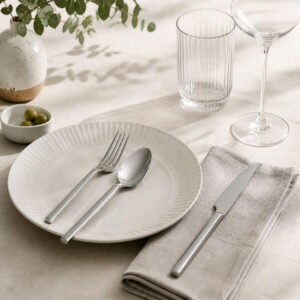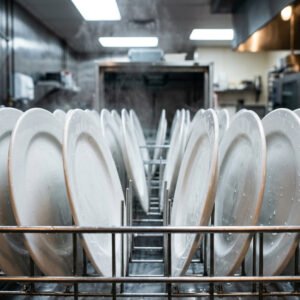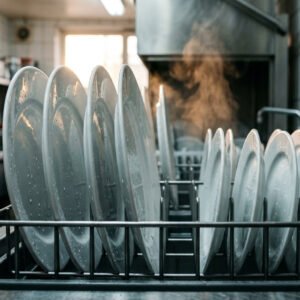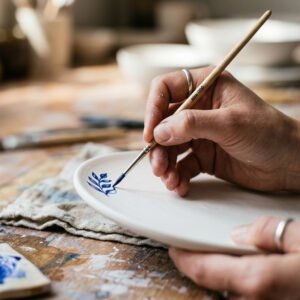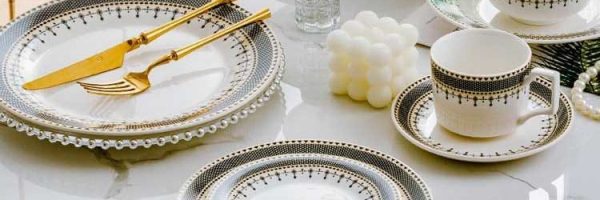
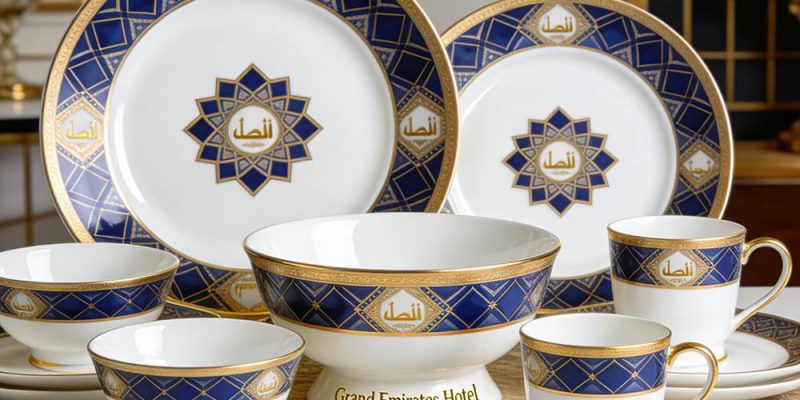
Few things in a hotel are used (and judged) as often as dinnerware. Dinner service in the UAE isn’t just about food; it’s a complete performance package. The dinnerware has to survive high-volume buffets, dishwashing cycles, and outdoor service in extreme heat without compromising presentation.
That makes procurement of hotel dinnerware in the UAE a frontline operational decision.
The UAE hospitality sector is scaling fast, with over 1,200 hotels and 216,000 rooms already in operation as per the UAE Ministry of Economy and Industry reports. In 2025, revenues hit AED 89 billion (USD 24.2 billion), and today, there are over 26,000 rooms in the pipeline, where procurement teams are working in a constant cycle of new openings and F&B concept launches.
What that means is, there’s scope, growth, and zero room for error. Whether you are serving guests in a luxury branch in Dubai Marina or hosting a small business lunch in Sharjah, the entire dining experience, including the dinnerware, has to perform consistently, service after service.
In this guide, we’ll cover how to choose the right hotel dinnerware in the UAE and how to bring durability, compliance, logistics, and brand alignment together so it shows up in your service cost and guest reviews.
Choosing Materials for UAE Hotel Conditions
During the summer, temperatures in coastal cities like Dubai and Abu Dhabi climb up to 45°C and occasionally around 49-50°C. In a high-volume service, with around 300–500 breakfast covers, the material choice isn’t about the looks. It becomes an operational decision.
Consider the frequent dishwashing cycles, cleaning detergents, and fast clearing, and the weaker materials will start failing within just the first few months.
So which materials stand up to the UAE heat, humidity, and high-volume hotel service?
Porcelain
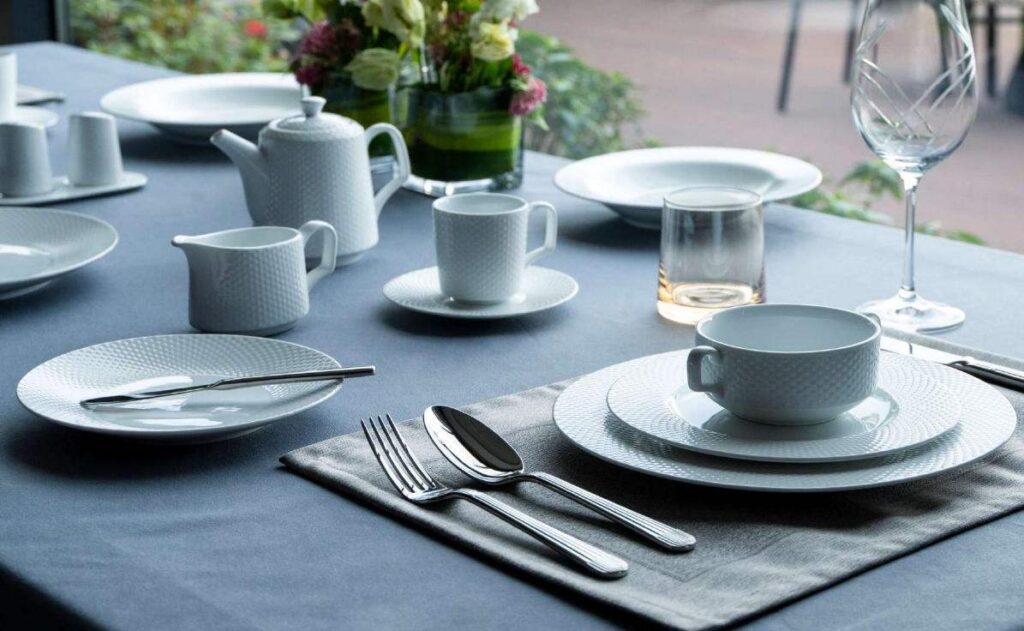
Porcelain is the backbone or workhorse of hotel dinnerware in the UAE, and for good reason. The material is non-porous and vitrified, making it highly resistant to staining, moisture absorption, and chemical wear.
Many traditional Emirati and Middle Eastern dishes are prepared in rich oils and aromatic spice blends. Ingredients like cumin, turmeric, and saffron add a deep flavor to the dishes but can also leave persistent stains on the dinnerware.
Since dinnerware is also exposed to high humidity and heat in the commercial kitchens, there is an increased risk of moisture absorption in lower quality ceramics.
Over time, consistent exposure weakens the structure and accelerates cracking. Toss them into industrial dishwashers with high alkaline detergents (pH 11–13), and whatever strength was left gets washed away.
In these situations, Porcelain Dinnerware, given its thermal stability, lasts. It remains the default hotel tableware in Dubai, for all-day dining outlets, breakfast buffets, banqueting, and high-volume room service programs.
Learn more about dinnerware durability and lifecycle cost in our guide: Best Restaurant Dinnerware: Material Selection & Buying Guide.
Bone China
In luxury hotel dinnerware Middle East programs, Bone China Dinnerware serves as the ultimate stage for fine dining. Its qualities, such as being lighter than porcelain, natural translucence, and aesthetics, make it more suited for premium dining concepts, such as in 5-star properties.
Since the material is lightweight, it’s easy to handle, reducing server fatigue. The delicate presentation makes it ideal for plated cuisines, and a perfect option for signature restaurants and fine dining tasting menus.
However, bone china is generally less forgiving in high-speed dining. The material is more prone to chipping, especially around the edges, compared to porcelain. That’s why it isn’t standardized across all outlets, but rather reserved for controlled or lower-volume high-value dining concepts.
Learn more in our guide: What is Bone China Dinnerware Made Of?
Stoneware
With the increasing number of concepts leaning towards chef-led and farm-to-table dining, Stoneware Dinnerware is slowly making its way into the hotel F&B programs. The earthy tones, textured finish, and often intentional variations between the finishes make each dish tell a story.
However, since stoneware has its limitations, like being porous, heavier, and less resistant to dishwashing than porcelain and bone china, it’s more suited for specialty dining.
It is not for the outdoors or buffets, but can be part of the non-core inventory for moderate-volume dining restaurants. Read more about the material here: What is Stoneware Dinnerware? A Complete Guide to This Timeless Tableware.
Melamine
Just as porcelain is the top choice for dinnerware for indoor dining, melamine keeps the outdoor service running, especially in scorching summers.
In pool bars, beach clubs, and casual outdoor restaurants in resort-heavy markets like Palm Jumeirah and Ras Al Khaimah, Melamine Dinnerware works well. It’s lightweight, shatter-resistant, and easy to handle for the staff through the sun loungers and crowded patios.
Melamine is also UV-resistant and can handle chlorine exposure and sand abrasion better than its counterparts. Also, replacement costs are low, so hotels can maintain large inventories for high-traffic outlets without blowing their F&B budget.
Most UAE hotels use a layered dinnerware strategy where they procure porcelain for high volume and durability, bone china for luxury dining, and melamine for outdoor serving. Many also invest in stoneware for concept differentiation in their hotel chains.
This multi-material approach works and helps them manage multiple outlets with multiple service styles, in widely unique environmental conditions.
UAE-Specific Procurement Considerations
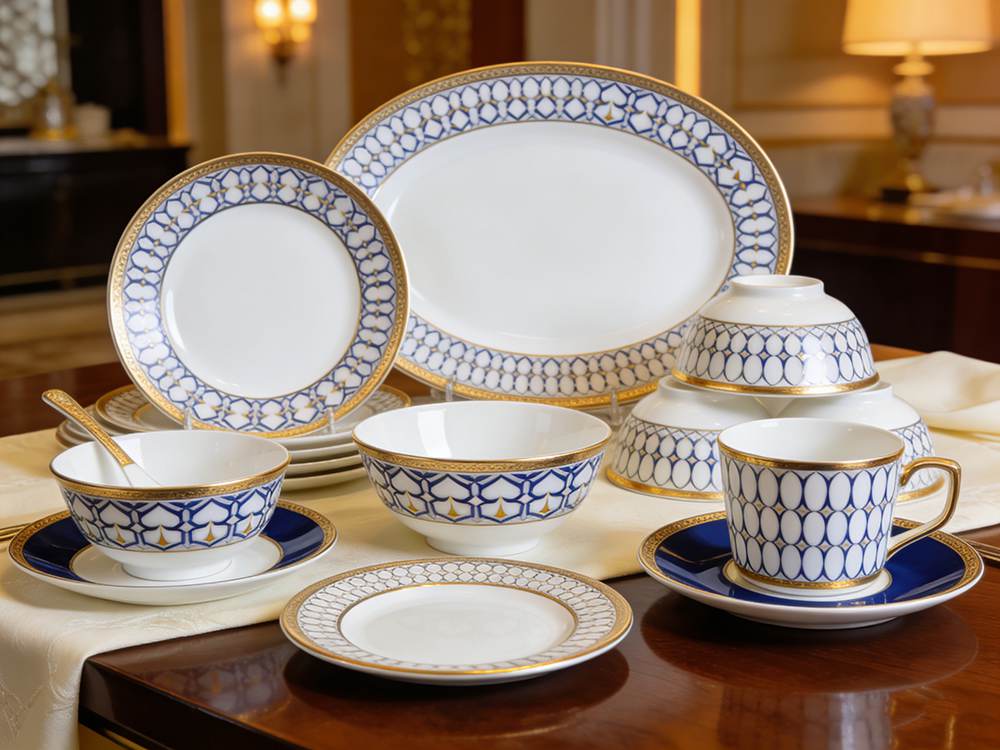
The UAE market is highly unique compared to other markets in the USA, UK, and other parts of the world. The hotel procurement in the UAE decision isn’t just made for the price and design. It is influenced by the climate extremes, cultural dining formats, regulatory environment, and import logistics, all coexisting in one of the fastest-growing hospitality markets in the world.
The UAE hospitality market is expected to reach USD 30.07 billion this year, 2026, and by 2031, it is to reach USD 43.92 billion. They are also targeting 40 million annual hotel guests under Tourism Strategy 2031.
For hotel dinnerware UAE procurement, this means considering the:
- Climate:The climate can be a silent damage factor for dinnerware materials. With humidity levels as high as 80-85%, the climate causes slow surface degradation in dinnerware, especially in plates with metallic rims or low-grade ceramics.
- Culture and Dining Format: Most UAE hotels create multiple cultural dining experiences for the guests. As a result, dinnerware requirements vary between mezze-style sharing plates and Arabic coffee (Gahwa) servings, to fine dining and high-volume buffets, and dinnerware has to support all of them.
- Food Safety & Compliance:The dinnerware must comply with ESMA and GSO, being lead and cadmium-free and certified safe for repeated food contact. It must also align with the EU Regulation EC 1935/2004. Always check for compliance certificates to ensure to meets the GCC or EU standards as well, because non-compliance isn’t a risk, but can lead to shipment rejection and fines as well.
- Import Logistics: Most commercial dinnerware in the UAE enters through the region’s largest logistics hub, the Jebel Ali Port. Procurement teams must ensure complete documentation, including the HS code classification, certificate of origin, packing lists, and commercial invoices, etc. Without any of the essential documents, shipments can get held, delaying hotel openings or restocking. Read more about UAE Import Requirements and Documentation.
Matching Dinnerware to Each Hotel Outlet
Concept Type | Recommended Dinnerware Material | Key Considerations | Service Volume | Environment Consideration |
Signature / Fine Dining Restaurant | Bone china or premium porcelain | Custom branding, wide-rimmed plates for modern plating | Low to medium | Controlled service, luxury |
All-Day Dining / Buffet Restaurant | Durable porcelain | Standard white or minimal designs | High 500+ covers | Frequent dishwashing, heavy use |
Specialty / Concept Restaurants (Arabic, Asian, Mediterranean) | Stoneware or reactive-glaze porcelain | Specialty shapes: mezze plates, sushi platters, textured finishes | Medium | Boutique hotel |
Pool Bar / Beach Club / Outdoor Dining | Melamine and tempered glass | Lightweight, shatter-resistant, chlorine- and UV-resistant | Medium | Outdoor, high-breakage |
Room Service / In-Room Dining | Porcelain (high heat-retaining) | Plates must survive trolley transport | High | Long corridors, stackability |
Banquets and Events | Porcelain or bone china | Large uniform stock, pattern continuity | Very high (500 – over 1,500 covers) | Consistency for large events |
Running a hotel in the UAE can at times feel like running five different restaurants or dining concepts at once under one roof. You have a luxury signature venue, a poolside bar, an all-day buffet, a specialty concept restaurant, and in-room dining, each with its unique requirements and dinnerware demands.
Here’s an outlet-by-outlet framework for UAE hotel operations:
Signature / Fine Dining Restaurant
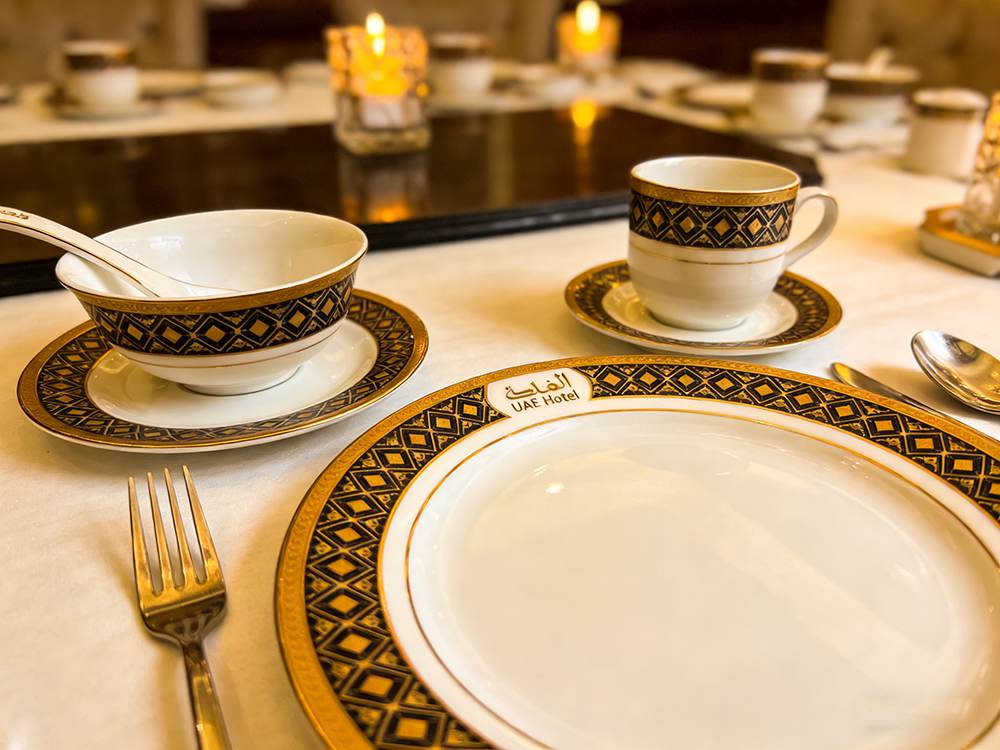
In luxury signature restaurants, it’s all about the presentation. Your tableware becomes part of the guest experience and also showcases your brand identity. Hence, the top recommended options for dinnerware are bone china or premium porcelain, with wide-rimmed plates for modern plating.
These can be customized with logos and rim detailing. In this category, Brett’s Bone China Silver Rim Dinner Plates Set and Brett’s French Pastoral Embossed Leaf Ceramic Plate Set are worth considering.
All-Day Dining / Buffet Restaurant
All-day dining outlets are high-volume spaces. Often, the guest count goes as high as serving hundreds of guests breakfast, lunch, and dinner. Hence, dinnerware durability and efficiency become extremely important.
In this category, porcelain is highly recommended, as it is stackable and weight-efficient. The designs are usually minimal, and you can work with a 3:1 plate-to-cover ratio. Brett’s Pearl-Textured White Porcelain Dinner Plates and Light Luxury Gold-Rimmed Feather Pattern Porcelain Dinnerware Set are options worth checking out here.
Specialty / Concept Restaurants
Specialty restaurants are all about themes and storytelling. The commercial dinnerware in Dubai must, hence, reinforce the concept visually as well as functionally. Stoneware and reactive-glaze porcelain are the recommended choices here.
In concept restaurants, we need mezze sharing plates, tagine dishes, sushi platters, tapas trays, with artisanal or textured finishes or non-uniform designs. The focus is on aesthetics and for the servings to be social-media-ready. Browse Brett’s Japanese Light Matcha Green Dual-Texture Ceramic Tableware Set and Japanese Hand-Thrown Ribbed Stoneware Dinnerware Set.
Pool Bar / Outdoor Dining
For outdoor venues, we need shatter-resistant dinnerware that can handle the sun, sand, and chlorine. Melamine is hence the recommended material given its lightweight construction, shatter, UV, and chlorine-resistance.
However, it comes with an operational limitation and cannot be used in microwave ovens or heat lamps. Discover Brett’s Round White Melamine Plate Set and Minimalist Dark Brown and Off-White Melamine Dinnerware Set.
Room Service / In-Room Dining
Many high-volume luxury hotels like Burj Al Arab and Jumeirah hotels rely on in-room dining as a premium guest service. Room service requires plates that can survive transit while keeping food at the right temperature as it’s served.
Porcelain dinnerware sets, such as Brett’s White Porcelain Dinnerware Set with Light Coffee Wide Trim Plates, work best with their heat-retaining properties. It is also recommended to look for specs like anti-slip cloches, tray-compatible plates, and stackable designs.
Banquets and Events
Banqueting is about the scale. Dubai hotels regularly host between 500 and over 1,500 covers for conferences, weddings, and corporate events. In such events, porcelain or bone china works well. They offer pattern continuity over time, and you can order large stock that’s durable and can withstand frequent dishwashing.
Building Your UAE Hotel Dinnerware Budget
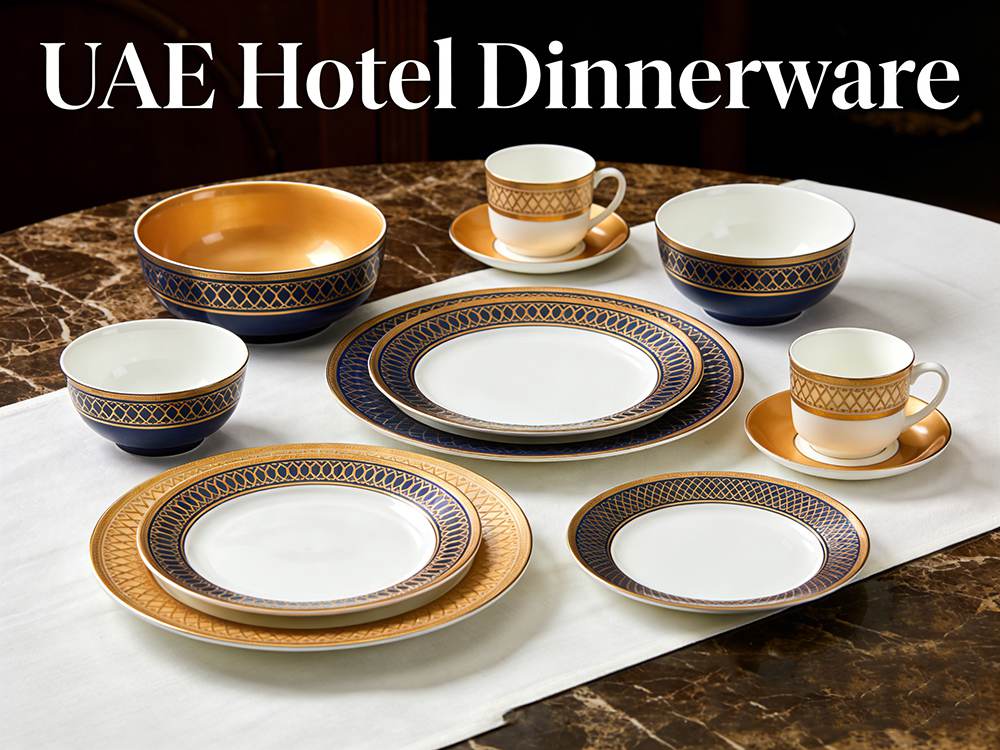
In the UAE, where hotels juggle multiple outlets, high guest turnover, and seasonal spikes like in Ramadan, planning your dinnerware budget can be a strategic tool to gain a competitive edge.
Here’s how to do it.
- Calculate Your Order: Start with your seat count and use the 3:1 rule to cover for high-volume serving in buffets and banquets. Keep a 10-15% additional margin for breakage and loss.
- Material Cost: Factor in the material cost per venue type, such as melamine, which has a low cost tier, whereas bone china is premium. Porcelain grabs you at a mid-range price for procuring your core inventory. Also set aside 15-30% above the cost for custom logos and branding.
- Plan the Replacement Budget:Dinnerware replacement rates vary by the material and outlet types. For porcelain material, you’ll need a high replacement rate of about 10-30% a year, as it is used in high-volume buffets and all-day dining. For bone china, allocate 5-15%, and for melamine, 10-20%
- Check Pattern Continuity: Before finalizing your order, make sure to confirm a 3-5 year pattern continuity with your dinnerware suppliers in the UAE and then plan the reorder cycles around the manufacturer’s production schedules.
Conclusion
If you’re running multiple outlets, procuring and managing dinnerware can be a headache. From bone china for fine dining to tough melamine to serve by the pool, Brett makes your choice easier.
Order with Brett to procure the right materials, patterns, and reorders so the tables stay full, the floors stay calm, and your guests enjoy every moment.
FAQ
What type of dinnerware do luxury hotels in the UAE use?
Most luxury hotels use porcelain for everyday serving and bone china for fine dining and signature restaurants. Many 5-star hotels also commission custom-branded plates with logos or unique patterns, for brand consistency across outlets.
How long does it take to import custom dinnerware to the UAE?
Custom hotel dinnerware orders from Asia usually require 30–60 days of production after sample approval. Add another 15–25 days of shipping to UAE ports like Jebel Ali. The total lead time becomes 45–85 days, depending on the order size and customs clearance.
Should UAE hotels buy dinnerware from local suppliers or manufacturers?
Local distributors offer fast delivery and lower MOQs, so they are ideal for urgent restocking. Direct-from-manufacturer sourcing gives you full customization and lower per-piece cost at scale. You can also access their exclusive designs.
What dinnerware is best for outdoor or poolside hotel dining in the UAE?
Melamine and heavy-duty tempered glass work best for outdoor service. Melamine is lightweight, shatter-proof, and also resistant to UV, chlorine, and sand.