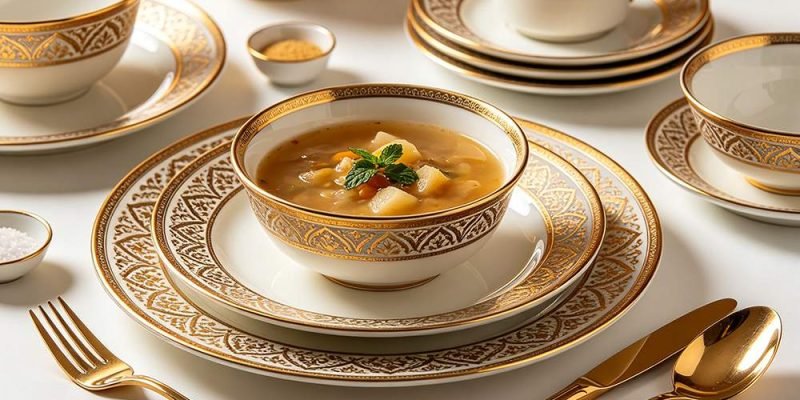
Whether you’re in Mumbai or Ahmedabad, the same butter chicken recipe can feel like a unique experience to your guest, depending on the plate it’s served on. In India’s HoReCa world, dinnerware is not just about plating or dining. It defines your brand. It’s about cost control, durability, and speed all rolled into one.
The price market varies depending on material quality, sourcing channel, and manufacturing standards. You might find a supplier promising top quality at INR 120 a plate, where another one would offer better quality imported ceramic plates for INR 600, which wouldn’t even last two months.
There are traditional wholesale and manufacturing hubs like Khurja in Uttar Pradesh and Crawford Market in Mumbai, and established manufacturing regions in Gujarat and Delhi NCR. India’s kitchenware and tableware market is valued at over USD 5 billion and continues to grow with the rising demand from the HoReCa sector.
This fragmented yet high-opportunity ecosystem makes your procurement strategy important. In the sections below, we will talk about the dinnerware materials, supply chain, and HoReCa dinnerware suppliers in India.
Understanding the HoReCa Dinnerware Ecosystem in India
The dinnerware demand in India is diverse. There’s a range of HoReCa formats, ranging from luxury five-star hotels to quick-service outlets, street-food kiosks, and large-scale catering operations, all serving regional cuisines such as biryani, thali, and tiffin-style meals.
Luxury Dining
In a premium hotel, dinnerware becomes your brand language. Most luxury hotels prefer bone china or vitrified porcelain. They use custom logos and patterns and consistent dinnerware across their outlets.
Mid-scale food chains focus on durability and stacking. They need dinnerware with easy replacement cycles that fall within their budget.
QSRs vs Fine Dining vs Cloud Kitchens
Many QSR or Quick Service Restaurants prefer melamine and reinforced ceramics because minimizing breakage is their priority. They want quick service and durable plates. Designs and patterns are secondary for them.
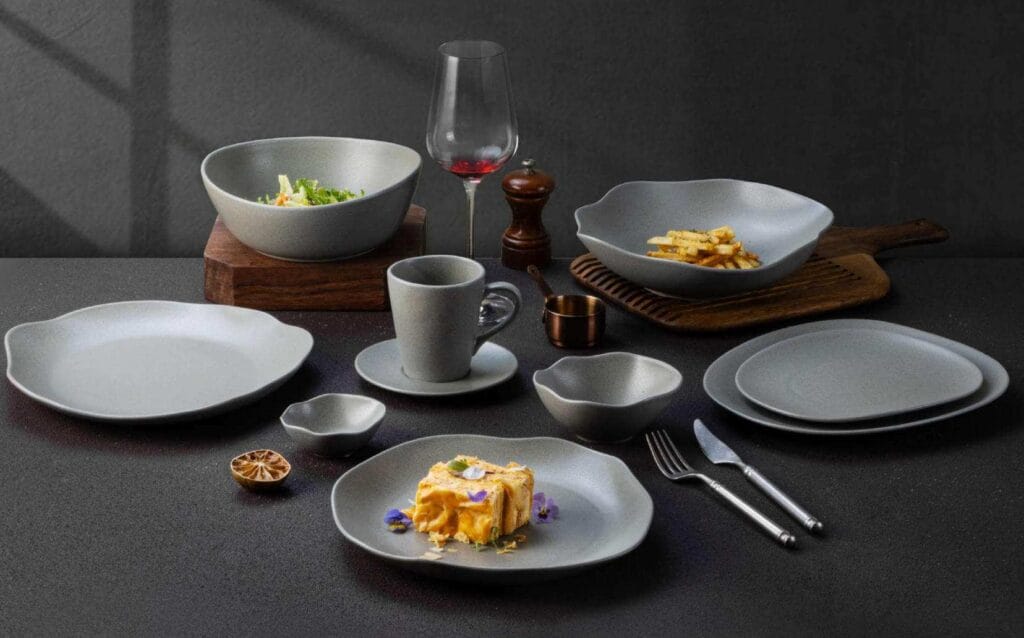
In fine dining restaurants, however, the plate finishes, symmetry, material, and design are all important. Many restaurants prefer matte finishes and asymmetrical designs, with the focus remaining on plating.
Whereas the cloud kitchens do not invest much in tableware. They usually procure multi-use containers with packaging compatibility.
Institutional Buyers
The institutional buyers constitute a major chunk of the market segment. It includes buyers from the airline catering or railway services. They look for standardization across the dinnerware materials.
Although they prefer high durability melamine and stainless steel, compliance checks such as the Food Safety and Standards Authority of India, FDA food-contact compliance, LFGB chemical migration testing, and EU Food Contact Regulation (EC 1935/2004) are a must.
Types of HoReCa Dinnerware: Material-Based Classification
The dinnerware material you choose will directly impact your breakage costs and service speed. It can, in fact, also shape the perceived dining value at your concept and your brand positioning.
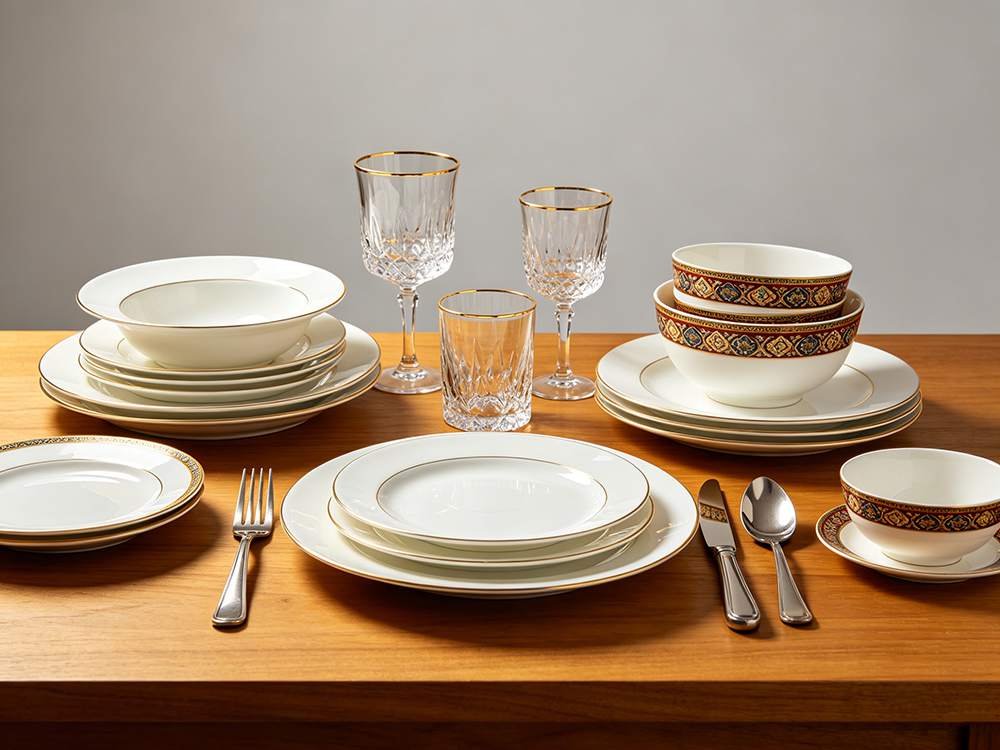
Premium materials such as bone china or high-grade, vitrified porcelain are commonly used in fine-dining hotels to elevate presentation, while melamine is preferred in high-volume casual dining formats where operational efficiency and cost control are the priorities.
Ceramic and Porcelain
The go-to dinnerware material for most restaurants is ceramic and porcelain. Porcelain dinnerware looks clean and premium. It is also preferred by the chefs as it gives them the right surface area for plating aesthetics.
Porcelain is also the winner when it comes to heat retention and keeping the flavor of the acidic Indian gravy intact. The surface is non-reactive and doesn’t mess with the taste of the dish.
The downside, however, is that there can be edge chipping, and so the breakage and turnover rates can spike.
Melamine
Even though melamine doesn’t get the love on Instagram and social media, it literally runs the Indian HoReCa industry. Melamine dinnerware is literally shatterproof. It’s lightweight and cost-effective at scale, which is why most restaurant operators love it.
You will mostly find QSR chains, biryani houses, food courts, and catering operations using melamine plates for serving.
However, while it survives stacking and drops, poor-quality melamine does stain over time and loses its shine. Also, it is worth keeping a check on the FDA guidance, which approves melamine for food contact under normal conditions, but not for high temperatures or for heating food.
Bone China
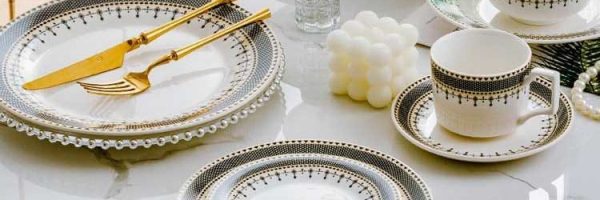
Bone china gives off a signal indicating that the guest is about to be served a high-quality meal. It is elegant, stylish, and exudes luxury, going with premium pricing and fine dining experiences.
However, when placed in service, it does have a high chipping rate compared to porcelain. Learn more about the difference between Bone China and porcelain in our guide: Bone China vs Porcelain Dinnerware: Which Should Hotels Choose?
Stainless Steel
It may not be trendy or look beautiful, but stainless steel is the underrated workhorse in India. You will find it in Indian Railways pantry services, large institutional kitchens such as hospitals, schools, and defense canteens, and budget catering operations.
Stainless steel wins as it is practically unbreakable, easy to clean, and keeps the inventory simple.
HoReCa Dinnerware Supply Chain Structure in India
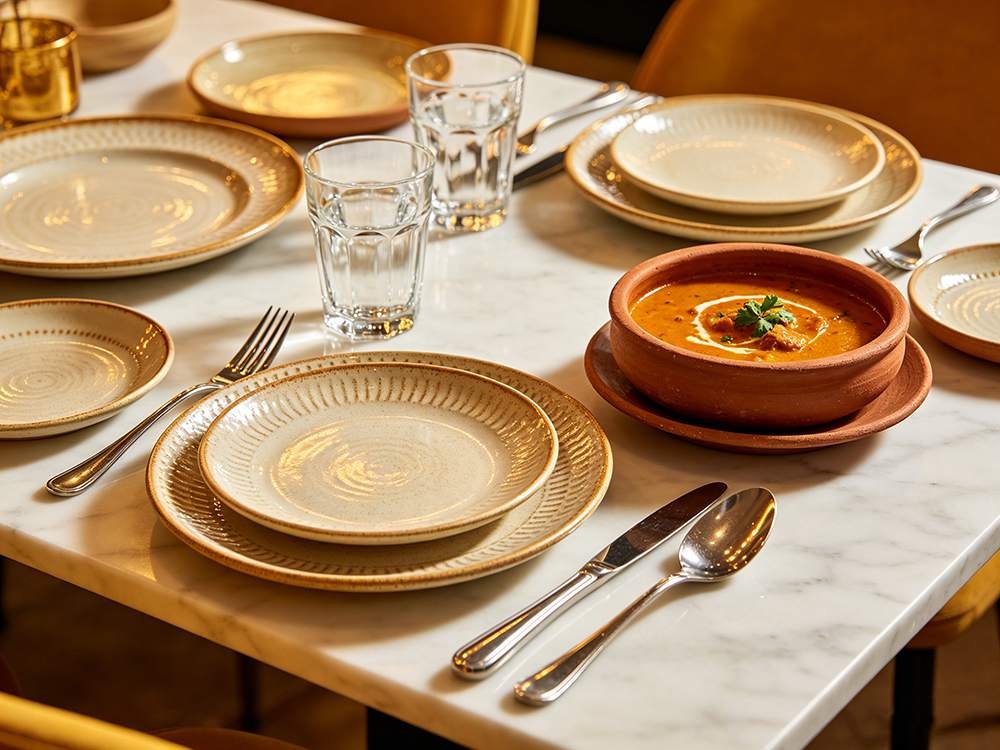
India’s HoReCa dinnerware market is highly unorganized. There’s a complex network of manufacturers, importers, traders, and multiple layers of intermediaries. Hence, assessing the channels becomes a challenge.
Organized Manufacturers
Many hotel chains and large restaurant groups in India source their dinnerware from organized manufacturers. These include the large factories mostly situated in Gujarat, Rajasthan, and NCR. These manufacturers offer consistency through their controlled production processes, including custom moulds, embossing, and branding options.
They also work on long-term supply contracts, which help ensure batch consistency and reliable sourcing for high-volume HoReCa operations.
Regional Wholesale Clusters
There are regional wholesale clusters that have, in fact, become the backbone of Indian dinnerware sourcing. Delhi NCR is the import gateway for Chinese and Southeast Asian products. Here you will find a huge variety of all kinds of dinnerware.
It’s a good market for restaurant owners who are looking for a quick setup and trend-driven cafés. However, there is no assurance that the quality will stay consistent across batches.
Similarly, Morbi in Gujarat is the Indian ceramic hub that houses porcelain and vitrified tableware. Here you will find export-grade quality at domestic prices.
Another place to source within India is Khurja, UP, where you can find handcrafted and semi-industrial products or unique designs.
Import vs Domestic Suppliers
Although most buyers think they’re saving money when they buy from domestic suppliers instead of importing dinnerware, they are often wrong.
Procuring dinnerware from reliable suppliers such as Brett offers several strategic advantages. These suppliers operate on standardized production systems that ensure each plate has uniform sizing, glaze consistency, and quality across batches.
This is especially an important feature for large restaurant chains where even minor variations in plate size or stacking stability can impact service. Also, global manufacturers maintain tighter quality control frameworks and internationally recognized food-contact safety certifications.
Another advantage is product continuity. The designs and specifications can be replicated or reordered years later without deviation, which is critical if you have expansion plans.
Domestic sourcing makes it easy to replenish your inventory, gets you lower MOQs, and also makes it easy to coordinate with the suppliers. However, quality, consistency in finish, and batch repeatability are not guaranteed.
This is why smart buyers balance their procurement strategy locally and from imports. They usually import design lead SKUs, while sourcing high-demand items such as melamine locally.
How to Evaluate HoReCa Dinnerware Suppliers
Comparing catalogues and prices upfront is easy. However, it is evaluating the actual performance of the dinnerware plates in an Indian kitchen that defines your choice.
Durability
Many suppliers boast blatantly about selling hotel-quality dinnerware plates. Never go for that; instead, ask for measurable durability metrics.
For instance, ask them about the chip resistance, such as the edge reinforcement design and glazing thickness.
Dishwasher Safety
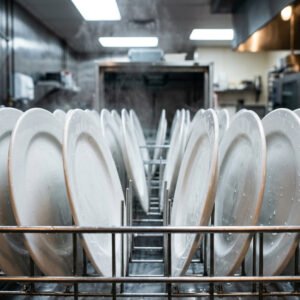
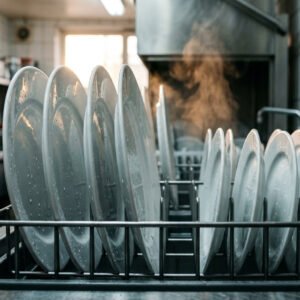
Indian cuisine has a lot of sauce and chutney, and the plates have to go through multiple dishwasher cycles daily. That means high exposure to heat and chemicals, and often rough handling.
Since most of the dinnerware plates get damaged during dishwashing, look for materials that resist glaze fading, surface abrasion, and thermal shock without warping or dulling.
Request the supplier for authoritative third-party test reports by TÜV SÜD or other labs for dishwasher durability, thermal resistance, and food-contact safety.
Thermal Shock Resistance
Ever witnessed a plate crack as soon as you poured hot gravy on it? That is classic low-grade material experiencing thermal shock.
For a commercial setting in India, your dinnerware must be able to handle the rapid temperature changes, especially when the sauces are poured or when it moves between refrigeration and plating.
Cost-per-Use Model
A cheaper dinner plate isn’t going to save you money; it’s just going to delay your expense. If you buy a plate that only lasts three months, that means your annual replacement rate is 4X a year.
Whereas a premium plate with a lifespan of 18 months will save you the replacement cost. Always evaluate your options through a lifecycle lens. In the long run, durability always outperforms the low upfront price.
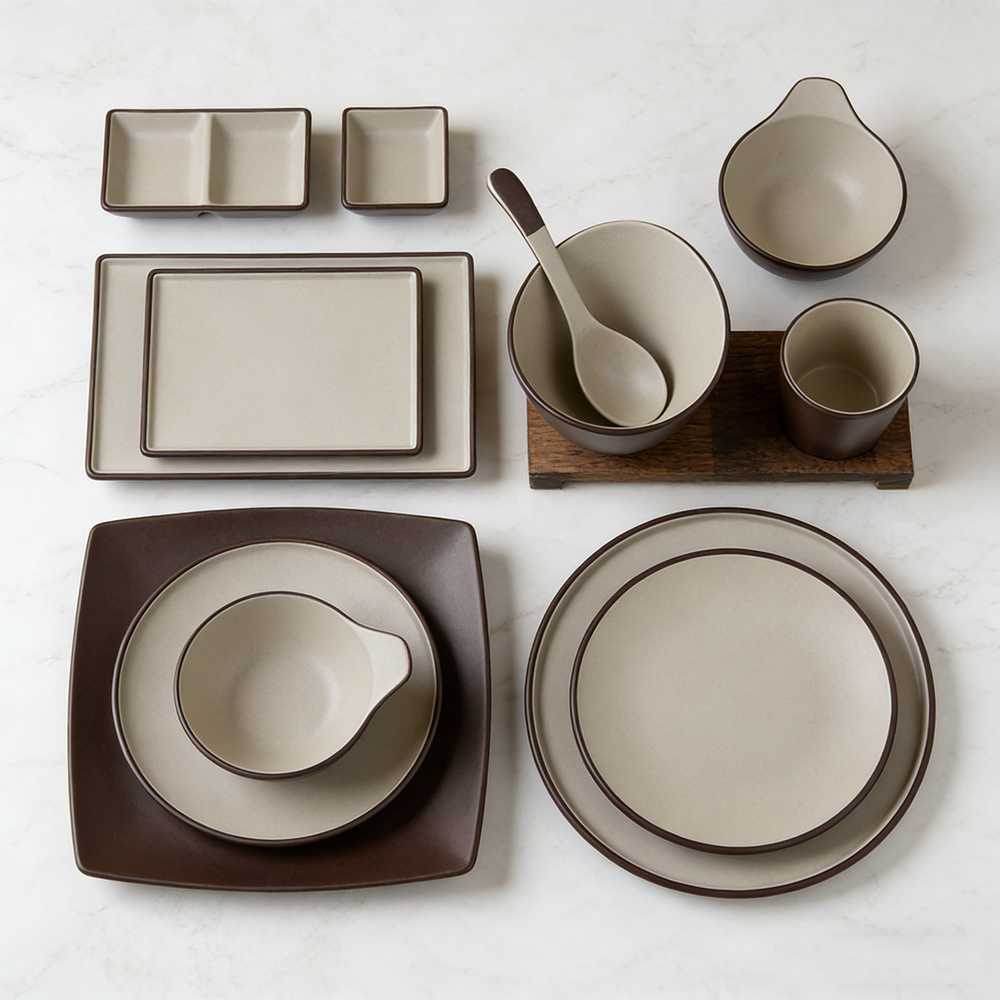
How to Shortlist the Right Supplier
Given the multitude of options, it often becomes hard for procurement teams to source the right dinnerware for their concept. However, following a strategy instead of just going in with whatever option comes first always pays off.
Here’s a step-by-step procurement framework for selecting the HoReCa dinnerware suppliers in India.
Step 1: Define the Use Case
First, look into your concept. Check your service speed, the customer experience you want to give out, and the breakage rate you can tolerate. You need to be clear about whether your priority is durability, aesthetics, or branding.
Step 2: Select Material Category
Match the material to your concept. For instance, melamine is best for high volume and fast service. Porcelain, which goes with premium dining. Bone china remains for luxury positioning, and stainless steel can match your institutional scale.
Learn more about material selection in our guide: Best Restaurant Dinnerware: Material Selection & Buying Guide.
Step 3: Request Samples
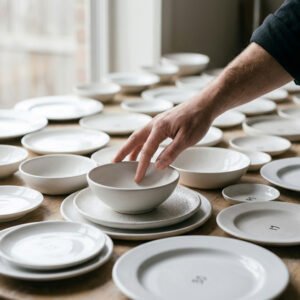
Always ask the supplier to send samples first. Put them to the test and check their weight balance, finish quality, and dishwasher resistance. Stack the dishes to check how well they do in an actual setting.
Indian cuisine also gives a hard time to ceramics, given the heavy, spice-rich ingredients. Serve cuisines like North Indian gravies, Hyderabadi biryani, South Indian sambar, and Indo-Chinese sauces on the samples and see how it handles the stains.
Also, check the performance with desserts like gulab jamun syrup or rabri, which often leave sticky residues on non-vitrified dinnerware.
Step 4: Compare Cost-Per-Use
Your cost per use is your deciding factor for dinnerware procurement. A cheap plate may be low-cost but have a short life. Similarly, a premium plate may cost you a lot but have a longer life. Always look into buying inventory that lasts between 6 and 18 months.
Instead of focusing only on unit price, calculate the number of service cycles a plate can handle. Observe how well it resists stains from turmeric-heavy curries. Check if it can retain the glaze quality after repeated washing or not.
Step 5: Verify Certifications and Compliance
Next, you need to check for FDA certification, lead and cadmium safety compliance, and ISO 6486-1:2019 manufacturing standards. If the certification is missing or vague, walk away from the supplier.
Connect with the Best HoReCa Dinnerware Supplier for India
Buying dinnerware in India isn’t just about plates; it’s more about profit leakage versus protection. You make one wrong choice, and you end up being stuck with high breakage costs, frequent orders, and inconsistent table aesthetics.
Likewise, the right choice can speed up your service and stabilize your costs instantly. So even though it may seem basic, something as simple as a plate can decide whether your restaurant looks and feels premium or chaotic.
If you are running procurement like a last-minute Diwali shopping rush, chaos is guaranteed. Brett brings structure to the process with its premium and casual-style dinnerware collections. Explore the designs today.
Frequently Asked Questions
What should I look for in HoReCa dinnerware suppliers in India?
HoReCa dinnerware for India must be strong and durable. The supplier should support life cycle-based procurement so you can order with ease even after six months or a year, and get the same quality and standard.
But more importantly, look for material certifications from the FDA or ISO.
Which material is best for HoReCa dinnerware in India?
Dinnerware material selection depends on the concept you are running. Most of the high-volume restaurants in India have switched to melamine, given its durability and ease of use.
Fine dining restaurants prefer ceramics and porcelain. Whereas, bone china is still the top choice for luxury dining. Institutional catering operations go with stainless steel material.
What is the most cost-effective dinnerware option for bulk restaurant use?
Melamine is often considered the most cost-effective option for high-volume restaurants in India. It is lightweight, doesn’t break, and has a long life. For low-cost institutional catering, stainless steel also offers excellent value due to zero breakage and durability.
Why is durability important in HoReCa dinnerware procurement?
In restaurants and hotels, dinnerware has to go through repeated washing, stacking, heating, and handling. Poor-quality products have to be replaced frequently, which increases your long-term operational costs.
Hence, durable materials can reduce the breakage rates and improve cost efficiency.