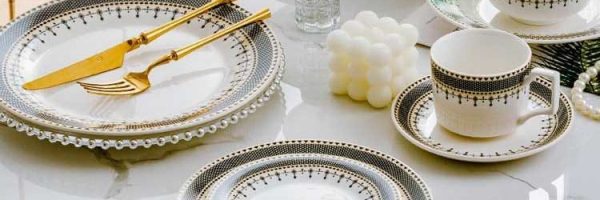
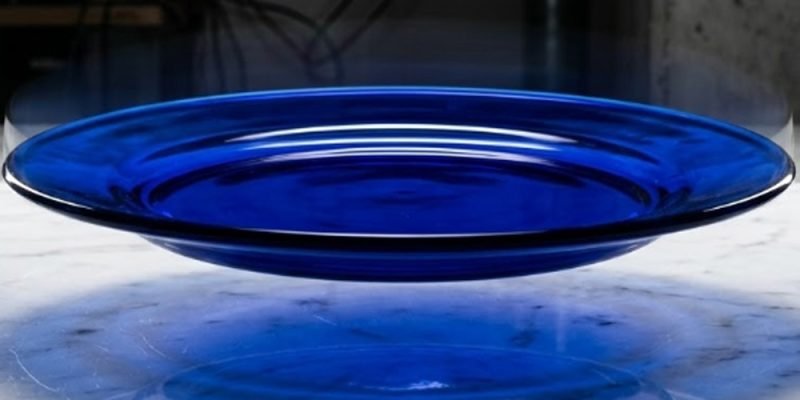
Most hotels are still using the same white porcelain dinnerware they purchased years ago. While dependable, traditional porcelain no longer offers the visual differentiation many luxury hotels seek. Increasingly, premium properties are introducing tempered glass dinner plates in signature restaurants and bars not as a novelty, but as a deliberate design and branding choice.
Glass dinner plates can last three to five times longer than regular ceramic dinner plates. They withstand 1000 service cycles of 90C in commercial dishwashers. Unlike glazed porcelain, they do not show the grey cutlery marks which develop after a few months of heavy use.
They also bring something that porcelain can’t attain: colour infused into the surface of the material, rather than painted onto it. What the guest experiences during that meal is conveyed through the colour, not just on the surface of the colour. It is noticeable that there is a difference. The quality signal is clear and easy to understand.
The guide provides all your procurement team needs to consider when specifying glass dinner plates for hotel service specifications, outlet-to-outlet guidance, what to expect from any supplier and how a custom glass plate programme supports a full hotel service specification.
Table of Contents
What Are Glass Dinner Plates And Why Do They Perform So Differently
A glass dinner plate is one that is not heated or fired from clay, but is made from tempered/toughened glass instead. The tempering process involves heating the glass to above 600°C, followed by a rapid cooling of both surfaces. This creates a compressive stress in the outer skin layer (above 100 MPa) that takes up mechanical shock before it can travel through the material. Hence, the ability of a tempered glass dinner plate to survive a fall from a height of 90cm.
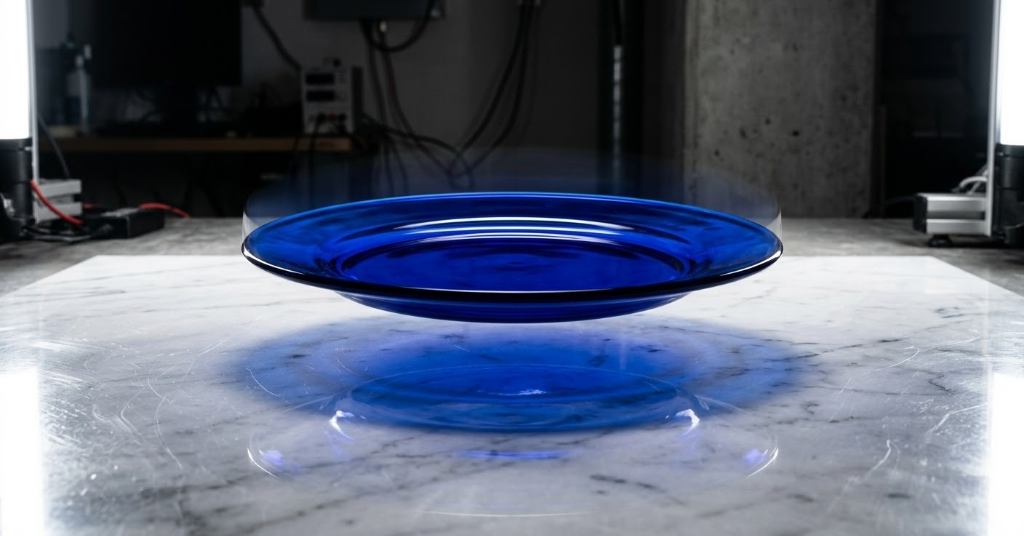
The typical ceramic breaks at 30- 50 cm. The visual difference is as important as the structural one. Colour is placed in a coating on the surface of glazed porcelain. Reflects light. Colour is added to the glass during manufacture to produce coloured glass dinner plates. It is through which light moves. A candlelit, deep blue glass plate isn’t the same as a painted ceramic plate. The depth isn’t added on top of the commodity, but is actually specified.
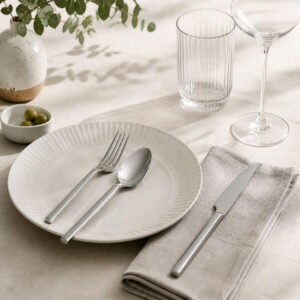
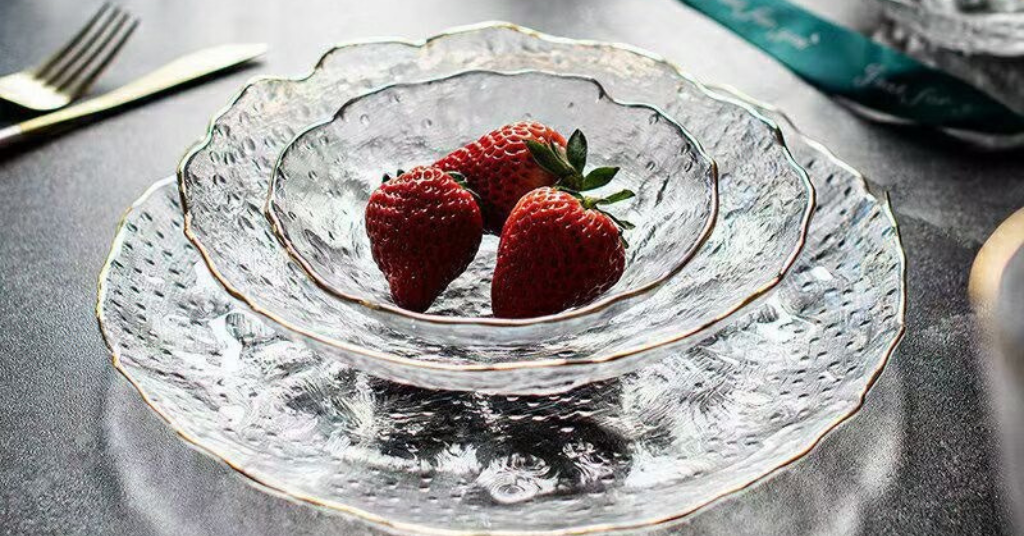
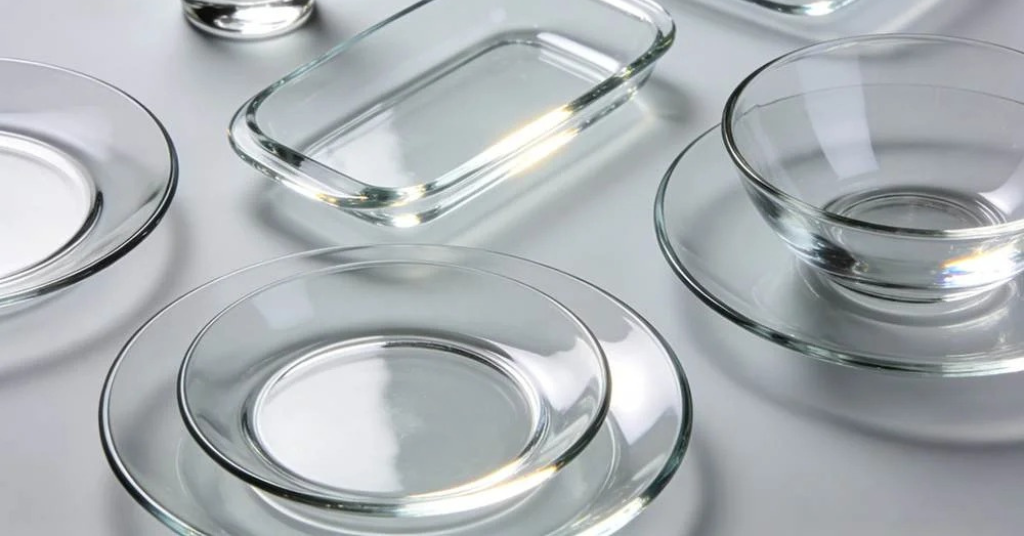
You can use clear glass dinner plates for different reasons. The plate is taken away from in front of the food. The only activity at the table is the chef’s plating. This is a big deal in fine dining rooms where the kitchen has been working for some years to achieve that look.
The Performance Numbers Behind Glass Dinner Plates
They are not claims about marketing. These are verified and referenced data.
Drops of up to 90cm from glass dinner plates have survived the ASTM C368 standard. Compare this to standard ceramic which fails at 30-50cm under the same test.
Commercial kitchens which have replaced ceramic with glass report 3 to 5 times longer in-service life under identical daily service conditions.
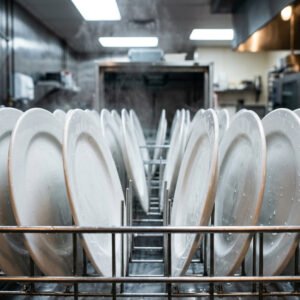
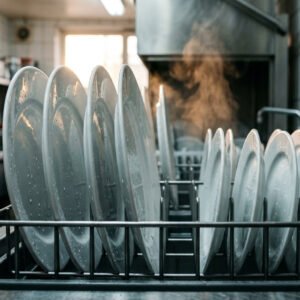
Tested to withstand the dishwasher at 90°C for 1,000 or more commercial cycles, according to the Winterhalter Gastronom GS29 standard. Oven-safe to 120°C. Freezer-safe to -20°C.
Resists cutting with normal steel kitchen utensils. The glazed ceramic tends to develop grey metal marks on it and cannot be polished. They repeat this cycle over and over until the plate is changed. This is a failure mode of plastics that does not occur in glass.
78% of culinary professionals who have tried both say they prefer having a glass background for plating elaborate food due to its excellent colour representation. The food appears to be improved. Fine dining kitchens ask for it because of its operational benefits.
Which Hotel Outlets Should Use Glass Dinner Plates
Fine Dining and Signature Restaurants
If your signature restaurant is a differentiator — even a hotel amenity — you are playing catch-up if you adopt the same white porcelain you’ve got on every other hotel in your market.
When the glass dinner plates are clear, the chef’s presentation becomes the focus. Nothing competes. The plate goes down and the food is all there.
Colour plates are not a glaze specification that another factory can duplicate; they are part of the plate itself to create a table identity that is not possible to duplicate.
Boutique Hotels and Lifestyle Properties
Boutique properties play by the details. Each experience aspect of the guest reinforces the brand story, or else it doesn’t.
A collection of glass dinner plates in a colour direction that aligns with the property’s image does something for the brand — and it looks great in any light, especially if guest photographs are the best advertising the property can offer.
Hotel Bars and Lobby Lounges
Glass is the medium of expression in a bar already. The visual palette is transparency, light, and reflection: glassware, mirrors, backbar displays.
A ceramic plate on a bar top does that. It contains a glass plate. When it comes to the presentation of premium bar foods and lounge presentations, the glass environment seems a perfect fit for the occasion, while ceramic is not so much.
In-Room Amenity and Premium Service
When a wine arrives, a welcome dessert or turn-down gift is displayed on a clear glass plate; it feels like it was created, like it was planned. Is not room service. That difference is noticed when viewed in relation to the price point at which a five star guest is paying for their stay.
How to Specify Glass Dinner Plates — What to Demand From Any Supplier
If the supplier is unable to submit a document working to these standards, pass on to another supplier.
Performance Standards
ASTM C368 impact resistance is measured in joules from an accredited third-party testing facility. It’s not a marketing statement. Non-examinative test.
Safe use of the dishwasher at 90°C for 1,000 or more cycles, based on the Winterhalter Gastronom GS29 or other commercial standard. Tried with commercial dishwashing chemicals, not household detergent. Food contact certification to FDA CPG 545.450 and EU Regulation 1935/2004. California Proposition 65 verification on a case by case basis on U.S. properties.
Customisation Options
Brett’s custom glass plate programme includes clear glass dinner plates, clear glass in the opal glass format (the white ceramic look), as well as clear glass in dinner plate, side plate, charger and serving plate formats.
Options range from logo printing to colour-accented rims, special colour directions and signature edge profiles. The difference from ceramic branding: Colour in glass is not subject to fading, chipping or varying in production runs. Your branding is forever.
When hotels specify across multiple outlets, a single glass colour direction ensures visual consistency between the fine dining room, bar and lounge. Clear glass dinner plates are a neutral background in all of them.
MOQ and Timeline
Brett’s programme begins at 50 pieces per item and goes up to 300 pieces per item, which is the same MOQ as the full ceramic programme. Production time is 30 to 60 days after sample approval. According to the capacity, Rush production is available.
Glass vs Porcelain vs Bone China — Side by Side
The selection between the various materials of tableware is not based on appearance in a store, but rather upon the ability to perform successfully during service. The table below details the practical implications that your procurement team should consider before deciding to go all the way with an outlet specification.
| Tempered Glass | Vitrified Porcelain | Bone China |
Drop resistance | Survives 90cm — ASTM C368 | Fails at 30- 50 cm | Similar to porcelain |
Dishwasher rating | 1,000+ cycles at 90°C | Commercial rated | Lower tolerance |
Cutlery scratching | Resistant — surface is homogeneous | Glaze marks over time | Marks appear quickly |
Visual quality | Colour in material — transmitted light | White surface glaze | Translucent — premium appearance |
Annual replacement rate | 5-20% | 50-150% | 15-25% fine dining only |
Best hotel outlet | Fine dining, boutique, bar, lounge | All outlets — volume workhorse | Fine dining, low volume only |
Custom colour/branding | Colour fired in — permanent | Glaze or decal application | Limited colour range |
Why Brett for Glass Dinner Plates
Since 1998 Brett has been providing hotel grade tableware to hotels in over 80 countries. We are located in Chaozhou, the tableware manufacturing centre of China, and have our showroom and office in Dongguan, Guangdong Province over more than 26 years.
We have clients in the Four Seasons and Shangri-La, Fairmont, Fairmont Inn and Suites, Raffles, Wynn, Sheraton, Hyatt, Fairmont Marriott and Crowne Plaza properties, Michelin Guide and Black Pearl Restaurant Guide restaurants in Europe, the USA, and the Middle East.
Brett’s claim to fame for glass dinner plates is the same as for its entire ceramic and flatware line: availability of replacement parts that is held. In year 3, you reorder the same number of dinner plates as in year 1. Colour consistency. Shape consistency. Specification consistency. Not so with glasses of glass. It is with Brett.
Brett is a one-stop source for hotels, creating a complete custom tableware programme, such as glass in the fine dining room, vitrinated porcelain in the volume outlets and flatware throughout the entire hotel. One quality standard. One procurement relationship. Single Point of Contact.
FAQ
Are glass dinner plates durable enough for commercial hotel service?
Yes. Tempered Glass Dinner Plates can take 1000 or more cycles in a commercial dishwasher heated to 90°C, and can withstand dropping from 90cm without breaking and resist scratches from steel cutlery. Converting from ceramic tile to glass in commercial kitchens typically yields a 3-5 times increase in in-service life. The life of the unit is the premium over standard porcelain, paid for with a reduction in replacement orders in the first year of operation.
What is the difference between opal glass and clear glass dinner plates?
This opal glass is white and looks like ceramic, with an effect of micro-crystals suspended in the glass during its manufacture. The premium white porcelain appearance and qualities of use are like tempered glass. Clear glass is perfectly transparent; the plate disappears under the food, and the chef’s plating is the main attraction. They both have the same commercial performance level and can be ordered via Brett’s custom glass plate programme.
Can we customise glass dinner plates with our hotel logo?
Yes. The Bretts custom glass plate OEM programme is able to accommodate printing the logo, coloured rim printing and custom colour directions. Colour is applied to the glass during firing rather than on the surface and will not fade with dishwashing. Your branding is the same the first time, the second time, the thousandth time, and beyond. Offered in 50 pieces per item.
Which outlets should use glass plates versus porcelain?
The most valuable uses for glass dinner plates include fine dining and signature restaurants, boutique dining rooms, hotel bars and lounges, and high-end in-room dining. Vitrified or alumina-reinforced porcelain is still the appropriate volume specification for all-day dining, banquet service, and breakfast buffets. Typically, most hotels introduce glass in two or three upscale outlets and ceramic in high-volume outlets.
How is colour different in glass plates versus glazed ceramic?
Colour in glazed ceramic is a layer of material that reflects light. In coloured glass dinner plates, colour is blended in the material and lets the light pass through. The depth and luminosity of a deep blue glass plate under candlelight cannot be obtained from surface-glazed ceramic. The colour is internal – not added on top of the specification. It is this visual distinction that makes fine dining operators and boutique hotels mention glass as their preferred choice for feature outlets.
What is the minimum order for Brett's glass dinner plates?
Unlike the ceramic range, where our custom programme begins at 300 pieces per item, Brett’s custom glass plate programme is at 50 pieces per item. Typical production lead time is 30-60 days after the sample is approved. Please get in touch with us at cbhoreca or WhatsApp +86 13535413512 to get a quotation for a particular item.
Conclusion
Glass dinner plates are not intended to replace porcelain across every outlet. They work best where presentation, brand identity, and guest experience matter most. For banquet halls, breakfast service, and other high-volume operations, vitrified porcelain often remains the most practical choice. Glass dinner plates are a performance and a brand upgrade! They last longer. They appear more appealing when they experience lightning in the hotel dining room.
This is owned by the first movers in their markets, who are the hotels. Their rivals can’t beat them with the same white porcelain, only a bit quicker. See our hotel tableware quantity planning guide and our hotel tableware procurement checklist for more information on the hotel tableware programme, including glass and ceramic types by type. Contact us today at cbhoreca and get the exclusive hotel tableware solutions to your needs with Brett, with quotes, catalogs, and samples available.