A perfect plate leaving the factory can still break on the way. The solution to transit breakage is simple: proper dinnerware packaging. The carton, dividers, and loading of the cartons will determine whether your order will be delivered whole or not.
This guide will help you to understand the packing of the ceramic dinnerware for export, how you know when you have a good pack, and also what a carton drop test is and what you should order. It also addresses the issues if the products are received damaged.
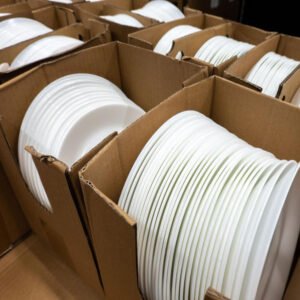
Rugged corrugated cartons rated for their load, dividers/inner boxes to prevent contact between pieces, and minimum space to prevent any movement are the best corrugated carton packaging for export. Ask your supplier to do a carton drop test on corners, edges, and faces of packed cartons and sign off on the pass. Include the carton board, packing type, and test in your RFQ and take samples before going into mass production.
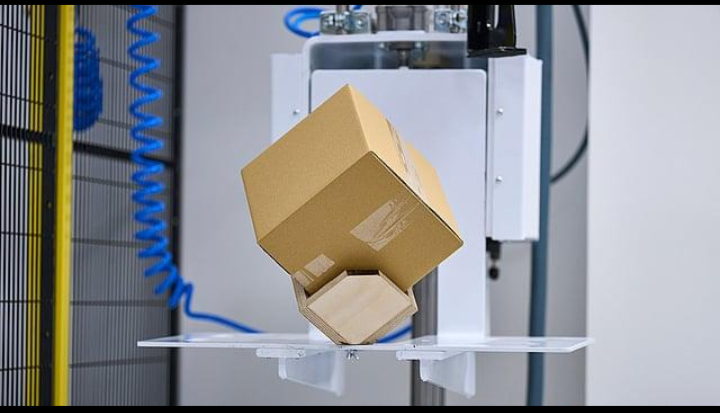
Table of Contents
Why Dinnerware Breaks in Transit
Ceramics are firm and brittle. They take pressure well but will crack if struck on an edge or if pieces strike each other. long trip by truck, ship, and truck again exposes cartons to several kinds of stress.
Cause | What happens | How packing helps |
Drops and impacts | Cartons fall during loading and unloading | A strong carton and padding absorb the shock |
Vibration | Pieces rub or tap each other for days | Dividers and snug packing stop movement |
Compression | Heavy cartons are stacked on top of each other | Strong board and sensible carton weight |
Moisture | Damp air weakens cardboard on long sea trips | Dry packing and moisture control in the container |
Rough handling | Cartons are thrown or dragged | Clear labels and pallets reduce manual handling |
Damage revealed in service is often created during shipping. To read our guide on the edge chip warranty, refer to how chip warranties work after delivery.
Common Dinnerware Packaging Methods
There are only a few methods used in factories. The one that fits will depend on the product, the order quantity, and whether the pieces are intended for distribution to a hotel or a retail shelf.
Method | How it works | Suits | Watch out for |
Bulk stack with separators | Plates are stacked with paper or foam between them, then placed in a master carton | Plain hotel and restaurant orders | Needs a strong carton and snug fit |
Inner boxes in a master carton | Small boxes of 6 or 12 pieces sit inside a larger carton | Mixed orders and easier counting | Takes more space, which raises freight cost |
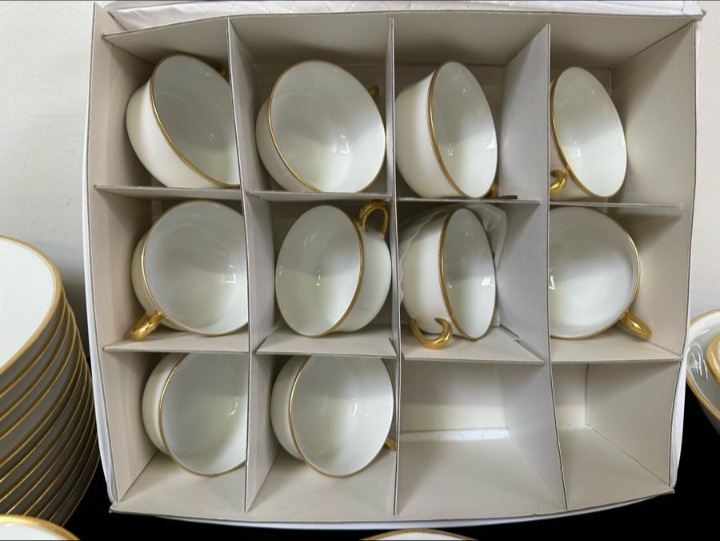
Cell dividers | Corrugated cells keep each piece apart, often with plates standing on edge | Fragile or decorated pieces | Dividers must fit the shape exactly |
Foam or pulp inserts | Shaped inserts hold cups, bowls, and teapots | Cups, mugs, and serving pieces | Loose inserts let pieces move |
Individual color boxes | Each piece or set has its own printed box | Gift sets and retail | Extra cost and extra volume |
Many people place plates on their side as they are able to withstand pressure better when propped up on their edge. Some people put them one on top of the other using separators. Inquire about the reasons behind your factory’s choice of ask.
What a Good Export Carton Looks Like
Look at the carton, not only what’s inside. A weak box defeats good padding. Our hotel tableware procurement checklist covers what to specify before ordering from China. These are the packing details to add.
Feature | What to ask for |
Carton strength | Corrugated board grade and strength suited to the product, carton weight, stacking, and shipping route |
Carton weight | A weight staff can lift safely, so cartons aren’t dropped or thrown |
Dividers and inner boxes | Dividers between pieces, with no direct contact between ceramic surfaces |
Void fill | Packing that stops pieces shifting without pressing on them |
Sealing | Strong tape on every seam, with the bottom reinforced |
Labels | Item codes, quantities, carton numbers, and clear handling marks |
How Different Items Are Packed
Item | Typical packing approach | Main risk |
Dinner and side plates | Stacks or edge-standing rows with dividers, in strong cartons | Rim chips from plates knocking together |
Bowls | Nested stacks with separators, or cells | Rim chips and cracks from nested pressure |
Cups and mugs | Cells or inserts that stop handles touching | Broken handles |
Saucers | Stacked with separators, sometimes sets packed together | Chips and scratches |
Teapots and serving pieces | Individual padding, with lids wrapped separately | Broken spouts, handles, and lids |
Decorated pieces need extra care. Gold rims and printed patterns can rub if pieces touch. Our guide on what to avoid when buying dinnerware explains how poorly stacking pieces can slide in transit and raise breakage.
The Carton Drop Test Explained
A carton drop test is used to determine the resistance of your packaging to rough handling before the goods are shipped. A carton is dropped from a predetermined height by an inspector or the factory, and the carton and the contents are then inspected.
Step | What happens |
1. Choose cartons | Packed cartons are picked at random from the finished order |
2. Set the height | The drop height depends on the carton’s weight and the standard used |
3. Drop in sequence | The sequence depends on the procedure. A common one uses 10 drops: one on a corner, three on edges, and six on faces |
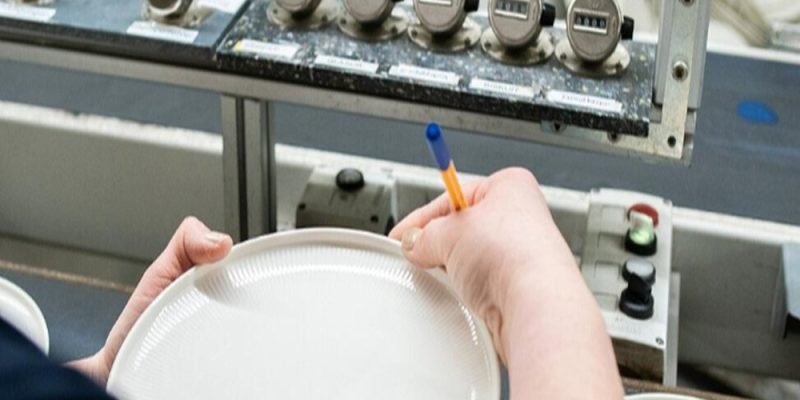
4. Inspect | The carton and the pieces are checked for damage after each stage |
5. Record the result | The result is recorded with photos and a pass or fail |
Most commonly used standards are ISTA and ASTM, and many buyers just stipulate a drop height and a pass rule in the contract. One of the basic guidelines is that there are no broken pieces and the carton remains intact. No matter what you decide on, jot it down.
Conduct the test on samples as well as at the time of shipment. This hotel tableware sample approval guide includes all other considerations to test before mass production, such as chip resistance and edge resistance.
How to Approve Dinnerware Packaging Before Mass Production
Approve the packaging the same way you approve the product. The approved packing should match what goes into production, not only the sample.
Step | What to check |
1. Request a packed sample | A sample packed exactly as the production order will be |
2. Confirm size and weight | Carton dimensions and gross weight match the specification |
3. Check movement | Plates, bowls, and cups can’t move freely inside the carton |
4. Check fragile points | Cup handles and decorated rims are protected |
5. Agree the test | The drop test procedure, height, and pass rule are written down |
6. Inspect after testing | Check the contents and record the results with photos |
7. Approve in writing | Sign off the final packing specification before production starts |
Pallets, Bracing, and Moisture
Packing doesn’t end at the carton. How cartons are loaded matters as much.
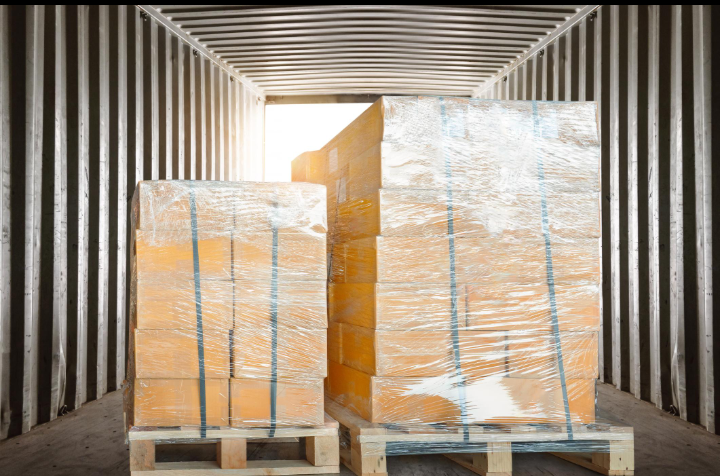
Pallets protect cartons and make loading quick. Stretch wrap and corner protectors make a pallet stable, and a pallet should not be stacked any higher than the bottom cartons can handle.
The boxes in the container must be propped up in such a way that they cannot slide or fall. A frequent cause of damage when opening the container is gaps at the doors.
Another problem with sea containers is that they can hold moisture, making it difficult for cardboard to withstand the trip. Discuss moisture control policies for longer routes with your forwarder.
The plan varies depending upon how many cartons fit and how heavy the load will be. See our guide to the CBM calculator for dinnerware to see how to work this out. If you’re looking to import dinnerware from China in bulk, check out our importing dinnerware from China guide.
What to Put in Your RFQ
A line such as “export packing” isn’t enough. Spell out the packing like any other specification. For a full template, see our guide on how to write an RFQ for hotel tableware.
Spec line | Example wording |
Carton strength | Corrugated board grade and strength requirements, stated for the carton weight and route |
Packing method | Dividers or inner boxes, with no ceramic-to-ceramic contact |
Carton weight | Maximum gross weight per carton, stated in kg |
Labels | Fragile and this-way-up marks, item code, and quantity per carton |
Drop test | Carton drop test to an agreed procedure, height, and pass rule, with photos |
Packing list | Per item: pieces, carton size, and gross weight |
Breakage allowance | Extra pieces shipped with the order, or an agreed claim period |
Here’s wording you can copy into your RFQ: “Please provide the proposed export packaging specification for the quoted dinnerware. Include carton dimensions, gross weight, corrugated board grade, internal dividers or inserts, pieces per carton, and pallet configuration where applicable. Please also confirm the transit-packaging test procedure and acceptance criteria, and whether test reports and photographs can be supplied before mass production approval.
Also plan for loss in service. Our commercial dinnerware guide suggests a starting 10 to 15 percent buffer for first-year breakage, which you should adjust to your own history. Keep transit damage separate from day-to-day breakage, and claim for it under your order terms. Our guide to the restaurant dinnerware breakage rate explains how to track the second kind. Good packaging cuts transit losses, but it can’t remove them.
Reducing Transit Damage by Stage
Stage | What to do |
Before production | Approve the packing specification and a packed sample |
Before shipment | Confirm packing consistency, carton markings, and inspection records |
During loading | Check pallet stability, stacking, and load restraint |
During transport | Confirm moisture protection and cargo insurance |
After delivery | Photograph damage, keep packaging, and record affected quantities |
If Your Dinnerware Arrives Damaged
Act quickly, because most claims have deadlines.
Step | What to do |
1. Photograph | Take photos of the outer carton, the container, and the broken pieces before moving anything |
2. Keep the packaging | Keep damaged cartons and dividers, since they show how the goods were packed |
3. Tell your forwarder | Report the damage in writing, and ask your insurer about its claim period |
4. Count and record | Record how many pieces are damaged and which items |
5. Contact the supplier | Send the evidence and refer to the claim terms agreed in your order |
Before you ship, inquire with your forwarder about cargo insurance. A claim is much easier to make when the cover and the evidence are ready.
Common Dinnerware Packaging Mistakes
First, they are taking the “standard export packing” without specifics. Each factory has a different definition of standard, so enquire about the carton board, dividers, and packing method.
The second is to avoid a drop test. The sturdy-looking carton may collapse on the first corner drop.
The third is overfilling the cartons. The heavier carton falls more frequently and squashes the lower cartons.
The fourth is neglecting water. On a long voyage in the wet, the packing used in dry weather may fail.
Discuss Export Packaging for Your Dinnerware Order
When you order dinnerware in bulk, confirm the packaging alongside the product specification, quantities, and delivery needs. Before approving your order, ask our team about carton dimensions and gross weight, internal dividers and protection for fragile pieces, packing for plates, bowls, cups, and serving items, available inspection and test documentation, and carton quantities and pallet arrangements. Our custom collection development includes coordinated packaging, so ask what is available for your order. Product-specific test reports and compliance documents are available on request, so ask which apply to your collection.
Frequently Asked Questions
What kind of packing is used for ceramic dinnerware for export?
Strong corrugated cartons with dividers, inner boxes or inserts to prevent pieces from touching, and with minimal space to allow no movement.
Which carton will be most suitable to send ceramic plates?
One with corrugated board graded for the product, the carton’s weight, stacking, and the shipping route, plus strong tape and a weight staff can lift safely.
How do you prevent plates from breaking during shipping?
Utilize strong cartons, dividers preventing pieces from touching, minimal space, pallets and bracing, and carton drop testing before shipping. Always approve a sample that has been packed.
What is a carton drop test of dinnerware?
A test dropping of a packed carton in a controlled manner on designated corners, edges, and faces. The sequence, height, and pass rule will depend on the test procedure and weight of the carton.
What packaging details should buyers include in an RFQ?
The carton strength, packing method, gross weight per carton, label, drop test procedure and pass rule, a Pieces and Weights per Item packing list, and the claim terms.
Should plates be packed flat or on edge?
Both are used. Many packers stand plates on edge because they handle pressure better that way, while others stack them flat with separators. Ask your factory which it uses.
What should buyers do when dinnerware arrives damaged?
Take a photograph of all of it, don’t forget to retain the packaging, and document in writing the damage and submit to the forwarder and insurer under the agreed claim procedure, and then submit the evidence to the supplier under the agreed claim procedure.
Conclusion
Good dinnerware packaging is a specification, not a given. Whether you receive your carton in pristine shape and condition or in pieces is determined by the carton board, the dividers, the packing method, and a carton drop test.
Include these in your RFQ, use test samples before going into mass production, and retain documentation if anything is damaged. Then factor in a buffer, because not all packing will make for a breakage-free package.
We supply bulk dinnerware for hotels and restaurants. Test reports and compliance documents are available on request. Reach our team at CBHORECA or WhatsApp +86 13535413512 to discuss packing for your next order.