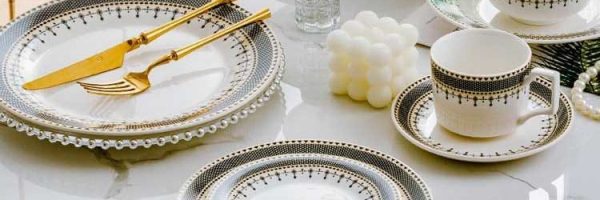
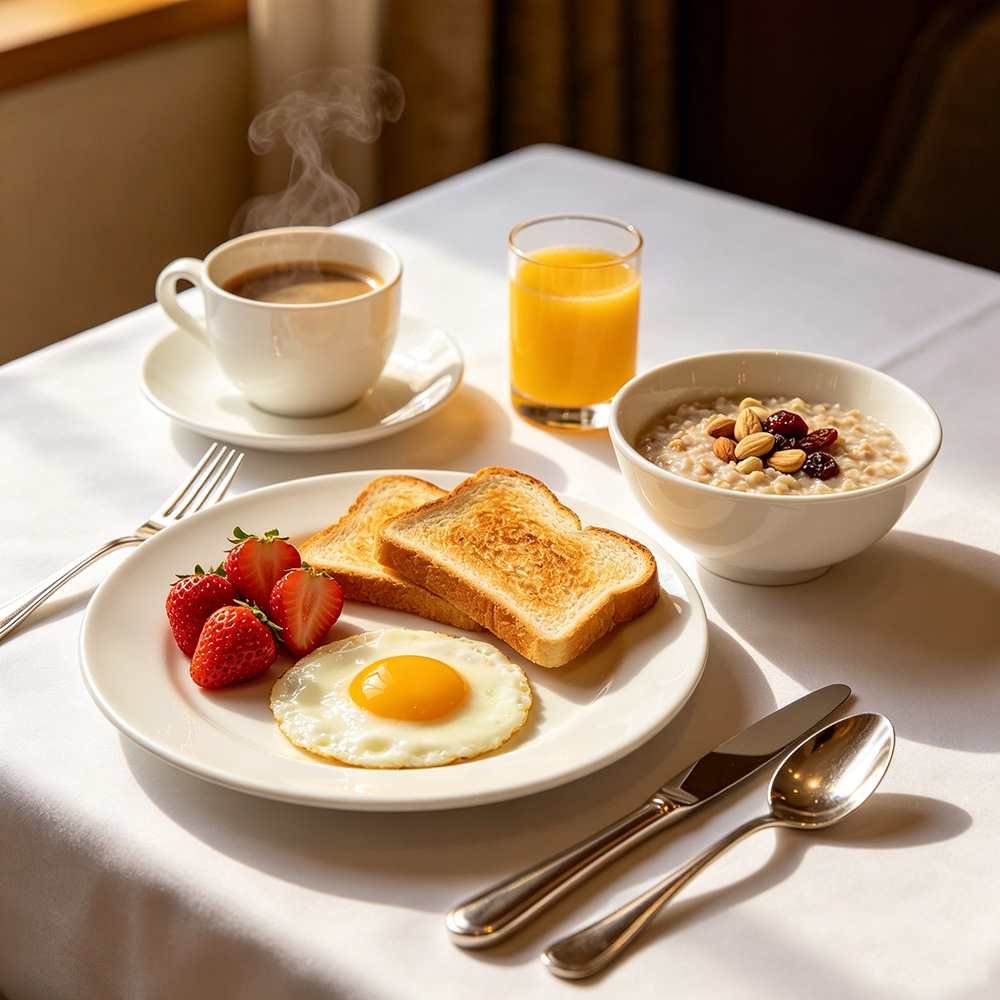
Breakfast is the most operationally demanding meal in any hotel. Research on this subject has been ongoing and has shown that 70 percent of leisure travellers and 63 percent of business travellers say breakfast is an important factor in their hotel choice. It’s the meal that will set the tone for the guest’s day, and one of the first quality cues your hotel will give them every morning is the hotel breakfast tableware on that table. Unlike dinner, there are continuous cycles for hotel breakfast from 6 AM to 11 AM. The plates are stacked and fall dozens of times. From juice station to table, table to dishwasher and back. Cutlery is kept in open trays where guests use it without the assistance of a staff member. More volume stress is applied to the tableware of a hotel in a shorter time than in any other service context. Whether you’re looking into the specs of plates and bowls, or the size of glasses, utensils, coffee cups and more, this guide covers all aspects of selecting hotel breakfast tableware that will not only look great, but they’ll work great. Table of Contents Why Hotel Breakfast Tableware Is Different From Other Meals Hotel breakfast tableware operates under conditions that no other meal service in a property replicates. Volume Intensity One breakfast plate may be in the commercial dishwasher at a 200-cover hotel buffet 4-6 times before noon. The same plate is used twice at an à la carte dinner restaurant. The total of the stresses accumulated on the dishes at a hotel the morning of breakfast exceeds the total of the stresses that can be accumulated on the dishes in a restaurant during an entire day’s service. Self-Service Handling In most hotels around the world, at breakfast buffets, guests use tableware without the supervision of the staff. Plates are picked up, carried down the dining room and arranged on anything from carpeted dining rooms to hard poolside terraces. Self-service puts a different set of pressures on the rim, base impact and stacking pressure that a plated dinner service does not. Speed of Rotation Breakfast time is important in a hotel. The core service window is typically 90 minutes, from 7 AM until 8:30 AM, which is when the highest demand is placed on the service, and requires that the table service be constantly rotating. The period of time, during which a plate chips, a juice glass becomes cloudy, or a coffee cup cracks, is a period of service disruptions that is irrecoverable. Guest First Impression Breakfast is the first meal consumed by most hotel guests. The first impression the guest has is the breakfast tableware, and how well they are made, from the weight of the coffee cup to the clarity of the juice glass to the brightness of the plate. The Three Hotel Breakfast Service Formats There are three different types of hotel breakfast, each with a different hotel breakfast tableware specification. Full Breakfast Buffet In mid-scale and upscale hotel properties, the most common format. The stations are available for guests to serve themselves: hot items, cold items, pastries, cereals, fruits and beverages. For hotel breakfasts, the specification is on stability, on the durability of the rims, on the performance of the dishwasher and not on finesse. The basic principle is the 3:1 inventory rule: three times as many pieces should be in rotation as are used during peak demand. Plated Breakfast Service Breakfast is served in the dining room – usually at luxury and boutique hotels. Staff provide service to each guest. Requires a higher specification for plated breakfast: bone china or high-quality porcelain dinnerware, polished stainless steel flatware and crystal glassware. The volume stress is very low and the visual standard is high. Continental and Grab-and-Go A lighter format is likely to be provided in select-service and budget properties. A few items of baked goods, beverages and packaged items. Hotel breakfast tableware for this format focuses on juice glasses, coffee cups and side plates. Quantities are not as high, but durability is the same — commercial dishwasher resistance is a must, no matter the service format. Breakfast Dinnerware: Plates, Bowls and Beyond Breakfast dinnerware is more varied than dinner service, as not only are there more different dinner categories served at one time, but there are also more different pieces of dinnerware. Breakfast Plates Hotel-grade porcelain dinnerware plates with 25 to 28 cm diameter handle most hotel breakfast tableware requirements — large enough for a full cooked breakfast and just the right size for continental service. ISO 9001 and FDA-certified hotel-grade porcelain performs significantly better in continuous commercial dishwasher rotation than retail-grade alternatives. Look for reinforced rim profiles — the weakest point in high-stack breakfast buffets. Side Plates At a breakfast buffet, 20-23cm side plates are used for the toast, pastries and fruit. The same porcelain is used, but the side plates must be of the same batch, as they are the ones that guests will be holding up to the other plates at the buffet line. Cereal and Soup Bowls Deep bowls (15-18cm) for cereals, porridge and yogurt. The wide, shallow bowls are more stable on trays and less likely to tip over during the transport of guests from station to table at a self-service buffet than narrow, deep bowls. Egg Cups and Specialty Pieces Eggs are served as a breakfast treat at many European and Middle Eastern full-service hotel breakfast programs and egg cups in matching porcelain or bone china finish off the breakfast table. Breakfast Flatware: Cutlery for Morning Service Hotel breakfast flatware faces unique challenges compared to dinner service. Cutlery sits in open trays at buffet stations where guests handle dozens of pieces to find what they need. It falls on hard surfaces and flows through the commercial dishwasher multiple times before noon. 18/10 stainless steel flatware is a professional option for flatware for a hotel breakfast. The 18 per cent chromium and 10 per cent nickel content gives it added protection against corrosion, the finish will not change after numerous cycles
Sustainable Hotel Tableware: Eco-Friendly Options for Hotels in 2026
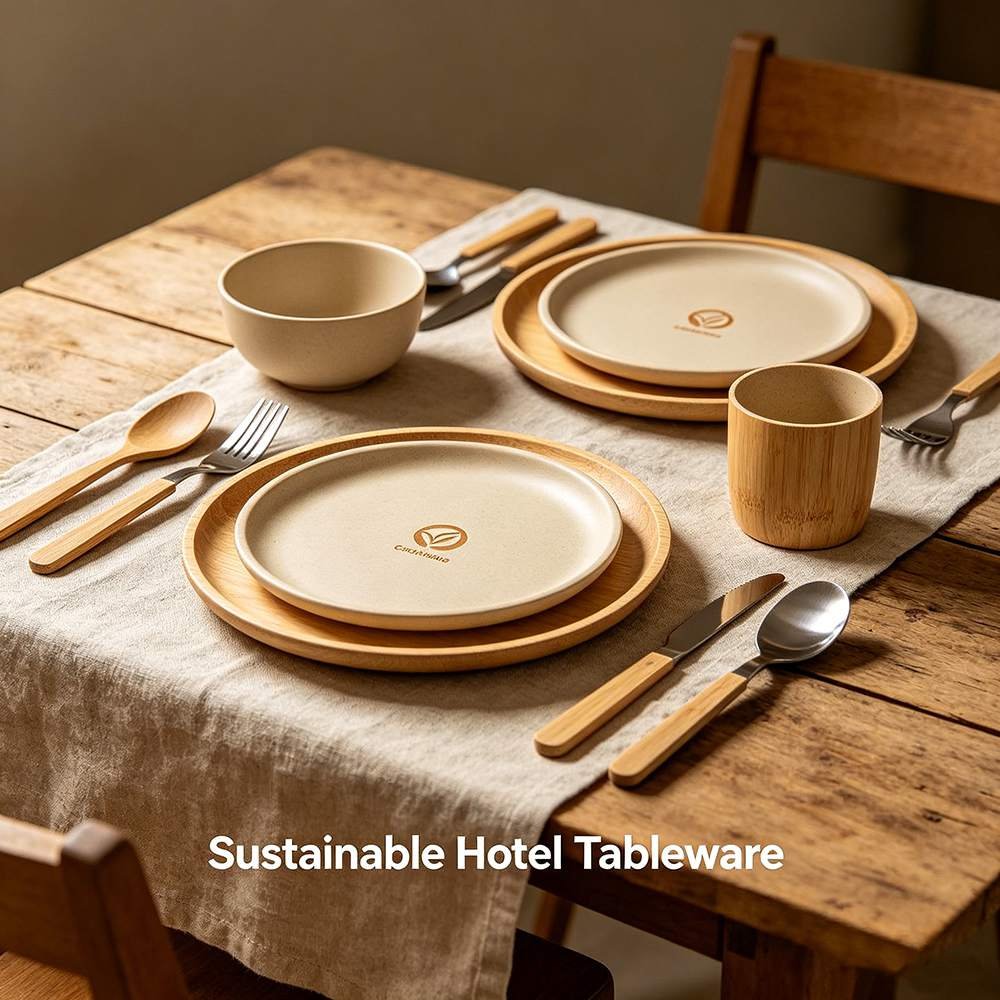
Sustainability in hospitality has crossed a threshold. It is no longer a positioning decision for a brand but a procurement requirement. Single-use plastics are no longer acceptable and are being phased out in hospitality environments in response to the increasingly strict rules and the demand of the consumer, being replaced by reusables. Now, 73 percent of travelers want the hotels they book to show environmental care. This transition has an immediate impact on hotel procurement managers and F&B Directors. Your decision on sustainable hotel tableware impacts your ESG reporting, satisfaction ratings, regulatory compliance, and overall cost of ownership all in one. This guide covers every dimension of sustainable hotel tableware procurement in 2026 — from certified materials and eco-friendly manufacturing standards to supplier evaluation and the business case for making the transition. Why Sustainable Hotel Tableware Matters More Than Ever in 2026 Three forces are driving sustainable hotel tableware from a marketing preference to a procurement requirement in 2026. Regulatory Pressure Single-use plastic cutlery, plates, and straws have been banned in EU member states by the Single-Use Plastics Directive. These post-Brexit requirements are equally reflected in UK rules. Several other states in the USA have laws that are similar. Hotels that serve customers in several markets are now required to prove their adherence to an evolving, multifaceted regulatory regime, and their tableware purchases are on the agenda. Guest Expectations Millennials are now the largest generation of travelers in the hotel industry, and 73 percent are willing to pay more for sustainable hotel offerings. Where properties are unable to show sustainable practices, they are at risk of losing bookings to their competitors that can. Eco-friendly hotel tableware is no longer a differentiator; it’s a base standard expectation, especially for luxury and/or lifestyle properties. ESG Reporting Requirements International hotel brands are now being asked to disclose what they can about their supply chain sustainability credentials — and what, for example, certifications their hotel tableware supplier partners have. Hotel groups with publicly pledged sustainability commitments are at risk of compliance issues, and a supplier without an audited sustainability record is a black mark on an ESG report. Understanding Sustainability Certifications for Hotel Tableware Not every sustainability claim is the same. The certifications that are relevant to the sustainable procurement of hotel tableware are those that have been verified by independent organizations to internationally agreed-upon standards. Global Recycled Standard Global Recycled Standard (GRS) is a third-party verification of recycled content from chain of custody audits. A GRS-certified manufacturer of tableware will prove that their products are made with verified recycled content, and not a marketing promise. The most important certification for procurement teams with recycled content specifications. Recycled 100 Claim Standard Products with the Recycled 100 Claim Standard are 100% made from recycled materials. This certification offers the most assurance for hotel groups with set recycled content requirements. ISO 14001 International standard for environmental management systems – ISO 14001. A manufacturer who is certified to ISO 14001 has developed a systematic way of reducing environmental impacts that extends to the manufacture of energy, waste management, water use, and emissions. BSCI and Sedex Business Social Compliance Initiative (BSCI) and Sedex certifications demonstrate ethical production and transparency. These certifications are becoming more necessary for modern slavery and ethical sourcing commitments by hotel groups for all supply chain partners. FDA and ISO 22000 FDA compliance and ISO 22000 are food safety standards that must be met, particularly for tableware that directly touches food, and especially important for materials that might be less well-known to regulators than traditional ceramics. Eco-Friendly Materials for Hotel Dinnerware Material is the most effective and important sustainable hotel tableware choice possible for most properties: selecting dinnerware that offers durability, good looks, and dishwasher washability, while also being made from a lower impact material. Recycled Porcelain and Bone China The most cost-effective sustainability improvement for most hotel dinnerware initiatives. Today, the most prominent tableware manufacturers have bone china and porcelain dinnerware and bone china collections that contain post-industrial recycled ceramic content and are produced using reduced-energy kiln processes and are certified to the Global Recycled Standard. They are nearly unmistakable when it comes to appearance, chip proof, dishwasher strength and durability, but they’re definitely easier on the environment. Stoneware The logical solution for hotels that emphasize sustainability in their brand. Stoneware is fired to a high temperature for excellent chip resistance and commercial dishwasher durability. Its organic design and textured finish convey a sense of environmental authenticity at the table, which is impossible with traditional white porcelain. Stoneware dinnerware is a visual representation of the property’s sustainable values for boutique hotels, lifestyle properties, and eco-resorts. Kiln Change Dinnerware The natural variations in the firing process bring unique, organic color effects to each dinnerware piece in the Kiln Change dinnerware. The natural variation is not a fault of the manufacturing process; it’s a design feature that tells the story of craft, authenticity, and natural material sourcing. Kiln change ceramic dinnerware provides a table setting that tells a sustainability story, quietly, with no words of marketing copy for sustainability properties. What to Avoid When selecting eco-friendly hotel tableware, avoid these common pitfalls: Single-use plastics— now banned or heavily restricted across the EU, UK, and multiple US markets. Melaminewith formaldehyde binders — avoid for formal dining contexts and verify compliance with EU food contact regulations. Unverified bamboo composite tableware— many products marketed as eco-friendly contain melamine binders; always request material safety documentation. Products without food safety certification— FDA compliance and ISO 22000 are non-negotiable regardless of sustainability claims. Sustainable Flatware: The Case for 18/10 Stainless Steel 18/10 stainless steel flatware has been the most sustainable hotel flatware choice available for decades — and the sustainability credentials speak for themselves: Lifespan— quality stainless steel flatware will serve for 10 to 20 years, whereas disposable flatware will serve only for months. Recyclability— 100% end of life recyclable without loss of quality; no issues with recycling at end of life because stainless steel is 100% recyclable. Mostcommercial stainless steel production uses 60 to 80 percent recycled content in raw materials Chemical stability— stainless steel
Hotel Glassware Guide: Wine Glasses, Champagne Flutes, and Water Goblets for Every Hotel Outlet
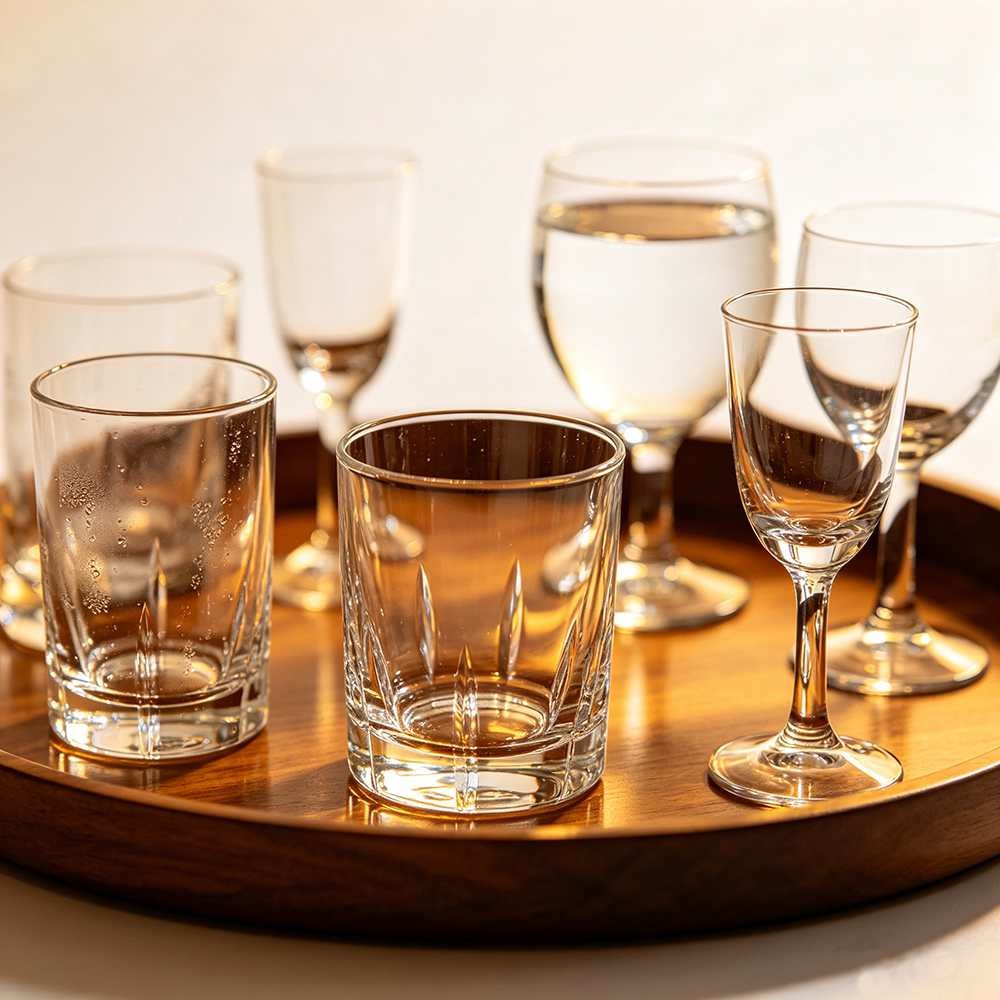
A five-star hotel is not one dining environment; it is four or five. The flagship restaurant for fine dining. The all-day dining outlet. The lobby bar. The breakfast buffet. Room service. Each one serves a different guest at a different moment with different expectations, and the glassware on that table has to meet every single one of them. This is where the majority of hotel glassware purchases go wrong. Properties select one glassware for the entire property, and then have to deal with the consequences. The wrong glass weight in the fine dining room, the wrong glass height at the buffet counter, the wrong glass material when it comes to room service, and the wrong rim profile at the bar. This guide takes a different approach. It’s outlet-by-outlet coverage, which means that you can design a comprehensive glassware program that will be effective in all your food and beverage outlets in your hotel. Why Hotel Glassware Cannot Be One-Size-Fits-All According to the Forbes Travel Guide — which rates five-star hotels in over 100 countries — 67 percent of their ratings are based on service quality. One of the most common and personal touch points a guest has with that service is the table. From 2025 onward, and In 2026, hospitality industry operators are taking a firm stance on outlet-specific hotel glassware and HoReCa glassware specifications, with glass profiles, materials, and weight tailored to the specific service environment, rather than a single specification for all outlets. To get this right, you need to understand what each hotel F&B outlet really requires from its glassware and make procurement decisions accordingly. Fine Dining Restaurant Glassware: The Premium Specification The most obvious and most critical place to see hotel glassware quality in the fine dining restaurant. Guests feel the weight of the glass in their hand, the clarity when held up to the light, and the elegance of the rim against their lips. These are not “secondary impressions” but rather fundamental elements of value and quality that command a top-dollar menu price. Material The right specification for fine dining hotel glassware is lead-free crystal hotel stemware. It is optically clearer, has a thinner rim profile, and has better light refraction, which all convey luxury at a first glance. Forbes’ criteria for five-star hotels include that crockery and glassware must be of uniform high quality throughout all dining areas—and, in a fine dining environment, that means crystal. Wine Glasses Red and white wine glass specifications are suitable for fine dining. For full-bodied red wines, a larger bowl (16-20 ounces) is recommended to give the wine room to breathe. White wine glasses, which are usually 12 to 14 ounces in size, have a more upright, narrow bowl that helps maintain a cooler temperature and more delicate aromatics of white wines. Water Goblets Fine dining water goblets are best suited to match the wine glass specification for weight and clarity. A crystal water goblet with a delicate stem and a slightly larger bowl (12 to 14 ounces) offers beauty and sufficient capacity for table-side water service during the meal. All Day Dining Glassware: Balancing Quality and Volume This all-day dining outlet sees much higher cover volumes than the fine dining restaurant and is often used to serve a wider range of clientele during breakfast, lunch, and dinner. The hotel glassware specification must consider both aesthetics and the practical aspects of heavy use and continuous service. Material The practical specification for all-day dining is commercial-grade commercial glassware, which is soda lime glass. Modern hospitality grade soda lime glass offers superior clarity, uniformity from batch to batch, thermal shock resistance, and rim strength for continuous commercial dishwasher cycles. All Purpose Wine Glasses Wholesale wine glasses in an all-purpose specification of approximately 13 to 15 ounces – will serve both red and white wine service with ease at any day dining volume. At this outlet level, having both a red wine glass program and a white wine program is creating an unnecessarily complex inventory situation, with no real benefit to the guest. Water Goblets A stable, wide-based water goblet in the 10-14 ounce size accommodates the entire spectrum of all-day dining beverage service, from table water service at dinner to juice and soft drink service at breakfast. At this specification level, focus on base stability and rim durability more so than decorative detail. Juice Glasses All day dining outlets must have dedicated juice glasses in a shorter, wider size (6-8 ounces) that will be stable on a table or self-service counter and easy for guests to pick up and handle during breakfast service. Buffet Glassware: Stability and Durability First Buffet hotel Glassware is in the most challenging environment of any property. Guests serve themselves glasses. Glasses are placed on open counters and knocked over, overfilled, and carried throughout the dining room. The service cycle is continuous, meaning that glasses are in constant motion from guest to table, to dishwasher, and to the buffet station during service. Here, aesthetics take second place to structural performance. Stability, rim strength, and dishwasher durability are the order of priorities. Water Goblets and Tumblers A water goblet with a broad base is most stable for buffet service, or a straight-sided tumbler. Compared to stemware, tumblers (which lack a stem and a tall centre of gravity) break much less often in buffet settings. Juice Glasses The shorter, wider juice glass design minimizes the tip hazard on crowded self-service counters and is much more stable than tall, narrow designs with constant guest manipulation. Champagne Flutes A thicker stem profile champagne flute with a reinforced base is much more likely to withstand the rough handling that occurs in self-service buffet service by hotels with buffet brunch programs and sparkling wine service, compared to more expensive crystal specifications. Hotel Bar Glassware: Visual Impact and Versatility The hotel bar is a revenue generating outlet, and hotel bar glassware is directly linked to the perceived value and the justification of cocktail pricing. In a lobby bar or lounge, your guests equate glass quality with drink quality, and with the right glassware specification, your bar staff
Wedding Tableware Rental Business: How to Start and Grow a Profitable Inventory
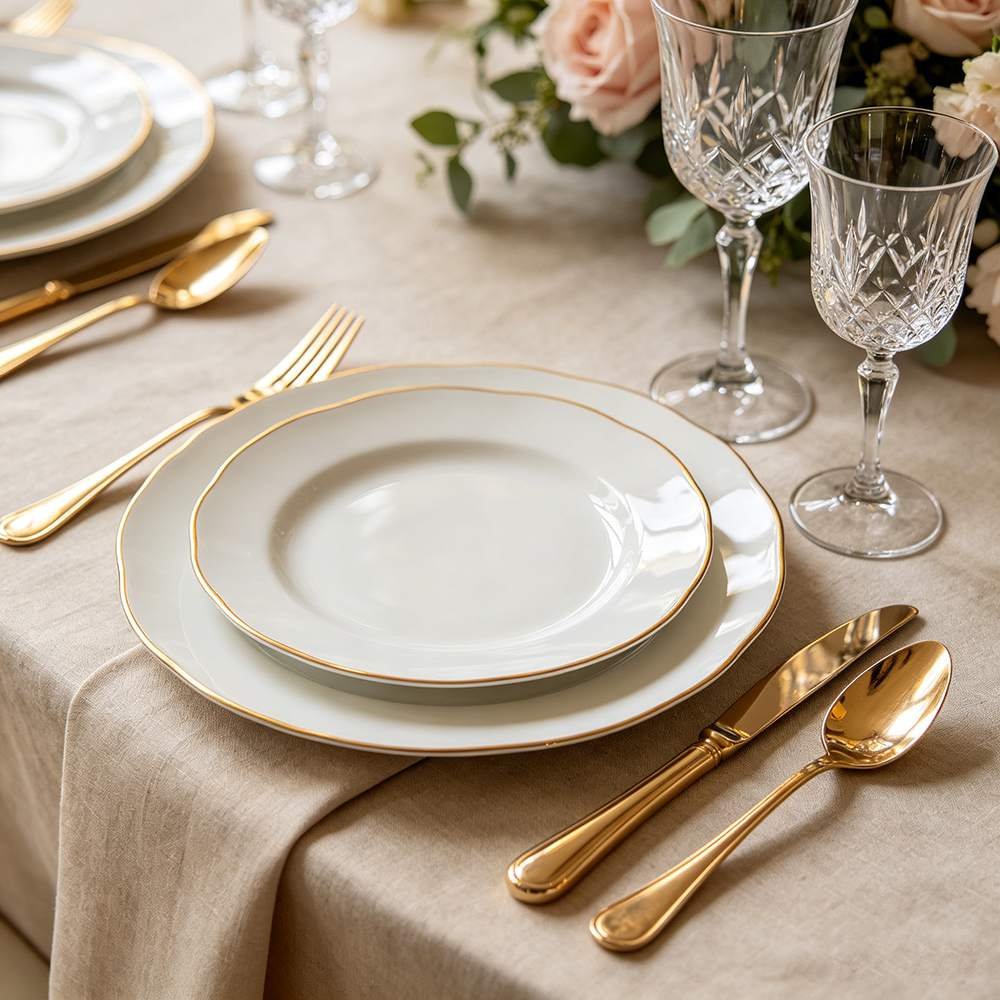
The wedding industry never slows down. Each weekend, somewhere in the world, a couple is arranging a reception — and each of those receptions requires plates, cutlery, and glassware. Wedding tableware rental is one of the most profitable niches in the events business. The global party and event rental market is estimated to be worth $12.38 billion in 2022 and grow to $37.54 billion by 2030. If you’re considering launching a wedding tableware rental company or expanding your current one, here’s what you need to know. Whether you are starting from scratch or looking to scale an existing operation, the fundamentals are the same, and this guide covers all of them. Why Wedding Tableware Rental Is a Smart Business in 2026 Most couples don’t want to purchase 200 place settings they will only use once. High-quality tableware is rarely available in large quantities. That’s the space that wedding tableware rental companies fill in, and it’s a space that can produce steady, predictable income. The demand is permanent. Weddings take place every weekend of the year. One wedding tableware rental for a 150-guest reception alone includes more than 1,500 individual pieces, including plates, side plates, soup bowls, dinner forks, salad forks, knives, spoons, wine glasses, champagne flutes, and water goblets. After the initial investment, each rental turn will yield pure revenue minus the cleaning, transport, and storage costs. Profits for industry operators are 40 to 60 percent when inventory is used regularly, and each item pays for its purchase price in 8 to 12 rental periods. What Wedding Tableware to Stock First The first and most crucial decision in your wedding tableware rental business is choosing the right inventory. Over-diversify, and you’re stuck with many pieces that don’t turn a profit. If the stock is too tight, you won’t be able to provide full reception packages. Here are the most in-demand pieces across all wedding styles and budgets: Dinnerware Dinner Plates, Side Plates, Soup Bowls, and Charger Plates. White and off-white bone china and porcelain dinnerware work for any wedding style, from minimalist to maximalist. Flatware Dinner forks, salad forks, dinner knives, butter knives, dinner spoons, dessert spoons, and teaspoons. Stainless steel flatware in mirror finish is the most in-demand finish for weddings. Gold PVD and black matte finishes are becoming more popular choices for luxury and styled events. Glassware Wine glasses, champagne flutes, and water goblets are the three essential categories. Every full-service wedding package requires all three. Serving Pieces Platters, soup ladles, serving tongs, and sauce boats for catered receptions with buffet elements. Build a basic set of 200-300 full place settings and then add specialty items. You’ll have the ability to host mid-size weddings of 100 to 150 people, and you’ll have the ability to deal with storage and cleaning expenses efficiently. How to Choose the Right Tableware for Your Rental Inventory Not all tableware performs equally in a rental operation. Beautiful pieces in a showroom that chip easily, fade after each dishwasher cycle, or don’t have the same batch consistency between restock orders are a problem. Durability Is the Primary Consideration Your rental inventory will go through hundreds of commercial dishwasher cycles over its lifetime. Hotel-grade porcelain and bone china manufactured to hospitality standards perform significantly better in high-frequency commercial washing than retail-grade alternatives. Look for tableware certified to FDA compliance and ISO 9001 — the same standards required by five-star hotels. Batch Consistency Matters for Aesthetics Replacement parts should be the same as those currently in stock when replacing after breakages. If the plate or champagne flute doesn’t match, it detracts from the uniformity of a table setting. Only deal with manufacturers with production records and who will ensure that the product is manufactured in batches that correspond to restock orders. Finish Durability Determines Longevity Mirror-polished stainless steel flatware should maintain its shine after 5,000 or more dishwasher cycles. Glassware should resist clouding and micro-scratching under repeated commercial washing. These are not cosmetic considerations; they directly affect the lifespan of your investment and the visual quality you deliver to clients. Certifications Are Your First Filter An FDA-compliant, ISO 9001 and BSCI/Sedex certified manufacturer is audited independently against international safety and quality standards. Think of certifications as your safety net — they tell you before a single piece arrives that what you are putting on your clients’ tables is safe, consistently made and ethically produced. Batch Consistency Is Your Second Filter The problem that every professional rental house will tell you is mismatched restocking orders. Your replacement plates must be the same as the plates you currently have. Same color. Same glaze finish. Same rim dimensions. This can be guaranteed by a manufacturer who has a complete production history for each of its active customer specifications. A person who can’t will cost you more than you saved on the unit price in unhappy clients and replacements. Customization Capability Becomes Important as You Grow During the initial phase, table service and normal mirror-finished stainless steel or dinnerware will do the job just fine. However, as your rental business grows, custom table service items such as your brand logos on plates, your name in cutlery handles, are a real competitive advantage. Have the option available when the time comes by working with a manufacturer that provides full OEM and ODM services. Reference Clients Are Your Final Filter A manufacturer whose custom flatware and ceramic dinnerware is trusted by five-star hotel groups and global retail brands has already proven their quality under the most demanding conditions in the industry. That track record tells you more than any brochure. How to Price Your Wedding Tableware Rentals Correct wedding tableware rental pricing is what makes the difference between a profitable wedding table hire business and a busy table hire business that never generates capital. The typical rental pricing scheme is cost recovery-based. The majority of operators charge around 10-15% of the cost of their wholesale purchase for individual rentals. Dinner plate — wholesale cost $8 to $15 — rental price $1.00 to $2.25 per event Wine glass — wholesale cost $4 to $8 — rental price $0.60 to $1.20 per event Dinner fork —
How to Choose Tableware for Hotel Buffets: A Complete Procurement Guide
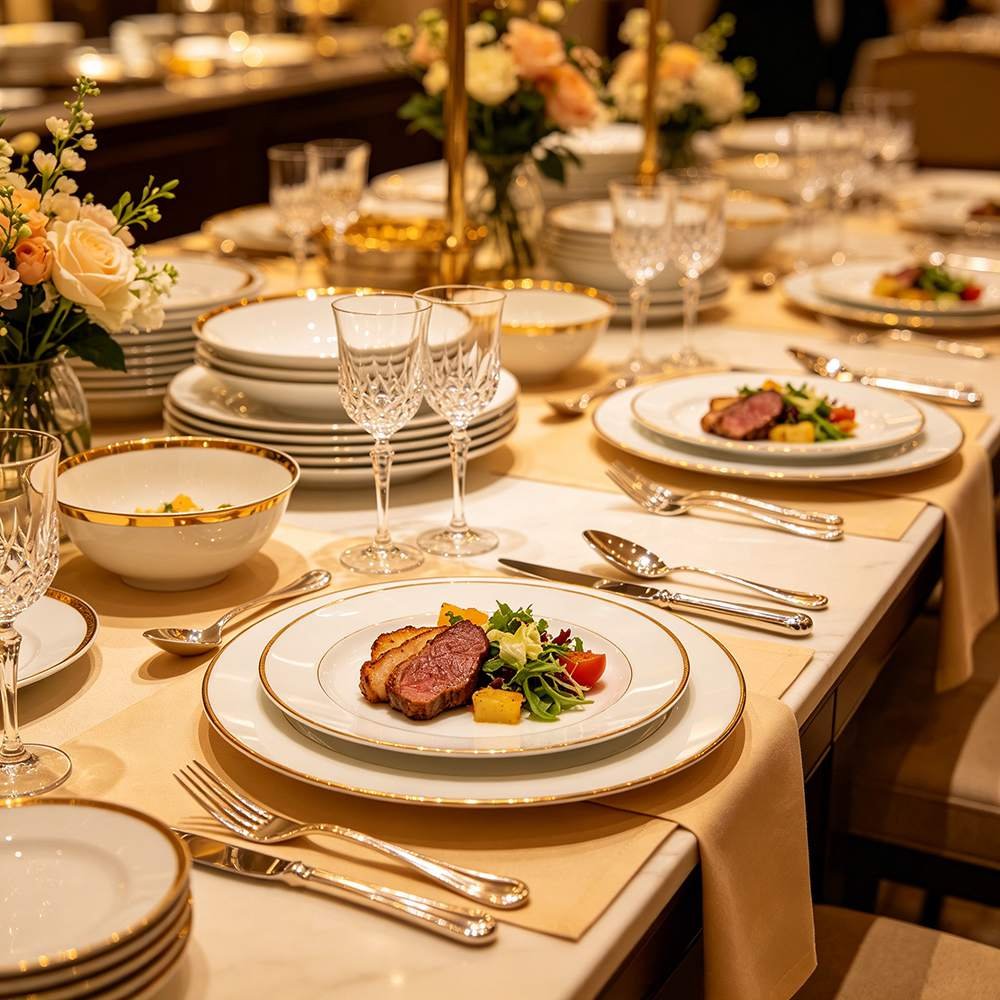
One of the most challenging tableware settings in the hotel sector is a hotel buffet. In a la carte establishments, the server regulates what plates get moved, while at a buffet, all of your tableware is on display and continuously passed among the hundreds of patrons serving it over a hundred times a day. The plates stack up and come down dozens of times per service. The serving plates are sent on a fast-moving cycle from the kitchen to the station and back. There is no place to make a wrong choice on the hotel buffet tableware, because it’s not just a matter of your budget; it’s a matter of your guest experience, your staff efficiency, and your brand every morning. Table of Contents What Makes Hotel Buffet Tableware Different The only difference between hotel buffet tableware and the regular restaurant tableware is volume stress. With a plated dining room, each plate could move four times during one service cycle: from the kitchen to the table, from the table to the dishwasher, from the dishwasher to the plate storage, and finally, from the plate storage to the kitchen. That same breakfast plate is used several dozen times before noon at a 300-person capacity hotel breakfast buffet. It’s stacked by kitchen employees, picked up by guests, taken by cleaning crews, and put through the dishwasher three times before lunch is served. The tableware that remains in this kind of environment is not always the most beautiful — it’s the most structurally stable, most chip-resistant at the rim, and the most uniform in shape to promote easy stacking. These are the guidelines used when making hotel buffet tableware purchases, which vary from the criteria used for a la carte tableware purchases. Choosing the Right Plate Material for Your Buffet The most important choice that a hotel buffet tableware buyer must make is the selection of materials. The incorrect material creates replacement expenses that build up monthly. Choosing the Right Plate Material for Your Buffet The standard breakfast and lunch buffet item for most hotels. It is dense and non-porous, resisting chipping better than thin materials; its white surface photographs well; it is subject to high-temperature commercial dishwasher cycles buffeted by operations throughout the day. Modern hotel-grade porcelain that is certified to comply with the ISO 9001 standard and FDA is capable of being run through thousands of dishwasher cycles without any surface degradation. Bone China Ideal for high-end buffet service operations such as luxury hotel brunch services, high-end catering events, and luxury hotel breakfast service, for which visual quality is an important part of the guest’s experience. Guests appreciate its lightness when self-serving of Bone china, and the translucent quality signals that the guest’s first impression of the quality of the bone china is correct. Melamine Ideal for outdoor breakfasts, poolside buffets, and casual food stations, where breakage can be highest. It is almost indestructible, easy to carry, and comes in styles that closely resemble ceramic. The restriction is heat: melamine can’t be placed under heat lamps or in microwaves, thus eliminating it from use in heated food stations. The best hotel buffet plans feature a multi-level structure. Porcelain or bone china (hotel-style) for indoor formal breakfast and brunch. Terrace and poolside outdoor melamine. This helps to lessen the total expense of replacement while preserving the visual quality where guests are paying the most attention. How Many Plates Do You Need for a Hotel Buffet? One of the more frequent and expensive errors in hotel buffet tableware ordering is under-ordering. The rule of thumb in the industry is that you should have three plates for every guest you think you will serve at maximum attendance at your restaurant. One plate is currently being used on the buffet line or by a guest. One is in the dishwasher. One is in reserve storage. If the hotel has a breakfast buffet serving 200 people and a double service rotation is employed: Minimum of 200 guests x 3 plates = 600 dinner plates. Determine opening inventory (720 plates) by adding a 20 percent breakage buffer. Use the same calculation for side plates, soup bowls, and dessert plates. You should use a 3:1 inventory calculation for each category, based on the actual number of covers per customer and the rotation rate. Choosing Serving Pieces for Hotel Buffets Hotel buffet serving pieces are where most procurement teams underinvest. The presentation at the station is the most important part of a buffet — and the serving items are the first thing that gets noticed, even before the food. Serving Platters Process the heaviest use in any buffet. They are continuously carried, replenished, and washed during service operations. Where there is a need to use a lot of platters, as in a hotel buffet, this type of “hotel grade” porcelain is the most reliable — dense enough to withstand repeated use and consistent in color and appearance throughout the years. Soup Tureen and Ladles Purpose-built soup and hot food stations must be robust enough to hold hot food for long periods without being affected by the heat, have good heat retention properties, and be sufficiently heavy in order to be stable on the buffet when used by guests. Stainless steel flatware, ladles, and tongs in 18/10 stainless steel are the professional standard — they do not rust, they clean easily in commercial dishwashers, and they last for years under daily buffet use. Serving Tongs and Spoons No matter how many buffet stations there are, each has to have its own serving utensils for every food item. In a mirror or satin finish, stainless steel serving tongs and spoons will remain pristine during continuous commercial dishwashing and will signal quality to guests throughout service. Chafing Dishes and Chafer Inserts For Hot Buffet stations, Chafing dishes maintain food at a safe serving temperature for long periods of time. The most effective hotel buffet operations employ stainless steel chafer frames fitted with porcelain or ceramic inserts. A combination of the strength of steel and the warmth of the ceramic food presentation. Flatware Selection for Buffet Operations The drop resistance of buffet flatware is different from that of
The Ultimate Guide to Hotel Tableware Procurement 2026
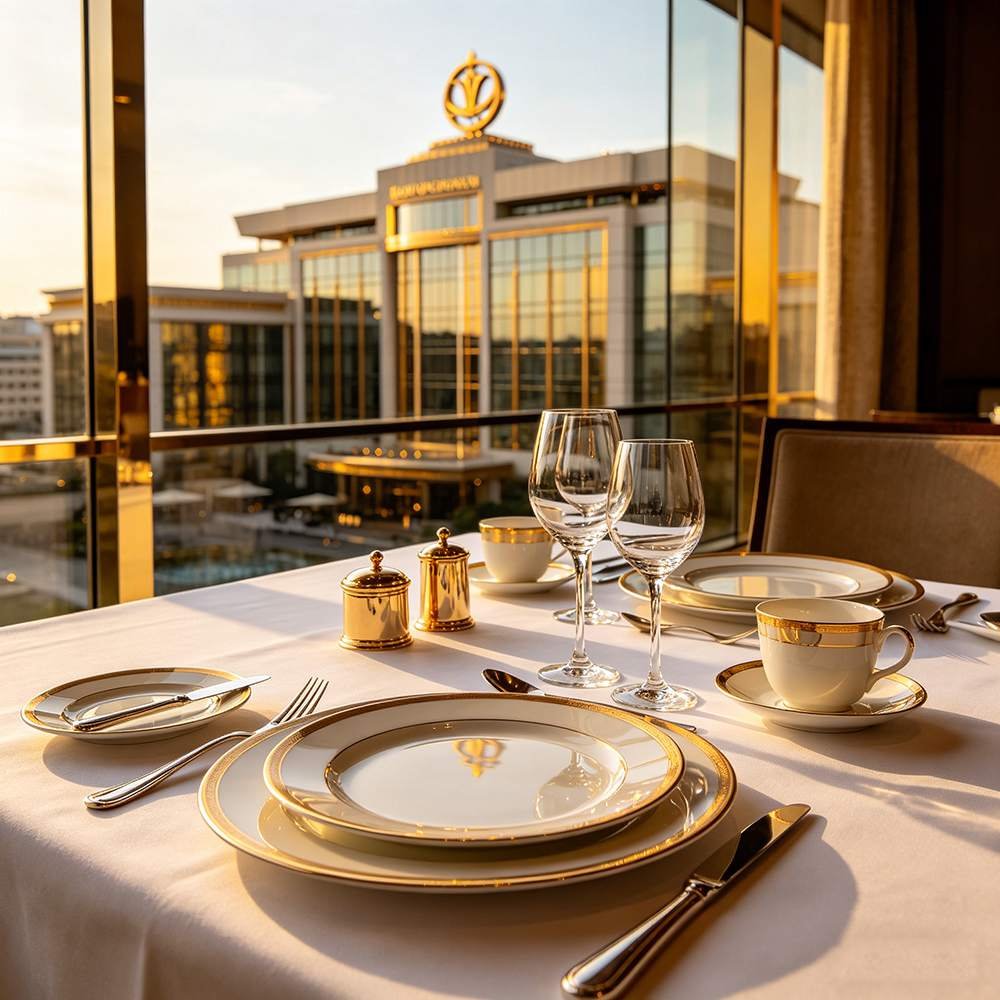
All the elements of a hotel dining table have a story. The weight of a fork, the translucency of a bone china plate, or the clarity of a wine glass in candlelight are made by procurement professionals who know that tableware is an expression of your brand. From materials to certifications, supplier evaluation to customization and cost management, this guide covers every dimension of hotel tableware procurement and horeca tableware selection. Table of Contents What Is Hotel Tableware Procurement? Hotel tableware procurement involves sourcing, assessing, selecting, and buying all the pieces of tableware required throughout the hotel property, such as plates, bowls, cutlery, glassware, and serving pieces. Hospitality procurement differs from retail purchasing because it involves large-volume orders, quality requirements, ongoing restocking needs, and the need to match products year to year and across outlets. It matters because a choice made today will impact your property’s dining experience for the next 3-5 years. Why Tableware Procurement Matters More Than You Think One of the most used and noticeable parts of your guest experience is your table service. Guests use tableware during each meal, and as research has shown, there is always a link between the tableware quality and the perceived quality of the food and satisfaction with the meal. Failure in standards such as unmatched replacement plates, cloudy glassware, or poorly balanced cutlery will be immediately apparent to guests. Enjoying the luxury of premium dishware, thousands of covers, and hundreds of dishwasher cycles protects your brand each day. Medallia research shows that approximately 61% of guests are willing to pay more for a more personalized experience in hospitality – and your tableware is one of the most obvious ways you can give them that experience, every time they sit down to eat. The Four Categories of Hotel Tableware A full hotel tableware program includes four categories of products: Dinnerware Includes all custom dinnerware and crockery throughout your dining establishment, such as plates, soup bowls, charger plates, and serving platters. Bone china, porcelain, stoneware, and melamine are all options for materials, depending on the service and property level. Flatware The term cutlery can also refer to every fork, knife, and spoon that is used at the table, as well as serving utensils for buffets and banqueting. Premium hotel flatware is made from 18/10 stainless steel and comes in a variety of finishes such as mirror polish, satin, tumble, and gold PVD. Glassware Contains all types of drinking vessels, such as water goblets, red wine glasses, white wine glasses, champagne flutes, beer glasses, and specialty drinkware. Materials can be plain tempered glass or crystal (which is free of lead) for a more luxurious environment. Serving Pieces Cover all items for presentation and transfer of food: serving bowls, platters, ladles, tongs, sauce boats, and buffet items. These items are used daily and must be of the same quality as tableware in the front of the house. How to Choose the Right Material for Your Property The choice of materials is the most critical in hotel tableware buying. The selection of the wrong material impacts durability, aesthetics, heat retention, dishwasher performance, and overall cost of ownership throughout the inventory lifecycle. Bone China Custom bone china dinnerware is the premium choice for luxury and fine dining. It is translucent and luminous, which conveys refinement at a glance and makes it look great in pictures. Bone china is not as fragile as it looks, but the thin walls do need to be handled carefully in high production quantities. Porcelain Custom porcelain dinnerware is the most versatile choice for hotel tableware programs. The modern hotel-grade porcelain is available in a bright, uniform white finish that is ideal for all types of dining, ranging from buffet to a la carte service. It is tougher and thicker-walled, making it very resistant to chipping in commercial settings. Stoneware Ideal for rustic, organic, and boutique hotel styles. It’s a textured, artistic style that gives a table setting a nice “warmth” and has become a popular choice in lifestyle hotels and resort properties. Melamine Practical solution for poolside dining, outdoor terraces, and casual food and beverage outlets, where the risk of breakage is high. It’s nearly indestructible, lightweight, and comes in designs that closely resemble ceramic. The most successful hotel tableware programs have a multi-tiered approach bone china or high-quality porcelain in the flagship dining rooms, hotel-grade porcelain throughout all day dining and room service, and melamine in the outdoor and casual dining areas. How to Choose the Right Material for Your Property The most important tool in your hotel risk management toolbox when shopping for tableware is certifications. They certify your suppliers’ food-safe products as quality-approved and ethically and environmentally produced products, internationally. FDA compliance— for properties that are in or supply the US market. Make sure that all materials are appropriate for direct food contact. ISO 9001— Ensures a systematic quality management system for each production run. ISO 22000— Focuses on food safety management systems, to ensure that manufacturing processes are verified to comply with international food safety standards. BSCI— Business Social Compliance Initiative is a guarantee of ethical production and working conditions. Sedexwill help them to show transparency and accountability in their supply chain, and is now a requirement for many international hotel groups. Global Recycled Standard— certification for sustainable sourcing of materials for properties with environmental commitments. How to Evaluate a Hotel Tableware Supplier The decision of the hotel tableware supplier is a long-term one. The following is a formal structure for evaluation: Production Capacity Ensures that suppliers can deliver your first order and subsequent reordering in a timely fashion. For large groups or multi-property programs, a minimum of tens of millions of pieces per year is needed for a reliable supply chain. Customization Capability Essential if your property requires branded tableware. Your supplier should have a team of in-house designers to help turn your brand requirements into production specifications, and custom glaze colours, logo printing or embossing, rim profile options, and custom packaging. Quality Control Processes Will conduct a multi-stage inspection that starts from raw material to
Brett Flatware: Premium Stainless Steel Cutlery for Hotels, Restaurants, and Global Brands
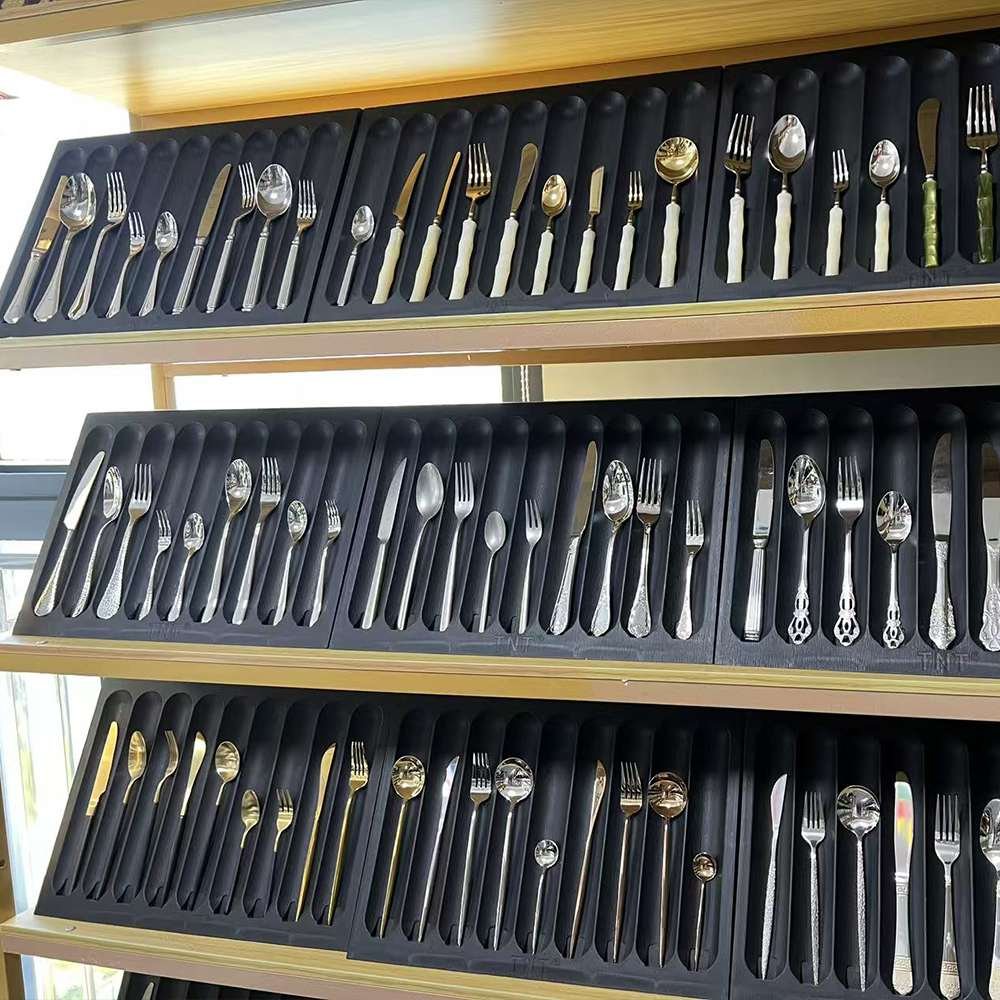
When a guest at a five-star hotel picks up a fork, they are holding much more than a utensil. They are in contact with a brand’s promise. All this, from the weight to the finish to the balance in the hand, is a statement of quality before your first bite. Hotels, restaurants, or global retail stores don’t purchase custom flatware by the thousands. This is an investment in the experience, reliability, and brand of the guest. Brett is a reputable custom flatware company that produces high-quality, premium stainless steel cutlery for Walmart, Target, Starbucks, and 8,000+ worldwide hotels. Who Is Brett? Shenzhen Brett Hotel Supplies Co., Ltd. (China Brett) is a leading one-stop HoReCa tableware solution provider. Brett manufactures a complete range of HoReCa tableware, including custom flatware, ceramic dinnerware, and glass drinkware, all from a single trusted manufacturing partner in South China. Brett was founded in 1998 and is based in a modern production plant in South China, providing services to hotels, restaurants, catering companies, and retail brands in over 80 countries. Having more than 20 years of manufacturing experience, Brett has established a reputation for offering high quality tableware with beautiful design, strict quality control, and a wide range of customization options, all under one reliable manufacturing company. https://youtu.be/Y9mVxZqx4Bg?si=5y4UXnmBaOt-UT09 Brett’s Cutlery Product Range Brett produces a complete line of stainless steel cutlery to suit the needs of the high-volume hospitality business and upscale retail brands. Dining Flatware Dinner forks, salad forks, and fish forks Dinner knives, butter knives, and fish knives Dinner spoons, dessert spoons, soup spoons, and teaspoons Serving Sets Soup ladles and serving tongs Serving spoons and complete buffet serving sets Designed for both kitchen practicality and front-of-house presentation Specialty Cutlery Cake forks, oyster forks, and cocktail forks Specialty dining pieces for fine dining and event settings Brett has it all, whether you require a full five-piece place setting in a luxury hotel dining room or a full buffet serving set in a high-volume catering business. Available Finishes Brett provides three basic stainless steel flatware finishes that match any dining aesthetic and brand needs: Mirror Finish The traditional option in hotel and restaurant flatware. It is reflective and shines brightly on a formal table set up, and takes photographs exceptionally well. Mirror finish is the most popular of five-star hotels and fine dining restaurants in the world. Tumble Finish Gives the cutlery a natural, brushed, and organic appearance while giving it a slight texture to reduce finger and water marks. It’s equally perfect for modern eatery designs and relaxed luxury. Matt Finish Provides a sophisticated, non-reflective surface that’s grown in popularity for modern luxury hotel environments. It is a simple yet elegant look that will complement minimalist table design ideas and will look especially great with neutral tableware sets. Beyond these standard finishes, Brett also provides gold PVD finishes and wooden handle options for brands that want unique, upscale finishes. Manufacturing Capabilities Brett’s South China production facility is one of the most capable custom flatware manufacturing operations in the region: 12,000 square metresof dedicated production space 300+ skilled workersin a professional production team 60,000,000+ piecesannual production capacity Tough Quality Systemwith multi-stage quality control process Full OEM and ODM services,including custom packaging, branding, and private label solutions Every piece of cutlery that leaves our facility passes through a multi-stage quality control process from the inspection of raw materials to the final packaging. Our OEM/ODM service production capacity allows us to fulfill large-scale procurement orders from hotel chains, retail brands, and catering businesses around the world without sacrifice on quality or delivery time. Certifications and Quality Standards Brett’s cutlery products are certified by the most demanding international quality and compliance organizations of the industry: BSCI— Business Social Compliance Initiative, confirming ethical manufacturing practices Sedex— Supplier Ethical Data Exchange certification FDA— Food and Drug Administration compliance for US food safety standards ISO 9001— Quality Management System certification ISO 22000— Food Safety Management System certification ISO 45001— Occupational Health and Safety Management System ISO 14001— Environmental Management System certification GMP Certified— Good Manufacturing Practice SQP, SCAN, Global Recycled Standard, and Recycled 100 Claim Standard— responsible sourcing and environmental sustainability These certifications are not just a compliance obligation for Brett, but are the foundation of the trust our international partners have in us as a long-term manufacturing partner. Global Brand Partnerships Brett’s reputation as a trusted hotel cutlery supplier wasn’t built overnight. It’s the result of years of consistently delivering excellence to some of the world’s most famous retail and hospitality brands. Brett’s stainless steel cutlery is trusted by such global giants as Walmart, Target, Macy’s, Kohl’s, Sainsbury’s, Kroger, ALDI, Williams Sonoma, US Foods, Starbucks, Dollar General, and MINISO. These are brands that have hundreds of suppliers all over the world and ensure that all manufacturing partners meet the highest standards for product quality, ethical practices, and supply chain reliability. They have been working together with Brett for a while, and their relationship is based on trust, which can only be earned through consistent performance. A supplier with this kind of track record takes the guesswork out of the hotel procurement manager or retail buyer’s choice of a new custom flatware manufacturer. Brett is the quality standard when the world’s largest retailers rely on him. Why Choose Brett as Your Cutlery Supplier? Brett has been the cutlery supplier of choice for over 8,000 hotels and 10,000 catering companies around the world. These are the things that make a difference. Use a scale suitable for your operation. With 300 dedicated production staff, Brett’s South China facility can produce more than 60 million pieces a year. From your initial order for one hotel to your restocking of hotels worldwide, Brett is on time and on volume. Customization without compromise.Whether it’s handle design, selecting the finish, private label packaging, or logo engraving, Brett’s OEM/ODM service has you covered. Your brand is embedded in all of our products. Certifications to secure your procurement. FDA, ISO 9001, ISO 22000, ISO 45001, ISO 14001, BSCI, and Sedex — these are not box-ticking exercises for Brett. They are the expectations we
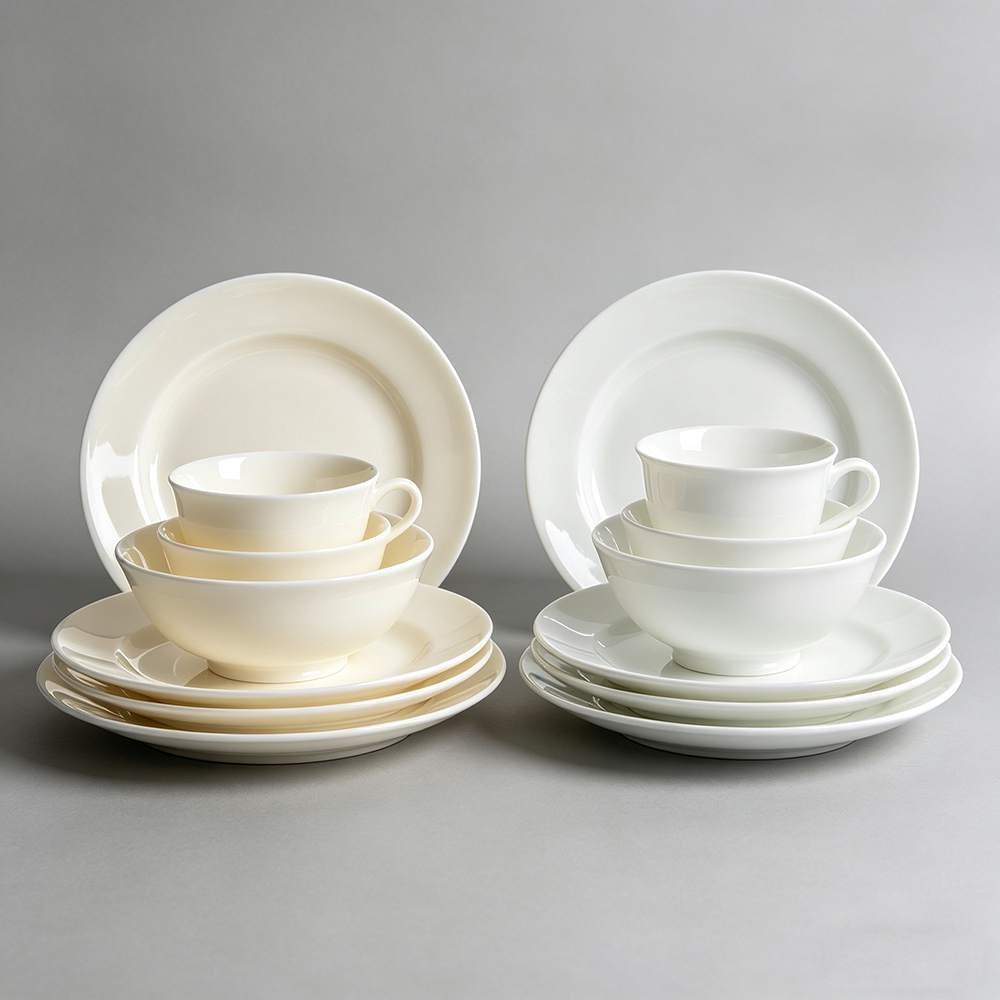
Bone China vs Porcelain Dinnerware: Which is Better for Hotels and Restaurants?
Every procurement manager eventually faces this question. You are sourcing new tableware for your property, and two materials, bone china and porcelain, will be on your mind. Both look premium. They are both served on five-star tables across the globe. However, they behave quite differently in professional hospitality circumstances. This guide will explain the actual difference in terms of durability, aesthetics, heat retention, and cost to enable you to make the correct decision about your property. Table of Contents What is Bone China Dinnerware? Bone china is a porcelain that includes a large percentage of bone ash, usually 30-45 percent of the overall composition. This bone ash, which is the result of burnt animal bones, provides the material with its characteristic features: a transparent, almost glowing look, high whiteness, and a very low weight in comparison with its strength. Bone china was originally made in England in the 18th century, but soon became the luxury tableware of choice among manufacturers in other countries. It is still the gold standard in fine dining dinnerware restaurants, luxury hotel restaurants, and high-end banquet settings. When a guest picks up a bone china plate and feels the lightness and elegance of the plate in comparison to the normal crockery, that one touch sends a message of quality even before the first dish is served. What is Porcelain Dinnerware? Porcelain dinnerware is produced from refined kaolin clay that is fired at high temperatures, usually between 1,200 and 1,400 degrees Celsius. The outcome is a high-density, vitrified, non-porous substance that is highly strong, uniform in color, and has been tested over decades of heavy commercial use. Porcelain does not have bone ash as compared to bone china. What it lacks in translucency and lightness, it more than makes up for in strength and affordability. Hotel-grade porcelain is designed with the special needs of the professional service- heavy dishwasher loads, continuous stacking, and the stress of handling that is an inherent part of a busy kitchen setting. It is what makes porcelain the most popular hotel dinnerware material in the mid-range to upper-end properties worldwide. Bone China vs Porcelain: Key Differences at a Glance Property Bone China Porcelain Composition Clay + bone ash (30–45%) Refined kaolin clay Weight Light Medium to heavy Appearance Translucent, bright white Opaque, white to off-white Durability High Very high Chip resistance Good Excellent Heat retention Good Very good Price point Premium Mid to upper range Best suited for Fine dining, luxury hotels All hotel tiers Durability and Chip Resistance This is the first question every hotel procurement manager asks, and the answer is more nuanced than most supplier catalogs suggest. Bone china is stronger than it looks. The bone ash structure makes it stronger in tensile strength than normal porcelain, and this is the reason why bone china gained its fame in establishments where the dishes were used every day under harsh circumstances. Nevertheless, the less rigid wall thickness in a commercial hospitality setting makes it susceptible to rim chipping when stacked together or loaded carelessly into dishwasher racks. In high-volume operations, hotel-grade porcelain prevails in outright chip resistance. Its heavier construction and thicker walls absorb the type of daily impact one might expect in a busy restaurant kitchen. In properties with hundreds of covers per night and with multiple outlets, reinforced hotel porcelain dinnerware will decrease the number of breaks. Studies in the hospitality procurement operations always indicate that porcelain in high-traffic foodservice settings has a service life of 20 to 30 percent higher than bone china in the same conditions. When your establishment operates under fine dining with professional service personnel and a set of cautious handling measures, the longevity of bone china is more than satisfactory. Porcelain will be more practical and economical when you are operating a high-volume buffet business or a resort that has many casual dining establishments. Aesthetics and Guest Perception Your hotel dishes are not a simple utility. It is a visual continuation of your brand, and your guests take notice of it, even when they do not know what they are reacting to, specifically. Bone china makes an instant impression of luxury at the table. Its transparency reflects light in a manner that cannot be imitated even by ordinary porcelain. Holding a bone china plate in front of a light source, one can see a warm, almost glowing quality which instantly signals high quality. It looks fantastic on the table, which is a more and more significant factor as visitors capture their meals on social media. Research conducted by Medallia found that approximately 61 percent of customers would pay more to receive personalized experiences in hospitality, and your tableware is one of the most noticeable ways of demonstrating that personalization. In the past years, there have been a lot of changes in the design and finish of porcelain dinnerware. In contemporary hotel-grade porcelain, bright and consistent white glaze is attained, almost identical to bone china under normal lighting conditions. In properties where the consistency of aesthetics in a large inventory is more important than the high translucency of bone china, porcelain gives the best visual performance at a more affordable cost per unit. When your guests are paying a premium price and your brand story is all about refinement and prestige, bone china dinnerware will support that story at the table. When you need to provide a refined, uniform dining experience at a high level in a series of locations, porcelain can tell that tale just as well. Heat Retention and Service Performance Guest experience is directly influenced by heat retention. A well-plated food item that reaches the table tepidly, due to excessive absorption of heat by the dish, is a service failure – no matter how pretty your china is. Porcelain dinnerware has inherent heat-retaining benefits. Its heavier weight retains heat and returns it to the food more steadily throughout the service process. This thermal mass is an operational benefit that is convenient in hotel room service delivery, where a plate is carried through the kitchen, staging, an elevator, and a corridor, then
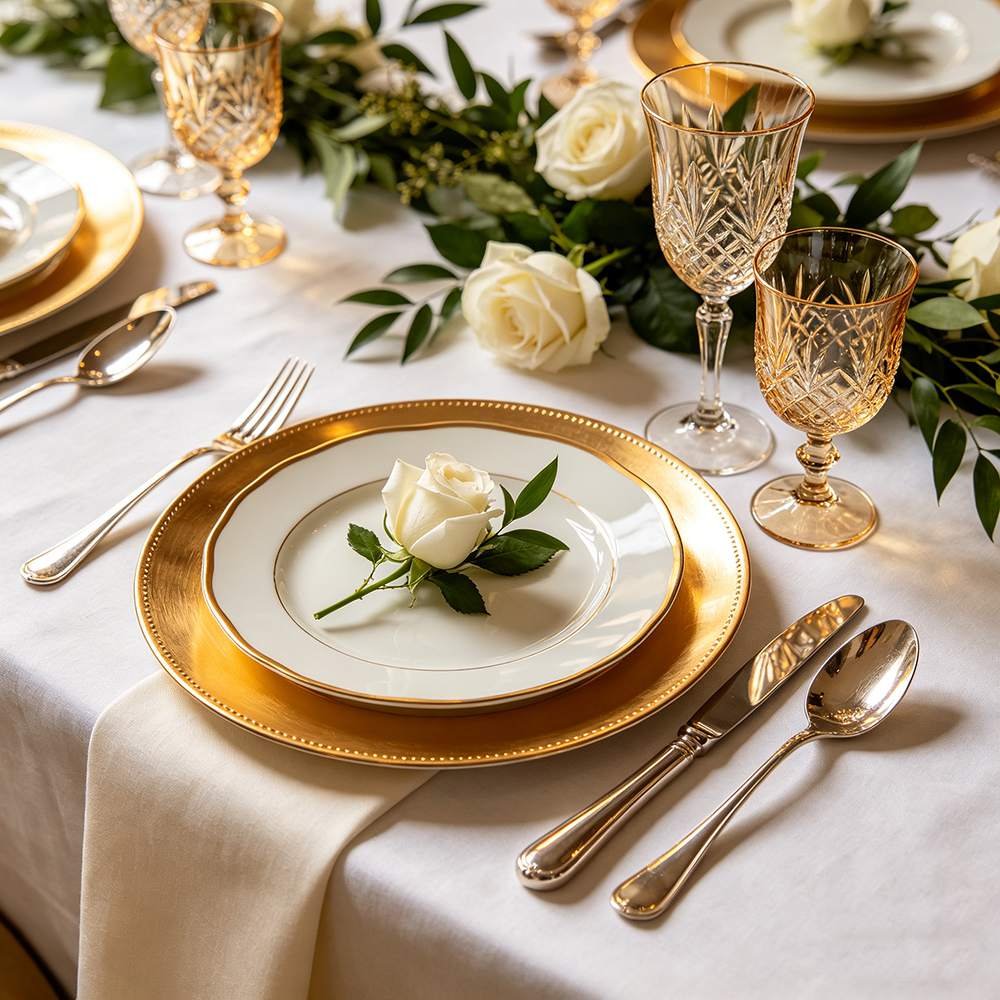
Wedding Tableware Guide: How to Choose Plates, Cutlery and Glassware for Your Event
Every detail at a wedding tells a story. The flowers, the lighting, the music – and when guests sit down and see a beautifully set table, your tableware is part of that story as well. If you are a wedding planner or a tableware rental business, selecting wedding plates, cutlery, and glassware is one of the most significant purchasing decisions you will make. In this article, we’ll explore all you need to know about wedding tableware – including material and style choices, sourcing, durability, and how to partner with the right manufacturer to create a tableware inventory that will delight your guests at every wedding. Table of Contents What is Wedding Tableware? Wedding tableware is the full set of tableware used for a wedding reception, including plates, bowls, cutlery, and glassware. Wedding tableware is chosen not only for its aesthetic appeal, but also for its capacity to enhance a table setting and withstand the rigors of multiple events and countless trips through the dishwasher. Wedding planners and tableware can make or break a reception. For tableware rental businesses, it is a product that needs to perform, look good, and stand up to heavy use for hundreds of events. Why Wedding Tableware Matters More Than You Think Guests sit at the wedding tables for hours. The tableware they are served on is one of the most visible aspects of the wedding – more so than couples and wedding planners often realise, until they see the wedding photos. According to research by The Knot, couples in 2026 spent an average of $35,000 on their wedding day, with decorations and table settings as one of the top five items couples planned to spend money on. The tableware your clients select (or that you rent as a company) affects how the wedding reception is perceived, photographed, and rated. Unevenly-shaped plates, foggy glasses, or poorly crafted cutlery are seen. High-end wedding tableware that shines beautifully in the candlelight and feels lovely in the hand speaks volumes. Wedding Plates: Materials, Styles and What to Choose Plates are the centrepiece of tableware. The material and design determine the look and feel of the wedding reception. Bone China Wedding Plates Bone china is the most popular choice for upscale weddings and rental inventories. Its almost ethereal quality shines under the lights in venues and photographs beautifully. Bone china plates are elegant and delicate to the touch – a tactile sensation that translates to luxury. Bone china wedding plates are the preferred choice for black-tie weddings, garden parties and luxury venue events. Porcelain Wedding Plates Porcelain is the most versatile choice for wedding tableware. Today’s hotel-grade porcelain boasts a pure white finish, ideal for all wedding styles, from country barns to modern urban hotels. Porcelain is less prone to chipping than bone china, making it the preferred choice for rental businesses with large stock for many weddings. It’s durable enough to withstand commercial dishwashers and can be used repeatedly for years. Stoneware Wedding Plates Stoneware is a growing trend for outdoor weddings, rustic and boho weddings. Its natural, textured look lends a rustic charm to tableware. Stoneware is heavier than bone china and porcelain, but its look for the right wedding is unbeatable. Plate Styles for Wedding Settings Plate shape and rim profile play a major role in table design, as well as the material. Coupe plates – without a rim – are modern and sleek. Traditional and formal dining are well served by rimmed plates. Embossed or logo embossed plates are available for rental companies and venues looking for a branded look. Wedding Cutlery: Choosing the Right Flatware for Your Event Wedding cutlery also known as flatware, is the element most guests interact with most frequently throughout the reception. Whenever a customer picks up his fork or knife, he or she is touching your brand. Material and Finish Wedding flatware of high quality is made out of 18/10 stainless steel, which is a grade that consists of 18 percent chromium and 10 percent nickel. This composition provides the cutlery with its bright, mirror-like finish, resistance to corrosions and long-lasting durability in repeated commercial dishwashing. The appearance of the table setting is greatly influenced by the choice of finishes. The traditional option is mirror finish – shiny, reflective and fitting formal and traditional wedding venues. Satin finish is less shiny and more matte which is appropriate in contemporary and minimalist receptions. Gold PVD coating is gaining popularity in high end weddings, bringing a touch of warmth and visual appeal to the table. Matte black finish suits the modern, editorial and urban wedding style. Weight and Balance Quality is conveyed by the weight of wedding cutlery as much as it is by its appearance. The flatware is heavy-gauge and feels heavy and high-end. Light cutlery, no matter the finish, is an indicator of a poorer quality experience. Heavy-gauge 18/10 stainless steel flatware is the right investment of rental companies that are developing a premium inventory. Piece Count and Settings A typical wedding dining table setting consists of a minimum of a dinner fork, salad fork, dinner knife, soup spoon, and teaspoon. When it comes to formal multi-course receptions, fish forks, fish knives, dessert spoons and cake forks are included. Collaborate with your manufacturer to create the specific number of pieces needed by your average event. Wedding Glassware: From Champagne Flutes to Water Goblets The aspect that reflects light most radically during a wedding is the wedding glassware. The glitter of a champagne glass in candlelight, the transparency of a crystal-clear goblet of water – these are the little things that render a table setting to be indeed memorable. Champagne Flutes The highlight of any wedding table is champagne flutes. They are featured in all the toast pictures and bear a lot of symbolic meaning during a party. Long, graceful flutes having a slender stem are a sign of luxury. Luxury wedding planners and high-end venues are fond of custom-printed flutes with the initials or wedding date of the couple. Wine Glasses Any reception that serves alcohol must
HoReCa Dinnerware Suppliers in India: Buyer’s Guide 2026
Whether you’re in Mumbai or Ahmedabad, the same butter chicken recipe can feel like a unique experience to your guest, depending on the plate it’s served on. In India’s HoReCa world, dinnerware is not just about plating or dining. It defines your brand. It’s about cost control, durability, and speed all rolled into one. The price market varies depending on material quality, sourcing channel, and manufacturing standards. You might find a supplier promising top quality at INR 120 a plate, where another one would offer better quality imported ceramic plates for INR 600, which wouldn’t even last two months. There are traditional wholesale and manufacturing hubs like Khurja in Uttar Pradesh and Crawford Market in Mumbai, and established manufacturing regions in Gujarat and Delhi NCR. India’s kitchenware and tableware market is valued at over USD 5 billion and continues to grow with the rising demand from the HoReCa sector. This fragmented yet high-opportunity ecosystem makes your procurement strategy important. In the sections below, we will talk about the dinnerware materials, supply chain, and HoReCa dinnerware suppliers in India. Understanding the HoReCa Dinnerware Ecosystem in India The dinnerware demand in India is diverse. There’s a range of HoReCa formats, ranging from luxury five-star hotels to quick-service outlets, street-food kiosks, and large-scale catering operations, all serving regional cuisines such as biryani, thali, and tiffin-style meals. Luxury Dining In a premium hotel, dinnerware becomes your brand language. Most luxury hotels prefer bone china or vitrified porcelain. They use custom logos and patterns and consistent dinnerware across their outlets. Mid-scale food chains focus on durability and stacking. They need dinnerware with easy replacement cycles that fall within their budget. QSRs vs Fine Dining vs Cloud Kitchens Many QSR or Quick Service Restaurants prefer melamine and reinforced ceramics because minimizing breakage is their priority. They want quick service and durable plates. Designs and patterns are secondary for them. In fine dining restaurants, however, the plate finishes, symmetry, material, and design are all important. Many restaurants prefer matte finishes and asymmetrical designs, with the focus remaining on plating. Whereas the cloud kitchens do not invest much in tableware. They usually procure multi-use containers with packaging compatibility. Institutional Buyers The institutional buyers constitute a major chunk of the market segment. It includes buyers from the airline catering or railway services. They look for standardization across the dinnerware materials. Although they prefer high durability melamine and stainless steel, compliance checks such as the Food Safety and Standards Authority of India, FDA food-contact compliance, LFGB chemical migration testing, and EU Food Contact Regulation (EC 1935/2004) are a must. Types of HoReCa Dinnerware: Material-Based Classification The dinnerware material you choose will directly impact your breakage costs and service speed. It can, in fact, also shape the perceived dining value at your concept and your brand positioning. Premium materials such as bone china or high-grade, vitrified porcelain are commonly used in fine-dining hotels to elevate presentation, while melamine is preferred in high-volume casual dining formats where operational efficiency and cost control are the priorities. Ceramic and Porcelain The go-to dinnerware material for most restaurants is ceramic and porcelain. Porcelain dinnerware looks clean and premium. It is also preferred by the chefs as it gives them the right surface area for plating aesthetics. Porcelain is also the winner when it comes to heat retention and keeping the flavor of the acidic Indian gravy intact. The surface is non-reactive and doesn’t mess with the taste of the dish. The downside, however, is that there can be edge chipping, and so the breakage and turnover rates can spike. Melamine Even though melamine doesn’t get the love on Instagram and social media, it literally runs the Indian HoReCa industry. Melamine dinnerware is literally shatterproof. It’s lightweight and cost-effective at scale, which is why most restaurant operators love it. You will mostly find QSR chains, biryani houses, food courts, and catering operations using melamine plates for serving. However, while it survives stacking and drops, poor-quality melamine does stain over time and loses its shine. Also, it is worth keeping a check on the FDA guidance, which approves melamine for food contact under normal conditions, but not for high temperatures or for heating food. Bone China Bone china gives off a signal indicating that the guest is about to be served a high-quality meal. It is elegant, stylish, and exudes luxury, going with premium pricing and fine dining experiences. However, when placed in service, it does have a high chipping rate compared to porcelain. Learn more about the difference between Bone China and porcelain in our guide: Bone China vs Porcelain Dinnerware: Which Should Hotels Choose? Stainless Steel It may not be trendy or look beautiful, but stainless steel is the underrated workhorse in India. You will find it in Indian Railways pantry services, large institutional kitchens such as hospitals, schools, and defense canteens, and budget catering operations. Stainless steel wins as it is practically unbreakable, easy to clean, and keeps the inventory simple. HoReCa Dinnerware Supply Chain Structure in India India’s HoReCa dinnerware market is highly unorganized. There’s a complex network of manufacturers, importers, traders, and multiple layers of intermediaries. Hence, assessing the channels becomes a challenge. Organized Manufacturers Many hotel chains and large restaurant groups in India source their dinnerware from organized manufacturers. These include the large factories mostly situated in Gujarat, Rajasthan, and NCR. These manufacturers offer consistency through their controlled production processes, including custom moulds, embossing, and branding options. They also work on long-term supply contracts, which help ensure batch consistency and reliable sourcing for high-volume HoReCa operations. Regional Wholesale Clusters There are regional wholesale clusters that have, in fact, become the backbone of Indian dinnerware sourcing. Delhi NCR is the import gateway for Chinese and Southeast Asian products. Here you will find a huge variety of all kinds of dinnerware. It’s a good market for restaurant owners who are looking for a quick setup and trend-driven cafés. However, there is no assurance that the quality will stay consistent across batches. Similarly, Morbi in Gujarat is the Indian ceramic hub that