
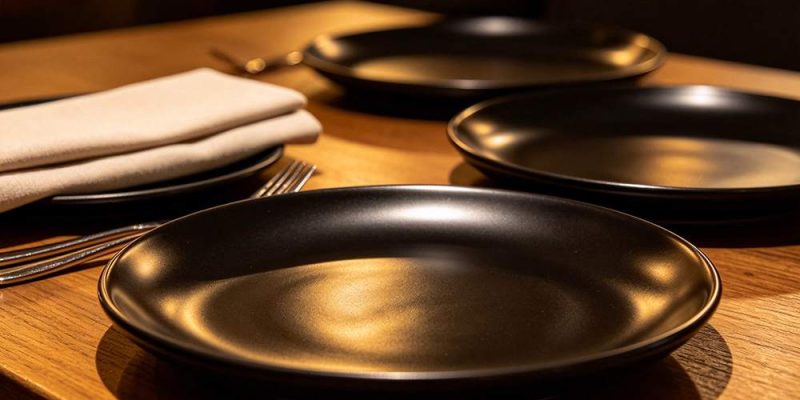
If you’re thinking about procuring dinner plates for a new restaurant or simply refreshing your existing inventory, it’s never an easy decision. All the catalogues and choices make it feel like you’re standing in front of an endless aisle. Every design, every pattern, and every shape looks just perfect for your restaurant.
There are whites in so many shades, neutrals and pastels, intricate and sophisticated patterns, and textures to choose from. Not knowing the exact kind of dinnerware to choose for your concept is often the reason why most dining restaurants end up looking the same.
When it comes to black restaurant plates, they do not follow the usual pattern. It’s all in the color.
Black doesn’t compete for attention, but rather stands out by itself. It frames the food, sharpening the color and contrast of the dish with intent. In professional kitchens and dining spaces, black dinnerware isn’t just stylish; it is a design tool that exudes confidence and modernity.
In this guide, we’ll explore the wide variety of black restaurant plates. We will talk about the texture, finish, and materials backed by science, so you know how to choose the right dinner set for your concept.
Why Restaurants Choose Black Dinnerware
Black restaurant plates do not follow trends. They are deliberately chosen to create an ambience, not work around it.
When it comes to dining, the color has a psychological effect on the appetite, too. As per a study, black tableware increased the craving to eat, whereas yellow and green tableware decreased it. Many concepts also opt for black due to their branding or service needs.
Here are some key reasons why restaurants choose black dinnerware.
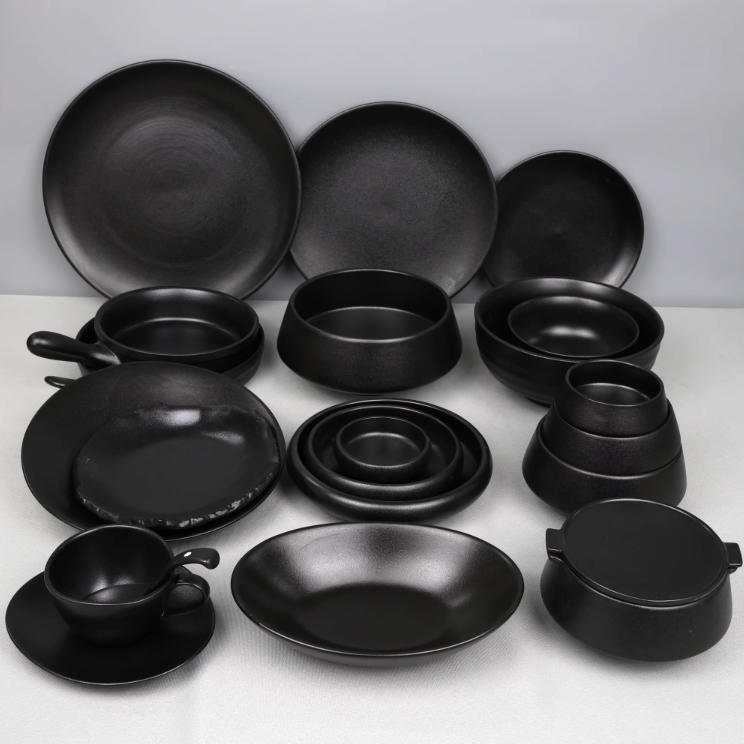
Black Makes Food Pop
Many chefs love black and white dinnerware for the contrast. Ingredients appear brighter, vibrant, and colorful against the plain background. On a black plate, the green serving looks greener, the reds look richer, and even the textures become more visible.
This makes the serving look fresh and of high quality. That single perception about the food is formed before it even lands in the mouth, and hence is very important for creating the first impression.
Learn more about color psychology here: White vs Colored Dinnerware: Psychology and Plating Design for Restaurants.
A Premium, Modern Feel
Black is also associated with sophistication. It doesn’t take much effort to make a dish look classy, stylish, and modern when served on a plain black background.
Hence, it is the choice for many premium and fine dining restaurants, as well as upscale casual spots, and other chef-driven concepts.
Explore the best black restaurant dinnerware sets by Brett here: Is Black Stoneware Dinnerware Sets a Good Choice? Best 5 Styles of Brett Recommended.
Black Supports Creative Plating
Black restaurant plates give chefs more freedom for presentation. Chefs can display unique artistic plating techniques that otherwise get lost on lighter backgrounds.
The sauces, purées, and garnishes all become more visible on black. This is especially important in modern culinary presentation, where plating is about setting the mood and theme. Expert presentation techniques for sauces, especially like swooshes, smears, layering, and the placement of greens and edible flowers, become more prominent.
Instead of disappearing into the plate, they stand out. This feature improves control over visual hierarchy. The bright sauces, creamy purées, and colorful garnishes get a depth when served on black.
This way, even the minimalist and simplest of dishes look highly artistic. Read on for more about Restaurant Food Presentation: How Dinnerware Shapes Your Plating.
Black Photographs Better
We are living in the age of Instagram and TikTok, so the plate presentation has to look good not just to the eye but also on camera.
Black plates do exceptionally well in photography because they naturally enhance the contrast, depth, and color. When food is placed against the black background, the colors look more saturated and defined. That often reduces or eliminates the need for heavy edits.
Even food styling resources like Sincerely Tori recommend using black or grey plates for moody food photography. According to them, the darker backgrounds enhance contrast and support dramatic, professional-looking photographs.
Can Hide Wear
Compared to white, black plates are generally better at concealing minor stains, marks, and discoloration. These naturally develop over time in high-usage commercial kitchens, where dishes undergo constant washing and handling cycles.
However, the finish still plays an important role in long-term presentation. Matte black surfaces, though they look elegant and modern, can show scratches and wear. Where glossy black finishes highlight fingerprints, smudges, and water spots under strong lighting.
Choosing the right finish, therefore, becomes important. Learn more about dinnerware finishes in our guide: Matte vs Gloss Dinnerware: Which Finish Works for Restaurants?
Fits a Range of Cuisines
Black plates are commonly used in sushi bars, ramen shops, and modern fusion restaurants. Since most of the ingredients used in these dishes are delicate, they stand out clearly against the dark background.
Black tableware is also common in steakhouses, where the color highlights grilled meats. In dessert plating, too, black offers a plain canvas that makes the bright sauces, fruits, cream, and garnishes look vibrant.
Types of Black Restaurant Plate Styles
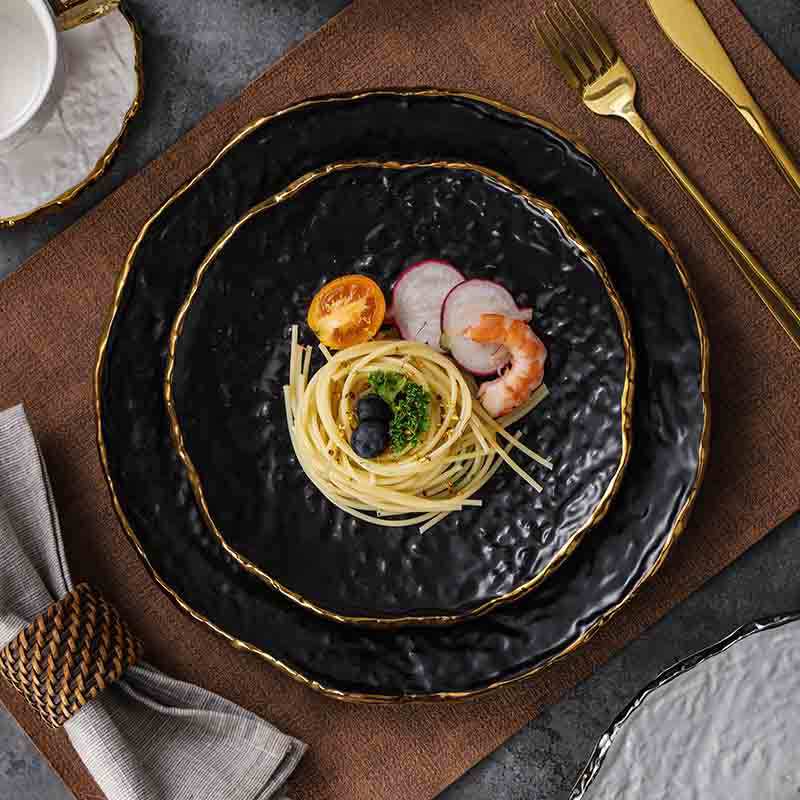
Black plates come in a wide range of finishes and textures. There are deep matte tones that look modern and glossy finishes that bring in the shine. Each variation has an effect on the dining mood.
Matte Black Plates
Matte black plates are commonly chosen in modern dining concepts because of the non-reflective surface. The matte finish absorbs and diffuses light, which creates a soft effect on the table, keeping the focus on the food.
This finish is especially popular in fine dining settings where you need minimal aesthetics. In this category, check out Brett’s Matte Black Stoneware Dinnerware Set.
Glossy Black Plates
The glossy plates do the exact opposite of a matte finish. They reflect light, which creates a high-contrast look on the table.
The enhanced shine makes the sauces and glazes stand out. However, strong lighting can cause a glare on the dish that can drive the focus away from the main serving.
These glossy black restaurant plates are more popular in contemporary dining concepts.
Textured and Reactive Glaze Plates
The textured and reactive glaze finish stands out due to its variations in tone and patterns. It is during the kiln firing stage that every plate develops a unique pattern due to the reactive glazing process.
These plates look brilliant and aesthetic, as if they are handcrafted. This variety is more specifically for boutique restaurants and tasting menus.
Learn more about reactive glaze in our guide: Understanding Reactive Glaze Dinnerware: Design, Safety, and Care Guide.
Coupe vs Rimmed Plates
The coupe dinner plates look minimal, clean, yet modern. Since there’s no rim, chefs get maximum usable surface area. They can create unique servings without any restrictions.
However, the rimmed plates contain the sauces better and look more traditional in comparison. Take a look at Brett’s Luxury Gold Rimmed Black Irregular Ceramic Plate Dinnerware Set.

Materials Used in Black Plates
You also get different material choices for black restaurant plates. There are the common porcelain, stoneware, bone china, and melamine.
- Porcelain: Porcelain is fired at high temperatures between 1200 and 1400°C. This makes the material durable and resistant to chipping. Black porcelain dishes are the best choice for fine dining in high-volume concepts.
- Stoneware: Stoneware, on the other hand, has a heavier and more rustic feel. It is thick and durable, which makes the material excellent at heat retention and ideal for heavy restaurant use. Black stoneware is commonly used for casual dining concepts, where the dark glaze gives a strong contrast to plated food.
- Bone China:Bone china is a premium ceramic formed from porcelain clay and bone ash. Despite its delicate appearance, it is strong and light in weight. The quality makes black bone china the preferred choice in luxury dining, hotels, and fine dining restaurants.
- Melamine: Lightweight and highly impact-resistant melamine black dinner plates are the perfect tableware for outdoor dining and casual environments. Melamine also allows a uniform colouring, which is an add-on for black tableware. It isn’t painted but is actually made from a thermosetting plastic called melamine-formaldehyde resin. The pigments are directly incorporated into the material before molding, and not as a surface layer. However, as per the FDA, you should avoid heating melamine dishes.
Food Safety, Lead-Free Standards, and Material Risks in Black Dinnerware
The darker the dinner plates, the more important material safety becomes. This is because black and dark colored glazes are formed from strong pigments and coatings, which can cause health risks.
As per a study, 43% of ceramic bowls and cups were found to have detectable levels of lead or cadmium when they were exposed to heat or acidic foods.
These metals, if part of the material, leach into food over time. They can affect the kidney function, bone health, and neurological development when they get inside the body.
This is why the Food and Drug Administration (FDA) takes strict measures to ensure that dinnerware manufacturers comply with their safety standards. There are defined limits for lead and cadmium inclusion that the manufacturers must comply with.
Why Black Finishes Require More Scrutiny
Unlike plain white porcelain, which uses clear glazes, black dinnerware requires added pigments such as metal oxides or specialty glazing techniques to give the plates the exact dark shade.
These finishes have to undergo strict quality control and food-safety compliance. The glaze composition and firing stability must ensure that the colorants remain bound to the surface and do not migrate into food.
This is why it’s important to adhere to the food-contact safety standards. Many manufacturers also provide third-party laboratory testing certificates, such as those by SGS, to verify the safety.
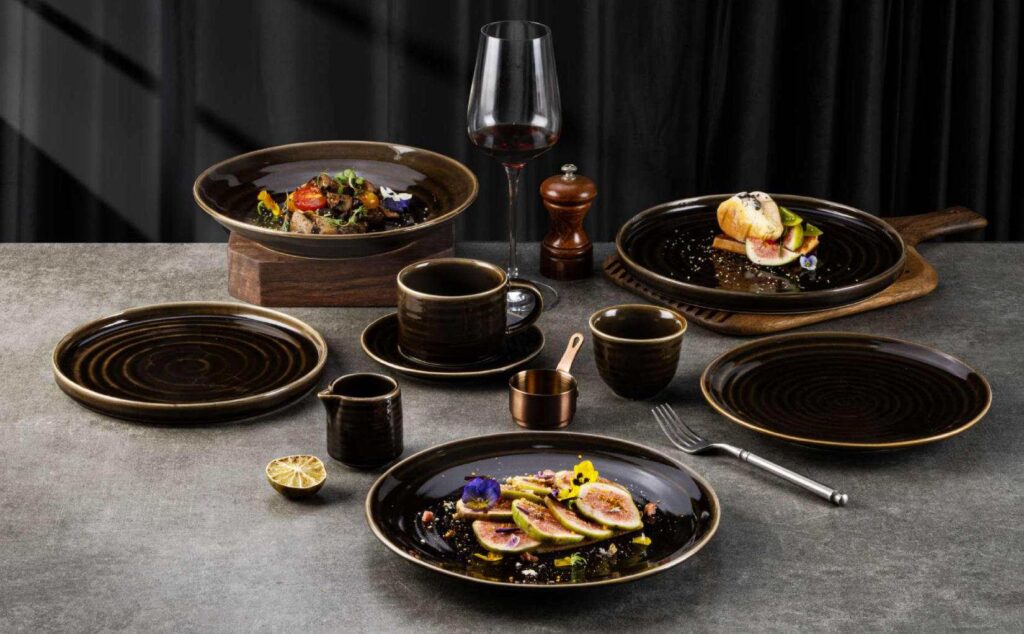
Black Restaurant Plates: It’s All in the Presentation
Putting black dinnerware on the table is all about using the right strategy. The right placement can make your dish stand out and look appetizing, but the wrong match between the dish and plate can make even your best-tasting cuisine fall flat for the guest.
Before you bring in the black dinnerware fleet, think through your restaurant’s ambience, theme, and setting. Then choose the black that goes with your cuisine and vibe.
If you want to skip the struggle of juggling manufacturers and catalogues, choose Brett and get it right the first time.
Frequently Asked Questions
What material is best for black dinnerware plates?
Commercial-grade porcelain is the top choice for most restaurants and concepts. Whether in black, white, or other colors, it is highly durable, resistant to chipping, and also looks aesthetic.
Do black plates scratch easily?
No. The scratch resistance depends on the finish of the plates, not the color. It’s true that matte black plates get more scratches and marks over time than glossy plates. But that does not mean they scratch easily.
Hence, you should always go with high-quality porcelain that comes with protective glaze for minimal wear.
When should you avoid using black plates?
Most of the time, avoid black plates when serving dark-colored foods. Like when you’re serving chocolate-based desserts or heavily browned items, black is a big no. Also, it is not recommended in dim lighting conditions.