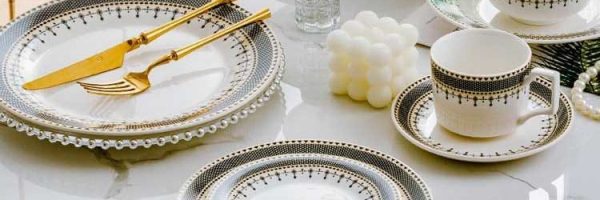

China is one of the largest procurement markets for ceramic dinnerware globally, and naturally, it has numerous ceramic tableware manufacturers, including many long-established brands and vibrant young companies that have recently entered the industry. If you are a buyer new to this industry and want to source satisfactory products in this market, finding a reliable and stable supplier is a crucial step. To help you quickly find reliable ceramic dinnerware manufacturers as partners, this article will introduce 10 well-known and reliable manufacturers in this industry, helping you narrow down your search and quickly identify suitable partners. 1. China Brett Website: https://cbhoreca.com/ Shenzhen Brett Hotel Supplies Co., Ltd., also known as China Brett, is a leading one-stop tableware solution provider dedicated to the global HoReCa industry. Established in 1998, with over 20 years of expertise, Brett operates an expansive 80,000 m² modern production base and employs a professional team of more than 350 skilled workers, successfully delivering tailored solutions for over 1,000 hospitality projects worldwide. Specializing in durable, elegant porcelain, bone china, stoneware, flatware, and glassware, Brett offers a comprehensive product portfolio that meets stringent FDA and EU food-contact safety standards. Renowned for its advanced customization capabilities—including unique shapes, glazes, colors, decals, and full branding services—Brett enables hotels, restaurants, and chains to create distinctive signature tableware collections that reinforce brand identity. With rigorous quality control, reliable supply chains, and long-term partnerships with international hotel groups, Brett has established itself as a trusted, innovative leader in the global hospitality tableware sector. 2. Yongjian Ceramic Website: https://www.yongjianceramic.com/ Yongjian Ceramics, founded in 1990 in Chaozhou, Guangdong, is a leading Chinese manufacturer of high-quality ceramic dinnerware. Specializing in wholesale tableware (plates, bowls, cups, and full dinner sets), it offers extensive OEM/ODM customization and serves over 3,000 clients in 100+ countries. With SGS, FDA, LFGB, and ISO certifications, Yongjian guarantees eco-friendly, food-safe products, low MOQs, fast sampling, and competitive pricing, making it a trusted partner for hotels, restaurants, brands, and retailers worldwide. 3. Pito Ceramics Website: https://pitochina.com/ Pito Ceramics, established around 2003 and based in China, is a premier manufacturer and wholesaler of premium ceramic crockery, specializing in porcelain and bone china dinnerware such as plates, bowls, teaware, and complete dinner sets. With over 20 years of expertise, the company offers flexible solutions including ready-made stock items and extensive bulk customization options for logos, patterns, shapes, and designs, supported by rapid prototyping and free samples within seven days. Certified by SGS, EC, FDA, LFGB, and ISO standards, Pito ensures 100% eco-friendly, non-toxic products with features like high bone ash content for lightweight durability and non-slip bases. Serving hotels, restaurants, wedding events, and branded retailers worldwide, it emphasizes sustainable manufacturing, meticulous quality control, and comprehensive design support to meet commercial and household needs. 4. Hosen Home(28 Ceramics) Website: https://hosen28.com/ Hosen Home, established in 1998, is a leading manufacturer and brand specializing in premium ceramic tableware, including dinnerware and drinkware. With over 26 years of expertise, the company operates a 10,000 m² production facility, offering extensive customization through material selection, custom mold creation for diverse shapes, advanced finishing techniques (such as unglazed, gloss, embossed, crackle, and matte), and tailored packaging solutions to enhance brand aesthetics and market appeal. Serving more than 800 homeware brands, including top 50 global retailers and online fast-fashion leaders, Hosen Home manages a vast catalog of over 10,000 SKUs as a BSCI-certified premium supplier, empowering clients to elevate their product lines with innovative, high-quality ceramic designs. 5. Fenn Home Website: https://fennhome.com/ Fenn Home, established in 1995 and headquartered in Chaozhou, China, is a premier ceramic tableware manufacturer with nearly 30 years of expertise in craftsmanship, innovation, and global compliance. Specializing in high-quality ceramics such as plates, mugs, bowls, and dining accessories (including glassware, flatware, and linens), the company operates three advanced factories with a daily output of 60,000 pieces, ensuring durability, safety, and stylish designs for homes, offices, hotels, and restaurants. As a BSCI, SMETA, ISO9001, FDA, LFGB, CA Prop 65, and CE-certified supplier, Fenn excels in OEM and ODM services, offering extensive customization in shapes, colors, patterns, and packaging, alongside one-stop sourcing and door-to-door logistics for bulk orders. Serving worldwide brands and businesses, it integrates supply chains to minimize costs and enhance sales through monthly design updates and reliable, eco-conscious solutions. 6. Taiyuan Linkbridge Ceramics Website: https://www.linkbridgeceramics.com/ Taiyuan Linkbridge Ceramics Co., Ltd., founded in 2004 in China’s ceramic hub, is a leading manufacturer and exporter of premium ceramic dinnerware, including plates, bowls, mugs, cups, and saucers. With over 20 years of expertise, the company boasts a 100,000m² production facility equipped with two mechanical kiln lines, 1,000+ skilled workers, and 50+ R&D designers, enabling a weekly output of 300,000 eco-friendly, heat-resistant pieces that surpass international standards. Specializing in OEM/ODM services, Linkbridge delivers customized designs, shapes, sizes, and decals with competitive pricing—saving clients up to 17%—and rapid prototyping for global brands. Serving more than 1,000 clients across 100+ countries in America, Europe, Japan, Korea, and Southeast Asia, Linkbridge achieves a 98.7% customer satisfaction rate and 97% on-time delivery through rigorous quality control. Its non-toxic, microwave- and dishwasher-safe products cater to hotels, restaurants, and retailers, emphasizing sustainable innovation and reliable supply chains. 7. Lianyuan Ceramic Website: https://www.lianyuanceramic.com/ Lianyuan Ceramic, established in 1993 in Chaozhou, China, is a leading manufacturer of premium ceramic tableware with over 30 years of experience. Specializing in porcelain, bone china, and stoneware dinner sets, tea sets, bakeware, and home decor, it offers full OEM/ODM customization including shapes, glazes, decals, and packaging. BSCI, ISO, and CA Prop 65 certified, Lianyuan operates modern production lines with in-house mold design and delivers safe, durable, stylish products to wholesalers and retailers across Europe, North America, Russia, and East Asia. 8. Homey Ceramic Website: https://homeyceramic.com/ Homey Ceramic, based in Dehua, China—the renowned “Porcelain Capital” for its rich kaolin resources—is a leading manufacturer and trading company specializing in high-quality household ceramics. With a focus on innovative and durable designs, the company produces a diverse range of products including porcelain and stoneware dinnerware, mugs, tea/coffee sets, vases, pet bowls, and garden accessories like plant

The Difference Between Ceramic and Porcelain Dinnerware: Which Is Better?
Ceramic and porcelain are terms we often hear when referring to dinnerware. They are common types of dinnerware used in daily households and hotel, restaurant dining settings. However, many people may get confused between the two—aren’t they both ceramic? So what exactly is the difference between ceramic and porcelain dinnerware? And is ceramic or porcelain dinnerware better? After reading this article, you’ll find the answers. 1. What is Ceramic Dinnerware? “Ceramic” is commonly used as a general term for pottery, stoneware, and porcelain, referring to vessel products made by firing and hardening clay. However, in the food service industry, “ceramic dinnerware” typically refers specifically to stoneware and pottery tableware. Features of Ceramic Dinnerware: Firing Temperature:~1,000–1,150°C Porosity: Higher; may require a thicker glaze layer Weight:Usually heavier than porcelain Design Versatility: Excellent for rustic, handcrafted, colorful styles Durability:Good, but less resistant to impacts and moisture absorption Ceramic dinnerware boasts a warm texture and handcrafted appearance, making it a popular choice for many households and restaurants. Of course, another key reason is its affordable price. PS: If you’re exploring tailored ceramic sets, you can also check out our custom ceramic dinnerware collections designed for restaurant and catering. 2. What Is Porcelain Dinnerware? Porcelain is a type of ceramic characterized by high density and high-temperature firing. It typically exhibits high strength, a refined appearance, and a certain degree of translucency. According to the “Concise Encyclopedia of Advanced Ceramic Materials” (Elsevier, 1991), porcelain is produced by firing kaolin clay at temperatures exceeding 1,300°C. (For general reference, you can also read more about porcelain on the Wikipedia overview page (Porcelain) for background context.) Features of Porcelain Dinnerware: Firing Temperature:~1,250–1,350°C Porosity:Very low; often fully vitrified Strength:Harder and more durable than standard ceramic Appearance:White, smooth, sometimes translucent Weight:Lighter and thinner than ceramic With its exquisite appearance enhanced by finishes such as electroplating, gold or silver gilding, decals, and glazing techniques, porcelain tableware delivers a premium, luxurious dining experience. This makes it a favored choice among high-end restaurants and hotels. PS: To explore customizable porcelain collections, see our custom porcelain dinnerware designed for brands and hospitality. 3. Ceramic vs Porcelain: Key Differences After knowing the definitions of ceramic dinnerware and porcelain dinnerware, we will now compare them across seven aspects: material composition, strength, water absorption rate, weight, appearance, heat resistance, and price. 3.1 Material Composition Ceramic: Mixed clays, often with more impurities Porcelain: High-purity kaolin, feldspar, and quartz Higher-purity raw materials enable porcelain to be fired harder and become more glass-like. 3.2 Strength & Durability Ceramic: Ceramic is softer, more likely to chip or crack on impacts. Porcelain: Porcelain is stronger, harder, and more resistant to chipping. The vitrification process creates a dense, glass-like body. “According to ceramic engineering principles summarized by W. D. Kingery (a pioneer in ceramic science), porcelain’s vitrified microstructure is what gives it superior strength and a low water absorption rate.” 3.3 Water Absorption Ceramic: normally 5–10% or higher Porcelain: <0.5% (almost waterproof) Therefore, for hotels and restaurants that frequently use and clean tableware, they prefer low-water-absorption porcelain dinnerware because it is more durable and hygienic. 3.4 Weight & Thickness Ceramic: Thicker and heavier Porcelain: Thinner, lighter, more refined Porcelain’s lightweight feel is one reason luxury restaurants love it—nothing says “fine dining” like a plate that looks delicate but performs like steel… ceramic steel, anyway. 3.5 Appearance Ceramic: Rustic, handcrafted, aesthetic variations Porcelain: Smooth, glossy, bright white or refined colored glazes 3.6 Heat Resistance Both materials resist heat well, but porcelain has better thermal shock resistance due to higher vitrification. 3.7 Cost Ceramic: More affordable Porcelain: Higher cost due to raw materials, firing temperature, and craftsmanship 4. Is Ceramic or Porcelain Dinnerware Better? Whether ceramic dinnerware or porcelain dinnerware, both are undoubtedly excellent choices for tableware. The decision on which is better ultimately depends on the user’s specific needs and preferences. Therefore, understanding what you want is key. Below are some points for your consideration: Choose Ceramic If You Want: A handcrafted or rustic aesthetic Lower cost Thicker, cozier-feeling plates Unique glazes and color effects Choose Porcelain If You Want: Maximum durability and chip resistance Low water absorption (ideal for commercial dishwashers) Lightweight, elegant, refined appearance Fine dining or hotel-grade performance Professional Environments (Hotels, Restaurants, Catering) Porcelain is generally the superior choice for: High-volume washing Stacking and storage Heat retention Durability Brand image If you’re running a hotel or restaurant, or working in the food service industry, porcelain dinnerware is undoubtedly the better choice. Of course, selecting ceramic dinnerware to match your restaurant’s style is perfectly acceptable (though your tableware may need replacing more frequently). Ultimately, it depends on your specific needs. 5. Comparison Table: Ceramic vs Porcelain Dinnerware (Summary) To help you see the differences more clearly, here’s a concise comparison table that summarizes key performance factors of ceramic and porcelain dinnerware: Feature / Property Ceramic Dinnerware Porcelain Dinnerware Material Composition Mixed clays with higher impurities Kaolin, feldspar, quartz (high purity) Firing Temperature 1,000–1,150°C 1,250–1,350°C Density & Vitrification Lower density, semi-vitrified High density, fully vitrified Water Absorption Rate High (5–10% or more) Very low (<0.5%) Durability & Chip Resistance Moderate; more prone to chipping Excellent; stronger and harder Weight & Thickness Thicker and heavier Thinner and lighter Appearance Rustic, handcrafted, varied glazes Smooth, refined, sometimes translucent Heat Resistance Good Excellent (better thermal shock resistance) Price Range More affordable Higher due to materials & firing Best For Home use, artisanal collections Hospitality, fine dining, heavy-duty use Ease of Customization Very flexible for glazing effects Excellent for luxury branding and uniformity 6. Frequently Asked Questions 6.1 Is porcelain better than ceramic dinnerware? – For durability, density, chip-resistance, and refinement—yes. – For artistic variation and affordability, ceramic has advantages. 6.2 Is ceramic or porcelain better for daily home use? – Families with kids may prefer porcelain for durability. – People who love handcrafted styles may prefer ceramic. 6.3 Is porcelain more expensive? – Generally yes, due to raw materials and higher firing temperatures. Final Decision: Ceramic or Porcelain? As mentioned earlier, both ceramic dinnerware and porcelain dinnerware are excellent choices for tableware. Their primary differences lie in appearance, strength, and durability. Therefore, if you prioritize

Brett Founder Anna Tsie Attends “Xu Dan & Her Friends” Annual Private Council, Spreading Love Through Charity Auction
At the recent “Xu Dan & His Friends” Annual Private Council, Anna Tsie, the founder of Shenzhen Brett Hotel Supplies Co., Ltd., was invited to join industry leaders and philanthropists for a meaningful gathering. During the charity auction, she successfully acquired a symbolic and deeply meaningful item—a pen personally used by Xu Dan. More than a writing instrument, this pen carries a decade of Xu Dan’s perseverance, courage, and unwavering dedication to his craft. It witnessed his signing a landmark 150-billion-yuan agreement (#MIFC Maldives International Financial Center with #MBSGlobal), transforming vision into achievement and belief into legacy. The pen stands as a beacon of kindness, wisdom, and the power of conviction. Xu Dan and the MIFC leaders For Anna, bringing this pen back to Brett through the charity auction represents both admiration for Xu Dan’s spirit and a heartfelt wish as a founder—and as a mother of two kids. She hopes this symbol of strength will inspire the company to keep advancing, and more importantly, help shine a light on the dreams of children who need support. At Brett, social responsibility has always been a core value. Through charitable participation, educational support in remote regions, and continuous community engagement, the company strives to give back and spread warmth to society. Every effort—big or small—is part of our commitment to making compassion part of our corporate DNA. From supporting children in Yunnan to joining hands with philanthropic initiatives like this private council, Brett remains firm in its belief: small acts of kindness can create powerful ripples, and collective goodwill can illuminate the future for many. Looking ahead, Brett will continue to walk the path of “uniting for love and doing good with purpose,” partnering with more organizations to extend care, opportunity, and hope. May this pen empower us to reach new business heights—and more importantly—lift the pure dreams of children who deserve to be seen and supported. Xu Dan and Anna

Top 10 Manufacturer in China for Restaurant Dinnerware Wholesale
Tableware is one of the most important components in the catering industry. Its quality reflects a restaurant’s commitment to the customer’s dining experience, and it is also a frequently used consumable item. Therefore, for hotels, restaurants, and other catering businesses, finding a suitable wholesale supplier that can consistently provide high-quality tableware is crucial. Below, we have compiled a list of 10 Chinese factories that offer wholesale restaurant dinnerware. They are all experienced and reputable manufacturers in the ceramic tableware production industry. If you are a business owner about to enter the catering industry, or are considering changing your tableware supplier for your restaurant or hotel, they would be a very reliable choice. Let’s take a look. 1. Guangdong PITO Technology Website: https://pitochina.com/ Guangdong PITO Technology Co., Ltd., known for its P&T Royal Ware brand, is a leading porcelain and bone china manufacturer based in Chaozhou, China. Founded in 2003, the company operates a 40,000 m² modern factory with strong production capacity and comprehensive QC systems. PITO specializes in hotel and restaurant dinnerware, offering high-temperature porcelain, elegant bone china, and fully customizable designs. With ISO certifications, international testing compliance, and a global client base, the company is recognized for its reliable quality, refined craftsmanship, and flexible OEM/ODM service. 2. China Brett Website: https://cbhoreca.com/ Shenzhen Brett Hotel Supplies Co., Ltd. (CBHoreca), also known as China Brett, is a leading manufacturer providing one-stop tableware solutions for the global HORECA market. With an 80,000 m² production facility, over 20 years of industry expertise, and a professional team of more than 350 skilled workers, the company has successfully completed 1,000+ hospitality projects worldwide. Brett offers an extensive product range—including porcelain, bone china, stoneware, flatware, and glassware—each crafted with a strong emphasis on durability, design, and food-contact safety EU certification & FDA certification. What sets Brett apart is its advanced customization capability, covering shapes, glazes, colors, and branding options that allow hotels and restaurants to create signature tableware collections tailored to their identity. Supported by reliable manufacturing, strict quality standards, and long-term partnerships with international hotel groups, Brett has earned its reputation as a trusted and forward-thinking supplier in the global hospitality industry. 3. Guangxi Sanhuan Enterprise Group Website: https://www.sanhuan.com/ Guangxi Sanhuan Enterprise Group, founded in 1987, is a leading Chinese ceramic manufacturer with a strong focus on high-grade daily-use tableware. With over 5,200 employees and 19 member companies, their business spans everyday ceramics, special ceramics, and cultural ceramics. Sanhuan offers a rich and diverse product range—including high-temperature hard porcelain, stoneware, fine glazed porcelain, and bone china—with more than 50,000 SKUs encompassing Chinese and Western dinner sets, tea and coffee ware, gift ceramics, and art porcelain. Their design philosophy blends Eastern and Western aesthetics, and they emphasize innovation through deep partnerships with institutions like Tsinghua University and Jingdezhen Ceramic University. 4. China DK Ceramic Website: https://www.chinadkceramic.com/ China DK Ceramic Co., Ltd. is a specialized manufacturer of hotel- and restaurant-grade tableware, offering a wide range of porcelain, glassware, and stainless-steel products. Their product line is particularly strong in hotel tableware, and they support full OEM/ODM customization, including shapes, glazes, and branding. With a global footprint, DK Ceramic has partnered with over 120 hotel brands worldwide, serving not just ceramic needs but also glass and flatware for large-scale hospitality projects. 5. Guangdong Sitong Group Website: https://www.sitongceramics.com/ Guangdong Sitong Group, founded in 1997 and based in Chaozhou, is a major Chinese ceramics manufacturer with over 165,000 m² of production space and more than 1,400 employees. Sitong offers a full range of household ceramics—including dinnerware, decorative pieces, and porcelain art—combining traditional craftsmanship with modern technology. With a strong design and R&D capability, it has developed dozens of proprietary cultural‑creative products and serves customers in over 90 countries. 6. Garbo Tableware Website: https://www.garbotableware.com/ Garbo Tableware, founded in 1993 in Guangzhou, China, is one of the largest and most experienced tableware manufacturers in South China. With six production facilities across multiple provinces and a total capacity exceeding 100 million pieces annually, Garbo offers a vast product range — including ceramic dinnerware, glassware, stainless steel flatware, kitchenware, and plastic items. Backed by over 30 years of industry expertise, Garbo supports both OEM and ODM customization, leveraging a strong design team of more than 10 designers and export reach to over 90 countries. 7. Weiye Ceramics Website: https://www.weiyeceramics.com/ Weiye Ceramics Co., Ltd. is a well-established ceramics manufacturer based in Chaozhou, Guangdong, China, with experience dating back to the early 1990s. They specialize in producing high-quality porcelain, bone china, and stoneware dinnerware, catering especially to the hospitality sector. Weiye emphasizes strong R&D capability, launching dozens of new designs each year. Their production is backed by rigorous quality control and ethical manufacturing standards (such as BSCI / SMETA audits). Their ceramics are exported globally to markets including Europe, North America, and Asia, serving hotels, restaurants, and high-end tableware clients. 8. Hunan Hualian China Industry Website: https://hlceramics.net/ Hunan Hualian China Industry Co., Ltd. (Hualian Ceramics) is a major Chinese ceramics group specializing in research, design, production, and sales of daily-use ceramics. Since its founding in 1994, Hualian has grown into a global player with over 5,000 employees, operating multiple production bases and firing kilns to support an annual output exceeding 140 million ceramic pieces. Hualian is deeply rooted in innovation: it holds a national enterprise technology center, has more than 300 patents, and has developed over 28,000 glaze colors and 100,000 different models. Their brand architecture includes several sub‑brands—such as red-guan kiln wine ware and color-glazed stoneware—and their products reach more than 40 countries, serving both everyday life and more artistic or cultural ceramic markets. 9. Chaozhou Chaofeng Ceramic Website: https://chaofengcf.com/ Chaozhou Chaofeng Ceramic Making Co., Ltd. is a well-established porcelain and tableware manufacturer located in Chaozhou, Guangdong, founded in 1991. With a 45,000 m² production site and about 350 staff, they produce roughly 22 million ceramic pieces annually using advanced digital and automated production lines. Chaofeng offers both OEM and ODM services, enabling customization in shapes, decal patterns, and packaging designs. The company emphasizes reliable quality, with more than a 96%
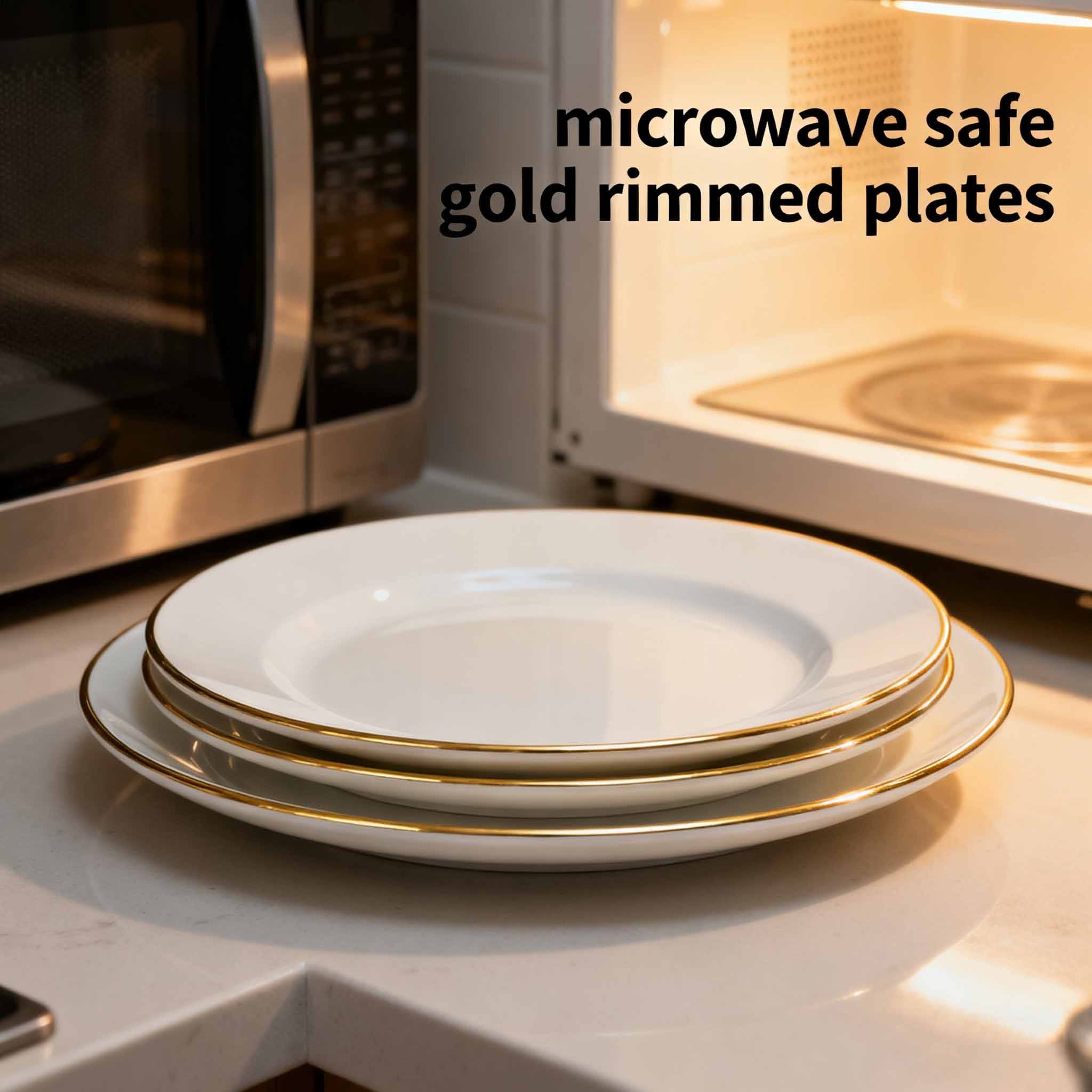
Are Gold Rimmed Plates Microwave Safe?
If you’ve ever hesitated to put your beautiful gold rimmed plates in the microwave – worried about “is this safe?”- you’re not alone. Gold-rimmed plates have long been a symbol of elegance popular in fine dining restaurants, luxury hotels, or home dinner settings. Their shimmering metallic edges instantly elevate the table. But “Are gold rimmed plates microwave safe?” still confuses countless people. The short answer is: Most of them are NOT microwave-safe, but there are specific exceptions—especially when high-temperature firing processes are used during production. This article dives deep into the science, safety guidelines, exceptions, and practical usage tips. 1. Understanding the Metallic Rim: Why it Matters in a Microwave Gold rimmed plates typically use: Real gold (usually 12%–24% gold content) Gold lustre, gold water, or gold paste Metallic decorative materials applied on the rim Microwaves heat food by causing water molecules to vibrate. But metals behave differently: Metals reflect microwaves Reflection may cause sparks or “arcing” The plate could overheat The microwave magnetron might get damaged So while the plate may look harmless, any metal on the surface becomes a potential risk in a microwave environment. 2. Why Most Gold Rimmed Plates Are Not Microwave Safe Here’s why standard gold rimmed dinnerware is usually unsafe: 2.1 Low-temperature applied gold reacts strongly in microwaves Many manufacturers apply the gold rim using low-fire decals or electroplating, which leaves the metallic layer exposed and conductive. This greatly increases microwave reactions. 2.2 The gold layer is not fully fused into the glaze When the gold sits on top of the glaze, microwaves can cause: Sparking Cracking Smoke or burning marks Damage to both plate and microwave 2.3 Uneven metal thickness creates concentrated heat points Microwaves target irregularities. Thicker gold areas can overheat rapidly. For these reasons, standard gold-rimmed plates are labeled “NOT microwave safe.” 3. The Important Exception: These Gold Rim Plates Might Be Microwave Safe If you’re wondering is there any plates with real gold rims can be put in the microwave? Yes, There are gold rimmed plates that can be microwave safe – If high-temperature fired 3.1 High-Temperature Fired Gold Rim Plates While most gold-rimmed plates are unsafe, a small category of high-end ceramic or porcelain plates can be microwave safe: ✔ If the gold rim is applied using real gold materials ✔ And then fired in a kiln around 800°C ✔ Allowing the gold layer to fuse and partially “glassify” with the glaze This high-temperature treatment stabilizes the gold, making it: Less conductive Less likely to spark More heat resistant More securely bonded to the plate surface In short: If the gold trim has undergone high-temperature firing, it may be microwave safe. ∗But Important Warning: Not All High-Fire Gold is Automatically Safe Even with high-temperature firing, the following variables matter: Gold material purity Layer thickness Firing temperature variation Manufacturer’s formulation Glaze compatibility Therefore: Only plates explicitly marked “Microwave Safe” should be microwaved. If the manufacturer did not test and label it, treat it as “NOT microwave safe.” 3.2 Using Microwave-Safe Rated Gold Water This is the most advanced method currently used in the ceramic industry. But not all gold water is microwave-safe — gold content must meet strict standards. Gold water (a precious metal liquid used in gilding) typically contains 8%–21% real gold. Higher purity = higher conductivity → higher risk. To make gold rims microwave safe, the gold water must meet: International microwave-compatibility standards Uniform conductivity levels High-temperature stability Low arcing potential Full compatibility with porcelain glaze systems In short: ✔ Not all gold water is equal ✔ Only certified, specification-compliant gold water can be used for microwave-safe gilding Example of Microwave-safe gold water: Heraeus Gold Water Heraeus, a German precious-metals giant with over 160 years of history, is considered the global benchmark for high-quality gold water(contain 24K real gold) used in ceramic dinnerware. (Which is Brett using for our gold rim plates) Heraeus gold water: Offers stable purity and controlled gold content Can fully glassify under high-temperature firing Shows extremely low conductivity after firing Meets worldwide ceramic microwave-compatibility standards Maintains consistent color and shine without fading This makes Heraeus gold water one of the very few materials capable of producing microwave-safe gold rims, when paired with correct firing temperatures. 4. How to Tell Whether Your Gold Rimmed Plate is Microwave Safe 4.1 Check the bottom stamp Check is there any label or symbol: “Microwave Safe” “Not Microwave Safe” Symbols indicating microwave compatibility If nothing is written → assume NOT safe. 4.2 Visit the manufacturer’s website Fine china and hotelware brands often list microwave guidelines. 4.3 Look at the production method If the brand states: High-temperature fired gold Kiln-fused metallic rim Real gold firing process Then it may be microwave safe—but only if they explicitly confirm it. 4.4 Perform the 20-second test (only if manufacturer confirms it may be safe) Place the empty plate in the microwave with a cup of water. Heat for 20 seconds: Plate cold + water hot = safer Plate hot = unsafe ∗Noticed: Never test plates that are NOT labeled microwave-safe. 5. What Happens if You Microwave a Plate With Regular Gold Rim? Possible risks: Sparks (electric arcing) Burn marks on rim Damage to microwave interior Cracking or shattering of the plate Risk of fire in severe cases ∗There are many other ways to heat food besides microwave, and you can use a different plate. After all, safety is over aesthetics, isn’t it? – so don’t “testing luck.” 6. Are There Safer Alternatives? If you need microwave-compatible plates with a luxury look, consider: Gold-look decal without metal content Colored glaze simulating metallic shine Electroplating-free patterns Matte painted borders They provide elegance without the risk. 7. For Restaurants, Hotels & Cafés: Practical Guidelines Because hospitality environments use microwaves frequently, you should: Use ceramic plates without metallic decoration Reserve gold rimmed plates for plating & dining, not reheating Train kitchen staff on safe material usage Ask suppliers whether the gold is high-fire or low-fire If you need safe, durable, and hotel-grade microwave-friendly tableware,Consider choosing high-temperature ceramic or more stable porcelain styles, such as Brett 1320℃ kiln change ceramic dinnerware series. Summary: Are
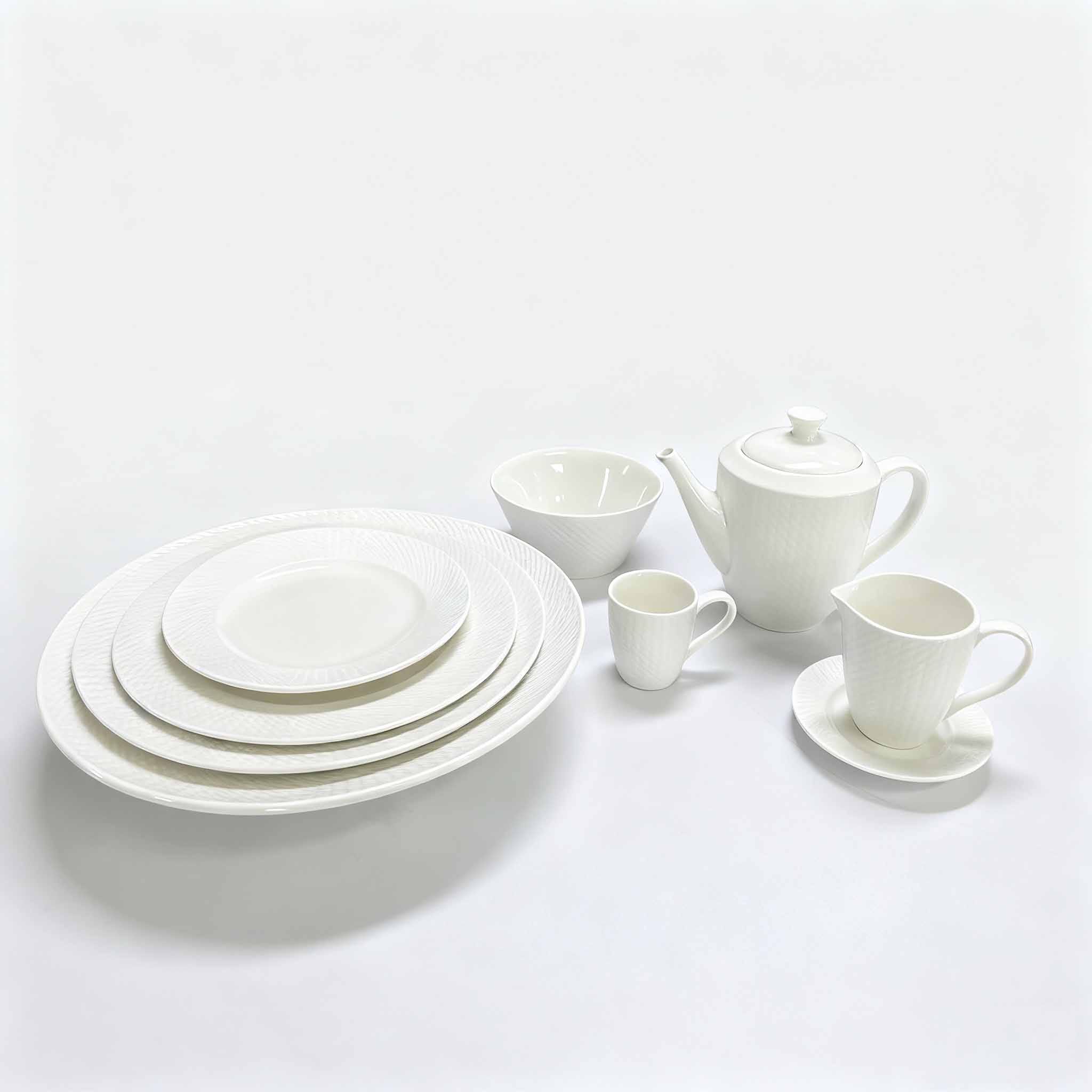
The Rise of New Bone China: How Alumina Replaces Bone Ash in Modern Dinnerware
For centuries, bone china has been synonymous with luxury and prized for its translucency, lightness, and refined elegance. But today’s consumers and manufacturers are increasingly seeking more ethical, sustainable, and cost-efficient alternatives, without sacrificing beauty or durability. This shift has led to the rise of new bone china dinnerware, a modern ceramic innovation that replaces traditional bone ash with alumina (aluminum oxide). The result? A material that mimics the visual appeal of bone china while offering enhanced strength, stability, and eco-friendly benefits. But how does it really compare to traditional bone china? And is new bone china considered high quality? Let’s explore. What is New Bone China Dinnerware? New bone china is a type of modern porcelain that uses alumina (a refined aluminum oxide) instead of animal-derived bone ash. While traditional bone china requires 40–50% bone ash, new bone china achieves similar whiteness, translucency, and durability using alumina-based formulations, eliminating the need for animal ingredients entirely. Typical composition of new bone china includes: Alumina (Al₂O₃) – for strength, whiteness, and translucency Kaolin (China clay)– provides plasticity and shape Feldspar– lowers firing temperature and aids vitrification Quartz– enhances hardness and stability (Material reference: Wikipedia – Alumina) Although the ingredient profile differs, the final look and feel remain remarkably similar to real bone china — making it a popular choice for both everyday households and the hospitality industry. Why Does New Bone China Replace Bone Ash? 1. Ethical and Vegan Appeal Since new bone china contains no animal bones, it aligns with modern consumer values such as: cruelty-free materials ethical sourcing plant-based or vegan lifestyles 2. Environmental Benefits Producing bone ash requires: animal byproducts high-temperature calcination extensive cleaning and processing additional carbon emissions Alumina production, while industrial, bypasses the animal-related stages and provides more consistent quality with fewer environmental variables. 3. Improved Quality Control Bone ash varies depending on its source. Alumina, however, offers: consistent whiteness predictable firing behavior stable chemical composition This results in reliable batches and fewer production defects. 4. Cost Efficiency Bone ash is expensive. Alumina is more scalable and cost-effective — especially for large-scale manufacturers supplying hotels and retailers. How Alumina Replaces Bone Ash (The Chemistry Behind the Magic) Bone Ash (Ca₃(PO₄)₂) Does 3 Things: Lowers firing temperature (flux effect) Creates translucency (light-scattering crystals) Boosts strength (micro-reinforcement) Alumina (Al₂O₃) Does the Same — But Better: Function Bone Ash Alumina Flux Moderate High (with feldspar) Translucency Via phosphate crystals Via corundum microcrystals Strength +300 % vs porcelain +400 % (harder than bone) Thermal Stability Good Excellent (melting point 2072 °C) Key innovation: Nano-alumina particles (< 1 micron) mimic bone ash crystal size, creating identical light diffusion — you literally can’t see the difference. What is New Bone China Dinnerware Made Of? Core ingredients include: Material Function Alumina (Al₂O₃) Replaces bone ash; adds translucency, whiteness, and strength Kaolin Provides structure and plasticity Feldspar Acts as a flux during firing Quartz Adds hardness and stability How firing works: New bone china is typically fired at 1,200–1,300°C, similar to porcelain, creating a vitrified, dense, and durable body. The final result is a dinnerware piece that is: lightweight smooth slightly translucent resistant to chipping In daily use, most consumers cannot distinguish it from traditional bone china. Is New Bone China Good Quality? This is a top question many people concern — and the short answer is yes. High-quality new bone china can match or even surpass traditional bone china in several aspects. 1. Stronger Than Ever Mohs hardness:5 (vs 7 for bone china) Drop test:Survives 1.2 m onto tile 78 % of the time (vs 65 % for bone china) 2. Hotel-Grade Durability Raffles Singapore (2025) switched to new bone china — breakage down 31 % Four Seasons uses it in 42 properties — zero crazing after 18 months 3. Microwave & Oven Safe Withstands −20 °C → 250 °C thermal shock No metallic trim needed for gold effects (uses ceramic luster) 4. Eco & Ethical 100 % vegan 30 % less energy to produce (higher firing efficiency) Recyclable (no organic residue) What’s the Difference Between Bone China and New Bone China? Feature Bone China New Bone China Key Ingredient Bone ash (40–50%) Alumina (0% bone ash) Color Tone Slight ivory tint Slightly brighter white Translucency Very high High Weight Light Light Durability Strong Strong — often stronger Ethical Aspect Contains animal materials Vegan-friendly Cost Higher More affordable Consistency Depends on bone ash quality Very stable due to alumina consistency Main takeaway: New bone china is the modern alternative that offers nearly the same look and feel — sometimes with better strength — but without bone ash. Does New Bone China Compromise on Quality? Many people assume that replacing bone ash must reduce quality. But material science tells a different story. Alumina is an engineering-grade material, it is used in: Aerospace components Industrial ceramics Medical applications High-performance refractory materials When applied to dinnerware: improves structural integrity enhances whiteness increases chip resistance This means using alumina in dinnerware make no compromise in quality — and in many cases, an upgrade. How New Bone China Is Made (Step-by-Step) Step 1: Raw Material Preparation Alumina, kaolin, and feldspar are precisely measured and mixed. Step2: Forming The clay is shaped using: slip casting pressure casting mechanical molding Step 3: Biscuit Firing The first firing removes moisture and strengthens the body. Step 4: Glazing A high-quality glaze is applied to give a glossy or matte finish. Step 5: High-Temperature Firing The piece is fired again at high temperatures (≈1,200°C), vitrifying the body. Step 6: Decoration Gold trim, decals, hand-painted details, and underglaze colors may be applied and fired a third time. Why Hospitality Brands Are Switching to New Bone China Many hotel groups and restaurants now prefer new bone china dinnerware because it offers: Luxury look at better cost efficiency: Perfect for large-scale procurement and replacement needs. High durability for commercial use:Ideal for busy restaurants and high-turnover hotel dining. Ethical and modern appeal:Vegan-friendly materials align with brand sustainability initiatives. Excellent customization options:Logos, special shapes, signature colors — all can be easily done. Explore premium custom bone
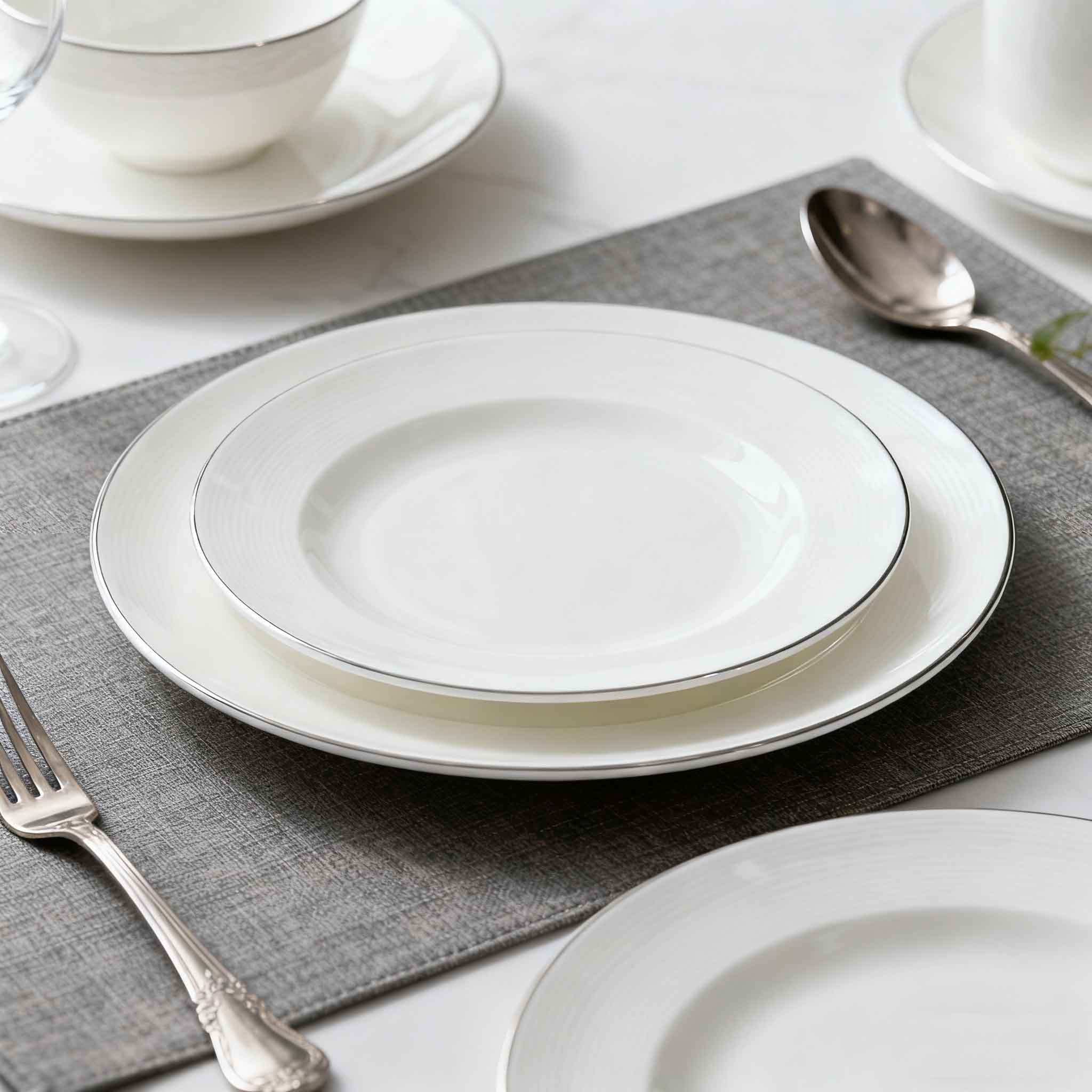
What is Bone China Dinnerware Made Of?
If porcelain is admired for its beauty, bone china elevates it to an art form. Recognized for its delicate translucency, light weight, and exceptional strength, bone china has long been associated with fine dining and luxury hospitality. But what makes bone china so special? The answer lies in its unique material composition — particularly the addition of bone ash. In this article, we’ll explore what bone china dinnerware is made of, how it’s produced, the ideal percentage of bone ash, and what sets it apart from other types of ceramics. 1. What is Bone China Dinnerware? Bone china is a type of porcelain that contains bone ash, kaolin, and feldspathic material. The addition of bone ash — typically from animal bones that have been calcined (burned at high temperatures until they turn into a white, powdery form of calcium phosphate)— gives the material its signature whiteness, translucency, and chip resistance. It was first developed in England during the 18th century as an attempt to improve the strength and beauty of traditional porcelain. The result was an extraordinary material that blended delicacy with durability — a combination few ceramics can match. – (Source: Wikipedia – Bone china) 2. What Is Bone China Dinnerware Made Of? Bone china is typically composed of three main materials: Ingredient % in Classic Formula Function Bone Ash (Calcined animal bone) 45–50 % Adds whiteness, translucency, and strength Kaolin (China clay) 25 % Provides plasticity and shape during forming Feldspar (or Cornish stone) 25–30 % Lowers melting temperature and enhances vitrification The key ingredient — and what differentiates bone china from other porcelains — is bone ash, which acts as a fluxing and strengthening agent. The result is a product that’s lighter, thinner, yet stronger than standard porcelain. Official definition : “A type of porcelain that contains at least 30 % tricalcium phosphate derived from animal bone and calcined at high temperature.” Anything below 30 %? Not legally bone china in the UK, EU, or US (per ISO 6486). It’s just “fine china” or “porcelain.” 3. How Much Bone Ash Should Be in Bone China Dinnerware? The amount of bone ash is crucial to achieving the right quality and properties. Traditionally, bone china contains between 40% and 50% bone ash by weight. Standard high-quality bone china: around 45%–50% bone ash Mid-range commercial versions:around 35%–40% bone ash Low-end imitations:sometimes contain less than 30%, which reduces translucency and strength The ideal ratio ensures: Translucency (light passes gently through the body, giving it a glowing look) Whiteness (a hallmark of premium bone china) Mechanical strength (resistance to chipping and cracking) Manufacturers who specialize in premium products — such as fine hotel tableware — often maintain a consistent 45% bone ash ratio to ensure both beauty and durability. Summary Table: Bone Ash % Grade Properties Best For 30–35 % Entry-Level Bone China Lightweight, decent translucency Retail gift sets 36–45 % Standard Fine Bone China Balanced strength + glow Everyday luxury 46–50 %+ Premium / Hotel-Grade Max chip resistance, ping tone 5-star hotels, Michelin restaurants 4. The Production Process of Bone China Dinnerware Bone china’s refinement isn’t just about the ingredients — it’s also about how it’s made. The process involves precise craftsmanship and multiple firings at controlled temperatures. Step 1: Preparing Bone Ash Animal bones (usually from cattle) are cleaned, sterilized, and calcined at around 1,000°C (1,832°F) to remove organic materials and turn them into bone ash (calcium phosphate). This material is then finely ground. Step 2: Mixing the Body The bone ash is combined with kaolin and feldspar in precise proportions to form a smooth, workable clay body. Step 3: Shaping The clay is shaped into plates, bowls, cups, and other items using slip casting or pressing techniques. Step 4: Biscuit Firing The first firing hardens the body at about 1,200°C and removes water and impurities. Step 5: Glazing and Second Firing A glassy glaze layer is applied and fired again at a slightly lower temperature (around 1,050°C–1,100°C), creating a glossy, smooth surface. Step 6: Decoration and Third Firing (Optional) Fine bone china is often decorated with decals, gold rims, or underglaze patterns — fired once more to permanently fuse the design. The end product: light, strong, and elegant dinnerware that radiates sophistication. 5. How Bone China Differs from Porcelain and Stoneware Type Main Ingredient Firing Temperature Color & Texture Key Features Bone China Bone ash + kaolin + feldspar 1,200–1,250°C Ivory-white, translucent Light, strong, refined Porcelain Kaolin + feldspar (no bone ash) 1,300–1,450°C Pure white, less translucent Hard but more brittle Stoneware Dense clay 1,200–1,300°C Natural, rustic Opaque, durable, heavier Bone china occupies a unique space — whiter than stoneware, stronger than porcelain, and more elegant than both. 6. Benefits of Bone China Dinnerware Lightweight Yet Strong:Despite its delicate look, bone china is highly chip-resistant and stronger than most other ceramics. Elegant Translucency: Hold a bone china plate up to the light, and you’ll see a soft glow — a hallmark of high bone ash content and fine craftsmanship. Smooth, Refined Texture:Its glazed surface feels silky smooth and resists staining, making it perfect for both home and commercial dining. Timeless Appeal: Used in royal banquets and luxury hotels alike, bone china represents prestige and craftsmanship that never go out of style. 7. How to Identify Real Bone China Here’s how to tell if your bone china dinnerware is authentic: Translucency Test:Hold it against the light — true bone china allows a gentle glow to pass through. Color:Genuine bone china has a slight ivory tint, not pure white. Sound:Tap it lightly — it should produce a clear, bell-like ring. Markings: Many manufacturers include “Bone China” or percentage indicators on the base. 8. Sustainability and Modern Alternatives Although traditional bone china uses animal-derived bone ash, modern manufacturers are exploring synthetic bone ash (derived from calcium phosphate) to create vegan-friendly versions without sacrificing quality. This innovation ensures bone china’s artistry continues while aligning with today’s sustainability values. 9. Why Brands and Hospitality Prefer Bone China Dinnerware In the world of hospitality and branding,
What is Stoneware Dinnerware? A Complete Guide to This Timeless Tableware
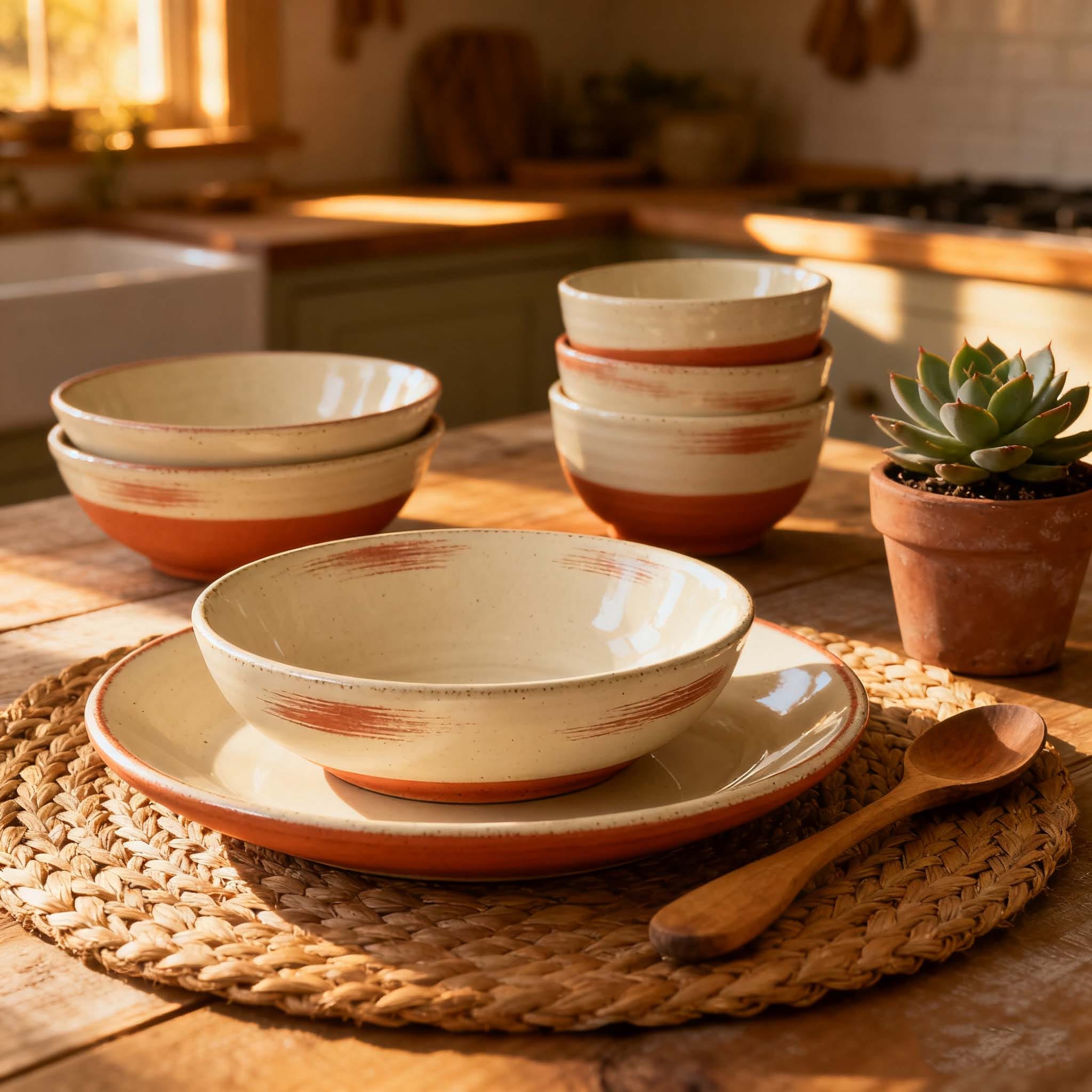
Tableware is a common product in our daily lives, accompanying us with every meal. Common types include disposable tableware, plastic tableware, metal tableware, and ceramic tableware. Among ceramic tableware, stoneware is one of the most common varieties. Its natural textures, handcrafted aesthetics, and durable performance make it both practical and beautiful. But what exactly is stoneware, and how does it differ from porcelain or earthenware? In this guide, we’ll dive into what stoneware dinnerware is, how it’s made, its advantages and disadvantages, and why it’s an excellent choice for both hospitality and home use. What is Stoneware Dinnerware? Stoneware is a type of ceramic made from dense clay that is fired at high temperatures — typically between 1,200°C and 1,300°C (2,200°F–2,400°F). This process vitrifies the clay, making it non-porous, strong, and chip-resistant. Unlike earthenware, which is fired at lower temperatures and remains porous unless glazed, or porcelain, which is whiter and more delicate, stoneware strikes the perfect balance between durability and artistry. In short: Stoneware = Durable + Stylish + Functional You can think of it as the “everyday luxury” of ceramic tableware — robust enough for daily use, yet refined enough for elegant dining. * Quoted from “Wikipedia – Stoneware“ How is Stoneware Dinnerware Made? Creating stoneware involves several precise steps, each influencing its final look and strength. Step 1: Raw Material Preparation The process begins with natural clays mixed with minerals such as feldspar or quartz. These ingredients add density and help the clay vitrify during firing. Step 2: Shaping The clay is shaped into plates, bowls, mugs, or serving pieces using either traditional hand-throwing or modern mold-forming techniques. Step 3: Biscuit Firing The first firing (also called bisque firing) removes moisture and hardens the clay. This happens at around 900–1000°C. Step 4: Glazing A glaze coating is applied for both protection and aesthetics. Glazes can be matte, glossy, speckled, or even reactive — creating beautiful color variations during kiln firing. Step 5: High-Temperature Firing The glazed piece is fired again at around 1,250°C. This fuses the glaze with the clay body, creating a dense, vitrified, and durable surface. The result is a piece of dinnerware that can withstand daily use, resist scratches, and maintain its color and texture for years. Key Characteristics of Stoneware Dinnerware Feature Description Material Dense natural clay Firing Temperature 1,200–1,300°C Texture Slightly rustic, heavier than porcelain Durability Highly chip-resistant and long-lasting Porosity Non-porous (liquid-resistant) Finish Can be matte, semi-matte, or glossy Usage Microwave, oven, and dishwasher safe (depending on glaze) Benefits of Using Stoneware Dinnerware 1. Durability That Lasts Stoneware is built to withstand daily wear and tear. It’s less likely to chip or crack than earthenware, making it ideal for both home and commercial use. 2. Natural Beauty and Unique Texture Each piece of stoneware has a unique glaze variation — no two items are exactly alike. This handcrafted charm adds warmth and authenticity to the dining table. 3. Heat Retention Stoneware retains heat longer than porcelain or glass, keeping food warmer for an extended time — a small but appreciated benefit during meals. 4. Easy Maintenance Most modern stoneware dinnerware is safe for dishwashers and microwaves. Its non-porous surface prevents absorption of odors and stains. 5. Eco-Friendly Material Since stoneware is made primarily from natural clay and minerals, it’s an environmentally friendly option compared to plastics or metal alternatives. Stoneware vs. Porcelain vs. Earthenware Feature Stoneware Porcelain Earthenware Firing temp 1200–1300 °C 1250–1450 °C 900–1100 °C Porosity < 0.5 % (fully vitrified) 0 % 5–15 % (needs glaze seal) Weight Medium-heavy Lightweight Heavy Chip resistance ★★★★★ ★★★ ★★ Thermal shock resistance ★★★★★ (oven-safe to 500 °F) ★★★ (some brands only) ★ (cracks easily) Price (16-pc set) $80–$250 $120–$600+ $40–$120 Look Rustic, matte, organic Glossy, refined, white Terracotta, colorful 2025 trend alert: Reactive matte stoneware now outsells glossy porcelain 3:1 on Wayfair and Amazon. Common Uses of Stoneware Dinnerware Home dining sets– Perfect for daily meals or casual gatherings. Restaurants & cafés– Durable enough for commercial dishwashers and frequent handling. Hospitality industry– Popular among hotels and resorts for its rustic-luxury appeal. Gift sets– Elegant, practical, and timeless, making them great for weddings or housewarmings. For businesses or brands seeking to create unique dinnerware collections, customized options are available. Explore custom stoneware dinnerware for personalized designs, glazes, and packaging solutions. How to Care for Stoneware Dinnerware Proper care ensures longevity and preserves its original charm. √ Do: Wash with mild detergent and a soft sponge. Allow items to cool before immersing in water. Store with felt pads or napkins between stacked plates to avoid surface scratches. × Don’t: Avoid sudden temperature changes (e.g., from freezer to oven). Do not use abrasive cleaners or steel wool. Avoid microwaving pieces with metallic glazes. Why Stoneware is a Favorite in Hospitality Hotels and restaurants love stoneware for its blend of aesthetics and strength. The material’s natural tones and reactive glazes perfectly complement contemporary interior designs, from farm-to-table restaurants to fine dining venues. Its heavier weight and subtle imperfections convey craftsmanship — a key value in modern hospitality branding. Conclusion Stoneware dinnerware represents the perfect harmony of practicality and beauty. It’s strong enough for everyday meals yet beautiful enough for special occasions. Whether you’re a homeowner, designer, or restaurateur, investing in quality stoneware is a choice that “can’t be wrong”.

Top 10 Porcelain Dinnerware Brands in the US
Whether you’re setting a casual brunch table or hosting a formal gala, porcelain dinnerware offers a glossy, lightweight finish that’s both microwave- and dishwasher-safe, making it a staple for modern households and hospitality pros alike. As we look into the US market, it buzzing with innovative collections blending classic motifs with sustainable practices—think lead-free glazes and eco-sourced clays. With the global dinnerware sector projected to hit $45 billion by 2030, investing in porcelain dinnerware is a business that ensures lasts. So weather you are looking for porcelain dinnerware for personal use or plan to invest in porcelain business, is better by start with knowing the top brand of it. This curated list spotlights the top 10 porcelain dinnerware brands in the US, based on expert reviews, consumer ratings from sites like Wirecutter and Serious Eats, and sales data from 2024-2025. These brands dominate retail shelves at Williams Sonoma, Crate & Barrel, and Amazon, offering everything from affordable everyday sets to heirloom-quality china. We’ve prioritized US-based or US-market leaders with strong availability, customization options, and food-safe certifications (SGS, FDA). Each entry includes key collections, price points, and direct website, so you can easily know more about these brands and their product. 1. Lenox – The American Elegance Icon Lenox, founded in 1889 in New Jersey, is synonymous with presidential inaugurations and bridal registries. Their porcelain dinnerware shines in the Eternal pattern—a white-on-white floral classic that’s chip-resistant and stackable for everyday use. In 2025, the Lenox Luxe collection introduces matte-glazed edges for a contemporary twist, priced from $150 for a 4-piece place setting. Ideal for formal dinners, it’s praised for its translucency and 5-year warranty. Website: www.lenox.com 2. Noritake – Japanese Precision Meets US Appeal A staple in American homes since the early 1900s, Noritake’s Colorwave series redefines porcelain dinnerware brands with bold, reactive glazes in 2025 hues like turquoise and slate. Bone china-strength porcelain ensures no warping under high heat, perfect for family gatherings. Sets start at $120 for 16 pieces, with customization for monograms. Reviewers love its non-porous surface for stain resistance. Website: https://noritakechina.com/ 3. Mikasa – Affordable Luxury for Everyday Mikasa, under Lifetime Brands, delivers budget-friendly porcelain dinnerware with the Italian Countryside pattern—delicate platinum rims on scalloped edges. Their 2025 updates include eco-vitrified finishes for enhanced durability, starting at $80 for a 16-piece set. Great for apartments or casual cafes, it’s lightweight yet tough against daily stacks. Website: www.mikasa.com 4. Spode – British Heritage with American Flair Spode’s Blue Italian pattern, a 200-year-old icon, remains a US bestseller for its hand-painted transferware on fine porcelain. The 2025 Woodland collection adds festive motifs for holidays, priced from $200 for 12 pieces. Its underglaze printing ensures fade-proof colors, earning nods from Bon Appétit for heirloom potential. Website: www.spode.com 5. Wedgwood – Timeless Sophistication Wedgwood, a Josiah Wedgwood legacy since 1759, captivates US buyers with the Wild Strawberry pattern—delicate botanicals on bone china porcelain. Their 2025 Vera Wang collection features minimalist asymmetry, from $250 for a 5-piece set. Renowned for thermal shock resistance, it’s a Wirecutter favorite for wedding gifts. Website: www.wedgwood.com 6. Villeroy & Boch – German Engineering in US Kitchens This 274-year-old brand’s NewWave collection offers undulating edges on premium porcelain, blending modern and classic for 2025 trends. Sets like Audun start at $180 for 16 pieces, with antimicrobial glazes for hygiene. Forbes highlights its balance of weight and elegance for entertaining. Website: www.villeroy-boch.com 7. Royal Doulton – Regal Patterns for US Tables Royal Doulton’s 1815 pattern revives Regency-era florals on translucent porcelain, updated in 2025 with sustainable sourcing. Priced from $160 for 12 pieces, it’s oven-to-table versatile. Serious Eats testers rave about its chip-proof rims for busy households. Website: www.royaldoulton.com 8. Herend – Hungarian Opulence in the US Herend’s Rothschild Bird pattern, hand-painted on Chinese porcelain, is a luxury US import for collectors. The 2025 Rustic collection tones it down for everyday, starting at $300 for a 4-piece set. Its 24-karat gold accents make it Spruce Eats’ pick for special occasions. Website: www.herend.com 9. Bernardaud – French Refinement Stateside Bernardaud’s Louvre service, inspired by the museum, features subtle engravings on Limoges porcelain. Their 2025 eco-line uses recycled water in production, from $400 for 12 pieces. Bon Appétit calls it the pinnacle of fine dining durability. Website: www.bernardaud.com 10. Portmeirion – Whimsical British Design for Americans Portmeirion’s Sophie Conran collection mixes floral porcelain with organic shapes, a US hit for its femininity. 2025 sees pastel updates, priced at $140 for 16 pieces. It’s lauded by Wirecutter for mix-and-match versatility. Website: www.portmeirion.com Here is a comparison table that can streamlines your search, it focusing on 2025 standouts for US consumers. Brand Signature Collection Price Range (4-Piece Set) Key Feature Best For Lenox Eternal $150+ Chip-resistant Formal Dinners Noritake Colorwave $120+ Reactive Glazes Family Meals Mikasa Italian Countryside $80+ Platinum Rims Everyday Use Spode Blue Italian $200+ Transferware Heirlooms Wedgwood Wild Strawberry $250+ Bone China Weddings Villeroy & Boch NewWave $180+ Antimicrobial Entertaining Royal Doulton 1815 $160+ Oven-Safe Casual Hosting Herend Rothschild Bird $300+ Hand-Painted Luxury Events Bernardaud Louvre $400+ Engraved Fine Dining Portmeirion Sophie Conran $140+ Organic Shapes Mix & Match Notice: The data is sourced from the internet and may contain errors due to timeliness and other factors; it is for reference only. Why Invest in Top Porcelain Dinnerware Brands? US porcelain dinnerware brands excel due to rigorous FDA compliance, innovative sustainability (e.g., recycled materials in Lenox’s lines), and wide availability via Amazon Prime or Bed Bath & Beyond. Unlike stoneware, porcelain’s non-porous nature prevents bacteria buildup, ideal for health-conscious homes. Trends lean toward multifunctional pieces—think oven-safe rims for seamless baking-to-serving. With inflation easing, these brands offer value: a $200 set lasts decades, outpacing disposables. For custom needs, explore porcelain dinnerware options from global suppliers, you can start with the dinnerware manufacturer in China by reading our previous blog “Top 10 Dinnerware Manufacturers in China Recommended”. Conclusion The top 10 porcelain dinnerware brands in the US blend heritage craftsmanship with forward-thinking design, turning meals into memories. From Lenox’s enduring whites to Herend’s gilded extravagance, there’s a set for every vibe. As dining trends

Top 10 Dinnerware Manufacturers in China Recommended
As a hotel procurement manager sourcing durable porcelain sets for banquet halls, a supermarket buyer stocking seasonal collections, or a tableware brand designer crafting bespoke wedding lines, finding a reliable dinnerware manufacturer is essential for scaling operations. China’s dominance in global tableware production—accounting for over 70% of the world’s ceramic exports—makes it the go-to hub for high-quality, customizable dinnerware at competitive prices. With rising demands for sustainable materials, flexible MOQs (minimum order quantities), and OEM/ODM services, the market is booming, projected to grow at 6.5% CAGR through 2030. In this curated list of the top 10 dinnerware manufacturers in China, we focus on established players excelling in customization, quality certifications (like SGS and FDA), and hospitality-grade durability. Selections are based on production capacity, innovation, client testimonials, and export volume. Whether you’re procuring bulk for chains like Marriott or designing exclusive patterns, these manufacturers offer end-to-end solutions from prototyping to global shipping. I am sure you can find a reliable partner upon them. 1. Weiye Ceramics – Guangdong’s Porcelain Powerhouse Founded in 1992 in Chaozhou, Guangdong—the “Porcelain Capital of China”—Weiye Ceramics spans over 200,000 sqm with 600+ employees, specializing in bone china, porcelain, and stoneware dinnerware. Ideal for hotel procurement, their collections include stackable plates, embossed bowls, and matte black luxury sets resistant to chipping in high-volume use. With 200+ new designs annually and MOQs starting at 500 sets, they support full OEM customization, including decal printing and gold rims. Clients praise their 99% on-time delivery and EC 1935/2004 compliance. For brand designers, their in-house R&D team turns sketches into samples in 7-10 days. Website: www.weiyeceramics.com 2. Pito China – Luxury Bone China Innovators Established in 2003 in Guangdong, Pito China is a leader in premium porcelain and bone china, exporting to over 50 countries with a focus on non-toxic, lead-free glazes. Procurement managers in fine dining will appreciate their microwave-safe, chip-resistant dinner sets, perfect for upscale restaurants. They excel in custom shapes and colors, with sustainable sourcing from Jingdezhen clay. MOQs as low as 300 sets and advanced techniques like hand-painting make them a favorite for wedding collections. Recent innovations include eco-friendly reactive glazes that mimic marble textures. Website: www.pitochina.com 3. Yongjian Ceramic Tableware Manufacturer – Chaozhou’s Wholesale Specialists Since 1990, Yongjian Ceramics, based in Chaozhou, Guangdong, has been a premier dinnerware manufacturer with over 30 years of expertise, operating a vast factory with advanced production equipment and a weekly capacity exceeding thousands of pieces. They specialize in wholesale ceramic tableware, including plates, bowls, dinner sets, cups, and mugs, tailored for hotels, restaurants, weddings, events, branded retailers, and boutique shops. Offering easy customization like logo printing on stock items, in-depth design support for shapes, colors, materials, patterns, surfaces, and packaging, plus free samples within 7 days, they ensure SGS, EC, FDA, LFGB, and ISO-certified eco-friendly products. Flexible MOQs, short lead times, and low costs make them ideal for bulk procurement and unique branded collections. Website: www.yongjianceramic.com 4. Dehua Xingye Ceramic – Versatile Porcelain Specialists With 25 years of experience since around 1999, Dehua Xingye Ceramic, located in Quanzhou, Fujian Province, is renowned for handcrafted porcelain and daily ceramics, including tableware, decorative pieces, and Dehua porcelain series. Their 70,000 sqm industrial park with 200 employees and 30 automatic production lines supports high-volume output for chain supermarkets and brand distributors. OEM/ODM customization covers patterns, designs, and festival-themed collections like Christmas series, with flexible MOQs and strict quality control. Exporting to 120 countries and serving 980 clients (including Amazon and TikTok sellers), they offer competitive direct-sale pricing, 5-year warranties, and 8-9 week delivery—ideal for procurement managers seeking reliable, vibrant tableware solutions. Website: www.dehua-ceramics.com 5. Hosen Home (28 Ceramic) – Homeware-Focused Ceramic Experts Established in 1998, Hosen Home—known as 28 Ceramic—is a BSCI-certified manufacturer in China with a 10,000 sqm facility, producing millions of pieces annually for over 800 homeware brands worldwide. Specializing in ceramic and pottery tableware, they cater to hospitality and retail with durable, stylish sets like daily porcelain and craft ceramics. Their experienced team of 100+ workers offers full OEM/ODM services, including multilingual support (Dutch, French, etc.), for custom logos and finishes. Flexible MOQs starting at 500 sets, combined with rigorous quality assurance, make them perfect for supermarket chains and designers launching branded collections. Clients value their craftsmanship and instant quoting for efficient bulk procurement. Website: hosen28.com 6. Shenzhen Karosa Chinaware – Premium Fine China Leaders Karosa (est. 2005) produces luxury bone china with 4.9/5 ratings for responsiveness, exporting to Europe and the US. Hotel buyers favor their elegant, pearl-glazed collections for formal dining, customizable with engraving and MOQs of 600 sets. Their advanced kilns ensure zero defects, backed by full inspections. For project supervisors, their collaborative design process yields exclusive lines in 20 days. Website: www.karosatableware.com/ 7. Guangdong Songfa Ceramics – Versatile Volume Producers Based in Chaozhou since 1998, Songfa Ceramics boasts a 100,000 sqm plant outputting 15 million dinnerware pieces yearly, specializing in hotel-grade stoneware and porcelain. Supermarket supervisors will value their bulk-ready hampers and barcode-integrated packaging for efficient shelving. They provide OEM with techniques like pad printing and reactive glazing, MOQs from 300 sets, and TUV-certified durability. For designers, their 50+ shape molds enable unique project prototypes. Website: en.songfa.com/ 8. Shenzhen Brett Hotel Supplies – Custom Hospitality Experts Shenzhen Brett, a rising star in Guangdong, specializes in OEM/ODM for high-end tableware, serving 8,000+ five-star hotels with bone china, porcelain, and seasonal collections like Christmas sets. Procurement pros appreciate their flexible MOQs (500 sets), end-to-end services from design to logistics, and SGS/EC compliance for food safety. They excel in bespoke logos, metallic accents, and retail packaging, with samples in 7-14 days. Ideal for brand owners launching private labels with 100% repurchase rates. Website: cbhoreca.com 9. Fashion Dinnerware Manufacturer – Chaozhou’s Trendy Crockery Innovators Fashion Dinnerware Manufacturer, headquartered in Chaozhou, Guangdong, is a dynamic dinnerware manufacturer focusing on stylish, custom solutions for restaurant crockery, catering needs, and wholesale suppliers. With expertise in porcelain, stoneware, and ceramic sets, they produce vibrant, trend-forward collections including plates, bowls, and serving platters designed for high-end hospitality and retail. Their