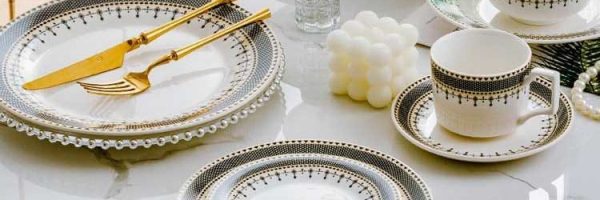
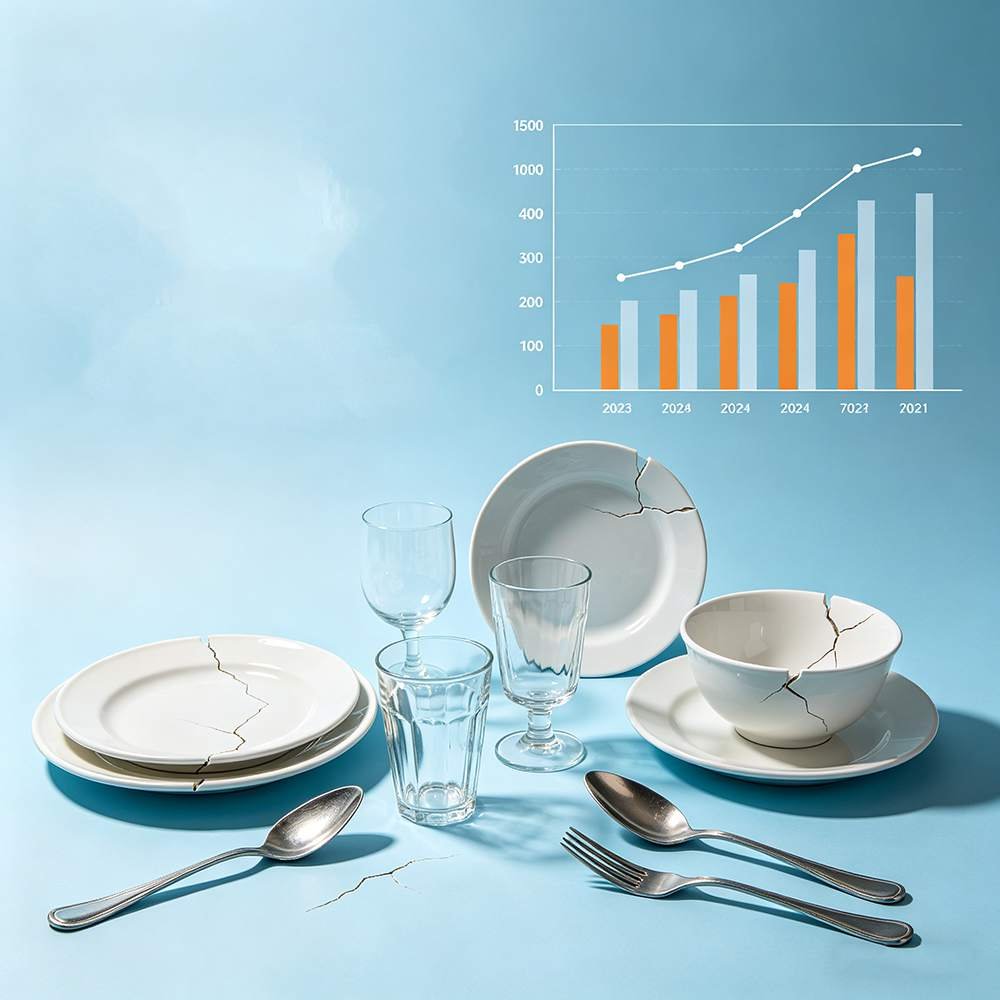
When a plate cracks, it doesn’t just chip or break. It snaps down your margins, too. One second, you have the perfect inventory lined up and ready to serve on a Saturday night. Next, there’s a tiny clink, and the plates are officially retired. You may not pay heed to it, but losing 1 to 2 pieces of dinnerware a day is common for a restaurant serving about 200 covers every day. But if you do the math, that runs up to 365 to 700+ items lost every year. According to Emergen Research, restaurants experience 5–10% tableware loss every year due to breakage, theft, and wear. Some operations end up spending up to USD 20,000– USD 50,000 annually on dinnerware replacements. This is a huge expense that you need to track and account for. Restaurant dinnerware breakage rate is also an indication of how well your training and equipment are working. In this guide, let’s learn how to calculate restaurant dinnerware breakage rate and reduce losses. What is the Restaurant Dinnerware Breakage Rate? The restaurant dinner breakage rate is the percentage of plates, cups, bowls, and other serving pieces lost or damaged every day, every month, or every year, from your inventory. In other words, it is the proportion of total dinnerware inventory that becomes unusable due to chipping, breakage, or cracking. The breakage rate is a performance indicator of how well your restaurant is running behind the scenes. It’s about how well your inventory can handle the dishwasher pressures, staff serving routines, stacking, and handling. Breakage, Loss, Vs Shrinkage Many hotel and restaurant operators lose money because they cannot distinguish between breakage, loss, and shrinkage. Breakage normally occurs when there’s physical damage to the plate. If a plate chips, cracks, or gets shattered, it is broken. Breakage mostly takes place during the service and dishwashing cycles. Loss occurs when the items disappear from the inventory. Losses may be due to theft, misplacement, or staff mishandling. Losses are harder to track and are often ignored when inventory, especially flatware inventory, is being audited. Now the term that covers both breakage and loss is shrinkage. Shrinkage is like an umbrella term that includes any kind of inventory reduction that’s not accounted for. Why Tracking Dinnerware Breakage Rate Actually Matters Unmanaged shrinkage can lead to a few percent of the total cost of goods in restaurant operations. That’s why, as much as it is important to track the cost of food, it is important to track dinnerware shrinkage. Cost Control Dinnerware breakage is a recurring operational cost. Read on more about the cost of dinnerware breakage in our guide: Restaurant and Hotel Dinnerware Replacement Cycles: Managing Breakage and Reordering. It may seem like a trivial matter when a small plate breaks, but frequent replacements quickly add up. If you look at the situation in about five years, the replacement costs can match and even exceed the initial investment. Inventory Accuracy Restaurants usually operate on the industry-wide standard, which is a 3:1 plate-to-seat ratio. This keeps the service in flow without any shortages or slowdowns amidst the service. Here too, tracking the breakage is important because each small loss reduces your backup stock. If you don’t keep a tab on it, you might end up without any buffer stock on a busy Friday night. Brand Presentation Chipped crockery looks unpresentable and mars the entire aesthetic. But at the same time, it also signals carelessness. This negatively affects the consumer perception of your concept and ultimately the ratings and reviews. Also, when there is a visual inconsistency on the table, like the replacements are mismatched, it weakens your brand identity. So even if your guests do not mention it, they make a mental note about how much you care about presentation as a brand. Again, when you track your breakage rates and restock timely, you can completely avoid displaying mismatched or chipped inventory. Operational Efficiency Studies in foodservice operations have shown that front-of-house handling and back-of-house washing are the main factors leading to tableware breakage. This breakage pattern also reveals deeper issues in your service plan. If you notice the breakage usually takes place in the dishwasher, there’s probably a problem with your process. Similarly, if there is frequent chipping around the rims, it means the storage and stacking need to be looked into. Also, if you notice there is a sudden increase in breakage and shrinking, it’s often due to a gap between your staffing and training. Procurement and Budget Planning Sourcing dinnerware must be done with proper planning. If you place the re-orders reactively, you will often be spending more than you budgeted for and may also run a higher risk of discontinued designs and mismatched stocks. With proper tracking, you can forecast the replacements and maintain a buffer stock to keep up with the demand. Also, you can negotiate better supplier terms as you would be planning a way ahead of time and would be able to give them leverage in lead times. Learn more about dinnerware replacement cycles in our guide: Restaurant and Hotel Dinnerware Replacement Cycles: Managing Breakage and Reordering. Why Dinnerware Breakage Is Unnoticed in Daily Operations Dinnerware breakage is often considered a secondary expense. It wouldn’t raise an alarm if two dinner plates chipped in a day. However, these tiny, invisible failures are happening every day in the process, material, and human levels, and add up over time. When these are not logged or reported, the damage compounds and eats up your profits as well. Micro-Chipping A small chip or a utensil mark on a plate would hardly look like damage. But over time, the degradation multiplies and increases on a microscopic level. The micro scratches, glaze cracks, and chips increase, which makes the plate rough and weakens it structurally. So while initially the plate may not be considered broken, it may be removed from the service quietly due to hygiene or safety concerns. Staff Handling Habits Normally, we assume that a plate breaks when it drops. However, that’s
Dinnerware for Filipino Restaurants and Catering Companies
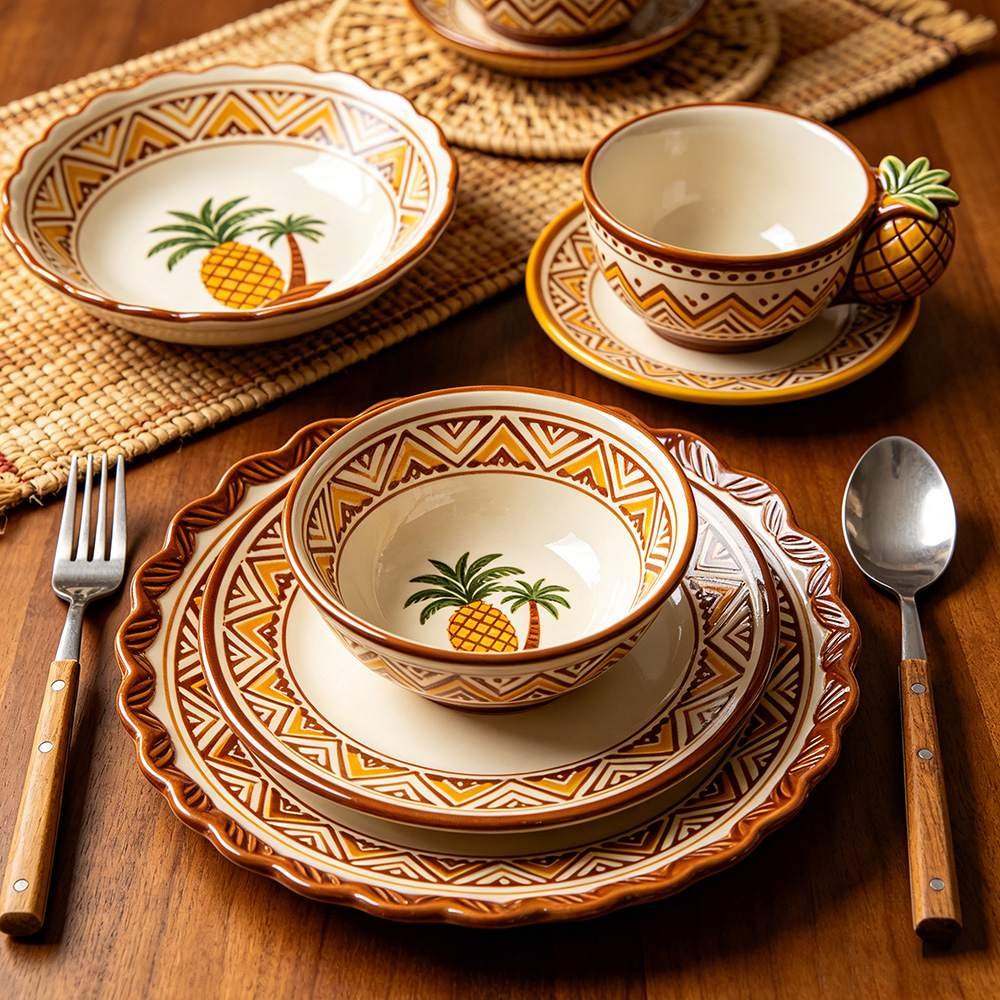
From the Makati weddings to the fast-turnover carinderia-style operations, dinnerware isn’t just about plates and bowls in the Philippines. There are over 100,000 food service spots across the country, out of which 80% are small, fast-moving businesses like carinderias. A single busy restaurant can go through thousands of plates a year, as the functions and events may have 200 to 500 guests (at the very least, at times!) Another fact of the matter is that Filipino cuisine is heavily based on liquid dishes. Think Sinigang, Tinola, and Kare-kare, and so the dinnerware required in the setting is much different from that of a traditional restaurant in the US. We need more shared platters, rice portions, sauce servings, and bowls for liquid-heavy dishes. The material must also be heat-resistant and strong enough to stay stable and survive the serving and dishwasher cycles. So when you’re procuring dinnerware for your restaurant in the Philippines, you need to look into factors like faster table resets, lesser breakage, and a consistent plating pattern across branches. Understanding Restaurant Dinnerware Philippines Standards in Commercial Kitchens In the Philippines, the dinnerware is often chosen for its performance rather than its looks. Since the service styles here are mostly fast-casual carinderia setups and large catering events serving over 300–500 individuals, the tableware needs to survive the constant stacking, transportation, and thermal stressors. Learn more about the top dinnerware brands in the Philippines here: Top 10 Dinnerware Brands in Philippines Recommended. Durability Requirements for High-Volume Filipino Restaurants The Filipino menus are not gentle on the ceramics. Many cuisines have steaming rice that has to be served hot, especially during buffet settings. There are boiling soups like bulalo and sinigang that are best served directly from the kitchen. Also, don’t forget the saucy viands like kare-kare and adobo, which require dishes that can retain heat during service and plating delays. The Philippine HoReCa sector requires vitrified or high-fired ceramic that can handle the rapid temperature changes without cracking. We need high-quality dinnerware that lasts; otherwise, you’d end up replacing the fleet much more quickly than you anticipate. Resistance to Chipping in Buffet and Catering Service In a catering operation, which is very common in the Philippines, dinnerware is constantly stacked and moved between venues. During this time, it is handled by temporary staff, and collisions are common. This becomes a potential chipping point for dinnerware. In such environments, commercial-grade porcelain and alumina reinforced ceramics are the best choices as they are least likely to develop fractures due to stacking and can withstand repeated commercial dishwashing. Take a look at Brett’s Porcelain Dinnerware Collection, which is durable, cost-efficient, and designed to withstand the stress and pressures of the commercial kitchen and service. Stackability for Catering Logistics Many catering operators prefer plates with uniform diameters for easy stacking. They choose designs with flat bottoms as they balance the weight and are less likely to crack under pressure. This is because logistics isn’t about storage only. It’s like a multitransport system. For instance, when you are travelling from Quezon City to Tagaytay for a wedding buffet, it may take around 1.5-2 hours on the road. But it exposes dinnerware to multiple handling points, road vibrations, and stacking pressures. So, even though the commercial-grade ceramics are designed for transport, the risk of chipping increases during packing and handling. Hygiene and Food Safety Considerations The Philippines has a very humid climate, with the average relative humidity going up to 71%–85%. This factor makes hygiene a very important consideration in the catering business. Apart from being durable, the dinnerware needs to be resistant to moisture absorption. This is why non-porous, vitrified porcelain is widely used here. Due to the high temperature firing, it does not absorb oils, food acids, or moisture. The dense structure also reduces odor retention. Compliance Expectations in the Philippines In the Philippines, professional food service operations must comply with established sanitary handling standards for food-contact materials. These align with international guidelines such as those set by the Codex Alimentarius Commission. Dinnerware must be food-safe and non-toxic, meeting regulatory requirements for materials that come into direct contact with food. Types of Restaurant Dinnerware Philippines Businesses Commonly Use We have the same four material choices in the Philippines for dinnerware: porcelain, bone china, melamine, and stoneware used in luxury hotels, fine dining, and fast food concepts. Porcelain Dinnerware for Fine Dining Filipino Restaurants Porcelain remains the top choice, especially in 4 to 5-star hotels and many upscale Filipino fusion restaurants. The material suits most plated dish servings in high-end dining and banquet set-ups as well. So if you are serving lechon belly with crisp skin presentation or kare-kare in sauce-controlled plating, or even seafood platters that need high heat retention and clean visuals, vitrified porcelain wins. Bone China Dinnerware for Premium Hotels/Luxury Dining Although bone china is often overlooked as a top choice, it has some eye-catching designs, especially to cater to the premium segments. The material is made of bone ash, which increases its strength. In high-end dining, choosing this material enhances the perceived food value and is also easy to carry for the staff, given its lightweight. However, the trade-off is that it comes at a higher cost compared to porcelain and is still susceptible to chip damage under heavy catering transportation. Learn more about bone china in our guide: Bone China vs Porcelain Dinnerware: Which Should Hotels Choose? Stoneware Dinnerware for Modern Filipino Concepts Lately, stoneware has become increasingly popular in modern Filipino restaurants. It is mostly used in heritage Filipino dining concepts, café-style fusion dining, and farm-to-table concepts. The material is well-loved for its natural aesthetic and premium feel. However, stoneware is heavier compared to porcelain and bone china. This increases the handling fatigue and also makes it more prone to chipping. Therefore, those dining concepts with heavy traffic do not prefer stoneware, but premium settings with trained staff who know how to carefully stack stoneware designs can find elegant designs in Brett’s Stoneware Dinnerware Collection. How to Choose Dinnerware Suppliers for
Black Restaurant Plates: Styles, Materials, and How to Choose
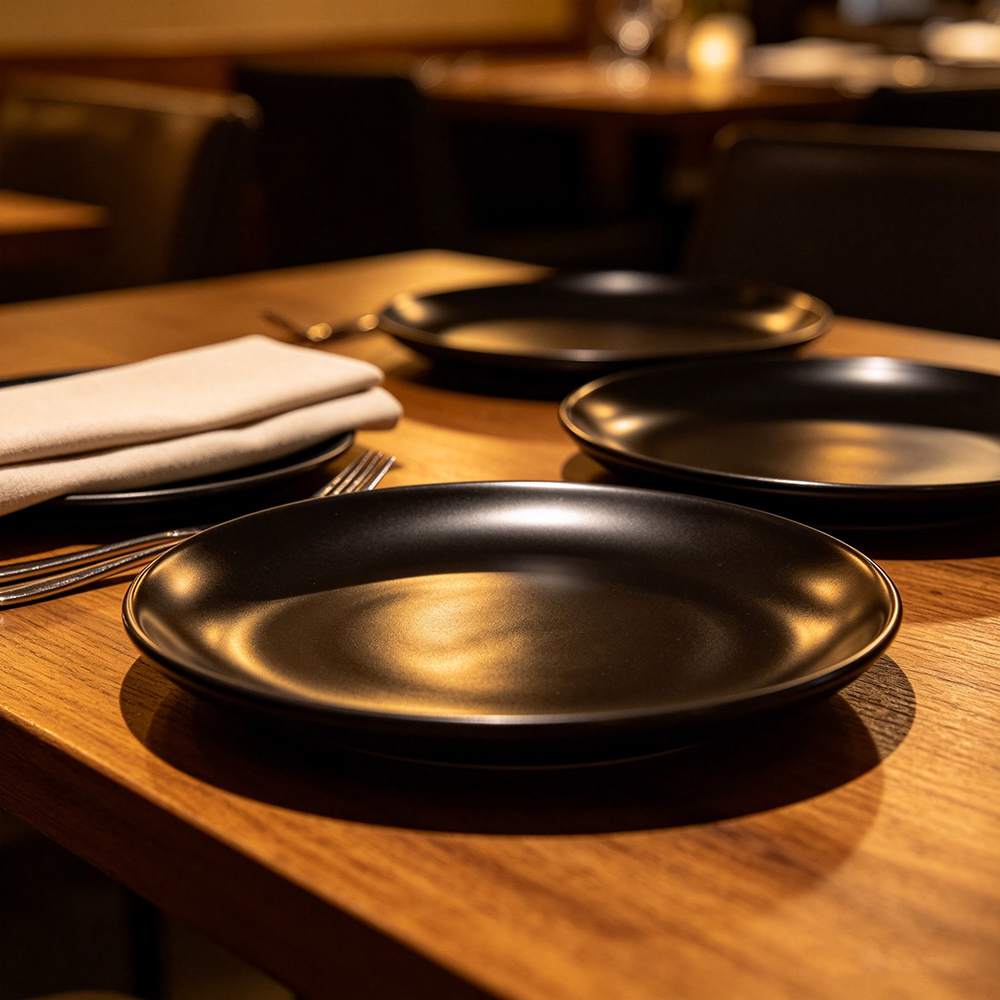
If you’re thinking about procuring dinner plates for a new restaurant or simply refreshing your existing inventory, it’s never an easy decision. All the catalogues and choices make it feel like you’re standing in front of an endless aisle. Every design, every pattern, and every shape looks just perfect for your restaurant. There are whites in so many shades, neutrals and pastels, intricate and sophisticated patterns, and textures to choose from. Not knowing the exact kind of dinnerware to choose for your concept is often the reason why most dining restaurants end up looking the same. When it comes to black restaurant plates, they do not follow the usual pattern. It’s all in the color. Black doesn’t compete for attention, but rather stands out by itself. It frames the food, sharpening the color and contrast of the dish with intent. In professional kitchens and dining spaces, black dinnerware isn’t just stylish; it is a design tool that exudes confidence and modernity. In this guide, we’ll explore the wide variety of black restaurant plates. We will talk about the texture, finish, and materials backed by science, so you know how to choose the right dinner set for your concept. Why Restaurants Choose Black Dinnerware Black restaurant plates do not follow trends. They are deliberately chosen to create an ambience, not work around it. When it comes to dining, the color has a psychological effect on the appetite, too. As per a study, black tableware increased the craving to eat, whereas yellow and green tableware decreased it. Many concepts also opt for black due to their branding or service needs. Here are some key reasons why restaurants choose black dinnerware. Black Makes Food Pop Many chefs love black and white dinnerware for the contrast. Ingredients appear brighter, vibrant, and colorful against the plain background. On a black plate, the green serving looks greener, the reds look richer, and even the textures become more visible. This makes the serving look fresh and of high quality. That single perception about the food is formed before it even lands in the mouth, and hence is very important for creating the first impression. Learn more about color psychology here: White vs Colored Dinnerware: Psychology and Plating Design for Restaurants. A Premium, Modern Feel Black is also associated with sophistication. It doesn’t take much effort to make a dish look classy, stylish, and modern when served on a plain black background. Hence, it is the choice for many premium and fine dining restaurants, as well as upscale casual spots, and other chef-driven concepts. Explore the best black restaurant dinnerware sets by Brett here: Is Black Stoneware Dinnerware Sets a Good Choice? Best 5 Styles of Brett Recommended. Black Supports Creative Plating Black restaurant plates give chefs more freedom for presentation. Chefs can display unique artistic plating techniques that otherwise get lost on lighter backgrounds. The sauces, purées, and garnishes all become more visible on black. This is especially important in modern culinary presentation, where plating is about setting the mood and theme. Expert presentation techniques for sauces, especially like swooshes, smears, layering, and the placement of greens and edible flowers, become more prominent. Instead of disappearing into the plate, they stand out. This feature improves control over visual hierarchy. The bright sauces, creamy purées, and colorful garnishes get a depth when served on black. This way, even the minimalist and simplest of dishes look highly artistic. Read on for more about Restaurant Food Presentation: How Dinnerware Shapes Your Plating. Black Photographs Better We are living in the age of Instagram and TikTok, so the plate presentation has to look good not just to the eye but also on camera. Black plates do exceptionally well in photography because they naturally enhance the contrast, depth, and color. When food is placed against the black background, the colors look more saturated and defined. That often reduces or eliminates the need for heavy edits. Even food styling resources like Sincerely Tori recommend using black or grey plates for moody food photography. According to them, the darker backgrounds enhance contrast and support dramatic, professional-looking photographs. Can Hide Wear Compared to white, black plates are generally better at concealing minor stains, marks, and discoloration. These naturally develop over time in high-usage commercial kitchens, where dishes undergo constant washing and handling cycles. However, the finish still plays an important role in long-term presentation. Matte black surfaces, though they look elegant and modern, can show scratches and wear. Where glossy black finishes highlight fingerprints, smudges, and water spots under strong lighting. Choosing the right finish, therefore, becomes important. Learn more about dinnerware finishes in our guide: Matte vs Gloss Dinnerware: Which Finish Works for Restaurants? Fits a Range of Cuisines Black plates are commonly used in sushi bars, ramen shops, and modern fusion restaurants. Since most of the ingredients used in these dishes are delicate, they stand out clearly against the dark background. Black tableware is also common in steakhouses, where the color highlights grilled meats. In dessert plating, too, black offers a plain canvas that makes the bright sauces, fruits, cream, and garnishes look vibrant. Types of Black Restaurant Plate Styles Black plates come in a wide range of finishes and textures. There are deep matte tones that look modern and glossy finishes that bring in the shine. Each variation has an effect on the dining mood. Matte Black Plates Matte black plates are commonly chosen in modern dining concepts because of the non-reflective surface. The matte finish absorbs and diffuses light, which creates a soft effect on the table, keeping the focus on the food. This finish is especially popular in fine dining settings where you need minimal aesthetics. In this category, check out Brett’s Matte Black Stoneware Dinnerware Set. Glossy Black Plates The glossy plates do the exact opposite of a matte finish. They reflect light, which creates a high-contrast look on the table. The enhanced shine makes the sauces and glazes stand out. However, strong lighting can cause a glare on

Top 10 Restaurant Dinnerware Brands Recommended
Choosing the right restaurant dinnerware brands is more than a design decision—it directly impacts presentation, durability, and overall dining experience. In the hospitality industry, tableware must strike a balance between aesthetics and performance. Plates need to look refined under soft lighting, but also withstand constant use, washing, and stacking. Whether you run a fine dining restaurant, a casual café, or a large hotel kitchen, selecting the right brand can make a measurable difference in both operations and brand perception. In this guide, we’ve curated 10 of the most reliable restaurant dinnerware brands worldwide as a reference for your future restaurant dinnerware purchases. Best 10 Restaurant Dinnerware Brands Recommended 1. Churchill China Website: https://www.churchill1795.com Churchill China, founded in 1795, is a pioneering British brand renowned for its premium ceramic tableware, trusted by top hotels and restaurants worldwide. With over two centuries of expertise, Churchill combines innovation with traditional craftsmanship, producing durable, elegant, and versatile dinnerware suitable for fine dining and high-volume hospitality environments. The brand emphasizes sustainability and quality, offering a wide range of products from classic porcelain to modern vitrified tableware, ensuring both aesthetic appeal and long-lasting performance. Known for its customizable solutions, Churchill China caters to chefs and restaurateurs seeking distinctive table settings that enhance the dining experience while withstanding rigorous commercial use. Its commitment to design, reliability, and eco-conscious production has cemented its status as a go-to choice for luxury hotels, Michelin-starred restaurants, and globally recognized hospitality establishments. 2. Steelite International Website: https://www.steelite.com Steelite International is a leading British manufacturer of high-quality tabletop solutions for the global hospitality industry. With a legacy spanning over 100 years, Steelite combines innovation, durability, and design excellence to create products that meet the rigorous demands of restaurants, hotels, and caterers. The brand offers a wide range of ceramic, porcelain, and melamine dinnerware, as well as glassware and accessories, all crafted to withstand high-volume use while maintaining elegance. Steelite emphasizes functionality, style, and sustainability, providing solutions that enhance the dining experience. Trusted by chefs and hospitality professionals worldwide, Steelite International has earned a reputation for reliability, innovative design, and exceptional quality, making it a go-to choice for fine dining establishments, luxury hotels, and globally recognized restaurant chains. 3. Villeroy & Boch Website: https://www.villeroy-boch.com Villeroy & Boch, founded in 1748 in Germany, is a globally renowned brand celebrated for its premium porcelain and ceramic tableware. With centuries of experience, the company blends traditional craftsmanship with contemporary design to create elegant, durable, and versatile dinnerware for both residential and professional settings. The brand offers a wide array of products, including classic and modern porcelain collections, glassware, and accessories, with a focus on quality, aesthetics, and functionality. Villeroy & Boch is committed to sustainability and innovation, ensuring products are both stylish and long-lasting. Recognized by fine dining restaurants, luxury hotels, and hospitality professionals worldwide, Villeroy & Boch continues to set industry standards in design, performance, and reliability, making it a top choice for discerning chefs and restaurateurs. 4. Royal Doulton Website: https://www.royaldoulton.com Royal Doulton, established in 1815 in England, is a prestigious brand known for its exquisite ceramic and porcelain tableware. Combining heritage craftsmanship with contemporary design, the company produces durable and elegant dinnerware that enhances both casual and fine dining experiences. The brand offers a wide selection of collections, ranging from classic to modern styles, with a focus on quality, functionality, and aesthetic appeal. Royal Doulton emphasizes sustainability and innovative production techniques, ensuring products withstand the demands of high-volume hospitality environments. Favored by restaurants, luxury hotels, and discerning chefs worldwide, Royal Doulton continues to uphold its legacy of excellence, making it a trusted choice for premium tabletop solutions. 5. Porland Website: https://www.porland.com Porland, founded in 1976 in Turkey, is a renowned manufacturer of high-quality porcelain dinnerware for the hospitality and domestic markets. With a commitment to innovation and craftsmanship, Porland blends elegant design with robust performance to meet the rigorous needs of restaurants and hotels. The brand’s extensive product range includes porcelain plates, bowls, mugs, and accessories, offering versatile solutions suitable for both modern and traditional dining settings. Porland prioritizes durability, design excellence, and eco-friendly production practices. Widely recognized by chefs and hospitality professionals, Porland is a trusted partner for establishments seeking stylish, long-lasting, and functional tableware. 6. Costa Nova Website: https://www.costanova.pt Costa Nova, based in Portugal, is celebrated for its handcrafted, high-quality ceramic dinnerware inspired by natural materials and coastal aesthetics. The brand combines traditional artisanal techniques with contemporary design to create versatile, durable, and visually striking tableware. Offering a broad collection of plates, bowls, and serving pieces, Costa Nova focuses on functionality, elegance, and sustainability, making its products suitable for both casual and fine dining settings. The brand emphasizes quality craftsmanship and timeless design. Favored by boutique hotels, luxury restaurants, and hospitality professionals worldwide, Costa Nova delivers tableware that enhances the dining experience while reflecting Portuguese artistry and attention to detail. 7. Arcoroc Website: https://www.arcoroc.com Arcoroc, part of the Arc International Group in France, is a leading brand in professional glassware and dinnerware for the hospitality sector. Known for combining durability with elegant design, Arcoroc produces glass and tableware solutions that withstand high-volume use in restaurants, hotels, and catering environments. The brand offers a wide range of products, including glassware, porcelain, and tempered tableware, focusing on practicality, aesthetic appeal, and safety. Arcoroc emphasizes innovative design and quality craftsmanship, ensuring long-lasting performance without compromising style. Trusted worldwide by chefs and hospitality professionals, Arcoroc delivers reliable, stylish, and functional tableware, making it a go-to choice for commercial dining establishments seeking both elegance and resilience. 8. Noritake Website: https://noritakechina.com/ Noritake, established in Japan in 1904, is a world-renowned brand specializing in high-quality porcelain dinnerware. Combining meticulous craftsmanship with contemporary design, Noritake creates elegant, durable, and versatile tableware suitable for fine dining, hotels, and restaurants. The brand’s collections feature a wide range of plates, bowls, and serving pieces, designed for both aesthetic beauty and practical performance. Noritake emphasizes sustainability, innovation, and attention to detail, ensuring products meet the rigorous demands of professional hospitality. Celebrated globally by chefs, luxury hotels, and prestigious restaurants, Noritake continues to uphold

Import Dinnerware from China to the US: 2026 Guide
Dinnerware procurement sounds easy until you are juggling multiple samples, spreadsheets, and have a supplier asking you whether you want simple porcelain or ceramic. That’s when you realize, it’s really not that simple. It starts quite small. You like a plate, pick out a shape and color, and imagine your brand’s logo placed on it. But as you fill the brief, you’re looking at codes, compliance, tariffs, and tiny technical details that somehow have huge consequences. Take something as basic as the product code. One digit difference from HTS code 6911 to HTS code 6912 can flip your dinnerware from non-porcelain to porcelain, changing not just the material but also the applicable duties, pricing, and the way your shipment is classified at customs. Importing dinnerware from China is a path well-trodden. The U.S. imports billions of dollars’ worth of ceramic tableware annually, where China dominates the global exports under HS code 6912, according to the Observatory of Economic Complexity. But it’s not just about finding a supplier and arranging the shipping fee. If you want your dinnerware to arrive on time, match your brand, and make you money, you are at the right page. In this guide, we will explore the behind-the-scenes process involved in importing dinnerware from China. Why US Buyers Still Source Ceramic Dinnerware from China Importing ceramic dinnerware from China isn’t about following a trend; it’s about stepping into one of the most established industrial supply chains of the world. For the US restaurants and hotels, China is a low-cost option for sourcing tableware. But what makes it more attractive is that the country has a manufacturing ecosystem that’s been built over centuries. Cities such as Chaozhou, Dehua, Tangshan, Liling, and Jingdezhen are major ceramic production hubs. Much of the manufacturing processes, such as raw material processing, glazing, and kiln firing, happen within the nearby geographies. Such integration and clustering isn’t easy to replicate by other countries. Chaozhou is one of the largest ceramic tableware production hubs in the world because of its industrial density. There are not hundreds but thousands of factories sharing kiln infrastructure here. The labor force is specifically trained in ceramic production. All these factors make China the most lucrative land for sourcing dinnerware. Scale and Customization There are very few regions that can match China’s ability to offer low to mid-range MOQs at similar prices. Even fewer offer low to mid-range MOQs per SKU and flexible customization options. Learn more about MOQ, Pricing, and Supplier Negotiation here: For boutique hotels, restaurant chains, and event rentals, procuring dinnerware from China is the most feasible option as you get consistent replication, aka a scalable system, and a variety of material options to choose from. Here’s more about dinnerware material selection: Best Restaurant Dinnerware: Material Selection & Buying Guide. Time Discipline Importing dinnerware from China takes about 60-90 days to the US. The ocean freight is around 15-25 days on average for the US West Coast ports and 25-35 days to the East Coast ports. Then there’s production, QC, or customs clearance. The entire process takes 90–120 days for first orders and around 60–90 days for repeat orders. This is why China works best for hospitality groups and restaurant chains that plan procurement in advance. Understanding US Duties on Dinnerware from China Buyers who succeed in procuring dinnerware that lasts, costs low, and scales aren’t the ones who find the cheapest supplier. They’re the ones who understand the system. The one place where most first-time buyers underestimate the process is in understanding the duties. China’s dinnerware import duty US is a stack of numbers, all dependent on what exactly you are importing. The process starts with the HTS classification, which is where most errors take place. Every shipment entering the U.S. is classified under the Harmonized Tariff Schedule, maintained by the United States International Trade Commission. For dinnerware, there’s a split between the HTS code 6911, which is for porcelain, and the HTS code 6912 for Non-porcelain ceramics. Unfortunately, misclassification between HTS codes 6911 and 6912 is one of the most common buyer mistakes and also a trigger for review by the U.S. Customs and Border Protection. Base MFN Duty Once the imports are classified, your procured dinnerware is assigned a Most Favored Nation (MFN) duty rate. The variation in the ranges depends on the product type, i.e., plates, cups, or dinner sets, the value thresholds per piece, and the specific 10-digit subheading. Section 301 Tariff This is the real cost of procurement. Most ceramic tableware from China falls under Section 301 List 3, which adds a 25% tariff on top of the MFN rate. This Section 301 tariff on ceramics was placed in 2018 and remains active today, as of April 2026. IEEPA Tariffs As per the February 20, 2026, Supreme Court decision, the previously imposed 10% “fentanyl” tariff and the 10% “reciprocal” tariff were ruled invalid and removed. Following the ruling, a temporary 10% global tariff was introduced under Section 122 of the Trade Act of 1974. However, the tariff must be verified at the time of shipment. FDA Compliance: Lead, Cadmium, and the Real Reason Shipments Get Held A shipment’s inability to prove FDA compliance is one of the leading causes of shipment delays and rejections. When you import dinnerware from China, “food-safe” is not a label. It’s a measurable regulatory threshold. If the product doesn’t meet it, your shipment doesn’t clear. Under U.S. law (21 U.S.C. § 342(a)(2)(C)), ceramic dinnerware intended for food contact is regulated by the U.S. Food and Drug Administration. The FDA lead limits for ceramic dinnerware vary based on product geometry. They are dependent on how food interacts with the surface, which determines how much lead can leach. For instance, for flatware like plates and saucers, the limits are ≤ 3.0 ppm; for pitchers, cups, and mugs, it is ≤ 0.5 ppm. That’s because a shallow plate has only a brief contact with food, whereas a mug holds hot, acidic liquid for much longer. The surface-to-volume ratio and contact time determine
Private Label Dinnerware: How Hotels and Restaurants Build Their Brand
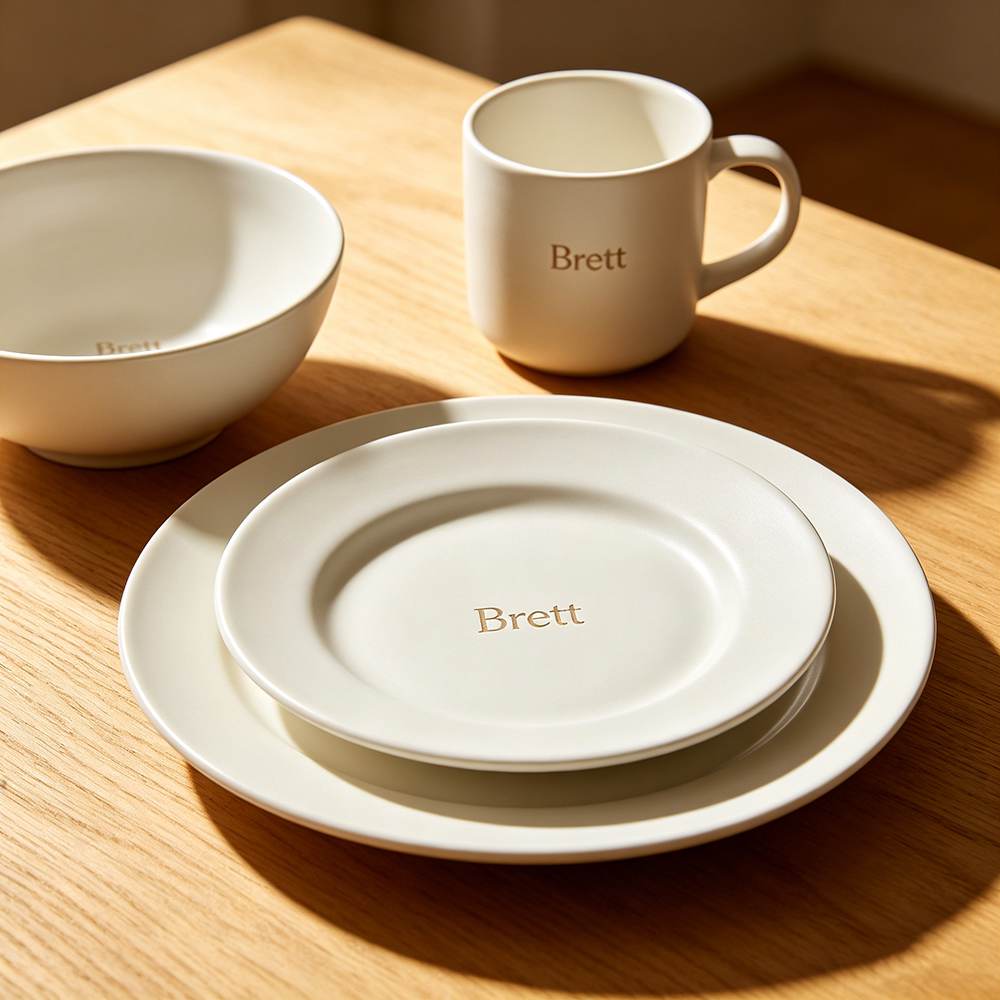
Some hospitality brands live on the billboards, while others live on their menus.But the best hospitality brands? They live on their tables and dinner plates! Private label dinnerware isn’t just about placing logos or branding elements on Porcelain Dinnerware. It’s about turning every table into an experience for every guest that they remember and cherish. It’s about getting them to know your brand even before they order their food. Designing the right tableware to create such an experience is the tricky part. A simple branded plate has to undergo a complex journey to make it all the way to the dinnerware fleet. There are OEM design decisions, glaze chemistry, and FDA food contact compliance standards that must be met. Then, come the branding elements that make the dinnerware truly yours. What Private Label Dinnerware Means For most brands, private label dinnerware simply means having a logo on a plate. But in the true sense, it’s like building a mini manufacturing ecosystem around the brand’s identity. For the hospitality business, it means designing tableware around the OEM/ODM structure. It includes everything from how the dinnerware is produced, fired, finished, and certified. It includes a custom logo application, either by decal, glaze, or embossing. Explore more on Ways to Print Your Logo on Plates. Private labeling doesn’t stop at design or logos. It extends into the technical lifecycle of the product, and that includes material selection, the firing process, glaze finish, and, of course, compliance and certification. It’s no wonder private label dinnerware is your brand architecture. And that architecture has to stay consistent, where every reorder must match the previous batch in performance and appearance. The level of manufacturing precision is what separates true private label dinnerware from basic logo application. The Private Label Production Flow Behind every branded plate in a hotel, a whole process is involved that is much unlike the retail ordering process. Here’s the step-by-step private label production process. The Brand Brief For private label dinnerware, a brand brief is designed that includes the hotel’s F&B positioning and brand guidelines. You have to give the manufacturer the design, branding elements to be placed, and other precision requirements. The factory then translates the information into mold compatibility, kiln firing, and glaze chemistry. How compatible the design is with all these manufacturing steps can determine whether the MOQ stays low or can be scaled. Mold Selection or Mold Creation The production process usually involves two paths: OEM vs ODM. Learn more about Custom Dinnerware for Hotels & Restaurants: OEM vs ODM Explained. While ODM is faster, as it works with existing plate shapes, molds, and proven designs, OEM gives you more flexibility in terms of customization. Most brands take the ODM route because it offers faster sampling and lower MOQs, but true private label dinnerware is unique in every sense. It stands out from the competition in terms of glaze finish, size, color, pattern, logo, and overall form. For the manufacturer, that means creating a new mold, making structural engineering adjustments, and calibrating for shrinkage, as ceramics, particularly porcelain, often shrink by 8–12% during the kiln firing stage. But that’s what makes the process expensive, as well. Sampling and Prototype Firing Before mass production begins in a factory, the sample pieces are fired in kiln batches. The glaze reactions are tested, and so is the logo durability. In ceramics, the sampling stage is very important, as firing at high temperatures can alter ceramic behavior. In fact, as per the Journal of the European Ceramic Society, firing consistency is one of the strongest predictors of structural durability and glaze stability in porcelain and stoneware systems. Branding Application Next, the branding elements are applied. These are mostly done via decal firing in hospitality environments, where the logo is printed and then fired into the glaze layer. There are also options like underglaze printing, which come at a slightly higher cost but also have higher durability. Then there’s embossed mold branding where the logo is physically formed into the ceramic body. Each method has unique kiln cycle requirements, defect risk rates, and MOQ thresholds. This is also where another important factor comes into play; learn more about why the glaze changes color in the kiln. Compliance and Food-Safety Private label dinnerware in hotels must comply with the U.S. Food and Drug Administration food-contact material standards (CFR Title 21) and the EU Regulation 1935/2004 for food-contact safety. Both frameworks ensure there’s no harmful migration of lead or cadmium in the food. Apart from that, they also require the dinnerware glaze to stay stable under heat and acidity, and be safe for repeated dishwasher exposure. Why Private Label Dinnerware Is a Manufacturing Strategy OEM ceramic suppliers structure private label production around three key processes: kiln efficiency, mold amortization, and glaze batch stability. So the question is not whether the manufacturer can fit your brand logo onto the dinnerware, but rather if they can produce private-label dinnerware specific to your identity. Manufacturers like Brett support private label programs by aligning hotel branding with their existing mold libraries, reducing tooling costs via shared production bases, consolidating SKUs across multiple properties, and optimizing kiln runs. Kiln-driven Cost Structure One of the most expensive stages of the ceramics production process is firing. Most industrial kilns for vitrified hotelware and porcelain operate in the range of 1200-1300°C, where materials undergo sintering and vitrification. Since the kilns require full load efficiency to be cost-effective, manufacturers try to optimize production by maximizing kiln utilization. They schedule compatible products together and reduce empty spaces as much as they can. Batch-Based Manufacturing Ceramic production is batch-controlled. Each stage, including forming, drying, glazing, and firing, must follow tightly controlled parameters to avoid structural or visual defects in the final pieces. This is critical because even small variations in humidity, drying time, or firing ramp rates can lead to warping, pinholing, crawling, or uneven gloss levels. To avoid it, manufacturers standardize production into controlled kiln batches where all pieces share the same thermal and chemical conditions. Tooling (Mold) Amortization
Dinnerware Minimum Order Quantity Explained: A Buyer’s Handbook
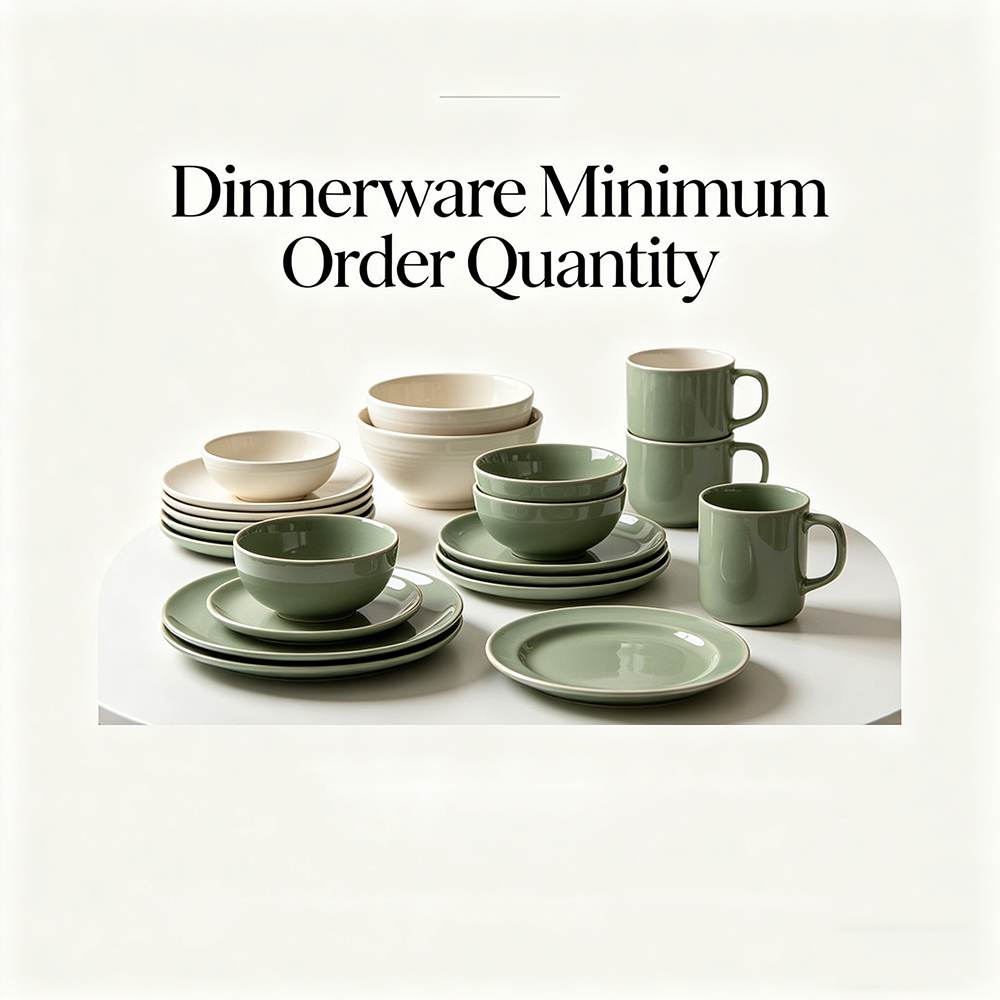
If you’ve ever tried sourcing custom ceramic dinnerware, you’ve probably had this moment where you ask for 200 plates, and the supplier comes back with an offer of a minimum of 2,000.Although it feels like the number has come out of the blue, it really hasn’t. Dinnerware minimum order quantity is a complicated concept. However, while we see the numbers, the logic is well hidden beneath the surface. Unfortunately, most suppliers and the internet don’t talk about it much. Even if you look up MOQs, you find endless product grids and listings, but no explanation about why these MOQs exist and how to work around them. That’s just what we will cover in this article. MOQs are all about physics and production economics. What Does MOQ Actually Mean in Ceramic Manufacturing? To understand what MOQs mean, we need to understand the production process. In a ceramic producing factory, kilns fire plates, glaze lines switch colors, and molds? These are spread across the total output. None of these processes can be viably done for a single individual plate. All of these have upfront costs that need to be spread across volume. As per the industry discussions published in the Journal of the European Ceramic Society and industry trade insights, ceramic manufacturing is organized around batch processing. The materials are prepared, formed, and fired in controlled production runs rather than individual units. But before you write off the 2,000-piece MOQ, considering it unreasonable, we’ll help you understand what the numbers actually mean. On paper, MOQ (minimum order quantity) is simply the smallest number of units a manufacturer produces in one run. Whereas, in reality, it is layered, conditional, and rarely ever a single number. What Does MOQ Actually Mean in Ceramic Manufacturing? In custom dinnerware production, the MOQ exists in three distinct forms. So if a supplier tells you their MOQ is 1,000 pieces, your question should be, “1,000 of what?” MOQ Per SKU Most buyers think they are negotiating on the MOQ per SKU. However, an SKU-level MOQ represents a specific product configuration. Like, say a 12-inch dinner plate or matte ivory glaze. Each variation means a new SKU with mold preparation/adjustment, glaze calibration, and production line setup, aka new costs for the manufacturer. MOQ Per Color / Decal / Finish If you’re placing the order for, say, 1,000 plates, but in four glaze variations and with two different logo placements, the math will change. In real terms, you are ordering 6 micro batches instead. Each one has to meet their own minimum threshold. This is because the glaze lines may have to be cleaned between the colors, it may require separate screens or transfers, and consistent firing for every finish. So more variations automatically means higher MOQs. MOQ Per Total Order Since the clients are mostly concerned about the MOQs per SKU, the suppliers are concerned with the MOQ per total order. Factories need this total order MOQ to justify their raw material batching, kiln loading efficiency, and labor allocation across the production. Although most suppliers will allow you to mix items, they will require a minimum order quantity or certain units. MOQ Ranges by Product Type (And Why They Vary So Much) Once you understand how MOQ behaves across different levels of customization, you will stop asking why it is so high. Instead, you will begin to ask the right questions, such as: What exactly am I asking the factory to do? MOQ Benchmarks for Ceramic Dinnerware Product Type MOQ Range Key Reasons Stock or Blank Ceramic (existing molds and standard glaze) 50–500 pieces No tooling required. It has a minimal setup and is often pulled from existing production lines. Custom Logos (decal or pad print) 500–2,000 pieces per design Separate printing screens are needed. Also requires firing consistency and batch decal application Custom Shape (new mold or OEM) 3,000–10,000+ pieces Requires mold creation, prototyping, and production calibration. Custom Glaze Color or Reactive Finish 1,000–5,000 pieces per color Needs glaze mixing, line cleaning, and firing consistency. Bone China Custom Dinnerware Higher than standard ceramics Custom bone china has a complex composition. It requires stricter firing control and has a higher rejection risk. Stock / Blank Ceramic This is the only scenario where the 50-500 MOQ is reasonable. This is because the factory already has existing molds. The glazes, too, are standardized and are being used in ongoing production runs. It is almost as if you are ‘piggybacking’ on an existing system. This is why many suppliers offer flexibility and allow mixing SKUs to achieve the total order threshold. Custom Logo For customized orders, most suppliers allow MOQs of around 500-2000 pieces. This is because adding logos is not as simple. Logo placement requires decal production or pad printing setup with alignment precision across batches. At times, additional firing cycles are required to fix the design into the glaze. Consistency is the key here. Even a slight shift in the placement across batches leads to rejected batches, so suppliers like Brett enforce strict application templates and quality checks during production. Custom Shape Creating a new shape in ceramics may get you an MOQ between 3,000 and 10,000 pieces. This is because it requires a new mold design and fabrication that can cost hundreds to thousands of dollars. There are iterations to the prototype and structural testing as well that add to the costs. So the OEM production comes at a much higher cost, and the order has to absorb all these fixed costs to be accepted. Custom Glaze Color Most people do not expect much change in the MOQ when they ask for different colors. But from the manufacturer’s perspective, it means new glazes that have to be mixed in batches, differences in kiln firing, and also the production lines’ cleaning between colors. Learn more about the process in our guide: Why Does Glaze Change Color in the Kiln? So we are looking at MOQs around 1,000 to 5,000 pieces. Bone China Bone China is all about beauty. It is lightweight and
Where to Bulk Wedding Plates? Manufacturer vs. Other Options — Which Suits You Best?
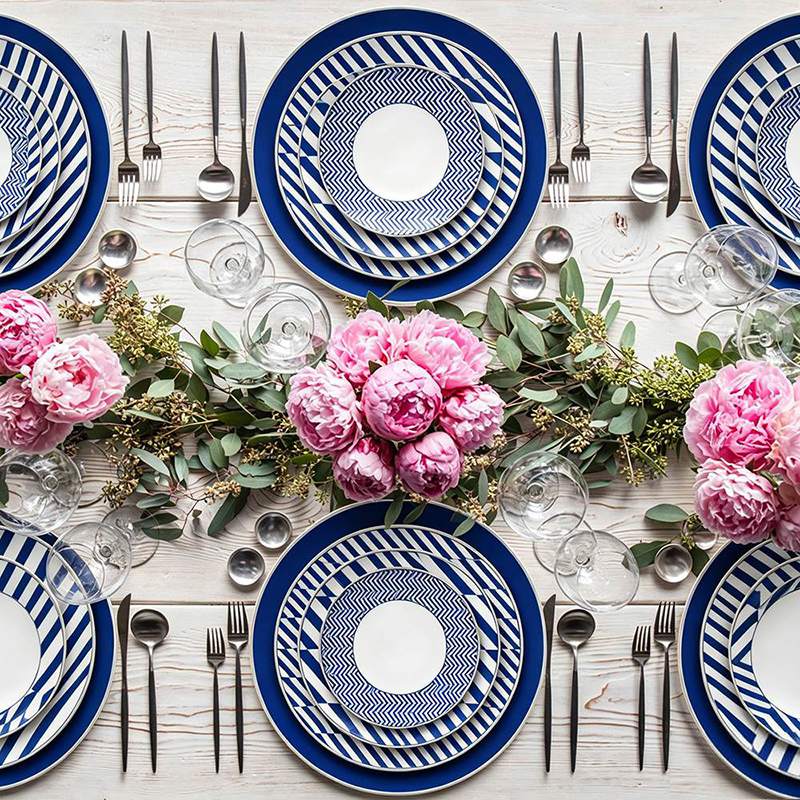
Planning a wedding at scale—whether for a single grand event or recurring event business—often involves one critical procurement decision: where to source wedding plates in bulk. The choice of supplier can directly impact cost, quality, customization, and overall event experience. When searching for wedding plates, buyers typically face two main sourcing paths: Buying directly from manufacturers Purchasing through other channels(retailers, wholesalers, rental companies, or online marketplaces) So which option is better? The answer depends on your needs, budget, and timeline. In this guide, we’ll break down each sourcing method in detail to help you make the most informed decision. Why Bulk Buying Wedding Plates Matters Bulk purchasing is not just about getting a lower price per unit. It also ensures consistency across all table settings, which is essential for weddings where aesthetics matter. Imagine a beautifully styled reception where every plate matches perfectly—this level of uniformity is difficult to achieve without careful sourcing. Bulk purchasing is common for: Wedding planners and event agencies Rental companies Hotels and banquet halls Large-scale weddings (100+ guests) Buying in bulk ensures: Cost efficiency Consistent design across all table settings Availability of replacement items Market data also reflects the growing importance of large-scale wedding planning. According to Statista, the global wedding industry continues to expand, driven by increased spending on personalized and high-quality event experiences. As weddings become more elaborate, sourcing decisions like dinnerware are no longer purely functional—they are strategic. Buying Wedding Plates Directly from Manufacturers Sourcing wedding plates directly from manufacturers is often considered the most cost-efficient option, especially for large-scale needs. Manufacturers operate at the source of production, which means there are no intermediaries adding markups along the supply chain. For businesses such as event rental companies or hotels, this can translate into significant cost savings over time. Advantages of Buying from Manufacturers 1. Lowest Unit Cost Cutting out middlemen allows you to access factory pricing, which is especially beneficial for large orders. ✔ Ideal for bulk orders (usually 500–1000+ pieces)✔ Better margins for resellers or rental businesses 2. Full Customization Options Manufacturers typically offer: Custom shapes and sizes Logo printing or embossing Special finishes (gold rim, matte glaze, reactive glaze) This is particularly valuable for: Luxury weddings Brand-focused events Event rental companies building unique inventories 3. Consistent Quality Control Working directly with a factory allows: Sample approval before production Quality inspection processes Long-term consistency for repeat orders 4. Scalability Manufacturers can handle: Large volume orders Repeat production runs Long-term partnerships Disadvantages of Manufacturer Sourcing 1. Higher Minimum Order Quantities (MOQ) Factories often require: Minimum orders of hundreds or thousands of units Not ideal for small or one-time events. 2. Longer Lead Times Production + shipping can take: 30–60 days (or more for custom orders) This requires advanced planning. 3. Import Complexity For international sourcing: Shipping logistics Customs clearance Import duties These factors add complexity, especially for first-time buyers. If you’re interested in learning more about wedding dinnerware manufacturers or looking for one, you can check out our previous article, “Top 10 Wedding Dinnerware Manufacturers Recommended“. Buying Wedding Plates From Wholesalers & Distributors For buyers who need a more straightforward purchasing process, wholesalers and retailers offer a practical alternative. These suppliers typically stock ready-made products sourced from manufacturers, allowing customers to purchase smaller quantities without long lead times. The advantage here lies in accessibility. You can browse available designs, place an order, and receive the products relatively quickly. This is particularly useful for mid-sized weddings or last-minute planning scenarios. That said, convenience comes at a price. Because wholesalers and retailers act as intermediaries, their pricing includes additional margins. Customization options are also limited, as most products are pre-designed. While this may not be an issue for standard weddings, it can be restrictive for those seeking a more distinctive table setting. Pros: Lower MOQ than factories Faster delivery Easier ordering process Cons: Higher prices due to markup Limited customization options Buying Wedding Plates From Retailers (Online & Offline) For buyers who need a more straightforward purchasing process, wholesalers and retailers offer a practical alternative. These suppliers typically stock ready-made products sourced from manufacturers, allowing customers to purchase smaller quantities without long lead times. The advantage here lies in accessibility. You can browse available designs, place an order, and receive the products relatively quickly. This is particularly useful for mid-sized weddings or last-minute planning scenarios. That said, convenience comes at a price. Because wholesalers and retailers act as intermediaries, their pricing includes additional margins. Customization options are also limited, as most products are pre-designed. While this may not be an issue for standard weddings, it can be restrictive for those seeking a more distinctive table setting. Pros: Immediate availability Wide variety of styles No bulk commitment required Cons: Not cost-effective for large quantities Limited stock consistency Difficult to reorder identical items later Rental Wedding Plates From Rental Companies For many couples planning a single wedding, renting dinnerware is an appealing option. Rental companies provide access to a wide range of styles without the need for ownership, storage, or post-event cleaning. This approach simplifies logistics significantly. Once the event is over, the rental company handles collection and cleaning, allowing hosts to focus on the celebration rather than the aftermath. Pros: No upfront purchase cost No storage required Includes cleaning services Cons: Cost accumulates over multiple events Limited design availability Risk of damage fees According to The Knot, rentals are a popular choice for one-time weddings due to convenience, but can become costly for repeated use. Buying Wedding Plates From Online Marketplaces (e.g., Amazon, Alibaba) Online platforms such as Amazon or Alibaba have made it easier than ever to source wedding plates from a global pool of suppliers. These marketplaces offer a wide variety of options, often with flexible order quantities and competitive pricing. The appeal lies in the ability to compare products and suppliers quickly. Buyers can explore different styles, materials, and price points without committing to a single source. However, this flexibility comes with risks. Product quality can vary significantly between sellers, and it is not
Banquet Dinnerware Setup: Complete Dinnerware and Equipment Guide
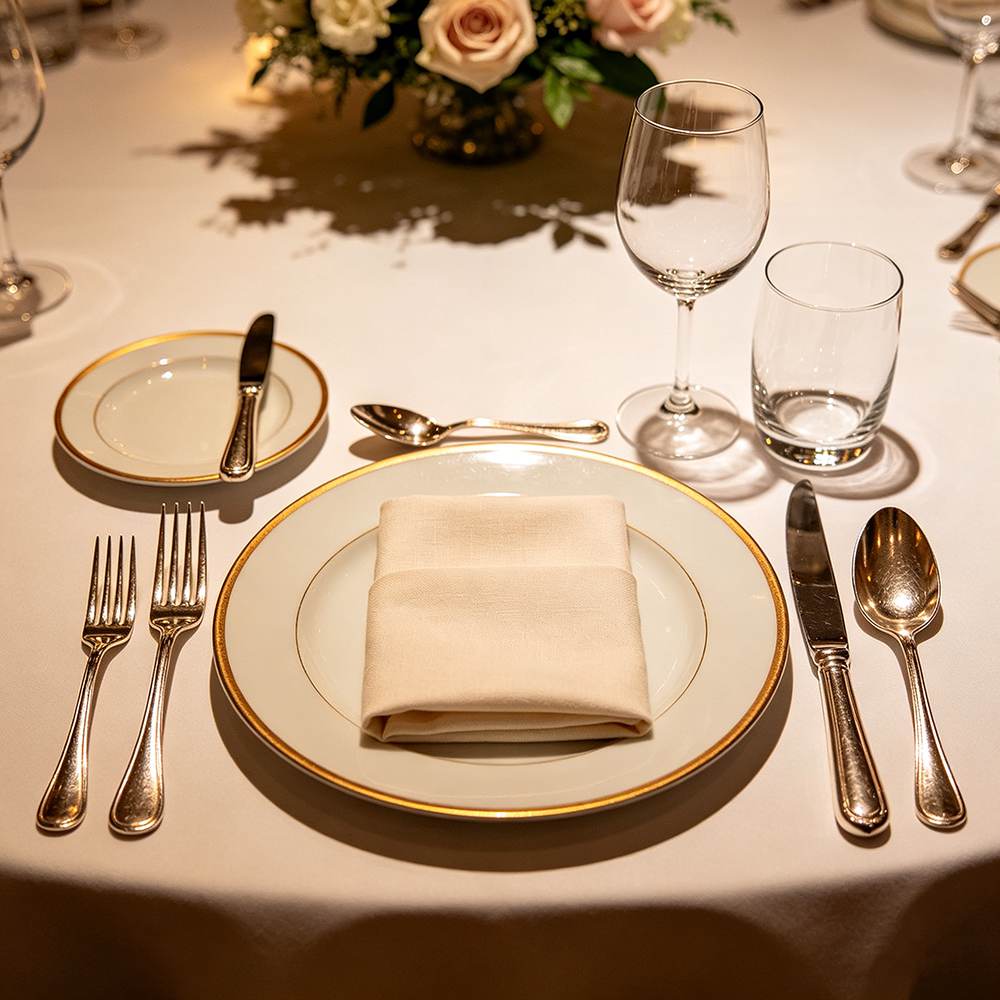
When we think of a banquet dinnerware setup, we usually picture floral arrangements, fancy dinnerware, and complementary silverware. However, setting a banquet table is as much about design and ambience as it is about operational functionality. Lizzie Post, the co-president of the Emily Post Institute, noted that table settings do much more than just look elegant. They actually send out the signal about the kind of food that’s about to be served. It sets the perception and expectations straight. For instance, if you see a soup bowl and spoon, soup is definitely on the menu! In this guide, let’s talk about formal and casual placements, plated versus buffet strategies, and essential equipment needed for the perfect banquet table setup. Formal Banquet Place Setting: The Emily Post Standard A formal banquet setup cannot be based on a basic checklist with just the essentials laid out on the table. It must be precisely and intentionally coordinated in a way that the plates, flatware, and glassware all come together. The Emily Post Institute sets the standard for formal banquet place setting. Following it can guarantee every component on the table has a purpose and a place. Charger Plate Right in the center of the formal banquet place setting, the charger or service plate is placed. What Is a Charger Plate? A charger (or service plate) is a large underplate used during pre-entrée courses. It should stay on the table through the first courses, like appetizers or soup, and is only removed when the entrée is served. At that point, it is swapped with the dinner plate. This is not your base decorative dinnerware, but just there to keep things functional. The idea is to ensure the guest always has a base plate in front of them during early courses. The charger is 12–14 inches in diameter, whereas the dinner plate is around an inch or so less, about 10–11 inches. Flatware: Outside-In Rule The cardinal rule, as per Emily Post, is that the utensils must be placed in the order of use. That is, they go from the outside to the inside. Forks must be placed on the left of the plate, knives and spoons on the right. Whereas the blades must always face the plate. There is an exception, though, the oyster fork must sit on the right as per convention. A maximum of three utensils must be placed on each side of the plate. For all additional courses, fresh flatware should be served with each dish. The dessert utensils rest horizontally above the plate, with the fork handle left and the spoon handle right. Explore more about flatware selection here: Commercial Flatware Selection Guide: Materials, Weights, and Durability for Restaurants. Glassware The glasses are positioned above and slightly to the right of the knives. Banquet settings usually include water and one or two wines. The water goblets sit first, with wine glasses arranged to their right in the order of service. Bread Plate, Napkin, and Finishing Touches The bread plates are placed on the upper left above the forks, the butter knife goes diagonal, with the handle on the right, and the blade down. Napkins are either on the charger or to the left. For banquets, a decorative fold on the charger is the standard. As per industry practice, utensil bottoms are aligned at 1 inch from the table edge, for professional precision. Table settings are expected to feature high-quality materials such as china, glassware, and stainless steel. Disposable plastic should be avoided in guest-facing service. Read more about dinnerware selection in our guide: Banquet Hall Dinnerware: Selecting Durable, Elegant Tableware for Events. Plated Service vs Buffet Service: How the Setup Differs In a commercial banquet, plated and buffet service are completely different. They change the dinnerware setup, staffing requirements, and also have unique equipment needs. Getting them right is what keeps the service flowing. Plated or Seated Banquet Setup For a plated service, we need a full formal place setting at each seat. That means there must be a charger, flatware, glassware, a bread plate, and a napkin. The courses are delivered in a sequence by the service staff. The flatware is either pre-set for each course or brought in as needed. This style eliminates the need for chafing dishes or buffet stations, but it requires a higher staffing of around one server per 15–20 guests. Because multiple courses are served at the table, each place setting requires more flatware per guest, which can make inventory management complex. The staff must coordinate the timing and placement of utensils and plates to maintain flow, so that each course arrives at the correct temperature and in the right order. Buffet Banquet Setup Buffet service simplifies the tabletop setup. The dinner plates may be stacked at the buffet station or placed at each seat. Whereas, flatware and napkins are positioned at the buffet end. This way, the guests can serve themselves without having to hold the utensils. The buffet station also includes specialized equipment, i.e., chafing dishes. These are full-size, 8–9 qt for entrées, then there are serving platters, serving utensils, plate stacks, and fuel or warming trays. Food safety, however, is critical here. As per the USDA FSIS guideline, hot foods should be maintained at 140°F (60°C) or above and cold foods at 40°F (4°C) or below. Staffing requirements are lower in a buffet setup than in plated service. Usually, one server per 25–30 guests is enough as the guests self-serve. Dinnerware Inventory Planning: How Much Do You Actually Need? A successful banquet service doesn’t begin when the first guest arrives. It starts in the storeroom. Banquet dinnerware checklist planning ensures there’s enough plates, flatware, and glassware for every course and every guest throughout the service. The Buffer Rule As per industry-wide practice, it is best to keep approximately a 20% buffer for extra dinner plates, soup bowls, dessert plates, glassware, and flatware beyond the guest count for essential items. This will cover accidental drops, losses, and last-minute attendees. Flatware Planning for Plated Service
How to Match Dinnerware, Flatware, and Glassware for Your Restaurant
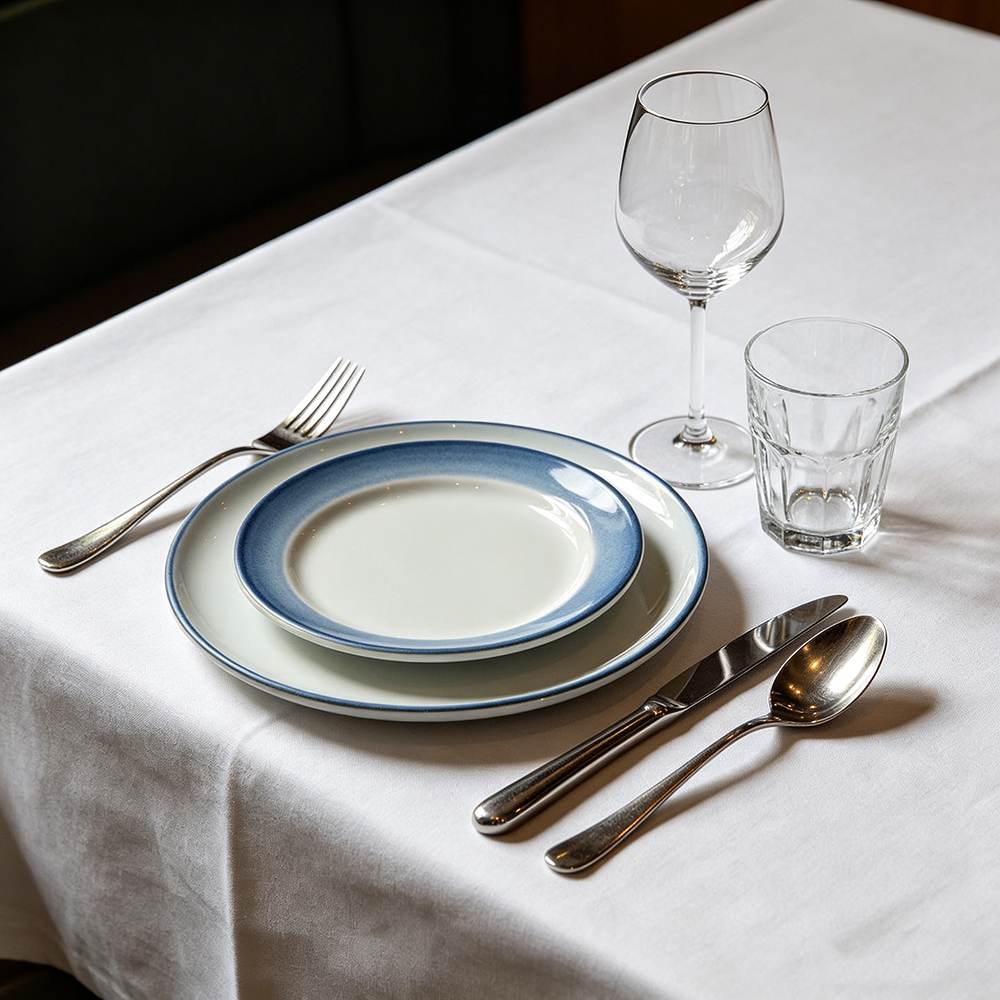
One of the top reasons why restaurants lose guests is not bad food, but an environment that doesn’t match their expectations. When a plate feels lighter than it should, or the glassware doesn’t balance right, and when the flatware looks cloudy, it all points towards neglect, inconsistency, and a lack of attention to detail. When anything about the tableware feels off, the guests form an idea about the food and the brand. Learning how to match dinnerware and flatware is not just a style choice anymore for restaurant tabletop design. It is perception control. According to Charles Spence and his team at the Crossmodal Research Laboratory, diners experience food in context. According to another study by Harrar and Spence, the weight, size, and shape of dinnerware directly influence the way food tastes. For instance, a heavy fork can make a dish feel premium and satisfying compared to a lighter or crooked one. So, how to match dinnerware and flatware? In this guide, we will talk about tableware coordination in a restaurant and matching dinnerware, flatware, and glassware to elevate the diners’ experience with your concept. Start With Your Restaurant Concept (Not the Catalog) Most restaurant operators flip through a supplier’s catalogue to find the design they like, and then, upon procurement, build the entire table around it. But this is how you’d actually end up with a table that looks nice but feels disconnected from your concept or menu. To match dinnerware, flatware, and glassware, you need to start with your concept. Think about the kind of dining experience you wish to create. Everything about the dinnerware, including the material, finish, and color, should be part of your procurement strategy. As per Pantone Color Institute, color selection and placement can directly influence the way people perceive the atmosphere and set expectations about it. And that’s even before the actual interaction begins. Putting thought into dinnerware is so important that it can make your customers come back with their friends and families in the future, or have them regret dropping by. Fine Dining / Tasting Menu Fine dining is all about precision. It’s about creating a visual story while balancing control and clarity. Bone China Dinnerware and High-end Porcelain Dinnerware are usually the top choices for these concepts. The crystal stem in the glassware category takes the lead as it looks appealing and sophisticated, and goes with the plates and concept. Take a look at Brett’s Custom Luxury Crystal Wine Glass Set in this category. Since bone china has a thin profile and appears translucent, it serves as a neutral canvas for food. Forged and high-polished 18/0 stainless steel flatware complements it best and can make the whole tableware come together. Learn more about the flatware grades in the guide: Stainless Steel Flatware Grades Explained: 18/10 vs 18/0. Upscale Casual / Modern Bistro Modern bistro tableware should be aesthetic, presentable, and operationally efficient. It must be able to perform under pressure and retain its luster and looks even after frequent use and dishwashing. Commercial-grade porcelain works best for this segment, as it’s durable, resistant to chipping and heat, and is also easy to maintain. The neutral finish also supports the versatile plating styles suiting unique menus and seasonal presentation requirements. Coupe-style plates with a rimless, low-profile form are a popular choice here. These have a comparatively large plate surface that offers a wide visual frame for food. It also aligns with the minimalist presentation style associated with modern bistro dining. Rustic / Farm-to-Table Most farm-to-table concepts exude warmth and authenticity. The dinnerware that highly aligns with the concept is textured stoneware, such as Brett’s Japanese Hand-Thrown Ribbed Stoneware Dinnerware and reactive glaze finishes. Glaze creates variation and a slight imperfection in the serving style. When no two plates look identical, the serving looks unique, kind of handcrafted. Learn more in our guide: Understanding Reactive Glaze Dinnerware: Design, Safety, and Care Guide. Matte flatware works best with these dishes as it doesn’t visually clash with them. In glassware, thick-walled tumblers are the preferred choice. Explore more about Wine Glasses for Restaurants here. Fast-Casual / High-Volume For fast-casual and high-volume settings, we need efficient and durable dinnerware. The priority switches from aesthetics to operational efficiency. Hence, fully verified porcelain that is cheap, resistant to staining and water absorption, and stackable works best for the setting. In flatware, 18/0 stainless steel is magnetic, cost-efficient, and complements the dinnerware. Flatware Dinnerware Pairing: How to Match Dinnerware and Flatware Textures and Finishes Most tabletop designs click and work in harmony, or feel subtly or entirely off. You need to match like with like. That means the finish, texture, and often colors too must complement each other once placed together on the table. Smooth and Reflective: Glossy porcelain or bone china is used in formal settings. In such concepts, usually procurement managers opt for 18/10 flatware with a mirror finish. Just as the dinnerware, the flatware too reflects light, and both of these go with the clean and refined crystal or thin-walled glassware. Textured and Matte: If you are serving on stoneware dinnerware with reactive glaze, satin and matte finishes both work with it. The tableware here must absorb light to give a grounded and approachable feel to the restaurant. Amongst glassware, thick-walled and handblown styles work best. Contrast:Mixing and creating contrast across the textured groups, like mixing matte stoneware and polished flatware, too, can work only if intentionally done. The concept creates a contrast and visual interest between the elements on the table. However, when wrongly executed, it feels like a mismatch. For example, when Brett’s Matte Black Stoneware Dinnerware Set is paired with polished 18/10 stainless steel flatware, it creates a strong visual contrast between soft, non-reflective surfaces and high-shine finishes. Why Weight Coordination Matters More Than You Think Unfortunately, weight is one factor that doesn’t get as much attention as it deserves in the procurement decision for dinnerware and flatware. But, truth is, where texture gets you the attention, guests feel the weight too. In a premium setting, a heavy fork