A plate can withstand high temperatures and still crack because of too rapid a temperature change. That difference is crucial in a hectic hotel kitchen. The dinnerware might be transferred from storage to a plate warmer, under a heat lamp, or into an oven, and each of these demands calls for certain different properties of the material.
This guide provides information on what happens when dinnerware is exposed to heat and thermal shock, which materials are heat-resistant, and the differences between plate warmers, heat lamps, ovens, and microwaves. It also includes questions to ask suppliers before ordering in bulk for your hotel.
Not everything that’s heat-resistant is oven-proof. When fully vitrified, porcelain is also durable and water-resistant. However, because of the product’s tested specifications, it may or may not be suitable for oven use. Thermal shock and cracking may occur due to abrupt changes in temperature. Dinnerware may also not be suitable for microwave use because of metallic trims. Never accept ratings and test documentation from a manufacturer without seeing it in writing.
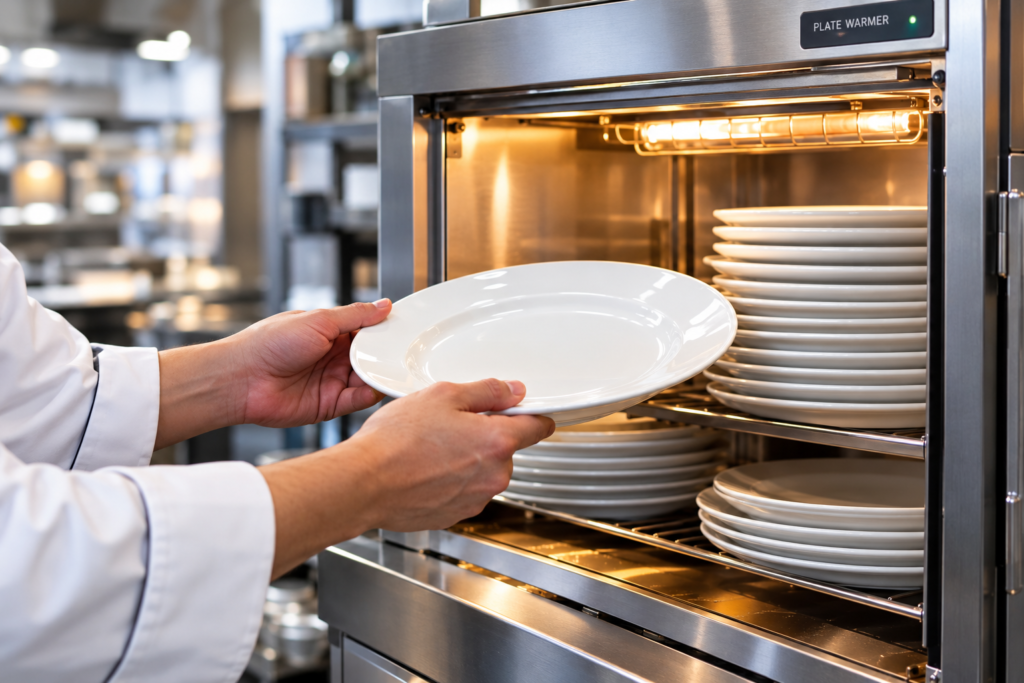
Table of Contents
Heat vs Thermal Shock
Steady heat is handled well by ceramics. They’re surprised by a sudden change, known as thermal shock, that occurs when one part expands or contracts faster than the other. Our guide on what to avoid when buying dinnerware notes that porcelain and vitrified stoneware typically perform better under that stress.
Cause | Example in a hotel kitchen | Risk |
Hot to cold | Rinsing a hot plate under cold water | High |
Cold to hot | Putting a chilled plate into a hot oven | High |
Repeated cycles | Warming, serving, and washing all day | Medium |
Existing flaws | A chipped rim near a heat source | High |
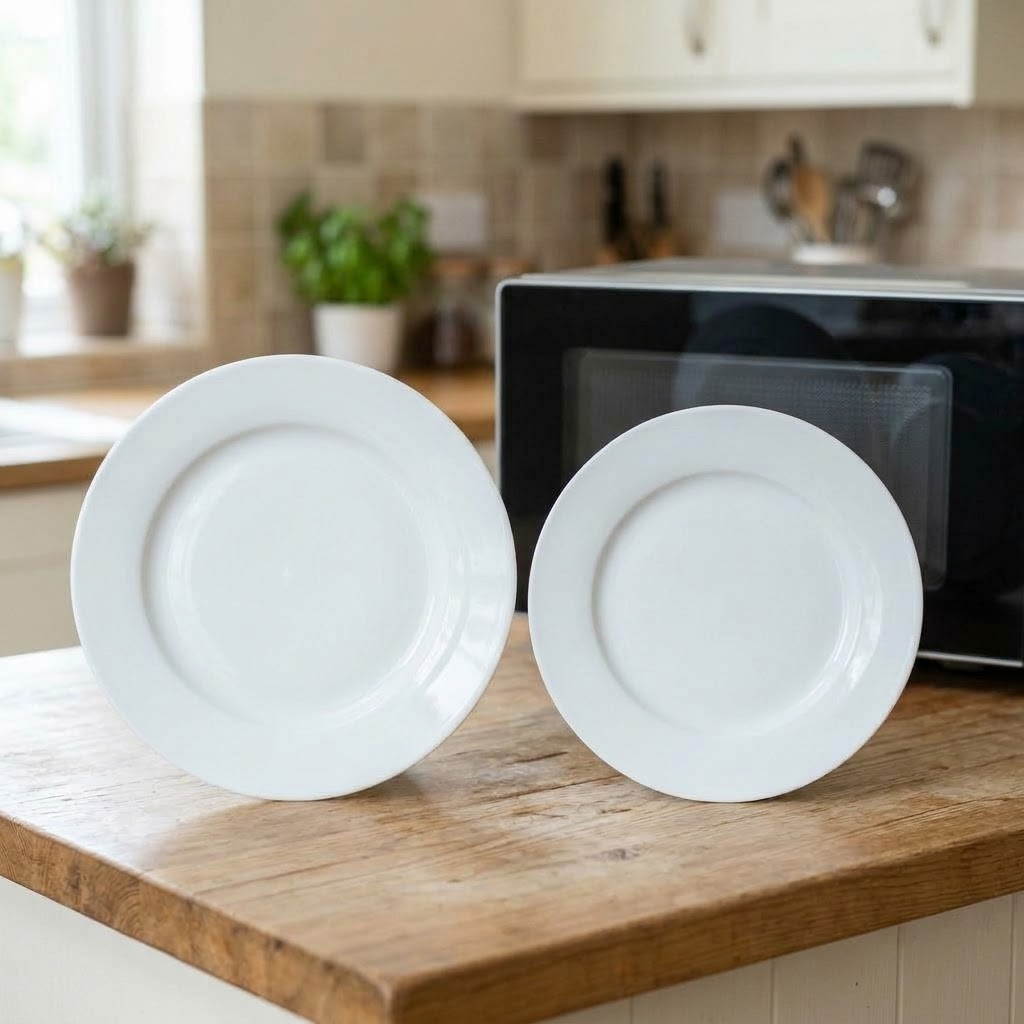
Which Materials Handle Heat Best?
The body is determined by the material and thus by the density of the body. According to Our Guide to Ceramic and Porcelain Dinnerware, the higher the degree of vitrification, the more thermal shock-resistant the porcelain is.
Material | Heat behavior | Watch out for |
Vitrified porcelain | Dense, with the best thermal shock resistance of the common materials | Thin edges and damaged pieces can still crack |
Bone china | Depends on body formulation, thickness, glaze compatibility, and testing | Check the collection’s rating before oven or warmer use |
Vitrified stoneware | Typically performs well under temperature stress | Heavy, and slow to cool |
Low-fired ceramic and earthenware | More porous and weaker under heat | Avoid for commercial use |
Melamine | Not designed for ovens | Many products are unsuitable for microwaves |
For hotel porcelain dinnerware, a vitrified body helps, but it doesn’t prove an oven rating. Only the maker’s stated rating does. See our comparison of porcelain vs. stoneware dinnerware and our hotel and restaurant dinnerware buying guide.
A Note on Vitrification
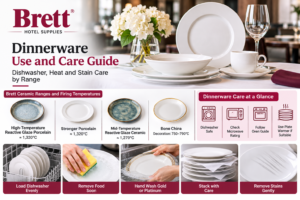
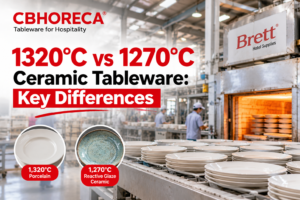
Vitrified means the body has been fired hot enough that it has become dense and non-porous. Fully vitrified porcelain is normally fired at about 1200 to 1400°C and can have a water absorption of 0-0.5%. Our guide to what vitrified porcelain is will give you more information. Decoration, thickness, and glaze also affect the behaviour of a finished piece, as does density.
Heat Sources in a Hotel Kitchen
Oven-heated plates and dishes are used daily, and at a much higher temp than plate warmer dinnerware. Use supplier’s written figures only.
Heat source | How it affects the piece | What to check |
Plate warmer | Moderate, steady warmth | Repeated cycles and the maximum warming temperature |
Heat lamp | Gentle, one-sided warmth | Uneven heating on thin or decorated pieces |
Oven or combi oven | High dry heat | A stated maximum temperature, and gradual changes |
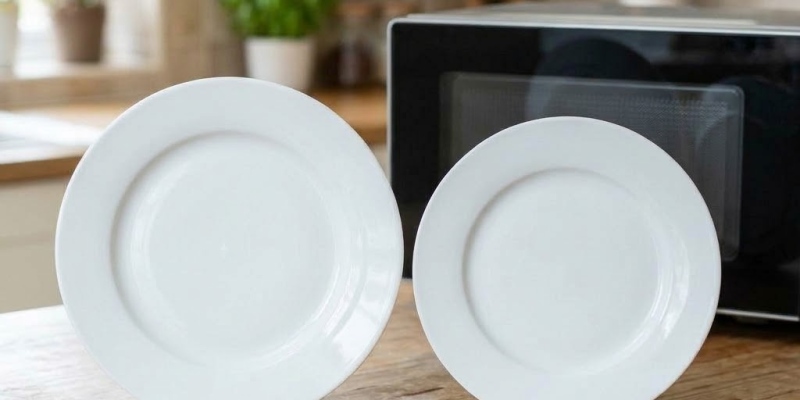
Microwave | Heats food and can cause sparking with metallic decoration | A microwave rating, and no metallic trim |
Commercial dishwasher | Hot, wet, and repeated | Cycle testing and glaze durability |
The oven-safe ratings are also widely different among collections and some manufacturers rate their porcelain much lower than those they give for retail stoneware. Do not substitute a common industry temperature with the specific product’s manufacturer’s temperature rating. It is for commercial porcelain plates as well as any other item.
Can You Use the Same Dinnerware in a Plate Warmer and an Oven?
Not necessarily. A plate warmer preserves the temperature of the plate and an oven is at far higher temperatures and temperature changes when the dinnerware is placed in. Check both ratings individually. Repeatedly warming buffet items and ensuring banquet orders run smoothly and reliably.
Service type | What buyers should verify |
Buffet service | Repeated warmer exposure over a full day |
Room service | Heat retention and safe handling of hot plates |
Fine dining | Decoration durability and temperature compatibility |
Banquet operations | Consistent performance across large quantities |
Restaurant kitchens | Compatibility with the actual kitchen equipment |
What "Oven Safe" Means on a Spec Sheet
Each label answers a different question. When you compare oven safe plates from different suppliers, read the wording carefully.
Label | What it usually means | What to ask |
Oven safe | Suitable for oven use up to a stated maximum | What is the maximum, for this exact decoration? |
Microwave safe | Suitable for microwaves, usually with no metallic trim | Does it cover the rim, logo, and pattern? |
Thermal shock resistant | Tested against sudden temperature changes | Which method, temperature difference, and result? |
Plate warmer suitable | Suitable for repeated moderate heating | What is the maximum warming temperature? |
A claim is a label that has no number or a test report. When asking for the oven-safe ratings of commercial dinnerware, or if you are using dinnerware at a restaurant that is daily transported between the warmer, the table, and the dishwasher, request it in writing.
Metallic Trim and Microwaves
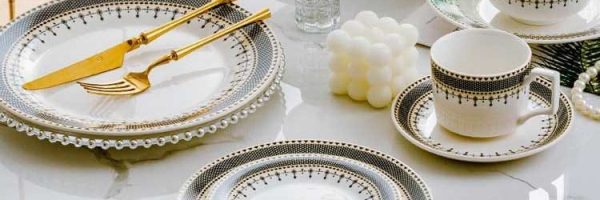
All gold-rimmed plates are marked “not microwave safe” because the metal could spark. Our Guide to whether gold-rimmed plates are microwave safe should be read if you are in a rare instance of microwave-safe, high-temperature-fired gold, which is only recommended for placing in the microwave if specifically stated. If microwave safe dinnerware is important in your kitchen, tell the customer about plain glazes or a specific rating for decoration.
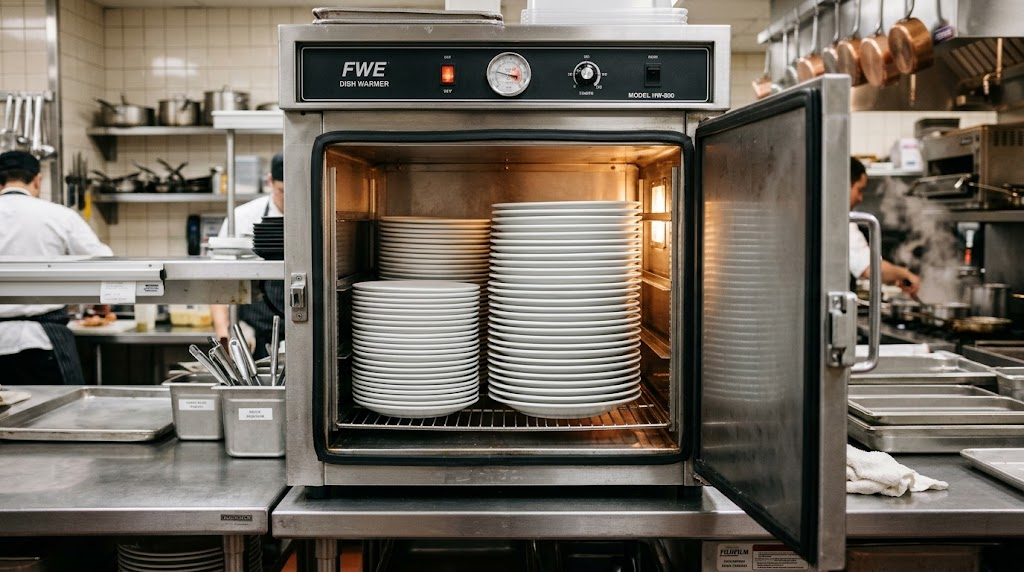
What Ratings to Ask a Supplier For
Use this list as a specification checklist, alongside our guide to choosing commercial dinnerware.
Ask for | Why it matters |
Maximum oven temperature | Sets the upper limit for oven use |
Plate warmer suitability and maximum temperature | Warmers run all day |
Thermal shock test result | Shows how the body handles sudden changes |
Microwave rating for the exact decoration | Metallic trim changes the answer |
Test report for this collection | Documents should match the product |
If applicable, enquire if there is a standard procedure for thermal shock testing, like the European standard EN 1183, which covers the thermal shock and thermal shock endurance of ceramics. Ask for the test conditions, temperature difference, number of cycles, and results. Testing for thermal shock and dishwasher tests require different things, so please request them separately.
Include the following text in your RFQ: Maximum oven temp, plate warmer suitability, microwave rating, and thermal shock test method and result for each item quoted; test report for this collection.
How to Test Samples for Heat
Test real samples in your own kitchen before approving production. Our hotel tableware sample approval process covers dishwasher cycles and other tests.
Test | How to run it |
Warmer cycles | Warm samples daily in your own plate warmer for several weeks |
Service sequence | Warm the plate, add hot food, clear it, and wash it |
Dishwasher cycles | Run samples through your own machine many times |
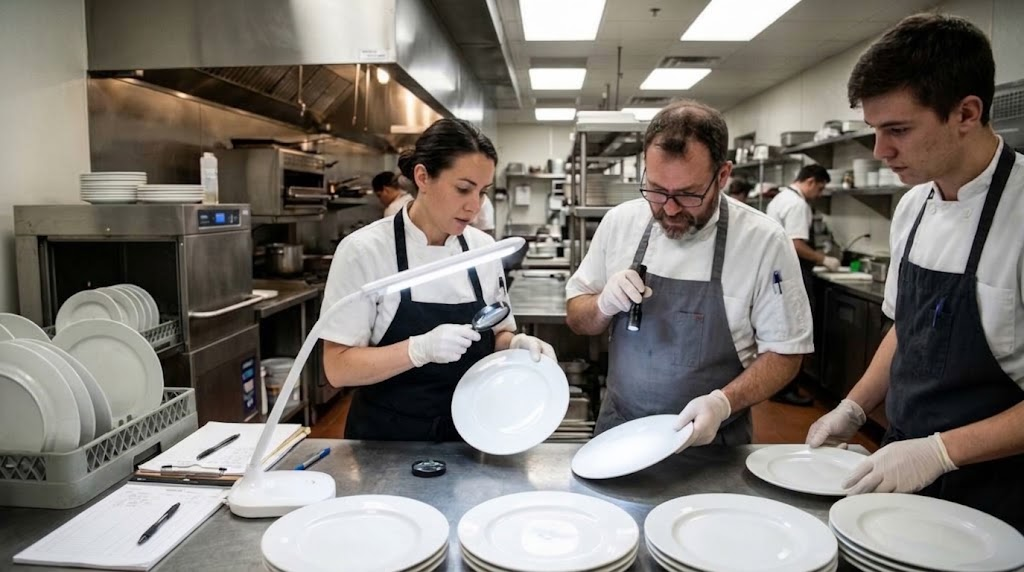
Edge inspection | Check rims under good light after each stage |
Accept samples that are manufactured to the same specification, including the final glaze and decoration. A plain white sample can be used to prove the heat performance of a decorated production piece.
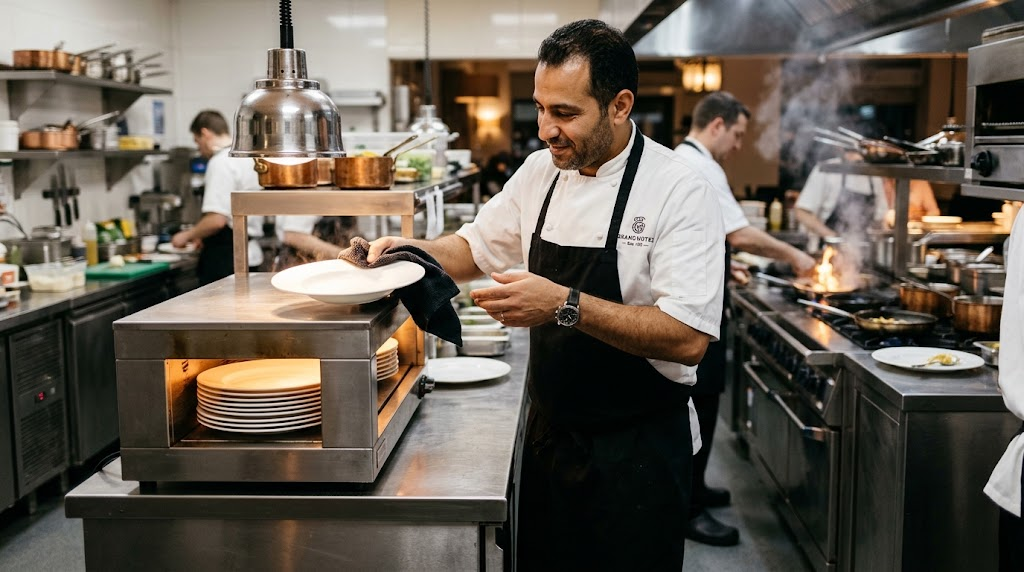
Common Heat Mistakes
There are some common mistakes that people make when using hotel dinnerware.
Assuming all plates are oven-safe
The suitability of an oven for the food is not dependent on its material alone. Different collections may have different ratings, even if the products are from the same manufacturer. Please be sure to check the specifications to confirm the exact collection you want to order.
Ignoring metallic trim when using microwaves
Sparking may occur in microwave ovens when metallic decorations like gold and silver are in the microwave. Do not assume that a plate with metal trim is microwave safe. Follow the manufacturer’s directions when using.
Underestimating the effects of plate warmers
Repeated exposure to heat over time could cause a performance issue, but a plate warmer can not cause immediate damage. Rather than conducting a one-day trial, test the sample for several weeks in actual use in the kitchen.
Overlooking thermal shock testing
A plate that is heat resistant and can endure heat for a long time can crack when exposed to sudden heat changes. Request suppliers to provide thermal shock test data and temperature limits. When the supplier cannot give supporting data, it is a red flag in your eyes before ordering in bulk.
Everyday Habits That Prevent Cracks
There are several little things that can add up to a long-lasting service life for dining ware in your hotel. Ensure kitchen personnel are trained in these basic practices to help minimise thermal stresses and avoid unnecessary cracking.
Do | Avoid |
Let hot plates cool before washing | Rinsing a hot plate under cold water |
Preheat ovens before putting rated pieces in | Putting cold plates into a hot oven |
Remove chipped or cracked pieces from service | Using damaged plates near any heat source |
Train staff on the rating for each piece | Assuming every plate fits every machine |
Signs of Heat Damage
For signs of crazing, look for small cracks in the glaze, hairline cracks running from the rim, and cloudy or blistered glaze after multiple firing cycles. Another indicator is if there is a hidden crack that the person is not able to feel when they tap a plate. Remove any item suspected from service.
How Brett Supports Heat-Rated Orders
We make bone china, stoneware, and vitrified porcelain dinnerware for hotels and restaurants. Tell us where the pieces will be placed (oven warmer, oven, or microwave), and which ratings and which thermal shock data exist in your collection. Test Reports and compliance documents are available on request for each product.
Frequently Asked Questions
Is hotel dinnerware oven safe?
Not always. Depending on the collection and decoration, ratings differ. Only place plates in the oven when the manufacturer labels them as oven safe; check the specification, preheat the oven, and do not place a cold plate in a hot oven.
Is commercial dinnerware oven safe?
Some is, and some isn’t. If using the oven, it must have a specified maximum temperature from the supplier for that particular collection. Do not assume that because a plate is for sale to restaurants, it is oven safe. Request a rating in writing.
Is porcelain oven safe?
The fully vitrified porcelain is capable of withstanding moderate heat from the oven, though only if the maker rates the collection for such use. A body that is vitrified helps, but does not constitute a rating. Thin or broken items will break more easily, and temperature shifts should be avoided at all times.
Can plates go in a plate warmer?
Most vitrified porcelain handles are good for plate and heat; they’re good for both the heat and the oven, but the ratings are different. Request: Maximum Warming Temperature, then test samples over a number of weeks, as cycles reveal weaknesses.
What is thermal shock in dinnerware?
Stress generated by a rapid temperature change, e.g., putting a cold plate into a hot oven, can lead to the formation of cracks within the ceramic body. A piece’s resistance to these sudden changes in temperature is called thermal shock resistance. Request the test method used (e.g., EN 1183) as well as the test conditions and results.
Which dinnerware material handles heat best?
Fully vitrified porcelain is the most heat shock resistant, followed by vitrified stoneware. Earthenware is weakest, and bone china relies on formulation and thickness. The rating of the maker of the same collection applies regardless of the content.
Conclusion
The best oven safe dinnerware for a hotel is vitrified and rated for the specific purpose, and has been tested in your own kitchen. Most issues are due to sudden change and unrated use, rather than heat.
Looking for dinnerware perfect for your kitchen needs? Please provide details of what you intend to use it for, the material you prefer and quantities, and we will discuss suitable collections, available specifications and customisation options. There are test reports and compliance documents available upon request. Contact our team by email at CBHORECA or WhatsApp +86 13535413512 to talk about the next tableware project with us.