A hotel, restaurant, and café tea set will need a teapot, a set of cups and saucers – or mugs – and a creamer and sugar bowl, manufactured from a commercial-grade material such as porcelain or vitrified bone china, designed to the right size for your service, and capable of withstanding chipping and dishwasher damage before you place your order.
For more than 20 years, we have been providing tea sets to hotels, restaurants and cafés and those that are most durable in daily use were never selected because of their appearance. A tea set is used and poured, stacked, washed, refilled and the wrong selection appears in its chipped rims, mismatched reorders, or in a guest’s hand that does not feel right.
We list the key elements to include in a professional tea set, how to determine the right material, size and style for your property, what to do before ordering in bulk, and how this type of tableware can make you lose money without you realizing it.
Table of Contents
Why the Right Tea Set Matters in Hospitality
Tea service is one of the less public acts of hospitality that is poured on the table, lingered over, and is often the final thing a guest recalls about a meal. A hotel tea set or restaurant tea set that feels cheap in the hand, drips from a poorly designed spout, or comes disassembled from a prior purchase or reorder is a cheapening of that moment that other tableware doesn’t.
The movement of the matter, the flow of the spout, the fit of the lid, the balance of the handle- a photo can’t really convey all that a teapot has to offer. This category is a bit more complex than ordering another case of side plates, and it’s one of the few types of tableware where the “useful test” is as important as the “apparent test.”
What Should a Professional Tea Set Include?
The typical complete commercial tea set will have a teapot that is designed for a specific service style, cups and saucers or mugs, a creamer and a sugar bowl in matching glaze and pattern. Certain properties provide a slop bowl containing used tea leaves for part of their afternoon tea hour, and multi-outlet hotels may standardise the use of a one design tea cup and saucer for all outlets to ensure consistency in presentation from the lobby lounge to the in-room service.
A pot for each person, a common pot served at the table, or a large pot for banquet and buffet service will require different-sized pots as well as spout and handle designs, so check with your service style before ordering. When you don’t know what kinds of services your property will be offering, you might require two or three different pot styles in the same pattern instead of just one.
How to Choose the Right Tea Set Material
The selection of material has an impact on the durability, look, weight, and everyday use of the tea set for hospitality. Before choosing the material, consider the outlet’s service and concept, size and washing needs.
Porcelain
Most full-service hotels and restaurants tend to use porcelain tea sets. Porcelain is dense, chip-resistant relative to other ceramics, and maintains a clean white finish that is appropriate for most branding techniques when fired at a high temperature. Moreover, it is easier to reorder consistently, as the porcelain glaze formulations are easier to match batch to batch than more delicate finishes are likely to be over the life of a tea programme. Our commercial dinnerware buyer’s guide discusses the merits of porcelain versus other materials throughout a broader dinnerware program.
Bone China
Bone china will be lighter in weight and will have a warm, more translucent appearance which seems more refined and is widely used for fine dining and 5-star afternoon tea service. It’s not as hardy as porcelain, and it works better for lower-volume, higher-touch use cases such as a café counter than it does for higher volume, higher touch use cases such as a medium-high-volume counter.
Stoneware
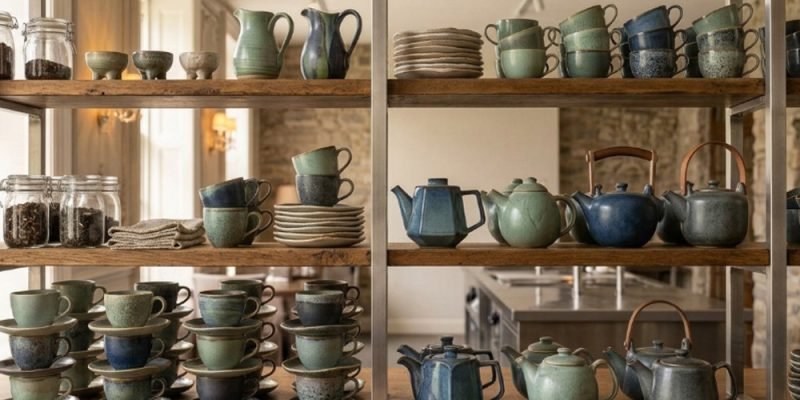
Looks great in rustic, café style or farm-to-table concepts. It’s heavier in weight and will stand the test of time, but the added weight and less refined appearance isn’t for all brands, especially those with a more streamlined or modern aesthetic.
Fine China
Fine china is more refined than bone china, but is even thinner and more delicate, and should only be used for special occasions in a signature dining room or special service, not everyday use at a busy outlet.
Tea Cup Size and Capacity: What Buyers Should Consider
When purchasing a teacup, consider its size and capacity. The capacity of the teacup set will depend on the type of service that needs to be provided and is not a default setting. Usually 6-8 oz cups are used for an individual service, but larger cups or mugs are used in cafes serving larger-size pour-over or specialty tea format, typically 10-12 oz. The diameter of the saucer should be about ½ inch larger than the cup so that drips don’t run down the sides and so that a small spoon will not make the saucer look too large on the table.
The size of the teapot set should depend on the number of cups you plan to pour; a single-serve pot will be 12-16 oz, a shared table pot will be 24-32 oz, and a banquet or buffet pot will be 48 oz or larger, depending on the type of event you are having.
A pot filled incorrectly will result in real service disruption – a pot that is too small will need frequent refreshes during the service, and a pot that is too large will cool down before it has been poured all the way to the last cup, resulting in a weaker or cooler cup of coffee at the end of the service.
Choosing Between Different Tea Set Styles
Concepts should come before style! Whether you’re looking for a classic rounded shape or a basic glaze, it works well for most full-service hotels and proves to be timeless instead of trendy; after all, a tea set can be used over the course of several years, not just one season. Angular, matte or hand-thrown-look stoneware styles are appropriate for boutique cafes and contemporary ideas.
Fine dining and luxury afternoon tea programs tend to be more elaborate, especially in terms of the design of the tea service, gilded rims, or fluted bodies: after all, the tea service is not just a mystery sauce added on to the meal but a component of the presentation and a part of the guest experience.
Durability and Commercial Dishwasher Performance
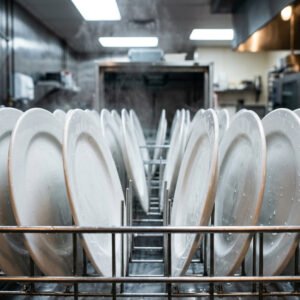
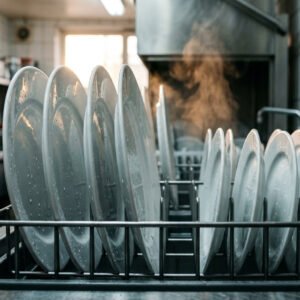
Whole tea set orders, or any quantity of commercial tea sets, should be supported by actual durability data and not only an assumption that ceramic is ceramic. Ask for a commercial dishwasher cycle count, preferably 1,000 cycles or more and if visible, ask about the change in glaze after 1,000 cycles; spout and handle durability is important to ask as these are thinner and more exposed parts of the dishwasher that can chip or crack before the main body.
Chipping resistance of rim and spout tip should be discussed separately from the body chip resistance. They’re the two points on a teapot that are hit most often, with cups when it’s being poured, trays when it’s being carried from one place to another, and the other teapot against itself when it’s stored.
How Design Affects Tea Service and Presentation
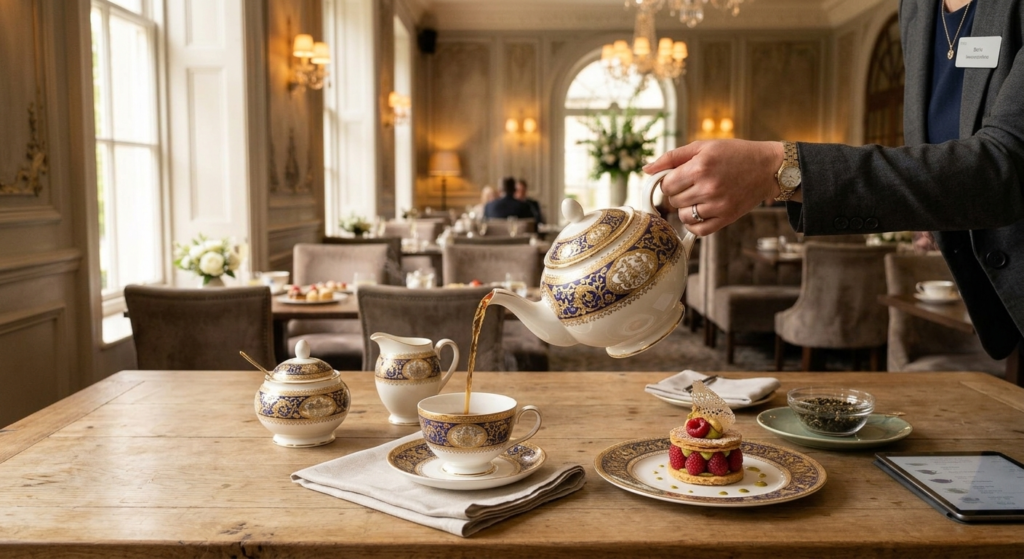
Don’t underestimate the importance of shape. A short handle or an awkward angle makes service more time-consuming and makes spills more likely in a hectic tea service, especially when a member of staff is using one hand to pour the tea. Spout design is also important – a good spout will pour cleanly without dripping down the side of the pot, and a bad spout will leave a ring on each tablecloth it comes into contact with, and will cause an unnecessary amount of laundry over time.
Lid fit is important as well – if the lid is loose, it will rattle when pouring and can move or drop when transporting from kitchen to table, which is a breakage risk as well as a potential safety hazard if it rattles and causes hot liquid to splash. For a more detailed discussion on the link between design and service, read our how dinnerware shapes plating and presentation which discusses the link between design and presentation.
Color, Branding and Custom Tea Set Options
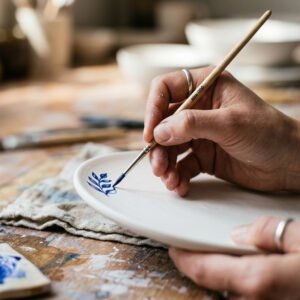
Hospitality tea sets usually come in white, a color that complements any menu or seasonal theme and is aesthetically pleasing in photos. However, it is not unusual to see custom glaze colours, gold or platinum rim finishes or logos and monograms applied to tables in hotels and restaurants that wish to create a unique table style, such as a signature afternoon tea service, which is promoted as a ‘dinner at the destination’ experience.
When branding is part of your concept, include it with the spec as early as possible; there will be minimum order quantities and longer lead time for custom glaze and decoration than there is for a standard catalog color.
Tea Sets for Hotels vs. Restaurants and Cafés
Several types of use cases are often required for tea sets used in hotels: in-room use, the tea lounge in the lobby, and either tea service for banquets or tea for events; usually it is necessary to standardize on a single basic set with an additional pot that can be used for banquets. For restaurant teas, the scope can generally be kept more focused and it is usually tightly aligned to the type of service this particular outlet offers.
Cafés are usually more casual, less elaborate, and tend to be more functional and durable, as they are designed for greater speed and turnover than the more traditional and formal service of an afternoon tea in a hotel. Also, to reduce breakage and speed service at the busy counter, they often opt for a smaller cup and larger mug style, or even for a mug, rather than a cup and saucer.
What to Check Before Ordering Tea Sets in Bulk
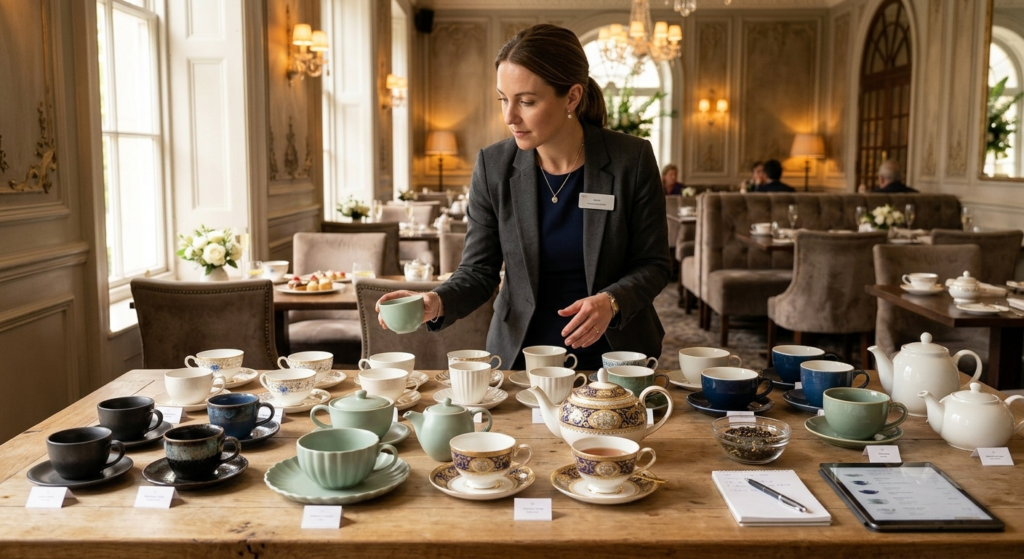
When ordering in bulk, get a physical sample before taking the plunge to approve – and then sample it yourself, check for dripping, balance in hand, lid stability, etc. Ensure that the tea sets you’re ordering are from a genuine production line and not hand-manufactured samples, and ask to see FDA and LFGB certification for food contact safety, as well as your quality and ethical compliance certifications.
Last but not least, make sure the supplier is able to match the glaze and pattern in reorders, because if they don’t match a tea party, your guests will notice it—even if they don’t know why.
Common Tea Set Buying Mistakes in Hospitality
The most common mistake is that you buy from a catalog picture only, without a pour test or balance test of the spout. This is the reason that spout drip and awkward balance are not noticed until after the entire order has been served. The second is sizing it for a tea set for retail use, not volume of service, resulting in frequent mid-service refills.
The third is the lack of a statement on the durability of the rim and spout, when the durability of the body is addressed. The fourth is to buy a tea set as just a one-off rather than a programme that requires future reordering, and only years later realise the original glaze formulation wasn’t documented.
How to Choose a Reliable Tableware Supplier
Choose a supplier who has actual manufacturing capacity in their catalogue, certificates, not just the logos, and experience with hospitality clients, not just retail and gift market tea sets. Then ask them how they deal with batch consistency for reordering and get sample lead times in advance that adhere to the actual project time frame. Our hotel procurement process guide explains how we assist multi-outlet groups to standardise supplier selection throughout their hotel portfolio.
Final Checklist for Hospitality Tea Set Buyers
Verify service style and capacity per piece. Select your material according to your ideas and your requirements for your service—porcelain for most full-service programs; bone china or fine china for low-volume and refined service; and stoneware for casual or rustic programs. Ask them to give a physical sample and pour in it before giving consent. Verify dishwasher cycle testing and documentation, focusing on durability of rims and spouts. If your order is placed before the shipping date, make sure you have agreed upon terms of batch consistency for any future reorders.
Why Choose Brett?
Select Brett for over 20 years of experience making hospitality tableware. Our products include porcelain, bone china, stoneware, tea sets, dinnerware and flatware for hotels, restaurants and cafés around the world, and we can also customise, produce and document the quality of our products for hospitality projects. From new properties to renovating outlets, to using the same products at several outlets, we can help you determine which products are the right choice for your service needs.
Frequently Asked Questions
What is the best material for a hotel tea set?
Most full-service hotels use porcelain, as it is durable and is ordered repeatedly. Fine china or bone china is better for more modest service for fine dining or signature afternoon tea.
Which size teapot for restaurant tea service do I need to order?
Single-serve pots are generally 12 to 16 oz, table service pots are 24 to 32 oz, and for banquet or buffet service, they will generally be larger, typically 48 oz or more.
Can hotel tea sets be customized with a logo or pattern?
A standard set is made up of a teapot, cups and saucers, a creamer and a sugar bowl, and can also include a slop bowl for traditional afternoon tea service.
What should I test before ordering tea sets in bulk?
Yes. There are also custom glaze colors, patterns and application of logos with most commercial tableware suppliers, although it can increase the MOQ and lead time for custom decoration.
Is bone china more fragile than porcelain for hospitality use?
Test a physical sample for dripping and handle balance testing, specifically confirm dishwasher cycle testing and require documentation of the test.
For hospitality, is bone china more fragile than porcelain?
Yes, generally. Bone china is also thinner and more fragile, making it more appropriate for lower volume/higher touch service than high volume service at a café or buffet.
Why do teapots need separate durability testing from other tableware?
Teapots have thin-walled, exposed features, spouts, handles, and lids which receive repeated contact while they are being poured, carried, and stored. Only a durability claim for the main body does not imply that the same durability is guaranteed for the higher risk points.
How often should hotels reorder or refresh a tea set program?
While there is no specific timeframe, monitoring breakage by piece type, such as cups and saucers, can establish a realistic reorder pace, which is greater than that of pots, rather than waiting until an actual shortage occurs to reorder.
Conclusion
Choosing the right tea set isn’t about shape, color, or material. In the case of hotels, restaurants, and cafés, it must be able to deliver consistent results on a day-to-day basis, in commercial washing and repeated handling, and even when reordering in the future.
When you place a bulk order, take the time to assess the material, capacity, pouring performance, durability, dishwasher resistance, design, customization, and consistency of the supplier. Above all, test a real sample of the physical article, not just based on pictures or specifications.
A high-quality tea set can effectively help you build your brand image and also help you avoid any breakage, replacement expenses, or service problems in the long run. Find a supplier who is familiar with the needs of a hospitality business and can ensure quality is consistent as your business expands.
Tea sets, dinnerware and flatware for hotels, restaurants and cafés around the world are supplied with FDA, LFGB, ISO 9001, BSCI (Business Social Conduct) and Sedex on request. Please contact us at choreca or WhatsApp +86 13535413512 to discuss the tea service requirements of your property.