For 2026, here are five trends transforming hotel tableware procurement. Check out these five trends that are changing tableware procurement in hotels. The procurement of tableware in the hotel industry has undergone a lot of changes in the last few years. Purchasers today don’t consider only price and look. There is an increased emphasis on sustainability, product durability, design and supplier reliability when purchasing.
Five trends are creating this change: sustainability is now a supplier requirement, minimum order quantities are shrinking, durability standards are increasing, hotels are shifting to textured and earthy designs, and digital 3D sampling is speeding up sourcing.
Table of Contents
Why 2026 Is a Turning Point for Hotel Tableware Procurement
The hotel sector continues to expand, and hotels are more critical in their tableware purchasing. They desire products with a longer shelf-life, that associate with their brand and that are supplied quickly and reliably.
Because production is more flexible, and there’s a growing need for custom designs, procurement is no longer a matter of buying plates; it’s a matter of making smart purchasing decisions that will last a lifetime.
Trend 1: Sustainability Is Now a Qualifying Criterion
Sustainability used to be a good to have. Today it is one of the first factors that are taken into consideration by hotel buyers while comparing hotel suppliers.
More and more, hotels are calling for manufacturers to be more transparent in their materials, production, and environmental practices. Those suppliers with a proven track record of fulfilling these standards are much more likely to be in the running for the next project.
The EU Green Claims Directive of 2024 will require proof of environmental claims, provided in the form of supporting documentation. European-based hotel groups are making that requirement directly to their tableware suppliers. Procurement teams are no longer interested in a factory’s sustainability commitments; they’ve come to expect a specific document.
What Procurement Teams Are Now Requesting
Lead and Cadmium test reports with actual numerical values, not a certificate but a lab report showing the mg/L readings, as compared with ISO 6486-1. ISO 14001 environmental management certification. FSC certification of paper-based packaging. Social compliance audit report from BSCI or Sedex. Energy use figures for the firing of kilns.
More than 67% of hospitality procurement managers are now including sustainability as a part of their tableware vendor selection process, compared to less than 30% in 2018, according to the Commercial Tableware Services Market Research 2026. This is no trend on the road to maturity. It is accelerating.
Brett’s complete certification suite, FDA, EU 1935/2004, ISO 9001, ISO 22000, ISO 14001, BSCI and Sedex, covers all the documentation requirements found on 2026 hotel group supplier questionnaires. See our hotel tableware procurement checklist for the full certification framework.
Trend 2: Custom OEM MOQs Have Dropped Significantly
Until recently, custom hotel tableware – shapes, exclusive glaze colours, logo-branded tableware was only available to larger hotel chains, where 1,000–2,000 pieces per item was a minimum order requirement. That’s not the case in 2026.
Now the established Chinese manufacturers are ready to give OEM orders of 500 pieces per item as standard (which was 1,000-2,000 pieces per item in 2020). This shift has enabled a new type of buyer to become a part of the custom hotel tabletop market—boutique hotels, independent restaurants, small luxury properties and event venues that weren’t able to specify bespoke table top for enough volume to warrant the commitment.
What This Means for Your Next Procurement Decision
If you were using generic white porcelain on your property because you didn’t think you could afford to use custom specification, that’s changed now. A 500-piece OEM minimum equates to a 150-seat restaurant requiring about 3.3 pieces per seat to meet the requirements of a fully custom dinner plate specification — which can be achieved for most hotel restaurant operations without overstocking.
Brett’s custom ceramic dinnerware programme begins at 50 pieces per item all the way up to 300 pieces per item, depending on specification, which is well under the new industry standard, making custom specification available even for boutique properties and event-focused operations, with items of smaller quantities.
Trend 3: Durability Standards Have Tightened
5-star hotel porcelain durability has changed in 2026. The new benchmark is 500 commercial dishwasher cycles, whereas it was 300 cycles in previous procurement cycles.
This restriction is an indication of two forces coming together. First, the total cost of ownership discussion that many procurement teams today have: instead of looking at tableware prices per unit, they look at the cost of the tableware over five years, as detailed in our hotel dinnerware cost analysis. Second, as high-volume operations, such as hotels, shorten service windows and make more turns of tables, the number of cycles per dishwashing machine will increase.
What to Specify in Your Procurement Brief
Ask for 500-cycle resistance data from an independent testing agency for a commercial dishwasher with documented tests carried out at 65°C, in addition to rim chip and glaze surface integrity tests. If porcelain is used, also ask for edge impact test results to DIN-EN-12980, which is the European standard for edge impact resistance of hotel porcelain, and is most relevant to predicting in-service breakage rates.
How many procurement briefs require documentation by the Bureau Veritas or by Lucideon, the standard that tests for edge impact resistance that is 9.8 times as high as regular household porcelain according to DIN-EN-12980 testing?
Trend 4: Aesthetic Preferences Are Moving Away From All-White
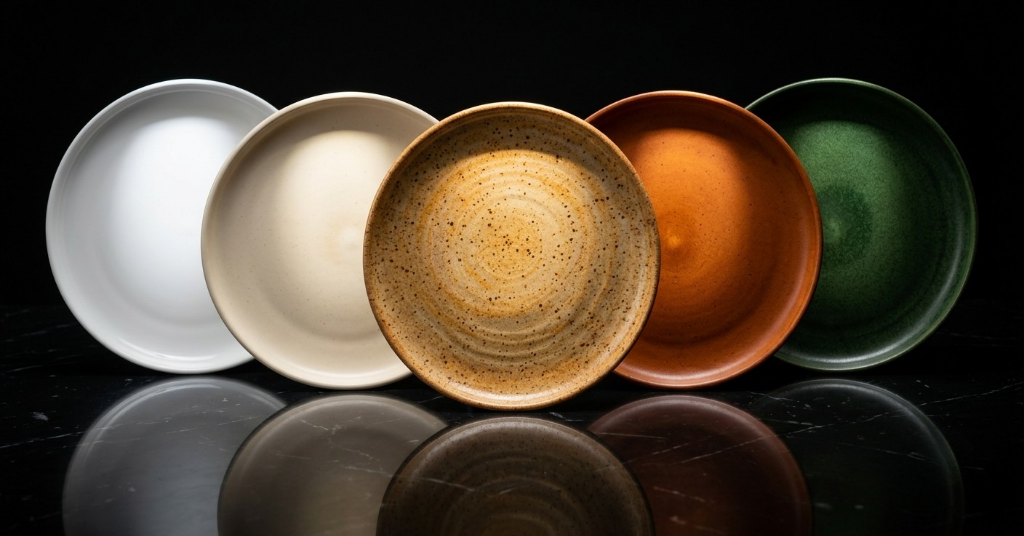
The entire white table at the hotel dining room is not being removed. But it’s a choice, not the default anymore, and the first time a significant number of hotel procurement teams make a different choice. The shift is not random. Three distinct aesthetic directions are appearing consistently across hotel tableware specification sheets in 2026.
There is undoubtedly a change in the market, and all of these trends revolve around natural materials, matte finishes, modular solutions, and long-lasting products, according to The Caterer’s 2026 tableware trends report. Christopher Lightfoot, Director of WMF Professional, stated this trend firsthand: “The market is trending toward regional design, tactile design and purposeful aesthetic design beyond white utilitarian design.
The Three Aesthetic Directions Driving Hotel Orders in 2026
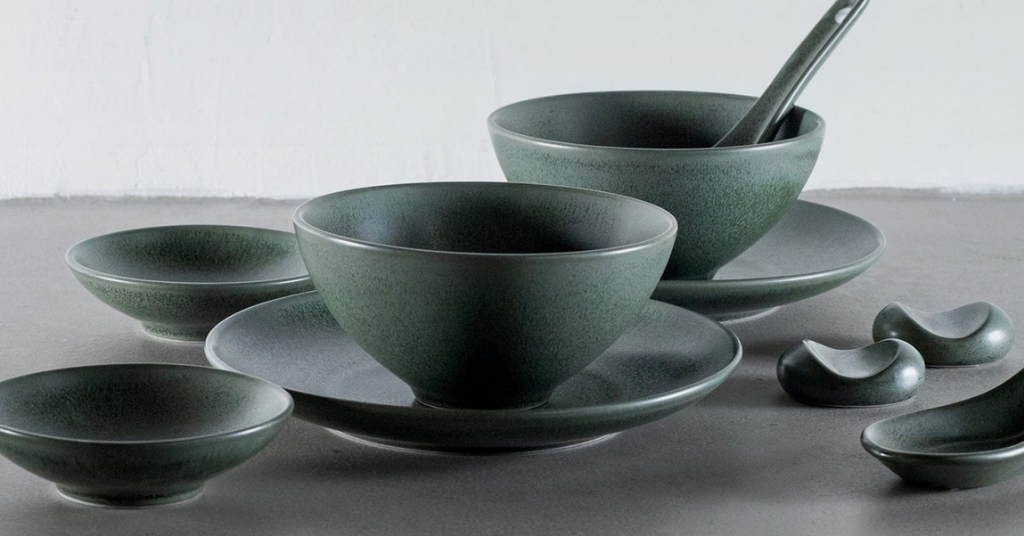
The first one is earthy neutrals and textured surfaces: terracotta, clay tones, limestone beige, and mushroom-toned glazes, which evoke natural materials and regional character. These are especially effective in the resort/boutique hotel and relate directly to the physical setting of the property.
The second is jewel tones and deep naturals (forest green, cobalt, emerald and rich burgundy in ceramic glaze and glass dinner plate). It is these that are leading the market in fine dining and signature restaurant specifications for which visual distinctiveness is the main procurement goal. Brett’s glass dinner plates, in coloured tempered glass, provide this visual direction through the addition of the colour, and not by being just a surface coating of a glass that can be reproduced by another competitor.
The third is a milder neutrality, with eggshell, blush, pale sage and ash rose taking the place of the bright white that has been the standard for a decade or so in hotel porcelain. The pieces are coming into play in boutique and lifestyle hotel settings where the aim is to have the table feel more inviting than the typical white porcelain can do.
Trend 5: Digital Design Tools Are Compressing OEM Timelines
In the past, the OEM tableware development process took two to three rounds of physical samples, with each round taking 3 to 4 weeks to produce and send overseas, resulting in a 90-day OEM development process from the specification brief to approved sample for bulk production.
That’s all different in 2026, thanks to digital 3D rendering and glaze simulation tools. Now, procurement teams can electronically approve design direction, examining shape profiles, glaze colors and even the placement of a logo in 3D rendered form before making a physical sample round commitment.
What This Means for Hotel Opening Teams and Procurement Planners
This is a big change for hotel opening teams. The OEM development cycle is 25 to 30 days shorter, so the decision of which tableware can be made later without affecting the delivery time. This window is important for properties whose choices on tableware are still to be made late in the FF&E process, which is very common.
Digital proofing is a game-changer for procurement planners who have always relied on stock patterns even when specifying was too time-consuming. For most hotel opening schedules that were typically thought to be too short for custom work, the optimized 60-day schedule from specification brief to bulk ready is possible.
See our hotel tableware procurement checklist for the entire OEM process, from brief to sample to bulk production.
2026 Hotel Tableware Trends: Procurement Implication Summary
Trend | What Has Changed in 2026 | Procurement Action Required |
Sustainability documentation | EU Green Claims Directive compliance now required — 67% of procurement managers include sustainability in vendor selection | Request ISO 14001, BSCI/Sedex, lead/cadmium lab reports from all suppliers before shortlisting |
Custom OEM MOQ | 500-piece standard OEM MOQ — down from 1,000-2,000 in 2020. Custom specification now accessible to boutique properties | Revisit custom specification if previously ruled out on volume grounds. 500 pieces per item is achievable for most hotel restaurants |
Durability standards | New benchmark: 500 commercial dishwasher cycles with no visible chip or glaze degradation — tightened from previous 300-cycle standard | Specify 500-cycle dishwasher resistance and DIN-EN-12980 edge impact testing in procurement brief |
Aesthetic direction | Shift from all-white to earthy neutrals, jewel tones, textured surfaces, and softened whites. Design distinctiveness now a competitive priority | Evaluate coloured glaze, glass dinner plates, and textured ceramic options alongside standard white porcelain for signature outlets |
OEM timeline | Digital 3D rendering compresses OEM development from 90 to 60-65 days. Custom work now achievable on tighter opening schedules | Re-evaluate custom specification even for compressed timelines. Digital proofing removes the primary reason for defaulting to stock patterns |
How Brett Supports Hotel Tableware Procurement in 2026
Since 1998, Brett has been providing tableware to hotels in over 80 countries from its tableware manufacturing base in Chaozhou, China, and the tableware’s showroom and office in Dongguan, Guangdong Province. Four Seasons, Shangri-La, Fairmont, Raffles, Wynn, Sheraton, Hyatt, Marriott and Crowne Plaza properties, Michelin Guide and Black Pearl Restaurant Guide properties in Europe, the USA and the Middle East are all our clients.
Brett’s programme aligns to the five trends that are driving procurement in 2026 for tableware in a hotel. Full sustainability documentation is available upon request, including ISO 14001, BSCI, Sedex, FDA and EU 1935/2004. Custom OEM is from 50 to 300 per piece. Under the DIN-EN-12980 testing, the strength of the porcelain was documented as being 9.8 times that of normal porcelain. Our line includes the complete range of style changes for ceramic dinnerware, from coloured glass dinner plates, which have colour added through firing, to dinnerware with a unique, fire-transformed glaze for kiln-change ceramic dinnerware. And, digital design proofing is provided before production of physical samples.
FAQ
What are the biggest hotel tableware trends in 2026?
Sustainability documentation has become a requirement for choosing suppliers; custom OEM MOQs have been reduced from 900 to 500 pieces per item; durability is now at 500 commercial dishwasher cycles; OEMs are moving away from all-white, towards textured, earthy and jewel-toned tableware and digital 3D rendering has reduced OEM development timelines from 90 to 60 days: These are five trends that are driving the hotel tableware procurement market in 2026.
Is sustainability really becoming mandatory in hotel tableware procurement?
Yes — and it has been a fast change. More than 67 percent of hospitality procurement managers now consider sustainability a part of their vendor selection process, compared to less than 30 percent in 2018. The regulatory impetus is the EU Green Claims Directive, which was set to come into effect in 2024, and which directly requires all groups with European operations to pass on documentation requirements to their tableware supplier. It is no longer just additional requirements such as ISO 14001, BSCI, or Sedex audit reports; actual lab testing reports for lead and cadmium are now part of the supplier questionnaire requirements.
What is the minimum order quantity for custom hotel tableware in 2026?
The industry standard of established Chinese manufacturers is 500 pieces per item for OEM custom tableware, compared with 1000-2,000 pieces in 2020. Brett’s custom ceramic programme begins at 50 pieces to 300 pieces per item, which is lower than the new industry standard. For boutique hotels, independent restaurants and event venues, it allows them to have access to custom specifications without having to commit to buying a quantity of tableware.
Why are hotels moving away from all-white tableware?
For decades, the industry has had the default specification of all-white porcelain for the tableware used in hotels, in part for practical considerations (easier to match across replacement orders) and in part because it was the safe, generic choice. In 2026, more and more hoteliers are understanding that having identical all-white tables in hotels with competing brands is a differentiation issue, not a solution. The resulting palette of earthy neutrals, jewel tones, textured surfaces, and unique glaze effects is a clear instance of a step toward table identity – the use of tableware as a branding tool rather than as a backdrop.
How has digital design technology changed custom hotel tableware procurement?
New digital 3D rendering and glaze simulation tools enable procurement teams to view and approve shape profiles, glaze colours and logo placement digitally, before the creation of a physical sample. This eliminates one or two rounds of samples in the regular OEM development model, making the time from 90 days to 60 days or optimized to 65 days. This change makes custom specification possible for teams opening hotels or planning new purchases who would otherwise have resorted to using patterns from the stock cleaners.
How should I update my hotel tableware specification brief to reflect 2026 standards?
Extend the brief of your standard spec to include four new requirements. Ask for sustainability paperwork: ISO 14001 Certificate and BSCI / Sedex audit report. Secondly, state the commercial dishwasher resistance for 500 cycles. Third, ask for DIN-EN-12980 edge impact test data from an accredited test lab. Finally, consider coloured glaze and textured surface materials, in addition to standard white materials, on signature outlets. To view the entire specification list, please refer to our hotel tableware procurement checklist.
Conclusion
The five trends for hotel tableware procurement for 2026 aren’t standalone developments; they are linked changes in a market that’s becoming more demanding on sustainability, more accessible on customization, more demanding on durability, more distinctive on aesthetics, and faster on procurement timelines.
When the hotel continues to specify generic white porcelain from a supplier that has no sustainability documentation and no digital proofing capability and has a minimum order of 1,500 pieces OEM, there is a lack of realism and assumptions that are no longer in line with the market. Procurement has shifted.
Hotel tableware procurement checklist, our hotel tableware quantity planning guide, and our 5-year cost analysis for the full procurement process (specification, supplier qualification, quantity planning and cost analysis). Contact us today at Cbhoreca to customize your exclusive hotel tableware solutions with Brett for quotes, catalogs, and samples available.