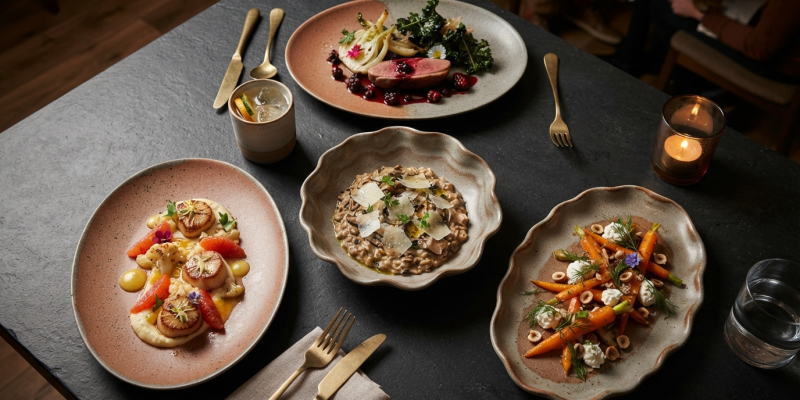
Irregular plates add interest and originality to the presentation for a hotel or restaurant. They come in a variety of styles, including oval, leaf-shaped, sculpted, and asymmetrical, which assist chefs in making unique food presentations.
This guide covers irregular shapes, sizes, and uses of restaurant plates. It also explains how to determine the ideal space to accommodate your plates, how to stack, and storage and dishwasher-friendly considerations before you select the right tableware to suit your hospitality business.
Irregular plates are plates, bowls, and trays that move beyond conventional circular designs. Many of the flat plates in Brett’s 2026 irregular range are around 300-385 mm across and 27-45 mm high. Raised pieces and bowls grow as high as 70-127 mm. Please check the exact size, usable plating area, dishwasher rack size, stacking, storage height, durability of the edges and replacement availability with actual samples before ordering.
Table of Contents
What Are Irregular Plates?
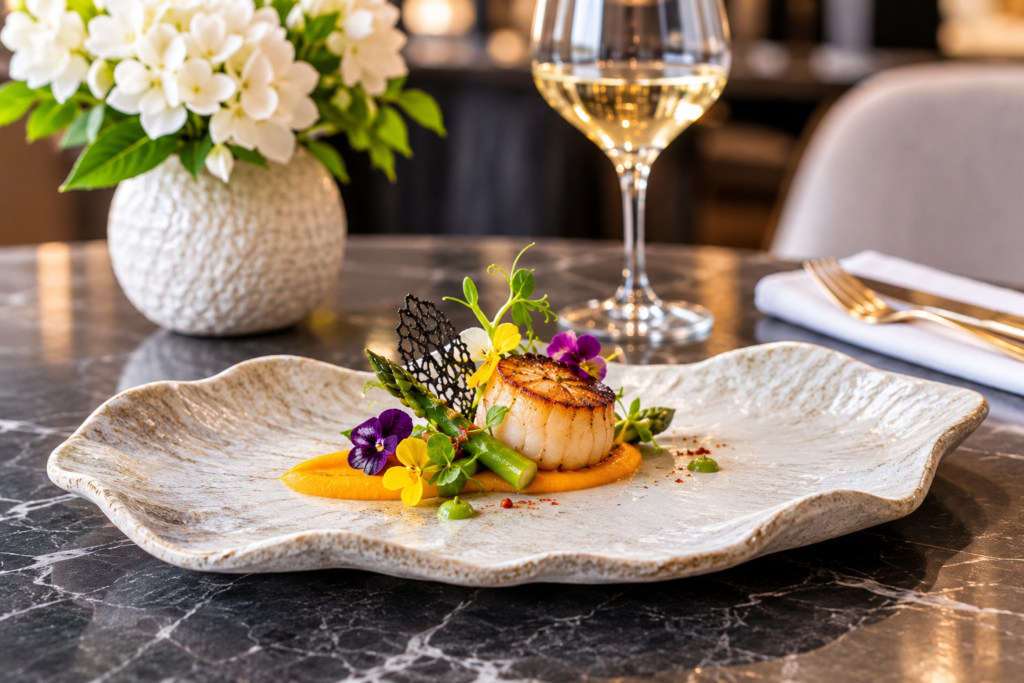
Irregular plates are also known as irregular-shaped plates and they go above and beyond the standard circular shape. Can be oval, rectangular, wavy, asymmetric, and inspired by a stone or sculptural design. Some are raised; some have uneven rims. Some have textured surfaces and raised bases.
These pieces are used by chefs to outline food and provide a unique presentation. They are particularly prevalent at fine dining establishments, tasting menus, chef’s-table service and select buffets or displays.
What are irregular plates used for?
Irregular plates can be found in hotels and restaurants. These are often used when serving a menu, tasting menu, sweet, starter, and/or shared food items. Plates of different sizes allow for innovative and aesthetically pleasing food displays. They are commonly used in high-class restaurants, chefs’ tables, and in certain buffets. Alongside style, people should also think about how suitable they are for washing, stacking and storing.
Shape family | Examples in Brett’s irregular range | Typical hospitality use |
Trays and oval plates | Oval tray; oval plate | Mains, sharing dishes and long presentations |
Sculpted-edge plates | Round plate; bird’s nest plate | Main courses and signature dishes |
Bowls | Pasta bowl; stone shape bowl; oyster shape bowl; bamboo shoots bowl | Pasta, soups, salads and starters |
Stands and raised pieces | Food stand; high stand plate; stump food stand; dessert stand | Buffet display, canapés and desserts |
Small tasting pieces | Ball shape food bowl; spoon shape bowl; eggshell plate; Swiss roll plate | Amuse-bouche and tasting courses |
Long and narrow plates | Rectangular plate; dessert plate; pillow plates | Sushi, petit fours and grazing |
Brett has approximately 35 known shape types listed in its catalogue. The table lists the important design families, not all the items.
Irregular Plate Sizes: Examples From Brett’s Range
Irregular plates are typically described by length, width, and height, instead of just the diameters. These examples are selected from Brett’s 2026 range catalogue, which is irregular. Sizes are expressed in length x width x height (L x W x H). Where provided, catalogue inch labels are provided.
Piece | Size (L × W × H) | Catalogue size |
Oval tray | 178 × 140 × 48 mm | 7.5 in |
Oval tray | 250 × 191 × 58 mm | 10.5 in |
Oval tray | 295 × 228 × 57 mm | 12 in |
Oval plate | 302 × 204 × 27 mm | 12 in |
Oval plate | 351 × 251 × 31 mm | 14 in |
Round plate | 312 × 305 × 27 mm | 12 in |
Round plate | 362 × 355 × 32 mm | 14 in |
Pasta bowl | 255 × 232 × 72 mm | 10 in |
Pasta bowl | 305 × 284 × 84 mm | 12 in |
Bird’s nest plate | 335 × 263 × 41 mm | 13 in |
Bird’s nest plate | 385 × 263 × 45 mm | 15 in |
Leaf plate | 310 × 200 × 36 mm | 12.25 in |
Ball-shaped food bowl | 109 × 95 × 83 mm | Not listed |
Ball-shaped food bowl | 148 × 138 × 127 mm | Not listed |
The inch labels are catalogue-sized names and are rounded, not necessarily equal to the longest measured side. Check the final size specifications with the existing product specification sheet before ordering.
Length and width are not the only important factors; height is the same. A flat plate, which is 27 mm high, could stack differently from a bowl of pasta that is 84 mm high. More free space on the shelf and a different dishwasher layout may also apply to a raised bowl or stand.
Why Chefs and Hotels Choose Irregular Restaurant Plates
Irregular plates will provide some variation, but the most appropriate one will vary depending on the menu, outlet and handling requirements. Consider the outlet first, shape second; if it’s appropriate for a tasting menu, it may not be for a banquet.
Outlet | Suitable pieces | Why they may work |
Fine dining and tasting menus | Oval plates, ball bowls and small tasting pieces | Give individual courses a distinctive presentation |
Chef’s table and private dining | Sculpted plates and stands | Help create a recognizable serving style |
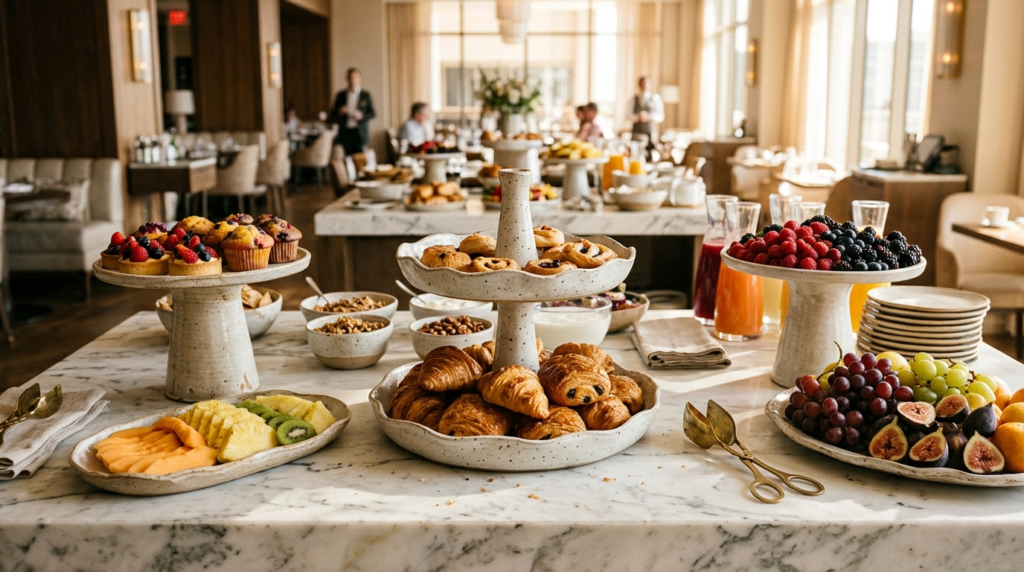
Hotel breakfast and brunch displays | Stands, high stands and trays | Add height and visual variety to selected displays |
Hotel lobby bar and lounge | Trays, narrow plates and small bowls | Suit snacks, sharing dishes and lighter meals |
Banquets and events | A limited selection of signature pieces | Add visual interest without making the full service difficult to manage |
A signature plate can be a part of a hotel’s dining identity and also help make a dish more photogenic. That benefit is only realized if the pieces are easy to wash, store, handle and replace.
Practical Challenges With Irregular Plates
Irregular shapes may act differently than a round plate when in storage, in washing, and in service.
What to check | Questions for the buyer or kitchen team |
Stacking | Do the pieces nest securely? Do rims or textured surfaces touch when stacked? How high can staff stack them safely? |
Dishwasher-rack fit | Will the longest pieces fit the rack without touching the spray arms or blocking other items? |
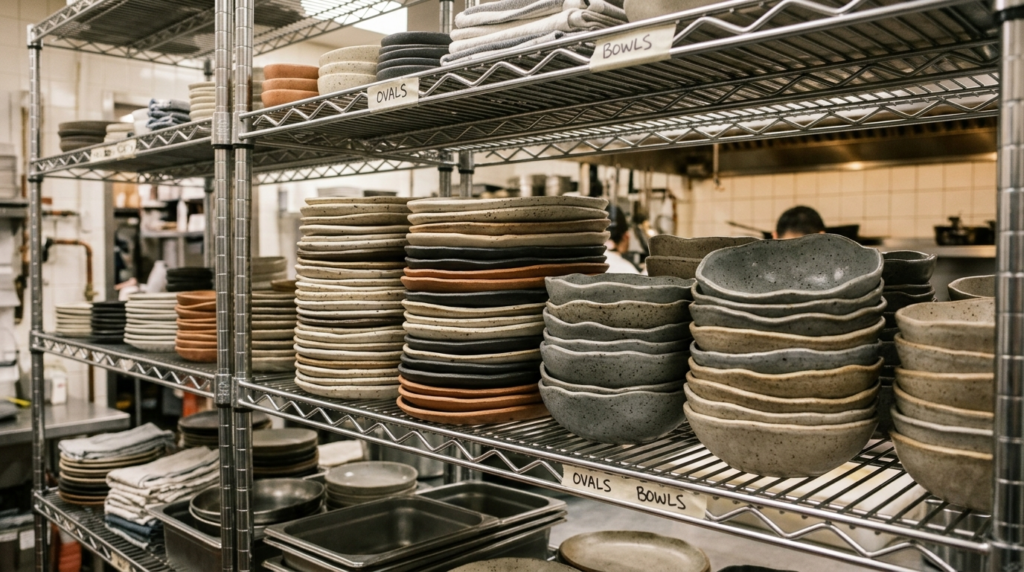
Storage space | Do raised bowls and stands need additional shelf height or dedicated storage? |
Chip and edge risk | Are thin, wavy or exposed edges vulnerable during loading, unloading and transport? |
Weight and handling | Can staff carry the pieces comfortably, including when a full service tray is used? |
Replacement | Can the same shape, size and glaze be reordered later? What is the expected production lead time? |
With an oval plate (351mm) or a bird’s nest plate (385mm), please verify the rack size, not just the general size used for dishwashers.
Textures and Finishes in Brett’s Irregular Range
Shape is just one aspect of design. Brett’s 2026 irregular catalogue includes smooth glossy white surfaces, stone or rough glazes in grey and beige, black textured surfaces, and hammer finish plates and bowls. All surfaces should be tested under the conditions of cleaning and handling for the specific outlet it will serve.
Finish | What to evaluate during testing |
Glossy white | Check for visible cutlery marks, staining and cleaning performance under normal service conditions. |
Rough or stone-like glaze | Check whether food residue collects in the texture and whether the surface cleans fully. |
Black textured finish | Test with the cutlery used in the outlet and inspect for visible scratches or light marks. |
Hammer finish | Check rim comfort, surface cleaning and how pieces sit when stacked. |
Read Brett’s hotel tableware sample approval guide for a structured testing process. Request the care instructions and finish-specific test data for the specific item under consideration from the supplier.
Plating Space and Portion Size
The outside size of an irregular plate does not show how much room there is for food. A wide, sculpted rim, raised edge, or roughened edge may limit the plating area in the center.
Match each shape before ordering. Serve the main course, drizzle sauce or garnish over it, and observe from the “eye level” of the diner. A flat piece with a height of 27 mm might be suitable for a composed dry dish; a pasta bowl, with a height of 72-84 mm, may be more suitable for pasta or sauce-based dishes. These examples are not the rule; be sure to find usable well depth and capacity of the specific piece.
How to Combine Irregular Plates With a Core Tableware Range
The majority of hotels don’t have to offer food on odd-shaped plates. One good solution would be a standard “core” of very common plates and some “signature” irregular plates for signature plates, tasting menus, private plates, or to display.
Consider ordering an agreed reserve quantity of specialist pieces, particularly when the shape is custom or may require a longer replacement lead time. Explore Brett’s ceramic dinnerware and tableware options when planning a coordinated service range.
How to Test Irregular Plate Samples
Do not approve a specialist plate based on a photograph or rendering alone.
Test | How to carry it out |
Real-dish test | Plate actual menu items, including sauces and garnishes, then carry the dishes to a table. |
Stacking test | Stack several samples on the storage shelf and service cart. Check stability, contact points and visible marks. |
Dishwasher test | Run the samples through the kitchen’s own machine and rack arrangement. Follow the supplier’s care guidance and record any changes. |
Edge inspection | Inspect rims and exposed edges under good lighting before and after handling and washing. |
Dimension check | Measure multiple pieces to understand variation in length, width and height. |
Handling test | Ask service and stewarding staff to load, carry, unload and store the samples. |
What to Ask a Supplier Before You Order
Irregular pieces may show more variation than standard round plates, so include clear tolerances and performance requirements in the request for quotation (RFQ).
Request from the supplier | Why it matters |
Body material and water-absorption information | Helps identify the ceramic body and understand its relevant properties. |
Exact dimensions and tolerance in millimetres | Clarifies acceptable variation between pieces and production batches. |
Dishwasher and thermal performance information for the exact item | Avoids relying on a general claim that may not apply to every shape or decoration. |
Glaze and colour consistency details | Supports visual matching across the first order and future reorders. |
Carton quantity and gross carton weight | Helps calculate storage, handling and freight requirements. |
Relevant test reports and compliance documents | Allows the buyer to review evidence that applies to the specified product. |
Replacement availability and lead time | Helps plan for breakage, expansion and future replenishment. |
For a more complete purchasing checklist, see Brett’s hotel tableware specification guide and hotel tableware RFQ guide.
Custom Shapes and Sizes at Brett
Brett’s tableware is made in its factory located in Fengxi, Chaozhou. Customization can be done in a variety of aspects based on the product and project needs: shape, size, colour, logo, pattern, and packaging. Physical samples need to be reviewed and approved before bulk production. Some items and customizations have minimum orders and lead times; check them for the proposed design.
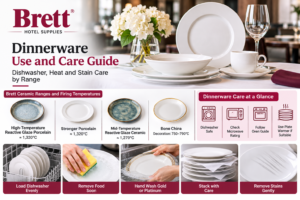
Brett says that its ranges are dishwasher-proof, except that bone china that is embellished with genuine gold or platinum should be hand washed. Purchasers should always check the instructions for use with the specific item and determine if the form will fit into the commercial dishwasher racks.
Common Mistakes When Buying Irregular Plates
Some common mistakes are usually committed when buying irregular plates:
- Ordering by pictures only. The dimensions, weight, finish, balance, or feel of a plate can not be confirmed by images.
- Ignoring dishwasher compatibility. A big oval or a sculpted plate might not fit the kitchen racks which are already in use.
- Using specialist pieces for every service. Keep irregular shapes for dishes and outlets where they add clear value.
- Monitoring storage and stacking. Please verify shelf clearance, cart capacity, and safe stacking before bulk ordering.
- Not planning for replacement items. Discuss the availability of reorder, batch matching and lead time and a reserve quantity.
- Failure to specify the tolerances in the purchase specification. Write dimensions and tolerances.
Frequently Asked Questions
What are irregular plates?
Plates, bowls and trays that have an unusual shape, including oval, wavy, asymmetrical, stone-inspired, leaf-shaped, or raised designs, are all considered irregular plates. They are used as restaurant plates to add a unique appearance to a dish in restaurants.
How big are irregular plates?
Flat plates in the examples of Brett’s 2026 irregular range are about 300-385 mm wide, or 12-15 inches wide, and 27-45 mm tall. Raised bowls and pieces range in height from about 70–127 mm. Always measure the entire length, width and height of the item in question.
Are irregular plates dishwasher safe?
Brett says its ranges can be used in the dishwasher, except bone china decorated with real gold or platinum, for which hand washing is recommended. The instructions for the care of the item must be checked, and it must fit in the commercial dishwashers by the buyer.
Do irregular plates stack?
There are some irregular plates that stack, but many irregular plates do not neatly nest like the standard round plates. Try out various pieces in combination and test for wobbling, rim contact, marks, shelf height, and cart stability.
What should I check before ordering irregular plates?
Determine exact size in millimetres, usable size, dishwasher rack fit, stacking, storage, weight, edge strength, size tolerance, glaze consistency and availability of replacements. Confirm samples before bulk production.
Conclusion
Irregular plates add style and character to hotel and restaurant dining. But good tableware should look attractive and work well in daily service. The proper pieces should match the menu, offer adequate plating space, and be easy to fit into daily kitchen routines.
Before ordering, check physical samples for dimensions, stacking, dishwasher-proof, future replacement, and storage. We have tableware solutions that can be tailored to fit a variety of hospitality concepts at Brett, including shapes and sizes, colours, patterns, and branding. Samples are approved before bulk production, and test reports are available on request.
Want to find unique tableware for your next hospitality job? Visit our collections at CBHoreca and contact our team at ann@chinabrett.com or WhatsApp +86 135 3541 3512.