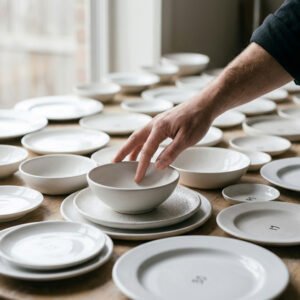

Ask three suppliers for a 27 cm dinner plate, and you can get three slightly different plates. Some names are rounded, such as 10 inch, and the number on a spec sheet doesn’t necessarily indicate how much food will actually fit. That’s why restaurant plate sizes are worth specifying carefully.
This guide provides you with the standard sizes in both centimeters and inches, explains how plates are measured, and demonstrates how to test-fit plates in your dishwasher, shelves and tables. See our dinnerware sizing guide for portion and plate sizes by service style.
The typical restaurant dinner plate size is 25 to 30 cm (10 to 12 inches). The sizes are approximate, so please specify the overall diameter, well size, and tolerance in writing. Before ordering, make sure the plate will fit into your dishwasher racks, shelves, and table space.

Table of Contents
Restaurant Plate Sizes at a Glance
Start with the information in the table below. Each manufacturer has different models, so refer to the actual specification sheet for verification.
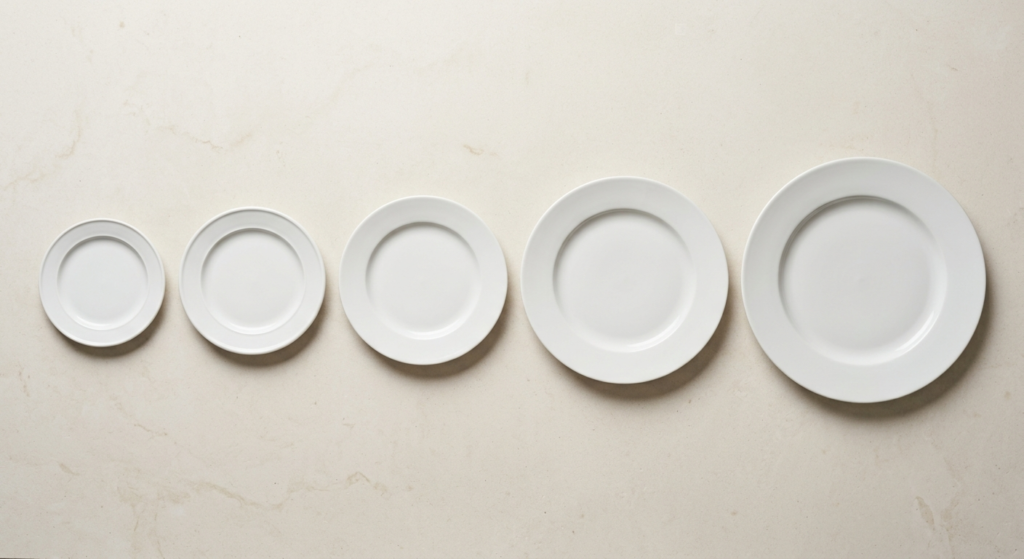
Plate type | Size in cm | Size in inches | Typical restaurant use |
Bread and side plate | 15 to 18 | 6 to 7 | Bread, butter, small sides |
Dessert plate | 18 to 25 | 7 to 10 | Desserts, pastries |
Starter or salad plate | 20 to 23 | 8 to 9 | Appetizers, salads |
Pasta plate or shallow bowl | 23 to 27 | 9 to 10.5 | Pasta, risotto |
Dinner plate | 25 to 30 | 10 to 12 | Main courses |
Charger plate | 30 to 36 | 12 to 14 | Formal and banquet settings |
Sharing platter | 30 to 40+ | 12 to 16+ | Family style dishes |
The conversion is simple. One inch equals 25.4 mm, so a standard dinner plate size of 10 inches is 254 mm, or 25.4 cm. This second table helps when a supplier quotes in inches and your spec is metric.
Inches | 6 | 7 | 8 | 9 | 10 | 11 | 12 |
Centimeters | 15.2 | 17.8 | 20.3 | 22.9 | 25.4 | 27.9 | 30.5 |
How Plate Size Is Measured
Most suppliers show the overall diameter, edge to edge across the widest point. It’s the figure quoted, but only one of four that matters.
Measurement | What it tells you | Why it matters |
Overall diameter | Edge to edge across the widest point | Sets shelf, rack, and table fit |
Well size | The flat or inner area that holds the food | Decides how much plating space you really have |
Rim width | The band between the well and the edge | A wide rim shrinks the usable well |
Height or depth | How tall or deep the plate sits | Affects stack height and sauce handling |
Here’s the catch. A 27 cm plate with a wide rim will provide you with less usable space than a 27 cm coupe plate with nearly no rim. Request the size of the well as well as the overall diameter so that plates can be fairly compared.
The size is also nominal (rounded names). There may be some variation between factories and batches in actual pieces. Request tolerance in writing, then measure actual samples using a ruler. Our hotel tableware sample approval guide covers all the other tests that need to be performed before mass production.
Choosing Plate Size by Service Style
Service style pushes size up or down. Fine dining often uses wide-rimmed porcelain with mains at 11 to 12 inches (28 to 30 cm) and appetizers at 8 to 9 inches (20 to 23 cm). Casual dining usually sits around 10.5 to 11 inches (27 to 28 cm). Our dinnerware sizing guide lists sizes by concept and checks the average, including high-volume service.
Service style | Typical main plate | What drives the choice |
Fine dining | 28 to 30 cm (11 to 12 in) | Wide rim, sauce work, plating space |
Casual dining | 27 to 28 cm (10.5 to 11 in) | Balance of presentation and handling |
Buffet | Often a little smaller | Portion control and queue flow |
Our guide to the different types of dinner plates explains how rimmed, coupe, square, and presentation plates differ, which matters as much as the diameter itself.
Plate Size and Portion Presentation
Size affects the appearance of a piece. A large amount of food may look like a lot on a 23 cm plate, and small on a 30 cm plate. A sauce smear that looks refined on a wide-rimmed 12-inch plate can look cluttered on a 9-inch coupe. We cover that in our guide on how dinnerware shapes your plating.
Try out the actual menu on your sample plates first before ordering. Plate the heaviest dish and the lightest dish, then see if both look right. If one looks lost, you may need two sizes.
Plate Size and Dishwasher Racks
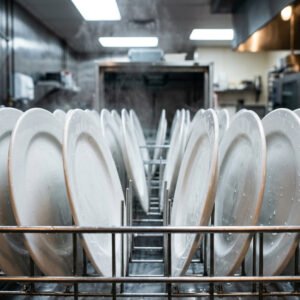
Most commercial racks are about 500 by 500 mm, and large plates or chargers can push the limits of standard peg racks. Check your machine and compare it with the plate’s diameter before ordering.
If the plate does not fit in the rack, it is washed by hand or placed in a slower cycle. Both cost labor. Our guide to what to avoid when buying dinnerware includes two of the things that people don’t check: the size of the racks and the depth of the shelves.
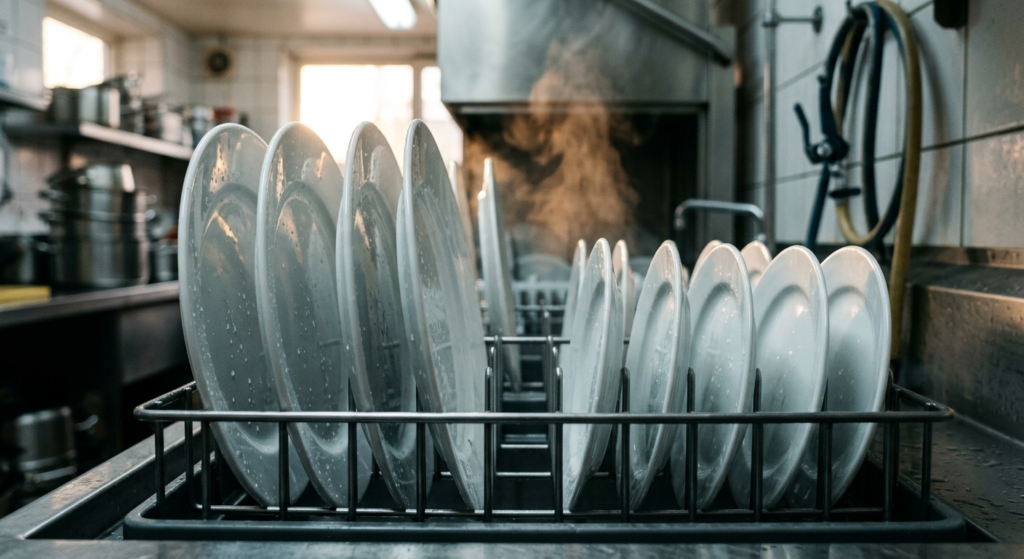
Plate Size, Storage, and Stacking
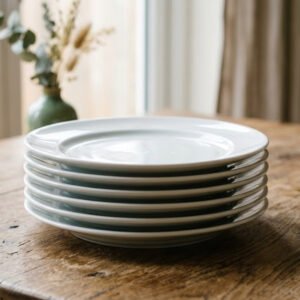
Take the dimensions of the shelf depth and the space between the shelves. Add the height of a full stack. A plate that fits one at a time may not fit in stacks.
Weight counts too. Larger plates weigh more, and a tall stack of heavy porcelain is harder on staff and on rims. Inquire on the spec sheet about the weight of each piece and compare it among suppliers.
Plate Size and Table Space
A 30 cm plate plus flatware and glassware can crowd a small two-top. Before you make your selection, measure your tables and make a complete set-up of a place setting as a test.
Chargers provide a 30 to 36 cm footprint below the plate. They look great on banquet rounds and formal settings, but check that guests still have elbow room.
Plate Size by Cuisine
Your menu decides more than your service style does. A dish consisting of a sauce and two sides, plus a grain, requires space. One sliced protein + one garnish does not.
Cuisine style | Size tendency | Why |
French and European classical | Wide rimmed plates, 11 to 12 in (28 to 30 cm) for mains | The rim frames sauce and garnish |
Modern and tasting menus | Smaller coupe plates, often 8 to 10 in (20 to 25 cm) | Course after course needs a clean, light look |
Indian and Middle Eastern | Larger plates or shared platters | Several components share one plate |
Pasta and risotto | Shallow bowls or plates, 9 to 10.5 in (23 to 27 cm) | Sauce needs a lip, and pasta needs depth |
Treat these as tendencies, not rules. If your menu mixes styles, sample two sizes and plate your real dishes on both.
What Plate Sizes Should a New Restaurant Order?
Start with a small core set, then add specialty sizes once the menu settles. The ranges below are a starting point, not a rule. For quantities and breakage buffers, use our guide on how many plates a restaurant needs.
Core item | Suggested size | Role on the menu |
Dinner plate | 25 to 28 cm (10 to 11 in) | Mains, the workhorse piece |
Starter or salad plate | 20 to 23 cm (8 to 9 in) | Appetizers, salads, shared small plates |
Bread or side plate | 15 to 18 cm (6 to 7 in) | Bread service and sides |
Pasta plate or shallow bowl | 23 to 27 cm (9 to 10.5 in) | Pasta, risotto, saucy dishes |
Dessert plate | 18 to 20 cm (7 to 8 in) | Desserts and petit fours |
How to Write Plate Sizes Into Your RFQ
A vague line like “10 inch dinner plate” leaves room for surprises. Write the plate dimensions the way you’d want them delivered. Our hotel tableware procurement checklist includes the bigger picture of the RFQ, and the size lines are covered in the table below.
Spec line | Example wording |
Overall diameter | Dinner plate, 270 mm overall diameter |
Well size | Flat well diameter of [your minimum] mm |
Rim width | Rim width of [your range] mm |
Height | Overall height of [your range] mm |
Weight | Maximum weight of [your limit] g per piece |
Tolerance | Agreed tolerance on diameter, stated in writing |
Common Plate Size Mistakes
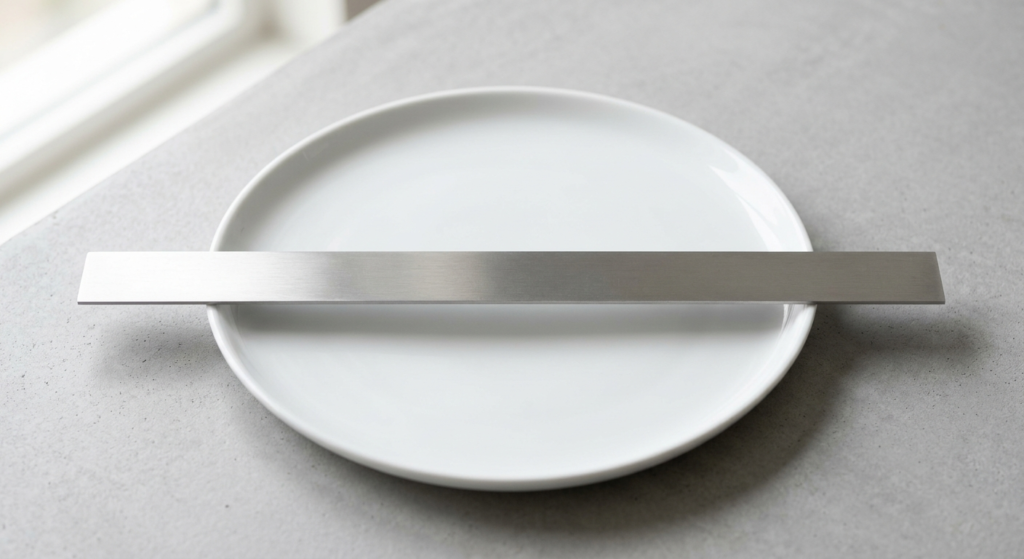
The first one is ordering plates by inch name only. A “10 inch” plate from one factory can differ from another, so always ask for millimeters and a tolerance.
The second mistake is not considering the well size. Two plates of the same diameter may vastly differ in terms of plating area
The third common mistake is not checking whether the dishwasher and shelf can accommodate your plate. It is not uncommon that after falling in love with a big plate, you cannot rack or stack it due to its size.
The fourth mistake is buying one size for everything. A single plate size rarely suits both a light starter and a heavy main.
How Brett Supports Plate Size Specifications
We make plates in a wide range of shapes and sizes in porcelain and bone china, including custom sizes for private label programs. Send us your spec in millimeters and we’ll confirm the dimensions on samples before production. Our dinnerware is certified to SGS and TUV standards with EC No. 1935/2004 compliance.
Frequently Asked Questions
What is the standard restaurant dinner plate size?
About 25 to 30 cm (10 to 12 inches). Everyday service tends to average at 10.5 to 11 inches; fine dining is more often 11 to 12 inches.
What size is a standard side plate?
The standard for bread and side plates is usually 15 to 18 cm (6 to 7 inches).
How are restaurant plate sizes measured?
Most suppliers list the overall diameter, edge to edge across the widest point. Ask for the well size, rim width, and height too, since they decide how much usable space you get.
Do plate sizes vary from supplier to supplier?
Yes, they are ‘nominal’, meaning that a “10 inch” plate can well vary between suppliers or even within a factory. Ask for the tolerance and confirm using a ruler on sample plates.
Will large plates fit in a commercial dishwasher rack?
Most commercial dishwashers have a rack size of approximately 500 by 500 mm. Large plates or chargers can often reach the maximum length of 500 mm, so check with your machine supplier and compare with the plate diameter before ordering.
Do different cuisines require different plate sizes?
Often, yes. Classical European mains tend to use wide rimmed plates, tasting menus lean toward smaller coupe plates, and dishes with several components need more room. Sample your real menu on two sizes before you decide.
What plate sizes should new restaurants buy first?
A dinner plate, a starter/salad plate, a bread/side plate, a pasta plate or shallow bowl, and a dessert plate. Consider specialty sizes when the menu is finalized.
Conclusion
Good restaurant plate sizes begin with the standard sizes but these are only a guideline, as the overall diameter is only one measurement. The well size, rim width, height, weight, and tolerance will determine how well the selected plate will work on your line. Check against the racks in your commercial dishwasher, shelves, and tables, and then apply the millimeter sizes to your RFQ, ensuring that all suppliers are quoting the same plate.
We supply hotel and restaurant plates in standard and custom sizes, backed by SGS, TUV, EC No. 1935/2004, FDA, LFGB, ISO 9001, BSCI, and Sedex documentation on request. Contact our team at Cbhoreca or WhatsApp +86 13535413512 to discuss plate sizes for your next order.