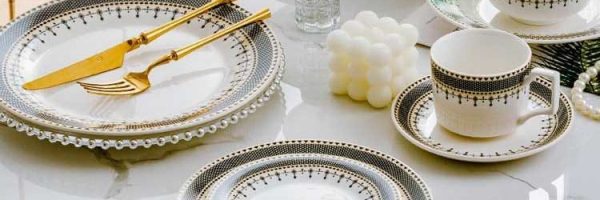
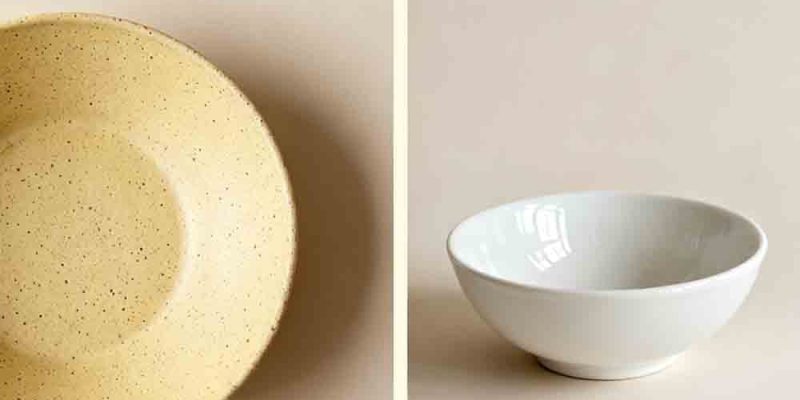
Ceramic and porcelain are terms we often hear when referring to dinnerware. They are common types of dinnerware used in daily households and hotel, restaurant dining settings. However, many people may get confused between the two—aren’t they both ceramic?
So what exactly is the difference between ceramic and porcelain dinnerware? And is ceramic or porcelain dinnerware better? After reading this article, you’ll find the answers.
1. What is Ceramic Dinnerware?
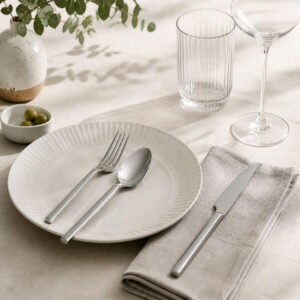
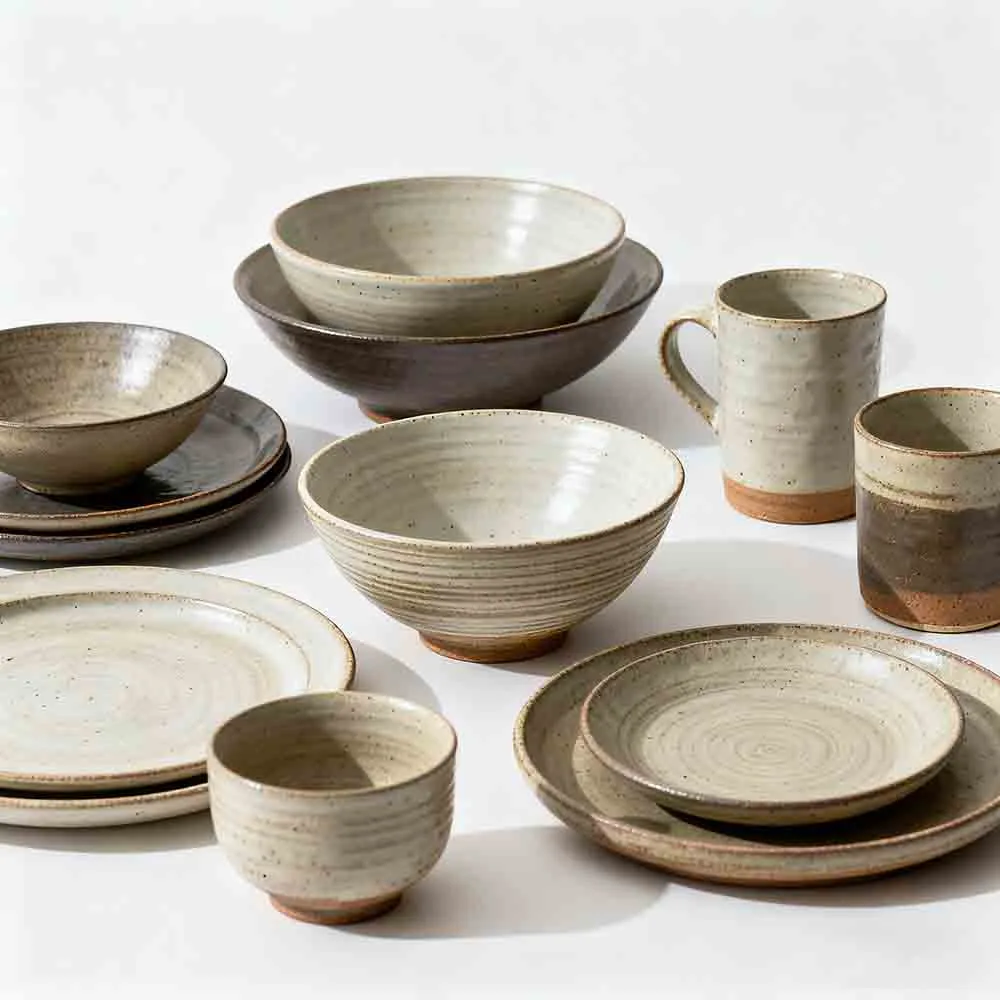
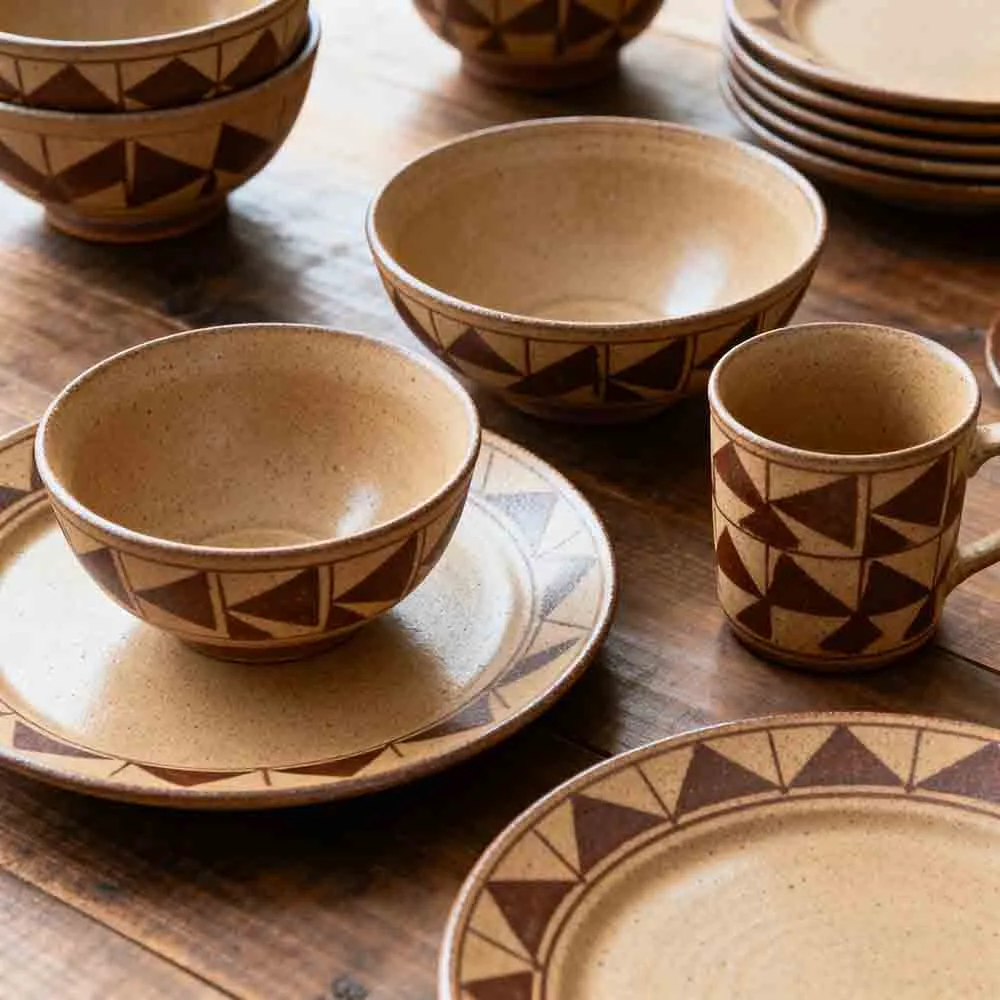
“Ceramic” is commonly used as a general term for pottery, stoneware, and porcelain, referring to vessel products made by firing and hardening clay. However, in the food service industry, “ceramic dinnerware” typically refers specifically to stoneware and pottery tableware.
Features of Ceramic Dinnerware:
- Firing Temperature:~1,000–1,150°C
- Porosity: Higher; may require a thicker glaze layer
- Weight:Usually heavier than porcelain
- Design Versatility: Excellent for rustic, handcrafted, colorful styles
- Durability:Good, but less resistant to impacts and moisture absorption
Ceramic dinnerware boasts a warm texture and handcrafted appearance, making it a popular choice for many households and restaurants. Of course, another key reason is its affordable price.
PS: If you’re exploring tailored ceramic sets, you can also check out our custom ceramic dinnerware collections designed for restaurant and catering.
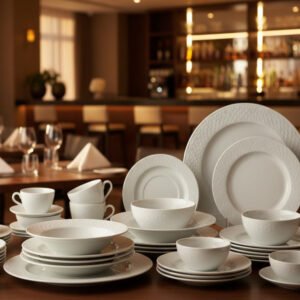
2. What Is Porcelain Dinnerware?
Porcelain is a type of ceramic characterized by high density and high-temperature firing. It typically exhibits high strength, a refined appearance, and a certain degree of translucency. According to the “Concise Encyclopedia of Advanced Ceramic Materials” (Elsevier, 1991), porcelain is produced by firing kaolin clay at temperatures exceeding 1,300°C.
(For general reference, you can also read more about porcelain on the Wikipedia overview page (Porcelain) for background context.)
Features of Porcelain Dinnerware:
- Firing Temperature:~1,250–1,350°C
- Porosity:Very low; often fully vitrified
- Strength:Harder and more durable than standard ceramic
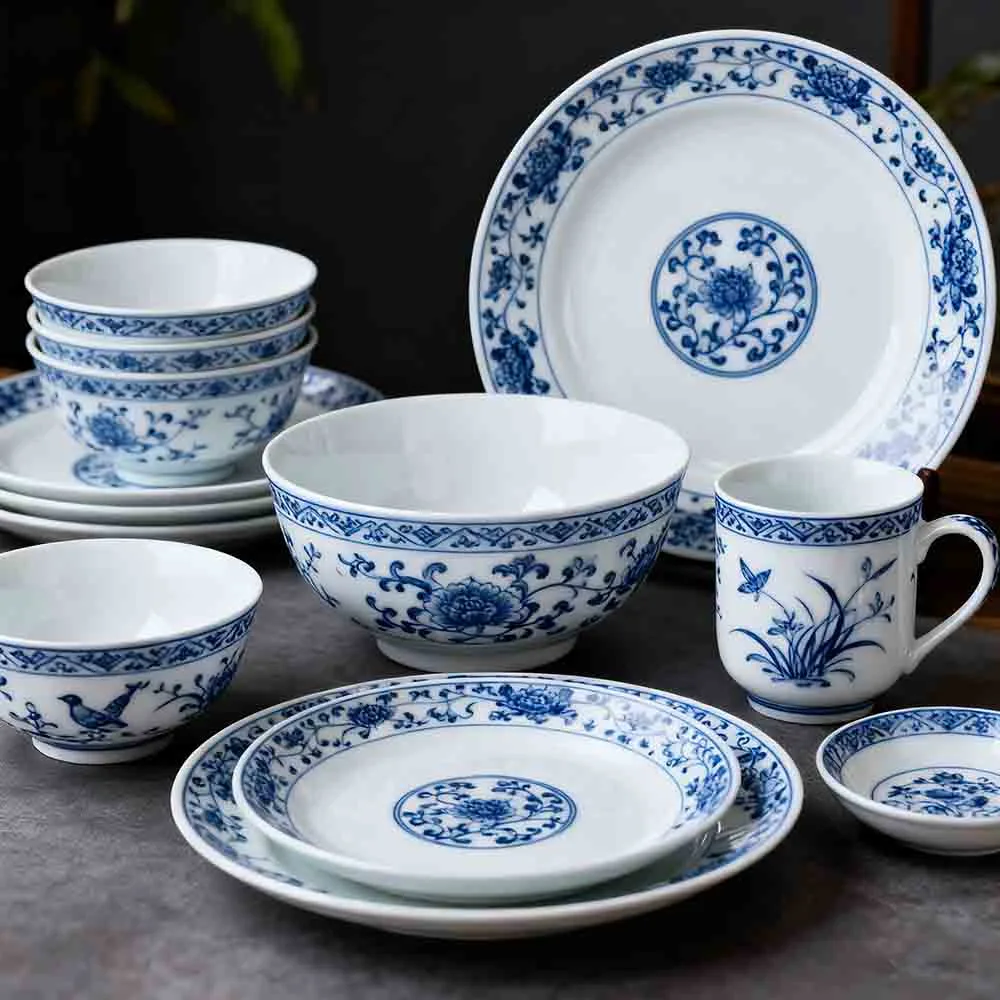
- Appearance:White, smooth, sometimes translucent
- Weight:Lighter and thinner than ceramic
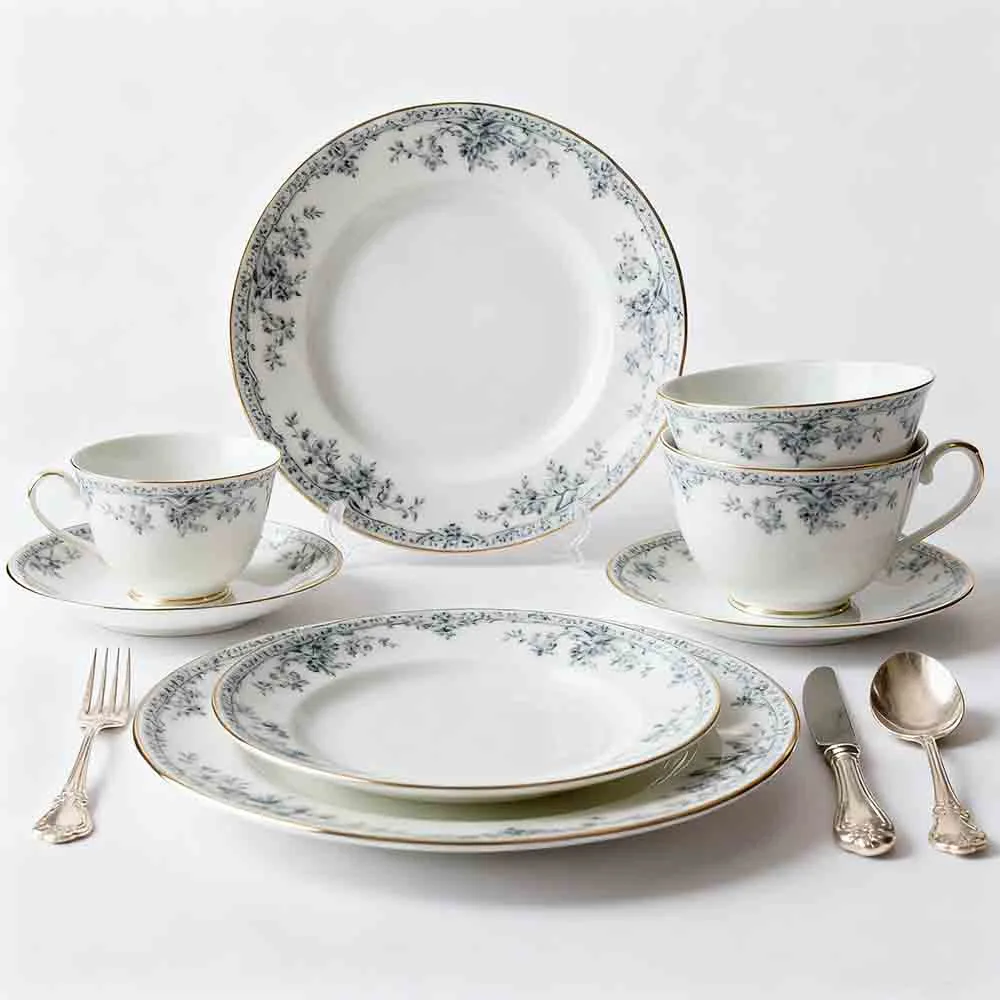
With its exquisite appearance enhanced by finishes such as electroplating, gold or silver gilding, decals, and glazing techniques, porcelain tableware delivers a premium, luxurious dining experience. This makes it a favored choice among high-end restaurants and hotels.
PS: To explore customizable porcelain collections, see our custom porcelain dinnerware designed for brands and hospitality.
3. Ceramic vs Porcelain: Key Differences
After knowing the definitions of ceramic dinnerware and porcelain dinnerware, we will now compare them across seven aspects: material composition, strength, water absorption rate, weight, appearance, heat resistance, and price.
3.1 Material Composition
Ceramic: Mixed clays, often with more impurities
Porcelain: High-purity kaolin, feldspar, and quartz
Higher-purity raw materials enable porcelain to be fired harder and become more glass-like.
3.2 Strength & Durability
Ceramic: Ceramic is softer, more likely to chip or crack on impacts.
Porcelain: Porcelain is stronger, harder, and more resistant to chipping. The vitrification process creates a dense, glass-like body.
“According to ceramic engineering principles summarized by W. D. Kingery (a pioneer in ceramic science), porcelain’s vitrified microstructure is what gives it superior strength and a low water absorption rate.”
3.3 Water Absorption
Ceramic: normally 5–10% or higher
Porcelain: <0.5% (almost waterproof)
Therefore, for hotels and restaurants that frequently use and clean tableware, they prefer low-water-absorption porcelain dinnerware because it is more durable and hygienic.
3.4 Weight & Thickness
Ceramic: Thicker and heavier
Porcelain: Thinner, lighter, more refined
Porcelain’s lightweight feel is one reason luxury restaurants love it—nothing says “fine dining” like a plate that looks delicate but performs like steel… ceramic steel, anyway.
3.5 Appearance
Ceramic: Rustic, handcrafted, aesthetic variations
Porcelain: Smooth, glossy, bright white or refined colored glazes
3.6 Heat Resistance
Both materials resist heat well, but porcelain has better thermal shock resistance due to higher vitrification.
3.7 Cost
Ceramic: More affordable
Porcelain: Higher cost due to raw materials, firing temperature, and craftsmanship
4. Is Ceramic or Porcelain Dinnerware Better?
Whether ceramic dinnerware or porcelain dinnerware, both are undoubtedly excellent choices for tableware. The decision on which is better ultimately depends on the user’s specific needs and preferences. Therefore, understanding what you want is key. Below are some points for your consideration:
Choose Ceramic If You Want:
- A handcrafted or rustic aesthetic
- Lower cost
- Thicker, cozier-feeling plates
- Unique glazes and color effects
Choose Porcelain If You Want:
- Maximum durability and chip resistance
- Low water absorption (ideal for commercial dishwashers)
- Lightweight, elegant, refined appearance
- Fine dining or hotel-grade performance
- Professional Environments (Hotels, Restaurants, Catering)
Porcelain is generally the superior choice for:
- High-volume washing
- Stacking and storage
- Heat retention
- Durability
- Brand image
If you’re running a hotel or restaurant, or working in the food service industry, porcelain dinnerware is undoubtedly the better choice. Of course, selecting ceramic dinnerware to match your restaurant’s style is perfectly acceptable (though your tableware may need replacing more frequently). Ultimately, it depends on your specific needs.
5. Comparison Table: Ceramic vs Porcelain Dinnerware (Summary)
To help you see the differences more clearly, here’s a concise comparison table that summarizes key performance factors of ceramic and porcelain dinnerware:
Feature / Property | Ceramic Dinnerware | Porcelain Dinnerware |
Material Composition | Mixed clays with higher impurities | Kaolin, feldspar, quartz (high purity) |
Firing Temperature | 1,000–1,150°C | 1,250–1,350°C |
Density & Vitrification | Lower density, semi-vitrified | High density, fully vitrified |
Water Absorption Rate | High (5–10% or more) | Very low (<0.5%) |
Durability & Chip Resistance | Moderate; more prone to chipping | Excellent; stronger and harder |
Weight & Thickness | Thicker and heavier | Thinner and lighter |
Appearance | Rustic, handcrafted, varied glazes | Smooth, refined, sometimes translucent |
Heat Resistance | Good | Excellent (better thermal shock resistance) |
Price Range | More affordable | Higher due to materials & firing |
Best For | Home use, artisanal collections | Hospitality, fine dining, heavy-duty use |
Ease of Customization | Very flexible for glazing effects | Excellent for luxury branding and uniformity |
6. Frequently Asked Questions
6.1 Is porcelain better than ceramic dinnerware?
– For durability, density, chip-resistance, and refinement—yes.
– For artistic variation and affordability, ceramic has advantages.
6.2 Is ceramic or porcelain better for daily home use?
– Families with kids may prefer porcelain for durability.
– People who love handcrafted styles may prefer ceramic.
6.3 Is porcelain more expensive?
– Generally yes, due to raw materials and higher firing temperatures.
Final Decision: Ceramic or Porcelain?
As mentioned earlier, both ceramic dinnerware and porcelain dinnerware are excellent choices for tableware. Their primary differences lie in appearance, strength, and durability. Therefore, if you prioritize durability, porcelain dinnerware is the better option. If appearance is your sole concern, both have their merits—simply follow your own aesthetic preferences.