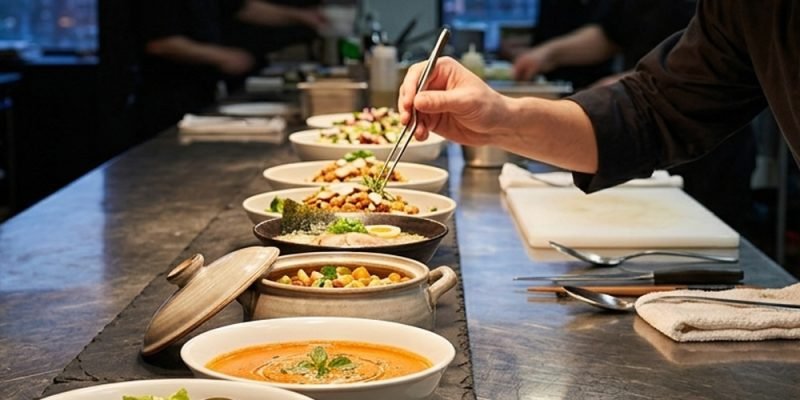
The right serving bowl can complement a restaurant table setting while supporting proper portion presentation and efficient service. Bowl size affects portion presentation, material affects durability and handling, and order quantity affects inventory and replacement costs.
Different bowls are required for various restaurant and hotel uses such as soups, salads, pasta, ramen, rice, sauces, sharing, and buffet service. Using the appropriate format for each application ensures consistent presentation and a more efficient procurement process.
This guide includes the primary types of serving bowls, their sizes, materials, and restaurant and hospitality considerations for buying.
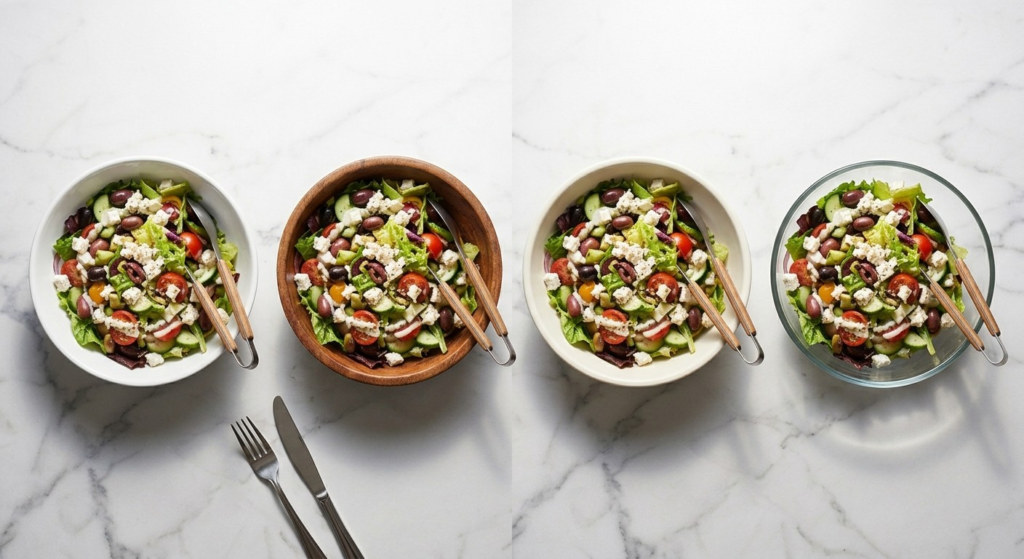
Table of Contents
Serving Bowls vs. Dinnerware Bowls: What's the Difference?
A serving bowl is typically used to hold and serve food for sharing, table service, or buffet service. Most dinnerware bowls are intended for one person and will fit only one person at a time.
Selecting bowls based on their purpose can help restaurants keep:
- Consistent portion presentation
- Appropriate serving capacity
- Better table aesthetics
- Efficient storage
- Consistent table settings
- More organized purchasing
As restaurant needs change, buyers should define clear bowl specifications based on the menu, table service, and overall service style.
Types of Serving Bowls for Restaurants
The serving bowl for the food depends on the size of the portions and the way they are served.
Soup and Broth Serving Bowls
Soup bowls may be small serving bowls or large communal bowls. If serving soup for individual service, 12–16 oz bowls are suitable for starter portions, or 20–24 oz bowls are suitable for larger soup portions.
Restaurants might want to consider larger tureen-style bowls that range from 64–128 oz. for buffet or shared service. The bowl should be deep enough to hold the food, but still have enough room to add garnishes and serve comfortably.
Salad Serving Bowls
Salad bowls require sufficient surface area for mixing, dressing, and serving.
An individual side salad can fit in an 8–12 oz bowl, while a larger entrée salad may require 20–32 oz. Larger bowls (48 – 128 oz) can be chosen to accommodate larger groups of people and volume served for family-style service. Wide bowls are especially beneficial as there is more space to toss ingredients and to spread out dressings.
Pasta Serving Bowls
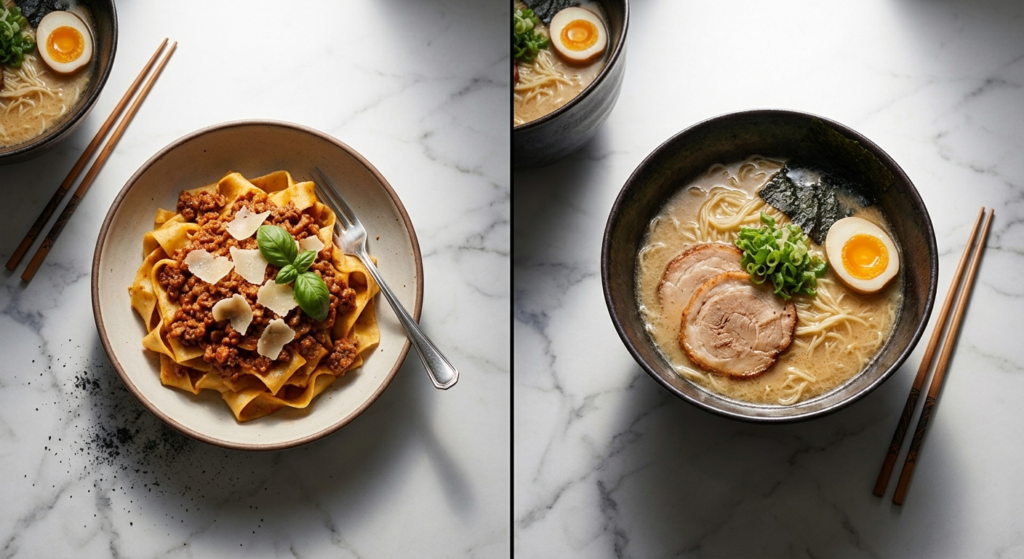
Pasta is more typically served in wide, not so deep bowls, as opposed to soup bowls.
The pasta bowl is about 8-10 inches in diameter and has a capacity of about 22-32 oz.
The larger form allows for space for food to be displayed and more easily served by guests with forks and other utensils.
Pasta is a key menu item for restaurants, and it will be important to mention both the shape of the bowls and the size of the bowls when ordering.
Ramen and Noodle Bowls
The deeper the design, the better it will keep the broth in place, and a wide enough opening for guests to reach the noodles. A wide shallow pasta bowl doesn’t always make for an appropriate alternative to a ramen bowl. If you want to see how dinnerware bowls are different depending on their functions, check out Brett’s guide to the three basic types of dinnerware bowls.
Ramen or noodle dishes call for a different bowl as they might include broth, noodles, veggies, meat, and the rest of the ingredients.
Rice and Grain Serving Bowls
Rice or grain dishes may be served as a single dish or as a shared or communal dish.
The capacity of individual bowls is 8-12 oz, and shared presentations may need 32-64 oz.
Depending on how the dish is prepared and served, specialty dishes can be in various formats. Choose the bowl based on the food and service style.
Dip, Sauce and Condiment Bowls
Small bowls are great for dips, sauces, condiments, or side portions.
Dipping bowls may be 2-6 oz. for an individual one or 8-16 oz. for a communal dip and sauces.
These are smaller pieces and can be used for multiple applications in restaurants: for sauces, condiments, garnishes, and some desserts.
Buffet and Display Serving Bowls
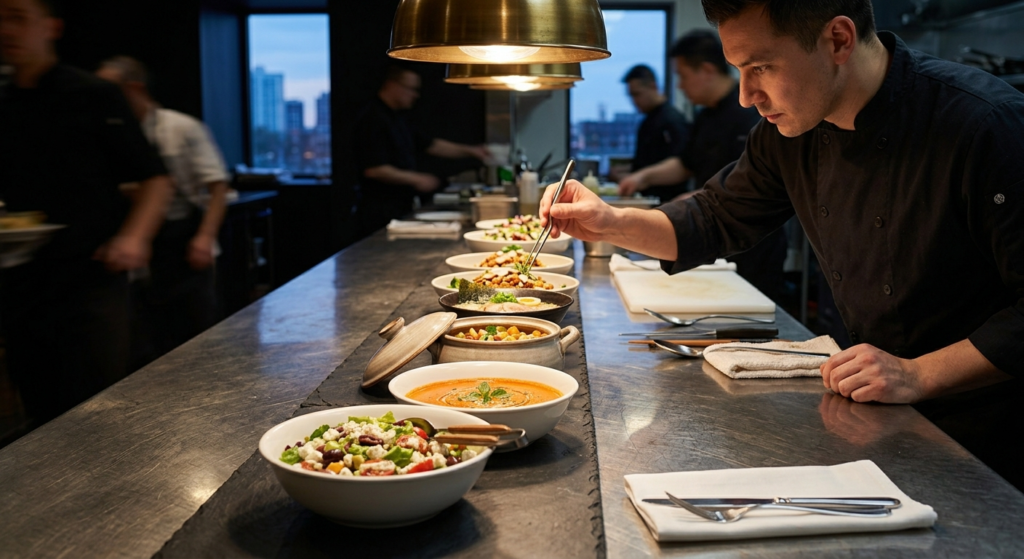
Larger bowls and capacity for extended service are often required for buffet operations. Food and service station capacities vary from 64 oz to 200 oz or even higher.
In buffet applications, capacity, shape, stability, ease of serving, temperature, presentation, cleaning and storage must all be taken into consideration. The same factors should be taken into account when selecting restaurant serving platters and other commercial serveware.
Wide-mouth ceramic or glass bowls can make a bold statement for cold salad, dessert or display items.
Restaurant Serving Bowl Size Reference
Bowl Type | Individual Size | Sharing Size | Common Material Options |
Soup/broth | 12–16 oz | 64–128 oz | Porcelain, ceramic |
Salad | 20–32 oz | 48–128 oz | Ceramic, glass |
Pasta | 22–32 oz | 48–64 oz | Porcelain, ceramic |
Ramen/noodles | 32–48 oz | — | Ceramic, porcelain, melamine |
Rice/grain | 8–12 oz | 32–64 oz | Ceramic, porcelain |
Dip/condiment | 2–6 oz | 8–16 oz | Porcelain, ceramic, melamine |
Buffet display | — | 64–200+ oz | Ceramic, glass |
The ranges are provided as a guide only and cannot be regarded as a standard. For more information on plate and bowl sizes, consult the dinnerware sizing guide for hospitality. Restaurants should choose their capacity according to the quantity and appearance of their menu items.
Best Materials for Commercial Serving Bowls
The material should be appropriate for the restaurant’s environment and not just for looks. To compare material options for restaurant dinnerware in more detail, see Brett’s restaurant dinnerware material selection and buying guide.
Vitrified Porcelain
Vitrified porcelain is a favorite for full-service restaurants, hotels, and fine-dining restaurant settings. It has a beautiful look and can pair with high-end table service, and is also naturally low-absorbent and dense, fitting for heavy-duty foodservice applications.
When customers are purchasing commercial porcelain, they should consider requesting technical specifications and test documentation from the manufacturers that are applicable, rather than just product descriptions. Check out the commercial dinnerware durability guide for a detailed look at testing, certifications, and service.
Stoneware
Many restaurants choose stoneware because they want a rustic or handcrafted/artisan look. Its natural visual appeal works well with farm-to-table, casual, and contemporary concepts.
When purchasing stoneware for large volume applications, it is important to consider the manufacturer’s specifications, durability needs, and compatibility with the washing and service environment.
Commercial Melamine
Melamine used for commercial purposes can be beneficial if low weight and impact resistance are required.
It’s frequently used for casual dining, outdoor dining, and some buffet situations.
Follow manufacturer’s instructions with regard to temperature, microwave, food contact and cleaning at restaurants.
Tempered Glass
Serving bowls made of tempered glass can work for salad, for desserts and for fruit, where a visual presentation is desired. They are transparent, and this makes the food itself part of the presentation.
When using for commercial purposes, select products that are foodservice approved and follow manufacturer’s guidelines for temperature changes, dishwashing and handling. These ranges should be treated as starting points rather than universal standards.
Serving Bowl Size and Portion Control
Bowl size can affect how food is presented to guests. If the bowl is much larger than what you want to serve, the kitchen might feel like they need to serve more to balance out the other items.
A restaurant may have 200 servings per day with 4oz each, but if an extra 4oz of food is added to each serving, there are an additional 800oz. of food served per day.
That equals 50 lb (or approximately 6.25 gallons by volume).
One of the practical processes is:
- Menu portion
- Required volume
- Bowl capacity
- Visual presentation
- Final specification
The size of the bowl should be adequate to hold the number of servings to be served and allow for some space for garnishing and presentation.
The actual food cost impact will vary depending on the ingredients and size of portion being served, but the principle is as follows: The specification of the tableware should be to support the kitchen’s portion standard.
How Many Serving Bowls Does a Restaurant Need?
There is no single number that fits all restaurants.
The number required is based on:
- Number of seats
- Number of covers per day.
- Service style
- Washing frequency
- Menu mix
- Bowl usage frequency
- Breakage
- Storage capacity
- Replacement lead times
If a restaurant often uses individual pieces, they might order additional pieces per seat to have enough stock on hand during the time pieces are being washed or kept in stock.
When buying buffet bowls and specialty serving items for large sharing bowls, consider buying in quantities based more closely on how often they’re used rather than the quantity calculation used for dinnerware. Planning replacement stock and reordering may be facilitated with a restaurant and hotel dinnerware replacement cycles guide.
What Should Restaurant Buyers Consider Before Ordering?
Before ordering, Restaurant Buyers should consider the following:
Before ordering a serving bowl, procurement teams need to define a specification.
- Calculate the amount of food required for an application
Determine exactly what type of food the bowl will hold. The capacity and shape of soups, pasta, ramen, and salad/sauces are different.
- Set up the Portion Size.
Discuss the quantity of food that will be served with the kitchen crew and choose the bowl accordingly.
- Choose the Material
Consider durability, appearance, weight, washing conditions, temperature requirements, and the restaurant concept.
- Measure Dimensions and Capacity
Do not rely on advertised capacity alone. The bowl’s shape, depth, diameter, and rim width can all affect food presentation and usability.
- Consider Storage
Larger serving bowls take up more space, so buyers should consider whether they are stackable and easy to store.
- Plan Replacement Stock
Breakage is a normal part of commercial foodservice. Purchasing should take anticipated usage into account and ensure that there is an adequate replacement stock.
- Ask About Customization
Custom shapes, colors and glazes, and logos can give a unique table arrangement to a hotel, restaurant group or branded dining concept.
Custom Serving Bowls for Restaurants
Restaurants don’t always need to choose from standard catalog designs.
For projects with specific branding or presentation requirements, manufacturers may offer OEM or ODM solutions. Brett’s guide to sourcing dinnerware from custom manufacturers vs. stock suppliers explains the trade-offs between the two approaches.
Customization can include logo printing and other custom dinnerware options, depending on the project requirements.
- Bowl shape
- Dimensions
- Capacity
- Glaze color
- Surface finish
- Logo
- Pattern
- Packaging
For large hospitality projects, working directly with a manufacturer can also make it easier to discuss technical specifications, sample development, and production requirements.
Brett Restaurant Serving Bowl Solutions
Brett provides commercial table service for hotels, restaurants, and hospitality operations around the world, and has a range of serving bowl solutions that meet various foodservice needs. Custom Ceramic Dinnerware comes in a variety of custom shapes and sizes, with vitrified porcelain and strengthened porcelain serving bowls, and available in a variety of colors for glaze, patterns, and logos.
From a procurement perspective, Brett’s tableware is supported by FDA food-contact compliance and certifications or standards including ISO 9001, ISO 22000, ISO 14001, BSCI, and Sedex. Appropriate documentation can be requested for review.
The Brett team can help you decide on the material, size, capacity, quantity, finish and design of your project if you need standard serving bowls or if you want a completely customized OEM/ODM design.
FAQ
What size serving bowl does a restaurant need for soup?
Soup bowls are typically 12 to 16 oz for starter portions, and 20 to 24 oz for larger portions. Use larger “tureen” type bowls for shared or buffet service.
What is the difference between a pasta bowl and a regular serving bowl?
Typically, pasta bowls are broader and flatter, providing more space for showmanship and making it easier for guests to consume the dish. Of course, the dimensions are dependent upon the design, but a typical pasta bowl is 8 – 10 inches in diameter with a capacity of 22 – 32 oz.
Which material is best for restaurant serving bowls?
No single material is ideal for all restaurants. Porcelain can be used in a variety of full-service and high-end settings, stoneware can be used for artisan ideas, melamine can be used in certain casual or outdoor settings, and tempered glass can be used for visual presentation.
In a 60-person restaurant, what is the number of serving bowls needed?
The answer is dependent on the menu and frequency of use. There should be a sufficient supply of individual bowls to cover current service, washing, and replacement needs. There should be no seating capacity calculation of shared and buffet bowls.
Is it possible to add a logo to restaurant serving bowls?
Yes. Serving bowls may be customized by different manufacturers and in different orders of service to include various shapes, glaze colors, patterns and logos. Purchasers should verify the methods of customization, minimum quantities, and production requirements with the manufacturer.
Which bowl is the best to serve in a Ramen Shop?
Typically, a shallow, wide pasta bowl is not as suitable as a deep, narrow pasta bowl, which has ample room for broth, noodles and the desired toppings. A 32–48oz capacity may work for many applications of ramen, but the actual specification will depend on the ramen’s recipe and portion size in the restaurant.
Conclusion
The most attractive bowl is not necessarily the best choice for restaurant service. It’s the bowl that matches the food, portion, service style, material requirement, and operating environment. Restaurants will need to know the necessary capacity, dimensions, and material for each use before ordering. They must also take into account washing cycles, storage, breakage, replacement needs, and future customization.
Using the correct specification can help restaurants keep their plates looking the same throughout the day, and prevent the need to change tableware unnecessarily. If your restaurant or hotel has specific shape, size, material, glaze, and/or branding requirements for serving bowls to match your menu, Brett can create the perfect solution for you.
Looking to order your restaurant serving bowls? Call Brett today for a free catalog, samples, and/or an OEM/ODM quote.