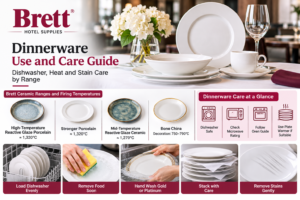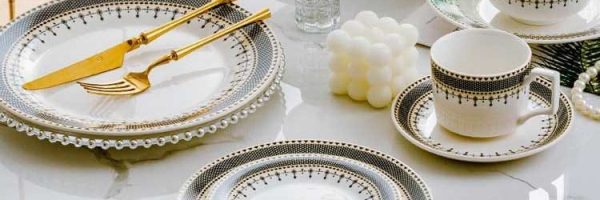
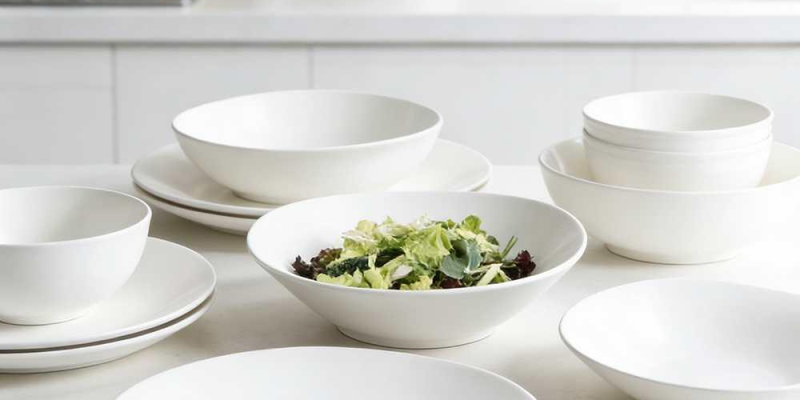
Porcelain dinnerware is designed to be used and enjoyed over and over, but even the best plates require care to look and perform as designed. They can be gradually damaged by daily washing, touching them with cutlery, stacking them up inappropriately, and sudden changes in temperature.
Cleaning plates is just the beginning of the problem for hotels and restaurants. Dinnerware needs to keep its look after multiple uses, commercial dishwashing, storage, and handling.
Cleaning and using the right detergents, and avoiding contact with plates and extreme temperature changes outside the product’s range. These are the most effective methods for prolonging the useful life of porcelain dinnerware.
This Brett’s guide explains cleaning, handling, and maintaining porcelain dinnerware and reducing the need for costly replacements.
Table of Contents
Is Porcelain Dinnerware Durable?
Yes. Fully vitrified porcelain is normally durable due to its low water absorption and hard, smooth surface. These properties make it an ideal material for lots of applications in the hospitality sector, including hotels and restaurants.
But this doesn’t mean that porcelain can’t be damaged. Chips, cracks, or surface deterioration may still occur if impacted repeatedly, hit on the rim, placed in an improper dishwasher, or subjected to thermal shock.
Durability for commercial kitchens depends on several factors:
Factor | Why It Matters |
Vitrification | Affects density and water absorption |
Glaze quality | Influences surface wear and stain resistance |
Rim design | Affects resistance to edge impacts |
Manufacturing quality | Influences consistency and performance |
Handling practices | Reduces unnecessary chips and breakage |
Washing conditions | Affects long-term glaze appearance |
The material is only part of the equation. Proper maintenance and the right product specification both matter. For a deeper comparison, read Brett’s guide to restaurant dinnerware materials and durability.
How to Clean Porcelain Dinnerware Properly
When many plates are going through service and washing cycles each day, cleaning procedures do make a difference. Clean and collect food debris on a daily basis. Clean up after service as soon as feasible. Dried sauces, oils, and food pigments may be more difficult to remove if they sit on the surface for a long time.
For routine cleaning:
- Scrape or wipe off food film before washing.
- Use a detergent appropriate for the dinnerware and washing equipment.
- Use detergent at the recommended rate by the manufacturer.
- Do not use scouring pads that may harm decorative surfaces.
- Rinse as needed during the washing process.
- When storing, let plates dry first!
For stubborn food residue, use a cleaning method approved for the particular porcelain finish.
Hand-Washing Porcelain Plates
Hand-washing may be beneficial for certain decorated items, delicate finishes, and other items that need extra care.
- Warm water, mild and appropriate detergent, soft sponge or cloth.
- Avoid rough brushes, steel wool, and aggressive cleaning chemicals.
- Focus on gold rims, patterns on print, and other trims.
- These finishes can be subject to different care instructions than a normal glazed porcelain finish.
- Never assume that a clean-up technique that works for clean white porcelain will work for all the decorated collections.
Commercial Dishwasher Care
Commercial dishwashers play a crucial role in a busy hospitality operation, but if they’re not properly washed, they can have an impact on dinnerware in the long run.
Follow these practices:
- Load plates into the correct racks for your machine.
- Allow sufficient spacing for plates not to touch.
- Avoid overloading racks.
- Use the recommended detergent and rinse-aid settings.
- Test the water temperature and detergent level.
- Regularly check plates for surface wear and damage.
Why does porcelain sometimes lose its appearance after repeated washing?
Some of the causes may be detergent concentration, water conditions, abrasive contact, and improper washing temperature and existing glaze damage.
The correct dishwasher programme should be the same as the manufacturer’s and the requirements of the specific collection.
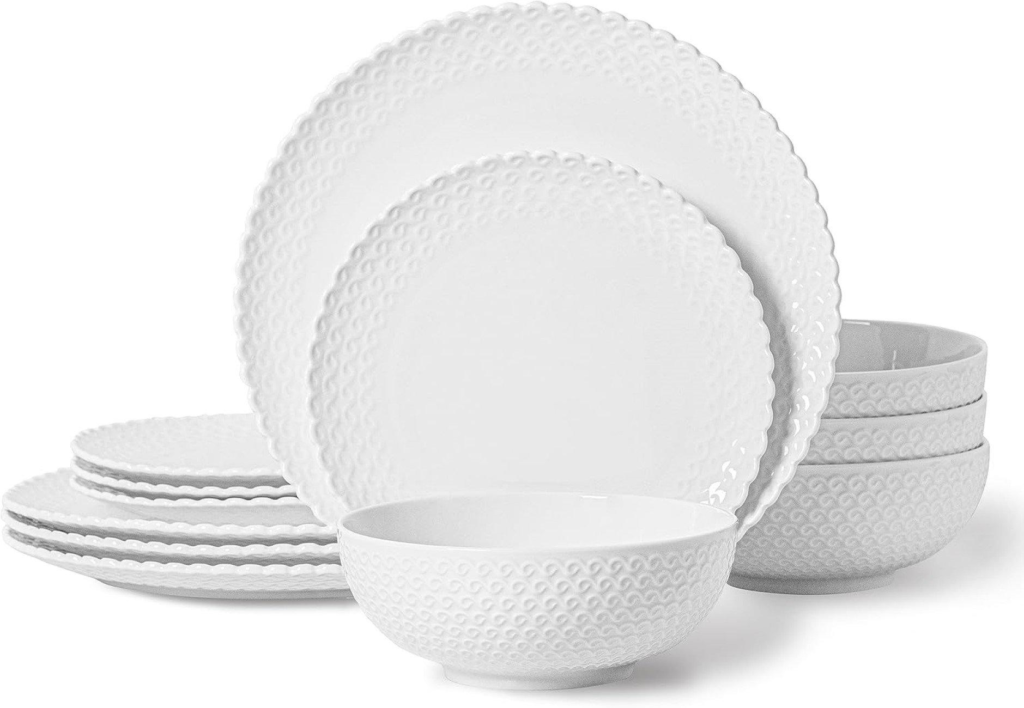
How to Remove Metal Marks from Porcelain Plates
Grey or dark lines on white porcelain plates aren’t always scratches or food stains. They can be metal transfer marks left by repeated contact with stainless steel cutlery.
Knives and forks may leave small amounts of metal in the glaze during regular service in the restaurant. These marks will stand out more on matte and textured surfaces.
To solve metal marks:
- Determine if the marks are metal transfer or true damage to the surface.
- Use the right non-abrasive porcelain cleaner.
- If it is a compatible surface, use a mild baking soda paste.
- Use a soft cloth to apply gently.
- Rinse thoroughly and check the finish.
- Avoid strong chemicals and abrasives unless the manufacturer says they’re suitable.
If the glaze has been damaged, it might be impossible to remove some of the marks. For a closer explanation of this issue, read Brett’s Matte vs. Gloss Dinnerware guide.
How to Remove Stains from Porcelain Dinnerware
Tea, coffee, sauces and strongly coloured foods can leave visible marks, particularly when plates are not cleaned promptly.
The cleaning approach should depend on the type of stain and the surface finish.
Type of Mark | Recommended Approach |
Tea and coffee stains | Use a suitable porcelain-safe stain remover |
Food residue | Pre-rinse and wash with an appropriate detergent |
Grease marks | Use a suitable dishwashing detergent |
Hard-water deposits | Follow the manufacturer’s approved descaling instructions |
Grey cutlery marks | Use a suitable metal-mark cleaner |
Don’t think that “stronger” chemicals will yield better results. Can cause damage to the decorative finishes or the glaze.
Food colours can leave behind marks and food particles can cling to the surface of matte and textured dinnerware plates, which may need to be handled with care.
How to Prevent Porcelain Plates from Chipping and Scratching
Often, damage to plates occurs during handling, stacking, and dishwashing instead of when the guest is eating.
The trick is that small improvements in handling can translate to a significant impact for hotels and restaurants with hundreds or thousands of pieces.
Avoid Rim-to-Rim Contact
One area that is exposed to impact during stacking and washing is the rim.
Make sure that kitchen staff put plates in racks carefully, rather than by dropping or sliding them against other plates.
Use Suitable Storage Systems
Keep plates on sturdy, clean shelves. Do not stack too high and do use recommended separators, if applicable.
Decorative or delicate surfaces can be protected from contact by using protective pads.
Inspect Plates Regularly
Check for:
- Small chips around the rim.
- Hairline cracks.
- Damaged glaze.
- Rough or sharp edges.
- Persistent marks that may indicate surface deterioration.
Remove cracked or chipped pieces from service. Chips and cracks can trap food and get worse with use.
Train Staff on Proper Handling
It is better to have a consistent handling routine than for individual staff to remember different routines.
Teach staff to stack plates, load dishes into the dishwasher, unload tables, and store dishes.
For more information about commercial breakage, see Brett’s Commercial Dinnerware Durability Guide.
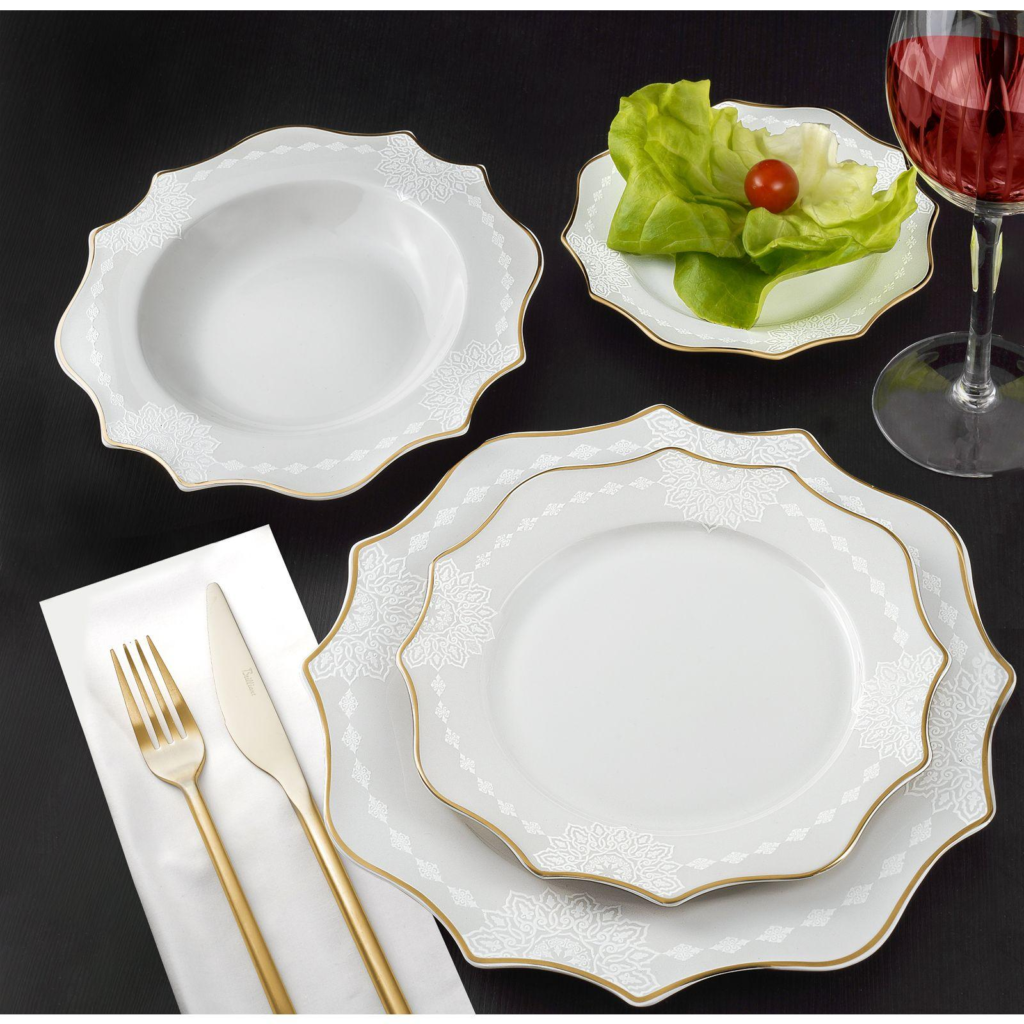
Can Porcelain Dinnerware Go in the Dishwasher, Microwave and Oven?
This is one of the most important questions for hotel and restaurant purchasing teams. The answer depends on the specific product, glaze, decoration, and manufacturer’s testing.
Application | What to Check |
Commercial dishwasher | Approved washing conditions and cycle testing |
Microwave | Microwave rating for the exact product and decoration |
Conventional oven | Maximum approved oven temperature |
Plate warmer | Maximum warming temperature and repeated-cycle suitability |
Heat lamps | Suitability for prolonged or uneven heating |
The suitability ratings may vary for plain porcelain and decorated porcelain. An example of this is metallic decorations, which can result in problems of microwave safety. Likewise, something that can be used on a plate warmer may not be able to be used in the conventional oven.
Do not use the material name as the sole source of information. Ask for written specifications for the exact collection. Brett explains these differences in its Oven-Safe Hotel Dinnerware Guide.
How to Prevent Thermal Shock in Porcelain Dinnerware
When a ceramic object is subjected to a sudden change in temperature that creates different expansion and contraction in different areas of the body. In restaurant and hotel kitchens, it may occur when:
- A hot plate is immediately washed with cold water.
- A cold plate is kept in a hot oven.
- Dinnerware is transported quickly between hot and cold conditions.
- Repeated heating and cooling can worsen an already damaged piece.
To reduce the risk:
- Cool hot plates based on the manufacturer’s directions.
- Preheat ovens before using rated dinnerware.
- Do not expose to rapid changes in temperature.
- Avoid using chipped or cracked parts in the vicinity of heat sources.
- Adhere to temperature restrictions for each collection!
Thermal shock resistance should be backed up by relevant test information for purchasing teams. Inquire from suppliers what they used to test it with; the temperature differential used; and the outcome of the testing performed.
When applicable, EN 1183 is a relevant European test standard for thermal shock and thermal shock endurance of ceramic ware.
For more information, read Brett’s guide to oven safety and thermal shock in hotel dinnerware.
How to Store Porcelain Dinnerware Properly
Plates are protected during storage between servings. Plates may be stored, transported, and moved between outlets in a very busy hotel kitchen, with limited space. Improper storage can cause edges to be damaged and the surface to be abraded.
Follow these practices:
- Keep plates off unstable or slanted surfaces.
- Stack materials at a height that can be easily managed.
- Don’t put heavy objects on fragile plates.
- Don’t forget to use separators where they are needed.
- Maintain clean and dry areas for storage.
- Avoid sliding plates against one another.
- Discard stock that is damaged from usable stock.
When properties have multiple restaurants or banquet outlets, it also makes it easier to ensure consistent handling across teams.
When Should Hotels Replace Porcelain Dinnerware?
The replacement of the plates is not required for all marks. Some damage, however, is not something that should be overlooked.
Condition | Recommended Action |
Removable metal marks | Clean using an approved method |
Light food stains | Clean and inspect |
Persistent surface deterioration | Review the condition and manufacturer guidance |
Chipped rim | Remove from service |
Visible cracks | Remove from service |
Damaged or peeling decoration | Assess against product specifications |
Replacement availability is another factor to take into account when choosing dinnerware for purchasing teams.
A consistent reorder list ensures hotels have the same look across outlets and reorder lists for future orders.
When weighing up commercial dinnerware, take into account the actual unit price, along with potential service life, replacement needs, and service performance.

Frequently Asked Questions
Is porcelain dinnerware durable enough for restaurants?
Yes. Fully vitrified porcelain is used extensively in hospitality due to its compact body, low water absorption and its use as a daily product. Actual durability will vary with the product specification, rim design, quality of the glaze and conditions of handling.
Does porcelain dinnerware chip easily?
When edges of the porcelain strike other plates, hard surfaces or dishwasher racks repeatedly, the porcelain can chip. Damage can be prevented by proper handling, proper storage and reinforced rim designs.
Does porcelain plateware scratch?
Porcelain glaze is usually very hard but not resistant to surface marks. Transfer marks may form on the finish of stainless steel cutlery, and a rough cleaning or multiple contacts may be detrimental.
How do you remove grey marks from porcelain plates?
Use a cleaner that is safe for porcelain surfaces. To remove metal transfer marks, a mild baking soda paste may be helpful for finishes that are compatible. Wipe with a soft cloth; do not scrub.
Can porcelain plates go in a commercial dishwasher?
Numerous hospitality collections of porcelain are created for business dishwashing. Buyers, however, should check the conditions of washing that have been approved, the requirements for detergents, and the appropriateness of the washing cycles for the specific products.
How long does porcelain dinnerware last?
It varies. It depends on the quality of manufacturing, the number of service units, washing and storage conditions, and the handling and replacement of service units. Routine visual checks can help to detect damage in time to prevent it from becoming a service problem.
Can gold-rimmed porcelain plates go in the microwave?
Never assume that they are microwave-safe. Metallic decorations can cause sparking. Put only a product that is specifically designated by the manufacturer in a microwave.
Conclusion
The first step to good maintenance is getting the right product specification. In the case of hotels, restaurants and catering enterprises, porcelain dinnerware should be chosen in consideration of service volume, washing needs, design and conditions of use.
At Brett, we manufacture porcelain, bone china and stoneware tableware for hospitality businesses, with custom designs and branding options available.
When ordering for a new hotel or restaurant, or ordering replacements, think of the durability, finish, handling, and proven product ratings.
Explore Brett’s restaurant dinnerware buying guide or contact our team to discuss care guidance and specifications for your next tableware order. Test reports and compliance documents are available on request. Reach us at ann@chinabrett.com or WhatsApp +86 13535413512.