Here is the one thing most restaurant owners never hear from a guest who doesn’t return. They do not call. They do not email. They don’t leave a review to tell you exactly what’s wrong. They simply quietly choose somewhere else the next time and the time after that. And then, you just don’t see them again for whatever reason.
The food was good. The service was very warm. The price was fair. There was something wrong, though. There must have been something about it that just didn’t live up to the room, the menu, the price point. Something they couldn’t name, but could surely feel. That something is all too often the tableware.
Your guests aren’t consciously sitting there analyzing your dinnerware specifications. However, tableware communicates volumes long before the first dish is served. It informs a visitor whether or not this restaurant is paying attention. The details here may not be important. If what they were told was an experience they are about to have.
Here’s a guide that restaurant owners and F&B directors will want to follow if they want to know what their tableware is saying, and what they can do about it.
Table of Contents
What Guests Actually Experience Before the First Bite
This is not interior design theory, but rather, this relationship is the experience that guests have had. It’s a documented science and the results are more dramatic than most operators can expect.
The study was conducted at an Edinburgh hotel, the Sheraton Grand, and published in the journal Flavour. The same food was served to two sets of eaters. One group wore heavy and substantial flatware. Others used the lighter canteen style cutlery. The groups were unaware of each other. They were not told that any changes had been made. The findings were clear, however: guests who had the heavier flatware found the food as tasty, more artful, and were willing to pay about 15 percent more for the same food. Same kitchen. Same chef. Same ingredients. Different cutlery. Different experiences.
Oxford professor Charles Spence has documented how plate weight, colour, shape, and texture all affect flavour perception. White plates make sweet flavours seem sweeter. Darker plates will show more vibrant colours. Round plates make sweetness more noticeable, angular plates make bitterness more noticeable. The plate is not a neutral surface, where food rests, it’s part of the taste experience, depending on what the guest is conscious of or not.
It’s not just about flavours. Various studies have consistently demonstrated that customers’ overall dining satisfaction is strongly related to the visual presentation of the dining experience, with 72% of diners stating that visual presentation directly influences their overall satisfaction. Every detail from the weight in their hand to the glaze of the ceramic is subconsciously registered before the first bite
The Revenue You Do Not Know You Are Losing
From psychology to cash. And the numbers are big. A pilot programme has been run at the Marriott International at 15 properties to see how impactful the tableware specification upgrade has been. The results: guests’ scores on table presentation rose 12 points; replacement budgets dropped 58 percent and breakage incidents dropped 68 percent. It’s not just a rounding effect: a 12-point gain on a guest satisfaction index is a massive leap that directly correlates with higher review ratings and repeat visits rates in the hospitality satisfaction score matrix.
Let’s discuss the implications of a 12-point increase in the satisfaction with table presentation in your restaurant. It means visitors will carry a more positive perception away. It means that they’re more likely to talk about it with another person. It means that they will return and take someone else with them.
Think about what the opposite of this means. What is the restaurant that is serving chipped plates, mismatched replacement plates from three different restocking orders, scratched tableware with grey metal scratches that won’t polish, saying to the customer sitting across from him or her for 90 minutes? What information is in that table?
It lets them know that the restaurant doesn’t see it. If it does see, it doesn’t care enough to do anything about it. The last thing any restaurant owner wants their patrons to be saying over a meal is either of these stories.
The Consistency Problem That Compounds Quietly Over Time
This type of problem is particularly damaging to restaurants and occurs so slowly that many restaurant owners won’t catch it in time to fix it.
It begins when a plate breaks. You request that a replacement be sent. The replacement is just a bit different, the white is a little hotter, or the profile of the rim might be slightly different as it’s supplied, or the glaze finish on the replacement is a little different from the original. You barely notice. The team is oblivious to it. The guest is highly attuned and even though they may not be able to state what they are noticing.
Next, there’s another plate that cracks. Another replacement comes in. And another. After eighteen months the dinnerware set, which was picked up with a unified, thought-out dinnerware set, has been a blend of three or four generations of restock, each with a slight variation in white tone, weight, finish, and rim detail. The lack of uniformity in the table presentation conveys a clear message to an astute guest: “We’re not paying attention here.
The purpose of pattern continuity in tableware procurement is just that: to ensure that replacement parts bought in year two or three will match the original parts from year one. It demands purchasing from a supplier who will keep production records and glaze compositions for your particular specification. If not, it will be a little worse each time you have a replacement order.
In the same way, the principles used for hotel table ware can apply to your restaurant needs and you can find a full guide to specifying pattern continuity in our hotel tableware procurement checklist before your next order.
The Table Your Guests Are Photographing — And What They Are Sharing
The table will be a content platform in 2026.
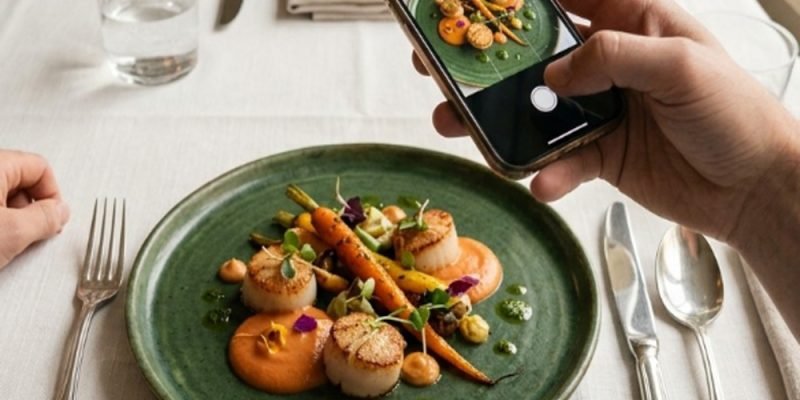
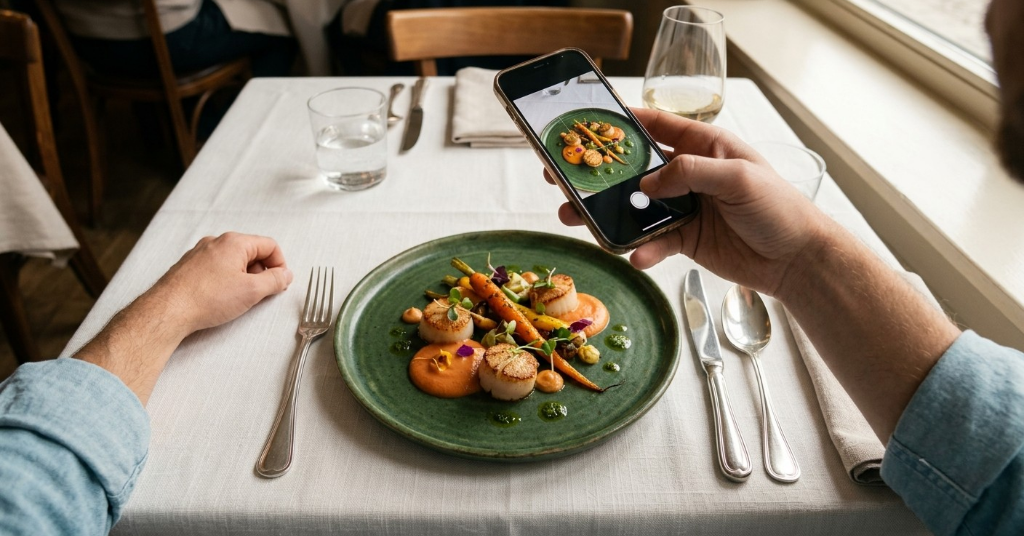
Some fraction of the patrons at a restaurant eating a meal have their image captured on camera in the restaurant kitchen. The photos are posted all over Instagram, TikTok, Google Reviews, and many others. They are the permanent visual marketing tools for your restaurant, which can attract the attention of new customers when they are making a booking, and remind them to share their restaurant experience with others.
What do those pictures of the restaurant's table service reveal about the restaurant?
Plated beautifully on a considered and distinctive plate is a story of a kitchen that cares. The plate becomes a part of the photograph’s composition. It tells you what the quality is, before you start writing a caption. The moment that picture is posted and somebody who has never been to your restaurant looks at it, that’s part of what’s going to get them to come in.
A nice meal served on a scratched-up and generic plate with a little yellowish discoloration is a different story. The food may be the same, but it’s a meal your employees are taking at work, not a restaurant you’re going to. The quality of your table service is no longer just a matter of dining room decor; it’s also a marketing tool or a marketing liability, depending on your choices.
Tableware that is invested in purposefully and developed as a recognizable, cohesive brand manner is observed to have tangible impacts on social interaction, content created by guests, and their organic reach through social media posts with photos of a table that looks good and makes them feel like they are sharing.
What Your Tableware Is Communicating Right Now
Each piece of tableware makes a statement. This is a real-life description of the statements the different conditions of table service make to a first-time restaurant visitor.
Chipped or Cracked Plates
This is the worst message a restaurant could give. A cracked plate sitting on one table tells me that the restaurant has no control over its stock before serving and that they have no expectations or standards for what gets served to the customer, nor do they bother with the customer experience. Not something minor to complain about when it comes to aesthetics. When a guest arrives and the plate is chipped, it is an indication that the guest’s experience is not appreciated. The majority of guests won’t say anything. They will remember it. And they will consider it as part of their decisions on whether they will return.
Mismatched Replacements
A table where four plates match and two do not send a subtle message of neglect it’s a sign that the restaurant has lost some of its plates and hasn’t replaced them carefully. The purpose could have been financial. The cue one gets is the message of carelessness. But in a restaurant that plays on experience, carelessness cannot be recouped.
Grey Cutlery Marks on Plates
This one sneaks in but is all-pervasive. Glazed porcelain gets marks on it from repeated contact with cutlery that cannot be removed by polishing; these are surface damage. A plate with any kind of cutlery on it appears dirty even after coming out of the dishwasher. Even if a plate is thoroughly clean, guests believe that it is a lack of cleanliness. The answer is glaze-hardened ceramics that do not exhibit this tendency for metal marking, or glass plates with a homogeneous surface that do not exhibit this tendency. To fix this problem altogether, refer to our glass dinner plates guide.
Lightweight, Generic Flatware
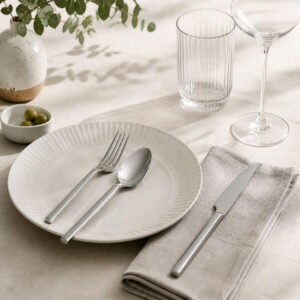
Weight communicates value. This isn’t a conscious process that guests are thinking about, it’s a physical feeling. When a guest picks up a fork that feels flimsy or insubstantial, their brain registers a cheap experience to it as a cue, this isn’t a premium experience. This effect was recorded in detail by the Sheraton Edinburgh research. The same food, but different ratings due to the weight of the utensils. If you think your flatware is light in the hand, you are working against all other flatware investments you have made in the quality of your menu.
Tableware That Does Not Match the Room
A restaurant that has put effort into interior design, lighting, a thoughtful menu and attentive service, but is using the same old white plates for their menus, has a coherence gap. The visual language of tableware is inappropriate to the experience being promised. People are not aware of this split. Coherent tableware matches the brand identity, colour, weight, texture and style, making all of the elements of the experience feel purposeful. Any beautiful room feels incomplete without generic tableware.
What the Right Tableware Actually Does for a Restaurant
The tableware discussion shouldn’t just be regarding the cost of bad tableware. It also should be the price of proper table service.
A good dish can turn into an extraordinary dish with the right plate. Well, not because it lies, but because it’s part of the presentation. This is something that any serious chef will know. Everything the plate is, the rim width, the contrast between the colour of the plate and the food, how much it weighs when held in the hand as it reaches the table, and so on are all part of what the guest receives. It’s not a luxury to invest in tableware that helps in the kitchen. It’s filling the purpose of the food.
The right tableware also creates a visual identity that guests will link with your restaurant. Guests will remember what they ate because of a unique plate. It is a component of what they say about you when you’re introduced to them. It’s a part of what you see in every picture you took on your table. As soon as you have a good visual identity, your guests can spot your restaurant table before reading the menu.
And the wrong tableware, incorrectly specified and supplied, is cheaper over the five years than the right tableware — it’s not more expensive. When compounded over a complete restaurant programme, the breakage rate differential between commercial grade vitrified porcelain and generic ceramic usually is more cost-effective than the difference in the original specification price. For the complete numbers, See our 5-year cost analysis for the full numbers.
What Your Tableware Is Telling Your Guests: A Practical Reference
Tableware Condition | What the Guest Feels | What It Costs You |
Chipped or cracked plates in service | The restaurant does not check its standards | Guest does not return. No review left. You never find out why. |
Mismatched replacement pieces | Someone is not managing this carefully | Erodes confidence in overall attention to detail |
Grey cutlery marks on plates | This plate looks dirty — is it clean? | Perceived hygiene failure. Direct satisfaction hit. |
Lightweight, generic flatware | This does not feel premium | 15% lower willingness to pay — Sheraton Edinburgh research |
Tableware inconsistent with room aesthetic | Something feels off about this place | Coherence gap — reduces overall experience rating |
Cohesive, considered tableware programme | This restaurant pays attention to everything | 12-point satisfaction increase — Marriott pilot data |
How Brett Supports Restaurant Tableware Decisions
Since 1998 Brett has been providing tableware for hotels in over 80 countries. The base of our company is in Chaozhou, the centre of tableware manufacturing in China, and we have established a showroom and office in Dongguan, Guangdong Province for more than 26 years. Our clients comprise Four Seasons, Shangri-La, Fairmont, Raffles, Wynn, Sheraton, Hyatt, Marriott and Crowne Plaza properties as well as Michelin Guide and Black Pearl Restaurant Guide venues throughout Europe, the USA and the Middle East.
The problems outlined in this guide, such as chipping, mismatched replacement, cutlery marks and pattern inconsistencies are not operational problems, they’re procurement problems for restaurants. They are generally caused by purchasing the incorrect specification and/or from a supplier that is unable to guarantee the continuity of your patterns and has not specified your physical requirements.
Brett’s custom ceramic dinnerware programme spans the entire range from vitrified porcelain and alumina-reinforced strengthened porcelain, for the main restaurant table service, to stoneware for concept and casual dining, glass dinner plates for fine dining and boutique outlets, and custom flatware that is available in every finish and weight specification. The pattern continuity of all pieces is guaranteed: the same specification from year to year, for replacement orders many years after the opening order.
The discussion begins with the message your restaurant wants to tell. We assist you with the tableware that will convey it properly.
FAQ
Does tableware really affect how much guests enjoy their food?
Yes and science has proved it. Guests at the Sheraton Grand Edinburgh, London, found that heavier flatware made identical food more enjoyable and they were willing to pay 15 per cent more. Professor Charles Spence of Oxford has confirmed that the colour, weight and shape of the plate do directly influence the perception of taste.
What is the cost of using cheap dishes in a restaurant?
Two ways. Directly low-specification ceramic has an annual replacement rate of 50-150 percent, which is equivalent to replacing all of the inventory at least once a year. Worn tableware and indirectly chipped plates decrease repeat visit numbers and satisfaction levels. After implementing the upgrade of tableware items, the satisfaction score for the Marriott pilot increased by 12 points.
What is pattern continuity and how is it important?
Pattern continuity refers to the replacement pieces purchased in year 2 matching the original pattern (colour, shape and finish). If you don’t, then you slowly start to mix up your table until it loses the sense you put in it. Always verify this in writing prior to ordering from any supplier.
What is the impact of tableware on restaurant social media success?
At nearly all meals, guests will snap photos of their meals. Those photographs are worth sharing when they have the visual impact of distinctive and coherent tableware. Even a fine looking meal can look ordinary with plain or broken plates. Your table serviceware is in every guest photograph either as a marketing asset or a liability.
What is the number one worst tableware faux pas?
Permitting chipped plates to be used. A chipped plate is used to let the guest know that the restaurant is not inspecting its standards before the meal is served. Rarely does anyone say a word but they don’t return. Before service check all plates, and if there is any damage to the rim pull out the affected plate immediately.
How to determine if table service is impacting the guest experience?
Go to your dining room before service as if you were a first time visitor. Check for chips, grey uniform, colour differences in plates. Is the flatware substantial when picked up? Are the table service items suitable for the space? What you see in 5 minutes is what your guests see every night!
Conclusion
The guests who stop coming back will rarely tell you why. But the data, the food science, and your own inventory will, mismatching replacement, and table that’s not like the rest of the restaurant. There are no complaints reported for these failures. They all produce a choice that never returns.
All these principles apply to restaurant procurement and are detailed in our hotel tableware procurement checklist for the full specification framework. Finally, if you want to know what five years of the wrong tableware specification will cost you, in actual numbers, then you’ll find the 5-year cost analysis will provide you with the full story. Contact us today at cbhoreca to get a quote, catalogs and samples for your exclusive Tableware solutions from Brett.