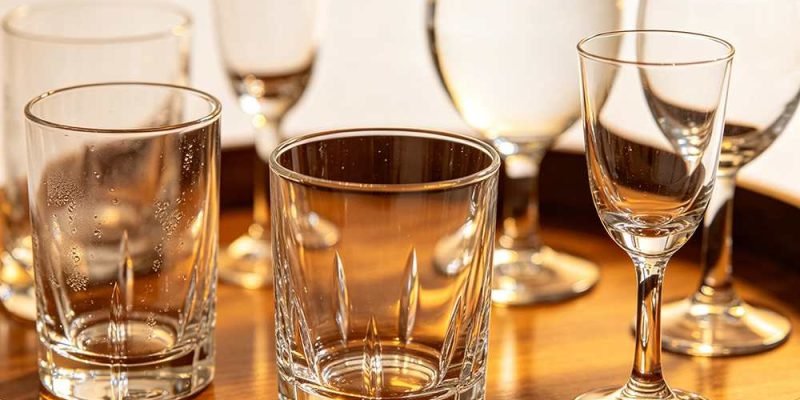
A five-star hotel is not one dining environment; it is four or five. The flagship restaurant for fine dining. The all-day dining outlet. The lobby bar. The breakfast buffet. Room service. Each one serves a different guest at a different moment with different expectations, and the glassware on that table has to meet every single one of them.
This is where the majority of hotel glassware purchases go wrong. Properties select one glassware for the entire property, and then have to deal with the consequences. The wrong glass weight in the fine dining room, the wrong glass height at the buffet counter, the wrong glass material when it comes to room service, and the wrong rim profile at the bar.
This guide takes a different approach. It’s outlet-by-outlet coverage, which means that you can design a comprehensive glassware program that will be effective in all your food and beverage outlets in your hotel.
Why Hotel Glassware Cannot Be One-Size-Fits-All
According to the Forbes Travel Guide — which rates five-star hotels in over 100 countries — 67 percent of their ratings are based on service quality. One of the most common and personal touch points a guest has with that service is the table.
From 2025 onward, and In 2026, hospitality industry operators are taking a firm stance on outlet-specific hotel glassware and HoReCa glassware specifications, with glass profiles, materials, and weight tailored to the specific service environment, rather than a single specification for all outlets.
To get this right, you need to understand what each hotel F&B outlet really requires from its glassware and make procurement decisions accordingly.
Fine Dining Restaurant Glassware: The Premium Specification
The most obvious and most critical place to see hotel glassware quality in the fine dining restaurant. Guests feel the weight of the glass in their hand, the clarity when held up to the light, and the elegance of the rim against their lips. These are not “secondary impressions” but rather fundamental elements of value and quality that command a top-dollar menu price.
Material
The right specification for fine dining hotel glassware is lead-free crystal hotel stemware. It is optically clearer, has a thinner rim profile, and has better light refraction, which all convey luxury at a first glance. Forbes’ criteria for five-star hotels include that crockery and glassware must be of uniform high quality throughout all dining areas—and, in a fine dining environment, that means crystal.
Wine Glasses
Red and white wine glass specifications are suitable for fine dining. For full-bodied red wines, a larger bowl (16-20 ounces) is recommended to give the wine room to breathe. White wine glasses, which are usually 12 to 14 ounces in size, have a more upright, narrow bowl that helps maintain a cooler temperature and more delicate aromatics of white wines.
Water Goblets
Fine dining water goblets are best suited to match the wine glass specification for weight and clarity. A crystal water goblet with a delicate stem and a slightly larger bowl (12 to 14 ounces) offers beauty and sufficient capacity for table-side water service during the meal.
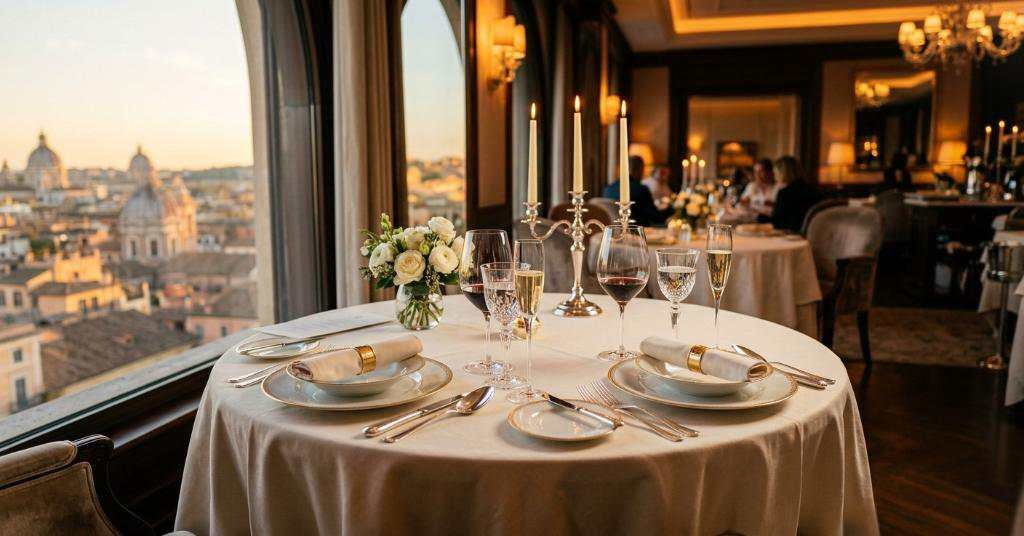
All Day Dining Glassware: Balancing Quality and Volume
This all-day dining outlet sees much higher cover volumes than the fine dining restaurant and is often used to serve a wider range of clientele during breakfast, lunch, and dinner. The hotel glassware specification must consider both aesthetics and the practical aspects of heavy use and continuous service.
Material
The practical specification for all-day dining is commercial-grade commercial glassware, which is soda lime glass. Modern hospitality grade soda lime glass offers superior clarity, uniformity from batch to batch, thermal shock resistance, and rim strength for continuous commercial dishwasher cycles.
All Purpose Wine Glasses
Wholesale wine glasses in an all-purpose specification of approximately 13 to 15 ounces – will serve both red and white wine service with ease at any day dining volume. At this outlet level, having both a red wine glass program and a white wine program is creating an unnecessarily complex inventory situation, with no real benefit to the guest.
Water Goblets
A stable, wide-based water goblet in the 10-14 ounce size accommodates the entire spectrum of all-day dining beverage service, from table water service at dinner to juice and soft drink service at breakfast. At this specification level, focus on base stability and rim durability more so than decorative detail.
Juice Glasses
All day dining outlets must have dedicated juice glasses in a shorter, wider size (6-8 ounces) that will be stable on a table or self-service counter and easy for guests to pick up and handle during breakfast service.
Buffet Glassware: Stability and Durability First
Buffet hotel Glassware is in the most challenging environment of any property. Guests serve themselves glasses. Glasses are placed on open counters and knocked over, overfilled, and carried throughout the dining room. The service cycle is continuous, meaning that glasses are in constant motion from guest to table, to dishwasher, and to the buffet station during service.
Here, aesthetics take second place to structural performance. Stability, rim strength, and dishwasher durability are the order of priorities.
Water Goblets and Tumblers
A water goblet with a broad base is most stable for buffet service, or a straight-sided tumbler. Compared to stemware, tumblers (which lack a stem and a tall centre of gravity) break much less often in buffet settings.
Juice Glasses
The shorter, wider juice glass design minimizes the tip hazard on crowded self-service counters and is much more stable than tall, narrow designs with constant guest manipulation.
Champagne Flutes
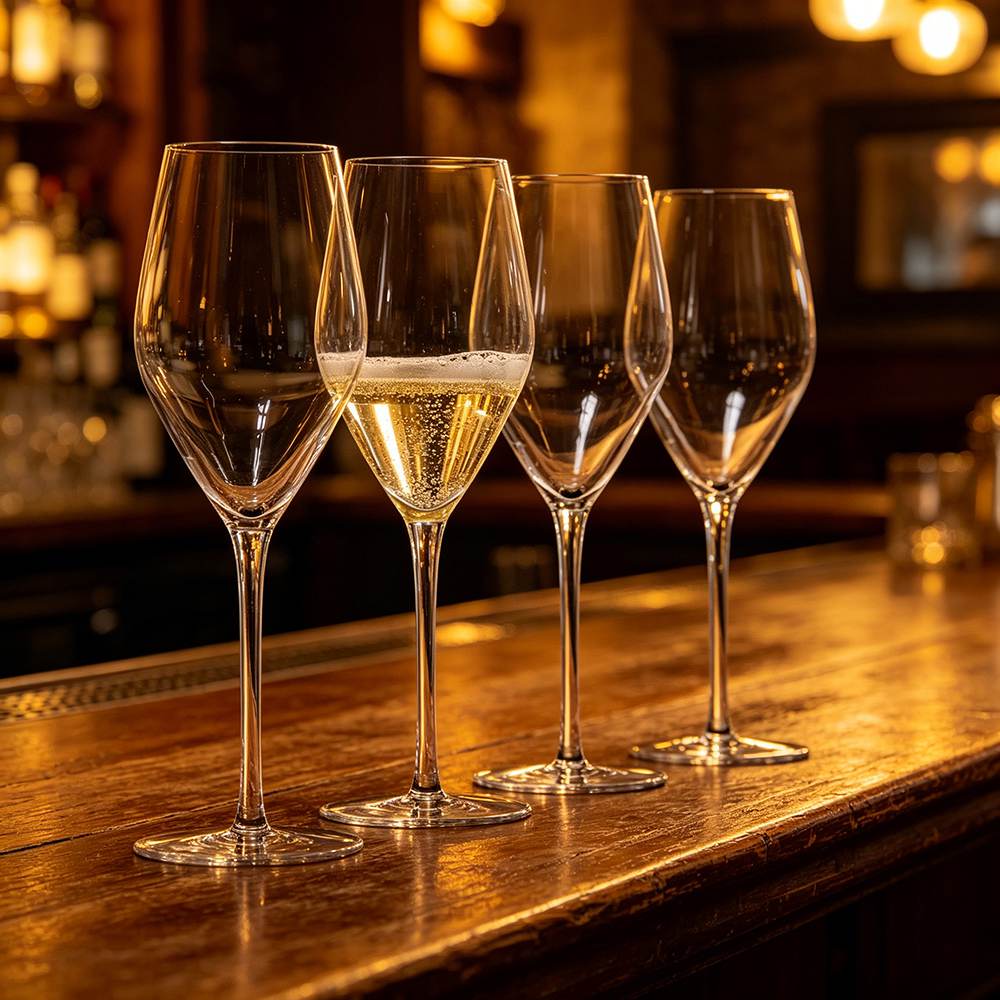
A thicker stem profile champagne flute with a reinforced base is much more likely to withstand the rough handling that occurs in self-service buffet service by hotels with buffet brunch programs and sparkling wine service, compared to more expensive crystal specifications.
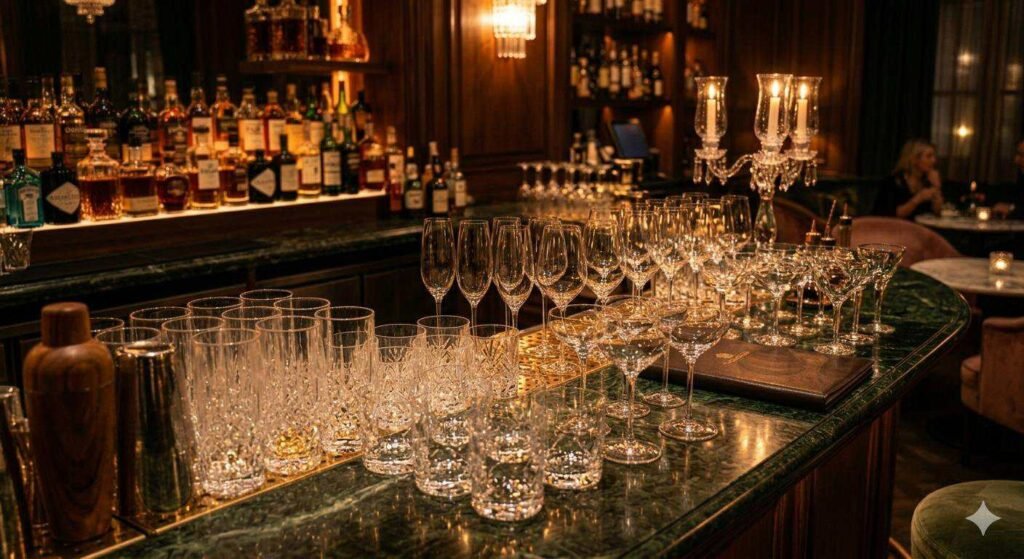
Hotel Bar Glassware: Visual Impact and Versatility
The hotel bar is a revenue generating outlet, and hotel bar glassware is directly linked to the perceived value and the justification of cocktail pricing. In a lobby bar or lounge, your guests equate glass quality with drink quality, and with the right glassware specification, your bar staff can charge premium prices with peace of mind.
Highball Glasses
The backbone of any hotel bar program. A 10-14-ounce highball glass is used for most mixed drinks, soft drinks, and mocktails in casual and upscale bar settings. Use a clear, straight-sided profile that is heavy at the base.
Old Fashioned Glasses
A 6 to 10 ounce old-fashioned glass with a heavy base is a sign of a quality positioning of your spirits program. Part of the premium feel of a good whisky or cocktail on the rocks is the weight of the glass in the hand.
Wine Glasses
Bar wine service is usually done in an all-purpose specification, which is a medium bowl wine glass that is used for both red and white wine service, and doesn’t require a separate wine glass inventory management system at the bar.
Specialty Cocktail Glasses
Signature cocktail programs are enhanced by the use of Martini glasses, margarita glasses, and coupe glasses. Use only specialty glassware that your cocktail program demands — each specification increases inventory management challenges.
Room Service Glassware: Practical Elegance
The demands of room service hotel glassware are unique. It is provided on trays, and is used in private areas, without staff supervision, and returned from being carefully placed to being knocked over on the floor.
A medium-weight water goblet (10-12 ounces) with a solid base is sufficient for most room service beverage needs. If a wine is available on the room service menu, an all-purpose wine glass will make the job of room service delivery easier, as well as inventory management easier than a varietal-specific wine glass.
Champagne and sparkling wine ordered via room service is served in a reinforced stem champagne flute, which is a narrow stem and tall glass that poses a high risk of tipping on delivery trays and during in-room handling.
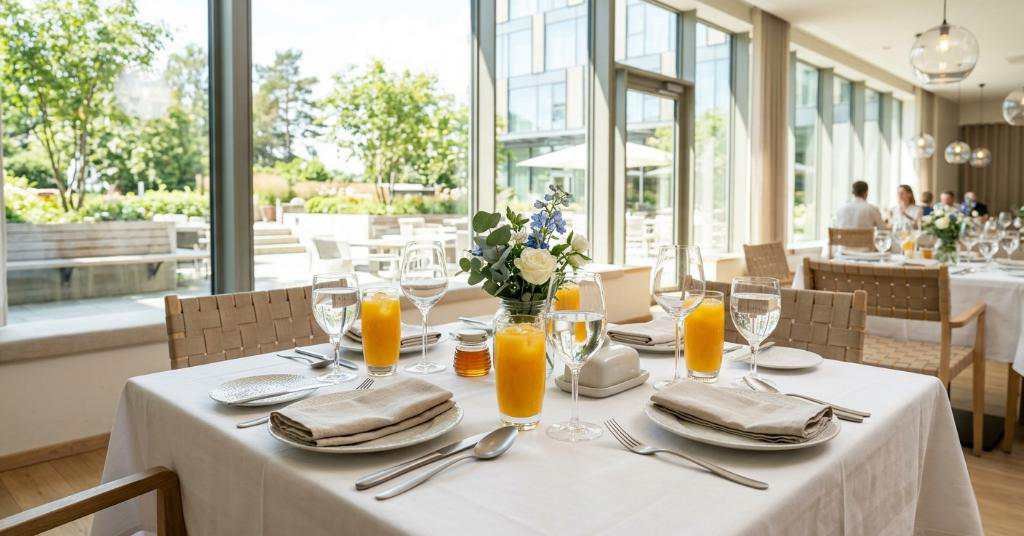
Glassware Materials Compared: Soda Lime vs Lead Free Crystal
Feature | Soda Lime Glass | Lead Free Crystal |
Clarity | Excellent | Superior |
Rim Thickness | Standard | Fine |
Dishwasher Durability | Excellent | Good |
Breakage Resistance | High | Moderate |
Cost Per Unit | Lower | Higher |
Best For | All day dining, buffet, bar, room service | Fine dining, premium events |
Custom Branded Hotel Glassware: Building Your Identity at the Table
Custom-branded custom glass drinkware and hotel glassware are an increasingly important element of the five-star hotel identity — and one of the most visible brand touchpoints in a guest’s dining experience.
Options for hotel glassware branding include:
- Etched or engraved logos on the base or bowl
- Colored glass programs matched to brand palettes
- Exclusive bowl shape designs developed in collaboration with the manufacturer
- Branded packaging for gifting and retail programs
For hotel groups developing custom glass drinkware collections, they should choose a manufacturer that provides one-stop OEM and ODM services, which will greatly simplify the customization process and allow them to achieve a unified visual effect for all types of glassware
How to Build a Complete Hotel Glassware Program
A complete hotel glassware program requires outlet-specific specifications across five categories:
- Fine dining— lead free crystal wine glasses, champagne flutes and water goblets
- All day dining— commercial soda lime all purpose wine glasses, water goblets and juice glasses
- Buffet— reinforced base tumblers or water goblets and juice glasses
- Bar and lounge— highball, old fashioned, wine and specialty cocktail glasses
- Room service— durable water goblets and all purpose wine glasses
The 3:1 rule is true for all categories: For each guest at the highest cover count, there are three of each glass type in inventory to guarantee uninterrupted service without running short. Work with a trusted hotel glassware supplier who maintains batch consistency records across all outlet specifications. Include a 10-15% replacement fund for the normal breakage rate of the total value of the glass inventory, for all outlet types.
How Brett Supports Hotel Glassware Programs
Brett knows that the process of picking glassware for your hotel is not a single decision; it is a series of decisions made at each food and beverage outlet throughout your property.
From fine and commercial glassware for all-day dining and buffet service to higher quality glassware for fine dining and event service, you’ll find all the glassware specifications your outlet needs in our glass drinkware wholesale collection. Each piece is designed to resist commercial dishwasher cycles and reinforced rims and bases to resist breakage during operation.
For hotels that want to develop a custom branded hotel glassware program, we offer OEM and ODM options ranging from logo engraving to custom bowl profile options, unique color options, and branded packaging. Brett glassware is certified to the standards recognised by our partners, including BSCI, Sedex, FDA, ISO 9001, ISO 22000, and GRS (Global Recycled Standard).
Our complete hotel tableware range also includes bone china dinnerware, porcelain dinnerware and stainless steel flatware — allowing you to source your entire table program from a single trusted supplier.
FAQ’s
Should every hotel outlet use the same glassware specification?
No. Every outlet’s services, cover volume, and guest expectations are unique. The crystal needs to be top-notch for fine dining. Commercial-grade soda lime glass with reinforced rims and stable bases are necessary for buffet and all-day dinners. Fitting to the specification greatly decreases the number of breakages and overall procurement expenses.
What is the difference between soda lime glass and lead free crystal for hotels?
Soda lime glass provides high volume hotel F&B outlets the professional standard of quality, cost effectiveness, batch consistency and thermal shock resistance. For fine dining and high end event service, the optical clarity and the fine rim profile of lead-free crystal is the ideal specification which conveys luxury at close range.
How do I prevent glassware clouding in commercial dishwashers?
When hard water mineral deposits build up after several dishwasher cycles, it causes clouding. Ensure glasses are replaced with clear signs of clouding before guest tables, use commercial dishwasher detergents compatible with the glass used and ensure glass water temperature and rinse aid dosing is correct.
What is the minimum glassware inventory I need for a 150 cover hotel restaurant?
Use the “3:1 Rule”: For every 150 of each glass size, you should have 450 of that size in your opening inventory. Include a 20 per cent breakage buffer. In a 150-cover restaurant, it is about 540 water goblets, 540 wine glasses, and 180 champagne flutes as your initial specification.
Can Brett produce custom-branded glassware for hotel groups?
Yes. Brett provides comprehensive OEM and ODM capabilities such as logo engraving, custom bowl profiles, unique colors, and packaging. Call our team at cbhoreca to speak with someone about your hotel glassware branding needs.
Conclusion
The difference between a hotel glassware procurement program that works and one that costs you every service period comes down to one decision — whether you treat glassware as a single property-wide purchase or as a series of outlet-specific procurement decisions.
Each outlet in your property has different guests, different service conditions, and different performance requirements. The glass that elevates your fine dining room will not survive a week at the breakfast buffet. The glass that handles your buffet volume will not communicate luxury in your flagship restaurant.
For over 20 years, Brett has been a trusted supplier of hotel glassware to five-star properties and global brands in more than 80 countries. Customize your exclusive hotel glassware solutions with Brett — quotes, catalogs and samples available. Get started today by contacting us at cbhoreca.