When opening a restaurant, most people have only planned the major factors like the type of cuisine or location. No one really prepares you for the technical aspect of things, like how many plates does a restaurant need?
This may seem like a minor detail, but it has a huge impact on your daily operations. Order too few plates, and your servers will be waiting on the dish pit during rush hour. Order too many, and you’ll waste money and storage.
A good industry baseline to follow is the 3:1 rule, meaning 3 plates per seat. Of course, this isn’t a strict expectation, just a starting point to help you kick off your restaurant plate inventory. The final answer depends on menu complexity, service format, plate categories, and replacement planning.
In this guide, we’ll cover everything you need to calculate the right number of plates for your business.
The 3:1 Rule — Your Starting Calculation
There’s no universal answer to “how many plates does a restaurant need?” However, most restaurants follow the 3:1 plate ratio, which means 3 plates per seat. This rule comes from G.E.T. Enterprises, a leading commercial dinnerware manufacturer for restaurants.
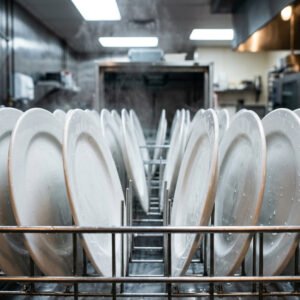
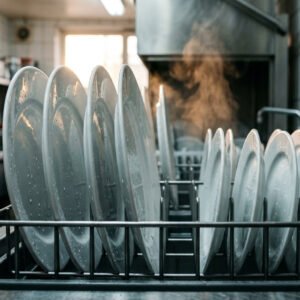
This way, there’s always one plate in service, one in the wash cycle, and one cooling or resting. This prevents thermal stress, which happens when you put hot-washed plates right into service instead of cooling down.
Most plate materials don’t tolerate rapid temperature changes too well. When the surface cools down before the interior, it can lead to warping and cracking over time. Plus, this ratio also ensures that you never run short even during peak hours.
Dropping below this ratio almost guarantees trouble. You’ll be forced to serve plates that are still wet or hot from the washer, which increases the risk of breakage and costs you more than it saves you. In any standard restaurant where the dish pit runs nonstop, a 2:1 plate ratio would create a bottleneck within the first hour.
Still, remember that the 3:1 rule is just the starting point. Your final answer needs to account for many other factors and still add a few extra plates for good measure.
Let’s say there are 100 seats in your restaurants, which means you need at least 300 plates as a baseline. Then, add a 10–15% buffer in case of breakage or peak surges. That brings you to about 330–345 plates.
Since dinnerware is usually sold by the dozen commercially, it’s best to round up to the next dozen. That means you need to order 29 dozen or 348 plates for your 100-seat restaurant.
Of course, you’ll need to apply this ratio to each type of plate, bowl, or piece of cutlery in your restaurant. At the end, your total restaurant dishware inventory will be much higher than 348. We’ll help you calculate that in the next section.
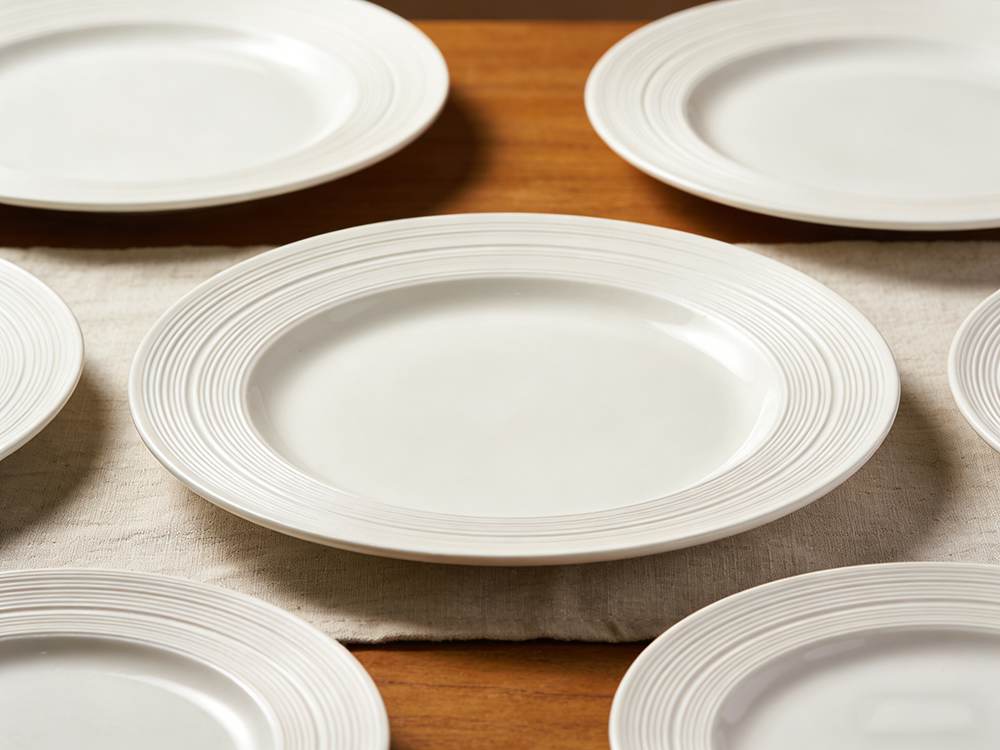
Beyond Dinner Plates — Building Your Full Plate Inventory by Category
Of course, no restaurant serves just one type of plate. You need to factor in all the dinner plates, side plates, bowls, and other dinnerware in your restaurant plate inventory calculation. Based on your menu structure, you may need different amounts of each type of plate.
According to commercial dinnerware quantity guidelines per 100 seats, your calculation would be:
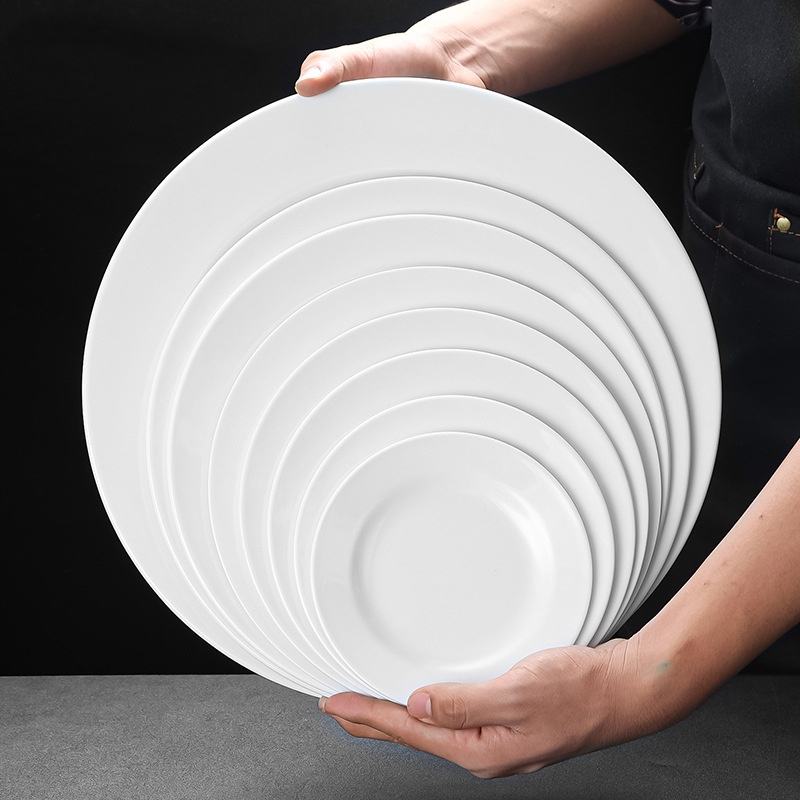
- Dinner Plates (10–12”):This is the non-negotiable backbone of any dinnerware program. You’ll need at least 3 per seat, so that’s 300 pieces.
- Side/Salad Plates (7–8”):Your usage of side/salad plates depends on whether your menu features any plated salads, shared appetizers, or bread-and-butter services. As a good rule of thumb, you’ll need about 1.5 or 2 per seat, which means around 150–200 pieces total.
- Bread and Butter Plates (6–7”):You’ll only need these plates if your concept includes bread service. In that case, you’ll need about 1 or 1.5 per seat, meaning 100–150 pieces. If not, many casual-concept restaurants skip this plate entirely.
- Bowls:If you have a few pastas and soups in your menu, you’ll need no more than 1.5 to 2 bowls per seat. That means around 150–200 pieces. However, if your menu is bowl-heavy, centering around soups, ramen, poke, or pasta, it’s better to follow the 3:1 ratio.
- Dessert Plates (6–8”):Most restaurants need 1 or 1.5 desserts per seat, which means around 100–150 pieces. These can also double as appetizer plates to reduce the total stock-keeping unit (SKU) count.
- Specialty Pieces:These include charger plates, share platters, appetizer boats, and other miscellaneous pieces. You only need to order them based on what your menu actually uses. Unused specialty pieces are typically dead inventory that takes up time and money.
Before making your restaurant opening dinnerware order, make sure to do a complete menu analysis. For instance, if you have a steakhouse that doesn’t serve soups or pastas, you can skip bowls entirely. On the other hand, a pasta-centered restaurant would need twice as many bowls as dinner plates.
Adjusting Quantities by Restaurant Type
Here’s what most people don’t cover when you ask, “How many plates does a restaurant need?” The 3:1 plate ratio isn’t a universal rule to be followed by all types of restaurants. It’s just a starting point to help you kickstart your calculation.
The final number will be vastly different depending on the type of restaurant you have.
Fine Dining
Most fine dining restaurants typically have 50 to 80 seats. There’s a much higher variety of menu options, which translates to variety in plate types, too. However, the overall volume will be low since there aren’t that many people dining at a time.
Additionally, fine dining places typically have a multi-course service, ranging between 4 and 7 courses. This means there may be around 5 plate categories, with 3 pieces per seat for each category.
In the end, the total number of unique plates may be higher than standard, but the total volume will be moderate. You may also need to budget for premium materials like bone china or fine porcelain.
Casual Dining
Casual dining restaurants have anywhere between 80 and 150 seats, which is where the 3:1 rule applies perfectly. Most casual dining menus require no more than 2 or 3 plate categories.
However, there is a higher turnover, which means the rotation cycle will be tested more often. In that case, it’s best to stick to standard porcelain plates. You’ll also definitely need the 10–15% buffer plates, too.
Fast Casual/QSR
Then, there are fast casual restaurants, which typically have over 100 or 200 seats. The volume is much higher, but there are only a few types of plates. Most operations use the same two plate sizes for everything.
Since this is a fast-paced environment, it’s best to stick to melamine plates since they’re more durable and easier to replace. If the table turn rate is very fast and the dish pit runs continuously at your restaurant, you may even go for a 3.5:1 or 4:1 ratio.
Buffet/Hotel Breakfast
In buffets and hotel settings, the plates are being handled by the guests instead of servers. There isn’t much variety needed in plate type, but you will need a high volume of plates to cater to every guest. Since guests take fresh plates for each buffet pass, 4 plates per seat is a good estimate.
The critical serveware inventory here is buffet serving platters and chafing dish inserts, not individual plates.
Catering/Banquet Operations
For caterers and banquets, the number of plates needed varies by event. If you’re planning to source your own plates for each event, order for the largest single event capacity you can host, with a 15–20% buffer.
Storage will be your main constraint here, which is why it’s best to invest in plates that weigh less and stack better.
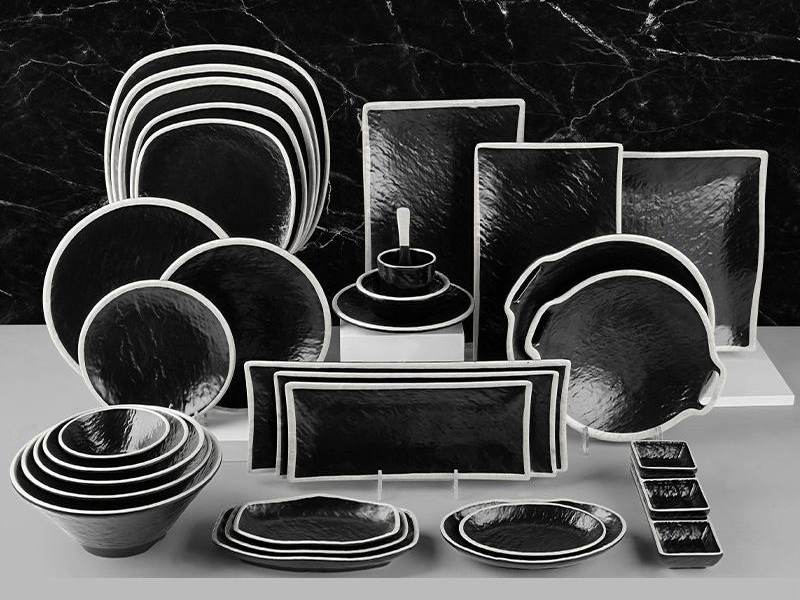
Replacement Rates and Ongoing Budget Planning
Of course, restaurant plate inventory doesn’t just end with the one initial order. You’ll also need to account for the restaurant dinnerware replacement rate and adjust the commercial dinnerware quantity accordingly.
Here’s a guide to replacement rates by plate material, how to track attrition, and how to budget for reorders.
- Porcelain: Porcelain plates have a replacement rate of 50% to 150% a year, depending on the volume and how you handle them. If you have a 100-seat restaurant and start out with 300 porcelain plates, you’ll need 150–450 replacement plates in the first year. However, proper handling and following the 3:1 rule can help you extend their lifespan.
- Melamine: Melamine is far more durable, but these plates are still susceptible to cosmetic issues like scratches or loss of luster. It has a replacement rate of 10–20% a year.
- Bone China: Bone china is actually replaced less frequently than porcelain, especially in controlled environments where the staff is trained for fine dining. However, since the per-piece cost is higher, your replacement spend for bone china plates will stack up fast. Experts say 2–3% of bone chinais broken yearly, even with trained staff.
According to industry experience, most of this breakage occurs between cleaning and dishwashing. It’s not unusual to lose a few during all the bussing, stacking bus tubs, and loading racks. However, if you train your staff on proper handling, you’ll be able to reduce breakage more effectively than just getting more durable materials.
Then, you’ll only need to replace the dinnerware every 2–6 years. As a budget rule of thumb, it’s wise to invest 1–2% of your F&B revenue in plate replacement every year. On the other hand, you could track your plate inventory every quarter and reorder as soon as the stock falls below 2.5 plates per seat.
If you’ve chosen patterned plates for your restaurant, make sure that your supplier offers pattern continuity. Otherwise, you’ll have to replace the entire dinnerware instead of just a few plates at a time. Brett offers pattern continuity guarantees and open-stock reorder availability for hotel and restaurant programs.
Quick-Reference Order Calculator
Finally, it’s time to put it all together with one simple calculation and answer, “How many plates does a restaurant need?” Let’s say you’re a 120-seat casual Italian restaurant with a menu featuring antipasti, pasta, mains, and desserts. Here’s what your restaurant opening dinnerware order would look like.
Step 1
First and foremost, you need to figure out your plate categories. In this scenario, you’ll most likely need dinner plates, pasta bowls, side plates, and dessert plates.
Step 2
For each category, apply the 3:1 ratio as a starting point. Since there are 120 seats, you’ll need 360 plates in each category.
Step 3
The 3:1 ratio is just a base number. You also need to adjust the number of plates for menu weighing. For instance, if 60% of your entrees are pasta dishes, you’ll need a 3.5:1 ratio for pasta bowls.
Step 4
Don’t forget to add a 10–15% buffer across all categories. This accounts for breakage, loss, and rush hour.
Step 5
Since commercial plate orders are available in dozens, it’s wise to round up to the next dozen.
Step 6
Finally, add all these numbers together and make sure you have enough storage before placing the order. If you’re planning to open multiple outlets, Brett’s team can help with quantity planning, sample coordination, and storage recommendations.
FAQs
1. How many plates does a 100-seat restaurant need?
As a baseline, a 100-seat restaurant would need at least around 300 plates, following the 3:1 ratio. On top of that, add a 10–15% buffer to account for any breakage or rush hours. This brings the total to around 330–345 plates.
Side plates, bowls, and dessert plates would need to be calculated separately.
2. What is the 3:1 plate ratio for restaurants?
The 3:1 ratio refers to 3 plates per seat in the restaurant. This way, there’s always one in service, one being washed, and one cooling down or resting. With this ratio, you won’t run out of plates during peak surges or risk damaging them due to thermal stress
3. How often do restaurants replace plates?
The replacement rate for plates depends mostly on their material. Porcelain dinnerware has an annual replacement rate of 50–150% in commercial settings. Meanwhile, melamine is more durable at 10–20% per year.
You can expect to completely replace all your dinner every 2–6 years, depending on the handling and material. Of course, you’ll also need to keep making ongoing replacement orders to maintain stock availability.
4. How many plates should a restaurant have per seat?
The industry standard is 3 plates per seat for each category. For a 100-seat restaurant, that means 300 dinner plates, 300 side plates, 300 dessert plates, 300 bowls, and so on.
5. Should restaurants use porcelain or melamine plates?
That depends entirely on your restaurant’s concept. If you have a fine dining restaurant where presentation is the top priority, porcelain plates are a good choice. Meanwhile, fast casual restaurants tend to go for durable choices like melamine.