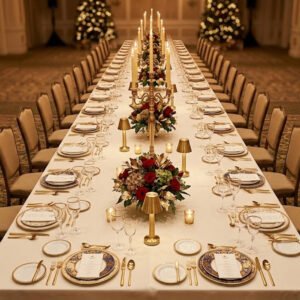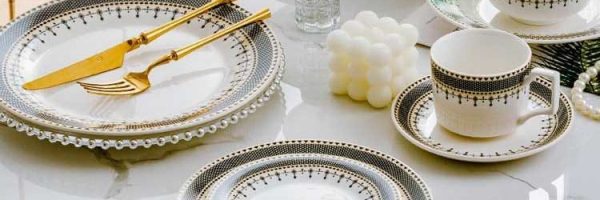
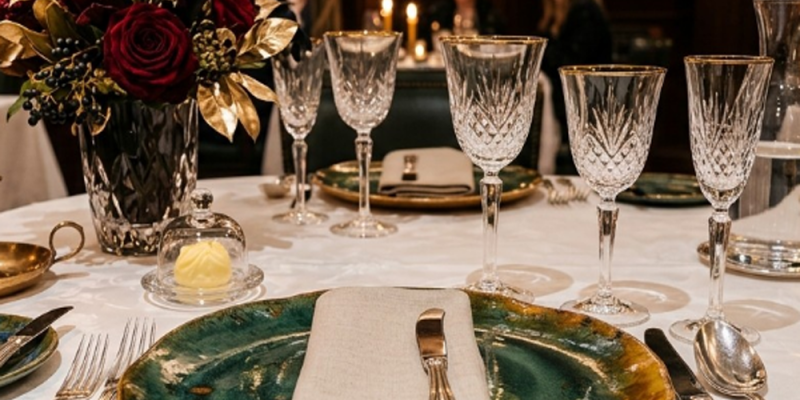
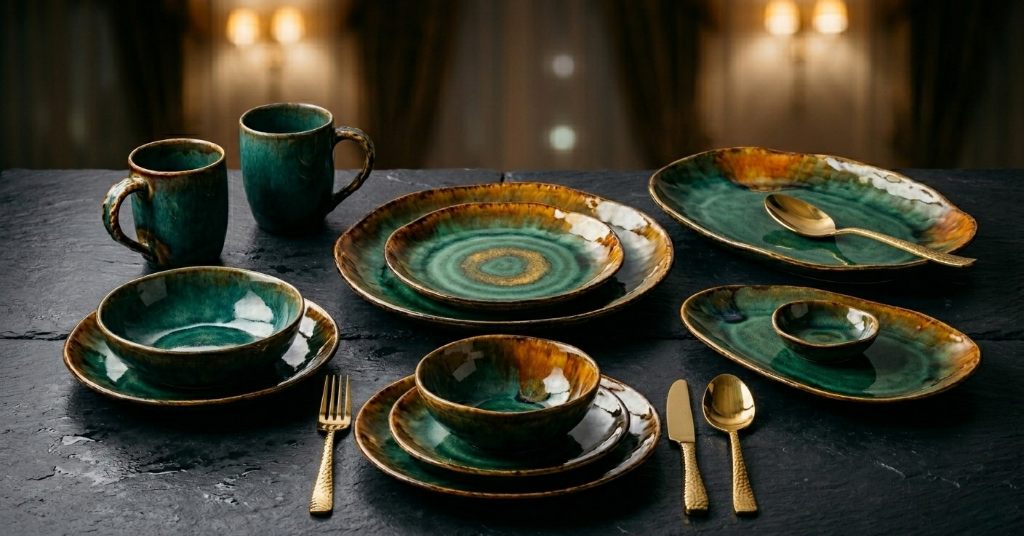
If you enter a 5-star hotel dining room, you’ll discover two types of tables. The first kind is flawless and forgettable. Every plate is identical. Every glaze uniform. The table serves its purpose, but it leaves little lasting impression. It doesn’t do anything else. The second type stops you. No two pieces appear exactly alike. The glaze changes from a deep jade to amber as the light moves over the glaze.
There are no duplicate pieces. The table feels curated – not just what is on the table, but how the dining experience should feel. More often than not, that second table is featuring kiln-change dinnerware. And the hotel that selected it knew that the most sophisticated luxury properties in the world have learned: If there are no two identical pieces, then it is not a limitation in an age of mass production. It’s the strongest table identity a hotel can have.
Table of Contents
What Kiln-Change Dinnerware Actually Is
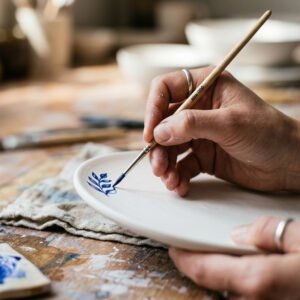
In Chinese ceramic tradition, kiln-change dinnerware is known as yaobian (窑变), meaning “kiln transformation.” It refers to ceramic pieces whose final appearance is shaped not by printing or machine application, but by the chemistry of fire itself.
The special glazes used on each piece in our ceramic collection undergo a special firing process in the kiln at temperatures above 1320°C. These high-temperature glazes undergo different reactions due to the varying conditions of the kiln, such as micro-variations in temperature, kiln atmosphere, oxygen levels, and glaze thickness on the surface. The finish is shaped by fire, resulting in subtle variations that make every piece unique, with organic color transitions, subtle gradients, and speckled depth and surface movement.
The Role of Temperature and Atmosphere
A 10 to 20 degree change in firing temperature at the peak firing temperature can make a light jade glaze turn to a smoky blue glaze. The colour-producing properties of metallic oxides are greatly influenced by the firing atmosphere (whether it is an oxidising or reducing environment). Green is produced by copper in an oxidation atmosphere. The same copper gives a red colour in a reducing atmosphere.
Brett’s ceramic engineers control and manage these variables, but there’s always a surprise element of nature in the mix within those controlled variables. This is not a manufacturing error. For more than a millennium, fine Chinese ceramics have been characterized by a conscious approach to ceramic artistry.
Why No Two Pieces Are Ever Identical
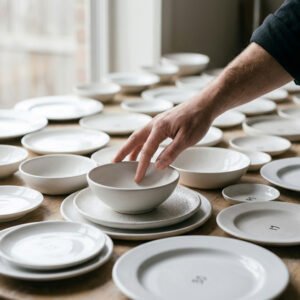
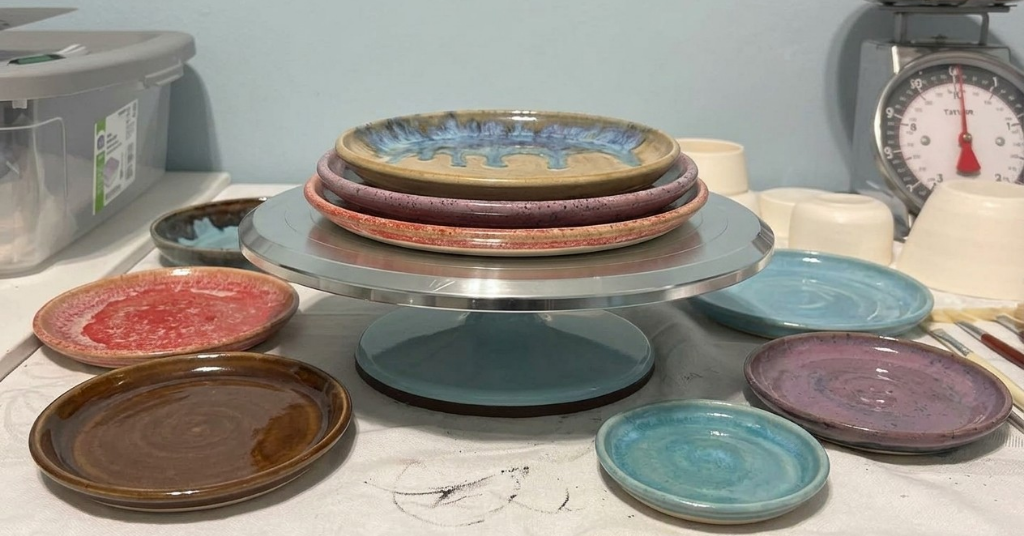
Each kiln-change piece is unique by design. It is a direct result of the interaction between glaze chemistry, firing temperature and kiln atmosphere — variables that cannot be precisely replicated from piece to piece, even within the same production batch.
Brett’s production process sets the parameters that define the overall character and colour direction of a collection, ensuring that items from the same batch share a family resemblance, a coherent aesthetic identity. However, each piece within those limits has its own individual colour balance, depth of firing and firing movement.
The Science of Unpredictable Beauty
Brett’s kiln-change glazes consist of special frits, metallic oxides and mineral compounds that react at high firing temperatures. They react to the silica in the porcelain body, the kiln atmosphere, and copper, cobalt, iron and titanium oxides, creating color changes from blues that darken to purples, silvers that evolve to shimmering golds, and earthy hues that transform into crystalline textures.
By utilizing state-of-the-art CNC-controlled kilns, Brett’s engineers are now able to precisely control the heating rate of the kiln and the cooling curve with error margins of less than 1.2 percent for large quantity production runs. A set of a single colour family and direction of the aesthetic is consistent; a hotel can state that they wish a set with a sea-blue glaze direction and receive a set of one direction, but each piece has its own interpretation of the direction.
What This Means for Luxury Hotel Branding
The implications of this uniqueness for luxury hotel branding are enormous and it is helping to push the world’s most discerning luxury properties towards kiln-change dinnerware.
A Table Identity That Cannot Be Copied
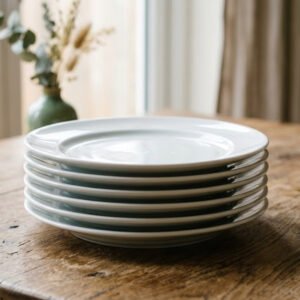
If the standard porcelain used in the hotel is well specified, then any competitor that has the same relationship with the supplier can match it. Any of these can be reproduced: the form of the plate, the colour of the glaze, the finish. If a hotel builds its table identity on standard porcelain, it is building on something any competitor can replicate.
If a hotel has a table identity based on the tabletop that is changed in the kiln, it is using a product which cannot be replicated exactly. Each colour on each Brett is a unique firing cycle, and is not repeatable exactly — indigo hues turning to amber, that are not repeatable. A competitor may order an item from the same collection that is a different item but the same colour family.
The Social Media Visibility Advantage
In 2026, the dining table is a content-sharing platform. Guests take pictures of their meals, the environment, and the overall atmosphere of a restaurant, as a standard feature. This attitude has evolved tableware into a medium of brand awareness and not just a purchase.
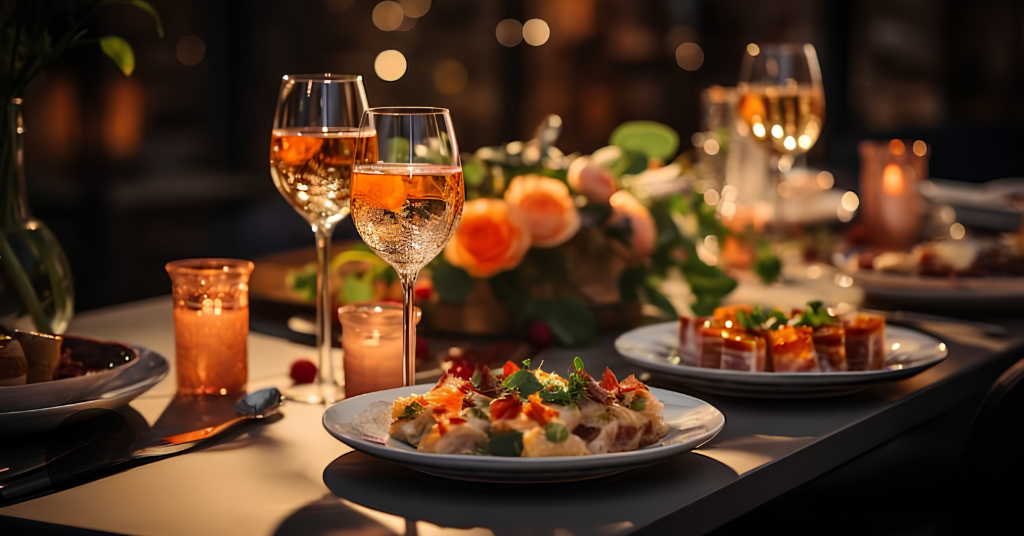
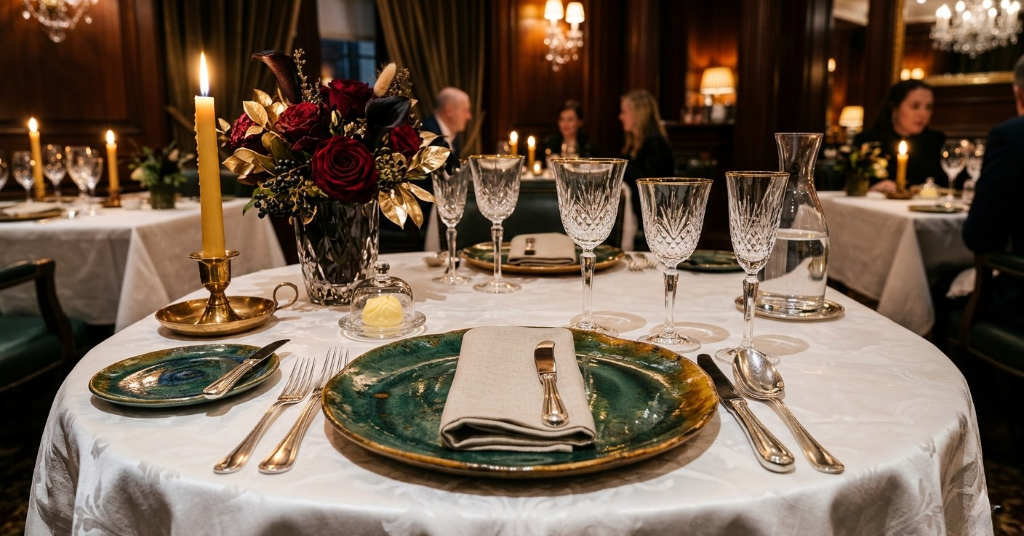
Unique tableware naturally encourages guest photography and social sharing. Kiln-change glazes interact with light during the whole course of the meal, from dramatic under candlelight to subtle in daylight to richly textured under the warm light that is often seen in luxury hotel restaurants. The pictures show slightly different versions of the same object, objects which are not realizable with conventional porcelain.
Each guest photograph with kiln-change dinnerware is a part of the hotel’s visual identity. The hotel’s brand is not restricted to the dining room, but distributed on its own without marketing.
The Guest Memory Effect
Tableware is no longer just a product that serves a purpose, but a tool that helps to create memories. Guests may never know the porcelain brand on the table. But they recall the table’s feel. They recall if it was a familiar or memorable meal, planned or random.
Research into hospitality guest experience consistently shows that distinctive tableware ranked among the top five amenities in guest satisfaction surveys at boutique luxury properties — above many operational factors that procurement teams spend significantly more time and budget on.
Why Kiln-Change Creates Stronger Memory
Each kiln-change piece is different, and experience designers call this a salient sensory detail, that is, an element of an experience which stands out just because it’s unexpected and unrepeatable. A guest notices that their dinner plate has a gradient of colour while their companion’s does not, and they are right; it is really different. They are genuinely unique pieces, shaped by the same firing process yet displaying distinct characteristics.
This awareness turns to memory. The table appears to be well cared for. The experience is purposeful. The hotel seems to have made decisions, and those decisions are indicative of quality and care that is not communicated by the uniformity of tableware.
Kiln-Change vs Standard Porcelain — The Table Identity Comparison
Factor | Standard Porcelain | Kiln-Change Dinnerware |
Piece uniqueness | Every piece identical | Every piece distinct |
Table identity | Replicable by competitors | Cannot be exactly replicated |
Social media impact | Standard visual appeal | Higher photo-sharing rates |
Guest memory | Functional — largely unnoticed | Distinctive — creates salient memory |
Brand storytelling | Limited — generic specification | Rich — artisan craft narrative |
Commercial durability | High — commercial grade | High — 1320°C fired commercial grade |
Price point | Lower upfront cost | Premium — justified by brand value |
Practical Considerations for Hotel Procurement
There are some practical questions hotel procurement teams need to ask themselves with such unique dinnerware.
Batch Consistency — Managing Natural Variation
One of the most common questions about kiln-change dinnerware is whether or not the replacement pieces will match closely enough to be used with the existing inventory, especially the dinnerware that has been in service for months.
Brett is tackling this by using documented glaze formulas, controlled firing parameters and archived batch records for all current glaze specifications for clients. The glaze formula and firing parameters used for the originals are used for the replacement pieces as well, so that replacement pieces are in the same glaze color family and have the same aesthetic character as the originals, but each replacement piece is unique.
Natural variation between firing batches is a part of the aesthetic; a table setting with dinnerware from different firings, but the same colour direction, is a curated difference, not a difference. This is a very different process from normal porcelain, where the variation in the batch is a visible defect.
Commercial Durability at Hotel Service Volume
A common concern is whether artisan aesthetics compromise commercial durability. At Brett, they do not. The ceramic collection for kiln change is fired at temperatures above 1320°C, which is the same firing temperature as commercial stoneware and porcelain used for hotel services. The pieces are scratch-resistant, chip-resistant and designed for commercial dishwasher cycles.
The firing temperature of 1320°C also produces a dense, vitrified ceramic body, which gives the commercial durability that is essential for the glaze effects to change kiln. The artisan aesthetic and the commercial performance are not at odds, but are a result of the same firing process.
MOQ and Custom Specifications
Brett’s kiln-change collection comes in minimum quantities of 50 pieces and 300 pieces per item, making it available for boutique luxury properties and multi-outlet hotel groups. For hotels that are creating their own exclusive glaze directions, custom shapes or branded pieces that embody the identity of the hotel in the material specifications of the tableware, full OEM and ODM customization is available.
How Brett's 1320°C Kiln-Change Collection Supports Luxury Hotel Programs
Since 1998, Brett has been producing and selling ceramic tableware for hotels in over 80 countries from its manufacturing center in Chaozhou, the ceramic capital of China, and showroom and office in Dongguan, Guangdong Province, with more than 26 years of manufacturing experience.
We work with Four Seasons, Shangri-La, Fairmont, Raffles, Wynn, Sheraton, Hyatt, Marriott and Crowne Plaza properties, Michelin Guide restaurants and Black Pearl Restaurant Guide restaurants in Europe, the United States and the Middle East. Brett also serves catering companies, banquet operations and wedding events worldwide.
Our 1320°C kiln-change ceramic dinnerware collection is available in:
- Reactive ramp colors— speckles, gradients, crystal glaze and matte glaze effects across a full contemporary color palette
- Full table service collections— plates, bowls, mugs, platters and serving pieces in coordinated kiln-change specifications
- Custom glaze formulas— exclusive color directions developed for specific hotel brands that cannot be replicated in other properties
- Logo embossing and bottom stamps— brand identification fired into the ceramic itself, not printed on top
- Stoneware or porcelain body— depending on the durability and weight profile required for the hotel’s specific service program
FAQ
Can kiln-change dinnerware maintain consistent color effects across a large hotel order?
Yes — with an important clarification. The glaze formula, firing temperature, and kiln atmosphere are all controlled by Brett’s kiln-change production so that all pieces from a collection have the same color family and aesthetic direction. The direction is the same, but the expression of it in individual pieces is different: the colour distribution, the gradient pattern, and the movement of the surface that comes out of the kiln in each piece. This controlled variation is not a defect but one of the defining characteristics of kiln-change dinnerware. A hotel that calls for sea-blue glaze direction is given a set of pieces that are all of that aesthetic direction, but each piece is distinctively of that direction.
How does kiln-change dinnerware perform in commercial hotel dishwashers?
The ceramic body produced by the firing of Brett’s kiln-change ceramic collection is dense, vitrified and has excellent scratch resistance, chip resistance and commercial dishwasher compatibility. The high-temperature firing that makes the kiln-change glaze effects also gives the body density that provides commercial durability. Kiln-change pieces will perform at the same commercial standard as Brett’s standard hotel porcelain, and have the added benefit that the surface character of kiln-change glazes often develops with age, adding depth and patina which uniform glazes will not.
What is the minimum order quantity for Brett's kiln-change dinnerware?
Brett’s kiln-change ceramic collection is available in minimum quantities of 50 to 300 per piece, depending on the specification. Our team can advise boutique luxury properties on collection development, glaze sampling, and production planning for a complete dining program around a particular kiln-change direction. Our OEM program is compatible with proprietary glazes not offered to other buyers by hotel groups creating their own custom glazes. Please call us at Chinabrett, and we will talk about your specific needs.
Conclusion
In a hotel industry where every property claims to offer a luxury experience, the table is where the difference becomes visible. Standard porcelain says: we meet the standard. Kiln-change dinnerware says: we made a choice. We chose craft over uniformity. We chose fire over formula. We chose a table identity that cannot be copied because no kiln firing ever happens the same way twice.
The guest who notices that their plate is different from their companions has discovered something genuinely true. These are genuinely different objects. Made in the same fire. Never repeated. That is why the world’s most discerning luxury hotels have made the switch. And that is why Brett has spent 26 years perfecting the craft of kiln-change ceramics at 1320°C — because the hotels that understand this are the ones worth building for. Let Brett provide you with your hotel tableware quote and custom catalogs and samples. Please contact us at chinabrett.