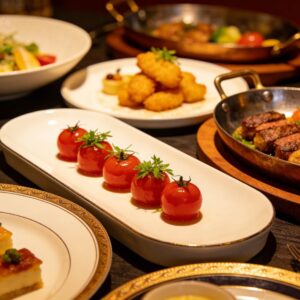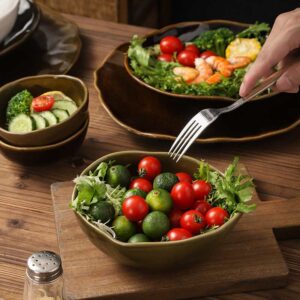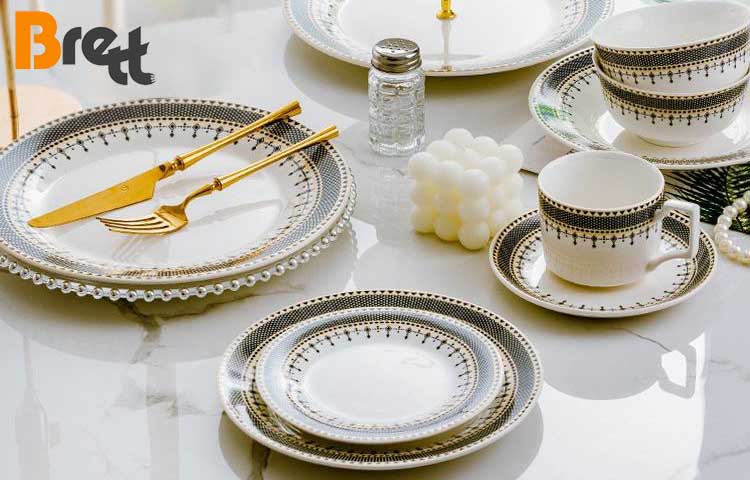
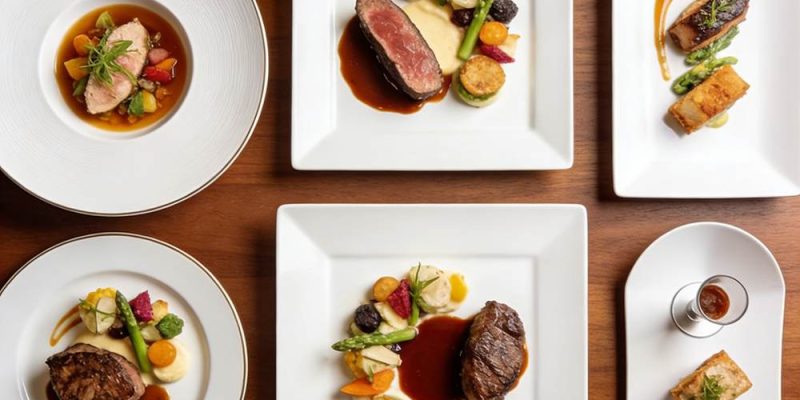
Every restaurant food presentation guide covers the same ground. Sauce placement. Negative space. Height and layers. The rule of thirds. These are useful, but they all skip the decision that comes before any of them.
What plate are you putting it on?
The plate is the canvas. A sauce smear that looks refined on a wide-rimmed 12-inch porcelain plate looks cluttered on a 9-inch coupe. The same protein, the same garnish, the same chef. Two completely different results.
This guide bridges food plating techniques and dinnerware selection, because knowing how to plate food means nothing if the plate isn’t complementing your concept.
What Your Plate Tells Your Guest Before the Food Arrives
Restaurant food presentation starts before the first bite. The plate your dish lands on shapes how a guest perceives flavor, quality, and value, and there is published research to back that up.
A study found that identical desserts were rated differently for sweetness, flavor intensity, and quality depending solely on the color of the plate on which they were served. Crucially, the pattern held across every dessert tested, meaning the same plate consistently produced higher scores across all attributes.
The researchers noted that color-flavor associations, such as black with intense or sophisticated chocolate, played a role. This was measured in a restaurant environment, not a lab. How should this shape your decision? Here is what that means for practical dinnerware decisions.
Color Changes Taste Perception
White plates, such as those of ceramic dinnerware, make food colors appear more vibrant and enhance perceived sweetness. Black plates increase the sense of flavor intensity and add visual drama. Earth tones signal warmth and naturalness, which suits rustic and farm-to-table concepts.
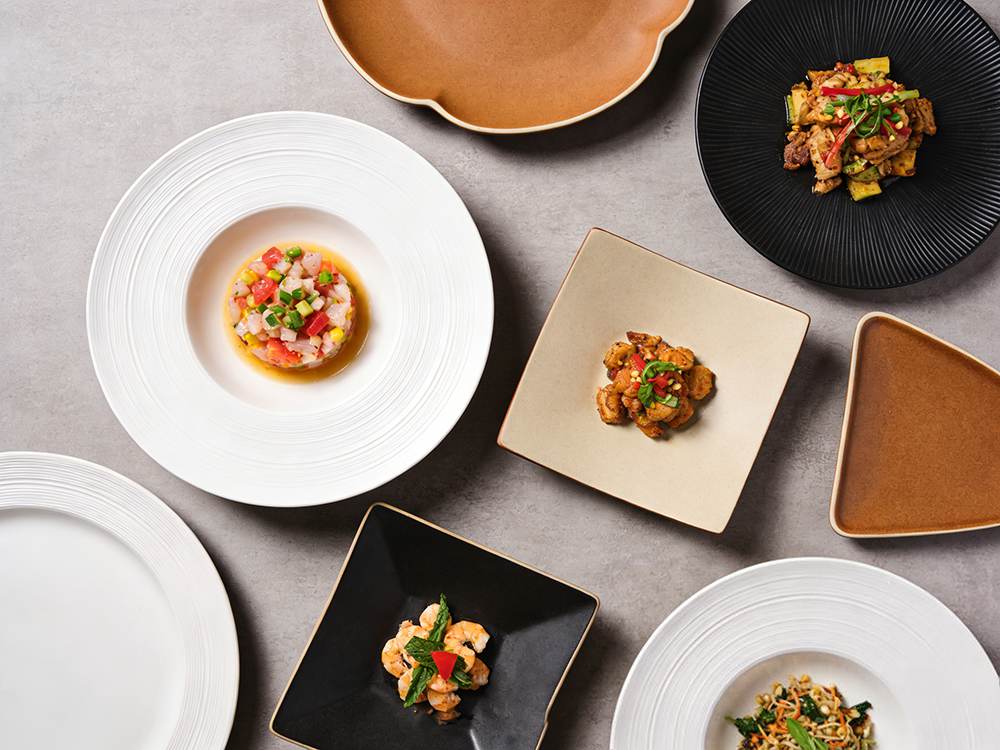
Your plate color should work with your cuisine’s dominant food colors, not fight them. A bright ceviche on a white plate pops. The same dish on a cream or yellow plate loses contrast immediately.
Shape Signals the Dining Experience
Round plates read as familiar, comforting, and traditional. Square and angular plates communicate modernity and precision. Asymmetric or organic shapes suggest artisanal, creative cuisine.
Crossmodal research shows angular plate shapes can make food taste sharper, while round shapes reinforce softer, rounder flavor profiles. The shape of the plate is part of the eating experience, whether the guest consciously registers it or not.
Size Controls Negative Space
Oversized plates of 12 inches or more create the negative space that fine dining restaurant food presentation depends on. Smaller plates, 9 to 10 inches, concentrate the composition and create a sense of generosity through proportion. Neither is wrong. Both are deliberate choices, but plate sizing affects portion perception.
Matching Dinnerware to Your Menu Concept: A Cuisine-by-Cuisine Guide
According to industry data from the National Restaurant Association, 50% of consumers rank food quality as a top-three priority when choosing a full-service restaurant, and 18% of millennials say a unique or trendy ambiance is a deciding factor.
Your dinnerware sits at the intersection of both.
It signals quality before the food arrives and shapes the ambiance without a single word. The right plate for a Japanese concept looks nothing like the right plate for an Italian trattoria. Here is how to match them correctly.
Fine Dining and French or European Classical
Opening a fine dining concept and wondering why the plating still feels flat? The plate size might be the answer.
Classical French plating is built on negative space. The food lives in the center, intentional emptiness surrounds it, and the rim acts as a frame.
For this to work, you need wide-rimmed porcelain plates with 2- to 3-inch rims, at least 11 to 12 inches for mains and 8 to 9 inches for appetizers. White or ivory bone china is the standard because it lets the food command full attention. Coupe shapes work for modern fine dining. Rimmed plates suit classical European service.
Japanese and East Asian
Here is something most Western operators get wrong when opening a Japanese concept: everything does not need to match.
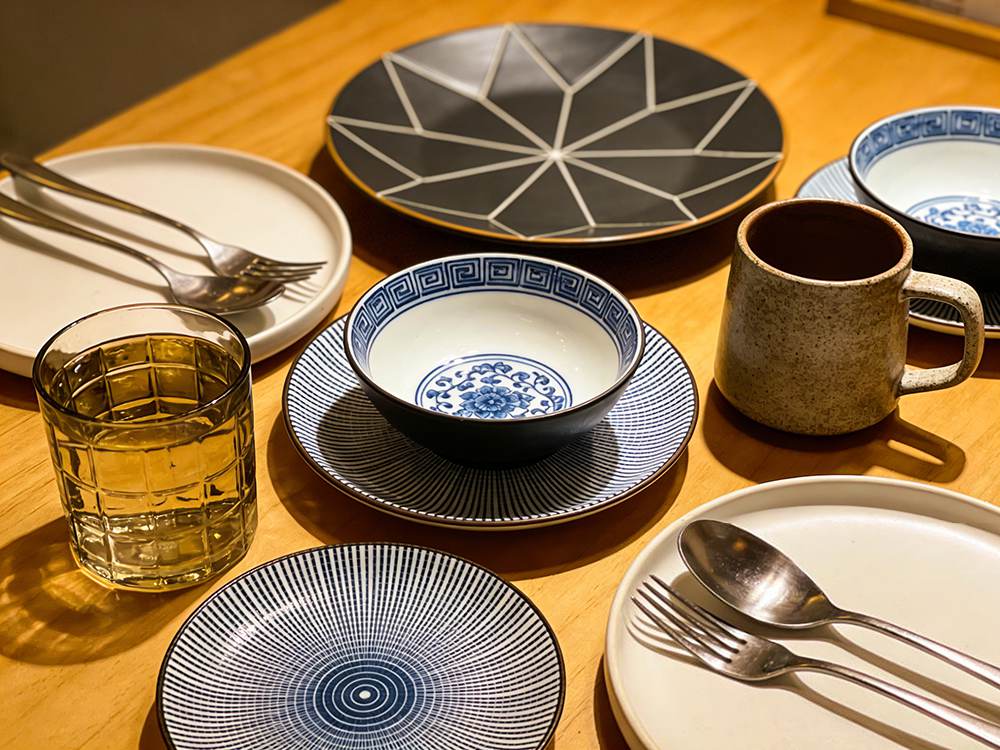
Japanese food philosophy treats each dish as its own expression. A rectangular plate for grilled fish, a bowl for rice, and an asymmetric dish for appetizers. That variety is intentional and traditional.
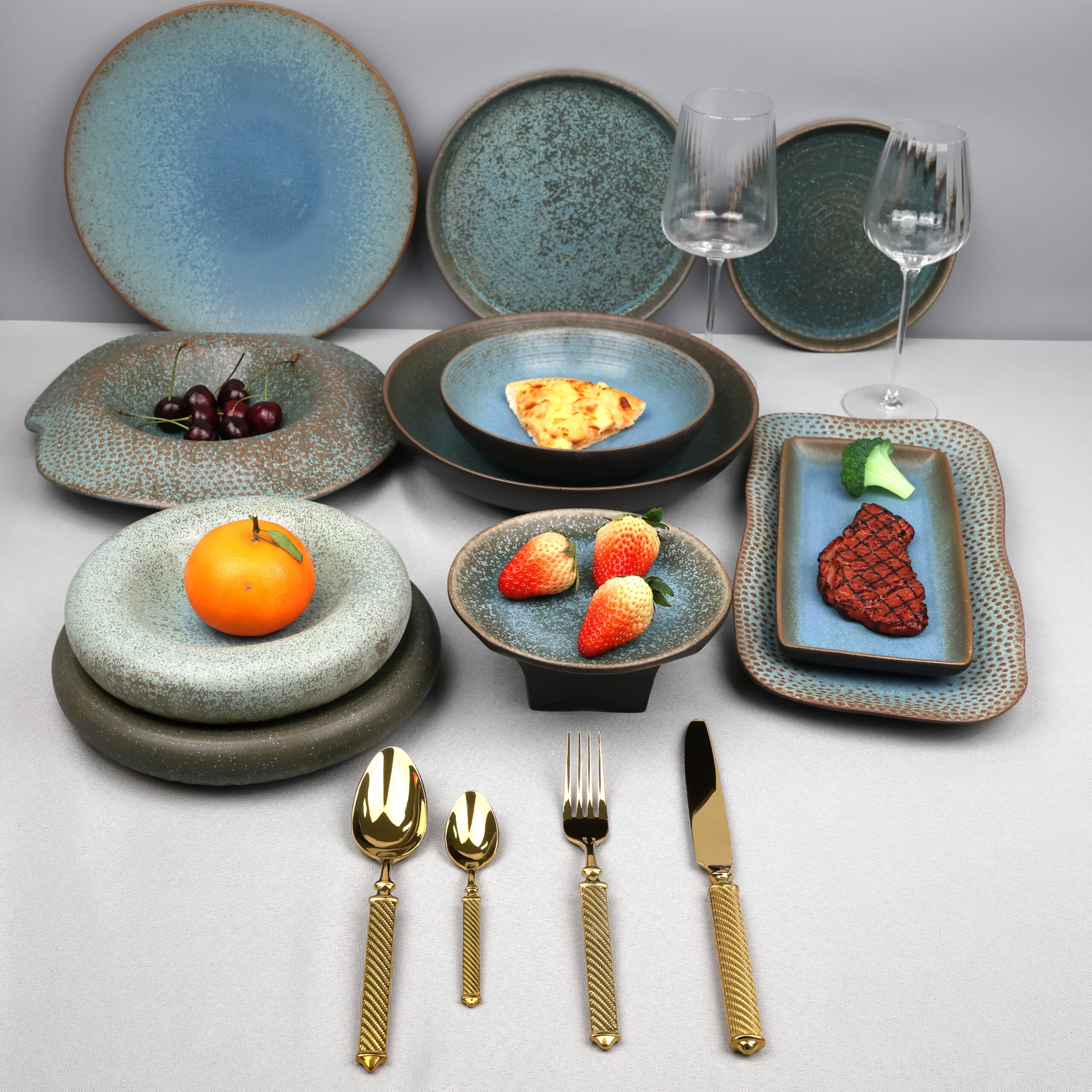
Look for reactive glaze ceramics with matte finishes and organic edges. Dark tones, black, slate, and deep blue work particularly well for sashimi and lighter dishes where contrast matters. Coordinated variety, not uniformity, is the goal.
Italian, Mediterranean, and Family-Style
Italian food is meant to look abundant. So why are you serving it on a plate that makes it look architectural?
Go generous.
Deep pasta bowls with wide rims hold sauce without crowding the dish. Warm-toned stoneware or porcelain in earthy colors reinforces the welcoming, communal spirit of Mediterranean dining. For family-style service, the platter becomes the centerpiece.
Large sharing platters and deep serving bowls on the table signal generosity before anyone picks up a fork. The food should look like there is plenty of it.
Farm-to-Table and Modern Casual
Your menu tells a story about seasonal, local, and natural ingredients. Does your dinnerware tell the same story?
Standard mass-produced white porcelain undercuts that narrative immediately. Stoneware with reactive glazes, organic shapes, and earth tones in greens, browns, and grays reinforce the authenticity on which your concept is built.
Each piece can have natural variation, which adds to the handcrafted feeling rather than detracting from it, for specific courses like charcuterie or cheese, wooden boards and slate surfaces extend the story further.
See how stoneware compares to porcelain before committing to a material.
Fast-Casual and High-Volume
Presentation matters here, too, just not at the expense of durability and cost.
The plate still needs to look intentional. A solid-colored melamine or durable stoneware in a consistent size keeps service manageable and keeps replacement costs low.
Choose colors that hide everyday wear and keep the look clean across a full service day. The goal is a plate that looks good at cover one and still looks good at cover 200.
The Plate Selection Framework: 5 Questions Before You Buy
Good restaurant food presentation starts with the plate you choose.
Plating dinnerware selection is one of the most skipped steps in restaurant procurement, and it’s the one that affects every food plating technique that follows.
Before placing any dinnerware order, run through these five questions.
1. What Are Your Dominant Food Colors?
Look at your menu and identify the colors that appear most often. Rich browns, bright greens, pale whites, deep reds. Your plate color should create maximum contrast or intentional harmony with those hues. A vibrant ceviche needs a plate that makes it pop, not one that absorbs it.
2. What Service Style Defines Your Operation?
Plated fine-dining, family-style, tasting menus, and buffet service all require different shapes and sizes. A 12-inch wide-rimmed plate makes sense for classical plating. A coupe works for tasting menus. A deep bowl anchors family-style pasta service. Service format should drive the shape decision before aesthetics enter the conversation.
3. What Story Is Your Restaurant Telling?
Your dinnerware is a brand asset. Restaurant plate design should reinforce your concept, not contradict it. For example, a farm-to-table concept on mass-produced white porcelain sends a mixed message. A modern Japanese concept of standard round plates misses an opportunity.
The plate should reflect whether your story is rustic warmth, Japanese precision, or European classical elegance.
4. How Will These Plates Photograph?
Every dish that leaves your kitchen is a potential social media post. Consider how your dinnerware looks under your restaurant’s lighting and in photos.
Matte surfaces reduce glare. Contrasting plate colors make food pop. Consistent dinnerware builds a recognizable visual identity across every post.
5. Can Your Supplier Coordinate the Full Table?
Dinnerware, serveware, and flatware from a single source are easier to coordinate visually and logistically. If your supplier handles complete tabletop programs, that’s fewer vendors, fewer mismatches, and a more consistent table from day one.
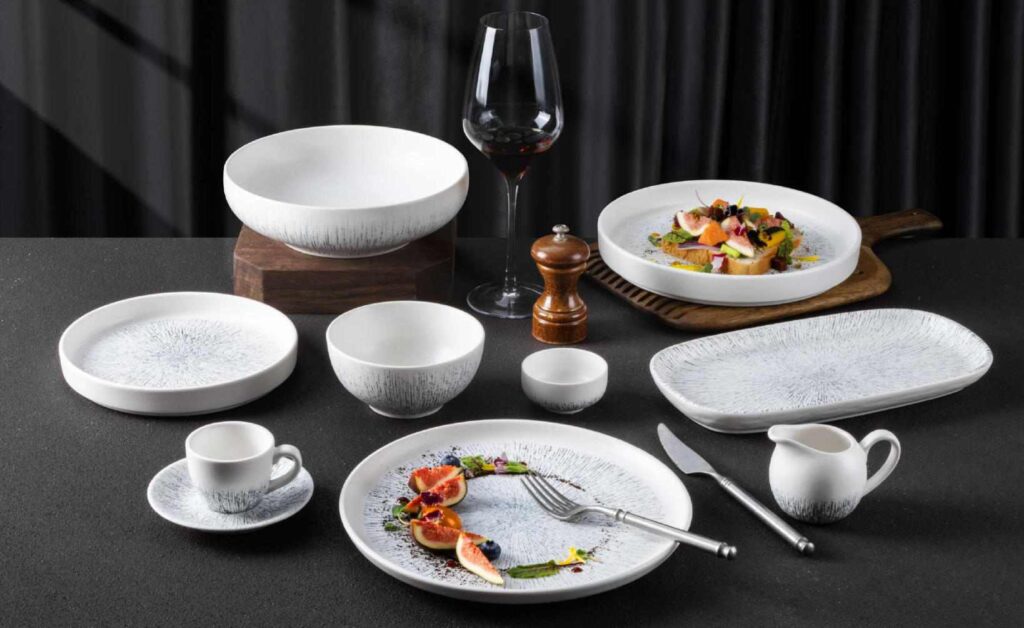
Restaurant Food Presentation Beyond Color and Shape: Rim Style, Finish, and Texture
Most conversations about restaurant food presentation stop at color and shape. But the operators who get the full picture also think about rim style and surface finish. These details are what separate a plate that looks considered from one that just looks clean.
For anyone thinking about how to plate food like a chef, this is where the detail lives.
Rim Style
Rim choice is one of the most practical decisions in menu-driven tableware selection, and it directly affects how much usable surface your plating techniques have to work with.
A wide rim of 2 to 3 inches creates a natural frame around the food. The dish lives in the well, the rim provides breathing room, and the composition reads as intentional. This is the standard for fine dining and classical European plating.
A narrow rim or coupe plate maximizes the usable surface. No boundary means more room for contemporary plating presentation ideas, and the look is cleaner and more modern. Tasting menus and contemporary concepts lean heavily toward coupe.
Raised-edge or stackable plates are the practical choice for high-volume kitchens where plates must move quickly through service and storage.
Surface Finish and Texture
Glossy surfaces reflect light, making sauces and glazes shine. It’s the classic professional look and works across most concepts.
Matte and textured finishes absorb light and create depth, which suits farm-to-table and artisanal restaurant plate design. Reactive glazes add natural surface variation that makes each piece feel individual.
Some manufacturers offer a hybrid finish, matte exterior with a glossy interior, giving you visual depth on the rim and a presentation-ready surface for the food.
Dinnerware and Food Photography: Plating for the Camera
Your plate appears in every food photo, every social media post, and every guest story before the bill arrives.
According to Deloitte’s 2025 research, 90% of restaurants say social media is very or extremely important to their overall marketing, and restaurants reported an average 9.9% increase in revenue as a direct result of their social media strategies.
The plate in those photos is doing active marketing work whether you planned for it or not. Plating dinnerware selection and restaurant food presentation are now the same conversation as your marketing strategy.
Here is what to consider before you buy.
- White and light-colored plates photograph consistently across different lighting conditions and work with virtually any tableware for food concept, making them the lowest-risk choice for social content.
- Matte surfaces reduce glare and unwanted reflections under restaurant lighting, which is one of the most practical advantages matte finishes offer beyond aesthetics.
- Contrasting plate colors create immediate visual impact. Dark plates make light dishes pop. Light plates make colorful dishes vibrant. Dinnerware menu concept matching applies to your feed as much as it applies to your dining room.
- Consistent dinnerware builds a recognizable visual identity across posts. Guests who follow you start to recognize your plates before they recognize your logo.
The camera does not forgive a plate that looked fine in a catalog. It rewards one that was chosen with intention.
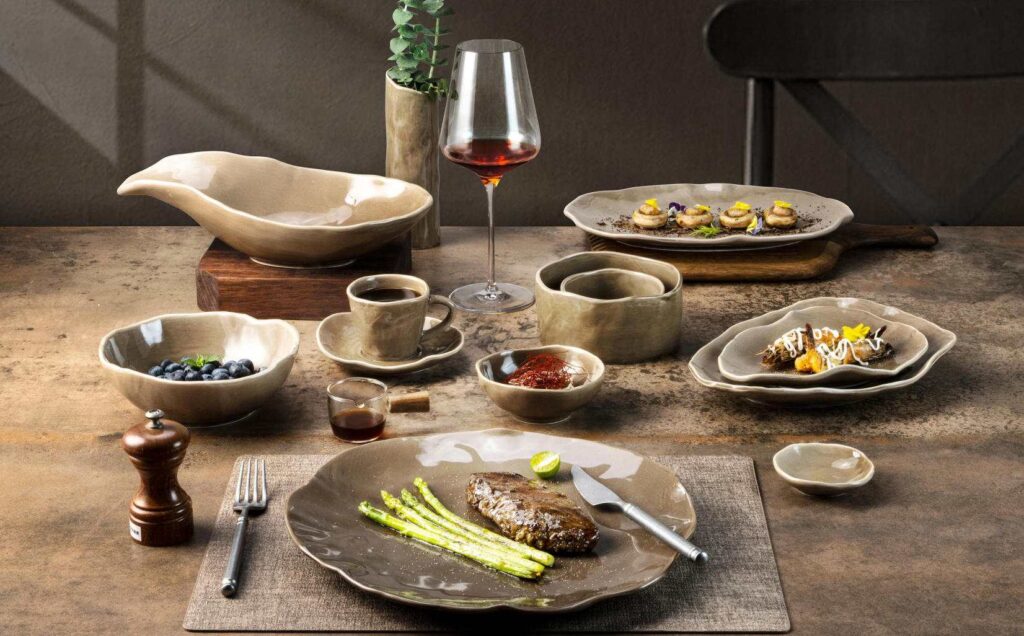
Elevate Your Restaurant Food Presentation With Brett Custom Dinnerware
The best chefs choose their plates with the same intention they choose their ingredients. The plate is the first decision in restaurant food presentation and the one that shapes everything that comes after.
A great plating technique on the wrong plate underdelivers. The right dinnerware makes good food look exceptional.
Brett is a China-based wholesale OEM dinnerware manufacturer specializing in high-end custom tableware for the global hospitality industry. From material selection to pattern design, Brett works with hotels, restaurants, and catering operations to create fully customized dinnerware programs tailored to your concept. Contact Brett to request samples today.
Frequently Asked Questions
1. What color plate is best for food presentation?
White is the most versatile choice. It enhances food color contrast and works across all cuisines. Black plates intensify perceived flavor for rich dishes. Earth tones suit farm-to-table and rustic concepts. Match your plate color to the dominant colors of the foods on your menu.
2. How does plate shape affect food presentation?
Round plates signal comfort and tradition, ideal for classic cuisine. Square and angular plates communicate modernity. Oval plates suit protein-forward dishes. Asymmetric shapes work well for Japanese-inspired and creative presentations. The shape should complement your restaurant concept, not just your personal preference.
3. What plate size do fine dining restaurants use?
The standard for fine dining is 11 to 12 inches for dinner plates and 8 to 9 inches for appetizers. The larger size creates the negative space that elegant plating depends on. Tasting menus may use smaller 6 to 7-inch plates for individual courses.