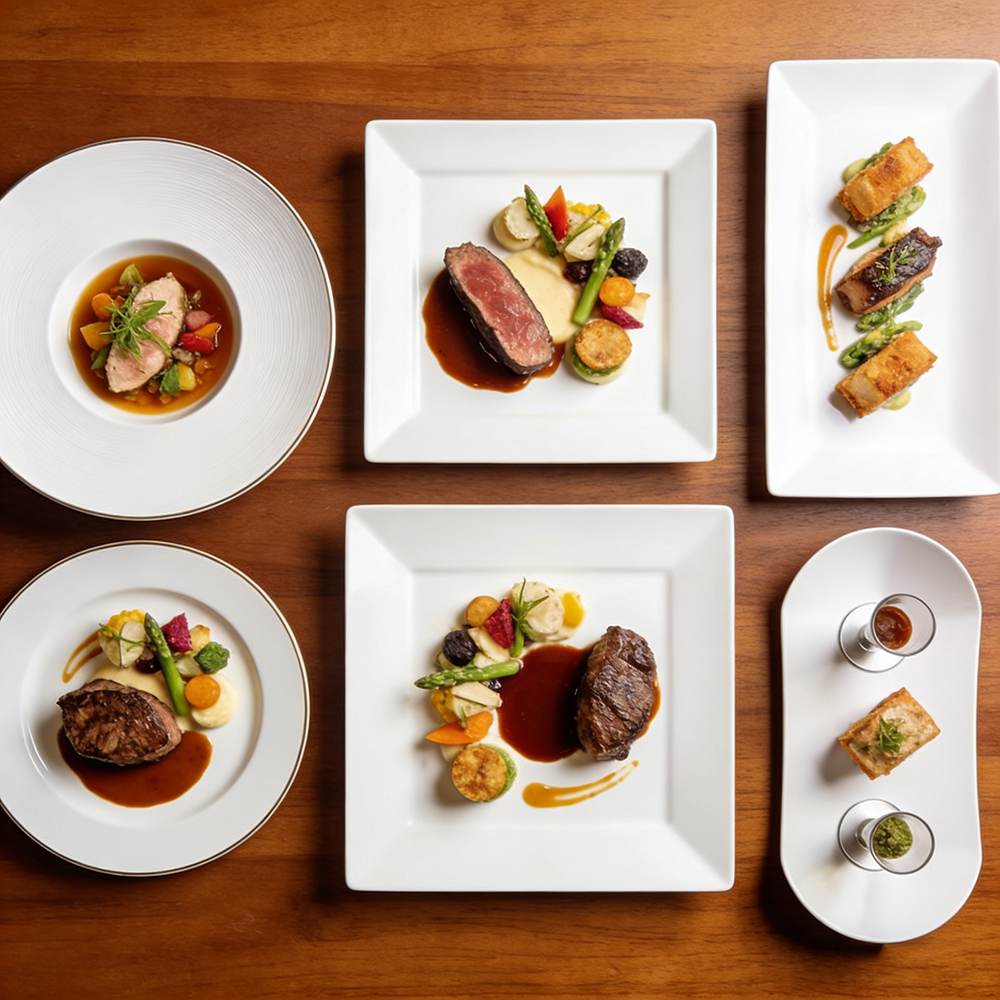
Every restaurant food presentation guide covers the same ground. Sauce placement. Negative space. Height and layers. The rule of thirds. These are useful, but they all skip the decision that comes before any of them. What plate are you putting it on? The plate is the canvas. A sauce smear that looks refined on a wide-rimmed 12-inch porcelain plate looks cluttered on a 9-inch coupe. The same protein, the same garnish, the same chef. Two completely different results. This guide bridges food plating techniques and dinnerware selection, because knowing how to plate food means nothing if the plate isn’t complementing your concept. What Your Plate Tells Your Guest Before the Food Arrives Restaurant food presentation starts before the first bite. The plate your dish lands on shapes how a guest perceives flavor, quality, and value, and there is published research to back that up. A study found that identical desserts were rated differently for sweetness, flavor intensity, and quality depending solely on the color of the plate on which they were served. Crucially, the pattern held across every dessert tested, meaning the same plate consistently produced higher scores across all attributes. The researchers noted that color-flavor associations, such as black with intense or sophisticated chocolate, played a role. This was measured in a restaurant environment, not a lab. How should this shape your decision? Here is what that means for practical dinnerware decisions. Color Changes Taste Perception White plates, such as those of ceramic dinnerware, make food colors appear more vibrant and enhance perceived sweetness. Black plates increase the sense of flavor intensity and add visual drama. Earth tones signal warmth and naturalness, which suits rustic and farm-to-table concepts. Your plate color should work with your cuisine’s dominant food colors, not fight them. A bright ceviche on a white plate pops. The same dish on a cream or yellow plate loses contrast immediately. Shape Signals the Dining Experience Round plates read as familiar, comforting, and traditional. Square and angular plates communicate modernity and precision. Asymmetric or organic shapes suggest artisanal, creative cuisine. Crossmodal research shows angular plate shapes can make food taste sharper, while round shapes reinforce softer, rounder flavor profiles. The shape of the plate is part of the eating experience, whether the guest consciously registers it or not. Size Controls Negative Space Oversized plates of 12 inches or more create the negative space that fine dining restaurant food presentation depends on. Smaller plates, 9 to 10 inches, concentrate the composition and create a sense of generosity through proportion. Neither is wrong. Both are deliberate choices, but plate sizing affects portion perception. Matching Dinnerware to Your Menu Concept: A Cuisine-by-Cuisine Guide According to industry data from the National Restaurant Association, 50% of consumers rank food quality as a top-three priority when choosing a full-service restaurant, and 18% of millennials say a unique or trendy ambiance is a deciding factor. Your dinnerware sits at the intersection of both. It signals quality before the food arrives and shapes the ambiance without a single word. The right plate for a Japanese concept looks nothing like the right plate for an Italian trattoria. Here is how to match them correctly. Fine Dining and French or European Classical Opening a fine dining concept and wondering why the plating still feels flat? The plate size might be the answer. Classical French plating is built on negative space. The food lives in the center, intentional emptiness surrounds it, and the rim acts as a frame. For this to work, you need wide-rimmed porcelain plates with 2- to 3-inch rims, at least 11 to 12 inches for mains and 8 to 9 inches for appetizers. White or ivory bone china is the standard because it lets the food command full attention. Coupe shapes work for modern fine dining. Rimmed plates suit classical European service. Japanese and East Asian Here is something most Western operators get wrong when opening a Japanese concept: everything does not need to match. Japanese food philosophy treats each dish as its own expression. A rectangular plate for grilled fish, a bowl for rice, and an asymmetric dish for appetizers. That variety is intentional and traditional. Look for reactive glaze ceramics with matte finishes and organic edges. Dark tones, black, slate, and deep blue work particularly well for sashimi and lighter dishes where contrast matters. Coordinated variety, not uniformity, is the goal. Italian, Mediterranean, and Family-Style Italian food is meant to look abundant. So why are you serving it on a plate that makes it look architectural? Go generous. Deep pasta bowls with wide rims hold sauce without crowding the dish. Warm-toned stoneware or porcelain in earthy colors reinforces the welcoming, communal spirit of Mediterranean dining. For family-style service, the platter becomes the centerpiece. Large sharing platters and deep serving bowls on the table signal generosity before anyone picks up a fork. The food should look like there is plenty of it. Farm-to-Table and Modern Casual Your menu tells a story about seasonal, local, and natural ingredients. Does your dinnerware tell the same story? Standard mass-produced white porcelain undercuts that narrative immediately. Stoneware with reactive glazes, organic shapes, and earth tones in greens, browns, and grays reinforce the authenticity on which your concept is built. Each piece can have natural variation, which adds to the handcrafted feeling rather than detracting from it, for specific courses like charcuterie or cheese, wooden boards and slate surfaces extend the story further. See how stoneware compares to porcelain before committing to a material. Fast-Casual and High-Volume Presentation matters here, too, just not at the expense of durability and cost. The plate still needs to look intentional. A solid-colored melamine or durable stoneware in a consistent size keeps service manageable and keeps replacement costs low. Choose colors that hide everyday wear and keep the look clean across a full service day. The goal is a plate that looks good at cover one and still looks good at cover 200. The Plate Selection Framework: 5 Questions Before You Buy Good restaurant food presentation starts with the plate you choose. Plating dinnerware