
Commercial flatware selection sounds simple until you start tracking replacements and realize some sets cost less upfront but create more work and spend over time. Some bend more easily during heavy use. Others lose their shine sooner.
Only a few hold up through years of dishwashing and handling. For hotel procurement managers and restaurant teams, which stainless steel grade and weight will match your concept and still last in daily service is a practical question.
This guide breaks down commercial flatware, including stainless steel flatware grades, weight, and durability. You will also learn how to choose the right set for your restaurant so your hospitality tableware stays consistent across service and reorders.
Stainless Steel Flatware Grades: 18/10 vs 18/8 vs 18/0
After you notice the look and feel of your commercial flatware, the next question is always the same. Will it stay that way after months of dishwashing and daily handling? That answer depends more on stainless steel flatware grades than on pattern or finish.
If you want a reliable restaurant flatware selection process, start here first, because the grade is what drives corrosion resistance, shine retention, and long-term flatware durability in hospitality tableware.
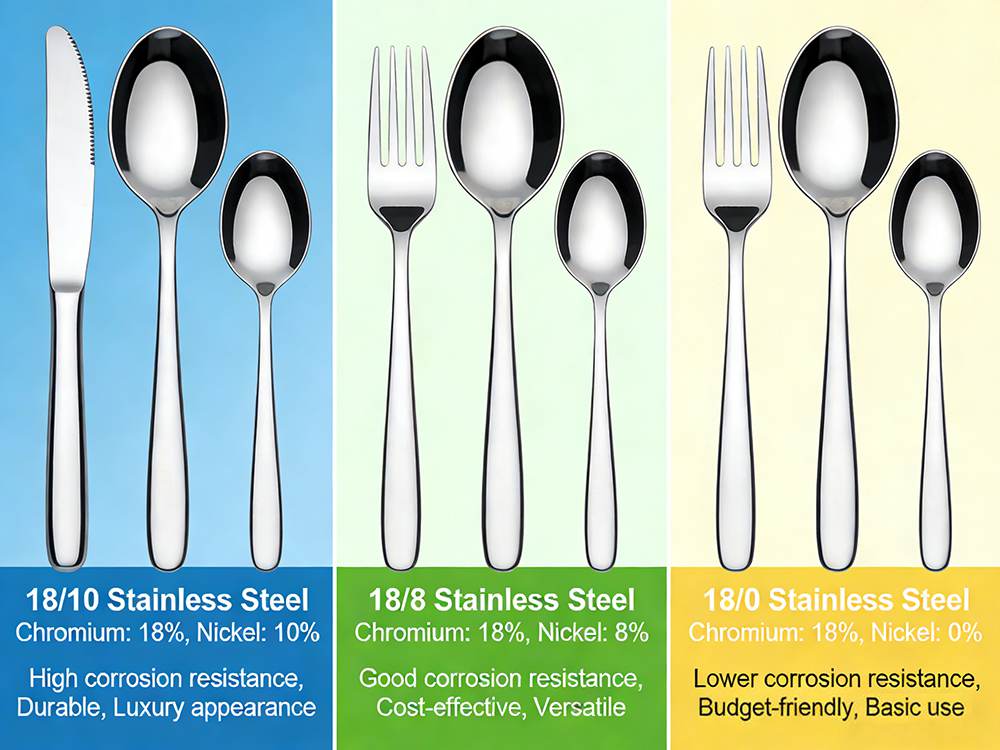
18/10 Flatware (Premium Standard)
18/10 flatware is the option many hotels and fine dining rooms default to when they want a polished, high-end look that holds up. It keeps its shine longer and handles frequent dishwashing well.
If you often serve acidic foods, or if you want your hospitality tableware to look consistent across every service, 18/10 is usually the safest pick. It also feels more substantial, which many guests associate with quality.
18/8 Flatware (Balanced Choice)
18/8 is the practical middle ground. It performs well in busy dining rooms, looks clean on the table, and usually comes in a wider range of patterns.
If you are managing a procurement budget but still want strong flatware durability, this is the grade many operators land on. You may see it listed as 304 stainless steel in supplier specs.
18/0 Flatware (High-Volume, Budget-Friendly)
18/0 flatware is chosen when loss and replacement are part of the reality, like cafeterias, schools, and quick service. It can be more prone to spotting and wear over time, so you plan for more frequent replacement. One practical advantage is that 18/0 is magnetic, which can help if your dish area uses magnetic retrievers.
Flatware Weight Categories and Performance
Flatware weight comes from metal thickness, not from stainless steel flatware grades. In commercial flatware, weight affects how often your team replaces bent forks and how well your set stands up to service.
You can have 18/10 flatware that feels light, and 18/0 flatware that feels substantial. Here’s how to determine which flatware works best for your restaurant.
Forged Flatware (Ultra-Premium, 70 to 90 grams)
Forged flatware is made from a thicker piece of steel, so it feels solid and resists bending. In practice, this is what you choose when your dining room is selling an experience, and you want the guest to feel it in their hand.
For instance, a fine dining restaurant serving steaks every night will notice fewer damaged pieces over time. The trade-off is that forged commercial flatware can feel heavy for some guests, especially in older audiences, and it sits at the top end of most procurement budgets.
Extra Heavy Weight Flatware (Premium, 60 to 80 grams)
Extra-heavy flatware gives you a premium feel without going fully forged. This is a common choice in hotel programs and upscale casual concepts because it balances flatware durability with cost control.
For example, if your hotel has a breakfast outlet and a dinner outlet, an extra-heavy restaurant flatware selection helps both spaces feel consistent. It also holds up well in busy dishwashing cycles, which matters when volume is high.
Heavy Weight Flatware (Standard, 55 to 70 grams)
Heavyweight is the practical sweet spot for many operations. It feels substantial enough that guests read it as quality, but it is not so heavy that it feels bulky.
A bistro with steady turnover, or a catering company that needs reliable hospitality tableware for repeated events, often lands here. If you want commercial flatware that performs well across most menus, this is usually the safest starting point.
Medium Weight Flatware (Budget, 40 to 55 grams)
Medium-weight flatware is built for cost and replacement flexibility. It can work in cafeterias, schools, and quick service settings where loss is expected and the priority is keeping inventory moving.
The limitation shows up when food requires pressure. For instance, a medium-weight dinner knife and fork can bend more easily during steak service, which increases replacement needs over time.
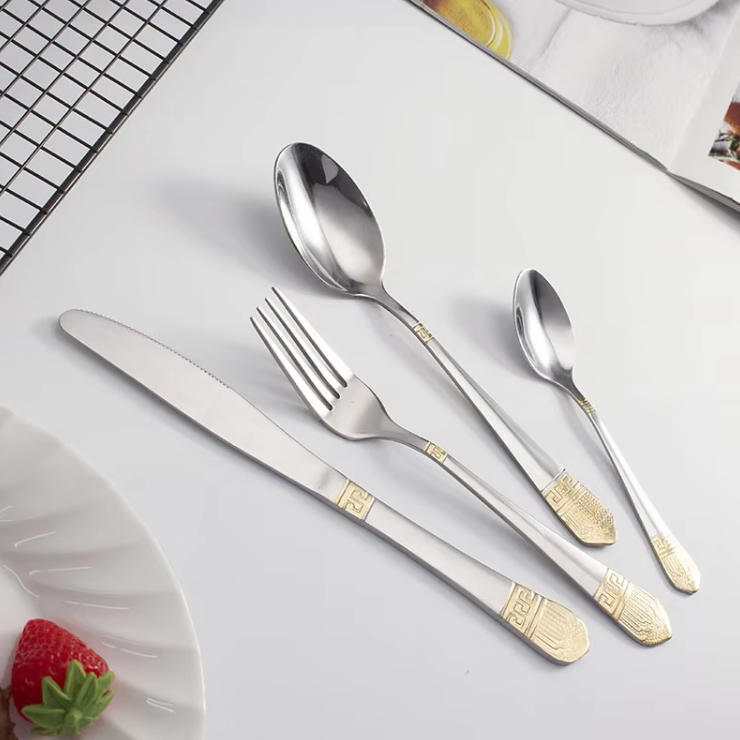
Forged vs Stamped Flatware Construction for Restaurants
After you choose stainless steel flatware grades and flatware weight, the next decision in restaurant flatware selection is flatware construction.
Construction is about how the piece is formed, and it affects bending, long-term wear, and how the pattern holds up through commercial dishwashing.
For hotel procurement teams and catering operations, this is one of the easiest ways to predict flatware durability.
Stamped Flatware Construction (Most Common in Commercial Flatware)
Stamped flatware starts as a flat sheet of steel that is cut into shape, then pressed to form the handle design. It is fast to produce and easy to scale, which is why most commercial flatware programs use stamped patterns.
For example, if you are buying hospitality tableware for a busy restaurant or a hotel buffet, stamped construction paired with heavyweight flatware can perform well in daily service.
The key is to avoid thin economy sets. With the right weight and grade, stamped flatware can still feel professional and stay stable through repeated washing and handling.
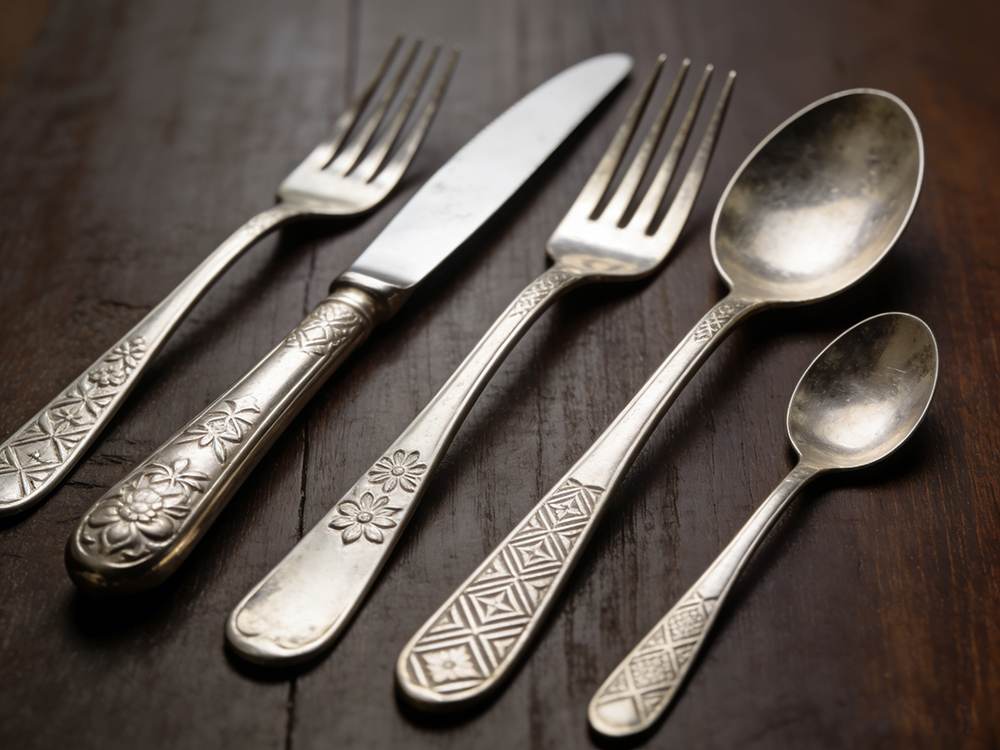
Forged Flatware Construction (Premium Build)
Forged flatware is made by heating and shaping a thicker piece of steel, which creates a stronger utensil with more resistance to bending.
The pattern is formed through the handle, not only pressed onto the surface. In practice, this matters when the flatware sees high pressure and constant use.
For instance, a fine dining room using 18/10 flatware for steak service will usually get a longer working life from forged pieces, and the handle detail stays defined over time.
This is also why luxury hotels and private clubs often choose forged flatware when the guest experience and long-term durability carry more weight than upfront cost.
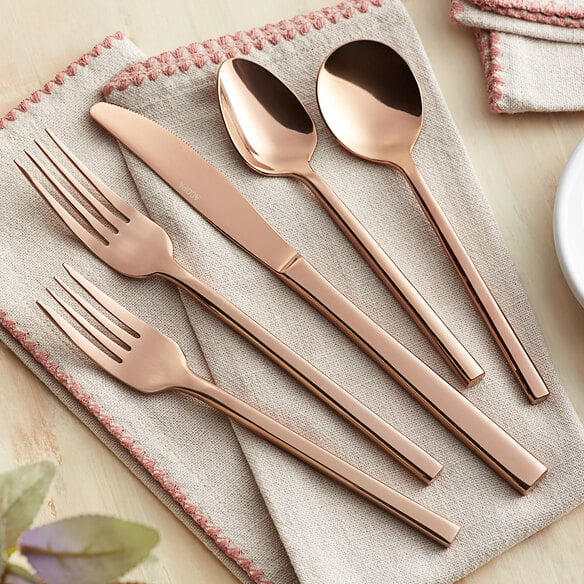
How to Choose Between Forged and Stamped
If your operation is high volume and you need reliable reorders, stamped commercial flatware in a heavy or extra-heavy flatware weight can be the most practical choice.
If you are building a premium dining experience and want maximum flatware durability, forged flatware is usually the better fit.
In many hospitality procurement programs, the mix works too. Stamped sets for everyday outlets, forged sets for private dining, banquets, or VIP service.
Flatware Finishes and Commercial Table Aesthetics
In restaurant flatware selection, the flatware finish changes how the table looks in photos, how the set hides wear, and how much upkeep your team deals with. It also affects flatware durability in commercial dishwashing, especially in high-volume hospitality tableware programs.
Mirror Finish (High Polish)
A bright, reflective look that feels classic in commercial flatware.
- Looks crisp under warm lighting and looks formal on the table
- Holds up well in daily use, but shows water spots and fingerprints faster
- Works well for fine dining, luxury hotels, and banquet service
- Easy choice when you want a traditional stainless steel look without extra complexity
Matte or Satin Finish
A cleaner finish that fits modern restaurants and contemporary hotel outlets.
- Reduces glare and hides fingerprints
- Makes light scuffs less noticeable during busy service
- Fits casual upscale concepts, modern plating, and minimalist dining rooms
- Pairs well with heavier flatware weight when you want a premium feel without shine
Hammered or Textured Finishes
Texture changes the look and also helps hide daily wear.
- Adds a handcrafted feel for rustic, chef-led, or farm-style concepts
- Masks minor scratches and handling marks better than smooth finishes
- Can feel less formal, so it depends on your venue style and guest expectations
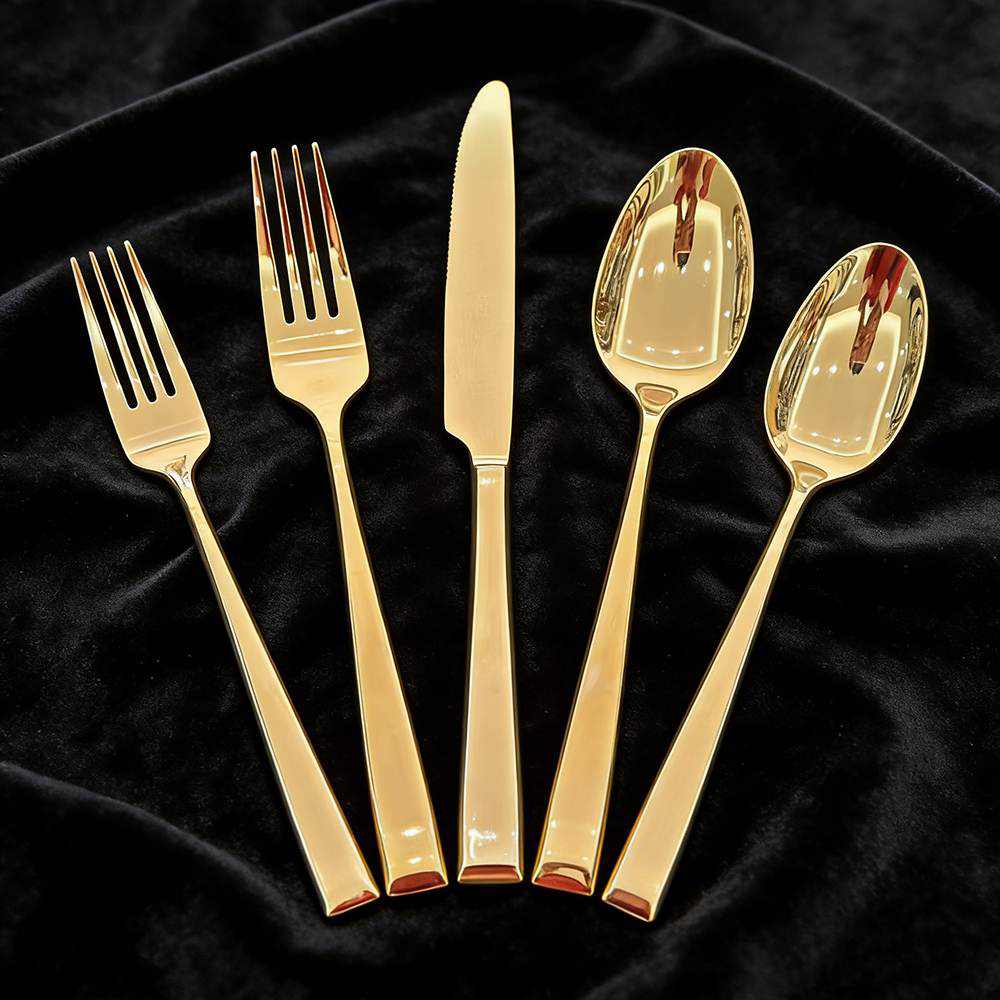
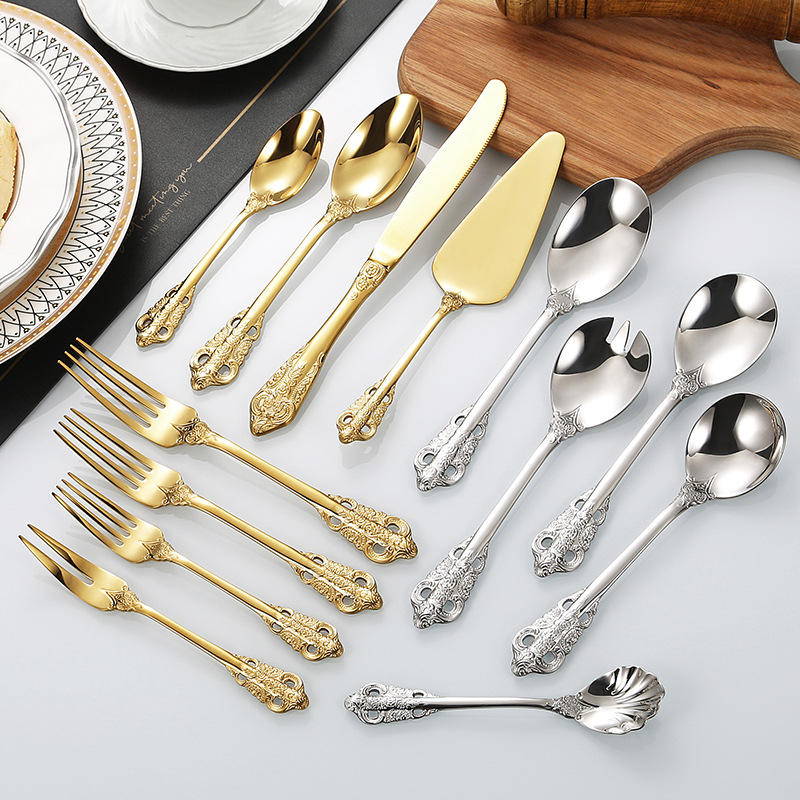
Silver Plate and Color Coatings
These finishes can look dramatic, but they come with trade-offs in commercial settings.
- Silver plate and colored PVD finishes can wear or chip faster with harsh cycles
- Better for lower-volume fine dining, boutique events, or special-use sets
- If you need one finish that stays safe long-term, classic stainless is usually the easiest to maintain
Choosing Commercial Flatware for Your Restaurant Type
Restaurant flatware selection gets easier once you match stainless steel flatware grades and flatware weight to how your operation runs. Use the scenarios below as a guide for commercial flatware recommendations in hospitality tableware planning.
Fine Dining and Luxury Hotels
Go with 18/10 flatware, extra-heavy or forged (about 60 to 90 grams), with forged construction when the goal is long-term flatware durability and a premium feel.
Mirror finish is the safe default, and a silver plate can work for special-use sets.
Quantity Planning: For 100 seats, plan at least 5 sets per guest position, so 500 dinner forks minimum.
Upscale Casual and Boutique Restaurants
Choose 18/8 stainless steel in a heavy weight range (about 55 to 70 grams) with stamped construction for cost control without sacrificing feel.
Mirror or matte finishes both work, so you can match the room style.
Quantity Planning: For 100 seats, 125 to 150 of each core piece covers service and washing cycles.
Fast-Casual and Mid-Level Dining
This works when speed, turnover, and loss risk matter more than a luxury feel, but you still want pieces that do not bend easily in daily use.
If budgets are tighter, 18/8 or 18/0 can be the right call when you keep weight practical. For example, heavy weight 18/0 often performs better in daily handling than light 18/10, because the thickness protects against bending.
Keep finishes simple, plan for higher replacement rates, and refresh annually as needed.
Quantity Planning: For 100 seats, plan 2 to 3 sets per guest position (so 200 to 300 dinner forks minimum), depending on turnover speed and how fast your dish cycle is.
Catering, Banquets, and High-Volume Programs
Most operators land on 18/0 to 18/8 with medium-to-heavy weights, stamped construction, and mirror finish for photos and easy resets.
Quantity Planning: Base it on your average event headcount, plus a 25 percent buffer, then keep a separate replacement reserve for losses (many operators hold another 10 to 15 percent in back stock for busy seasons).
Quantity Planning and Replacement Strategy
Commercial flatware planning starts with one question: how many pieces do you need in rotation so service never waits?
A simple way to estimate flatware quantity is to multiply the seated capacity by 1.5 to 2.5. The right multiplier depends on turnover, wash cycle time, and how often pieces disappear.
Here is what that looks like in practice.
A 100-seat dining room using a 2.5 multiplier needs about 250 dinner forks in rotation. A 50-seat fast-casual space at a 2.0 multiplier lands around 100 forks. A catering company building for 70-seat events at 2.0 needs around 140 forks, plus a buffer for transport losses.
Use a piece-by-piece breakdown so your restaurant’s flatware inventory stays balanced.
- Dinner forks: set the baseline (highest usage)
- Dinner knives: match dinner forks
- Soup spoons: about 75% of dinner forks
- Teaspoons:about 75% of dinner forks
- Salad forks:about 50% of dinner forks
- Dessert forks and spoons: about 50% of dinner forks
- Butter spreaders: add for formal service needs
Then, plan a replacement strategy by grade and volume.
Many operations budget annual replacement around 2% to 5% for 18/10, 5% to 10% for 18/8, and 15% to 25% for 18/0. Order replacements in batches when possible, confirm the same stainless steel grade and flatware weight, and track losses so you can adjust before shortages hit service.
Wrap Up
If you are selecting commercial flatware and want it to match your service style, guest expectations, and replacement needs, Brett can help.
We source hospitality tableware across stainless steel flatware grades, flatware weight options, and finishes, then recommend a set that fits your concept and budget.
Reach out to Brett to share your seat count, service type, and timeline, and we will suggest options and arrange samples.