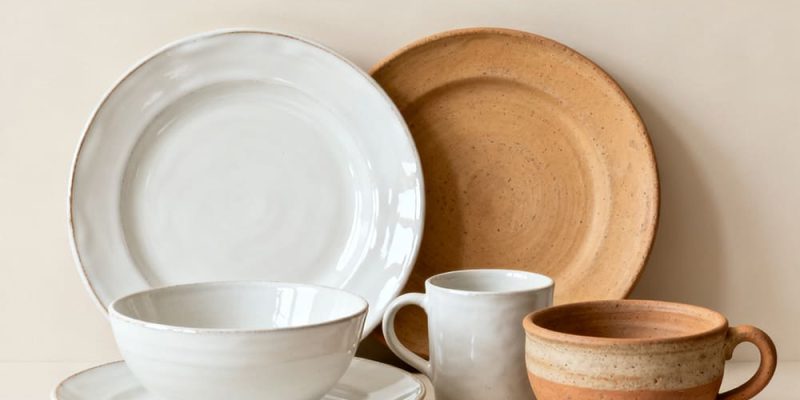
If you have experience purchasing clay products, you’ve probably heard many different terms during the purchasing process like ceramics, earthenware, stoneware, porcelain, and pottery. And you might wonder what the differences are between these terms. In our previous blog post, we discussed “The difference between ceramic and porcelain dinnerware”; you can check that out if you’re interested. Now, let’s turn our attention to ceramics and pottery and explore the differences between them. And which of them is better choice for dinnerware?
1. Is Pottery Considered Ceramic? (Short Answer: Yes)
Before explaining the differences between ceramic and pottery, let’s address a common question: “Is pottery ceramics?” This is a question many people ask when encountering these two materials.
According to authoritative ceramic science sources, including W. D. Kingery’s “Introduction to Ceramics” (a fundamental textbook in the field, which you can look up if you’re interested), ceramics refers to all inorganic, non-metallic solids formed and fired at high temperatures. Based on this definition, pottery is a subcategory of ceramics.
In short:
- Ceramics = Broad category
- Pottery = A specific type within the ceramics family
The Wikipedia entry for “ceramics” also provides a similar definition, stating that pottery is one of the earliest and most common forms of ceramics.
Therefore, we can conclude that all pottery is ceramic, but not all ceramics are pottery.
2. What is Ceramic?
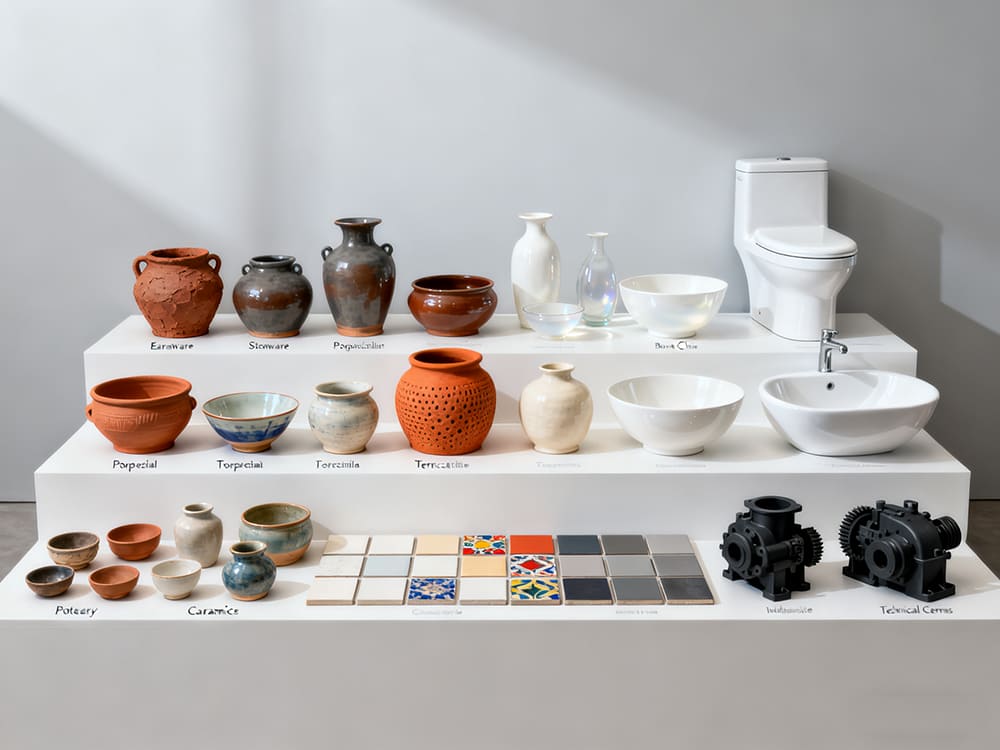
As mentioned above, ceramics refer to all inorganic, non-metallic solids formed and fired at high temperatures. They are typically made from clay and other natural minerals and fired in a kiln.
Types of ceramics include:
- Earthenware
- Stoneware
- Porcelain
- Bone china
- Terracotta
- Pottery
- Ceramic tiles, sanitaryware, technical ceramics, etc.
In the dinnerware industry, when we refer to “ceramic dinnerware,” it generally means pottery and stoneware dinnerware, as for porcelain and bone china we call by the specific name.
3. What Is Pottery?
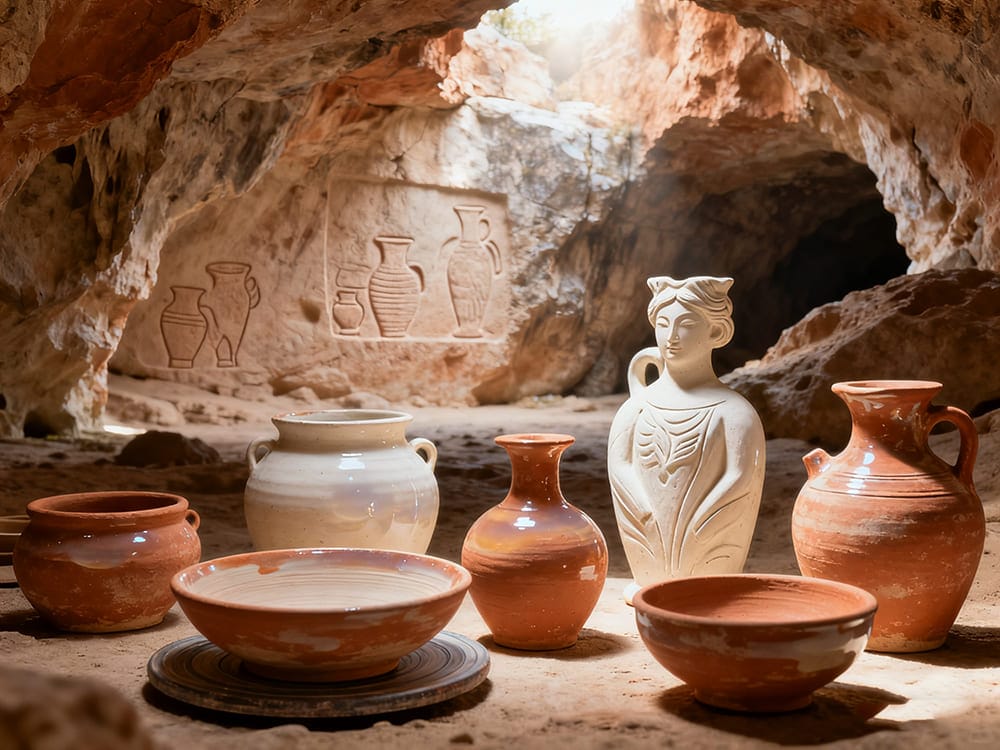
Pottery is one of the oldest crafts of humankind (some of the earliest examples date back over 20,000 years, such as the pottery from the Xianrendong site in China). It is an object made by hand or wheel-thrown from clay and fired at high temperatures, primarily used for vessels and artistic decoration (sculptures, vases), etc.
Most pottery is fired at lower temperatures (approximately 900-1100°C) and typically has the following characteristics:
- The body is more porous
- The appearance is heavier and more rustic
- It possesses the beauty of handmade craftsmanship
- The surface usually requires glaze to be waterproof
Overall, pottery gives a more traditional, handmade feel and artistic quality in its appearance.
4. Ceramic vs Pottery: What’s the Difference?
Pottery is a type of ceramic, so the difference between pottery and ceramics lies in what distinguishes pottery from other types of ceramics. Below is a comparison table highlighting the differences between pottery and ceramics.
Aspect | Ceramic | Pottery |
Definition | Broad category of all inorganic, non-metallic materials shaped and hardened by high-temperature firing | Traditional, usually handmade or small-batch objects made from clay (typically earthenware or stoneware) |
Composition | Includes earthenware, stoneware, porcelain, bone china, and technical ceramics | Usually earthenware or stoneware; porcelain is rare in true “pottery” |
Production Method | Can be handcrafted or mass-produced in factories; high uniformity possible | Mostly wheel-thrown, hand-built, or small-batch; emphasizes individual artistic expression |
Firing Temperature | 1000–1350 °C (varies by type) | Typically lower: 900–1100 °C |
Durability | Generally harder, more chip-resistant, and longer-lasting (especially porcelain & high-fired stoneware) | Softer and more prone to chipping unless high-fired stoneware is an exception) |
Water Absorption & Vitrification | Porcelain & stoneware are highly or fully vitrified (near 0% water absorption) | Usually only partially vitrified; needs glaze to be waterproof |
Aesthetic Style | Clean, refined, modern, professional look | Rustic, earthy, organic, artisanal feel |
Best Use Cases | Everyday dinnerware, restaurants, hotels, modern homes | Art pieces, rustic cafés, craft lovers, decorative objects |
Typical Examples | IKEA plates, fine bone china teacups, hotel tableware, floor tiles | Hand-thrown mugs, wood-fired vases, studio pottery bowls |
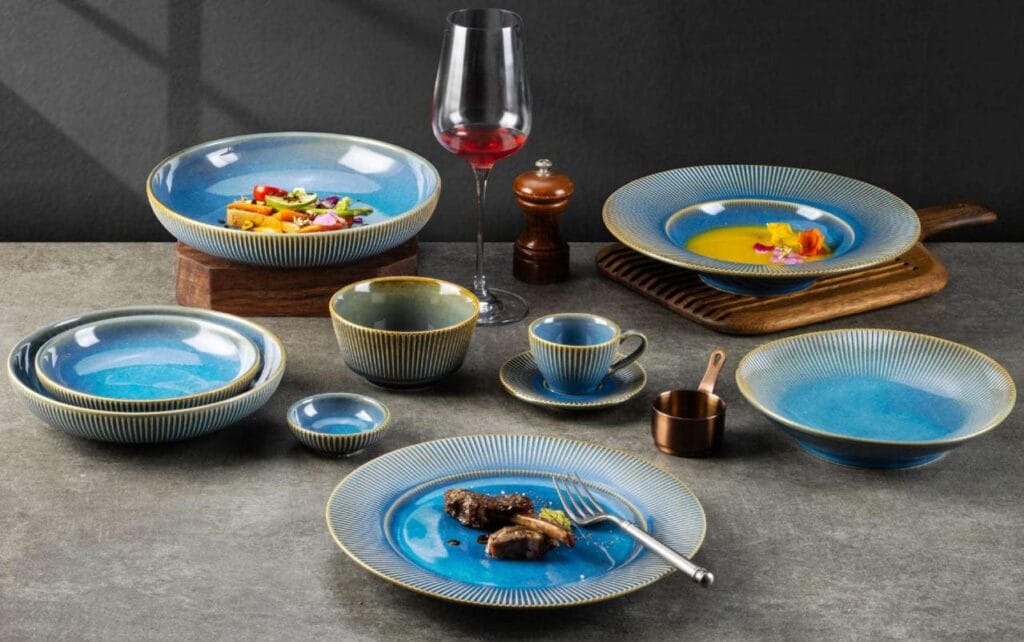
5. Ceramic Dinnerware and Pottery Dinnerware, Which is better?
After understanding the differences between ceramics and earthenware, I want to return to our main business – the tableware industry. Whether you are purchasing for a hotel or restaurant, or buying tableware for your own home, you will certainly be curious about which is better: ceramic or earthenware tableware? To compare which type of tableware is better, we first need to understand the requirements and evaluation criteria for tableware.
The following are some of the core factors to consider when purchasing tableware:
- Durability
- Water absorption
- Resistance to chipping
- Dishwasher safety
- Heat resistance
- Hygiene
- Appearance
- Cost
Now let’s compare earthenware and ceramic tableware based on these factors:
Earthenware dinnerware:
- Durability: Relatively poor
- Water absorption:Higher porosity, higher water absorption
- Resistance to chipping: Average, relatively more fragile than general porcelain
- Dishwasher safety: May not withstand commercial dishwasher cleaning
- Heat resistance:High
- Hygiene:Due to higher water absorption, there is a higher probability of bacterial residue, resulting in lower hygiene.
- Appearance: Retro, with a handmade texture, artistic
- Cost: General types (mass-produced in factories) are relatively inexpensive
Best for:
Home use, rustic style restaurants, art collection.
Ceramic dinner (to distinguish it from earthenware tableware, we mainly use porcelain tableware as a comparison):
- Durability:More durable
- Water absorption: Low porosity (generally less than 0.5%)
- Resistance to chipping: Strong
- Dishwasher safety:Can be used in general commercial dishwashers
- Heat resistance:High
- Hygiene:Very low water absorption, therefore high cleanliness and hygiene
- Appearance:Stylish, high-end, can be customized with different colors, patterns, and styles through various processes
- Cost:Relatively higher price than general earthenware
Best for:
Hotels, restaurants, catering services, long-term home use
Final Verdict
For practical tableware (especially for hotels and catering industries with high usage rates), ceramic tableware (mainly referring to porcelain tableware) is superior to earthenware tableware. For home use or those pursuing a retro or artistic style, earthenware tableware is also a very good and cost-effective option.
Conclusion
In summary, pottery is a type of ceramic, so comparing pottery and ceramics is essentially comparing pottery with other different types of ceramics. The biggest advantage of pottery compared to other ceramic products lies in its artistic appearance, tactile feel, and handcrafted look. If you want to learn more about the differences between different types of ceramics, you can follow our blog, where we will continue to share more knowledge about different ceramic tableware.