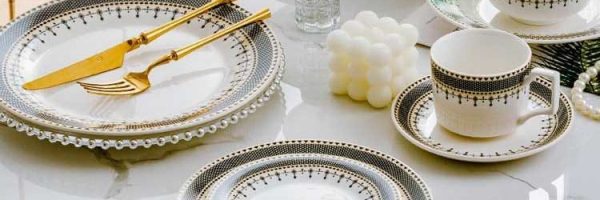

When choosing dinnerware, color is far more than an aesthetic decision. It influences appetite, perception of food quality, table ambiance, and even brand identity for restaurants and hospitality businesses. Among all color options, blue ceramic dinnerware stands out as both timeless and controversial. This raises an important question for buyers, designers, and restaurateurs alike: – Is blue a good color for dishes? The answer depends on psychology, culture, cuisine type, and practical usage. In this guide, we explore the design logic, science, advantages, drawbacks, and best-use scenarios of blue ceramic dinnerware. Why Blue Ceramic Dinnerware Has Enduring Appeal Blue has been used in ceramics for centuries, long before modern dining trends existed. From Chinese blue-and-white porcelain of the Ming Dynasty to European Delftware, blue has historically symbolized refinement, trust, and craftsmanship. According to Wikipedia’s overview of blue-and-white pottery, cobalt blue was favored because it remained stable under high kiln temperatures, making it ideal for ceramic decoration. Today, blue ceramic dinnerware continues to appeal for several reasons: It pairs naturally with white porcelain bases It works across traditional, coastal, and modern aesthetics It conveys calm, cleanliness, and sophistication It photographs exceptionally well (important in the Instagram era) Is Blue a Good Color for Dishes? The Psychology Explained Color psychology plays a crucial role in dining experiences. Research in environmental psychology and food science suggests that color can influence appetite and taste perception. Blue and Appetite Blue is often described as an appetite-suppressing color, largely because naturally blue foods are rare. According to color psychology studies summarized by Wikipedia’s article on color psychology, blue is associated with calmness, stability, and restraint rather than stimulation. This leads to a common concern:– Does blue dinnerware make food less appealing? The answer: Not necessarily. How Blue Dinnerware Affects Food Presentation While color psychology suggests that blue can suppress appetite, this isn’t necessarily true for plates. It depends on both the color combination of the food and the plate’s design. Blue tableware can positively impact our dining experience through these two factors. 1. Color Combination of Tableware and Food Blue ceramic tableware pairs exceptionally well with foods in contrasting colors: White or beige dishes (pasta, risotto, seafood) Warm-toned foods (roasted meats, roasted vegetables) Vibrant garnishes (green, red, yellow) In professional food presentation, contrast enhances visual appeal. Dark blue plates, in particular, can make lighter-colored foods appear more refined and carefully prepared. 2. Blue Tableware Design Enhances a Premium Feel Consumer behavior research shows that even with smaller portions, darker or cooler plate colors can improve people’s perception of food quality. Therefore, the blue plate is the choice of many high-end restaurants, fine seafood cuisine, and some themed restaurants and hotels, such as Michelin-starred restaurants, boutique hotels, and some restaurants with seafood and ocean themes. The Cultural Connotation of Blue in Tableware Color perception is not universal. Different countries, cultures, and ethnicities have different understandings of color. Below are the meanings of blue in different regions: East Asia: Blue symbolizes harmony, eternity, and refinement (especially evident in Chinese porcelain). Europe: Associated with tradition, trust, and elegance. Mediterranean Region: Evokes the ocean, freshness, and coastal life. Modern Western Dining: Reflects minimalist and tranquil luxury. Blue has relatively positive symbolism and meaning across different regions, making it a globally accepted color. Blue ceramic tableware is often considered a safe global choice for international hotel brands. Advantages of Blue Ceramic Tableware 1. Timeless and Classic Design Blue is a globally inclusive color, evokes feelings of comfort, and is one of the most popular colors. It pairs well with food (especially seafood), making it a timeless choice for tableware design. 2. Ideal for the Catering Industry Blue plates are better at concealing minor stains, dishwashing marks, and food residue than pure white (of course, this doesn’t mean restaurants can be lazy with cleaning; hygiene is still very important). Therefore, blue tableware is ideal for high-traffic dining environments. Even with frequent use, minor imperfections won’t be as noticeable, and it’s more durable than pure white tableware. 3. Abundant Style Selection Blue ceramic tableware is available in the following styles: Matte or glossy finish Active glaze Hand-painted or printed patterns Minimalist modern designs or classic edges 4. Distinctive Brand Image Blue, as a universally popular color, has a striking effect when used in tableware. Exquisitely designed blue tableware, such as the deep-sea blue ceramic tableware set from Brett’s high-temperature kiln change series, can create a striking impression, enhance the dining experience, elevate the ambiance of hotels and restaurants, and enhance the brand image. Potential Drawbacks of Blue Dishes To answer honestly whether blue is a good color for dishes, it’s important to acknowledge limitations. 1. Not Ideal for All Cuisines Blue may not complement: Heavily brown or beige foods (some stews, gravies) Certain desserts where warmth is key Traditional cuisines emphasizing red or gold tableware symbolism 2. Appetite Perception Concerns In casual dining or buffet settings, blue plates may feel less “inviting” than warm-toned alternatives like cream or ivory. 3. Shade Matters Not all blues perform equally: Very dark navy may overpower small dishes Bright cobalt can feel too bold for minimalist concepts Muted or dusty blues tend to be the most versatile Best Uses for Blue Ceramic Dinnerware Restaurants & Cafés Ideal for: Seafood restaurants Contemporary fine dining Coastal or Mediterranean concepts Chef’s tasting menus Hotels & Resorts Blue ceramic dinnerware works well in: Boutique hotels Breakfast service (especially with white food items) Poolside or seaside dining areas Retail & Home Use For consumers, blue dishes offer: Everyday elegance Easy coordination with neutral table linens A balance between decorative and functional design Modern Trends in Blue Ceramic Dinnerware Current market trends show a move toward: Reactive blue glazeswith organic variation Matte blue stonewarefor modern aesthetics Blue-on-white minimal patternsinstead of heavy decoration Sustainable ceramic production, emphasizing durability and longevity According to design trend analyses from hospitality sourcing platforms, blue remains one of the top three most specified dinnerware colors for modern restaurant projects globally. Final Verdict: Is Blue a Good Color for Dishes? Yes
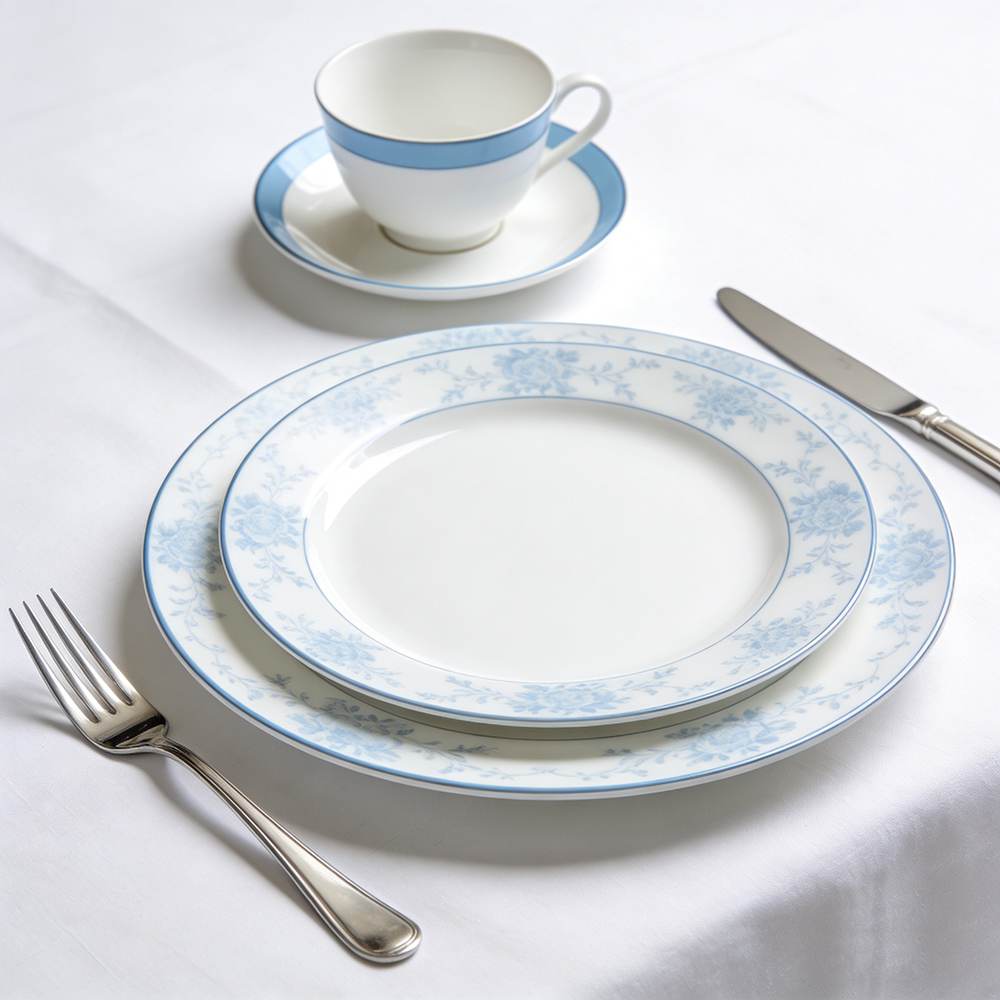
Top 10 Dinnerware Manufacturer in UK Recommended
If you are searching for a reliable dinnerware manufacturer in UK, whether for hospitality sourcing, retail distribution, or brand collaboration, understanding who truly manufactures (rather than just markets) their products is essential. The UK has a long and respected history in ceramic craftsmanship. From centuries-old pottery towns to modern design studios supplying Michelin-starred restaurants, the country remains an important player in the global tableware industry. This guide highlights 10 of the most reputable UK dinnerware manufacturers, selected based on heritage, manufacturing capability, design influence, and market presence. Why Choose a Dinnerware Manufacturer in the UK? UK-based manufacturers offer several distinct advantages: Strong heritage in ceramics, especially porcelain and fine bone china High design standards influenced by British lifestyle and dining culture Close alignment with European food-safety and sustainability regulations Strong reputation among luxury hotels, restaurants, and retailers That said, UK manufacturing often focuses on design, heritage, and premium positioning, while large-scale production is sometimes supplemented globally. Many buyers therefore compare UK suppliers with overseas manufacturing partners for cost efficiency. Top 10 Dinnerware Manufacaturer in UK Recommended 1. Wedgwood Founded: 1759Specialty: Fine bone china, porcelain tablewareWebsite: https://www.wedgwood.com Wedgwood is arguably the most internationally recognized British dinnerware manufacturer. Founded by Josiah Wedgwood, the brand has supplied royalty, luxury hotels, and collectors for over 250 years. Known for refined bone china and elegant patterns, Wedgwood represents the pinnacle of British ceramic heritage. Today, while production is partially global, design and brand identity remain deeply rooted in the UK. 2. Royal Doulton Founded: 1815Specialty: Porcelain and bone china tablewareWebsite: https://www.royaldoulton.com Royal Doulton blends British tradition with contemporary design. Its collections range from classic formal dining to modern, casual tableware suited for everyday use. The brand is widely used in hospitality and premium retail, making it a familiar name for buyers seeking a trusted UK-origin dinnerware manufacturer with global reach. 3. Emma Bridgewater Founded: 1985Specialty: Handmade, artisanal earthenwareWebsite: https://www.emmabridgewater.co.uk Emma Bridgewater is one of the UK’s most beloved ceramic brands, known for its hand-decorated earthenware. While not traditional porcelain, the brand has built a strong reputation for quality craftsmanship, authentic UK production ethos, and charming designs that resonate with both consumers and restaurants focusing on character-driven table settings. Their hand-painted mugs and plates are often used in boutique cafés and heritage-themed eateries. 4. Denby Pottery Founded: 1809Specialty: Stoneware dinnerwareWebsite: https://www.denbypottery.com Denby stands out among UK dinnerware manufacturers for its in-house production in England. Unlike many heritage brands, Denby still manufactures a large portion of its stoneware locally. Its products are highly durable, oven-safe, and designed for everyday use—making Denby especially popular in modern households and casual dining establishments. 5. Portmeirion Group Founded: 1960Specialty: Porcelain and ceramic dinnerwareWebsite: https://www.portmeiriongroup.com Portmeirion is best known for its botanical-inspired designs, particularly the iconic Botanic Garden collection. The group owns several well-known brands and focuses on decorative yet functional tableware. Portmeirion products are widely distributed internationally and appeal strongly to lifestyle and gift markets. 6. Steelite International (UK Origin) Founded: 1983Specialty: Professional hospitality dinnerwareWebsite: https://www.steelite.com Steelite is a major name in the HoReCa sector, supplying restaurants, hotels, and cruise lines worldwide. Headquartered in the UK, the company is known for technical performance, durability, and chef-driven design. For buyers focused on commercial dining environments, Steelite represents a highly functional dinnerware manufacturer in UK with strong global logistics. 7. Moorland Pottery Founded: 1980s (based in Devon, UK)Specialty: Handcrafted traditional potteryWebsite: https://www.moorlandpottery.co.uk/ Moorland Pottery is known for its authentic British stoneware and earthenware, handmade in small batches. Though smaller in scale than global brands, Moorland’s work emphasizes artisanal techniques and local craftsmanship. Their products are often chosen by boutique cafés, heritage hotels, and fine dining establishments looking for distinctive table settings. 8. Churchill China Founded: 1795Specialty: Hotel & restaurant dinnerwareWebsite: https://www.churchill1795.com Churchill China is one of the strongest UK-based manufacturers dedicated almost entirely to hospitality. Its collections focus on durability, stackability, and contemporary presentation. The company invests heavily in material technology and glaze development, making it a preferred supplier for chefs and hotel groups across Europe. 9. Burleigh Pottery Founded: 1851Specialty: Handcrafted earthenwareWebsite: https://www.burleigh.co.uk Burleigh is unique for its continued use of traditional handcraft techniques, including hand-applied transfer printing. Production still takes place in Stoke-on-Trent. While earthenware is less common in commercial dining, Burleigh’s products are highly valued in premium retail and heritage-driven collections. 10. Duchess China 1888 Founded: 1888Specialty: Fine bone chinaWebsite: https://www.duchess-china1888.com/ Duchess China focuses on elegant bone china collections, often associated with formal dining and tea service. The brand has strong historical ties to British ceramic craftsmanship and continues to appeal to traditional markets. UK vs Global Manufacturing: A Practical Perspective While UK dinnerware manufacturers excel in design, heritage, and premium positioning, buyers should also consider factors such as: Minimum order quantities Customization flexibility Lead times Cost efficiency This is why many international buyers compare UK brands with overseas production partners. If you are evaluating both heritage and scalability, our earlier article on dinnerware manufacturer in China recommended offers a complementary perspective on global sourcing strategies. Final Thoughts Choosing the right dinnerware manufacturer in UK depends on your priorities—whether that’s heritage, hospitality performance, design leadership, or brand recognition. The UK remains a cornerstone of global tableware culture, particularly for premium and professional dining. By understanding each manufacturer’s strengths, buyers can make informed decisions that balance tradition with modern commercial realities.
Hotel Dinnerware Procurement: Specifications, Standards & Supplier Selection
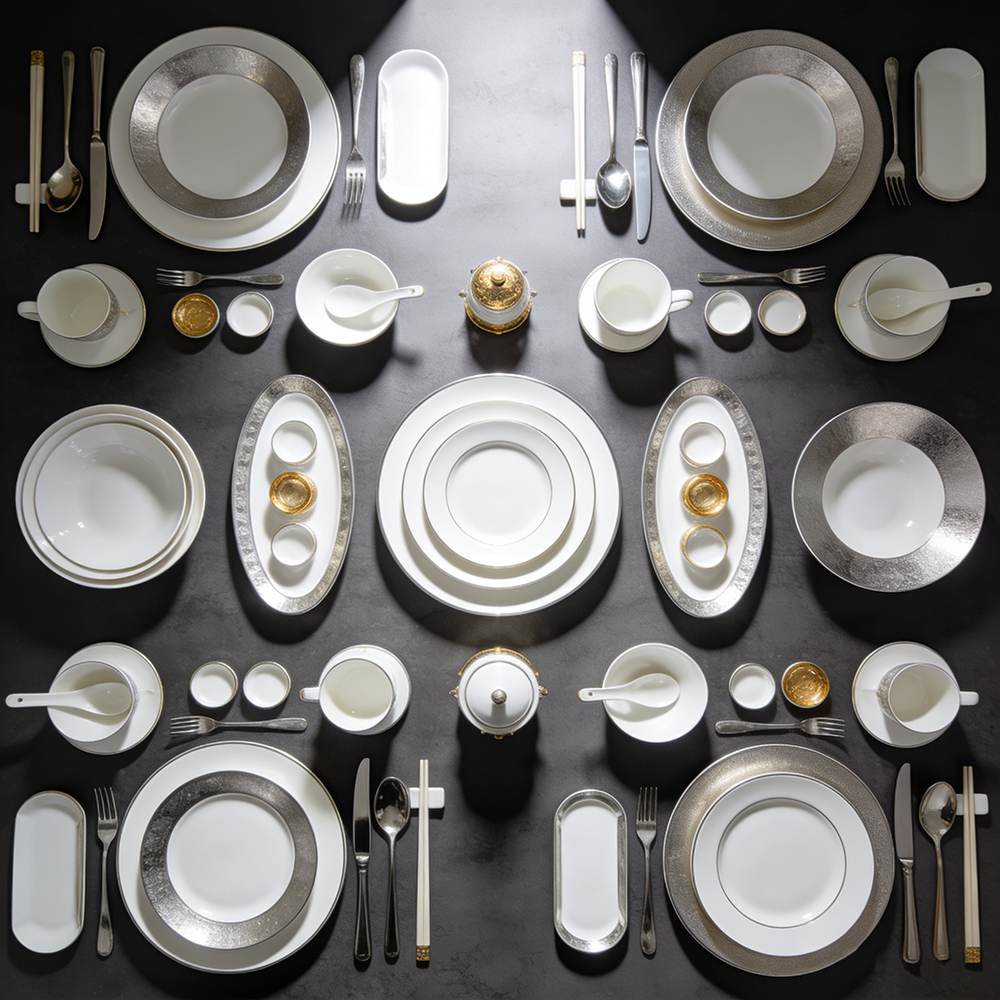
Hotel dinnerware procurement exists to manage scale, consistency, and long-term use across a property. Hotels don’t buy plates for one service or one outlet. They plan for restaurants, banquets, room service, lounges, and staff dining, all under the same brand standard. So why does procurement matter? Because the decision doesn’t end after the first delivery. Buyers have to plan for storage, replacement cycles, and future reorders while working within fixed timelines. Plates ordered today need to match in size, color, and performance months later. Procurement turns dinnerware from a simple purchase into an operational asset that supports kitchens, service teams, and guest experience over time. Let’s take a look at how dinnerware procurement works. How Hotel Dinnerware Procurement Works in Practice Hotel dinnerware procurement follows a structured path. Volume, timelines, and long-term use shape the process. It usually starts when an opening date is fixed or a renovation is approved. What looks like a simple plate decision becomes a coordinated operational project. How Dinnerware Decisions Actually Get Made in Hotels Procurement usually starts with the basics: what materials make sense, how many pieces are needed, and how the plates need to perform day to day. Those decisions don’t sit with one team. Operations, culinary, design, and finance all weigh in before anything moves forward. Once there’s alignment, buyers narrow the list and bring in samples. Those samples don’t stay in a showroom. They go straight into the kitchen. Plates get stacked, washed, and handled during service to see how they really hold up. The final choice comes down to what works consistently, not what looks best on paper. If the quality feels right, reorders look predictable, and the supplier can support long-term use, the decision sticks. Procurement Timelines Buyers Plan Around Timing drives every decision. Buyers plan months ahead, working backward from opening dates or relaunch deadlines. Sometimes, production lead times span several weeks, especially for custom designs. Delivery buffers are built to handle shipping delays and inspection windows. Successful procurement only happens when dinnerware arrives early enough for staff training, table setup, and last-minute adjustments without any pressure from the calendar. Defining Dinnerware Specifications Before You Contact Suppliers This part usually starts with a simple question from someone on the team: “Can’t we just pick a plate and order it?” That question tends to disappear the first time mismatched sizes show up or a re-order doesn’t quite match the originals. Clear specifications save you from these moments and make supplier conversations much easier from day one. Material and Performance Expectations Start with how your kitchen actually runs. Porcelain, bone china, and stoneware all look good on the table, but they behave very differently in service. A breakfast buffet with heat lamps and fast turnover needs something tougher than a quiet lounge. Fully vitrified bodies matter because they handle constant washing and heat without absorbing moisture. Think about dishwasher cycles, serving speed, and how often plates move from the hot line to the cold rinse. The right material supports service pace instead of slowing it down. Design, Size, and Brand Consistency This is where many hotels question their buying decisions later. Plate diameters sound minor until banquet plates aren’t the right size or salad plates crowd the tables. Rim profiles affect plating space and how sauces sit. Logo placement matters because it shows up in photos and room service trays. Color tolerance is critical for reorders. If the second batch looks slightly off, guests notice. Consistency is what keeps your stacks looking intentional months after opening. Functional Use in Hotel Kitchens Picture a busy night. Plates stack high behind the pass. Room service loads trays quickly. Banquet teams clear hundreds of covers at once. Specifications should account for stacking stability, weight, and grip. Heat lamps, carts, and tight storage spaces all test dinnerware daily. When specs match commercial kitchen behavior, plates feel like tools, not liabilities. Food Safety, Compliance, and What Procurement Teams Verify Choosing dinnerware for your restaurant comes with food safety concerns. Food comes in contact with the dinnerware surface, so procurement teams treat compliance as a shared language between chefs, operations managers, and legal teams. FDA Food Contact Compliance in the US In the US, hospitality food contact compliance starts with how materials behave once food hits the plate. Testing focuses on whether substances such as lead or cadmium migrate into food under heat, acidity, and repeated washing. During everyday service at the restaurant, plates end up holding hot sauces, citrus, oils, and desserts shift after shift. Over time, that exposure is exactly what testing is meant to account for. For procurement teams, FDA documentation isn’t paperwork for the file. It becomes part of the purchasing trail, backing internal sign-offs, vendor reviews, and brand standards checks. When questions come up later from ownership, auditors, or operations, having clear test reports keeps the conversation factual, simple, and easy to trace. Quality Management and Manufacturing Controls Quality management systems like ISO 9001 speak less about the plate itself and more about how it gets made every time. In plain terms, ISO 9001 shows that a manufacturer follows repeatable processes for sourcing materials, controlling production, inspecting output, and correcting issues before shipment. For hotels ordering thousands of pieces, consistency matters more than surface branding. A dinner plate re-ordered six months later needs to match weight, color, glaze feel, and stack height. Procurement teams rely on manufacturing controls to protect that consistency across batches and future orders. Decorative vs Service Grade Dinnerware Not all ceramics are built for hospitality use. Decorative dinnerware prioritizes visual appeal over structural performance. In the kitchen, those pieces face heat lamps, commercial dishwashers, stacking pressure, and fast clearing during service. Service-grade dinnerware is designed with those conditions in mind. Materials, firing temperatures, and glaze formulations support repeated use rather than occasional display. Procurement teams verify this difference early because plates behave very differently once they leave the showroom and enter a working kitchen. Creating an Effective Dinnerware RFP An RFP or Request for Proposal is the document
White vs Colored Dinnerware: Psychology and Plating Design for Restaurants
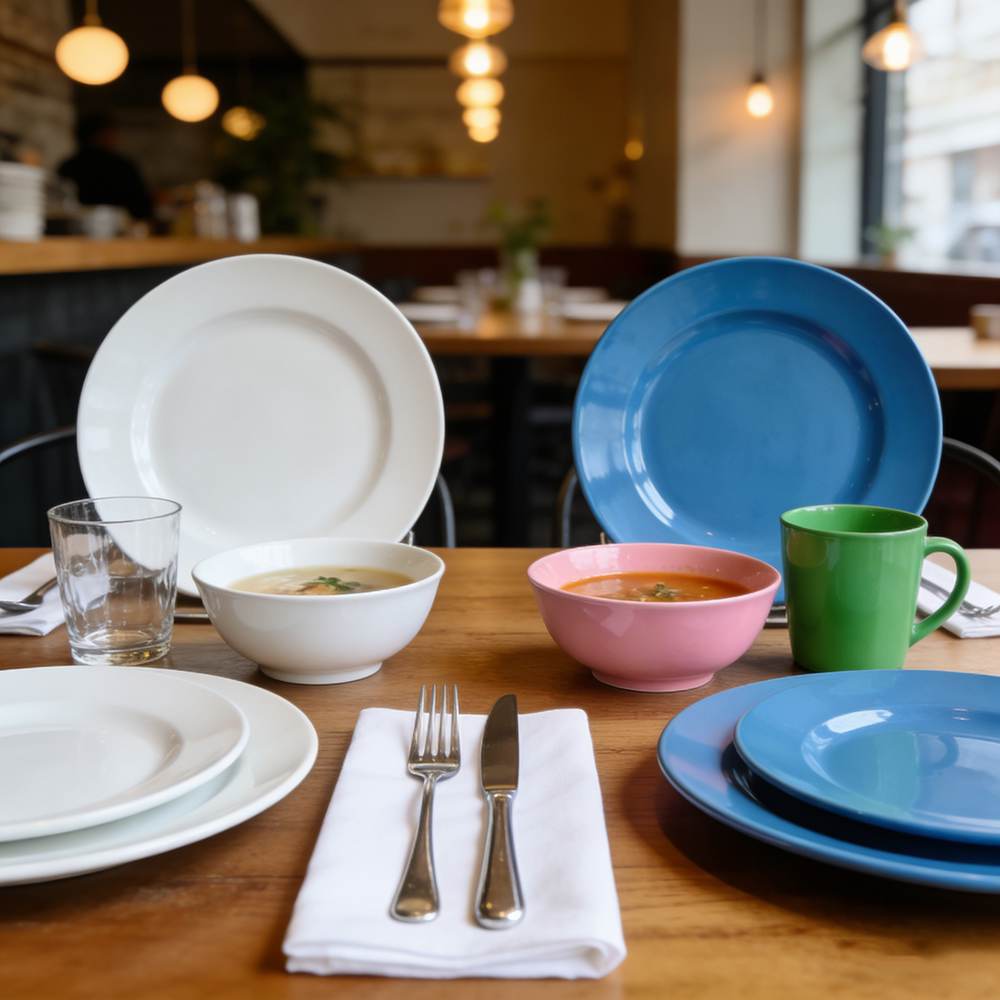
If you think your diner will be judging your food serving by taste only, you are wrong. They are judging for sure, but that begins way before they even start eating. Guess what creates the very first impression on their minds? The plate you serve the food on. Be it white, colored, patterned, or gold rimmed, each serving choice is a sales pitch for your cuisine. On the one hand, white colored plates make a dish look elegant and sophisticated. On the other hand, a boldly colored plate uplifts the entire dining experience. So, should you go for the contemporary white or bold black? Let’s learn about the plating colors. The Science Behind Visuals in Dining Your plates are the secret weapons that can change the entire perception of the food. As soon as the food lands on the table, the diners form an opinion about it. Visuals matter, and that’s just basic psychology in fine and casual dining. Research shows that visual cues, including the color and design of the weight plate, can change how people expect the food to taste. So keeping the visual appeal of your dish is not an add-on, but it actually drives satisfaction. As per another research, when the same dessert was served on different colored plates, people thought each serving had a different quality and sweetness. The color of the plate they were served on changed people’s perception of its sweetness and quality. In another study, people were asked to evaluate their servings in red, yellow, and blue colors. Red was associated with positive emotions and pleasure. Blue received negative reactions, where people even showed low appetite. This difference in attitudes was not due to the food quality but rather the color the food was served on. So, good-looking meals are more likely to get a higher ranking in the mind of the diner, which means they are likely to return and tip better. White Dinnerware: The Gold Standard There is a reason why white plates for plating have still survived today. They are timeless and versatile. You can’t ignore them, and they make the servings pop out. Another thing is that white goes with everything. No matter what the dish color (except for pure white, as it is!), it looks instantly vibrant on the solid background. Most restaurants still rely on white dinner plates due to control. It lets them display their artistry on a blank canvas. They can play around with all kinds of cuisines, color palettes, and seasons on white. Not All Whites Are Equal There are different shades of white. We have the pure white, which is sharp and modern but very unforgiving. It’s the best for contemporary restaurants looking at standardized servings. Then we have cream or ivory, which gives a bit of form to the serving. The shade feels classic and elegant, which is best for fine dining and Instagram, of course. The most popular one, however, is eggshell. This is like the balanced ground between both. It’s clean, just like pure white, but also elegant, like cream. It can work with different cuisine menus and seasons with ease, which is why it’s the hottest choice. Advantages of White Dinnerware White colored dishes are very versatile, and that makes them an all-around favorite in the food business. Let’s take a look at some of the key advantages of using white dinnerware. Neutral Canvas White provides a neutral background to your food. It doesn’t compete with it, but rather lets it shine. Whether you are serving fresh vegetables, proteins, or desserts, all hues are accentuated on white. Cleanliness White color also depicts cleanliness. Although it’s very unforgiving of the stains, it makes the food look well thought out, hygienic, fresh, and sophisticated. Portion perception Food appears larger on white. The color makes the serving look more generous without increasing your ingredient costs. So it’s more like a money-saving hack as well. Instagram Ready The color white is a clear winner in high-end dining. It lets the focus stay on the technique and detail. The dish is always Instagram-ready, where the meal is the star. That goes for all kinds of serving, whether in white bowls, dessert plates, or dishes. It gives a consistent baseline and doesn’t let the meals clash with each other. Colored Dinnerware – The Silent Advocates Bold, playful, and full of personality, that’s what colored plates are. They are the ideal tool for food businesses that want their dishes to advocate for them. Remember, though, going for bold colored plates is not a rebellion against white color. It’s more of making a statement. The plate color psychology goes far beyond presentation. Warm colors like red, orange, and yellow work as appetite boosters. They increase the appetite. While cool colors like green and blue look sophisticated and calm. But they can also suppress the appetite. How Different Food Businesses Use Colored Plates Not all food businesses use dinnerware color in the same way. Restaurants that focus on plated dining choose dinnerware based on how they want food to be perceived. Fine-dining and most Michelin-style restaurants use white or muted tones. They serve on white plates as they want the ingredients and serving styles shine. However, there are trending cafés and modern style bistros that use bold and colored plates. This is because they want to create memorable visuals. They also use it as a marketing strategy, as when pictures of the dishes are shared on social media, they can instantly be associated with their brand. So, colored dinnerware becomes a silent ambassador for them. You’ll find colored dishes in many ethnic or themed restaurants. They use color to match the cultural or seasonal vibes. For example, many Japanese restaurants use dark and earthy-toned plates for serving sushi and other cuisines. These natural and neutral backgrounds make the colors and textures of the food stand out without distraction. Colored Dinnerware and Its Influence on Different Foods The color of the plate also influences how the serving will be
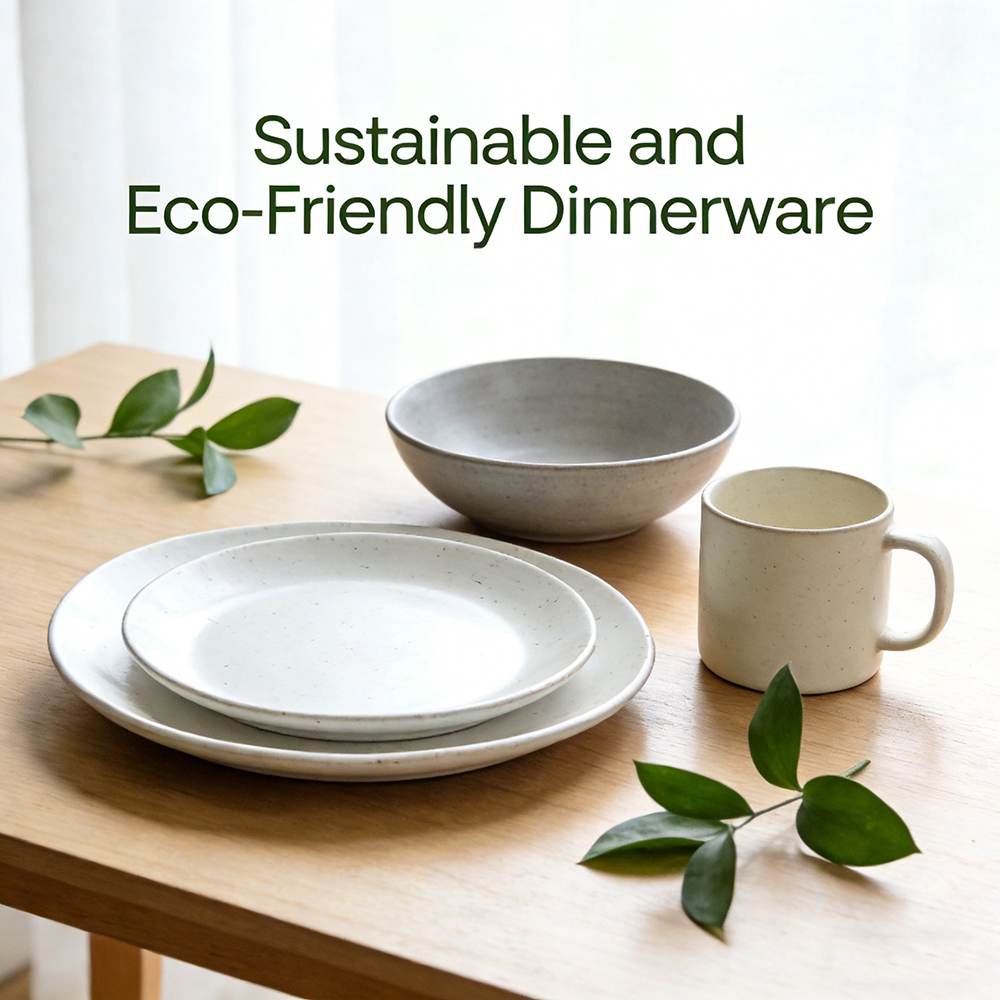
Sustainable and Eco-Friendly Dinnerware Options for Restaurants
Every restaurant wants fewer broken plates and fewer emergency reorders because they result in lower replacement costs. Sustainability in dinnerware rarely starts with a big environmental goal. It usually starts with frustration that comes with managing a dining operation. Plates chip faster than expected. Stacks never look complete. Boxes of replacements arrive far too often. Sustainable dinnerware is about choosing materials that survive service, dishwashing, and daily handling without draining your budget or filling storage rooms with mismatched pieces. This guide breaks down what sustainability really means for restaurants and which dinnerware options actually hold up. What Makes Dinnerware Sustainable? Sustainability in dinnerware doesn’t come with the product tag or in a brochure. When you’re re-ordering plates far sooner than you planned, that’s when sustainability comes into question. Truly sustainable dinnerware earns its place by surviving kitchen conditions and not by promising eco-benefits on paper. Below are the factors that actually determine whether dinnerware is sustainable once it enters daily hospitality use. Longevity Beats Labels Picture opening month versus month six. Opening week plates look perfect. By month three, a few are chipped. By month six, the stack is uneven. That replacement cycle is where sustainability is won or lost. A plate that lasts five years creates less waste than one replaced twice a year, even if the shorter-lived option claims to be “eco.” Fewer breakages mean fewer shipments, less manufacturing demand, and less material ending up discarded. Longevity reduces environmental impact without needing a label. Commercial Kitchens Stress-Test Plates Restaurant plates live hard lives. They’re stacked fast during clearing. They rattle through dishwasher racks. They sit under heat lamps waiting for pickup. They’re handled by different staff every shift. Sustainable dinnerware is built to tolerate repeated stress. High firing temperatures create denser ceramic bodies. Quality glazes resist wear from detergent and scrubbing. When plates survive thousands of washes without degrading, they reduce waste far more effectively than fragile alternatives. Replacement Cycles Ask yourself how often you re-order. Not because styles change but because the pieces disappear. Frequent orders mean higher waste, higher transport emissions, and higher long-term costs. Sustainable dinnerware stretches replacement cycles. Sets stay complete longer. When replacements are needed, consistency matters, so old and new pieces still work together instead of forcing full resets. Reusable vs Disposable in Service Disposable and compostable options sound sustainable until service begins. They require constant restocking, generate daily waste, and struggle with hot or plated food. Durable reusable ceramic outperforms disposables over time. One plate reused thousands of times produces less waste than hundreds of single-use items. Sustainability improves when durability replaces convenience. What Dinnerware Materials Are Sustainable and Eco-Friendly? Not all dinnerware materials behave the same way in commercial kitchens, as some naturally last longer, waste less, and age better under pressure. Porcelain Porcelain earns its reputation by lasting. Fired at very high temperatures, it forms a dense, non-porous body that handles heat, moisture, and constant dishwashing without breaking down. In hotels and full-service restaurants, porcelain survives daily service because it resists staining, doesn’t absorb odors, and keeps its finish intact over time. And when porcelain fails, it’s usually due to a drop and not gradual wear from a sustainability standpoint that matters. Fewer chips mean fewer replacements, fewer emergency orders, and fewer shipments. Over years of service, porcelain dinnerware reduces waste simply by staying in rotation longer. Bone China Bone china surprises operators because it feels light, almost delicate, yet it is remarkably strong for its thickness. Because it’s thinner than most ceramics, each plate uses less raw material, and the lighter weight reduces strain during stacking and clearing. In controlled environments like fine-dining or hotel restaurants, bone china holds up with minimal replacement. Sustainability here depends on how the dining room runs. With trained staff and steady service, bone china dinnerware can last for years. In rushed, high-impact kitchens, it’s less forgiving. The material itself is efficient, but hotel operations determine whether that efficiency pays off. Stoneware Stoneware sits comfortably between durability and warmth. It’s fired hotter than earthenware, which gives it better strength while keeping the tactile grounded feel that many casual concepts prefer. In bistros and farm-to-table restaurants, stoneware fits naturally. It holds heat well, feels substantial in the hand, and handles regular service without feeling fragile. Sustainability depends on quality. Well-glazed stoneware can last for years. Poor glazing leads to faster wear, staining, and earlier replacement. When sourced carefully, stoneware offers a practical balance: fewer replacements than earthenware, with a look that doesn’t feel overly formal. Earthenware Earthenware starts with a sustainability advantage on paper. It is fired at lower temperatures, which means less energy upfront. The challenge shows up during service, though. Earthenware is more porous and less tolerant of thermal shock, making it prone to chipping and cracking in busy kitchens. In high-volume operations, replacement rates climb quickly, offsetting any initial energy savings. That’s why earthenware works best as an accent. Signature plates, controlled presentations, and low-stress use are where it shines. When limited to specific roles, it can be sustainable. When used everywhere, constant replacement usually turns it into a waste driver. Melamine and Alternatives Melamine lasts in ways ceramics don’t. It resists drops, shrugs off impacts, and rarely chips. Operationally, that durability is appealing. Environmentally, it’s more complicated. Melamine isn’t biodegradable and has limited recycling options. It also comes with heat and food limitations, making it unsuitable for high-temperature service. Its long lifespan reduces replacement waste, but the end-of-life impact still matters. In certain settings, melamine lowers breakage and costs. From a sustainability perspective, it’s a compromise. It is durable in use but less aligned with long-term environmental goals than reusable ceramics. Reusable vs Disposable: Where Sustainability Breaks Down On paper, disposable dinnerware feels like an easy win. When plates chip too often, or labor feels tight, compostable plates start to look appealing. There’s no washing and no breakage. Simply use them and toss them. But that’s not the case in high-volume restaurants. Here’s why. Why Disposables Feel Like the Solution In
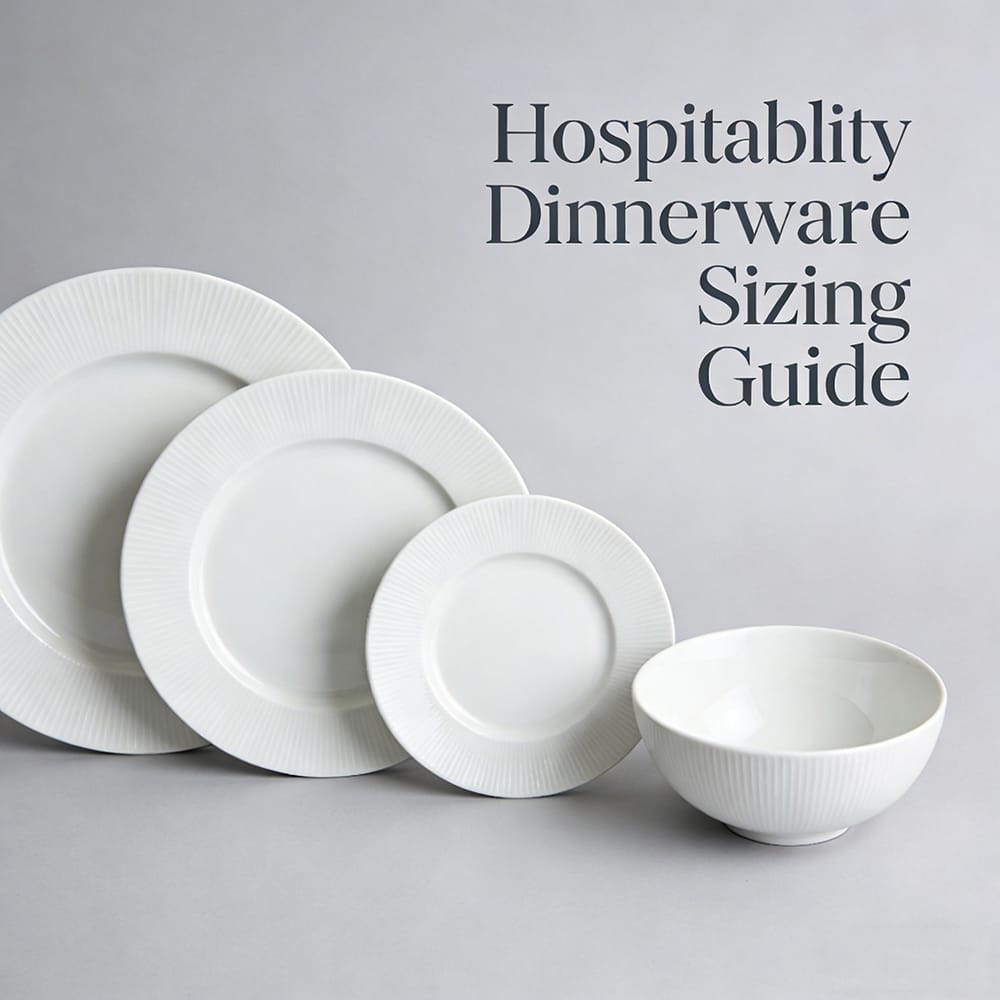
Dinnerware Sizing Guide: Plate Sizes & Portions for Hospitality
What if you learn that by simply swapping your plate size, you can save up to USD 300 to USD 600 a day? That too, without changing your menu or portion quality? Instead of using the standard 12-inch dinner plates, use 10.5-inch plates. With decreased space to fill, deliberately add 1-2 ounces less of, say, protein, the most expensive item. The dish will still appear full and balanced. Customers too won’t notice the difference either. But the cost savings are much noticeable: 1-2 ounces less of protein can save up to USD 2 to USD 4 per cover. Multiply that by 150 servings, and you get around USD 300 to USD 600 savings every day! Size matters, even if it’s a half-inch difference in the size of dinner plates. Putting it in monetary terms, restaurants and food businesses, using the right dinnerware, save up to 10% to 15% on annual food costs. Let’s learn how to choose the right dinnerware. Quick Dinner Plate Sizes Chart Here is a quick reference table for the standard sizes of dinner plates. Plate Type Standard Size Common Uses Portion Size Dinner Plate 10.5-11″ Main course, plated entrees 6-8 oz protein Salad Plate 8-9″ Appetizers, salads, sides 3-5 oz Bread Plate 6-7″ Bread, butter, small items Individual serving Bowl (soup) 8-10″ diameter Soups, stews, pasta 8-12 oz liquid Bowl (side) 6-8″ diameter Sides, desserts 4-6 oz Platter 12-14″ Sharing, family-style 2-4 servings Charger Plate 13-14″ Under-plate (decorative) N/A (no food) Plate Size Standards The plate size isn’t about the looks only. It’s basic economics. Larger plates need to be filled with more food. So, your ingredient costs go up with them. Midsized plates, on the other hand, make the meal feel balanced and don’t raise your costs either. The size of the plate has a subconscious effect on the minds of the customers. Food placed on a large plate appears smaller. Placed on a smaller plate, it looks like it’s too much. When we eat from a small plate, we feel full sooner. But when eating from a large plate, the same amount can feel smaller. To help restaurants standardize portion control and presentation, here’s a look at industry-standard plate sizes. Saucer: Most saucers are 5 1/2 to 6 1/2 in diameter. Usually, the size depends on the mug or cup, as they are manufactured to match the size. Appetizer Plate:This is usually the smallest plate on the dining table. It typically measures 4 to 5 inches and displays a single or small item. Side Plate:These measure 6 to 7 inches and are used for serving bread or placing napkins on the table surface. Dessert Plate: Dessert plates are a bit bigger and measure 8 to 10 inches in size. Dinner Plates: Dinner plates have a diameter of 10.5 inches. But recently, many restaurants have started opting for 11 to 12-inch plates, with wider lips/frames. Soup Plate:The soup plates are a hybrid between the dinner plates and the soup bowls. These usually measure 8-10 inches. Browse Brett‘s plate sizing options here. Plate Size By Restaurant The plate size is one of the least glamorized cost control measures for the food business. Your guests judge the value of the food much longer before they start eating it. Fine Dining Usually, in fine dining, these are the plate sizes used: Dinner Plate:Dinner plates are typically 9-10 inches. These are ideal for centered presentations too. 30-40% of the plate remains visible with blank white space for a visual impact. Salad Plate: Salad plates are usually 7–8 inches. These are used for the appetizers or salad courses, holding 3–5 ounces of salad with 1–2 ounces of dressing. Bread plates: These are 5–6 inches. These serve individual portions like a single roll or a few slices. Soup bowls: These are 7–8 inches in diameter. They make the soup serving look elegant and balanced. Upscale Casual Dining Dinner Plate:Dinner plates are typically 10.5–11 inches in casual dining. These allow a balanced serving of 5 to 7 ounces of protein, 3 to 4 ounces of starch, and 3 to 4 ounces of vegetables. About 20–30% of the plate remains visible for presentation. Salad Plate:Salad plates usually measure 8–9 inches. They are for the appetizers, salads, or shared first courses. Bread Plate:Bread plates are 6–7 inches. They serve individual portions, like a single roll or a few slices. Soup/Pasta Bowl:These bowls are 8–10 inches. They can have an 8–12 ounce capacity. They serve soups, stews, or pasta dishes. High-Volume QSR Dinner Plate Sizes Dinner Plate:Dinner plates are generally 11–12 inches in high-volume QSR. They can easily accommodate generous portions of meat, vegetables, and sides. Even with a 10-20% free space, they still look a treat for the eyes. Salad/Side Plate:These plates are 9 inches, sized for larger portions of sides or salads. Soup/Pasta Bowl:These bowls range from 10 to 11 inches. They have a capacity to hold 10–14 ounces. Portion Control and Its Impact on Cost Portion control isn’t just for the customer; it directly influences the bottom line. The plate size directly influences the perception of how much food the customer feels they are served. When we use smaller plates, they make the portion appear larger. Whereas large-sized plates can make the same amount look small. But slightly changing the serving size, like going from 12 to 10.5 inches as we discussed, can yield huge savings over the long term. The dinner plate sizes also have a huge effect on how the handler perceives the serving. On a 9-10-inch plate, the portion looks 30-40% larger, making it ideal for fine dining. While on a standard 10.5-11-inch plate, the 6-7-ounce portion will look balanced and well-proportioned. Hence, it’s the best size for casual restaurants where value and quality are both important. Plating Guidelines for Different Cuisines The cuisine you intend to serve can dictate a lot about the layout and spacing on a plate. Most fine-dining and contemporary restaurants rely on 9 to 10-inch plates now. They place everything precisely well-spaced on the plate. Nothing
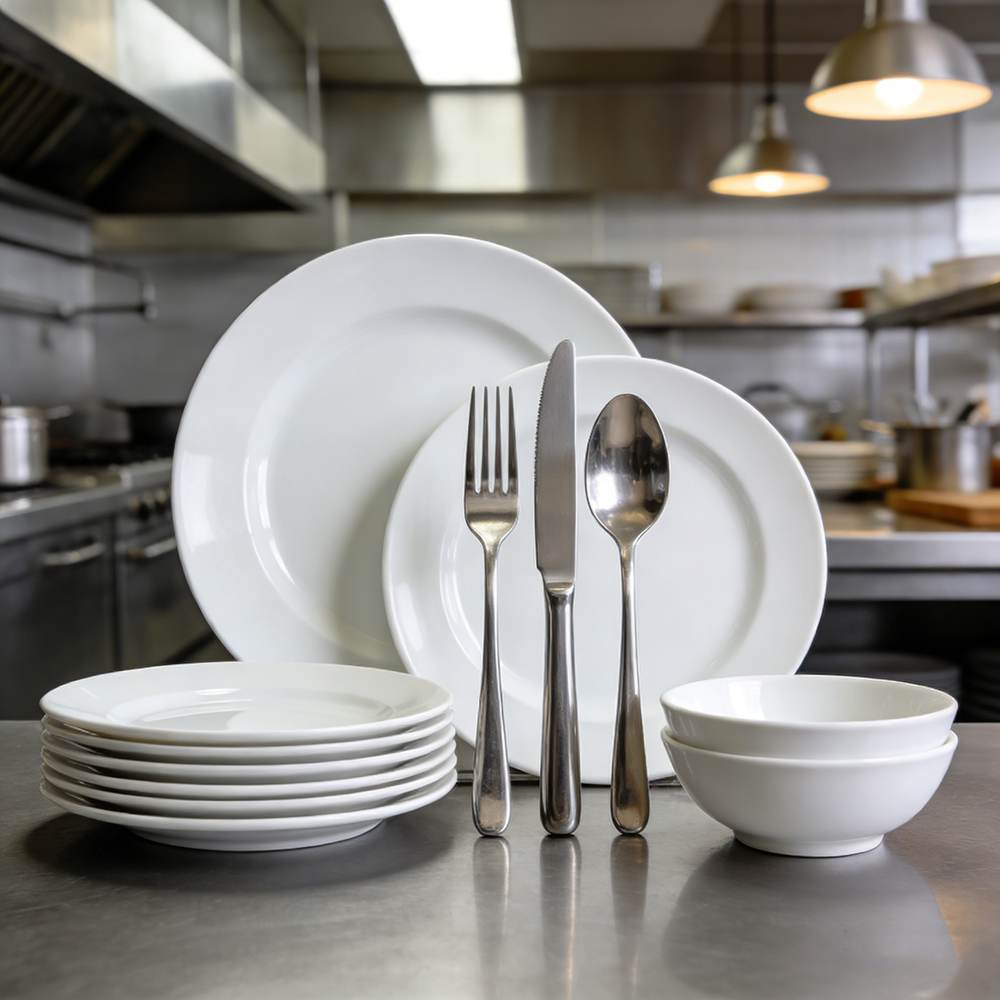
Commercial Dinnerware Durability: Testing Standards & Performance Data
Opening a new dining place or refreshing your tableware usually feels like a simple decision. The plates look right, the price fits the budget, and the supplier promises they’re built for commercial use. Then the service starts. Dishwashers run nonstop. Stacks move faster. Staff handle plates under pressure. Within a few months, replacements creep into the order lists, and costs rise. Most operators don’t expect dinnerware to fail this way. The problem is that durability isn’t a label. It’s the result of materials, testing standards, and kitchen conditions. This guide explains how commercial dinnerware is tested, where it breaks, and how durability decisions affect long-term costs. What Is Durability in Commercial Dinnerware? When suppliers talk about durable dinnerware, it’s easy to picture a plate surviving a drop. That’s part of it, but it’s not the full story. Two plates look identical on the shelf and still behave very differently once service gets busy. One keeps its edges clean and surface smooth, while the other starts showing wear within weeks. In commercial kitchens, plates rarely fail because of one dramatic moment. They wear down day after day. The plates get stacked tightly in racks. They slide against other plates during clearing. And they also move from heat lamps to prep tables. Commercial dishwashers that run hot all day long with aggressive detergents also wear down the plates over time. None of this looks extreme on its own, but together every factor adds up. That’s why durability isn’t about whether a plate breaks once. It’s about how the plate handles repeated strain without changing shape, losing its finish, or chipping at the rim. Durability is about how the plate behaves on its 500th wash, not its first service. For restaurant and hotel operators, the difference determines replacement rates, consistency on the table, and how predictable costs stay over time. Food Safety and Quality Certifications Certifications might not seem that important until something goes wrong. You buy a new dinnerware set, and a plate stains oddly. The glaze wears faster than expected Now, food safety becomes questionable. Here’s a breakdown of food safety certifications and how they affect quality. FDA Food Contact Compliance If a plate touches food in the US, it falls under FDA food contact rules. That includes the glaze, decorative layers, and any finish on the surface. FDA compliance isn’t a marketing upgrade, but it’s more of a legal requirement. What the FDA actually evaluates is migration. In simple terms, testing checks whether substances like lead or cadmium leach out from the plate into food during use. That includes hot dishes, acidic sauces, and repeated dishwasher cycles. The limits are strict, and they’re designed around long-term exposure, not a single-time use. For operators in hospitality, this matters because problems never arise immediately. They appear months into service when plates have been washed hundreds of times and hold hot food every day. FDA compliance means the dinnerware has been reviewed and authorized for that exact kind of commercial use. ISO 9001: Why Process Control Affects Durability Instead of testing plates, ISO 9001 tests the manufacturer. This certification confirms that a factory follows documented quality systems: how materials are selected, how glazing is controlled, how pieces are inspected, and how defects are handled. In hospitality terms, this translates to consistency. Two plates look identical on day one, but six months later, one chips faster, fails sooner, or warps slightly. The difference usually comes down to process control, and it’s not a design issue. ISO 9001 enforces repeatable production standards, staff training, and batch tracking. Restaurants feel this through lower replacement rates, fewer mismatched reorders, and less variation across shipments. How This Applies in Hospitality Settings Most guests will never ask about certifications, but operators pay for their absences. Service-grade dinnerware is about predictability under stress, heat, washing, stacking, and time. Brett’s manufacturing follows FDA food contact requirements and ISO 9001 quality systems, which means operators aren’t guessing how plates will behave after hundreds of services. These certifications remove risk from daily hospitality operations. Dishwasher Cycles: Where Dinnerware Gets Tested The dining room might sell the experience, but the dishwasher decides how long your dinnerware actually lasts. This is where “commercial grade” either holds up or falls apart. What Is a Dishwasher Cycle? One commercial dishwasher cycle is a full wash. Heat, detergent, pressure, and steam are involved. Most cycles run 5 to 10 minutes, and they repeat all day long. A typical restaurant runs around 50 cycles a day. Busy kitchens easily hit 100 to 150 cycles. High-volume QSR pushes over 200 cycles daily without even blinking. 50 cycles a day across a working year can mean over 12,000 washes per plate. Durability is not about surviving that one hot run; it is about surviving these 12,000 washes. How Different Materials Hold Up Over Time Here is where things separate quickly. Porcelain and bone china dinnerware are built for repetition. They handle long-term washing better with slower wear and fewer replacements. Stoneware sits close behind, especially in kitchens that avoid extreme heat swings. Melamine is the least durable when it comes to repeated heat and scrubbing. In commercial kitchens, repeated wash cycles result in rim wear, dulling glazes, and plates leaving rotation earlier than planned. High Volume in Kitchens In a restaurant serving 300 covers per day, plates don’t rest. They are continuously stacked, cleared, washed, and stacked again. Higher volume doesn’t make durability less important. In fact, it makes it more critical. The more cycles you run, the faster weaknesses show up, and that is why your dinnerware material choice matters more as service speed increases. Where and Why Dinnerware Breaks in Restaurants Durability doesn’t usually fail dramatically through one drop. A small chip, a hairline crack, or a broken rim at a time does not stop the service, but it is enough that the stack slowly thins out. Understanding how this happens explains why some dinnerware lasts for years while others barely make it through a season. Rim Chipping During
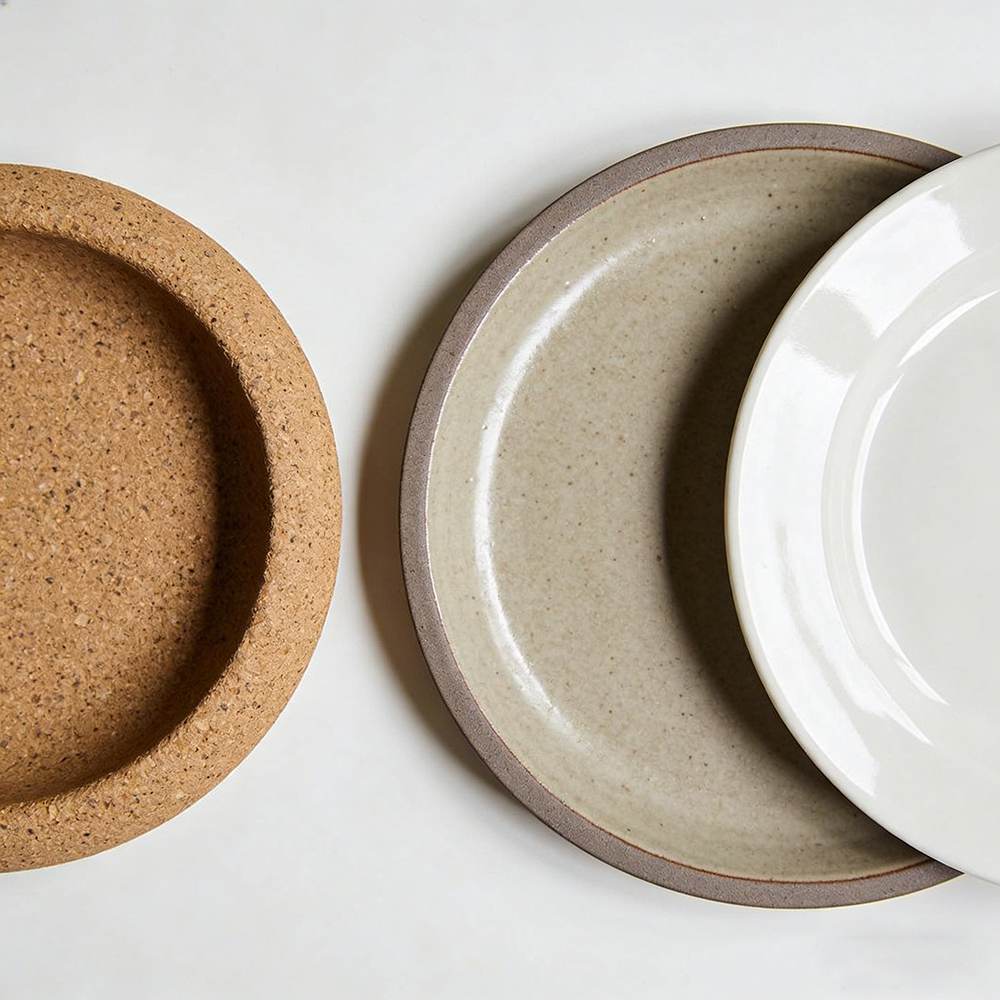
Earthenware vs Stoneware vs Porcelain: Complete Dinnerware Comparison
Earthenware, stoneware, and porcelain all fall under ceramic dinnerware, which is exactly why choosing between them gets tricky. They’re equally common, equally recommended, and all sold as interchangeable dinnerware when they’re not. Restaurant operators run into this decision when opening a new concept, refreshing tableware, or trying to fix rising replacement costs. One supplier promotes durability aspects. Another sells aesthetics. A third promises “restaurant grade” without explaining what that really means. Let’s look into how earthenware, stoneware, and porcelain actually behave in service so you can choose the material that works for your kitchen, your guests, and your budget long-term. Earthenware vs. Stoneware vs. Porcelain Earthenware, stoneware, and porcelain are all made from clay fired in a kiln and used across hospitality. But once plates start being used for service, stacking, dishwashing, and daily handling, the differences become very evident. What Is Earthenware? Pick up an earthenware plate, and you’ll feel it immediately. It’s thicker, heavier, and a little rough around the edges in a “this feels handmade” way. Earthenware is made from natural clay fired at lower temperatures, which is why it keeps that softer, more rustic texture. Visually, earthenware leans warm with muted colors, matte, or lightly glossy finishes. Sometimes you will see tiny imperfections that remind you of the handcrafted process. That’s exactly why earthenware is exclusively used in cultural restaurants, regional concepts, and places where building a restaurant narrative matters more than speed and efficiency. In hospitality, you usually find earthenware used selectively. Mostly, accent plates and signature bowls are used. It’s not built for rough handling or aggressive dishwashing, so most operators keep it away from high-volume service. What Is Stoneware? Now grab a stoneware plate. It feels heavier than porcelain, sturdier than earthenware. It feels solid, almost grounding. Stoneware is fired hotter than earthenware, which tightens the clay and gives it better strength while still keeping that natural, tactile feel. Stoneware is what a lot of modern restaurants pick. Farm-to-table spots, neighborhood bistros, and chef-led casual dining all use premium stoneware dinnerware. When you want plates that feel intentional but not precious, this is usually it. You notice the texture right away. Subtle speckling and reactive glazes with soft color changes make every piece feel related but not always identical. If you want a quick gut-check dinnerware moment, ask yourself, “Can this survive a busy Friday night?” In most kitchens, yes, as long as handling is reasonable and temperature shocks are avoided, stoneware remains durable. What Is Porcelain? Porcelain feels different the second you lift it. It is lighter than you expect, much smoother in texture. It is made from highly refined clay fired at very high temperatures, which creates a dense, non-porous body that is strong without needing bulk. Bright white, crisp edges, and glazes reflect light evenly, adding to your ambience. When sauces pop and plating looks sharp, porcelain is fully doing its job in hospitality settings. In restaurants, porcelain dinnerware is used everywhere for a reason. It handles heat and survives commercial dishwashers. It also stays consistent when you re-order replacement sets six months later. That reliability matters when menus are changing, staff are always rotating, and service stays busy. A Quick Look: Earthenware vs. Stoneware vs. Porcelain Before we get into durability tests, dishwashers, and long-term costs, this is the simple at-a-glance view. Feature Earthenware Stoneware Porcelain Material Natural clay Refined clay Highly refined kaolin clay Firing Temperature Low (softer body) Medium-high Very high (fully vitrified) Weight and Feel Heavy, thick, slightly coarse Solid, substantial, balanced Light, dense, smooth Surface Texture Matte or soft gloss, rustic Smooth with organic variation Glass-like, polished Porosity More porous Less porous Non-porous Visual Style Warm, handcrafted, traditional Earthy, modern-rustic Clean, refined, minimalist Common Hospitality Use Accent pieces, cultural concepts Casual to upscale casual dining Full-service, fine dining hotels Kitchen Performance, Durability, Cost Analysis Once a plate leaves the shelf and enters the kitchen, more factors come into play. In a commercial kitchen, heat lamps are always on, ovens are busy, dishwashers are running non-stop, and staff are quickly moving. This is where earthenware, stoneware, and porcelain stop being design choices. The difference matters most during service cleanup and replacement planning, and not when the dining room is quiet. Durability Under Kitchen Pressure Think about an oven-to-table moment. A bubbling stew, baked pasta, or gratin comes straight out of the oven. Earthenware struggles here. Its lower firing temperature makes it more sensitive to sudden heat changes, so cracks and glaze stress are common in fast-paced kitchens. Stoneware handles this better. It is built for heat retention and gradual temperature changes, which is why it is popular for baked dishes and comfort food concepts. Porcelain generally performs best under pressure. It tolerates high heat, fast service, and repeated handling without compromising structure, which is why hotels trust it for consistent and long-term use. Daily Kitchen Performance In a busy hotel breakfast service, plates stack high, clatter into racks, and go straight into industrial dishwashers. Earthenware shows wear quickly. Glazes dull faster, and chips appear sooner under heavy handling. On the other hand, stoneware holds up longer, especially in kitchens with trained staff and controlled clearing routines. Porcelain thrives here. Its dense body and sealed surface handle constant washing, strong detergent, and heat without absorbing stains or odors. Cost Over Time Upfront pricing is very misleading. Earthenware looks affordable at first, but higher breakage and replacement rates increase the costs quickly. Stoneware sits in the middle. Per-piece pricing is moderate, and replacements are manageable in casual and upscale casual restaurants. Porcelain costs the most initially, but replacement cycles are slower. Hotels and full-service restaurants spend less over several years because sets stay consistent longer. Food Safety Across Earthenware, Stoneware, and Porcelain Food safety isn’t something restaurants get to “feel out.” Once the plate is at the table, it becomes a food contact surface, and the material matters more than the design ever will. Earthenware, stoneware, and porcelain are all ceramic but behave differently when heat, acidity, moisture,
Understanding Reactive Glaze Dinnerware: Design, Safety, and Care Guide
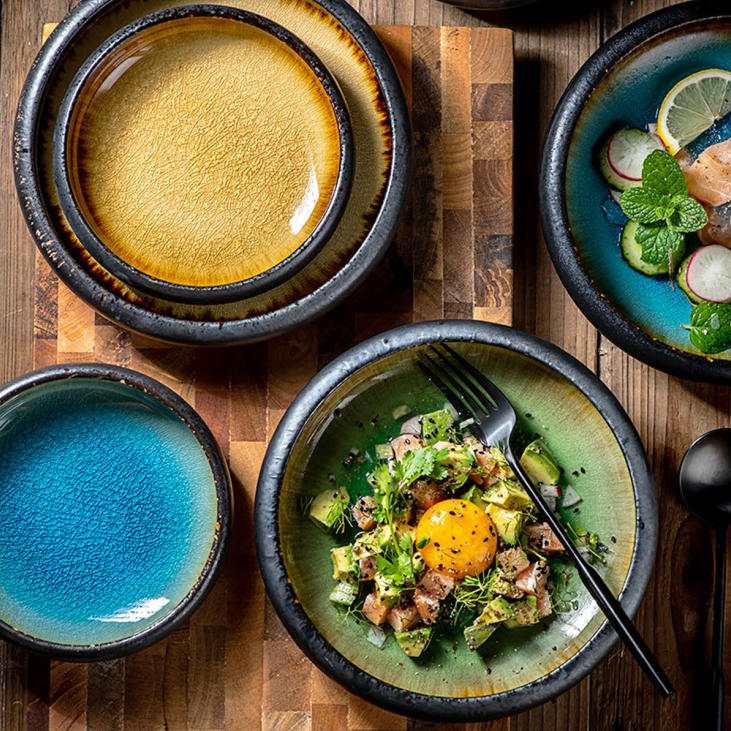
You’ve seen reactive glaze dinnerware and thought, this looks incredible, but is it practical? Maybe it caught your attention while sourcing plates for a new restaurant. Or a chef suggested it because it feels more handcrafted and unique. And now you’re wondering what that actually means once the plates actually go through service, dishwashing, and daily handling. Reactive glaze dinnerware sits between design and operations. It adds personality to the table, but it also raises questions about consistency, food safety, and long-term care. This guide discusses everything, so you can decide whether reactive glaze fits your kitchen, workflow, service style, and guest expectations beyond just visual appeal. What Is Reactive Glaze Dinnerware? Reactive glaze dinnerware is the kind of tableware that makes people lean in for a second look. At first glance, it feels handcrafted. Look closer, and you’ll notice flowing colors, soft breaks in the glaze, and subtly changing tone that make each plate feel a little different from the next. That’s the “reactive” part. The glaze changes while it’s firing, which creates movement instead of a flat, uniform finish. In a restaurant or hotel dining room, you line plates for service and realize none of them look copied and pasted. They still belong together, but they don’t feel mass-produced. That’s exactly why so many hotel operators choose reactive glaze dinnerware when they want warmth and personality without losing consistency on the table. There’s also a practical side. Reactive glaze dinnerware isn’t fragile art pottery. It’s designed for regular service, washing, and everyday use. You get visual depth without committing to fully handmade pieces that are hard to replace later. For chef-driven concepts, boutique hotels, and restaurants that care about presentation, this balance matches aesthetics and stands out. Manufacturing Process The base starts like most ceramic dinnerware, usually porcelain or stoneware. The difference comes in glazing. Special mineral-rich glazes are applied in layers, then fired at high temperatures. Inside the kiln, heat causes those minerals to react, which creates the color variation you see in patterns. Good manufacturers control this very carefully so the plates take on a cohesive feel while still feeling naturally unique. Reactive Glaze Aesthetics and Design Appeal Reactive glaze dinnerware brings character to the table in a way standard finishes never do. Each piece develops its look inside the kiln, where heat and minerals interact in unpredictable but controlled ways. For restaurants and hotels, this means plates feel curated rather than uniform. It’s a design choice that supports atmosphere, storytelling, and presentation without needing extra styling on the table. Why Reactive Glaze Feels Handcrafted Reactive glaze pottery starts to feel close to hand-painted dinnerware. Even when produced in controlled batches, each piece carries a slight variation. That variation is what catches your guests’ eyes. In artisan dinnerware restaurants, plates don’t blend into the background. They improve food presentation and make the table feel intentional. Dishes arrive looking thoughtful rather than staged, which matters when experience and presentation support pricing. How It Elevates Food Presentation Reactive glaze dinnerware frames food in a softer, more organic way. Uneven light reflection makes sauces look richer, more textured, and more defined. Colorful ingredients stand out without needing overly styled plating. Chefs like it because the plate adds character without competing with the dish. For operators, these unique dinnerware designs create an atmosphere without relying on decor alone. Safety, Finish, and Long-Term Appeal Design still needs to perform. Reputable manufacturers use food-safe glazes that fully seal the surface during firing. When done correctly, ceramic glaze food safety isn’t a concern, even in professional kitchens. The key is proper sourcing and artisan dinnerware care. Reactive finishes are meant to celebrate variation, not inconsistency. With an experienced dinnerware supplier, you get plates that feel expressive, durable, and suited to hospitality service rather than purely decorative use. Critical Considerations for Food Safety Reactive glaze dinnerware looks artistic, but in restaurants and hotels, safety always comes first. The reassuring part is that reactive glaze can be food safe when it’s made for hospitality use. Everything depends on formulation, firing, and testing. During proper firing, the glaze melts and bonds to the ceramic body, creating a sealed surface that doesn’t interact with food. Problems usually only appear with decorative-only pieces made for display, not service. Some handmade or imported items prioritize looks over performance, which raises concerns with heat, acidic foods, and repeated washing. That’s why reactive glaze should be evaluated like any other food-contact surface, instead of being treated as a decorative glazing. Before you bring reactive glaze into food service, pause and double-check a few details. Make sure the glaze is actually certified food safe, not just described that way in the catalog. Confirm there’s no lead or cadmium anywhere near regulatory limits. Look for a fully vitrified body with a glaze that’s properly sealed, not just pretty on the surface. Ask whether the plates have been tested with acidic foods like tomato sauces or citrus-heavy dishes. Check that the finish holds up in commercial dishwashers, not just light residential use. Work with suppliers who understand hospitality service, not decorative or retail-only ceramics. When you properly check these details, reactive glaze doesn’t feel risky for your hospitality settings. It becomes dinnerware that brings character to the table. Reactive Glaze in Hospitality Settings: Where It Fits Best Reactive glaze looks beautiful on a shelf. But how does it behave once plates start circulating through your dining room? Different hospitality settings ask for very different things from dinnerware, and this is where reactive glaze either becomes a headache or serves your table. Fine Dining Restaurants In fine dining, reactive glaze dinnerware feels right at home. Picture a tasting menu where every course arrives on a plate that feels intentional, not mass-produced. Guests notice. They turn the plate slightly. Someone at the table comments on the finish before the food is touched. That moment adds to your ambience. Reactive glaze supports premium positioning because no two pieces look the same. It turns plating into a
Melamine vs Ceramic Dinnerware: Which is Better for Restaurants?
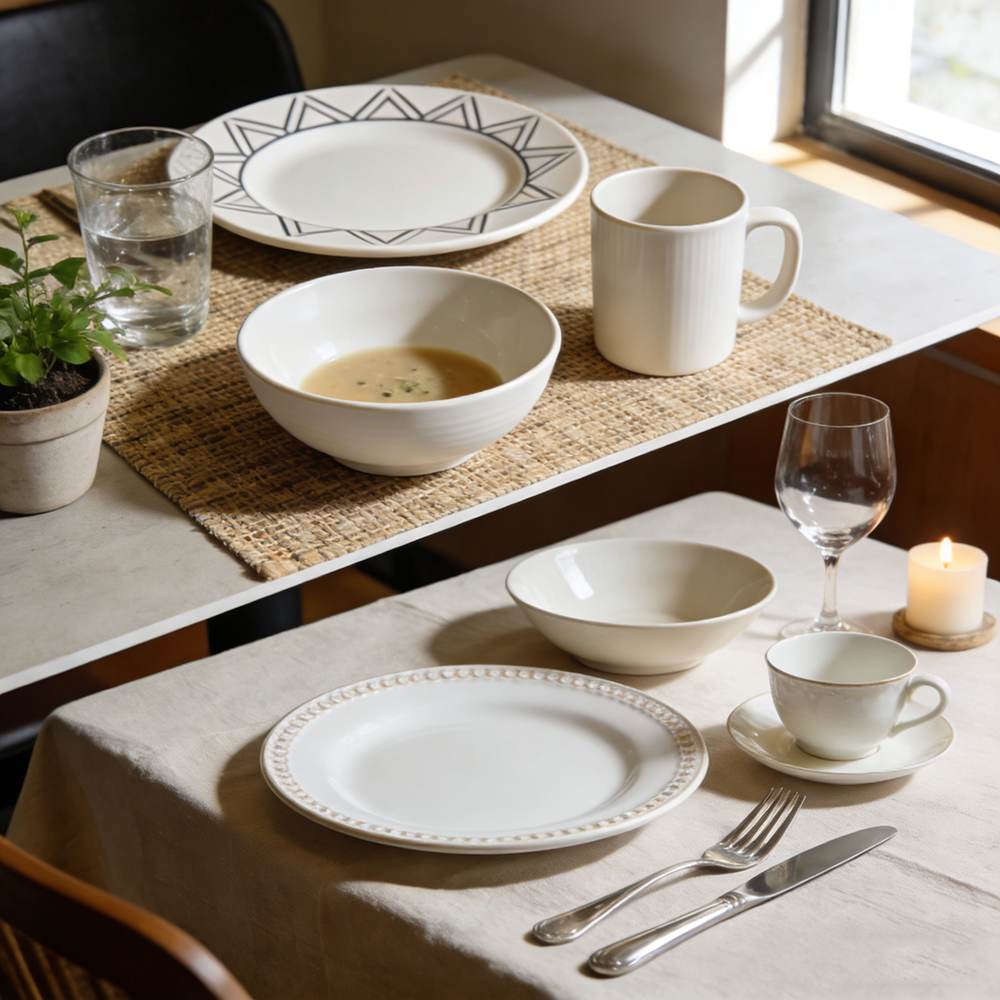
You’re reviewing your dinnerware because something isn’t working anymore. The plates chip too fast, and replacements cost more than expected. Or you’re simply unsure whether melamine or ceramic suits your restaurant style better. One option promises durability and low cost. The other feels better suited to your food and your brand. Suppliers give you mixed advice, and the trade-offs? They aren’t obvious. Melamine and ceramic behave very differently. This guide points out those differences, so you can choose the option that best fits your volume, menu, and guest expectations. Melamine vs Ceramic Dinnerware: What’s the Difference? When restaurant teams compare melamine and ceramic, they’re really deciding how their plates behave once service begins. The material you choose affects speed, safety, costs, and how guests read your brand long before the first bite. What is Melamine? Melamine is a molded resin, not a ceramic. It’s made from melamine-formaldehyde compounds pressed under heat into lightweight, rigid shapes. The surface feels smooth and slightly matte, with color molded all the way through. Melamine doesn’t chip or shatter, but it cannot handle high heat or prolonged contact with hot, acidic foods. It isn’t meant for oven-to-table service, reheating, or dishes that stay piping hot. You wouldn’t pull a bubbling stew from the pass in a melamine bowl or rest a just-seared entrée on it straight from the pan. You’ll see melamine dinnerware commonly used in buffets, cafeterias, fast-casual dining, outdoor service, and high-volume environments. Why Restaurants Rely on Melamine? Melamine suits kitchens that prioritize speed and efficiency. It reduces breakage, lowers replacement costs, and lets staff stack and clear quickly without worrying about shattered pieces. What is Ceramic? Ceramic dinnerware is made from refined clay fired at very high temperatures until it becomes hard, dense, and non-porous. This category includes porcelain, bone china, and stoneware. Ceramic dinnerware plates have a solid feel, stay bright through years of washing, tolerate heat, and remain food-safe even with acidic dishes. They’re common in full-service restaurants, upscale casual dining, and fine dining. Why Restaurants Rely on Ceramic? Ceramic supports hot food, polished presentation, and long-term durability. It also enhances plating in a way that melamine can’t. The glazed surface reflects light evenly, keeps the whites bright, and lets sauces, textures, and colors stand out, which elevates even the simple dishes. For restaurants exploring ceramic dinnerware, working with a supplier who understands service flow makes the difference. Brett helps operators compare materials and choose ceramic collections built for tough kitchen conditions. Physical Characteristics: Melamine vs Ceramic Melamine focuses on impact resistance and light handling, while ceramic relies on fired mineral strength, heat tolerance, and surface stability during service. Take a look at this quick comparison of the physical characteristics of melamine and ceramic. Physical Characteristic Melamine Ceramic Material Composition Melamine-formaldehyde resin (thermoset plastic) Natural clay minerals fired at high temperatures Firing/Production Molded under heat and pressure (not kiln-fired) Kiln-fired at 1,200 to 1,450°C Texture Smooth but plastic-like; can feel hollow Smooth, dense, glazed, glass-like Weight Very lightweight Light to moderate, feels more substantial Thickness Uniform thickness, less structural depth Can be thin yet strong, depending on type Chip/Break Resistance Won’t shatter but gets scratches Can chip or break if dropped Heat Tolerance Limited High (handles hot food and plating) Reaction to Acidic Foods Can degrade over time No reaction; fully stable Color & Design Range Wide colors, patterns, faux finishes White, neutral, modern, artisanal options Visual Impression Functional, casual Polished, professional, premium Typical Restaurant Use Buffets, fast casual, outdoor service Full-service, upscale casual, fine dining Melamine vs Ceramic: Factors to Consider for Restaurants Instead of lab specs or marketing claims, we’re looking at what actually matters once plates hit the floor, the dishwasher, and the table. Each factor below answers a question restaurant owners and managers ask when deciding between melamine and ceramic dinnerware. Food Safety and Heat Exposure Picture a busy service where hot pasta, soups, and sauces sit on the plates for a few minutes before runners grab them. Ceramic handles this well because heat, acidity, and long table times are part of its comfort zone. Melamine, on the other hand, works best when food is served warm or cool. If your menu includes steaming bowls or tomato-heavy dishes, ceramic removes a layer of risk from your daily service. Dishwasher Safety In commercial kitchens, dishwashers operate continuously throughout the day. High water temperatures, strong spray pressure, and industrial detergents place consistent stress on dinnerware materials. Ceramic dinnerware is designed for this environment. It tolerates repeated high-heat cycles and prolonged exposure to commercial detergents without compromising surface integrity or finish. This makes it well-suited for operations where dishwashing volume remains constant during service hours. Melamine is generally dishwasher safe, but temperature control is critical. While it can withstand standard wash cycles, repeated exposure to high heat accelerates surface wear over time. Commercial dishwashers typically run at elevated temperatures by default, which increases the rate of fading and surface dulling in melamine compared to ceramic. For kitchens with continuous, high-temperature wash cycles, ceramic aligns more closely with how commercial dishwashing equipment is used in practice. Durability Think about clearing a packed dining room at peak hour. Plates knock together. Racks are pushed at speed through busy service aisles. Melamine shrugs off drops and collisions, which is why it shines in fast, crowded spaces where constant movement matters more than preserving a pristine surface over time. Ceramic responds differently. It does not forgive drops, but it holds its surface and structure far longer. In restaurants where handling is steady and staff are trained, ceramic lasts for years. Replacement Rates by Restaurant Type Replacement patterns are a very important consideration when you’re buying premium dinnerware for your restaurant. Fine dining rooms replace fewer ceramic pieces because services stay controlled. Upscale casual sees steady ceramic loss but manageable planning. High-volume operations replace melamine more frequently, but at a lower overall cost. The critical factor is aligning the material with operational handling demands, not initial appearance. If replacement planning and consistency matter, Brett works