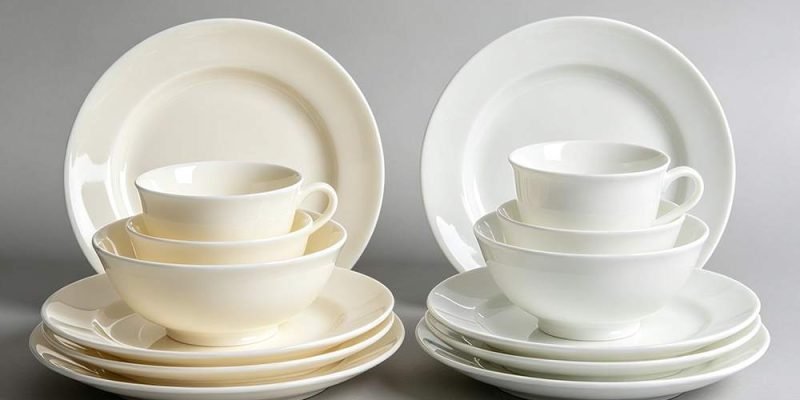
Every procurement manager eventually faces this question. You are sourcing new tableware for your property, and two materials, bone china and porcelain, will be on your mind. Both look premium. They are both served on five-star tables across the globe. However, they behave quite differently in professional hospitality circumstances. This guide will explain the actual difference in terms of durability, aesthetics, heat retention, and cost to enable you to make the correct decision about your property.
Table of Contents
What is Bone China Dinnerware?
Bone china is a porcelain that includes a large percentage of bone ash, usually 30-45 percent of the overall composition. This bone ash, which is the result of burnt animal bones, provides the material with its characteristic features: a transparent, almost glowing look, high whiteness, and a very low weight in comparison with its strength.
Bone china was originally made in England in the 18th century, but soon became the luxury tableware of choice among manufacturers in other countries. It is still the gold standard in fine dining dinnerware restaurants, luxury hotel restaurants, and high-end banquet settings. When a guest picks up a bone china plate and feels the lightness and elegance of the plate in comparison to the normal crockery, that one touch sends a message of quality even before the first dish is served.
What is Porcelain Dinnerware?
Porcelain dinnerware is produced from refined kaolin clay that is fired at high temperatures, usually between 1,200 and 1,400 degrees Celsius. The outcome is a high-density, vitrified, non-porous substance that is highly strong, uniform in color, and has been tested over decades of heavy commercial use.
Porcelain does not have bone ash as compared to bone china. What it lacks in translucency and lightness, it more than makes up for in strength and affordability. Hotel-grade porcelain is designed with the special needs of the professional service- heavy dishwasher loads, continuous stacking, and the stress of handling that is an inherent part of a busy kitchen setting. It is what makes porcelain the most popular hotel dinnerware material in the mid-range to upper-end properties worldwide.
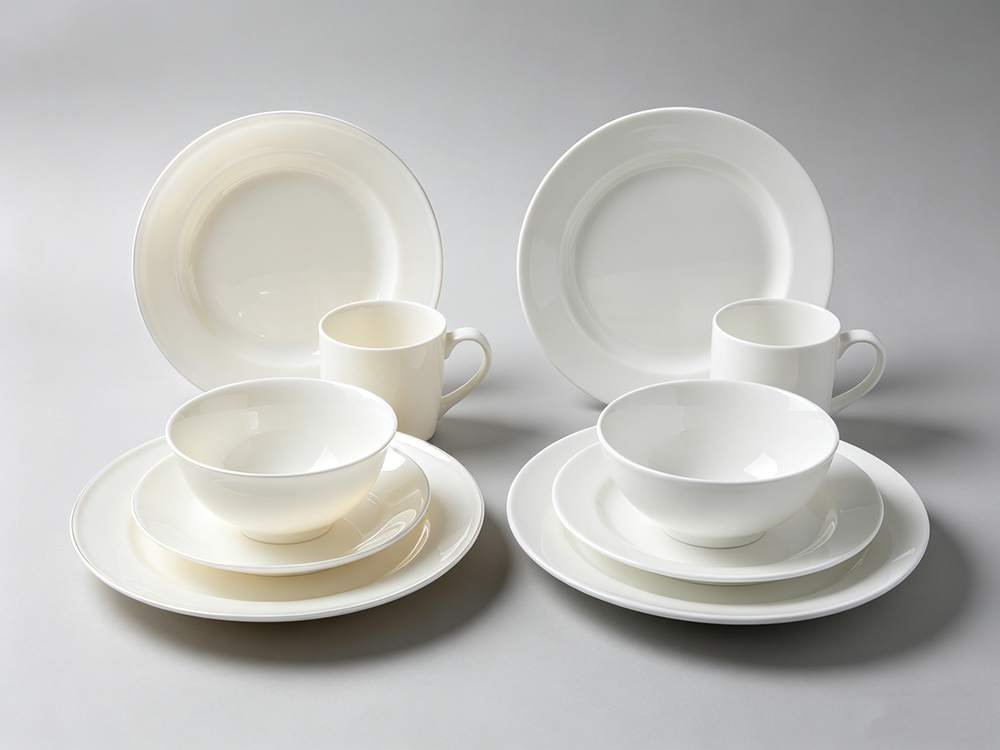
Bone China vs Porcelain: Key Differences at a Glance
Property | Bone China | Porcelain |
Composition | Clay + bone ash (30–45%) | Refined kaolin clay |
Weight | Light | Medium to heavy |
Appearance | Translucent, bright white | Opaque, white to off-white |
Durability | High | Very high |
Chip resistance | Good | Excellent |
Heat retention | Good | Very good |
Price point | Premium | Mid to upper range |
Best suited for | Fine dining, luxury hotels | All hotel tiers |
Durability and Chip Resistance
This is the first question every hotel procurement manager asks, and the answer is more nuanced than most supplier catalogs suggest.
Bone china is stronger than it looks. The bone ash structure makes it stronger in tensile strength than normal porcelain, and this is the reason why bone china gained its fame in establishments where the dishes were used every day under harsh circumstances. Nevertheless, the less rigid wall thickness in a commercial hospitality setting makes it susceptible to rim chipping when stacked together or loaded carelessly into dishwasher racks.
In high-volume operations, hotel-grade porcelain prevails in outright chip resistance. Its heavier construction and thicker walls absorb the type of daily impact one might expect in a busy restaurant kitchen. In properties with hundreds of covers per night and with multiple outlets, reinforced hotel porcelain dinnerware will decrease the number of breaks. Studies in the hospitality procurement operations always indicate that porcelain in high-traffic foodservice settings has a service life of 20 to 30 percent higher than bone china in the same conditions.
When your establishment operates under fine dining with professional service personnel and a set of cautious handling measures, the longevity of bone china is more than satisfactory. Porcelain will be more practical and economical when you are operating a high-volume buffet business or a resort that has many casual dining establishments.
Aesthetics and Guest Perception
Your hotel dishes are not a simple utility. It is a visual continuation of your brand, and your guests take notice of it, even when they do not know what they are reacting to, specifically.
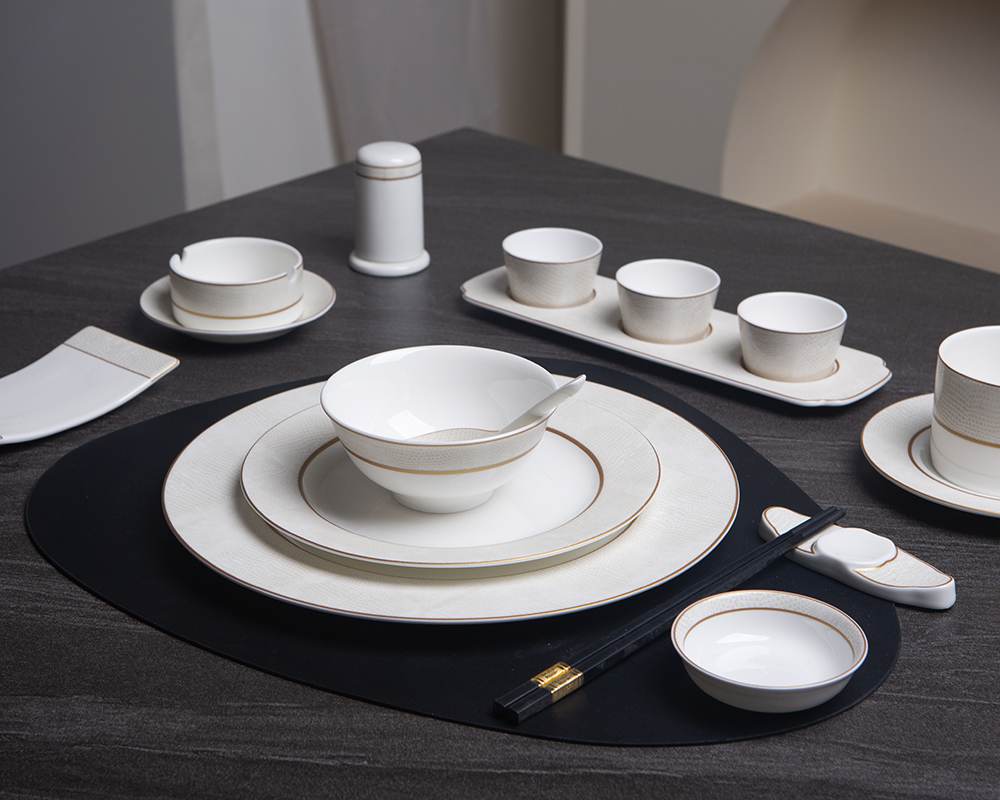
Bone china makes an instant impression of luxury at the table. Its transparency reflects light in a manner that cannot be imitated even by ordinary porcelain. Holding a bone china plate in front of a light source, one can see a warm, almost glowing quality which instantly signals high quality. It looks fantastic on the table, which is a more and more significant factor as visitors capture their meals on social media. Research conducted by Medallia found that approximately 61 percent of customers would pay more to receive personalized experiences in hospitality, and your tableware is one of the most noticeable ways of demonstrating that personalization.
In the past years, there have been a lot of changes in the design and finish of porcelain dinnerware. In contemporary hotel-grade porcelain, bright and consistent white glaze is attained, almost identical to bone china under normal lighting conditions. In properties where the consistency of aesthetics in a large inventory is more important than the high translucency of bone china, porcelain gives the best visual performance at a more affordable cost per unit.
When your guests are paying a premium price and your brand story is all about refinement and prestige, bone china dinnerware will support that story at the table. When you need to provide a refined, uniform dining experience at a high level in a series of locations, porcelain can tell that tale just as well.
Heat Retention and Service Performance
Guest experience is directly influenced by heat retention. A well-plated food item that reaches the table tepidly, due to excessive absorption of heat by the dish, is a service failure – no matter how pretty your china is.
Porcelain dinnerware has inherent heat-retaining benefits. Its heavier weight retains heat and returns it to the food more steadily throughout the service process. This thermal mass is an operational benefit that is convenient in hotel room service delivery, where a plate is carried through the kitchen, staging, an elevator, and a corridor, then directly to your guest to protect food quality and guest satisfaction.
Bone china is lightweight and thin, and thus does not hold heat as long. This gap can be largely reduced by pre-warming bone china dishes in a heated cabinet before service, and it is already standard practice in most fine dining operations. In a la carte service where the plates from the cabinet travel straight to the table in minutes, the heat retention is not a concern for either of the materials.
Dishwasher and Daily Service Cycle
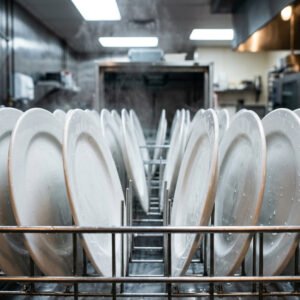
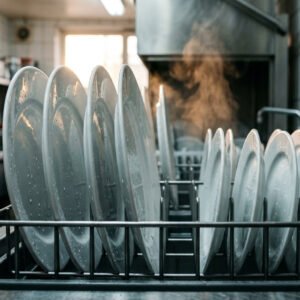
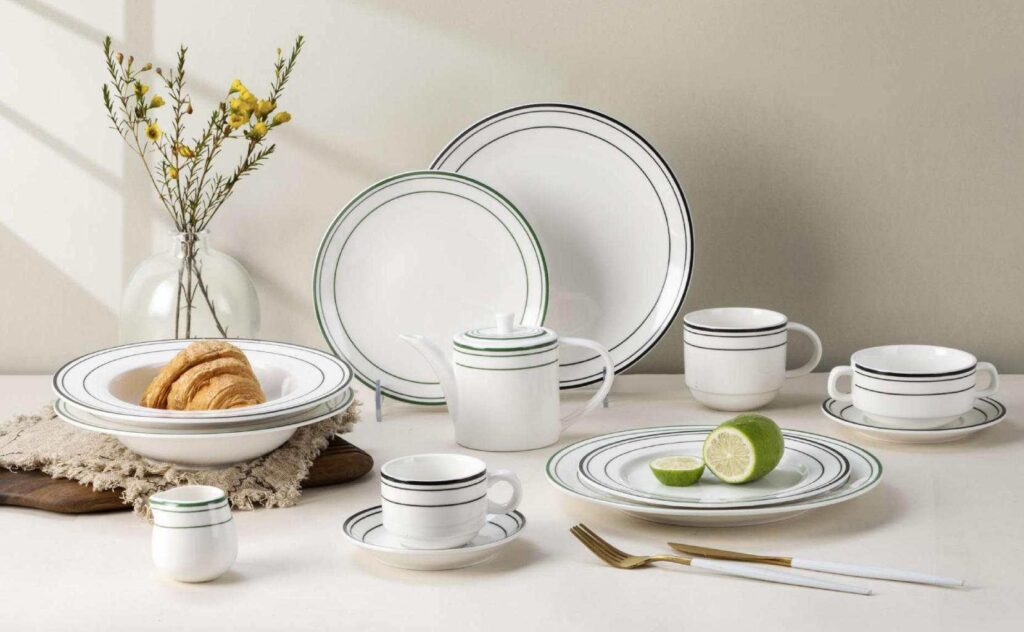
The most demanding location of your hotel dinnerware will be your commercial dishwasher. High temperatures, concentrated detergents, and mechanical handling stress test every piece in your inventory, and how a material performs under these conditions determines its true service life.
Bone china and porcelain can both be used in commercial dishwashers, provided they are produced to hotel quality. Nonetheless, there are significant variations in performance over the long run that are worth knowing before you make a wholesale investment in inventory.
With the right dosage of the detergent, bone china can be washed by the dishwasher without losing its bright white color and the integrity of the glaze. Even with the regular dosing of alkaline detergents, the glaze surface of any dinnerware would be affected gradually, although the dense composition of bone china would resist it as long as the dosing guidelines are adhered to.
Hotel-grade porcelain is more tolerant of changing dishwasher conditions. It is tougher to thermal cycle due to its heavier wall construction and high-temperature firing, and it can withstand many thermal cycles in hundreds of daily wash cycles. In cases where dishwasher control is not as stringent, porcelain is the less risky option in terms of inventory performance in the long-term.
Cost and Replacement Budget
Only a part of your actual hotel tableware procurement cost calculation is the price per piece. The actual budget impact over three to five years is determined by the total cost of ownership, which includes replacement frequency, minimum order quantities to restock, the consistency of glaze, and color matching between production batches.
Dinnerware made of bone china is priced at a premium, usually 30 to 60 percent more than similar porcelain items, based on the supplier and specifications. But in the case of a fine dining business with relatively low cover counts and with close service procedures, the replacement rate is not very high, such that the premium per piece does not translate into a much higher annual expenditure.
Porcelain dinnerware has a more predictable scale replacement budget. The difference in cost is operationally important to properties that deal with large inventories in multiple locations, where a complete restock could take hundreds or thousands of items. Hotel-grade porcelain is the economically-friendly option in large-scale hospitality businesses because of its lower unit cost and increased durability.
Which Material is Right for Your Property?
The decision comes down to your property tier, service model, and operational realities. There is no universally correct answer — only the answer that fits your specific context.
When your establishment is a luxury or ultra-luxury hotel with a fine dining establishment at its core, trained service staff that takes care in handling tableware, and a brand story that is established around refinement and prestige, the natural selection would be bone china dinnerware. Its aesthetic beauty and sophisticated heaviness speak quality on the table even before a word is uttered.
When you have multiple dining outlets with high cover counts, have high-volume buffet or casual dining concepts, and need to strike the right balance between presentation quality and operational practicality and budget control, hotel-grade porcelain provides the durability and consistency your operation requires.
Both are in use on many of the most successful hospitality groups in the world, where bone china is served in their flagship fine dining restaurant, and porcelain of hotel quality is used in all-day dining, room service, and banqueting operations. This graded approach balances the material selection with the service environment without affecting the aesthetic values or operational efficiency in any outlet.
How Brett Helps You Choose the Right Dinnerware
We produce bone china and porcelain dinnerware for hotels and restaurants in over 80 countries. Our team collaborates directly with procurement managers, food and beverage directors, and design teams to align the appropriate material, shape, and finish to the unique needs of each property.
We offer sample sets of both materials to allow your team to test actual performance in the field before making a commitment to production. Our own design department tailors glaze colors, rim profiles, logo placement, and surface finishes to make sure that your hotel dinnerware is an exact reflection of your brand identity, whether you are equipping a single flagship restaurant or a multi-property replacement program.
FAQ
Is bone china stronger than porcelain?
Bone china has higher tensile strength due to its bone ash composition, but porcelain’s heavier wall thickness makes it more resistant to chipping in high-volume commercial environments. Both are suitable for professional hospitality use when manufactured to hotel-grade standards.
Which dinnerware is better for five-star hotels?
Five-star hotel fine dining operations typically use bone china for its premium appearance and refined weight. However, many five-star properties use hotel-grade porcelain across their all-day dining and room service operations, where durability and volume are the primary considerations.
Does bone china yellow over time?
High-quality bone china maintains its bright white appearance through years of commercial use when properly cared for. Yellowing is typically caused by improper detergent dosing or storage conditions rather than the material itself.
How do I match replacement pieces to existing inventory?
Working with a single manufacturer for your full hotel dinnerware program is the most effective way to ensure consistent color and glaze matching across restock orders. Brett maintains production records for all active customer specifications to support seamless restocking.
What is the minimum order quantity for custom hotel dinnerware from Brett?
Brett accommodates projects of varying scales and offers phased delivery programs for large-scale orders. Contact our team directly at CBHoreca to discuss your specific requirements.
Conclusion
Bone china upholds the fine dining experience with visual appeal and elegant weight. Porcelain provides the reliability and stability that large-scale hospitality operations require. Most successful hospitality groups in the world use both of these strategically, and Brett produces both to the same high standards.
If you are ready to evaluate both options for your next hotel dinnerware project, Brett’s team is ready to guide you through the selection process and provide samples tailored to your exact specifications. You can request samples or discuss your project with Brett today.