When a plate cracks, it doesn’t just chip or break. It snaps down your margins, too. One second, you have the perfect inventory lined up and ready to serve on a Saturday night. Next, there’s a tiny clink, and the plates are officially retired.
You may not pay heed to it, but losing 1 to 2 pieces of dinnerware a day is common for a restaurant serving about 200 covers every day. But if you do the math, that runs up to 365 to 700+ items lost every year.
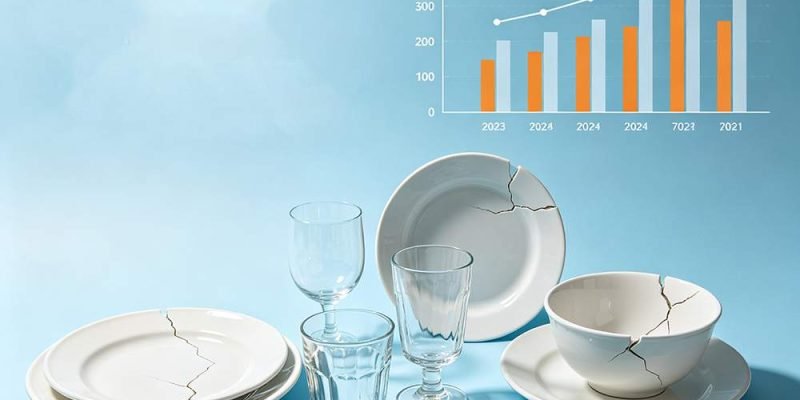
According to Emergen Research, restaurants experience 5–10% tableware loss every year due to breakage, theft, and wear. Some operations end up spending up to USD 20,000– USD 50,000 annually on dinnerware replacements.
This is a huge expense that you need to track and account for.
Restaurant dinnerware breakage rate is also an indication of how well your training and equipment are working. In this guide, let’s learn how to calculate restaurant dinnerware breakage rate and reduce losses.
What is the Restaurant Dinnerware Breakage Rate?
The restaurant dinner breakage rate is the percentage of plates, cups, bowls, and other serving pieces lost or damaged every day, every month, or every year, from your inventory. In other words, it is the proportion of total dinnerware inventory that becomes unusable due to chipping, breakage, or cracking.
The breakage rate is a performance indicator of how well your restaurant is running behind the scenes. It’s about how well your inventory can handle the dishwasher pressures, staff serving routines, stacking, and handling.
Breakage, Loss, Vs Shrinkage
Many hotel and restaurant operators lose money because they cannot distinguish between breakage, loss, and shrinkage.
Breakage normally occurs when there’s physical damage to the plate. If a plate chips, cracks, or gets shattered, it is broken. Breakage mostly takes place during the service and dishwashing cycles.
Loss occurs when the items disappear from the inventory. Losses may be due to theft, misplacement, or staff mishandling. Losses are harder to track and are often ignored when inventory, especially flatware inventory, is being audited.
Now the term that covers both breakage and loss is shrinkage. Shrinkage is like an umbrella term that includes any kind of inventory reduction that’s not accounted for.

Why Tracking Dinnerware Breakage Rate Actually Matters
Unmanaged shrinkage can lead to a few percent of the total cost of goods in restaurant operations. That’s why, as much as it is important to track the cost of food, it is important to track dinnerware shrinkage.
Cost Control
Dinnerware breakage is a recurring operational cost. Read on more about the cost of dinnerware breakage in our guide: Restaurant and Hotel Dinnerware Replacement Cycles: Managing Breakage and Reordering.
It may seem like a trivial matter when a small plate breaks, but frequent replacements quickly add up. If you look at the situation in about five years, the replacement costs can match and even exceed the initial investment.
Inventory Accuracy
Restaurants usually operate on the industry-wide standard, which is a 3:1 plate-to-seat ratio. This keeps the service in flow without any shortages or slowdowns amidst the service.
Here too, tracking the breakage is important because each small loss reduces your backup stock. If you don’t keep a tab on it, you might end up without any buffer stock on a busy Friday night.
Brand Presentation
Chipped crockery looks unpresentable and mars the entire aesthetic. But at the same time, it also signals carelessness.
This negatively affects the consumer perception of your concept and ultimately the ratings and reviews. Also, when there is a visual inconsistency on the table, like the replacements are mismatched, it weakens your brand identity.
So even if your guests do not mention it, they make a mental note about how much you care about presentation as a brand. Again, when you track your breakage rates and restock timely, you can completely avoid displaying mismatched or chipped inventory.
Operational Efficiency
Studies in foodservice operations have shown that front-of-house handling and back-of-house washing are the main factors leading to tableware breakage. This breakage pattern also reveals deeper issues in your service plan.
If you notice the breakage usually takes place in the dishwasher, there’s probably a problem with your process. Similarly, if there is frequent chipping around the rims, it means the storage and stacking need to be looked into.
Also, if you notice there is a sudden increase in breakage and shrinking, it’s often due to a gap between your staffing and training.
Procurement and Budget Planning
Sourcing dinnerware must be done with proper planning. If you place the re-orders reactively, you will often be spending more than you budgeted for and may also run a higher risk of discontinued designs and mismatched stocks.
With proper tracking, you can forecast the replacements and maintain a buffer stock to keep up with the demand. Also, you can negotiate better supplier terms as you would be planning a way ahead of time and would be able to give them leverage in lead times.
Learn more about dinnerware replacement cycles in our guide: Restaurant and Hotel Dinnerware Replacement Cycles: Managing Breakage and Reordering.

Why Dinnerware Breakage Is Unnoticed in Daily Operations
Dinnerware breakage is often considered a secondary expense. It wouldn’t raise an alarm if two dinner plates chipped in a day. However, these tiny, invisible failures are happening every day in the process, material, and human levels, and add up over time.
When these are not logged or reported, the damage compounds and eats up your profits as well.
Micro-Chipping
A small chip or a utensil mark on a plate would hardly look like damage. But over time, the degradation multiplies and increases on a microscopic level. The micro scratches, glaze cracks, and chips increase, which makes the plate rough and weakens it structurally.
So while initially the plate may not be considered broken, it may be removed from the service quietly due to hygiene or safety concerns.
Staff Handling Habits
Normally, we assume that a plate breaks when it drops. However, that’s only a minimal percentage of breaks that happen due to dropping. The real damage comes from routine handling.
When the plates are not stacked correctly, they are placed at a slight angle that exerts a concentrated pressure on the rim. This is a major cause of chipping.
At times, the staff carries too many plates at a time to avoid multiple trips. That can also have micro-impacts on the dishes due to vibration. Even though you don’t hear a crash, there is damage that cumulatively adds up.
Dishwashing Damage
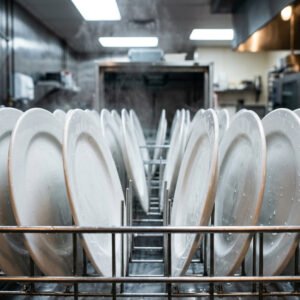
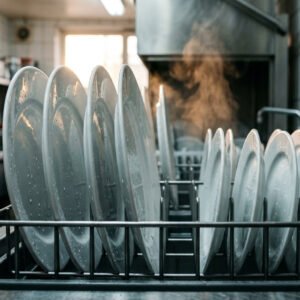
It may come as a surprise, but your dishwasher may be breaking more plates than the staff. A commercial dishwasher cycle can build the perfect storm of stress factors. There are high-pressure water jets, thermal shocks, and plate-to-plate contact in racks that can lead to chipping and glaze degradation.
Material and Manufacturing Specs
Different dinnerware, such as porcelain, bone china, and melamine, is created differently in a factory. Read more about the difference between bone china and porcelain in our guide: Bone China vs Porcelain Dinnerware: Which Should Hotels Choose?
All the materials have different specs that can affect the breakage point, for instance:
- Rim Design:The designs with rolled or thick rims have a higher chip resistance compared to thin rims.
- Firing Quality: When the firing quality is low, it creates internal pockets inside the plates, which ultimately fracture over time.
- Glaze Composition: The hard glaze can resist scratches, but can develop microcracks under pressure.
- Thermal Resistance: Materials like stoneware are more prone to cracking under temperature changes. Like when the dishes come out of the dishwasher, they must be given some time to cool down, instead of being pushed directly into the service cycle.
The Real Cost of Dinnerware Breakage
A chipped or worn-out plate would, for one, look bad. But it will also break the visual conformity of your concept. In a fine dining concept, you especially need the perfect plating contrast and symmetry. Even if there is a minor inconsistency, it can negatively affect the experience you want your guests to have.
This is why the damaged plates are quietly removed from the system. However, doing so without planning can get you mismatched replacements over time.
Such a setting sets a negative impression about hygiene and quality. Even if the tableware has minor scratches or looks dull, it reduces the value of the meal. Often, your entire concept, your kitchen, and your chef’s expertise are judged due to the details that are seen by the guests, a.k.a. the dinner plates.
And the results are financial. You will need a higher replacement frequency, you will have to retire the plates earlier, and your dinnerware fleet will have a reduced life. So, using cheaper or low-quality tableware will ultimately lead to higher long-term costs despite the lower upfront price you are paying.
How to Calculate Restaurant Dinnerware Breakage Rate
Restaurants usually use a simple ratio to calculate their dinnerware breakage rate. That is:
Breakage Rate (%)= Number of Items Broken/Total Items Used*100
- Number of Items Broken: Includes completely broken, chipped, and cracked pieces that are removed from service.
- Total Inventory: This is your active usable stock based on the current physical count.
Example: Say, for instance, you have a stock of 1,000 plates in inventory. Out of these, 50 plates were broken or chipped this month. So your breakage rate for the month will be:
50/1000*100 = 5% breakage for the month.
This is an important metric as the same breakage rate every month can compound and add to your replacement cycles.
What Is The Acceptable Dinnerware Breakage Rate?
The acceptable dinnerware breakage range differs for every concept, material, and service style. A café that has stoneware and tempered glass in its inventory would not have the same breakage rate as a fine dining restaurant serving on thin-rim porcelain and crystal.
But generally, as an industrial standard, 1-3% breakage is okay for china and 2–5% for glassware. So if you have:
- 2-5% Breakage:You have efficient operations.
- 5-10%: Your staff and dinnerware selection needs attention.
- Over 10%: You need to train your staff, look into stacking practices, and dinnerware quality.
How to Reduce Restaurant Dinnerware Breakage Rate
To fix dinnerware breakage, you need to design a complete system where the plates are exposed to less stress. Since most of the damage happens during handling, washing, and stacking, you can achieve the biggest wins by fixing these touch points.
Invest in Durable, Commercial-Grade Dinnerware
Unfortunately, most restaurants try to save money by investing in cheaper quality dinnerware. They actually end up spending more on replacements. Such dinnerware has internal stress points due to the inconsistent firing and a weaker glaze that can scratch and develop microchips.
Instead, go for commercial-grade dinnerware that is designed to handle repeated thermal cycling and stacking pressures.
Train Staff on Handling Protocols
Since most of the damage comes from handling and carrying, you can limit the damage by setting SOPs about the number of plates to be carried in one’s hand at a time and stacking practices. This will reduce the vibrations and rim contact during stacking and serving.
Optimize Dishwashing Systems
Make sure the staff know how to use the right racks for the plates. Ensure they keep them separate and angled properly. The plate-to-plate contact can cause chipping and abrasion.
Also, train your staff or do not overload the dishwasher. If there is clinking, there is going to be breakage.
Track Breakage As a KPI
For every day, week, and month, categorically track the number of items you are removing from the inventory. Also, include a section where you write about the location that was damaged. This will help you keep track of the pattern and work on your processes as needed.
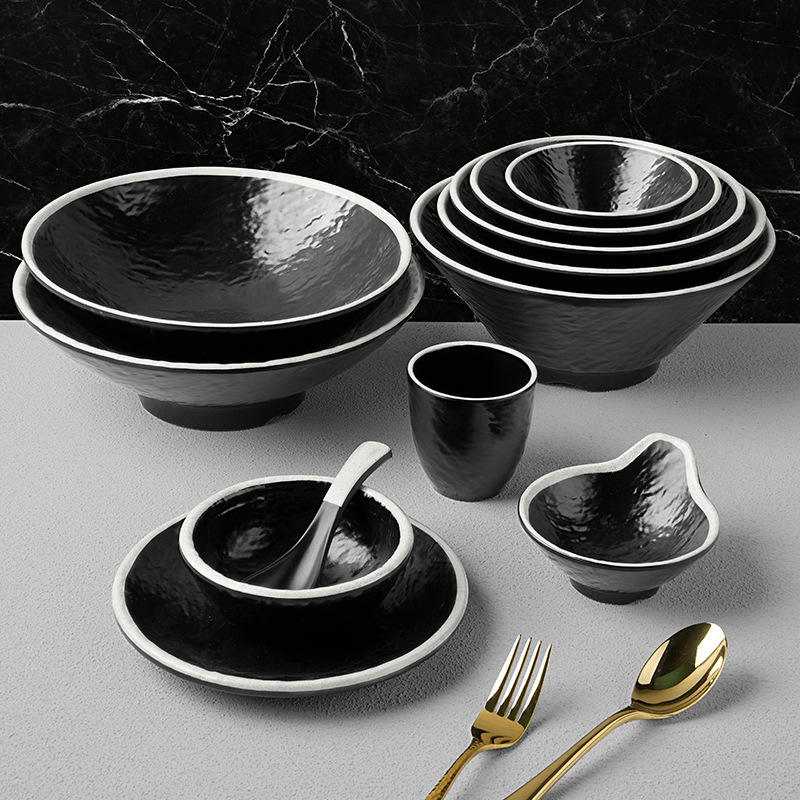
Do Not Let Broken Plates Break Your Profits!
Dinnerware breakage isn’t just a loss; it can be useful data to improve your processes. If you treat it as a controllable leak, track it, and fix your system, you can prevent bigger problems later.
This is why sourcing from a reliable manufacturer like Brett makes all the more sense. Brett designs durable dinnerware to meet the needs of commercial kitchens. That means less breakage, fewer replacements, and more predictable costs.
Frequently Asked Questions
How often should restaurants track dinnerware breakage?
Dinnerware breakage must be tracked every week for operational control and every month for financial reporting. Weekly tracking can help you identify sudden spikes or patterns in breakage that you can link to staffing, dishwashing, or service pressure.
What causes high dinnerware breakage in restaurants?
High dinnerware breakage is usually the result of a combination of factors. It may be due to improper handling, overloaded dishwashing racks, poor storage systems, or even using unsuitable dinnerware materials in the process. In most cases, it’s the repeated operational inefficiencies that can compound over time, leading to high replacement costs.
Can better dinnerware reduce breakage costs?
Yes. Investing in commercial-grade, reinforced dinnerware can reduce the breakage and hence replacement rates over time. While the initial costs are high, durable materials like vitrified porcelain and reinforced stoneware reduce the replacement frequency and improve long-term cost efficiency, especially in high-volume restaurants.
How does breakage affect restaurant profitability?
Dinnerware breakage increases direct replacement costs, but also indirectly affects the profitability through slower service, operational inefficiencies, and a weaker brand perception.
Even a small percentage increase in breakage can have an effect on the annual profit margins.