You have probably had that uncomfortable moment where you are standing in the prep area with racks stacked up high. You’re counting the glasses faster than you think and wondering whether the inventory will be enough.
The event begins, and you are thinking, “Are they the right ones for tonight? What will happen if even around 20% of them don’t even make it through?”
This is all behind the scenes of catering. Glassware is one domain where miscalculations can turn into visible problems.
If you look for catering wine glasses or catering glassware catalogues, you’ll be overwhelmed with the product choices and endless SKUs. But all of them come with zero guidance about the procurement strategies or ordering quantities.
Nobody is actually telling you what will work on a 200-guest wedding and how many glasses you would actually need? No one talks about the wrong rim thickness that can downgrade the guest experience.
The truth is that glassware is not a line item. It is the highest breakage and highest replacement cost category in catering operations.
In this guide, let’s explore how choosing water glasses can be an operational decision. We will talk about how speciality glassware is worth buying and the difference between the glass materials.
So if you have ever underplanned or overboarded your glassware inventory, you are just on the right page.
Types of Catering Glassware Every Operator Should Know
Unfortunately, most catering setups fail because they are not using the right mix. No matter how aesthetically appealing or attractive the glasses look, we don’t need so many shapes and sizes of glasses.
Buying glassware is more about how it will function and not about the categories. You need to look at the menu, what’s getting poured, and how fast it is being served and cleared. Here are some basic catering glass types worth considering.
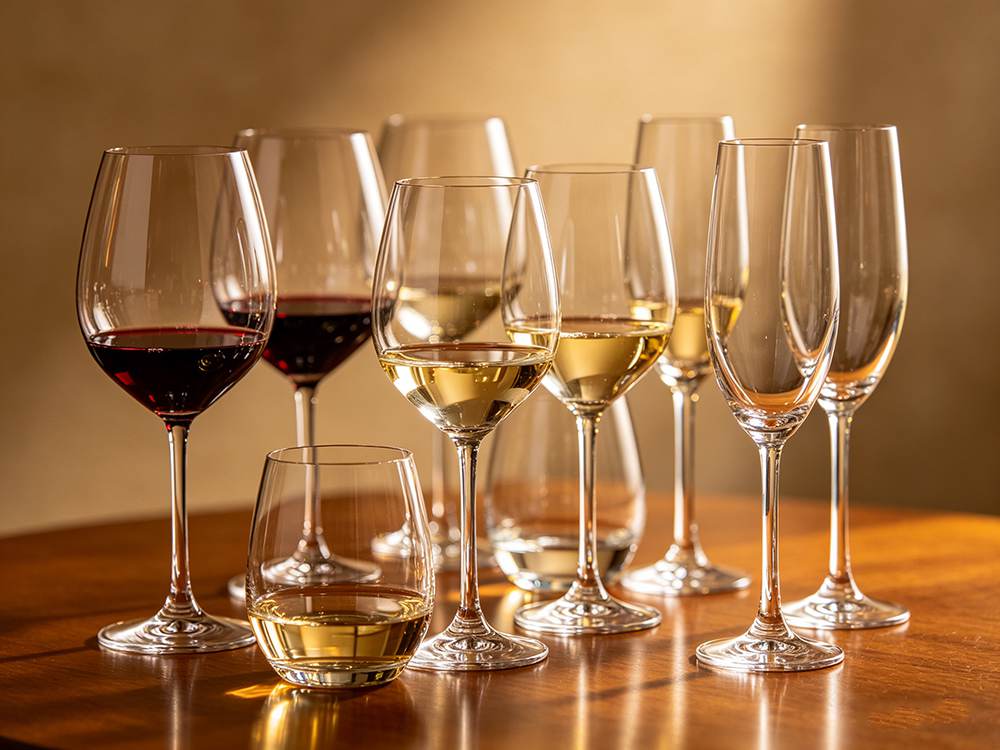
Wine Glasses for Catering: Red, White & All-Purpose
Often, operators overcomplicate glassware inventory by ordering the whole range of catering wine glasses. However, in a practical situation, most events do not need a full sommelier setup.
For high-end or fine dining catering, we need separate red and white glasses. But in the majority of service events, doubling the SKU will only lead to logistical friction.
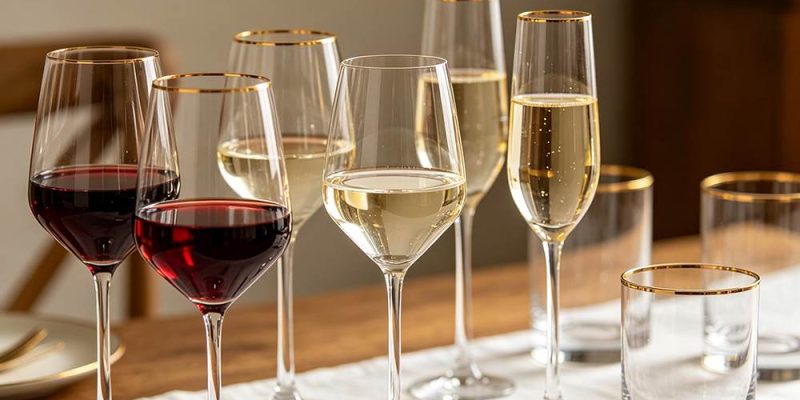
- Red Wine Glasses:The red wine glasses usually serve around 12 to 22 ounces of liquid. They have a wider bowl that allows aeration, and the Bordeaux-style shape is the most practical. Browse Brett’s Minimalist Transparent Crystal Wine Glass Set.
- White Wine Glasses: These are narrower and usually serve about 10–14 oz. These can preserve temperature and aroma, and given the narrow bowl, have less surface exposure.
- All-purpose Wine Glasses: This is your quiet MVP. The glasses serve about 12–16 oz of both red and white wine without slowing service.
Style of Glasses
Glassware comes in two styles: stemmed and stemless. The stemmed glasses appear more formal, and are the set expectation in weddings and formal dinners. The stemless range, on the other hand, is stable and stackable. They have much less breakage in outdoor and high-turnover events.
Water Glasses & Goblets
Water service is not the category where we run after elegance. It is where we just have to keep the service running. Every seat needs one glass, and that makes water glasses for catering the highest quantity items to stock. Water glasses also take the most abuse.
Most water goblets are stemmed and can carry 10 to 14 ounces of water. These are best used in informal settings like weddings, banquets, and plated service. Check out Brett’s Custom Vertical Stripe Wine Champagne Glasses.
You can also go with tumblers that have a volume of around 8 to 12 ounces. These are flat-bottom and stackable, and built for speed. That makes them the ideal choice for casual events, buffets, and high-volume service.
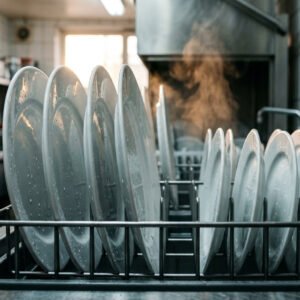
When buying water glasses or goblets, stackability is also important. You need to see how many glasses will fit a rack, how well they can last in dishwashing cycles, and the handling speed of the servers.
Browse Brett’s Luxury Gold-Rimmed Crystal Glass Set here.
Specialty Glassware: Champagne Flutes, Cocktail Glasses & Beyond
The specialty glassware offers dozens of options in event glassware. However, we only need a few and in controlled quantities to optimize the cost and service.
The key is to align the type of specialty glassware with the beverage program. Learn more in our guide: Wine Glasses vs. Water Glasses vs. Specialty Glassware.
In the category, you will find styles like:
- Champagne Flutes: Champagne flutes are a non-negotiable inventory for weddings and toasts. Ideally, plan to buy one for every guest. Explore Brett’s Crystal Champagne Flutes Setand Vintage Diamond Shaped Embossed Crystal Glass Set
- Highball/Collins Glasses: If you have cocktails on the menu, the Collins glasses are much needed.
- Rocks/Old Fashioned Glasses: These can handle spirits served neat or on ice.
- Cordial/Dessert Wine Glasses: The dessert wine glasses are a niche. Only stock them if you are serving dessert wines, hosting formal plated events, or catering to premium tiers.
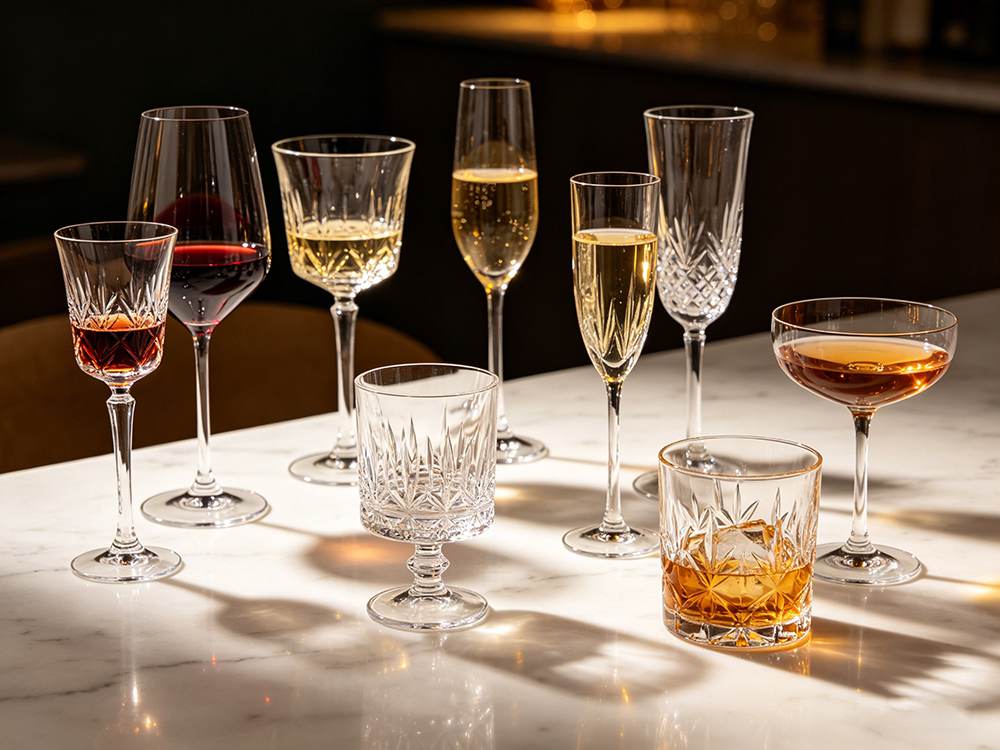
Understanding Glassware Materials: What Holds Up in Catering
Most catering wine glass catalogues visually appear very similar. The actual difference comes up during transportation, dishwashing, and service.
The glassware material is not a tiny detail. It’s a strategic decision that can cost you dearly in business.
Learn more in our Tempered vs Annealed Glassware guide, and you will see that glassware material goes much deeper than “cheap vs expensive.”
Soda-Lime Glass
About 90% of all manufactured glassware is soda lime. It includes the bulk wine glasses we find in hospitality catalogues. These glasses are affordable, easier to produce and scale, and clear enough for the standard service.
However, these also have a low resistance to thermal shocks, such as those experienced in the dishwasher cycle, and are also prone to cracking and chipping.
So while they are perfect for controlled environments, in catering with all the transportation and stacking involved, they can wear out much faster than you’d expect.
Tempered Glass
Tempered glass starts off as soda lime, but it’s heat treated that increases its strength. As a result, these glasses have a higher impact resistance. It doesn’t mean that these don’t break, but they break into small, blunt fragments instead of dangerous shards.
The category holds much better across repeated wash and transport cycles. But these typically cost more than standard annealed glassware.
Crystal Glass
One of the most noticeable categories in glassware is crystal. Composed of mineral additives, these have a much higher clarity and a thinner and more refined rim.
Think enhanced light refraction and aroma perception. But the thing is that these are very fragile and have a higher replacement cost. So you are looking at something that’s less forgiving during transportation and stacking.
For high-end plated events like VIP weddings, where presentation is everything, crystal glassware can get you noticed. But for general catering, it’s more of a liability.
Borosilicate Glass
Although more of a niche category, the borosilicate glassware is not your standard glassware. It is engineered for thermal shock resistance and is also stable across rapid temperature changes.
You can use these glasses in coffee service, tea stations, and specialty beverage set-ups. However, it’s not the core inventory needed for events.
Polycarbonate & Tritan
In certain events, glassware is not a practical option. Like in pool site service, outdoor venues, and high-risk environments. For serving these areas, you will need alternatives like Tritan and polycarbonate.
Polycarbonate is almost unbreakable and a bit heavier in weight. Tritan is lighter, clearer, and looks much closer to real glass.
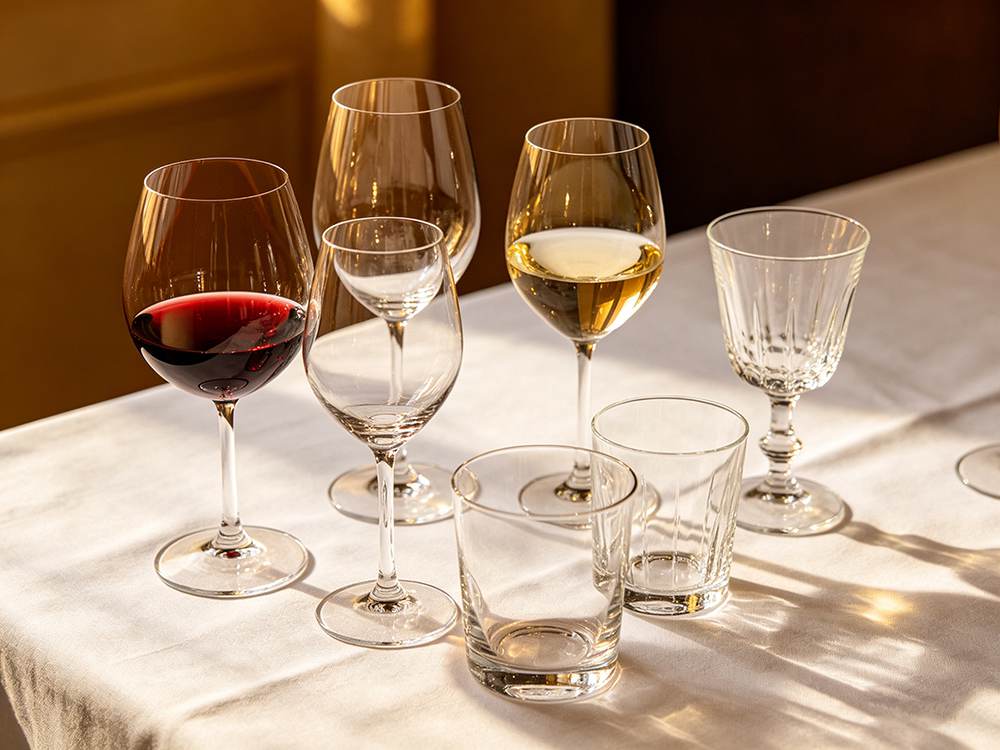
How Many Glasses Do You Actually Need? Quantity Planning for Caterers
No matter how good your catering wine glasses look on the shelves, they won’t matter when you run out of glassware mid-service. So the rule most caterers use for procurement is three times the headcount, or the 3:1 rule.
For every guest, that means one glass can be in use, one in washing, and one in reserve. So if you are serving 150 guests, you are planning for a core inventory of 450 glasses.
That means you will need 450 water glasses, the same quantity of wine glasses, and since the champagne flutes must be one toast per guest, that means 150 flutes. This is the functional baseline for any catering service.
Explore Brett’s Lead-Free Crystal Champagne Flute Set.
If you are running formal setups where you need separate wedding wine glasses for red and white, your glass count can double. Most operators, hence, stick to all-purpose glasses unless the client specifically asks for others. Check out Brett’s Crystal Sparkling Wine Glasses Set and Crystal Wine Glass Clear Goblets Red & White Wine Tasting Glassware.
Not all events must work the same way, and that means the glasses shouldn’t either.
For seated, multicourse dinners, you will need the highest glass count for the guests. The buffet requires a slightly low inventory, but still, a full place setting must be there. For a standing reception and cocktails, we need fewer water glasses and more highball and rock glasses.
For outdoor and roaming events, there is a higher loss rate, and more inventory is required. Always order 10 to 15% above the calculated requirements as a buffer.
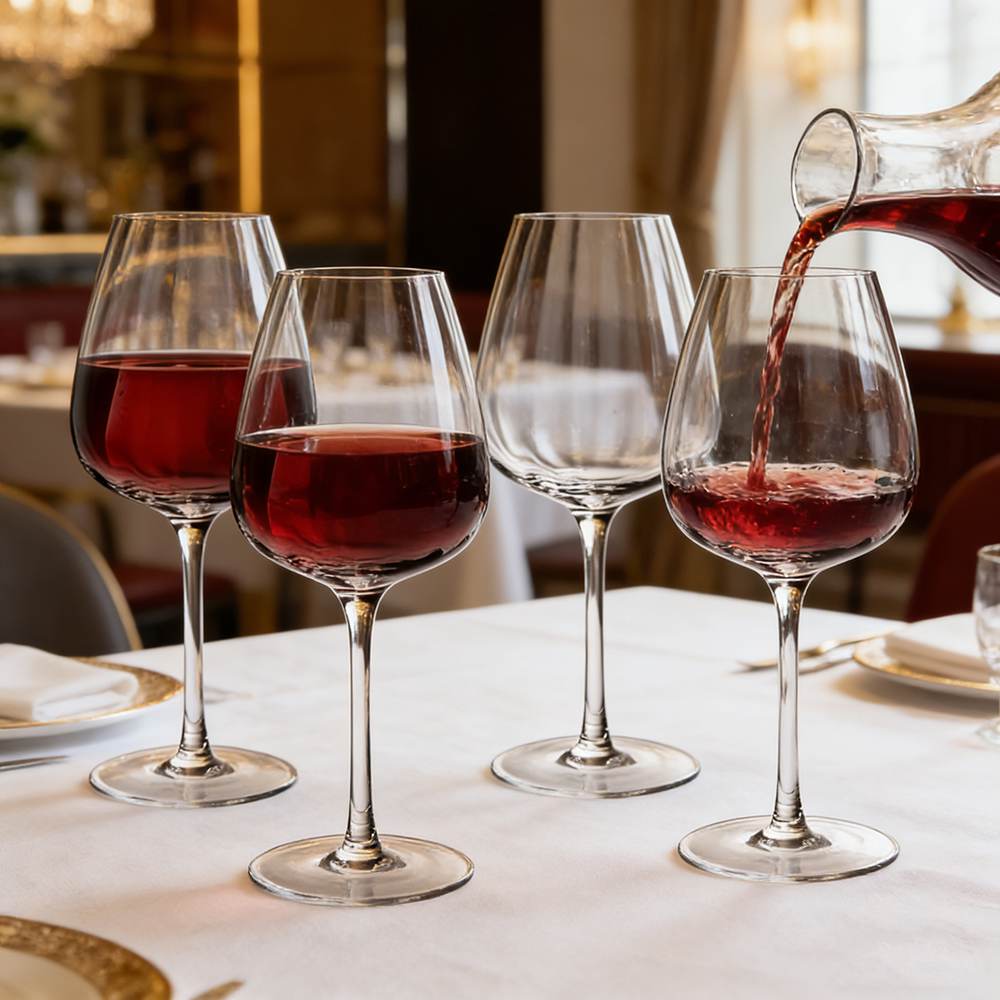
Procurement Tips for Catering Glassware
Buying catering wine glasses isn’t about choosing what looks good. It’s about what we’re still working with after 300 washes, 25 events, and the inevitable number of knocks and tilts.
Buying vs. Renting
Buying is always a win on costs and control if you are running around over three events a week. But if you are just managing occasional or one-off events, renting will keep your capital free and also help you manage your storage. Not to mention, it will also reduce the logistics and stacking stress.
Also, owning inventory will give you consistency and availability 24/7. However, renting will give you the flexibility without any long-term risks.
So what do smart operators do? They do both. They have a core inventory that they own, and specialty items are rented.
Here are some tips to help you procure dinner and glassware
Bulk Buying Without Regret
Buying bulk wine glasses is simple until a supplier discontinues the pattern on the same line within just six months. That leaves you stuck with mismatched inventory or a need for a full replacement cycle.
Always confirm with the supplier that the product line will remain in production after you buy from them. Also, ask them about the replacement availability timelines, so you can avoid seasonal delays when building your core inventory.
Always Test Before You Commit
Don’t take samples lightly. They are the cheapest insurance policy you can get.
Run them through your dishwasher cycles, check if they are clouding, chipping, and how the rim behaves during service. Also, check if they fit your racks and test them for stacking.
Think in Systems, Not Pieces
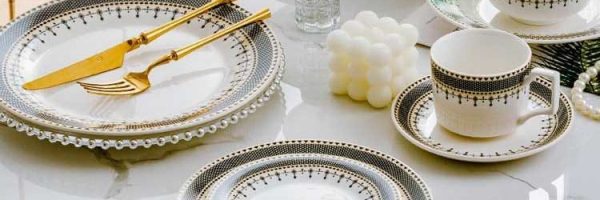
Glassware works along with plates, flatware, linens, and tables. When the whole presentation doesn’t align, it gets noticed.
This is why it is necessary to go with suppliers who offer coordinated tableware, like Brett. The tableware works and brings together everything visually as well as operationally.
Compliance Isn’t Optional
The dinnerware must also meet the food contact safety standards. Make sure the supplier is reputable, and their dinnerware aligns with the regulations of the U.S. Food and Drug Administration (21 CFR Parts 170–189).
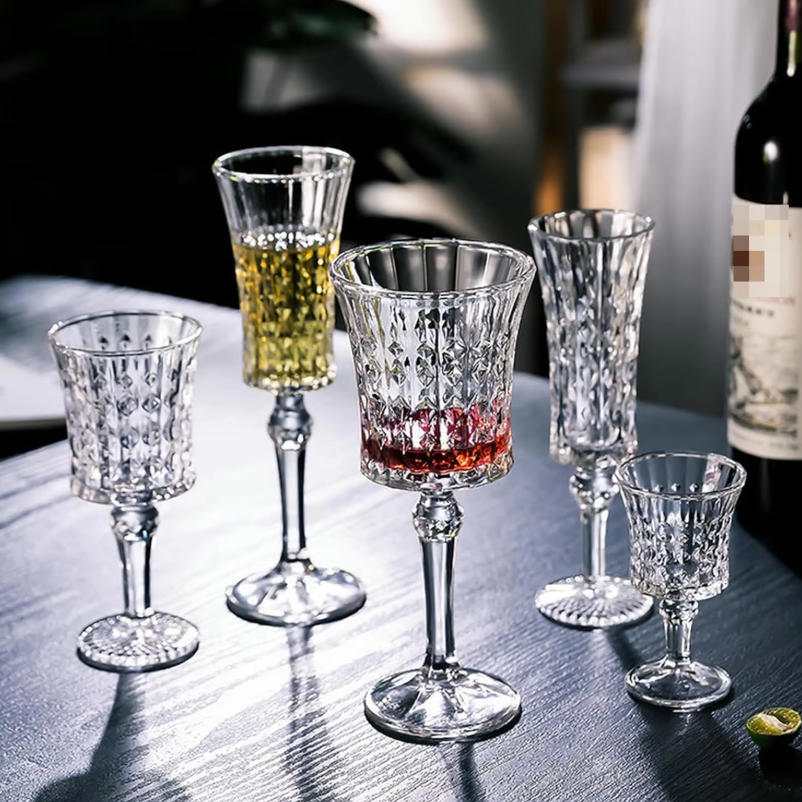
Catering Wine Glasses: The Decisions Guests Never See (But Will Always Feel)
The thing about glassware is that nobody will walk in and praise it upfront. But any time something feels off, they will notice.
Catering wine glasses have a quiet role to play, and the goal is to never let them become a problem. Nobody will notice you choosing durability over short-term savings or stocking just enough to handle the requirements of the event.
But doing all of that will keep everything else looking effortless and perfect. And catering is just about that.
That’s where Brett comes in. The glassware is designed to blend right in the details no one notices, but everyone feels.
FAQs
What type of wine glass is best for catering?
The most practical choice for catering is all-purpose wine glasses with a 12 to 16-ounce capacity. The bowl is balanced to handle both red and white wines, and it also keeps your inventory simple.
If you’re hosting upscale events, you may need separate white glasses and Bordeaux.
How many wine glasses do I need per guest for a catered event?
Aim to procure three wine glasses per guest. This way, you will have one in the service cycle, one maybe in the washing, and still you will have one in reserve to make up for broken glassware. Also, add a buffer of 10 to 15% to cover for unexpected delays, losses, or breakages during service.
What is the difference between tempered and regular wine glasses?
Tempered wine glasses are heat-treated. The manufacturing process improves their strength and makes them resistant to impact compared to standard annealed glass.
They are also safer in case they break because they shatter into small, blunt fragments instead of sharp shards.
Can you use the same wine glass for red and white wine at events?
Yes, a well-designed all-purpose wine glass can work for both red and white wines. Although separate glasses will enhance the experience in wine-focused events, a versatile option can simplify your operation without affecting guest perception.