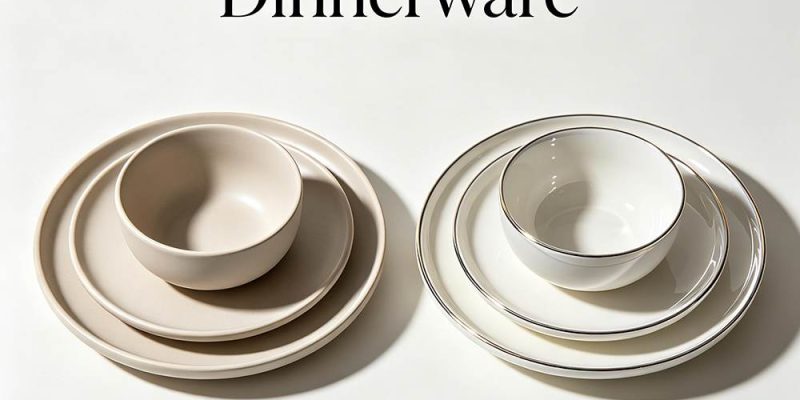
Your customers won’t notice when you place the most exquisite bone china dinnerware in front of them – until it feels off.
It only happens when the stains, marks, uneven glaze, or a blinding glare catches their eye, and that’s never in a good way. Think of a guest dressed to impress their date, one bad dinner plate can literally drain all the charm out of the perfect evening.
This is why choosing dinnerware and putting out the finest restaurant plate finish in front of the house is important. Coming to our debate of matte vs gloss dinnerware, your choice can make your entire menu look scrumptious or completely unappetizing.
The effects of the finish aren’t limited to the looks. How often you need replacements, how the guests see your brand, and whether or not your dinnerware will be able to survive the harsh wash cycles, are all dependent on the finish.
Let’s uncover how matte vs gloss finishes behave in real service conditions and their impacts on your long-term cost per plate.
What’s Actually Different? The Science Behind Matte and Gloss Glazes
You would notice most matte vs gloss dinnerware explanations just talk about the lighting behavior of the finish. In simple words, that means: matte absorbs, and gloss reflects.
The actual difference begins inside the glaze, at the kiln stage. That’s when temperature, mineral composition, and the cooling behavior work and determine how the plate will perform after hundreds of service and wash cycles.
Gloss Glaze
Glossy finish is strong, vitrified, and feels smooth to the touch. Speaking in the language of ceramics, its glaze is melted and fused into a dense and glass-like layer during the firing process.
Since most gloss glazes are usually fired at very high temperatures, often above 1200°C, they fully melt, so we get an even, continuous surface with zero or minimal micro-texture.
For the restaurant, that means a plate with a hard surface that resists abrasion and staining, and is easy to clean. The dinnerware with gloss glaze also has lower porosity, which doesn’t let the liquids penetrate and weaken its structure.
You get a higher performance from such materials, especially in high-use concepts. Explore Brett’s White Diamond-Pattern Embossed Durable Porcelain Dinnerware Set
Matte Glaze
Matte finish is kind of like an unfinished gloss; only the attempt is deliberate. The glaze chemistry is so adjusted to give the final product a soft, non-reflective look.
At times, materials like magnesium carbonate or barium compounds are also included in its composition to form microscopic crystals during cooling. These crystals do not allow the surface to get smooth, like the one we get from full vitrification.
As a result, the surface is diffused, appears rough, and has a bit of friction. Check out Brett’s Dark Brown/Black Vertical-Stripe Matte Glaze Ceramic Dinnerware Set here.
The Metal Transfer
Usually, once you place the procured dinnerware into service cycles, you notice stains or grey marks, especially on the matte plates, after a few weeks. These aren’t scratches, but indicators of metal transfer.
When the dinnerware is used with the cutlery in regular service, the stainless steel deposits tiny particles of metal into the microtexture. The marks are more noticeable on the matte plate compared to the gloss. That’s because gloss is smooth and has less friction, so there’s less transfer.
Although it is cleanable with mild abrasives like baking soda paste or commercial cleaners, it’s something you will encounter daily with matte finishes. So even though it isn’t structural damage per se, to the guest, it pretty much is.
Porosity, Staining, and Why Light Matte Plates Age Faster
Another concern with matte finishes is that they hold onto color or pigmentation since they have micro-texture. Therefore, oils and food pigments, such as beetroot and turmeric, settle and stain the surface.
The problem becomes more pronounced in light-colored dinnerware.
On the other hand, gloss finishes are smooth and have more of a sealed surface, which keeps them safe from this kind of discoloration or aging.
Check out Brett’s Pure White Minimalist Porcelain Dinnerware Set with gloss finish.
The Verdict? Satin-Matte
Since both dinnerware glaze finishes come with trade-offs, many manufacturers are now pushing a third category that’s gaining momentum in the industry, i.e., satin-matte (or semi-matte).
The material is more of a controlled compromise. It’s visually softer compared to gloss, but less textured. The glare too is less, and so is the metal transfer. Also, it’s fairly easy to clean and maintain.
Durability and Maintenance in Commercial Kitchens
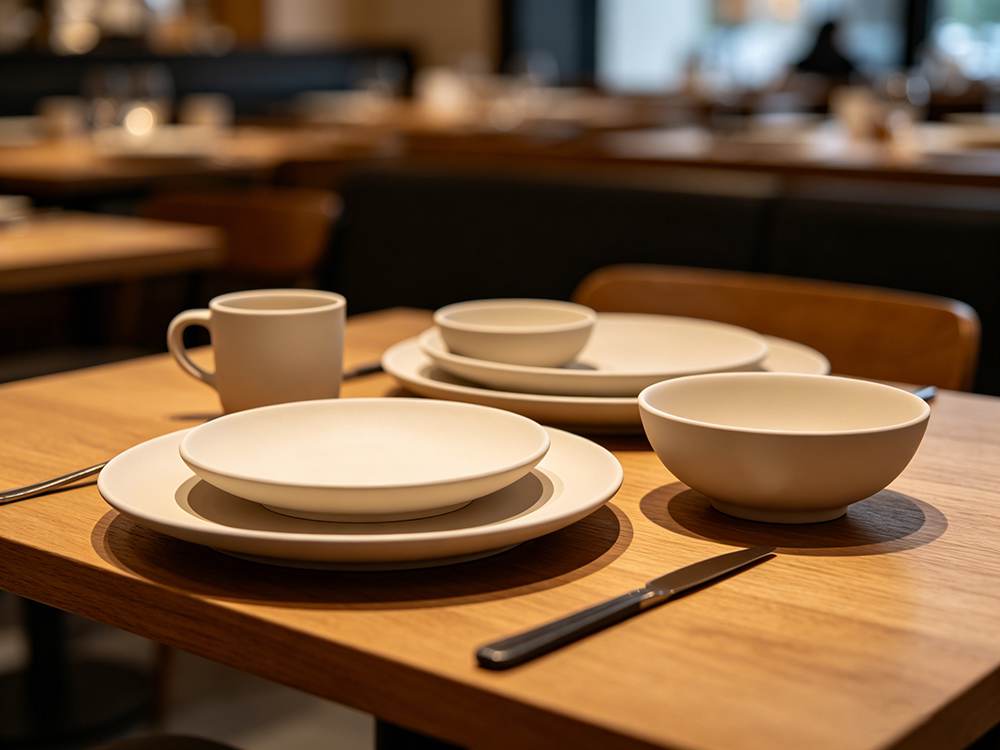
When you bring in dinnerware from your supplier to your kitchen, the exposure to real service begins. In high-volume settings, it typically has to undergo rinse cycles at 82°C in high-temp machines. It’s also washed with alkaline detergents to strip off the grease, and is exposed to the same temperature and harsh cleaners multiple times a day.
These conditions affect the finishes differently. Gloss, being fully vitrified, often holds up better than matte. However, over time, it begins to show fingerprints, smudges, and water spots, which come off as a sort of clouding or haze.
This isn’t structural damage, but mineral deposits or detergent residue. However, to the guest, that just means the dinnerware is dirty or not up to standard.
Matte finish dinnerware, on the contrary, dulls faster and shows up metal transfer sooner. This is why semi-matte becomes the ultimate choice, giving the best of both worlds.
- Stacking, Storage, and the Friction: Matte plates have rougher surfaces, so they don’t slide around easily. Over time, the constant contact and transportation can lead to surface scratches around the high-touch points. Gloss is easier to stack and handle. However, it does become slippery when wet, which may increase the risk of drops in fast service.
- Replacement Rates: Matte finishes may have to be replaced earlier for aesthetic issues like metal marks and staining. Gloss shows wear slowly but needs more maintenance to appear sharp in daily service.
- The 3:1 Rule:The standard rule for procuring dinnerware for a commercial kitchen is 3:1. It’s about ordering the dinnerware according to the number of cycles a plate goes through every day. This keeps the service in flow without any disruptions or shortages. Find out more in our guide: How Many Plates Does a Restaurant Need? A Practical Guide.
- Maintenance Reality: With matte plates, metal transfer comes as part of the deal. The good news, however, is that it can be managed with baking soda and commercial cleaners. However, gloss is the clear winner here as it’s more resistant to stains.
Food Presentation, Photography, and Guest Perception
In dining, there are no margins to go wrong with food presentation. It will ultimately show up in reviews, photos, and repeat visits. This is why matte vs gloss dinnerware is not just a back-of-house decision but also a front-of-house performance tool.
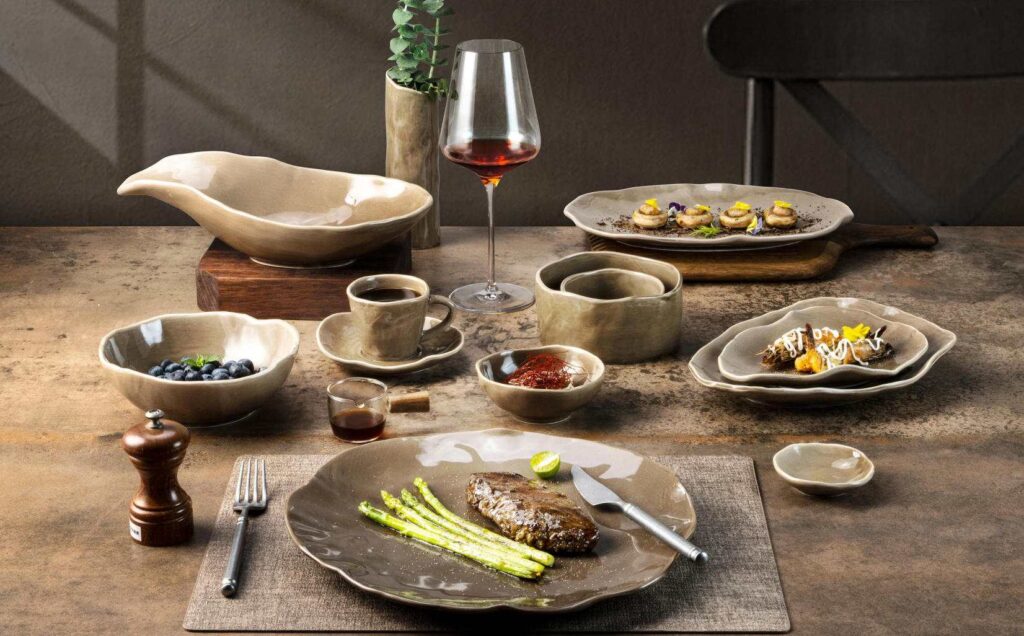
The finish you choose changes the way the serving is seen, perceived, photographed, and so promoted. If you have matte dinnerware, it usually creates a calm and even backdrop for the dish or course. No glare competes with the dish, so every little detail reads clean.
Gloss finish does the exact opposite. It makes colors look more vibrant, which makes salads, proteins, and desserts appear brighter and more cheerful.
However, it can also create hot spots or visual distractions that take the focus off the food. So, here Matte takes the lead. It’s easier to photograph. There’s no glare, overhead lights, or camera lenses to worry about. That translates to more shares on social platforms, more visibility for your brand, and more covers.
See how Brett brings elegance to the table with its matte range, including designs like Matte Texture Black White Ceramic Tableware Set and Brett’s Premium Matte Gray Ceramic Tableware Set.
Which Finish Fits Which Restaurant Concept?
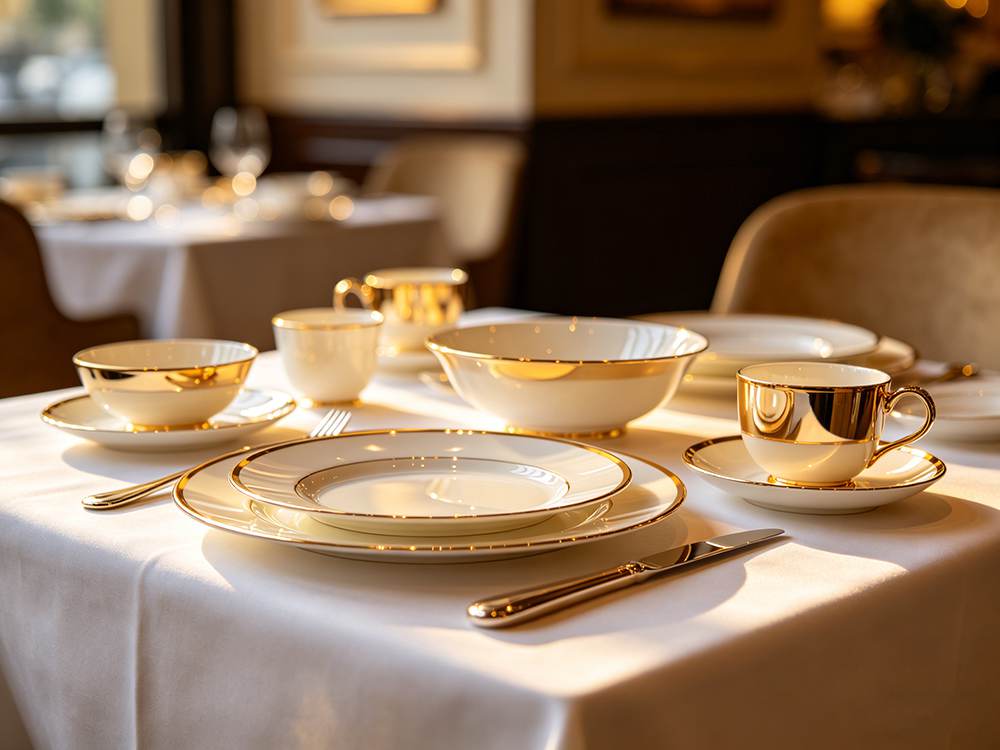
Most restaurant dinnerware procurement managers believe their concept can work with both kinds of finishes. But when you are placing an order of over six figures, the decision matters. So who wins the matte vs gloss dinnerware debate? It all comes down to the type of service operation, volume, and brand positioning.
Here’s a look at the type of glaze or finish that works best for different restaurant concepts:
- Fine Dining and Tasting Menus: For fine dining and tasting menus, matte and semi-matte both work well. The dinnerware becomes part of the serving in these concepts as a neutral canvas. It creates a tactile presentation with a modern, textured feel.
- Casual Dining and High-Volume Restaurants: For a casual dining concept, opt for glossy dinnerware. This kind can handle repeated dishwashing cycles and shows less visible wear over time. Matte too can work in such concepts, but it comes with a higher upfront cost and has faster visual wear.
- Hotels, Banquets, and Catering: For banquets and catering operations, you need hundreds of identical place settings and minimal variations. Gloss becomes the clear winner here as it offers consistency, stackability, and wears more evenly compared to matte. Procurement too becomes simple with fewer SKUs.
- Cafés and Brunch Spots:The cafes and brunch-focused concepts usually serve as visual platforms where the dishes are being photographed more than they are described. Each serving, hence, becomes part of your marketing campaign.
- Matte serves best as it completely eliminates the glare and is easier to photograph. Finishes like Brett’s Matte Black Stoneware Dinnerware Set create a high contrast for colorful dishes such as plated desserts and fruit bowls.
Final Take: Matte Vs Gloss Dinnerware
Imagine you have a full house on a busy night and a couple orders your most popular dish (the one that’s been making Instagram rounds lately). The moment it lands on the table, they reach for their phone before their fork and take a quick photo.
And then they move on. There are no second shots, no adjustments, nothing. That moment is all your brand gets.
If your dinnerware plate complements the dish, the image works. If it throws glare, has metal marks, or just feels worn, the impression slips away just as quickly. If you are thinking of ordering matte and gloss dinnerware, Brett is here to ease your decision. We provide consistent designs with multiple finishes, so what you serve on supports the standard you serve with.
FAQs
Is matte or glossy dinnerware more durable for restaurants?
Glossy finishes are generally more durable for restaurants and commercial settings. This is because these are fully vitrified, and the glaze creates a harder, smoother surface that resists cutlery wear, staining, and repeated dishwasher cycles.
The durability of matte depends heavily on its quality. High-fired commercial porcelain can perform well, but lower-grade matte finishes show visible wear faster.
Why do food photographers prefer matte plates?
Most food photographers work with matte plates in restaurants as they are easier to capture. The surface absorbs light instead of reflecting it, which reduces glare and hot spots. Gloss finish, on the other hand, creates the glare under overhead or natural lighting.
So matte produces cleaner, more consistent food images without much effort. For restaurants relying on social media or user-generated content, matte plates hence improve photo quality.
Do matte plates scratch more easily than glossy plates?
No. Matte plates do not scratch more; rather, they show metal transfer more visibly. The textured surface traps the tiny metal deposits from cutlery, which creates gray marks that look like scratches.
These can be cleaned off, but they reappear with use. However, glossy surfaces are able to resist this due to their smoother glaze.
Can you mix matte and glossy dinnerware in a restaurant?
Yes, and that is the best strategy. Many restaurants today use matte for signature or photo-driven dishes and gloss for high-volume service.