
When restaurant owners plan a rebrand, their focus usually lands on the obvious: a new logo, updated menu design, fresh signage, and revamped interiors. They may even do a full-scale restaurant redesign. But one crucial element sometimes becomes an afterthought: the tableware.
It’s surprising how tableware is left until the final stages of a restaurant makeover. And what’s even more surprising is that restaurant rebranding checklists online barely mention this key element.
A thoughtful restaurant dinnerware refresh shouldn’t be limited to aesthetics. It’s about aligning your concept, pricing, plating style, and guest expectations with every physical touchpoint. If your rebrand includes a concept change tableware plan, it deserves to be part of your tableware upgrade strategy from day one. And that’s what we’ll cover in detail in this article.
Why Your Dinnerware Is a Brand Asset
Dinnerware is one of the most powerful and most underestimated brand assets in the dining experience. Here’s why it should be a focal point of restaurant rebranding:
Dinnerware Frames the Food and the Brand
Every plate acts as a frame. And it ties to the kind of food you serve and the experience you want to deliver.
For instance, a rustic, handmade stoneware bowl gives a laid-back vibe. But something like a sleek, white porcelain coupe plate conveys sophistication.
If your brand is moving upscale during a restaurant refresh, but you’re still serving on thick, casual diner-style plates, the disconnect will be obvious.
Guests Physically Interact With It
Tableware is touched, lifted, and used throughout the meal. It influences comfort, perception of quality, and even portion size psychology. Weight, texture, rim depth, and shape all affect how premium (or not) your restaurant feels.
Besides the aesthetics, ergonomics also plays a role. Heavy, well-balanced plates are durable and high-quality. Delicate pieces can imply refinement. The right choice reinforces your brand positioning before the diner even takes a bite.
It Drives Social Media Visibility
54% of diners say they’ve discovered a new restaurant through social media. With a rebrand, you’d obviously want to promote your restaurant. Social media platforms like Instagram, Facebook, and TikTok are the best places to do that.
Sure, you can show off the decor of the restaurant, but it’s the food that makes the last impression. And your plates are constantly photographed.
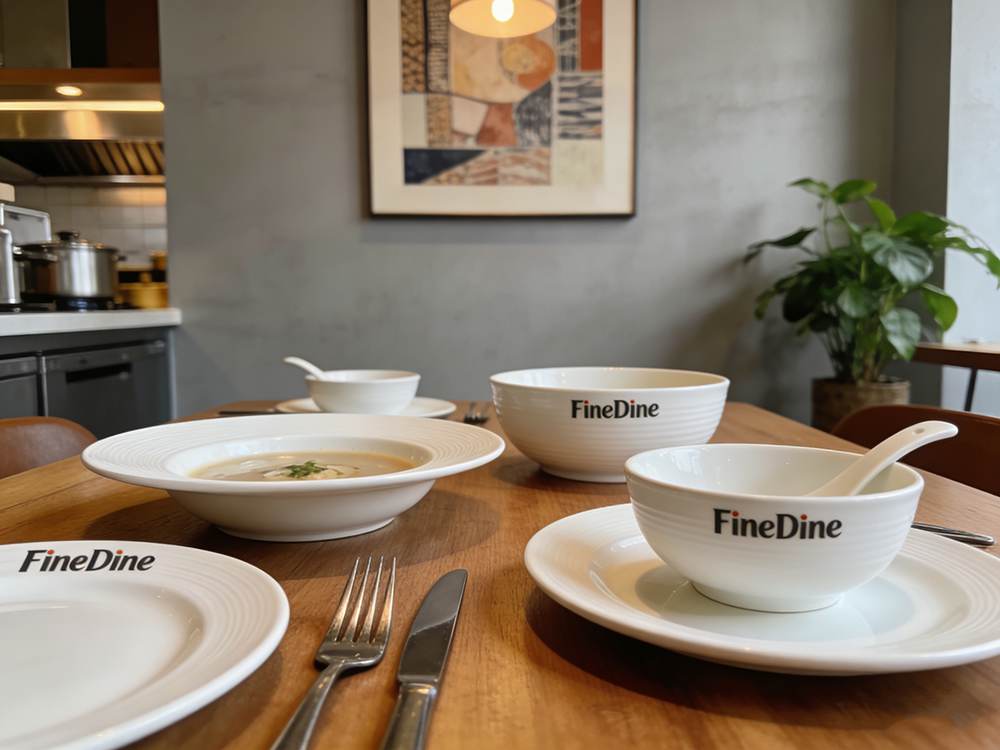
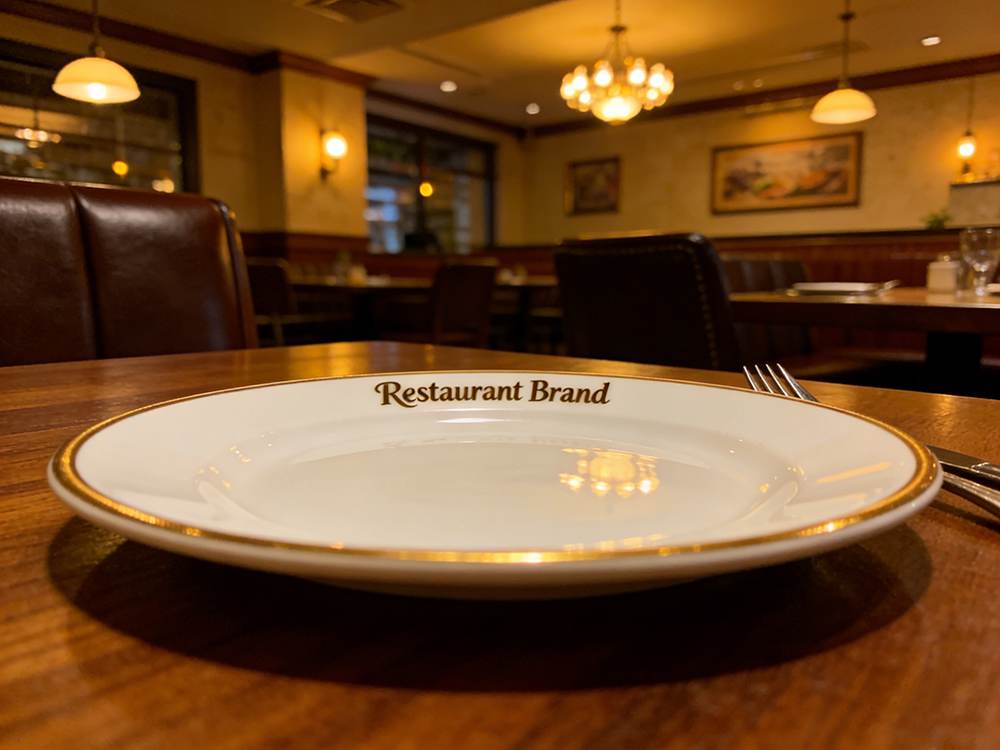
Custom dinnerware with a logo can help make your social media pictures of your plates instantly recognizable. Such tableware design ideas double as marketing. You can hire a manufacturer to make custom plates in your brand’s color scheme, with or without a logo, at a cost-effective price.
And even if you’re not using logos, the design and quality of the plate serve as assets in the social media pictures and videos you and your patrons post.
It Impacts Operational Efficiency
Dinnerware is also an operational infrastructure. Dinnerware sizing affects portion control. Bowl depth influences plating speed. Stackability impacts storage space.
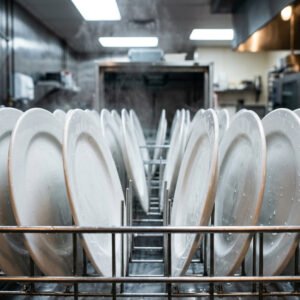
Many busy restaurants might need dishwasher-safe plates. That way, they can be washed in bulk and quickly.
If the plates aren’t reliable, the experience might not be the best for both servers and diners.

Phased Replacement vs Full-Swap of Tableware: Which Is Better for Your Restaurant?
When planning a restaurant dinnerware refresh, either plan to replace everything at once or transition gradually. Both approaches can work within a broader restaurant redesign. The right choice depends on your budget, timeline, and brand positioning.
A full-swap means removing all old dinnerware and introducing the new collection at once. This is typically done on the day of the reopening after the makeover.
The advantage is that this is a one-and-done deal. The rollout is done with the rebrand introduction, which can create a strong brand rest moment. But it does require a higher upfront cost and a larger initial inventory order.
Phased dinnerware replacement involves gradually introducing new pieces while retiring old ones. This route lowers immediate capital need.
More importantly, you can test and adjust before full rollout. If the dinnerware does well in the kitchen and on the table, you can order more. The downside is that there’s a temporary mismatched inventory.
Tip: Have a clear target date; otherwise, phased rollouts can drag on and impact brand identity.
Which Is Better?
If your restaurant makeover represents a bold repositioning, like a new cuisine direction, interior overhaul, or pricing shift, a full-swap makes more sense.
If your restaurant refresh is more evolutionary, a phased dinnerware replacement is a better choice. It can also be good for testing the waters, especially if you’re unsure about the tableware’s material or design.
How to Pick the Right Tableware for Your Restaurant Rebrand
Your restaurant’s new tableware is a key component of the rebrand. Naturally, you need to be much more discerning about what you choose.
Here’s a step-by-step guide:
1. Consider the New Branding
First, define your new identity. Are you moving upscale? Becoming more casual and approachable? Shifting to a farm-to-table narrative?
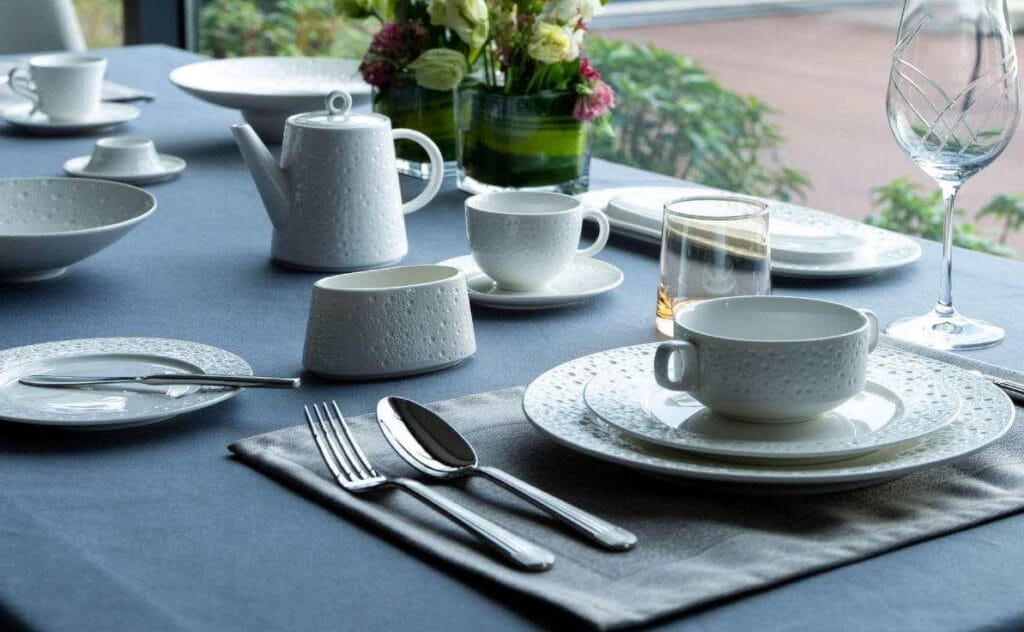
Your tableware should visually support that shift. For instance, a restaurant with a modern minimalist concept can feature clean white porcelain, coupe plates, and matte finishes. On the other hand, a luxury fine-dining establishment may want to opt for refined rims, lighter-weight porcelain, and restrained color palettes.
2. Look at Your Menu and Plating Style
Your food determines the plate type, not the other way around. During a restaurant makeover, menus change alongside design. Portion sizes, plating techniques, and garnish styles change. Your dinnerware should accommodate that shift.
Ask:
- Are dishes more composed and architectural?
- Are you serving more share plates?
- Has portion size increased or decreased?
- Are sauces central to presentation?
For example, shallow coupe plates can work well for modern, minimal plating. Deep-rim plates help contain sauced dishes.
Look at your menu carefully and also discuss the presentation with your chef. A restaurant dinnerware refresh that doesn’t account for plating realities can lead to poor presentation.
3. Choose the Right Tableware Materials
Material choice is just as important as shape and color. It affects durability, cost, presentation, and even perceived value.
Here are the most common materials used in restaurant dinnerware:
- Porcelain: This is a lightweight, refined, and chip-resistant material. It’s ideal for upscale and modern concepts.
- Bone China: It’s extremely light and elegant, and typically associated with fine dining. That’s why it’s more expensive. See how Porcelain and Bone China dinnerware compare.
- Stoneware: This material is heavier, textured, and rustic. It’s perfect for farm-to-table, comfort food, or artisanal concepts. Compare stoneware with porcelain.
- Melamine: This is a highly durable and budget-friendly material. But it’s best suited for casual or high-volume restaurants. See how Melamine and Ceramic dinnerware compare.
- Glass and specialty materials like reactive glaze: These can be used for modern or avant-garde presentations, but are typically reserved for accent pieces.
When building your tableware upgrade strategy, balance aesthetics with breakage rates, supplier reliability, and long-term replacement costs.
4. Balance Aesthetics With Durability
Don’t get carried away with beautiful but impractical options. Remember, these plates, bowls, and cutlery will be used almost every single day and washed frequently. It goes without saying that durability is a must.
When choosing dinnerware sets for restaurants and catering, ask about chip resistance, stackability, dishwasher safety, weight, and even replacement lead times (you will at some point need more of them).
5. Consider Budget and Replacement Planning
Dinnerware prices can vary quite a bit. Simpler designs and cheaper materials might not dent your budget that much. However, premium quality plates will definitely require a sizable investment.
Rebrands can be expensive. For example, Cracker Barrel, an American restaurant chain, spent $700 million on rebranding its brand and all its locations.
Even if you’re not a chain restaurant and operate one or a few locations, the costs can add up. So, it’s best to do some research and factor in tableware costs for your entire restaurant rebrand.
That said, few restaurants can replace all dinnerware at once, especially during a large restaurant redesign. That’s where a phased approach to replacing dinnerware makes sense.
Cost-Saving Tip: If you want custom colors or branded dinnerware, working with a manufacturer like Brett directly can save money.
6. Think Long-Term Brand Consistency
Tableware is not a seasonal decision. In fact, it’s a multi-year investment. Choose a collection that can evolve with you.
Neutral base plates allow seasonal accents. Consistent silhouettes create brand recognition. Over time, guests begin associating your plate style with your restaurant itself.
Restaurant Rebranding Checklist for Tableware
Here’s a ready checklist for restaurant rebranding, focusing on tableware replacement and transition:
Action | To-Do |
Audit Current Inventory | l Count all plates, bowls, and specialty items. l Determine how many need to be replaced. |
Define Your New Tableware Brief | l Specify material, color palette, shapes, and sizes. l Consider brand guidelines, interior palette, and the menu (if new). |
Calculate Par Stock Needs | l Plan 2.5 to 3x seat count per plate type. l Cover service rotation, dishwashing, and breakage buffer. |
Request and Test Samples | l Plate real menu items. l Test under actual lighting and on actual tables. l Run dishwasher cycles. |
Plan Rollout Timeline | l Decide whether to go with a full swap or a phased rollout. l Prioritize guest-facing items first if phasing. l Set a completion date. |
Handle Old Stock Responsibly | l Sell, donate, repurpose for staff meals, or recycle. |
Train Your Team | l Brief teams on stacking, handling, and dishwasher configuration for the new dinnerware. |
Mistakes to Avoid with Restaurant Tableware Upgrade
Even well-planned restaurant renovation ideas can fall apart if tableware decisions are rushed or poorly integrated. Avoid the common mistakes when buying dinnerware, especially during a rebrand:
- Tableware as low priority: Don’t wait until the end of a restaurant makeover to choose plates. Make sure to plan for tableware as part of the overall rebrand.
- Choosing style over practicality: Some plates look stunning. But they might chip easily or stack poorly. A successful restaurant dinnerware refresh balances aesthetics with durability, weight, and storage efficiency.
- Ignoring menu changes: If your restaurant redesign includes new plating styles or portion sizes, you may need different plate sizes. Test dinnerware with actual dishes to see if they look presentable.
- Mixing too many styles: Don’t go too overboard with plate style and colors. You want cohesive branding, so stick with similar materials and a consistent color scheme.
- Not planning for replacement: A niche or limited-edition collection may cause problems later on when you need replacement. Either order extra from the start or choose something easily replaceable.
Wrap Up
Yes, rebranding a restaurant can mean a different logo, fresh interiors, or a new menu. However, it’s also about changing key components of the dining experience, like the dinnerware.
A successful restaurant dinnerware refresh ensures your plates, bowls, and serving pieces reinforce your concept, pricing, and presentation.
Use the above restaurant branding checklist for tableware updates to plan and execute the transition on time and within budget
FAQ
1. How much does it cost to replace restaurant dinnerware during a rebrand?
The cost of replacing a restaurant’s full tableware depends on the type and quality of the dinnerware and the restaurant’s seating. For example, a 60-seat restaurant tableware upgrade can cost $3,000 to $15,000+, depending on material quality.
2. How often should restaurants update their dinnerware?
Commercial dinnerware in high-volume restaurants typically has a lifespan of two to three years before wear-out becomes apparent. Industry standards recommend a full refresh every 5 to 10 years (even if you’re not necessarily rebranding).
3. What should I do with old restaurant dinnerware during a rebrand?
Options include selling to restaurant supply resellers, donating to hospitality schools or community kitchens, repurposing undamaged pieces for staff dining, or recycling. Don’t discard the plates unless they’re unusable.
4. How to choose dinnerware that matches a restaurant's concept?
Start with your brand guidelines: interior palette, menu style, and service concept. You should also consider the kind of cuisine you want to serve and look at the styles from that particular region or country. That can help make the dining experience even more authentic.