The global aircraft tableware market was valued at USD 10,360 million in 2024 and is expected to reach USD 24,620 million by 2032, growing at a compound annual rate of 12.2%.
The accelerated growth rate indicates that aircraft dinnerware selection is no longer a minute operational detail. It’s a strategy to ensure it aligns with the cabin requirements and weight constraints.
At a height of 35,000 feet, every little gram makes a difference, whether it’s the luggage or basic tableware, even little deductions to the weight made onboard (when multiplied by thousands of flights a year) directly affect the fuel and maintenance costs.
Attention to the weight of dinnerware, hence, can serve as a lever to improve airline operation efficiency. Selecting the right type and material of the plate also plays a role in shaping the experience of the passengers.
Let’s take an expert dive into material selection, supplier evaluation, and learn how to align choices with first-class, business, and economy cabins.
Airline Dinnerware Requirements
From serving delicacies in classic bone china in first-class to using disposables or melamine sets in economy, the choice of airline dinnerware matters. In a global in-flight catering market currently valued at USD 17.02 billion, these decisions can deeply affect efficiency and service quality.
Airline dinnerware requirements, unlike traditional catering, are stringent, making the one-size-fits-all approach rather impractical. The different cabin classes and passenger expectations, coupled with operational constraints and branding requirements, make the choice widely vary between airlines.
Even on a single airline, you have to keep inventory like fine bone china for the first class and stackable plastic or melamine for economy. Both material choices are made based on their visual appeal, durability, weight optimization, but also to ensure they meet the industry stowing and safety requirements.
First and Business Class
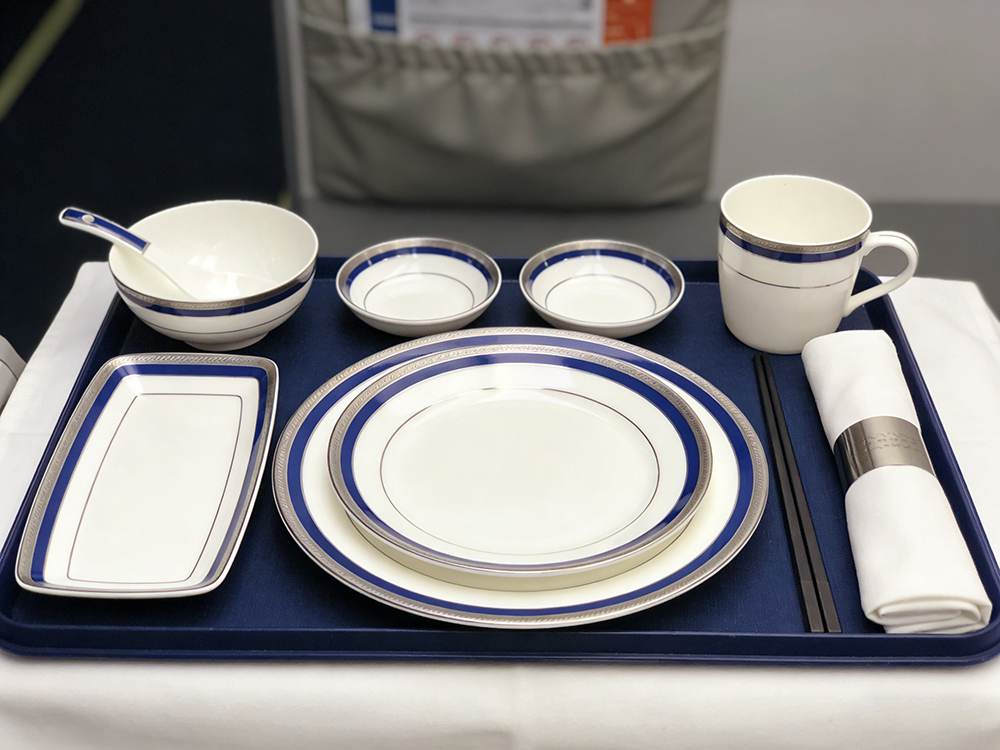
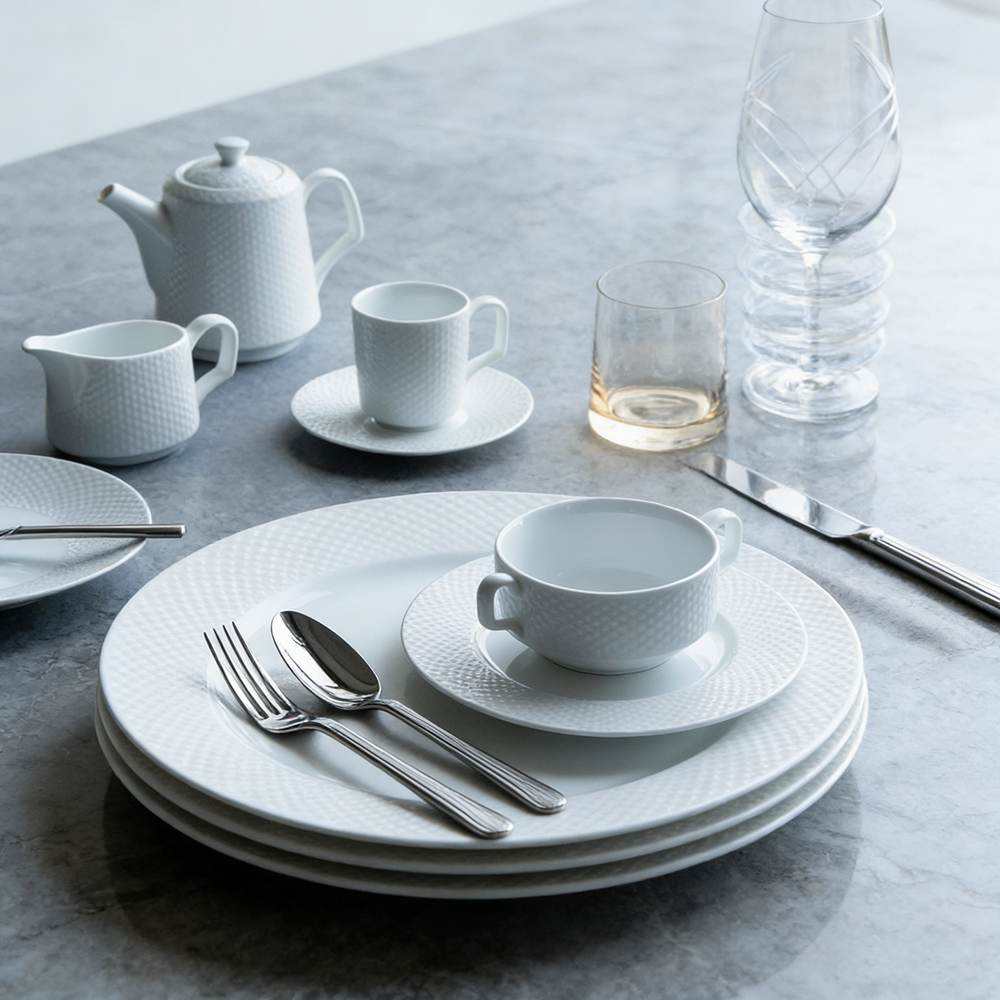
The premium first-class cabins exude luxury and presentation. In dinnerware, fine bone china is the number one choice for being translucent, light in weight, and having a refined appearance. (View Brett’s Custom Bone China Dinnerware collection).
Serving and dining in first class is a much more compatible experience than the top-tier restaurants and concepts. There are multi-piece arrangements and exquisite servings made atop premium serveware.
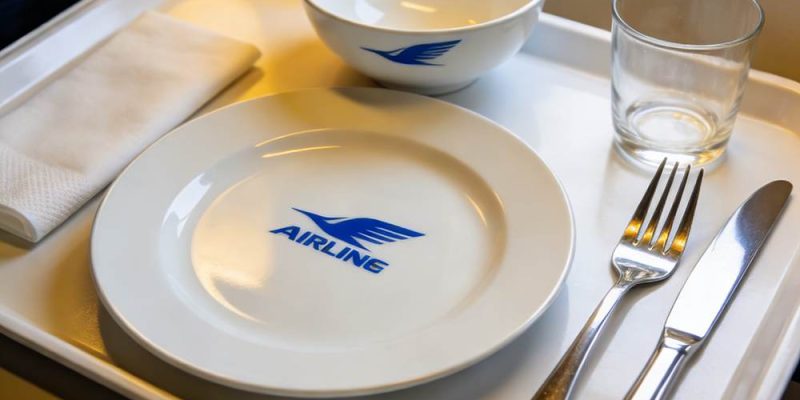
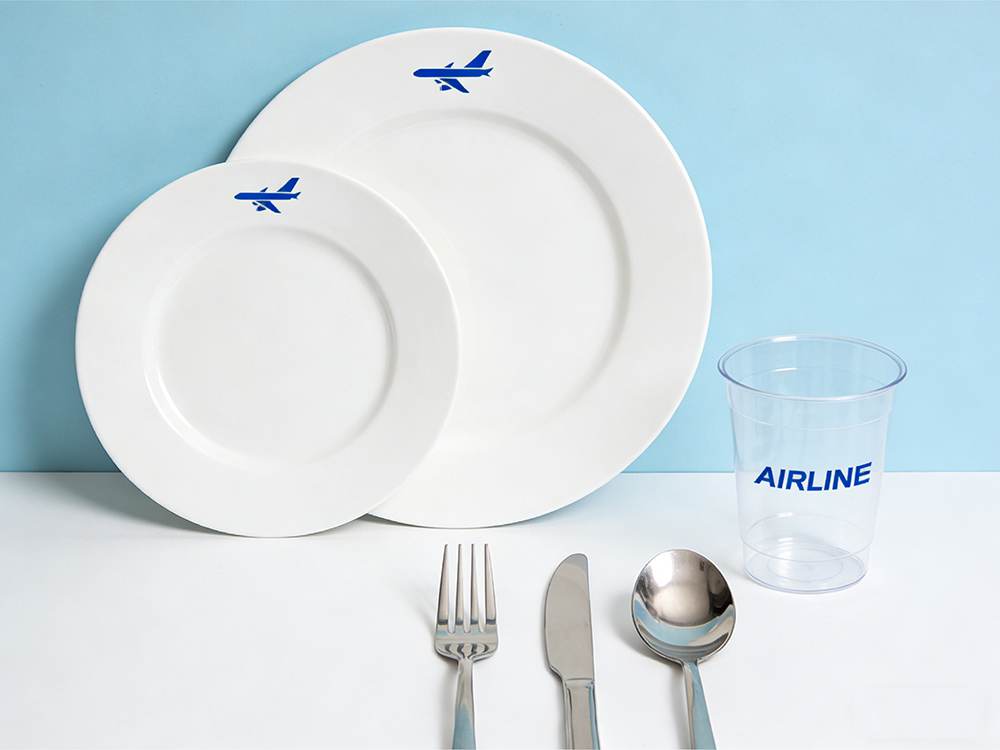
Most airlines collaborate with the top known brands to create custom designs for their brand that include everything from dinner plates, trays, side plates, bowls, cups, and saucers. The designs are exclusive with subtle logos and signature color accents to signify the brand while maintaining elegance.
Airlines have, since the beginning of first-class, spent considerable thought on premium cabin services. Case in point, in 2019, British Airways spent £6.5 billion on premium cabin service enhancements, including adding new fine bone china serveware to their inventory.
Premium Economy
Next, premium economy is the crossroads between operational durability and aesthetics. To balance the premium look while ensuring the dinnerware withstands frequent use and cleaning, high-quality porcelain and reinforced melamine prove to be the top choices for the class. (Discover Brett’s Custom Porcelain Dinnerware Collection).
Since premium economy is smaller than business and first class, investing in compact, practical dinnerware is better than procuring multi-piece arrangements.
Economy Class
The economy class represents over 67% of the in-flight catering market. For this segment, the airline industry heavily relies on rotable or reusable plastics like ABS, SAN, and PP. These materials are highly heat-resistant, stackable, and check all the boxes to last through extensive use.
Sustainable plastics, biodegradable and compostable disposables are also a sound choice as they continue to meet the airline sustainability targets (in line with the mission to achieve net zero carbon emissions by 2050).
A Cabin-Class Dinnerware Comparison Table
Cabin Class | Dinnerware Material | Required Dinnerware |
First Class | Fine bone china | Multi-piece sets: dinner, bread, bowls, cups, saucers |
Business Class | Fine bone china and porcelain | Multi-piece set |
Premium Economy | Porcelain or reinforced melamine | Smaller place settings |
Economy | Rotable plastic (ABS, SAN, PP) | Single-piece or minimal sets |
Economy (Disposable) | Biodegradable alternatives | Single-piece |
Material Selection and Weight Considerations
Assessing the right material for airline dinnerware is one of the most critical decisions to make. Each cabin class requires a distinct kind that also affects the fuel efficiency, as well as the passenger perception of the entire experience.
Bone China
Bone China remains the solid choice for premium cabins and first-class. Given that it’s composed of 45-50% bone ash, the material is exceptionally strong yet lightweight. Fully vitrified bone china material is also highly resistant and durable, making it the right choice for frequent in-flight use.
Thoughtful material selection, like opting for Brett’s Bone China Dinnerware, can actually reduce the overall weight and take up less stowage space. Take the example of Qantas, when they redesigned their premium cabinware, they managed to achieve an overall 11% decrease in weight.
Recent innovations in the category, like the new bone china, also have “alumina” in their bone ash mix. The formulation makes it mechanically stronger than its previous counterpart while maintaining the light-weight profile.
Porcelain
Serving food warm yet in a cost-effective way is the hallmark of airline catering. We need strength and a material that retains heat for a long time.
Porcelain stands out as the most cost-effective and high-strength option compared to bone china. Since airline branding requires versatile customization, porcelain adapts easily to various color accents, patterns, and logo integrations.
Rotable Plastic
For serving in the economy cabin, we need tableware that is stackable, durable, and cost-effective. Rotable plastic in such a situation works best as it’s reusable and has a quick turnaround time. Rotable plastic also reduces breakage related hazards and complies with aviation safety regulations for secure stowage.
The handling positions the material as the top choice for economy cabin serveware. Some of the highest recommended plastic categories that are reusable and have a rapid turnaround time include:
- ABS (Acrylonitrile Butadiene Styrene):Highly impact-resistant and dishwasher safe.
- SAN (Styrene Acrylonitrile):Translucent and clear appearance, also scratch-resistant.
- Ultem (PEI):High heat resistance, making it suitable for ovens.
Custom Branding and Design Specifications
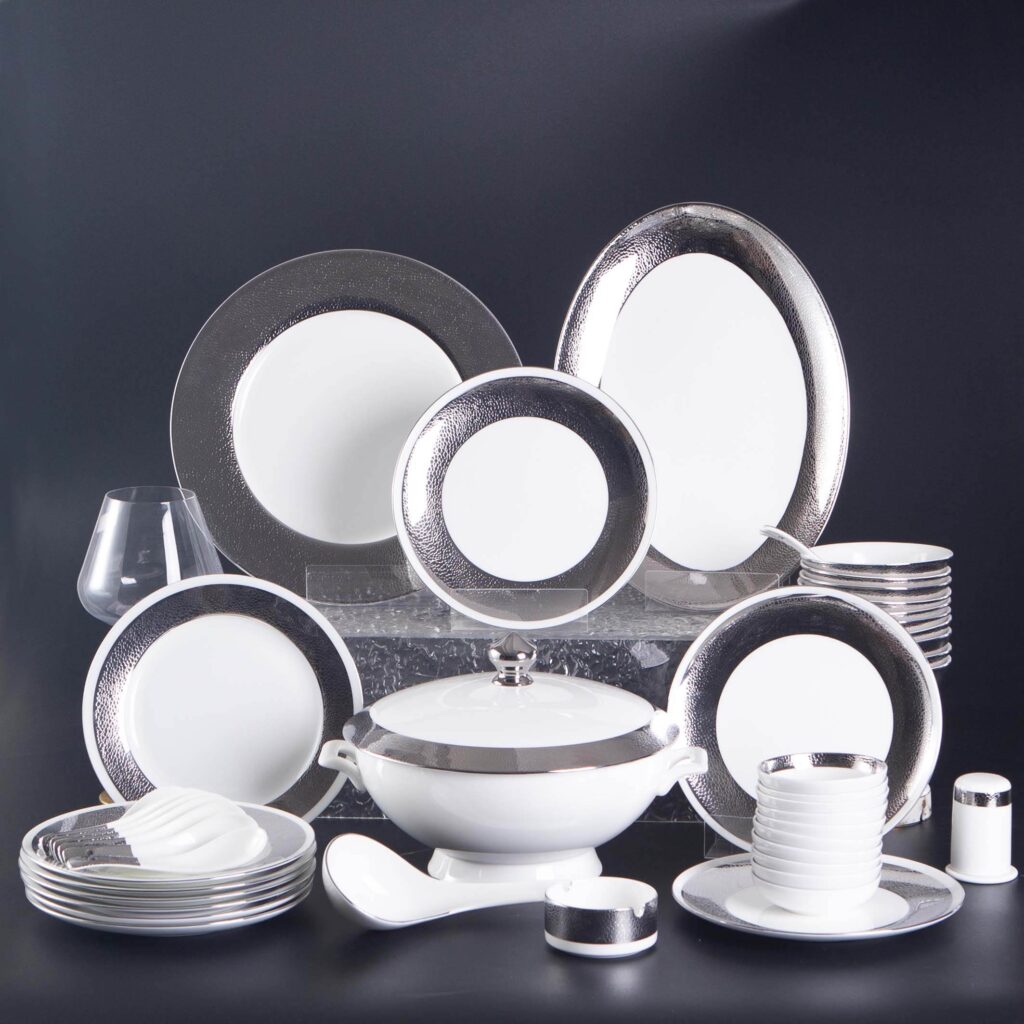
In the airline business, tableware should first and foremost meet the safety and operational standards and second, clearly depict brand identity. Choosing designs with a hint of branding, like subtle logo placements, can elevate the passenger perception of the airline itself.
Most dinnerware manufacturers, like Brett, offer custom branding and design options.
- Decal Printing:Very cost-effective and suitable for logos or patterns.
- Pad Printing:1–5 spot colors, metallic inks, and precise detailing work.
- Embossing:Raised logos for a tactile brand presence. (Ideal for premium cabin service).
- Custom Glazes:Available in signature colors to match the airline livery.
- Exclusive Patterns: Airlines often request non-routine branded dinnerware with route-specific or campaign-themed designs.
Design Considerations
Selecting tableware for a restaurant business is typically easier compared to aviation. Airline dinnerware must comply with the operational and compliance regulations to start with. Then there are other considerations, for instance:
- Stackability:Many airlines opt for tableware with curved edges to prevent slippage and for easy stackability.
- Compatibility:All airline dinnerware must fit the standard ATLAS or ACE trays for safe handling and service.
- Anti-slip:Tableware with anti-slip features is preferred to minimize accidents and reduce movement during turbulence.
- Modular Systems:Allow flexible meal configurations. (Ideal for a long flight or multi-course service).
Supplier Qualification Criteria
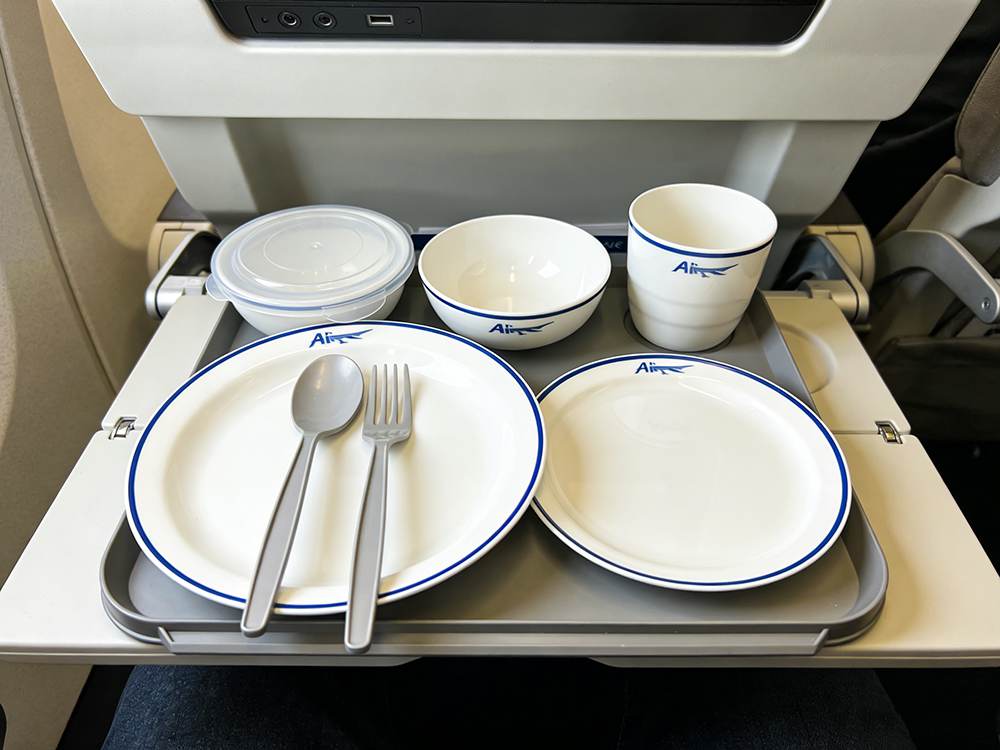
One of the most critical decisions when it comes to procuring the dinnerware is selecting the right supplier. The decision directly impacts quality, operational reliability, and consistency in delivery.
The following defines the core criteria every airline dinnerware supplier must meet.
Certification Requirements
Airline tableware must meet the food safety and material compliance standards. There’s the FDA (21 CFR) compliance required for materials that come in direct contact with the food.
The EU regulation EC 1935/2004, which is to ensure that there are no harmful substances in the food. The LFGB, which is a German food safety compliance (but mostly concerned with German destinations).
Then the ISO 22000 food safety management system compliance and other third-party certifications like SGS and lead-free and cadmium-free certifications.
Production Capability
It’s better to know if the supplier’s production capability is enough to meet your volume requirement. A thorough assessment upfront can help devise better contracts for the procurement.
Logistics and Supply Chain
Reliable logistics is also very important, so it’s important to check the online delivery track record of the supplier. Previous knowledge of customs, international freight, and airport delivery requirements is also a key prerequisite.
To protect high-value tableware like bone china, insurance may be needed. Also, the packaging quality must be checked to protect high-value tableware, especially during transit.
Innovations and Trends in Airline Dinnerware
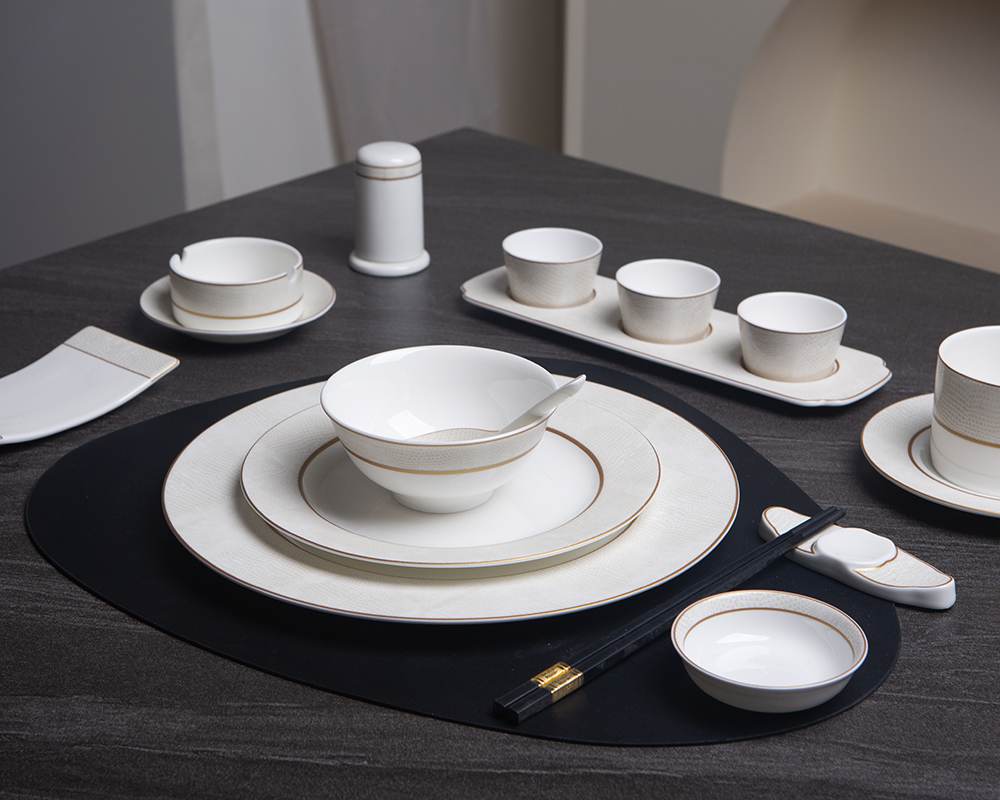
Although when airlines buy dinnerware it’s mostly about optimizing the passenger experience and operational efficiency, frequent improvements in the design and material must be looked into as well.
Innovations can get you more lightweight construction and sustainable dinnerware, which can have an impact on fuel savings and environmental compliance.
Lightweight Materials
Minimizing the plate weight remains a primary driver for innovation in airline dinnerware. In fact, a kilo of weight saved per aircraft can reduce the fuel cost by USD 4210 every year.
Hence, airlines are increasingly adopting advanced materials like new bone china, which gives a premium allure and lasts longer than standard porcelain.
Sustainablity
The aviation industry roughly accounts for 2-3% of global CO2 emissions. Although fuel gets the most attention, every on-board item, including their dinner selection, contributes to the total carbon footprint.
Also, since passengers are increasingly expecting more eco-conscious practices, we integrate more sugarcane cane Bagasse materials, bamboo fibre, and recycled plastic.
Modular and Multi-Functional Designs
The modern dinnerware is designed for flexibility and an easy in-flight experience. The tableware must be stackable and more space-efficient. Often, airlines mix and match pieces for a multi-course service so there’s less inventory management required, and easy stowage.
Custom Branding
Innovation has also extended to branding and customization of dinnerware. There are digital design tools and 3-D prototyping.
Airlines also opt for route-specific or other seasonal patterns to reinforce brand identity.
Best Practices for Procurement and Cost Efficiency
Achieving operational and cost efficiencies requires careful consideration of the material and design choices. Also, a consistent production for a fleet-wide implementation.
- Form long-term partnerships with trusted suppliers like Brett for consistent quality and better pricing.
- Harmonize the tableware specs across cabin-classes to simplify operations
- Consolidate sourcing from a single supplier to simplify logistics and ensure brand consistency.
- When piloting new designs on materials, use select routes so you can evaluate the durability and passenger feedback before fully committing.
- Invest in durable materials like bone china to reduce replacement frequency and operating costs.
FAQs
1. How do I source dinnerware for airlines?
To procure the right dinnerware for airlines, follow a structured process. First, define the cabin-specific material and weight, then look for certified suppliers. Ask them upfront for samples to evaluate durability and brand capabilities, and then negotiate the contract.
2. What is the best material for airline dinnerware?
The right kind of material depends entirely on the cabin class. For first and business class, fine bone china or the latest new bone China works best. You get luxury and durability all in one.
For premium economy, high-alumina porcelain or reinforced melamine is ideal as it’s lasting and cost-efficient. To serve in economy class, rotable plastics such as ABS, SAB, CPET, or alternatives like biodegradable material prove cost-effective and lightweight.
3. What certifications are critical for airline tableware suppliers?
Ensure the suppliers you select meet the FDA (21 CFR), EU regulation EC 1935/2004, and ISO 22000 safety management certification.
Conclusion
Airline dinnerware selection has a direct impact on fuel efficiency and the passengers’ inflight experience. If you consider the cabin-specific requirements and select the material that aligns with each class, these are much more achievable outcomes.
With a quality dinnerware supplier as your partner, like Brett, you get standardized designs, phased fleet rollouts, and comprehensive support at every step.
With Brett’s custom-designed dinnerware, whether you opt for premium porcelain that complements each course or plastic that serves food sizzling hot, every in-flight meal can become a memorable experience for the passengers.