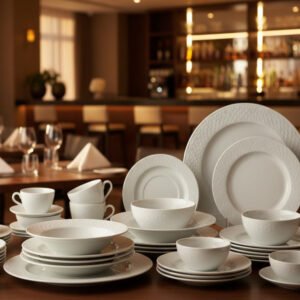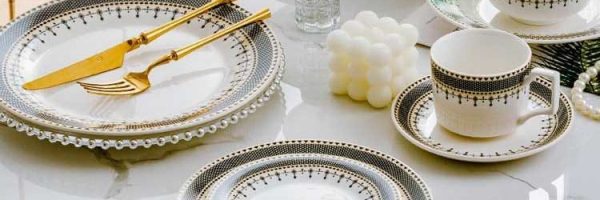
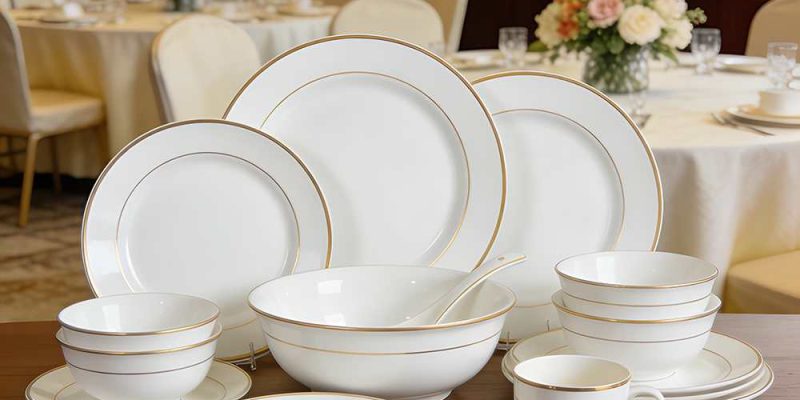
Commercial dinnerware sets are not just dinner plates and a few soup bowls. They’re the full table experience. Most hotels, caterers, and venues buy tableware in pieces, not as a whole dinnerware system, and that is where the table starts to look patched together.
A wedding service might look perfect from across the room, then feel mismatched up close. A breakfast setup might run fine for a month, then replacements arrive in a different shade of white. That is why complete tableware solutions matter.
This guide breaks down what professional venues really need, what to prioritize, and how to source custom ceramic dinnerware without creating procurement chaos.
What Goes in a Complete Dinnerware Set?
You’ll hear suppliers say “full set” all the time, but in hospitality, complete has a very specific meaning. It means that your dinnerware works as a complete system from plated dinners to breakfast service to banquet setups without forcing you to patch things together at the last minute.
Plates: The Base That Sets the Look
Your dinner plates (usually around 10 to 11 inches) are the first thing guests notice because they’re the main stage for every entree. That plate sets the tone for the whole table, so the shape, glaze, and color influence how premium the meal feels.
Then you have salad or appetizer plates (around 8 to 9 inches). These are small, but they matter more than people expect. For instance, if your starter plate looks like it came from a different collection, the table starts looking mixed even if everything is “white.”
And yes, even bread-and-butter plates (about 6 to 7 inches) make a difference. In five-star dining or formal events, these pieces signal that the setup was intentional, not just “good enough.”
Here’s the part most teams learn the hard way: even when colors match, wrong proportions ruin the table. A salad plate that feels too small or too wide instantly looks off.
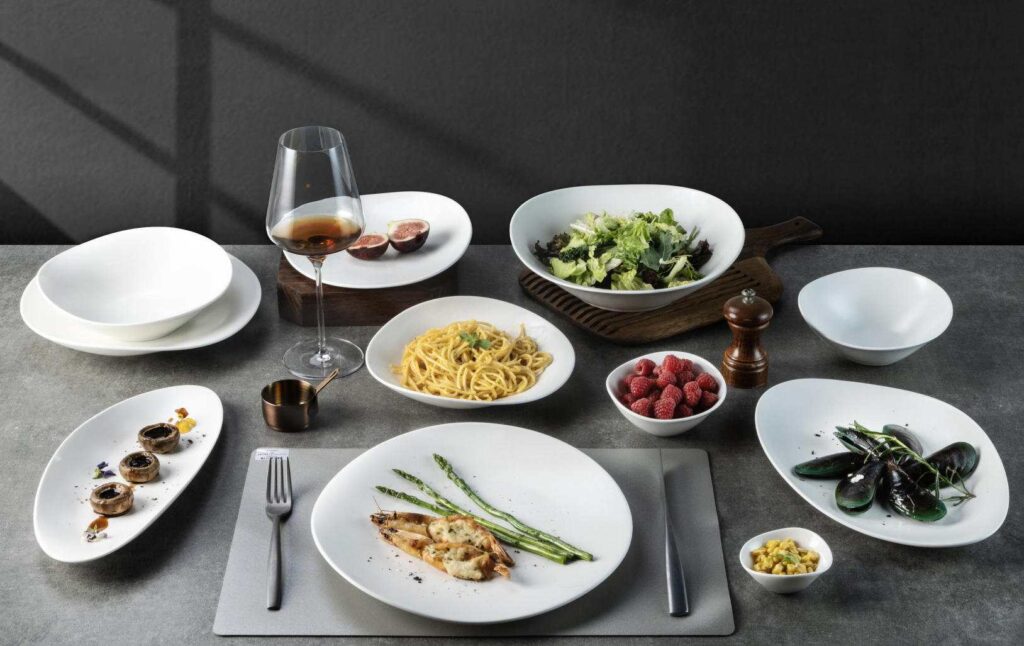
Bowls: The Pieces You’ll Use Across Every Service Style
Bowls are where a lot of venues unintentionally break the “complete set” concept.
You’ll typically need soup bowls for formal dining, cereal or oatmeal bowls for breakfast, and deeper pasta bowls for flexible plating. These pieces carry a huge range of menus.
Suppose your hotel runs breakfast daily and hosts plated weddings on weekends. If your bowls don’t match the rest of your dinnerware, your service feels inconsistent in photos and in person.
A common mistake is buying bowls separately later. That’s when the scale is wrong, the glaze is slightly warmer or cooler, and the stack height feels different in the kitchen.
Cups and Saucers: The Detail Guests Remember in Photos
This is where ‘complete dinnerware sets’ separate premium venues from average ones.
A coffee cup with a saucer instantly changes the feel of service. It looks polished. It photographs well. It even makes a simple coffee course feel higher-end.
Then there are mugs, which are more casual, but they still need to match. For example, if your dinner plates feel luxurious and your mug looks like a random office cup, guests notice.
They may not say it out loud, but it drops the impression. When cups share the same glaze tone, rim thickness, and handle style, the table feels like one idea instead of a mix of pieces.
Serving Pieces: The Difference Between Nice and Professional
Serving pieces are the part that venues forget during procurement until service starts. Serving platters, covered bowls, and small pieces like creamers or butter dishes may look optional, but they show up in buffets, VIP dining, and banquet service.
Suppose your chef is sending out shared starters or your banquet team is doing bread service. If the serving pieces look mismatched, the whole table feels unfinished. And yes, serving pieces are the hardest to match later, because different suppliers use different clay bodies, glaze thickness, and shapes.
Why Complete Dinnerware Sets Work Better
A complete dinnerware system is not about having more items. It’s about avoiding gaps. You can have beautiful dinner plates, but if the bowls feel random or the cups don’t match, the table stops feeling premium. That’s why hotels, caterers, and event venues should treat dinnerware as a complete dinnerware system, not a one-time purchase of dinner plates.
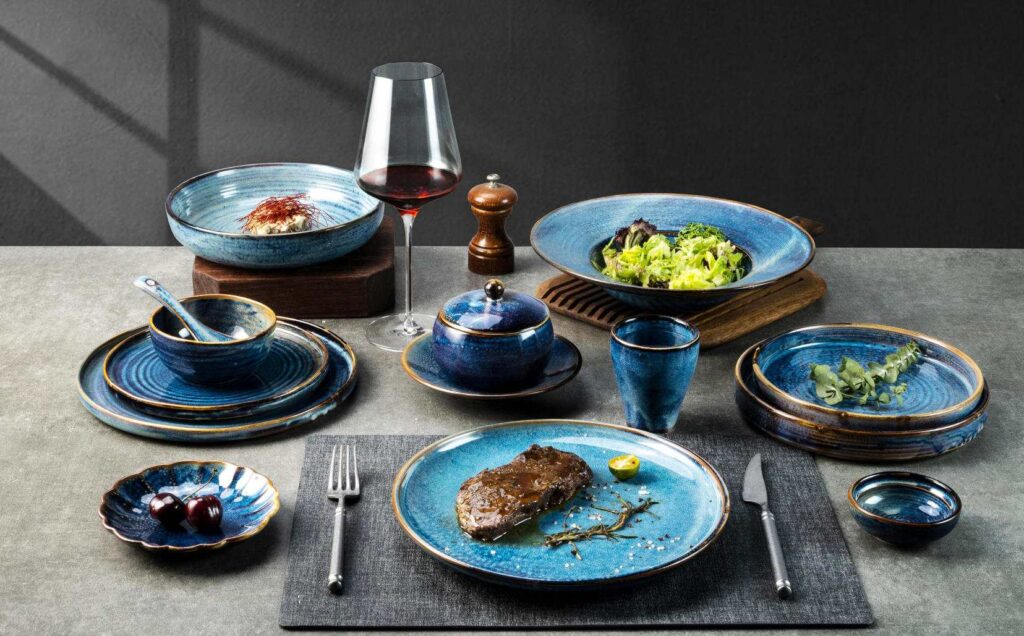
Why Fragmented Dinnerware Sourcing Doesn’t Work
On paper, sourcing from multiple vendors sounds flexible. In practice, it’s where most venues lose control of the look, the quality, and the timeline. You might save a little upfront, then spend the rest of the season fixing small issues that keep piling up.
Table Doesn’t Look Intentional
Suppose your porcelain plates come from one supplier, your soup bowls come from another, and your serving platters come from a third.
Even if everything is “white,” the tones rarely match perfectly. One looks warm, one looks cool, one has a different finish. Guests may not say it, but the table feels less premium.
Inconsistent Quality
Different suppliers use different standards. That’s why one batch feels solid, and the next scratches, chips, or fades faster than you expected. And once pieces break, replacement becomes annoying.
Patterns change, finishes get updated, and suddenly your “matching” pieces don’t match anymore. That’s where commercial dinnerware sets turn into a recurring expense instead of a stable investment.
When Procurement Turns Into Constant Follow-Up
This is the part procurement teams don’t like. Multiple vendors mean multiple invoices, multiple delivery schedules, and more back-and-forth when one shipment arrives late or incomplete. It also adds pressure on staff because handling and stacking can vary between materials.
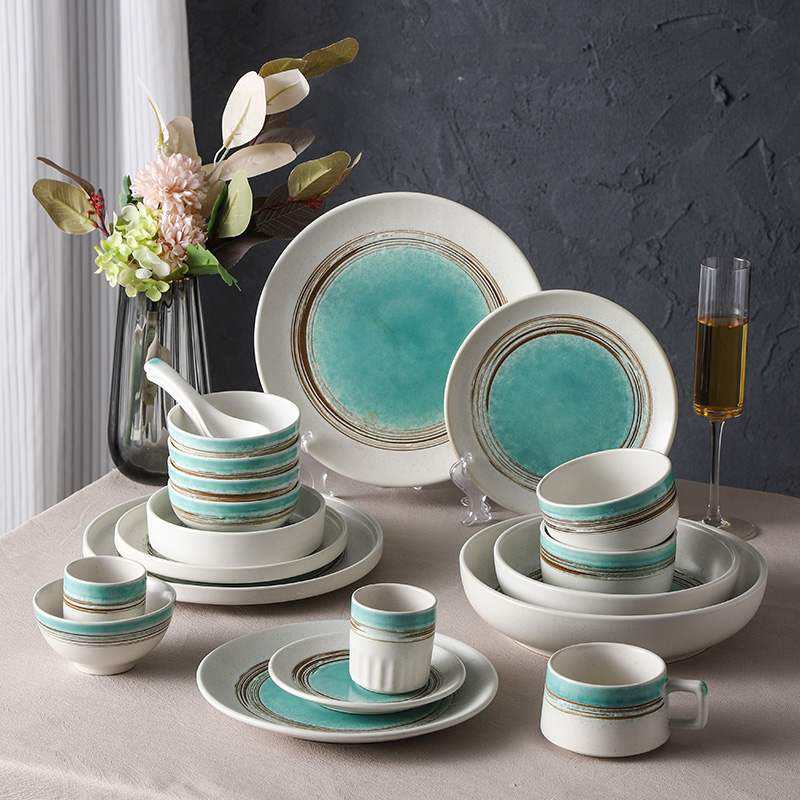
How Professional Dinnerware Systems Work
If you’ve ever tried to build a matching set from different suppliers, you already know the problem. The plates look close until you add the bowls. Then the cups. Then the serving pieces.
That’s why professional venues lean toward an OEM dinnerware approach when they want consistency, control, and a clean reorder plan.
OEM/ODM simply means you’re working with a partner who can design and manufacture your custom ceramic dinnerware as a complete system, not as random pieces from a catalog.
Instead of picking whatever is available, you’re building a setup that fits your service style, your brand, and your volume. And the biggest difference is long-term stability.
A reliable commercial dinnerware supplier with OEM/ODM capability can keep your exact molds, materials, and finish on record, so your replacements match later without the “close enough” look.
Here’s what that looks like in practice.
Phase 1: Design Consultation
This is where you sit down with the supplier and map out what your hotel or catering brand needs before anything gets produced. You share your aesthetic (luxury minimal, classic white, warm stoneware, modern matte), your service style, and your daily usage.
Then the supplier helps you finalize the full set details like plate sizes, bowl depth, rim width, finish, and matching serving pieces, so everything looks like it belongs together.
Phase 2: Unified Production Standard
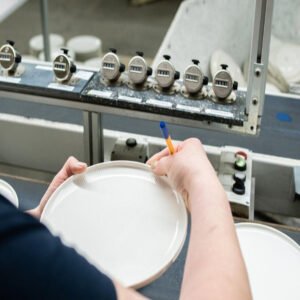
Once the design is approved, every piece is produced to a single consistent standard. That means the same clay body, glaze formula, firing temperature, and quality checks across the entire collection.
So your porcelain dinnerware, bowls, cups, and platters feel consistent in color, weight, texture, and durability, rather than looking like they came from different suppliers.
Phase 3: Long-Term Reorders and Continuity
This phase is what saves you later. Your molds, glaze details, and design specs stay on record, so when you need extra bowls, replacement dinner plates, or new sets for a second property, you can reorder without worrying about mismatched shades or discontinued designs.
You keep the same look across seasons, events, and expansions, without rebuilding the set from scratch.
Why Venues Choose OEM Dinnerware Systems
You can adjust the system to your service needs too (for example, deeper pasta bowls for catering, lighter bone china dinnerware for fine dining, or oversized platters for buffets).
Instead of guessing quality based on photos, you get samples, test them in service, and confirm the full set works together before you commit.
For hotels, caterers, and venues, this is how dinnerware stops being a constant procurement problem and becomes a stable part of operations, with a table setup that stays consistent year after year.
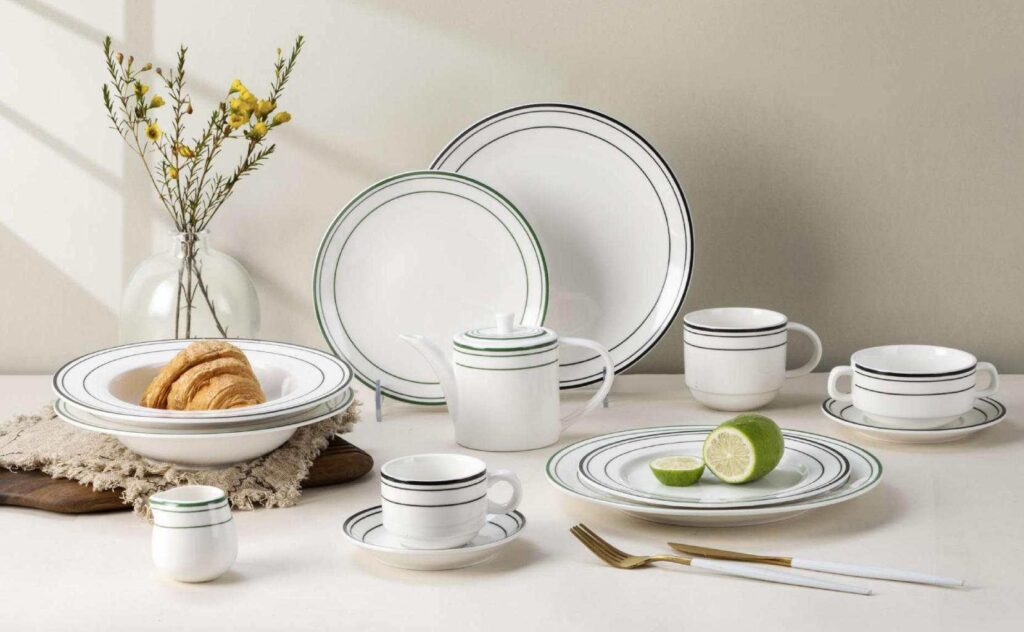
Why Complete Systems Cost Less Over Time
Here’s the strategic truth: a complete system from an OEM dinnerware partner can land in a mid to higher upfront range than piecing together items from multiple sellers. But choosing a cheaper route gets expensive in year two and year three.
Multi-Supplier Trap
Suppose you bought porcelain plates from Supplier A, bowls from Supplier B, and serving platters from Supplier C. Two years in, you need replacements. Supplier B changed the glaze or dropped the line.
Now you’re either paying a premium to hunt it down or replacing more than you planned. That’s how sets get replaced early, not because everything broke, but because everything stopped matching.
Why OEM/ODM Is Better for Durability and Reorders
With a single dinnerware supplier operating as OEM/ODM, all pieces follow the same production spec (clay body, glaze, firing, QA).
Items age together, so your table doesn’t look half new, half tired. And when you reorder dinner plates or soup bowls later, you’re not restarting the design process.
Imagine a fragmented buy looks cheaper upfront. Over five years, you add higher replacement spend, extra admin time, and forced upgrades when patterns change. A complete system usually keeps replacements tied to actual breakage.
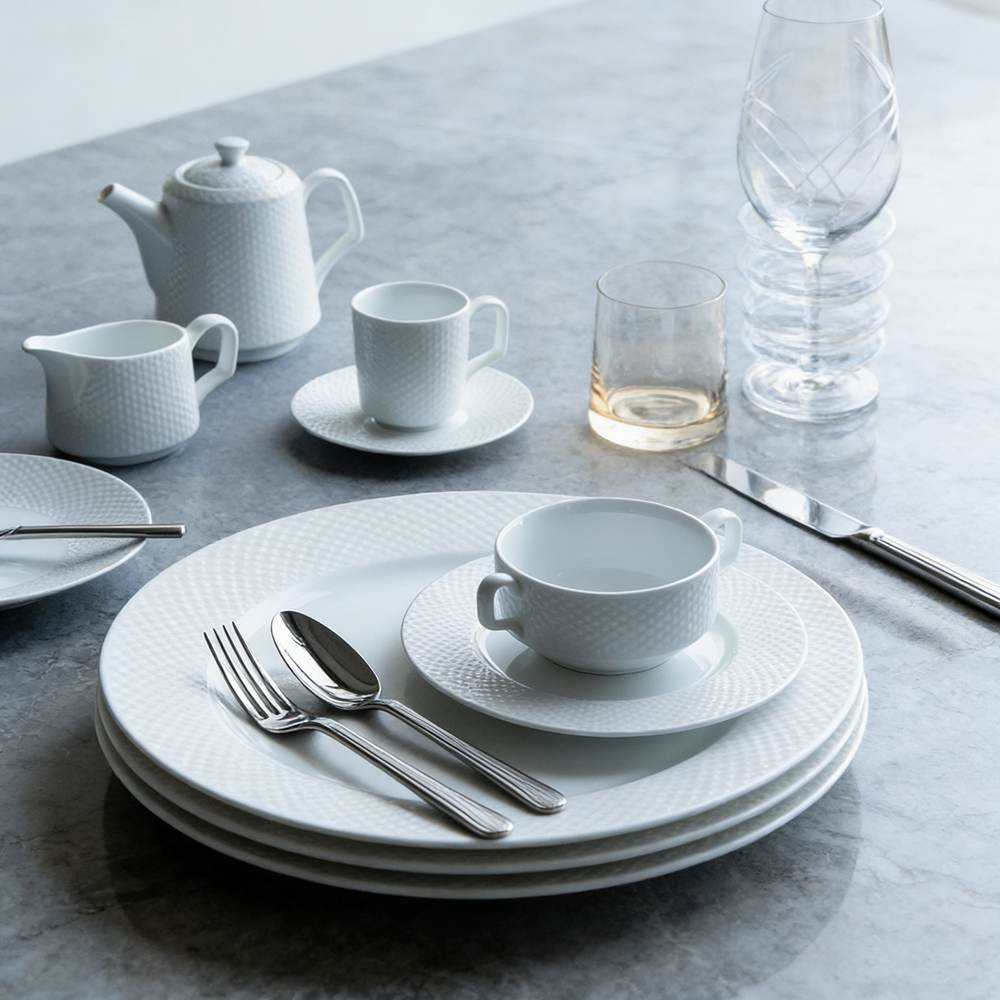
Which Venue Setups Should Use Complete Dinnerware Systems?
If you’re buying commercial dinnerware sets, the venue type matters more than people expect. A complete dinnerware system looks different depending on your service style, guest volume, and how polished you want every table to feel.
Scenario 1: Five-Star Hotel Dining
You choose bone china dinnerware in an ivory tone, then build the full system with dinner plates, salad plates, bread plates, soup bowls, cereal bowls, pasta bowls, coffee cups with saucers, and a strong serving collection.
You keep volumes high enough that service never runs short, and you reorder in batches every couple of years to keep everything consistent across outlets.
Scenario 2: Banquet Hall and Wedding Venue
You go for custom dinnerware in stoneware with a warm glaze and a clean rim detail. The set focuses on “photo-friendly” pieces with core plates, two bowl types, coffee service, and 2 to 3 platter styles for buffet and family-style. In year two, you add matching pieces as bookings grow, and nothing looks patched.
Scenario 3: Catering Company Service Kit
You choose white porcelain plates with clean lines. You keep it tight with dinner plates, salad plates, soup bowls, pasta bowls, coffee cups, and a few serving platters.
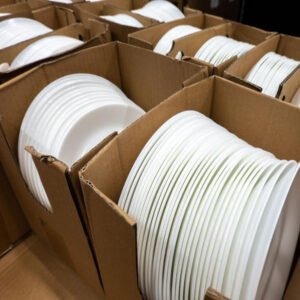
You order enough for your peak event size plus buffer, then reorder replacement packs as transport wear happens.
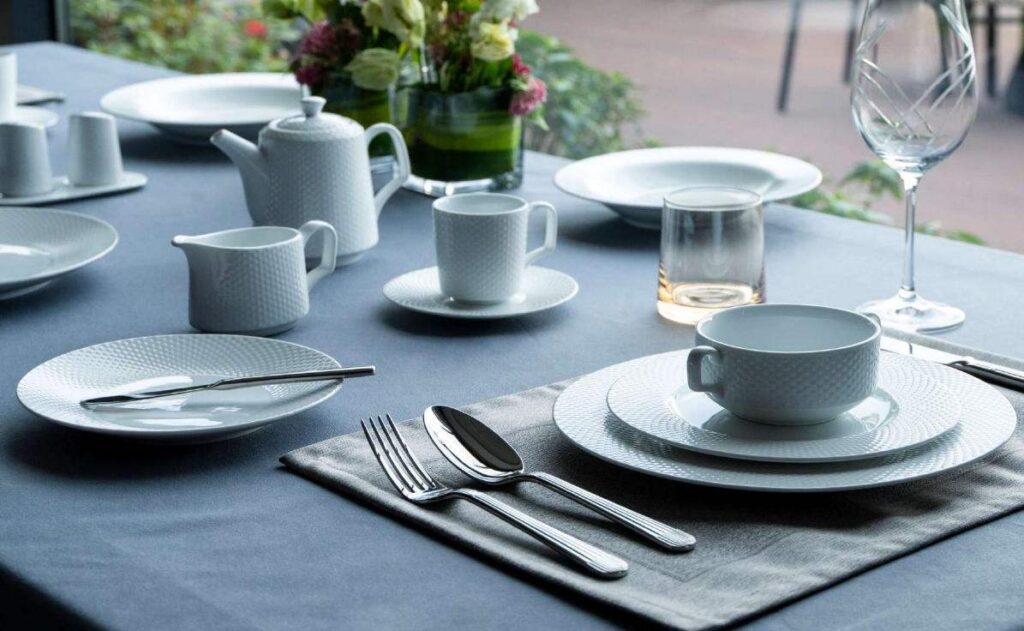
How to Source a Complete Dinnerware System
Not every dinnerware supplier can give you a complete dinnerware system. Some can sell plates. Some can ship boxes. But you’re looking for someone who can build the full set and keep it consistent when you reorder later.
Start by checking if they control production in-house, not through third parties. Then look for proof of commercial quality standards (SGS, TUV, EC 1935/2004), because venue use is very different from home use.
Before you commit, ask for a full sample spread that includes dinner plates, salad plates, soup bowls, cups with saucers, serving platters, and small pieces like butter dishes. You’ll immediately see if the finish, tone, and weight feel like one matching set.
One question makes everything clear: “If I reorder this in three years, will it match?” If they hesitate, that’s your answer.
Wrapping Up
If you want your tables to look consistent and your team to stop chasing replacements, source your commercial dinnerware sets as one complete system, not piece by piece.
Brett provides a one-stop OEM/ODM solution for hotels and venues, with custom dinner plates, soup bowls, cups, and serving platters that stay consistent and are easy to reorder. Reach out to Brett for tailored dinnerware solutions.