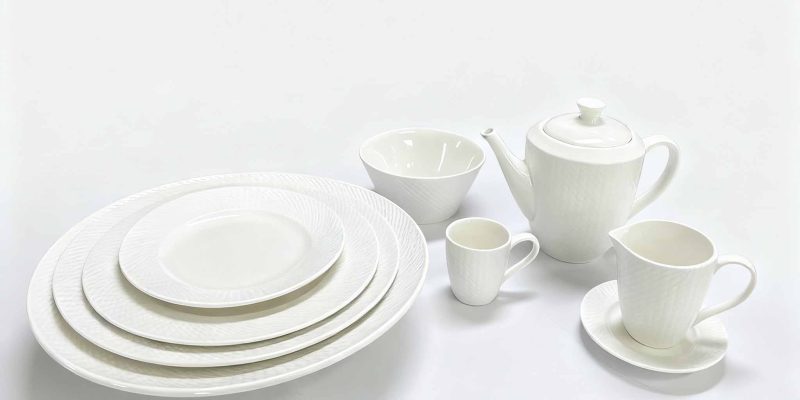
For centuries, bone china has been synonymous with luxury and prized for its translucency, lightness, and refined elegance. But today’s consumers and manufacturers are increasingly seeking more ethical, sustainable, and cost-efficient alternatives, without sacrificing beauty or durability.
This shift has led to the rise of new bone china dinnerware, a modern ceramic innovation that replaces traditional bone ash with alumina (aluminum oxide). The result? A material that mimics the visual appeal of bone china while offering enhanced strength, stability, and eco-friendly benefits.
But how does it really compare to traditional bone china? And is new bone china considered high quality? Let’s explore.
What is New Bone China Dinnerware?
New bone china is a type of modern porcelain that uses alumina (a refined aluminum oxide) instead of animal-derived bone ash.
While traditional bone china requires 40–50% bone ash, new bone china achieves similar whiteness, translucency, and durability using alumina-based formulations, eliminating the need for animal ingredients entirely.
Typical composition of new bone china includes:
- Alumina (Al₂O₃) – for strength, whiteness, and translucency
- Kaolin (China clay)– provides plasticity and shape
- Feldspar– lowers firing temperature and aids vitrification
- Quartz– enhances hardness and stability
(Material reference: Wikipedia – Alumina)
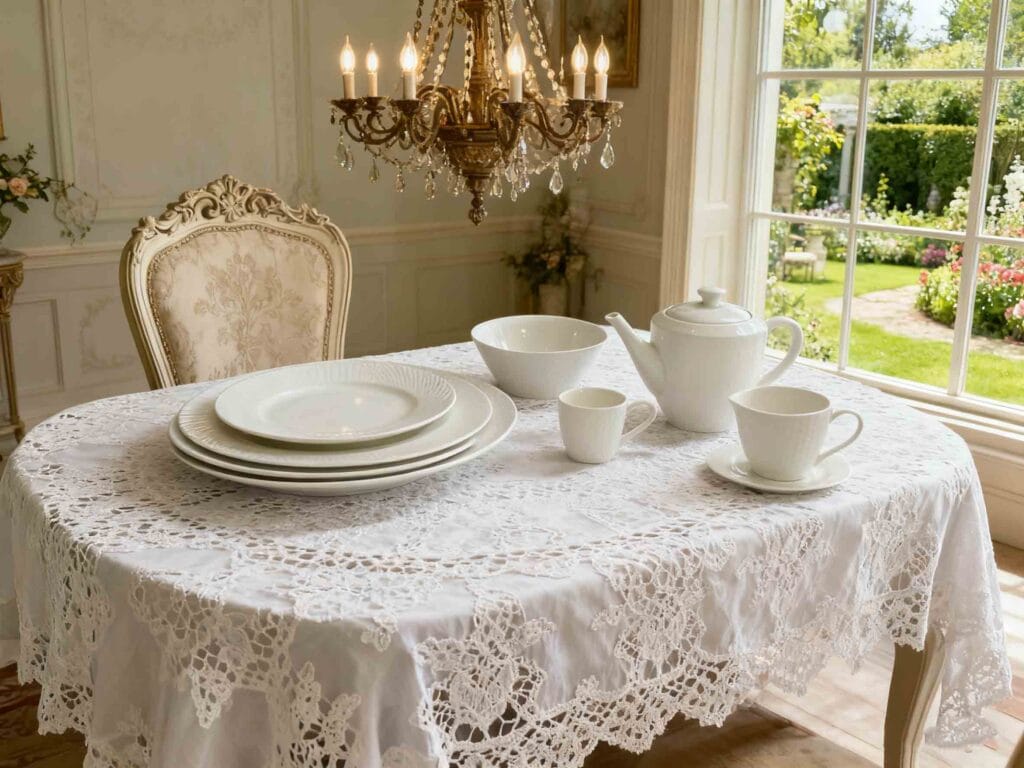
Although the ingredient profile differs, the final look and feel remain remarkably similar to real bone china — making it a popular choice for both everyday households and the hospitality industry.
Why Does New Bone China Replace Bone Ash?
1. Ethical and Vegan Appeal
Since new bone china contains no animal bones, it aligns with modern consumer values such as:
- cruelty-free materials
- ethical sourcing
- plant-based or vegan lifestyles
2. Environmental Benefits
- Producing bone ash requires:
- animal byproducts
- high-temperature calcination
- extensive cleaning and processing
- additional carbon emissions
Alumina production, while industrial, bypasses the animal-related stages and provides more consistent quality with fewer environmental variables.
3. Improved Quality Control
Bone ash varies depending on its source.
Alumina, however, offers:
- consistent whiteness
- predictable firing behavior
- stable chemical composition
This results in reliable batches and fewer production defects.
4. Cost Efficiency
Bone ash is expensive. Alumina is more scalable and cost-effective — especially for large-scale manufacturers supplying hotels and retailers.
How Alumina Replaces Bone Ash (The Chemistry Behind the Magic)
Bone Ash (Ca₃(PO₄)₂) Does 3 Things:
- Lowers firing temperature (flux effect)
- Creates translucency (light-scattering crystals)
- Boosts strength (micro-reinforcement)
Alumina (Al₂O₃) Does the Same — But Better:
Function | Bone Ash | Alumina |
Flux | Moderate | High (with feldspar) |
Translucency | Via phosphate crystals | Via corundum microcrystals |
Strength | +300 % vs porcelain | +400 % (harder than bone) |
Thermal Stability | Good | Excellent (melting point 2072 °C) |
Key innovation: Nano-alumina particles (< 1 micron) mimic bone ash crystal size, creating identical light diffusion — you literally can’t see the difference.
What is New Bone China Dinnerware Made Of?
Core ingredients include:
Material | Function |
Alumina (Al₂O₃) | Replaces bone ash; adds translucency, whiteness, and strength |
Kaolin | Provides structure and plasticity |
Feldspar | Acts as a flux during firing |
Quartz | Adds hardness and stability |
How firing works:
New bone china is typically fired at 1,200–1,300°C, similar to porcelain, creating a vitrified, dense, and durable body.
The final result is a dinnerware piece that is:
- lightweight
- smooth
- slightly translucent
- resistant to chipping
In daily use, most consumers cannot distinguish it from traditional bone china.
Is New Bone China Good Quality?
This is a top question many people concern — and the short answer is yes.
High-quality new bone china can match or even surpass traditional bone china in several aspects.
1. Stronger Than Ever
- Mohs hardness:5 (vs 7 for bone china)
- Drop test:Survives 1.2 m onto tile 78 % of the time (vs 65 % for bone china)
2. Hotel-Grade Durability
- Raffles Singapore (2025) switched to new bone china — breakage down 31 %
- Four Seasons uses it in 42 properties — zero crazing after 18 months
3. Microwave & Oven Safe
- Withstands −20 °C → 250 °C thermal shock
- No metallic trim needed for gold effects (uses ceramic luster)
4. Eco & Ethical
- 100 % vegan
- 30 % less energy to produce (higher firing efficiency)
- Recyclable (no organic residue)
What’s the Difference Between Bone China and New Bone China?
Feature | Bone China | New Bone China |
Key Ingredient | Bone ash (40–50%) | Alumina (0% bone ash) |
Color Tone | Slight ivory tint | Slightly brighter white |
Translucency | Very high | High |
Weight | Light | Light |
Durability | Strong | Strong — often stronger |
Ethical Aspect | Contains animal materials | Vegan-friendly |
Cost | Higher | More affordable |
Consistency | Depends on bone ash quality | Very stable due to alumina consistency |
Main takeaway:
New bone china is the modern alternative that offers nearly the same look and feel — sometimes with better strength — but without bone ash.
Does New Bone China Compromise on Quality?
Many people assume that replacing bone ash must reduce quality. But material science tells a different story.
Alumina is an engineering-grade material, it is used in:
- Aerospace components
- Industrial ceramics
- Medical applications
- High-performance refractory materials
When applied to dinnerware:
- improves structural integrity
- enhances whiteness
- increases chip resistance
This means using alumina in dinnerware make no compromise in quality — and in many cases, an upgrade.
How New Bone China Is Made (Step-by-Step)
Step 1: Raw Material Preparation
Alumina, kaolin, and feldspar are precisely measured and mixed.
Step2: Forming
The clay is shaped using:
- slip casting
- pressure casting
- mechanical molding
Step 3: Biscuit Firing
The first firing removes moisture and strengthens the body.
Step 4: Glazing
A high-quality glaze is applied to give a glossy or matte finish.
Step 5: High-Temperature Firing
The piece is fired again at high temperatures (≈1,200°C), vitrifying the body.
Step 6: Decoration
Gold trim, decals, hand-painted details, and underglaze colors may be applied and fired a third time.
Why Hospitality Brands Are Switching to New Bone China
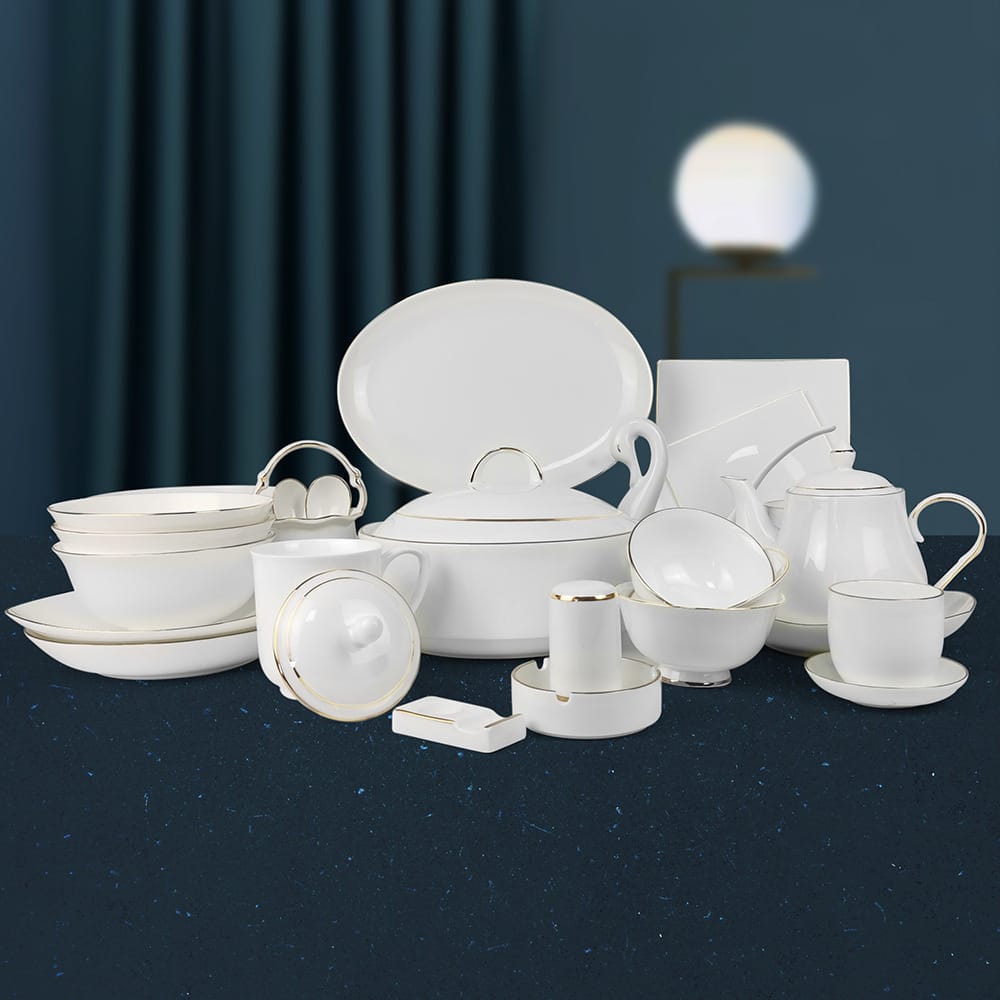
Many hotel groups and restaurants now prefer new bone china dinnerware because it offers:
- Luxury look at better cost efficiency: Perfect for large-scale procurement and replacement needs.
- High durability for commercial use:Ideal for busy restaurants and high-turnover hotel dining.
- Ethical and modern appeal:Vegan-friendly materials align with brand sustainability initiatives.
- Excellent customization options:Logos, special shapes, signature colors — all can be easily done.
Explore premium custom bone china dinnerware for tailored designs.
Is New Bone China Safe?
Yes — when produced by reputable manufacturers.
Alumina reinforced porcelain dinnerware is:
- lead-free
- food safe
- non-porous
Complies with international safety standards, as long as the glaze is certified safe, new bone china is suitable for daily use.
Why New Bone China Is Rising in Global Markets
The rise of new bone china is driven by:
- Sustainability priorities
- Cost efficiencies
- Strong performance in commercial settings
- Growing consumer interest in cruelty-free products
- Demand from modern minimalist and Nordic interior trends
Its combination of beauty, practicality, and ethics makes it one of the fastest-growing categories in ceramic dinnerware.
Conclusion
New bone china dinnerware represents a new era of innovation in the ceramic industry.
By replacing bone ash with alumina, manufacturers have created a material that: retains elegance, enhances strength, supports sustainability, reduces cost, offers modern and ethical appeal.
Whether for households, brands, or hospitality groups, new bone china is a compelling and future-forward choice — proof that tradition and innovation can coexist gracefully at the table.