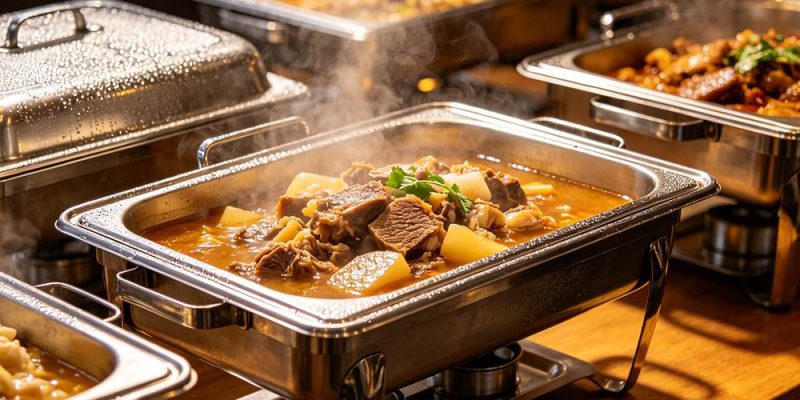
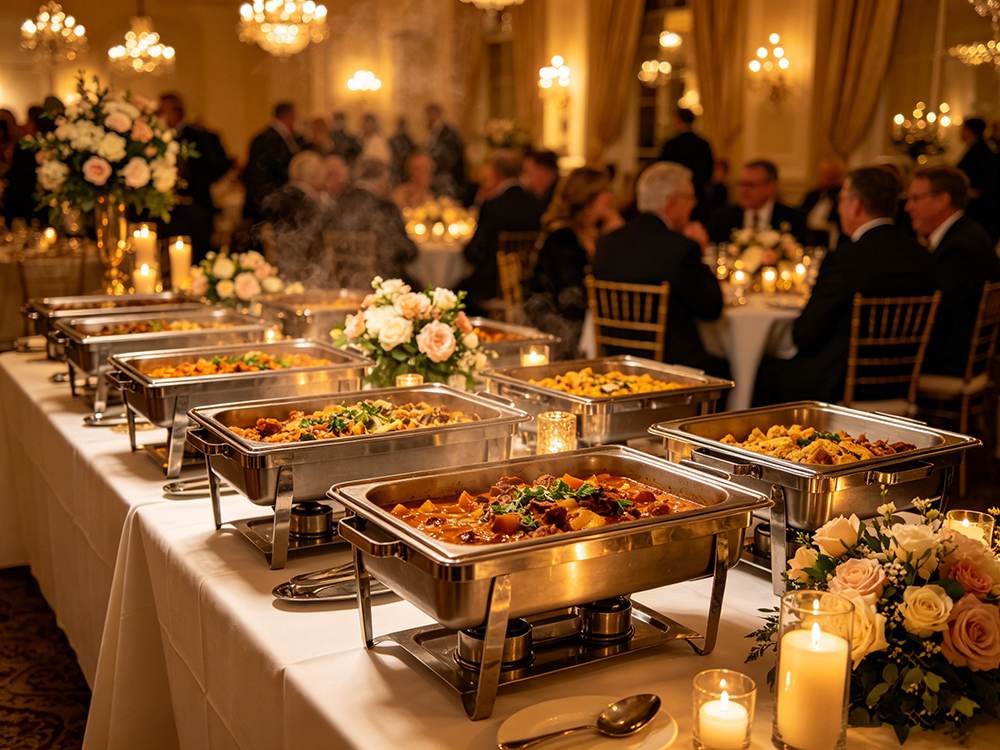
Everyone can see the food steaming and ready when served, but no one notices the effort, aka chafing dishes that keep it that way. Especially in the buffet line, one of the most common concerns is to ensure the food stays hot during service.
So, what is a chafing dish? The chafing dish is part of your inventory that does the job quietly.
At its core, a chafing dish is a metal pan-and-frame system using indirect steam heat or a water bath that keeps pre-cooked food warm at safe serving temperatures. There are no flames touching the food, no direct heat. Just controlled warming that holds texture, moisture, and safety without overcooking the meals.
A chafing dish is not for cooking. It’s for holding the food and keeping it warm in an industry where everything relies on one promise: hot food to stay hot until the last guest is served.
In this guide, we will look at the different types of chafing dishes and their standard sizes and capacity planning.
How a Chafing Dish Works: Anatomy and Heat Transfer
If questions like: “What is a chafing dish? Do I really need one?” are crossing your mind, a chafing dish is a whole system of keeping food warm during service. It only works when you set it right.
But if done wrong in any way, no matter how premium the equipment or dinnerware you use will not make up for the dried-out or spoiled food.
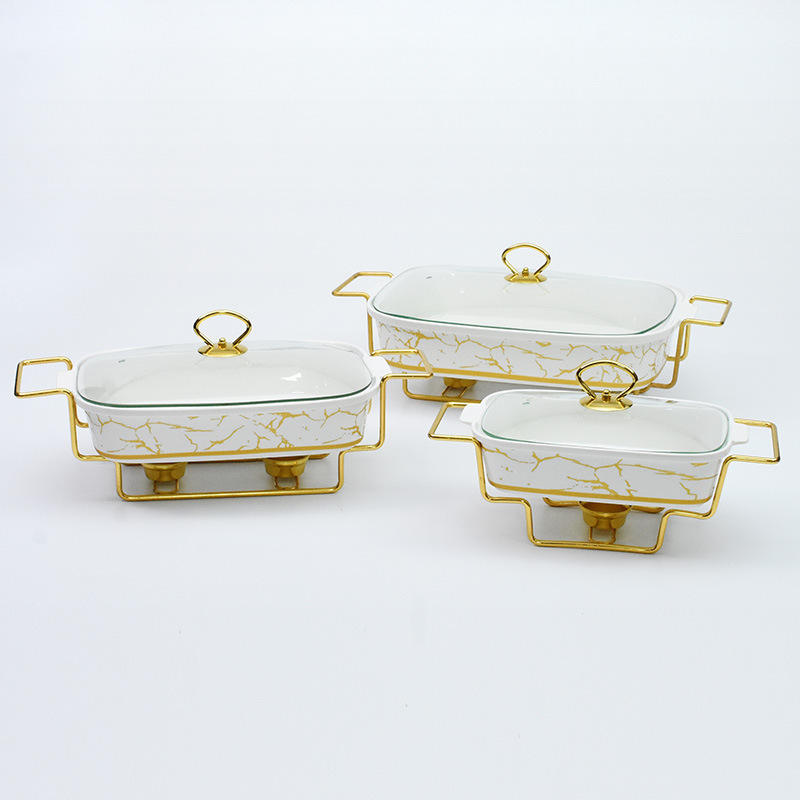
Every chafer has five core parts: the frame or stand that holds everything in place, the water pan that sits above the heat, the food pan holding food, the lid, and the fuel holder. The whole system works following the bain-marie principle, which is a controlled, indirect heating method for food.
The heat source warms the water in the lower pan, not touching the food directly. As water heats up, it produces steam, which rises and circulates around the food pan through convection.
The dish preserves a warm but gentle temperature that doesn’t let the food scorch, but only keeps it warm through the service.
Well-set chafing dishes can maintain food between 140–165°F (60–74°C) when used correctly. This keeps it out of the Danger Zone, safe from bacteria and spoilage.
Chafing Dish Types
Not all chafers are the same, and choosing the wrong type can have severe consequences during service. If you are new to the service, instead of thinking in terms of product names, consider the shape, heat source, and special use cases.
This will help you narrow your search and match the right equipment with the actual event. The choice ultimately should come from the environment you are operating in, not from preference.
By Shape: Rectangular, Round and Oval
When procuring the chafing dishes, it’s best to start with shape. The shape can determine how the food sits, heats, and gets served.
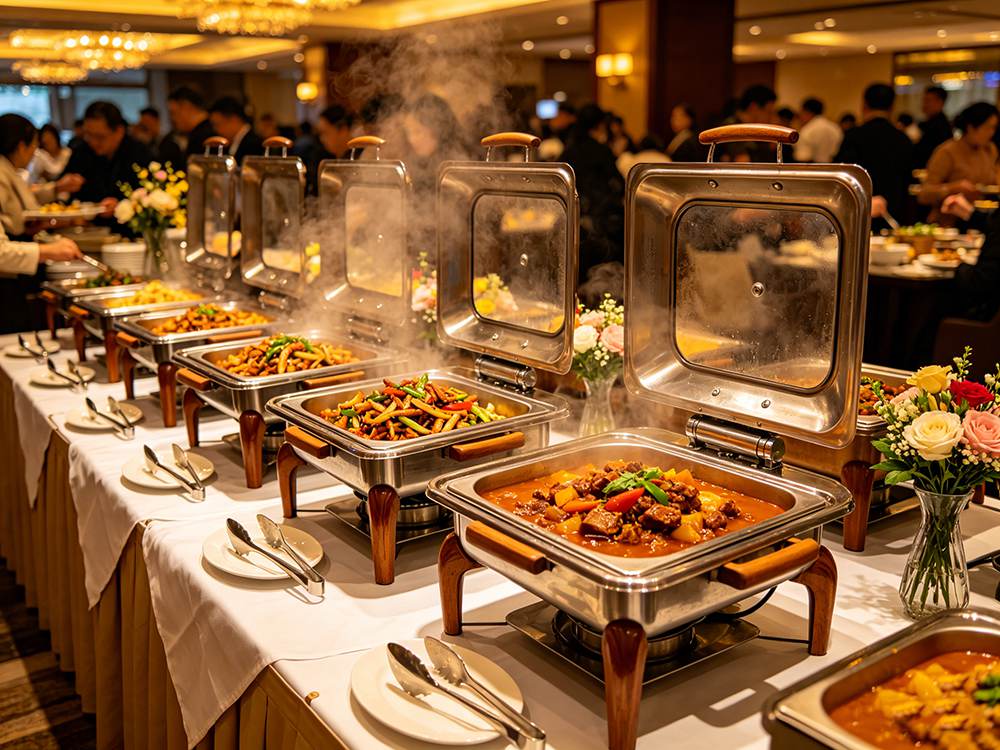
- Rectangular Chafing Dishes: With a capacity of about 8-9 quarts, these are best for entrées and high-volume service. Given the wide shape, these maximize buffet line space and can easily fit standard food pans. So, if you’re running large events, this is your default.
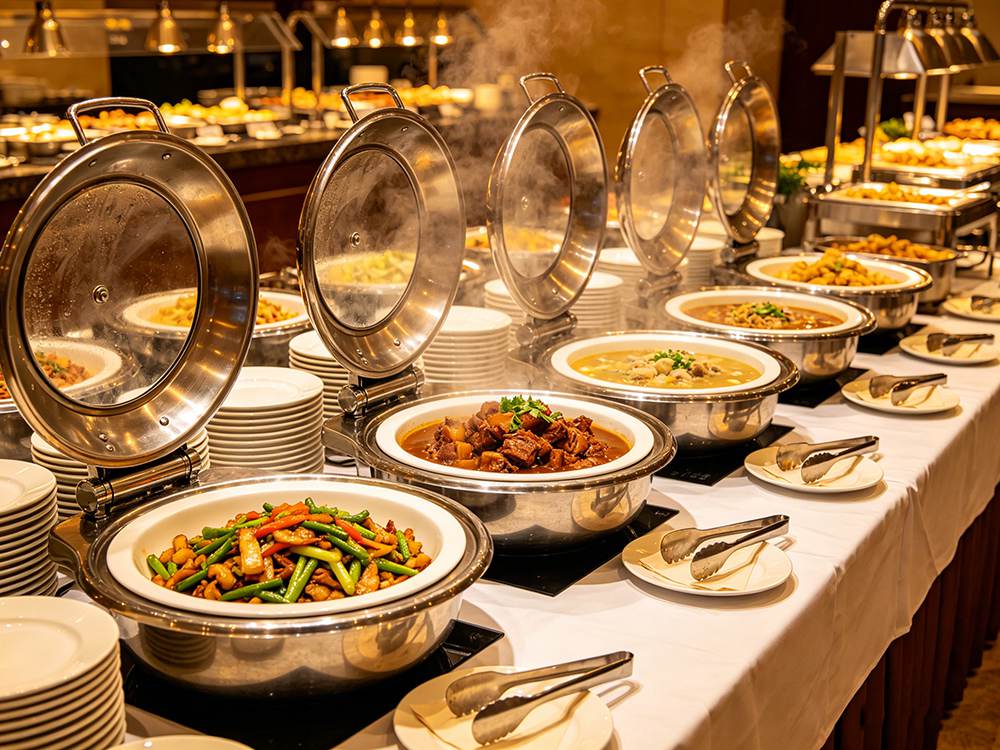
- Round Chafing Dishes:These are specifically for soups, stews, and sauces and can hold around 4–7 quarts. The shape promotes even heat circulation, ensuring consistent and stable heating of the dish.
- Oval Chafing Dishes: Oval chafing dishes are more popular in the plated-style buffets, weddings, and catering events. These have a better table presentation, although they function the same.
By Heat Source: Fuel, Electric and Induction
The chafing dishes categorized by power sources are:
- Fuel-based:These chafing dishes for catering do not need electricity, are fully portable, and easy to use anywhere. The burn times range from 2 to 6 hours, depending on the fuel type being used. The dishes are best for weddings, outdoor events, and mobile catering.
- Electric Chafing Dishes: These need to be plugged into a standard outlet to get a consistent heat without flame. These types are better for controlled environments such as banquet halls and indoor buffets, where power is reliable. Explore Brett’s Banquet Hall Dinnerware.
- Induction Chafing Systems: This is the most advanced option that uses the much safer electromagnetic heating for temperature control. In many cases, there’s no need for a water pan either. These are best for high-end hotels and modern buffet setups.
Specialty Types: Roll-Top, Stackable, Drop-In and Disposable
The specialty chafing dishes are designed for different concepts and operations.
If your setup also includes plated service with buffet lines, aligning your chafers with the rest of your table presentation, like charger plates, can make a visible difference.
The specialty chafing dishes include:
- Roll-top Chafing Dishes: These are especially common in self-service buffets and have hinged lids that can roll back.
- Stackable Chafing Dishes: These are designed to nest or settle into each other during transportation and storage.
- Drop-in Chafers: The drop-in chafers are built into countertops as part of the permanent buffet setup. These are ideal for banquet halls, hotels, and concepts with fixed service stations.
- Disposable Chafing Kits: If you’re looking for cheaper or easier-to-maintain options, the disposable chafing kits have aluminum pans with fire racks and fuel holders. These, however, last just single events and are good for off-site catering.
Chafing Dish Sizes: Which Size Do You Need?
Most catering setups misjudge the volume of chafing dishes or dinnerware they need for service. It’s not about fitting the table only, but more about how long the dish can work without needing refills.
If you are running buffet service alongside a plated concept, your chafing dish sizes should go with the rest of your table setup. The broad coordination is covered in our guide: Beyond Dinner Plates: Complete Dinnerware Sets for Hotels and Catering.
There are three core sizes of chafing dishes:
- Full-size Chafing Dishes: These can hold about 8–9 quarts and are usually part of the buffet service. Most concepts procure the rectangular shape as it suits high-volume items like rice, pasta, and proteins.
- Half-size Chafing Dishes: The half-size chafing dishes are more compact compared to the full-size ones and are usually used for sides, vegetables, and desserts. These are also easy to swap and refill. So if you serve a variety of menus, these are the go-tos.
- 2/3-size Chafing Dishes: These are usually round and square. Most often used when you need something in between the full size and half size. To learn more about portions and plate sizes, check Brett’s Dinnerware Sizing Guide.
Chafing Dishes Size Reference
Size | Capacity (Quarts) | Serving Estimate | Best Use Case | Typical Event / Guest Count |
Full size | 8–9 | 25–35 servings | Entrées and high volume items | For over 50 guests, large buffets or banquets |
Half size | 4–5 | 12–18 servings | Sides and desserts | Small to medium-sized events, variety-focused |
2/3 size | 5–6 | 15–22 servings | Vegetable sides, mashed potatoes, or baked entrees | Medium events or mixed entrée and side setup |
Chafing Dish Fuel Options: Choosing the Right Heat Source
In a chafer buffet equipment, the fuel choice isn’t about lighting the pan. The right heat source for each kind of food being served matters. It directly affects the safety and service.
Wick Fuel
In a chafer buffet equipment, the fuel choice isn’t about lighting the pan. The right heat source for each kind of food being served matters. It directly affects the safety and service.
Gel Fuel
This is ethanol or methanol-based and has a burn time of around 45 minutes to two hours. The fuel is easy to ignite, smokeless, and odorless, making it the best option for indoor events.
However, the downside is that it needs multiple refills and has less heat output than wick fuel.
Safe Pad Fuel
The safe pad fuel has a gel layer atop the absorbent pad. It’s wider, hotter, and more wind-resistant compared to gel alone. The fuel type suits outdoor venues best, especially buffet setups.
Chafing Dish Food Safety: USDA Guidelines Every Caterer Must Know
When using chafing dishes, since heat is involved, safety comes as the top priority. No matter how perfect the dish looks or is placed, it won’t be able to make up for the bacterial growth, deeming it unsafe, when food sits on it for too long.
According to the USDA, hot food must be held at a temperature of 140°F (60°C) or above. This keeps the harmful bacteria from multiplying. It is also recommended to use a food thermometer to monitor internal food temperatures during service.
Also, there’s a maximum holding time for the chafing dish. Do not let the food stay on one for more than 4 hours. Replace it with fresh batches to stay safe.
Also, as a rule of thumb, never use chafing dishes to reheat food. Reheating in chafing dishes or slow cookers can keep food in the Danger Zone for too long. Instead, preheat and cook food the usual way, and only then transfer it to the chafing dish for holding.
Read more about the Safe Handling of Take-Out Foods, USDA.
How to Use a Chafing Dish: Step-by-Step
Here’s how to set up the chafing dish so your food stays hot and presentable throughout service.
- Step 1: Place the frame or stand on the table, level it, and ensure there’s no foot traffic around it.
- Step 2: Position the fuel holders or cans in the base. Do not light them.
- Step 3: Fill the water pan with hot water, up to 1 or 2 inches max. Following the bain-marie principle, the hot water will maintain the pan temperature.
- Step 4: Next, insert the water pan into the frame. It should sit flat so it distributes heat evenly.
- Step 5: Light the fuel cans using a long lighter or ignition tool.
- Step 6: Place the food pan into the water pan and fill it with pre-cooked hot food.
- Step 7: Cover the dish with the lid and keep it on until service begins to retain the heat.
- Step 8: Monitor water levels periodically and replenish them as needed.
Common Chafing Dish Mistakes to Avoid
Even seasoned caterers can run into hiccups, making simple errors in catered events. Here’s what to avoid to keep the food safe, service running, and your guests happy:
- Do not use cold water in the water pan, as that will only delay the heat-up time and prolong the time the food stays in the Danger Zone.
- Avoid overfilling the water pan, as that could create a mess and pose potential safety hazards. Always keep the level at 1-2 inches.
- Do not attempt to cook food in a chafing dish, as that will again leave food in the Danger Zone for too long.
- Train your staff to check for dry pans and refill them every 30-45 minutes.
- Do not leave out food for too long,i.e., over four hours.
What Is a Chafing Dish, Really?
A chafing dish isn’t just a food warmer. It is your secret to a safe and stress-free service where every guest leaves satisfied and keeps coming for more.
When you manage to serve every tray steaming, it shouts success, without a sweat.
If you are looking for coordinated dinnerware that’s elegant and classy, explore Brett’s complete tableware solutions.
FAQs
Can you cook food in a chafing dish?
No. Chafing dishes only hold the already cooked food around 140°F or above. These are not ovens or stoves.
How long can food stay in a chafing dish?
You can keep food atop chafing dishes for 4 hours max. Anything at room temperature for more than 2 hours or 1 hour if it’s hotter than 90°F, enters the ‘danger zone’ and should go straight in the bin. Remember, food safety isn’t optional.
What size chafing dish do I need for 50 guests?
Initially, plan for 2 full-size dishes (8–9 qt) for the main, plus 2 half-size dishes (4–5 qt) for sides. You can adjust your inventory based on portions and menu complexity later.
What’s the difference between a chafing dish and a bain-marie?
Both use hot water to transfer heat, but the chafing dish is portable for buffets and events, while a bain-marie is a stationary countertop or built-in unit in commercial kitchens. It’s the same principle, in a different setup.
What fuel is best for chafing dishes?
Match fuel type with your event. Wick fuel is long-lasting, while gel fuel burns for less time and is also indoor-friendly. However, always choose UL-validated options as safety is most important.