Every restaurant wants fewer broken plates and fewer emergency reorders because they result in lower replacement costs. Sustainability in dinnerware rarely starts with a big environmental goal. It usually starts with frustration that comes with managing a dining operation.
Plates chip faster than expected. Stacks never look complete. Boxes of replacements arrive far too often. Sustainable dinnerware is about choosing materials that survive service, dishwashing, and daily handling without draining your budget or filling storage rooms with mismatched pieces.
This guide breaks down what sustainability really means for restaurants and which dinnerware options actually hold up.
What Makes Dinnerware Sustainable?
Sustainability in dinnerware doesn’t come with the product tag or in a brochure. When you’re re-ordering plates far sooner than you planned, that’s when sustainability comes into question.
Truly sustainable dinnerware earns its place by surviving kitchen conditions and not by promising eco-benefits on paper. Below are the factors that actually determine whether dinnerware is sustainable once it enters daily hospitality use.
Longevity Beats Labels
Picture opening month versus month six. Opening week plates look perfect. By month three, a few are chipped. By month six, the stack is uneven. That replacement cycle is where sustainability is won or lost.
A plate that lasts five years creates less waste than one replaced twice a year, even if the shorter-lived option claims to be “eco.”
Fewer breakages mean fewer shipments, less manufacturing demand, and less material ending up discarded. Longevity reduces environmental impact without needing a label.
Commercial Kitchens Stress-Test Plates
Restaurant plates live hard lives. They’re stacked fast during clearing. They rattle through dishwasher racks. They sit under heat lamps waiting for pickup. They’re handled by different staff every shift.
Sustainable dinnerware is built to tolerate repeated stress. High firing temperatures create denser ceramic bodies. Quality glazes resist wear from detergent and scrubbing.
When plates survive thousands of washes without degrading, they reduce waste far more effectively than fragile alternatives.
Replacement Cycles
Ask yourself how often you re-order. Not because styles change but because the pieces disappear.
Frequent orders mean higher waste, higher transport emissions, and higher long-term costs. Sustainable dinnerware stretches replacement cycles.
Sets stay complete longer. When replacements are needed, consistency matters, so old and new pieces still work together instead of forcing full resets.
Reusable vs Disposable in Service
Disposable and compostable options sound sustainable until service begins. They require constant restocking, generate daily waste, and struggle with hot or plated food.
Durable reusable ceramic outperforms disposables over time. One plate reused thousands of times produces less waste than hundreds of single-use items. Sustainability improves when durability replaces convenience.
What Dinnerware Materials Are Sustainable and Eco-Friendly?
Not all dinnerware materials behave the same way in commercial kitchens, as some naturally last longer, waste less, and age better under pressure.
Porcelain
Porcelain earns its reputation by lasting. Fired at very high temperatures, it forms a dense, non-porous body that handles heat, moisture, and constant dishwashing without breaking down.
In hotels and full-service restaurants, porcelain survives daily service because it resists staining, doesn’t absorb odors, and keeps its finish intact over time.
And when porcelain fails, it’s usually due to a drop and not gradual wear from a sustainability standpoint that matters. Fewer chips mean fewer replacements, fewer emergency orders, and fewer shipments. Over years of service, porcelain dinnerware reduces waste simply by staying in rotation longer.
Bone China
Bone china surprises operators because it feels light, almost delicate, yet it is remarkably strong for its thickness. Because it’s thinner than most ceramics, each plate uses less raw material, and the lighter weight reduces strain during stacking and clearing.
In controlled environments like fine-dining or hotel restaurants, bone china holds up with minimal replacement. Sustainability here depends on how the dining room runs.
With trained staff and steady service, bone china dinnerware can last for years. In rushed, high-impact kitchens, it’s less forgiving. The material itself is efficient, but hotel operations determine whether that efficiency pays off.
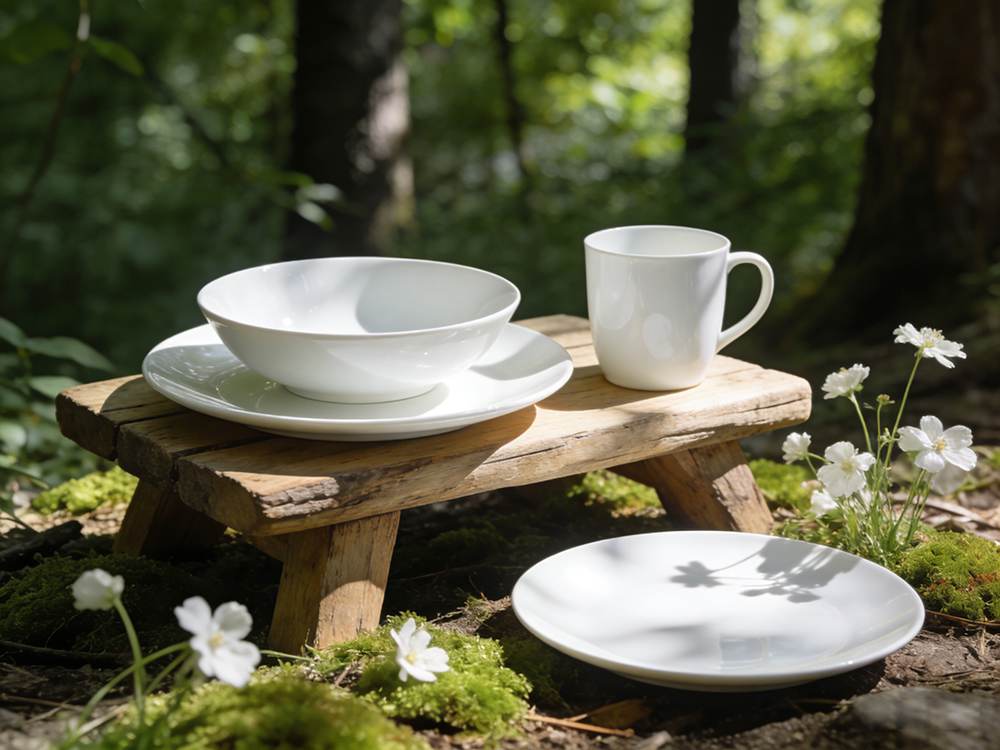
Stoneware
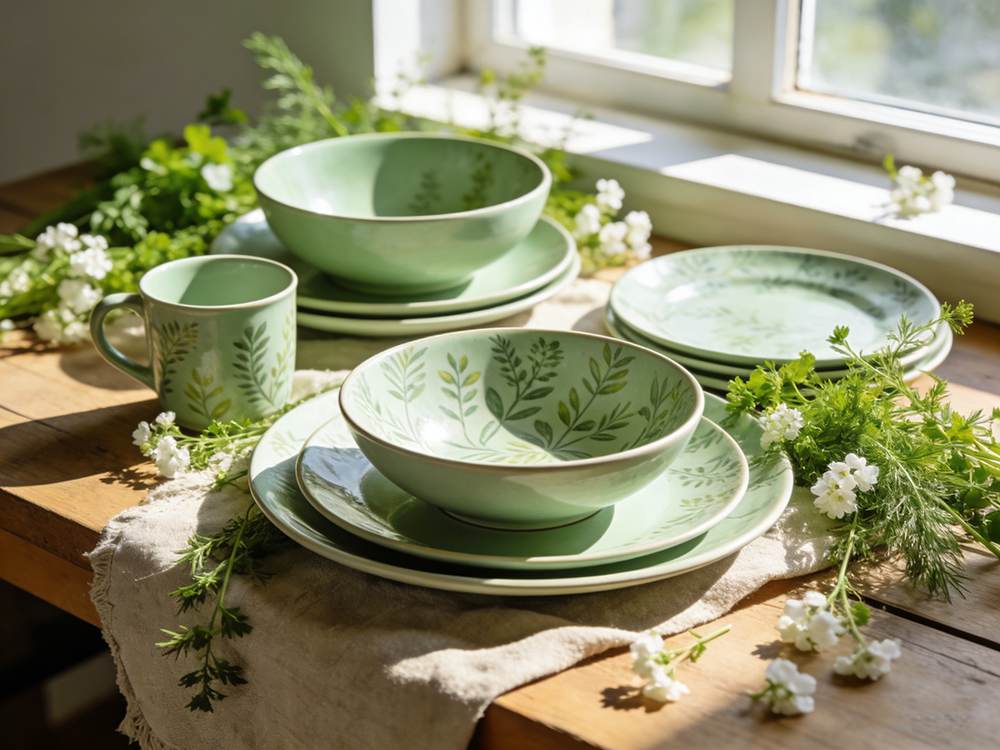
Stoneware sits comfortably between durability and warmth. It’s fired hotter than earthenware, which gives it better strength while keeping the tactile grounded feel that many casual concepts prefer.
In bistros and farm-to-table restaurants, stoneware fits naturally. It holds heat well, feels substantial in the hand, and handles regular service without feeling fragile. Sustainability depends on quality.
Well-glazed stoneware can last for years. Poor glazing leads to faster wear, staining, and earlier replacement. When sourced carefully, stoneware offers a practical balance: fewer replacements than earthenware, with a look that doesn’t feel overly formal.
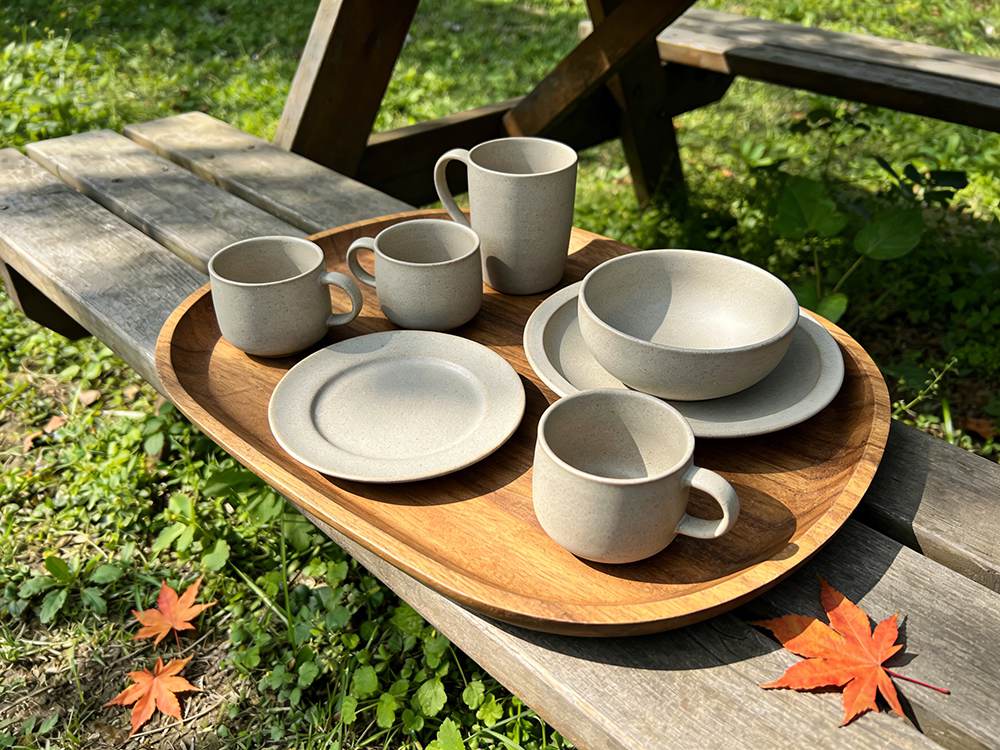
Earthenware
Earthenware starts with a sustainability advantage on paper. It is fired at lower temperatures, which means less energy upfront.
The challenge shows up during service, though. Earthenware is more porous and less tolerant of thermal shock, making it prone to chipping and cracking in busy kitchens.
In high-volume operations, replacement rates climb quickly, offsetting any initial energy savings. That’s why earthenware works best as an accent. Signature plates, controlled presentations, and low-stress use are where it shines.
When limited to specific roles, it can be sustainable. When used everywhere, constant replacement usually turns it into a waste driver.

Melamine and Alternatives
Melamine lasts in ways ceramics don’t. It resists drops, shrugs off impacts, and rarely chips. Operationally, that durability is appealing. Environmentally, it’s more complicated.
Melamine isn’t biodegradable and has limited recycling options. It also comes with heat and food limitations, making it unsuitable for high-temperature service. Its long lifespan reduces replacement waste, but the end-of-life impact still matters.
In certain settings, melamine lowers breakage and costs. From a sustainability perspective, it’s a compromise. It is durable in use but less aligned with long-term environmental goals than reusable ceramics.
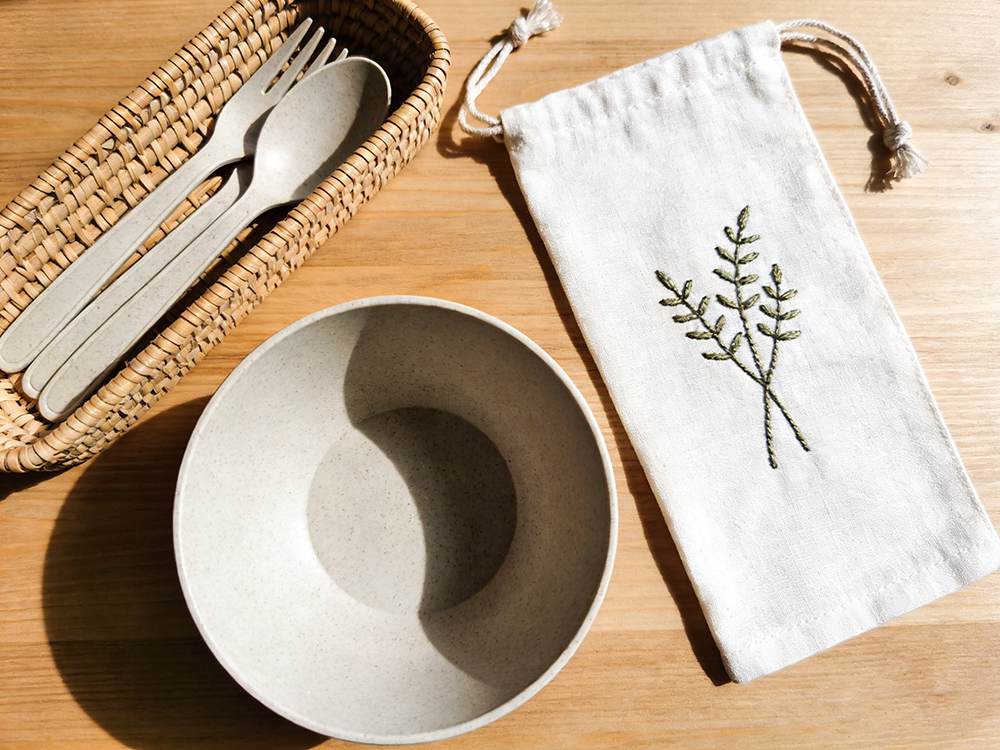
Reusable vs Disposable: Where Sustainability Breaks Down
On paper, disposable dinnerware feels like an easy win. When plates chip too often, or labor feels tight, compostable plates start to look appealing.
There’s no washing and no breakage. Simply use them and toss them. But that’s not the case in high-volume restaurants. Here’s why.
Why Disposables Feel Like the Solution
In high-pressure kitchens, disposables promise control.
Switching to compostable plates can seem like a way to reduce stress. There are no chipped rims or mismatched stacks. Just consistent inventory delivered by the box. This feels like an ideal solution, but there’s something important to consider when it comes to sustainability.
The trade-off most operators only see later is the hidden cost of single-use.
Disposable plates require constant re-ordering. They arrive in bulk shipments, and they rely on waste systems that don’t always compost properly, especially outside ideal conditions.
Many struggle with hot, saucy, or plated service, leading to double plating or waste before the table is even cleared.
Why Reusable Ceramics Are Better for Long-Term Use
Reusable ceramic dinnerware creates waste once. Disposable options create waste every single day.
A durable porcelain plate can go through thousands of washes over several years, even accounting for water and energy use, which results in a lower overall environmental impact than hundreds of compostable plates used once.

How Sustainability Changes Based on Restaurant Type
Sustainability looks very different once you step into the kitchen and watch service unfold. A tasting menu, a packed brunch, and a buffet line all put plates through completely different kinds of stress.
Fine-Dining and Hotels
In fine-dining and hotels, sustainability comes from longevity and consistency. Plates are handled with care, presentation matters, and reorders need to match perfectly.
Porcelain or bone china shines here because they last for years and don’t force you to replace entire sets just to stay consistent.
Casual Dining
In casual dining, the balance changes. You want warmth and personality, but you still need plates that survive daily knocks and non-stop dishwashing.
Stoneware fits the middle ground well. It ages better than earthenware and feels less formal than porcelain, which keeps replacement cycles reasonable.
High-Volume Concepts
For high-volume concepts, sustainability is about reducing waste from constant breakage. When plates disappear weekly, even compostable disposable ones add up fast. Durable ceramic usually creates less waste over time, even if the upfront spend feels heavier.
Buffets and Catering
In buffets and catering, sustainability means mixing materials. You have to use heavier plates where heat and presentation matter and lighter ones where speed and handling take priority. Sustainability here comes from fewer emergency reorders and fewer mismatched stacks.
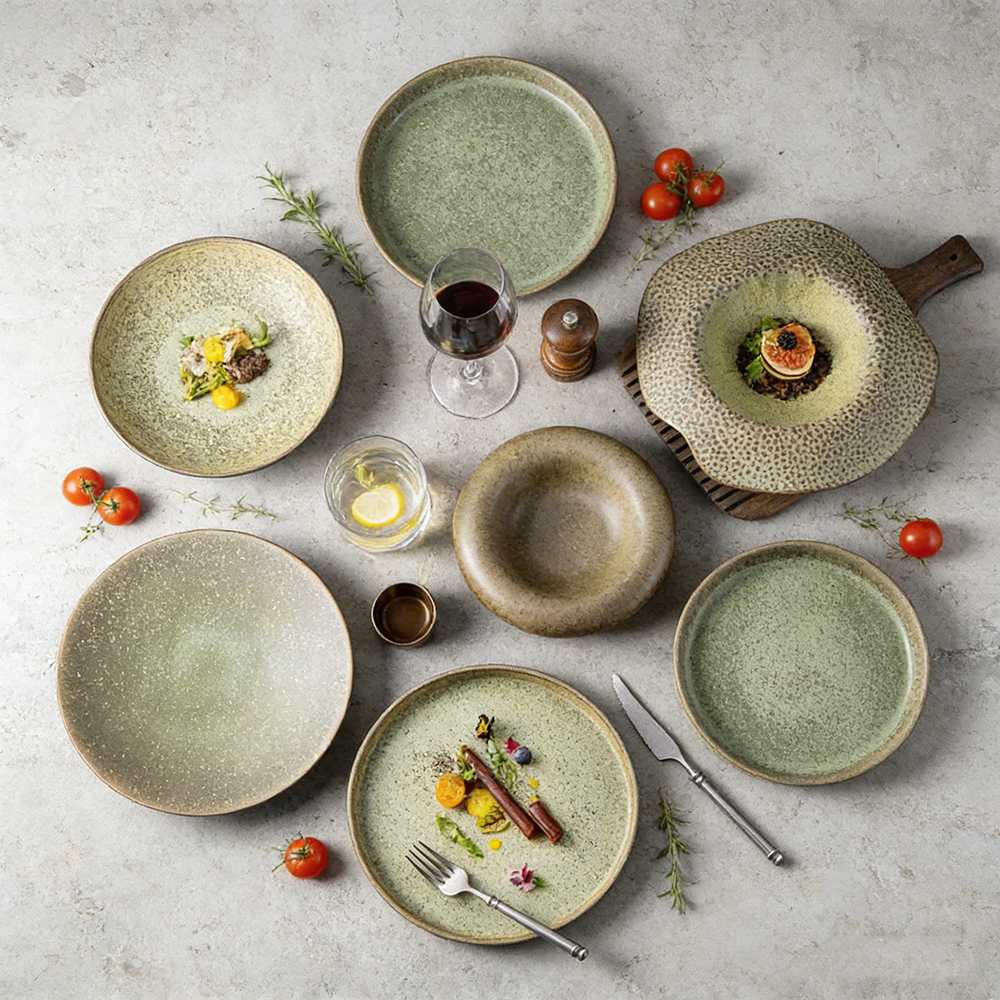
Choosing Sustainable Dinnerware for Your Restaurant
Sustainable dinnerware decisions begin with an honest look at how your kitchen runs on a busy day. Here’s how operators can make sustainable choices that actually hold up in service.
- Start with service speed. Fast clearing in high-turnover requires tougher plates than slow, controlled dining rooms.
- When purchasing premium dinnerware, think past first impressions. Trendy finishes look great early on, but durability decides how they age six months later.
- Plan for the second order. Sustainability shows up when you can re-order the same plates without redesigning the table.
- Ask about dishwasher use. Commercial dishwashers’ constant heat, detergents, and cycle volume matter more than home-use claims.
- Use statement pieces intentionally. Accent plates work best where they’re seen. Only use them for building a dining narrative.
- Consider handling habits. Stacking and storage affect lifespan more than most operators expect.
- Look for production control. Get in touch with suppliers who manage materials and manufacturing, as they tend to deliver more consistently.
- Customize with purpose. Branding and finishes matter, but only if the base plate performs long-term.
Brett works as a source manufacturer, which makes it easier to customize shapes and finishes without sacrificing durability.
FAQs
Is porcelain really sustainable for restaurants?
Yes, porcelain is sustainable for restaurants because it lasts. Its dense body and strong glaze reduce breakage, staining, and replacement frequency. Fewer reorders over time mean less waste and lower environmental impact, even if the initial production process uses more energy.
Are compostable plates better than ceramic dinnerware?
No, compostable plates create ongoing waste and frequent orders. Durable ceramic dinnerware that can be reused thousands of times has a lower long-term footprint, especially in restaurants serving hot or plated dishes.
Which dinnerware materials create the least waste over time?
Porcelain and well-made stoneware typically create the least waste because they last longer and need fewer replacements. Sustainability improves when plates survive service instead of being replaced constantly.
Wrap Up
Sustainable dinnerware isn’t about chasing labels. It’s about choosing a plate that lasts through service, washing, and re-ordering.
When durability, consistency, and thoughtful customization come together, waste reduces naturally. If you’re planning long-term service with fewer replacements, Brett can help you build sustainable custom dinnerware that works long-term for commercial kitchen use.