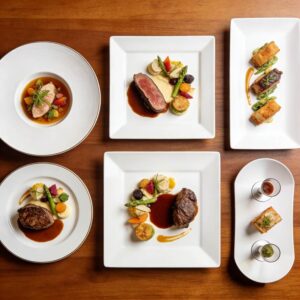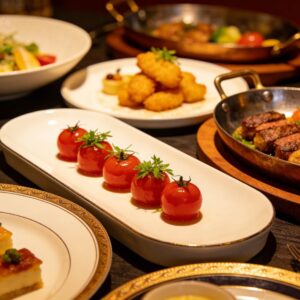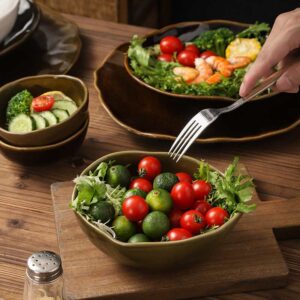
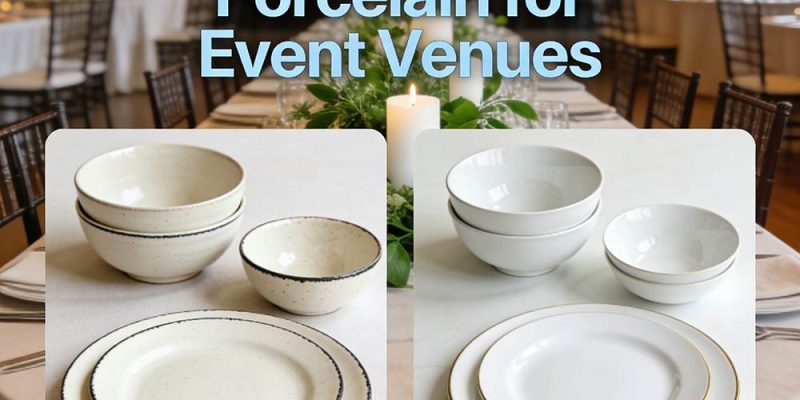
Every event table sends a message before the first course arrives. Plates sit in place, guests take their seats, and the look of the table sets expectations right away. That’s where stoneware vs porcelain for events becomes a practical choice for venues.
Both materials appear refined. Both suit formal settings. But they create distinct visual tones and perform in noticeably different ways during service.
This guide is built for venues comparing stoneware vs porcelain dinnerware. We’ll discuss how each option affects aesthetic, durability, and long-term use, so choosing dinnerware for your venue’s style feels clear, grounded, and worth your time.
Porcelain or Stoneware: Which Material Fits Your Venue Best?
Now, you’d expect porcelain to work well for corporate receptions. That clean, versatile, professional look fits neatly into structured events. But the same qualities suit formal receptions just as well.
Porcelain stays bright under lighting, keeps the table uniform, and lets the food do the talking. Do you know what that results in? A table that feels orderly, polished, and easy to trust, especially when consistency matters across many events.
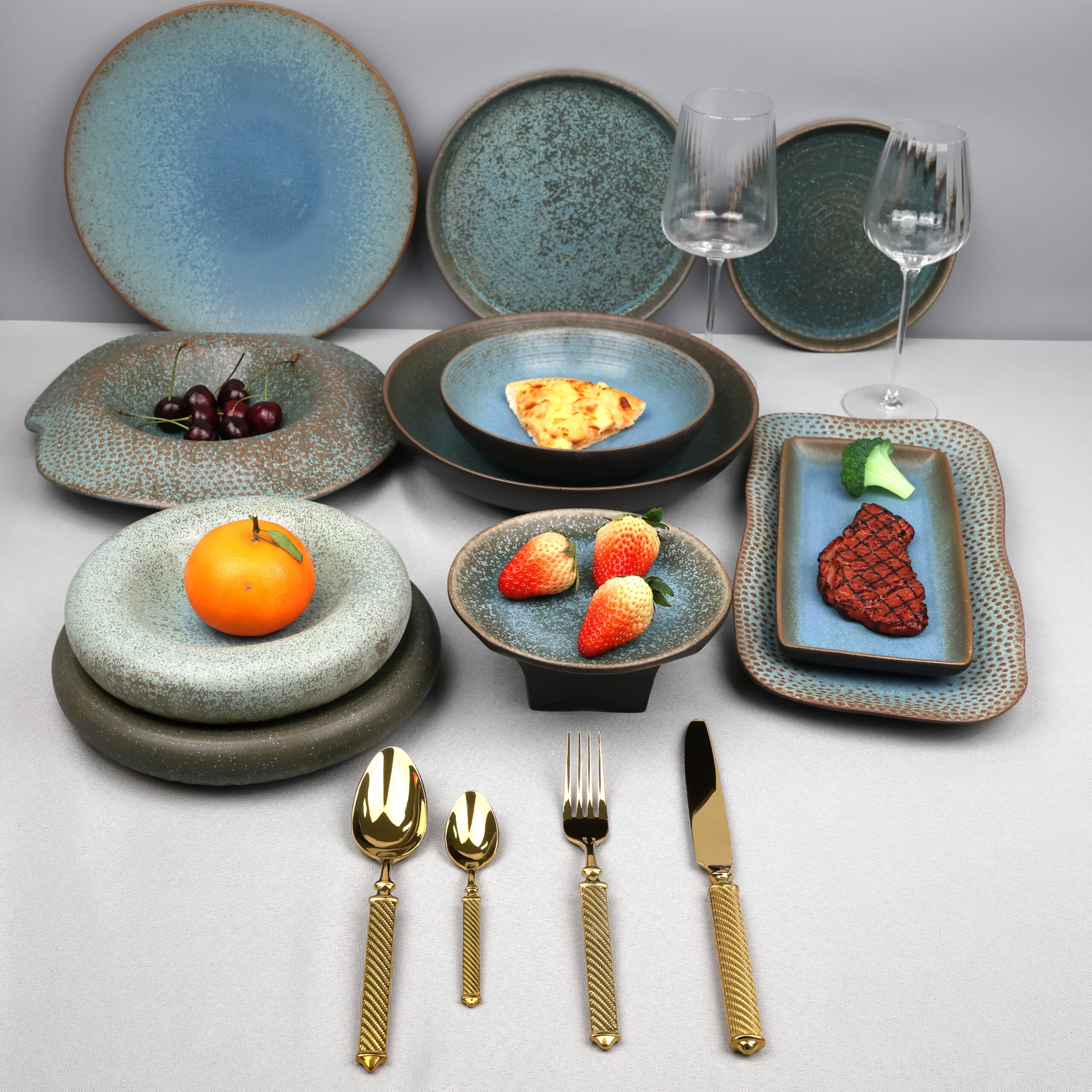
If you compare that with stoneware dinnerware for venues, you’re taking a more expressive route. Stoneware feels warmer in the hand and more relaxed at the table.
The surfaces have character. Sometimes subtle texture. Sometimes visible variation. What does that character do? It adds personality without decoration.
In the right setting, it makes the table feel intentional rather than styled. That’s why material choice affects perception.
Stoneware vs Porcelain for Event Venues: Material Comparison
At first glance, stoneware and porcelain look interchangeable on a dressed table. But once plates are handled, served, and reused across events, their difference becomes apparent.
Let’s take a look at porcelain vs. stoneware for events from a material point of view, so venues can understand how each is made and how it performs across different event venues.
Porcelain: The Industry Standard for Event Venues
Porcelain has earned its place as a default choice in many venues because it stays consistent across a wide range of events. It suits corporate receptions, formal dinners, and large-scale functions.
What Is Vitrified Porcelain?
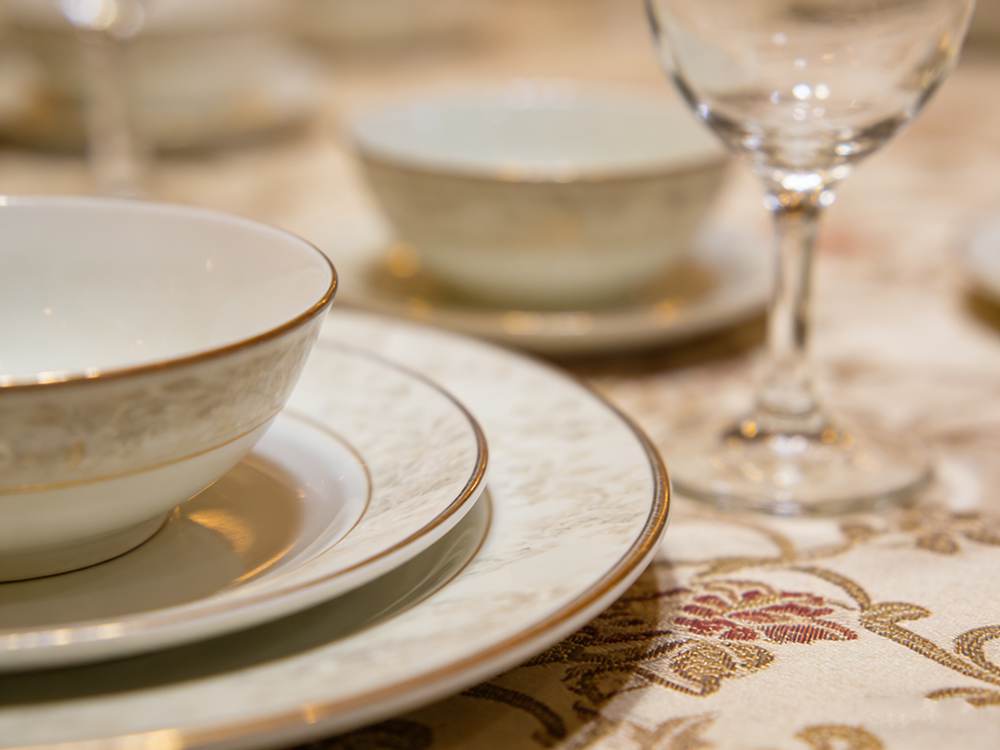
Refined clay blended with feldspar and quartz, fired at very high temperatures, creates vitrified porcelain. That firing process seals the body fully, creating a smooth, non-porous surface.
What does that lead to?
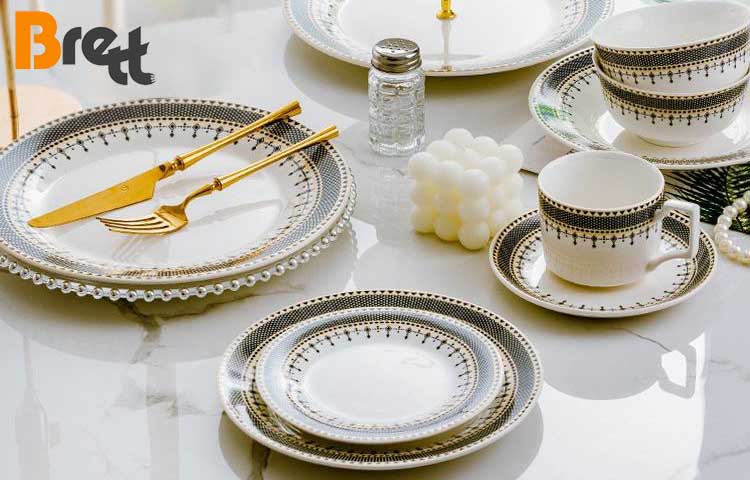
Plates that stay bright, resist staining, and clean easily. The look stays crisp and professional, and batches tend to match well over time. That’s why porcelain dinnerware for venues works when flexibility and consistency matter most.
Porcelain does have limits, though. The surface feels cool and formal, and without thoughtful design, it can feel plain. Bright white also puts more responsibility on plating, since food colors need to carry the visual interest.
Stoneware: The Artisanal Alternative for Event Tables
Stoneware takes a different aesthetic route because it is fired at slightly lower temperatures, and it retains a bit more texture and warmth in the body.
What Is Stoneware?
Stoneware plates are heavier and more grounded. The surface shows subtle variation even within production runs, giving the table character.
That character does something important. It adds atmosphere. In the right venue, stoneware dinnerware for venues supports rustic, contemporary, or chef-driven concepts and photographs beautifully.
But the trade-off is care and maintenance. Stoneware stains more easily, so it has to be handled well. Replacements are also needed more frequently, and they fit certain themes better than others.
Here’s a quick comparison to bring it together.
Factor | Porcelain | Stoneware |
Firing temperature | High | Moderate |
Vitrification | Full | Partial |
Surface | Smooth, sealed | Textured, warmer |
Aesthetic | Crisp, professional | Artisanal, relaxed |
Versatility | Broad | Concept-driven |
Maintenance | Simple | More care needed |
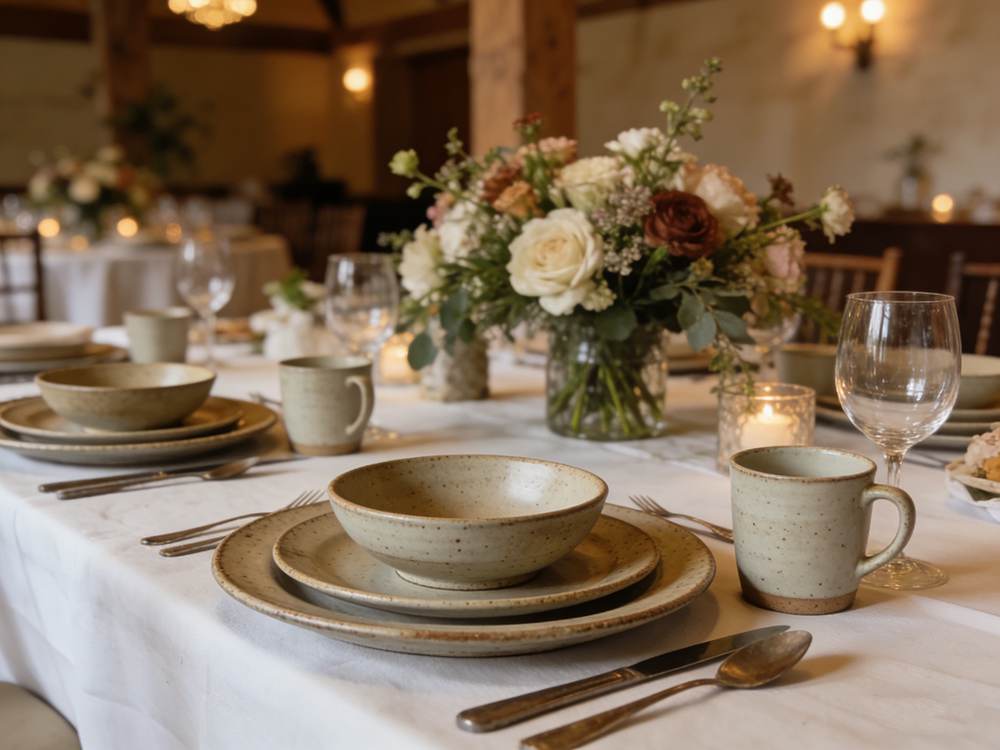
Aesthetic Positioning by Event Type: Stoneware or Porcelain?
When venues think about aesthetics, the question isn’t which material looks better in isolation, but which one supports the type of event happening in the room?
Stoneware vs porcelain for events becomes a visual decision first. The plates set the tone for the event, and that tone has to match the experience being promised at the venue.
Porcelain for Clean Formal and Multi-Purpose Events
Porcelain works best when the table needs to feel refined and dependable.
The surface stays crisp under lighting, the color stays neutral, and the table reads as polished from every angle. This makes porcelain a reliable choice for luxury receptions, award ceremonies, and formal dinners where consistency is part of the experience.
Porcelain also fits naturally into contemporary and modern events. Clean lines pair well with minimalist decor, and the bright surface acts as a neutral backdrop for bold plating.
In multi-purpose venues that host everything from weddings to corporate dinners, porcelain is the safest visual choice. It doesn’t lean too casual or too expressive, which helps it stay relevant across seasons and themes.
When the room changes weekly, porcelain adapts without pulling attention in one direction. It lets decor, florals, and food define the mood instead of the plate.
Choose porcelain dinnerware for venues when you want:
- Clean white plates that feel refined and professional
- A neutral base supporting formal and contemporary styling
- Consistent presentation across different event themes
- Strong visual alignment with linens and glassware
- A polished table suitable for photography from every angle
- Plates that feel familiar and reassuring to guests
- An aesthetic that stays relevant year after year
- Easy pairing with bold or minimalist plating
One look that works across many event formats
Stoneware for Warm, Expressive, and Concept-Led Events
Stoneware has a completely different aesthetic, which works best when the goal is atmosphere. Farm-to-table events benefit from its warmth and texture, which align naturally with organic menus and natural decor.
The surface isn’t perfectly uniform, and that’s the point. For instance, when guests sit down and notice a slight variation from plate to plate, it feels intentional, like someone actually thought about the table rather than ordering the safest option.
This is why stoneware works so well for contemporary and artisanal events. If you’re hosting dinners where the menu, décor, and setting are meant to feel creative, stoneware supports that story.
Even when it’s produced at scale, it still gives off a handcrafted feel. It also photographs warmly, which helps when your events live on social feeds and galleries afterward. Boutique and themed events benefit the most here, especially when being distinctive is part of the appeal.
Stoneware really comes into its own during smaller wedding celebrations. The warmer tones make tables feel closer and more personal. Guests tend to read that warmth as care. Not in an obvious way, but in a subtle “this feels right” sense that stays with them.
You’ll usually want stoneware in your venue if you’re aiming for:
- A table that feels warm, layered, and visually interesting
- Plates that suit rustic or design-led event styles
- Natural variation that feels intentional, not messy
- Easy pairing with florals, greenery, and natural décor
- A more personal table setup for smaller guest counts
- Softer, warmer photography without heavy styling
- A handcrafted look without commissioning custom pieces
- Dinnerware that becomes part of the event’s personality
Quick Takeaway
Porcelain gives you structure and flexibility. Stoneware gives you mood and personality. The right choice comes down to what you want guests to feel when they sit down.
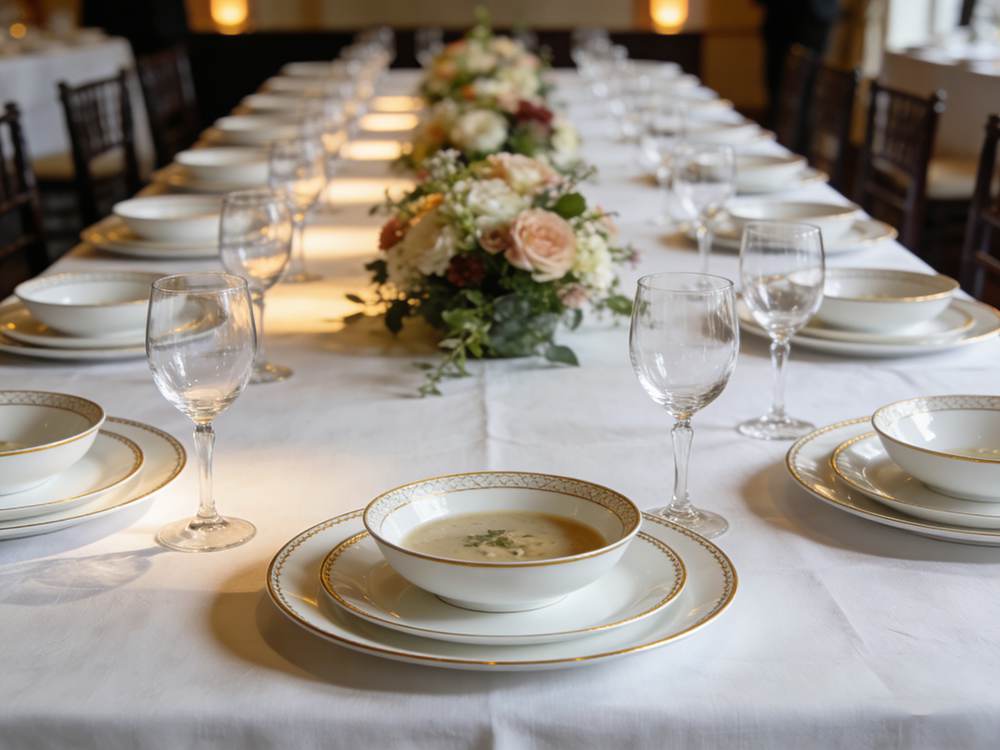
When Stoneware and Porcelain Don’t Work for Your Venue Aesthetic
Even great dinnerware can feel wrong if it doesn’t match the room. It’s not about quality. It’s about fit. If the plate pulls attention in the wrong direction, the table never quite settles.
Here are situations where the material choice can work against you.
When Stoneware Can Feel Out of Place
Stoneware isn’t ideal if you’re running a venue with a heavy, fast-paced calendar. For example:
- Large venues needing identical tables for every single event
- Formal receptions where a crisp, polished look is expected
- Corporate dinners and gala-style layouts
- Tables styled around bright linens and reflective finishes
- Spaces where texture competes with décor instead of supporting it
- Venues that rely on clean, uniform photography
- Multi-use rooms need a neutral plate solution
- Events where uniformity signals professionalism
When Porcelain Can Miss the Mark
Porcelain can feel too controlled in settings built around warmth or craft. You’ll notice this most in:
- Rustic or farm-led event concepts
- Boutique venues built on handcrafted storytelling
- Intimate celebrations that favor warmth over polish
- Tables layered with wood, linen, and organic textures
- Events meant to feel relaxed and expressive
- Menus designed to blend into earthy presentations
- Concepts where perfect uniformity feels restrictive
- Experiences centered on artisanal presentation
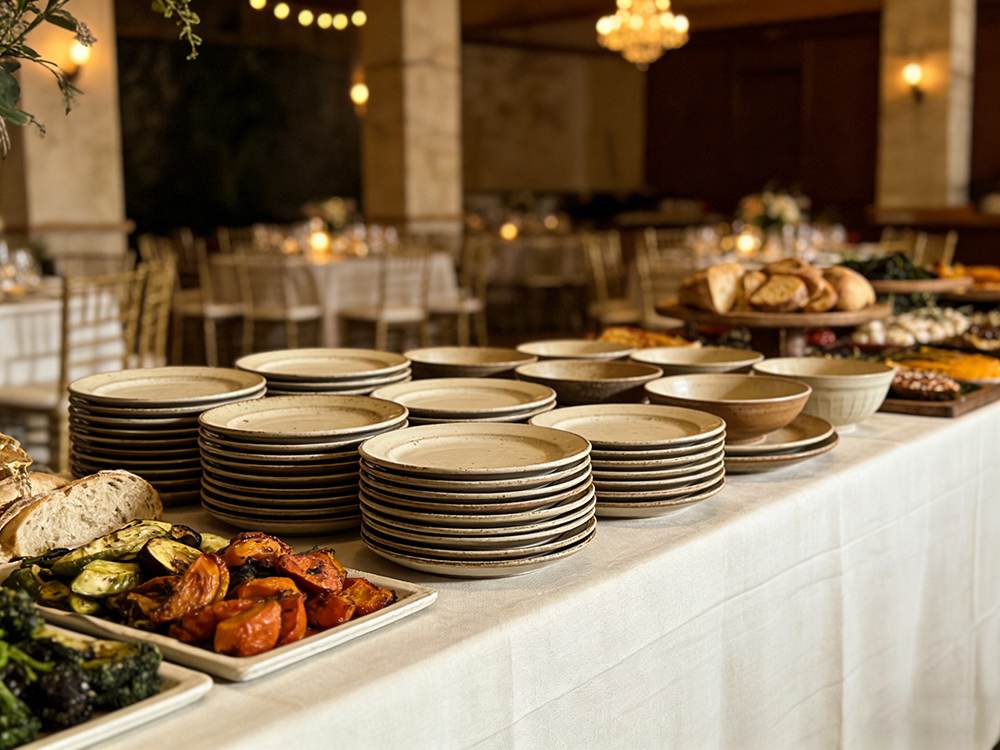
Heat Retention and Service Impact at Event Tables
Temperature affects how food is received long before guests comment on flavor. Plates play a role here, especially during seated events where courses take time to arrive.
Heat Tolerance During Service
Some materials handle higher service temperatures more easily. Porcelain, for example, stays stable when hot food is plated, especially when kitchens follow plate-warming routines. That’s why it fits comfortably into formal service environments.
On the other hand, stoneware prefers gentler transitions. It performs well within normal service ranges but reacts better to gradual than abrupt temperature changes.
Heat Retention and Guest Perception
Another factor is how long the warmth stays with the dish.
Stoneware holds heat longer, which helps hot courses feel comforting during slower-paced service. Guests notice that warmth right away, and it reads as care and attention.
Porcelain cools sooner, so the warming comes more from timing and presentation than the plate itself. When plating is thoughtful, the result still feels polished and intentional.
What This Means at the Table
Both materials work well in event service when handled correctly. One supports warmth through feel and surface character. The other supports structure and clarity through consistency and process.
The decision comes down to preference. Do you want the plate to contribute to warmth on its own, or do you want warmth to come entirely from the food and service flow?
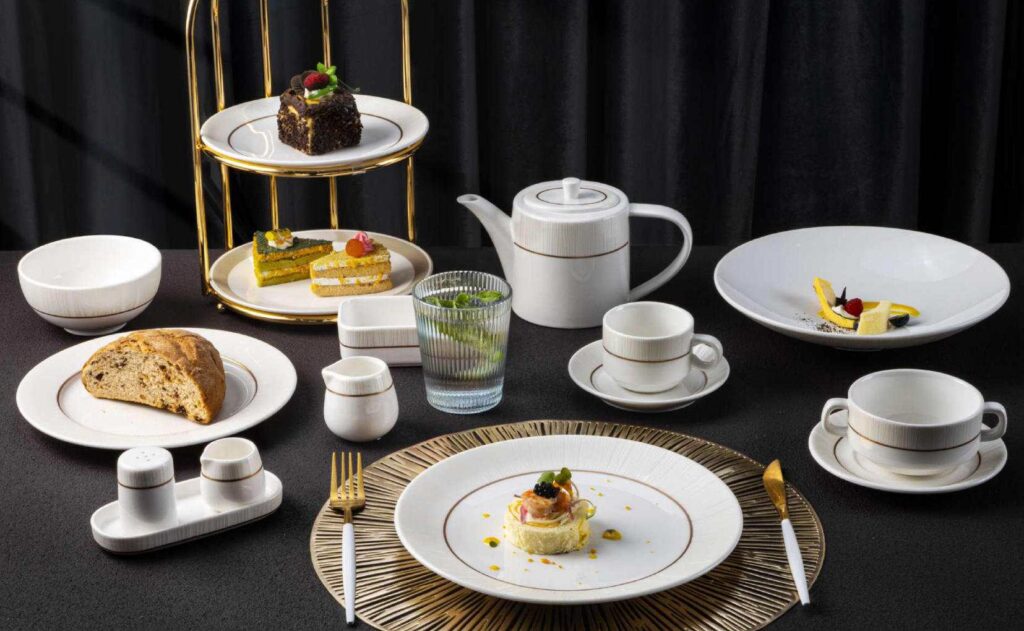
Cost and Maintenance for Event Venues
Upfront pricing only tells part of the story. What matters more is how dinnerware behaves over time and how much attention it needs from staff.
Porcelain: Follows a simple care routine. The sealed surface resists staining, standard dishwashing works, and pieces return to service looking consistent. With porcelain, replacements usually happen because something breaks, not because it looks off. That makes inventory easier to track and keeps the table looking consistent without much effort.
Stoneware: Requires more awareness. The surface can hold onto residue, so stains need to be handled early, and staff need to know what to watch for. If that care slips, pieces may need replacing sooner just to keep the table looking right.
The right choice depends on how much attention your venue can dedicate between events.
Decision Framework and Implementation for Event Venues
Choosing between stoneware and porcelain works best when the decision follows structure rather than preference. The goal is to match material to how your venue operates today and where you expect it to be a few years from now.
Step 1: Start with the Look You’re Known For
Think about the kind of events people book you for. If your venue leans formal, luxury, or modern, porcelain usually fits right in with its clean, consistent appearance.
If your space is built around farm-to-table dinners, rustic styling, or artisanal themes, stoneware tends to feel more natural. And if your calendar includes a bit of everything, porcelain is the easiest material to work across styles.
Step 2: Be Honest About How Busy You Are
Event volume matters more than most venues expect. A packed calendar puts pressure on matching pieces and replacing them quickly, which is where porcelain makes life easier. With fewer events, stoneware has more room to work without adding stress behind the scenes.
Step 3: Plan for Visual Consistency
Some venues need every plate to look the same, year after year. Porcelain supports that kind of consistency. Others enjoy a little variation at the table. In those spaces, stoneware adds character instead of creating problems.
Step 4: Look a Few Years Ahead
If you plan to keep the same table in the long term, porcelain usually makes sense. If you already expect a refresh down the line, stoneware can fit that timeline more comfortably.
Quick Tip
If you’re leaning toward porcelain, think ahead. Order in bulk, keep care routines simple, and work with a supplier that can match pieces later without surprises.
If stoneware is your choice, plan for a shorter refresh cycle, make sure staff know how to handle surfaces, and leave room to update the look when your aesthetic evolves.
Wrap Up
Stoneware adds warmth, texture, and personality. Porcelain brings structure, clarity, and a polished finish. Many venues use both, placing each where it makes the most sense. In the end, the best table is the one that supports your events without creating extra work.
If you’re ready to fine-tune your setup, explore durable, custom dinnerware solutions with Brett and build tables that feel intentional at every event.