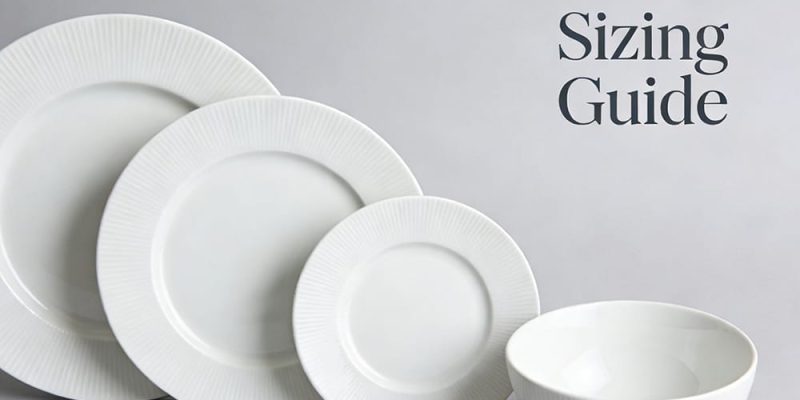
What if you learn that by simply swapping your plate size, you can save up to USD 300 to USD 600 a day? That too, without changing your menu or portion quality?
Instead of using the standard 12-inch dinner plates, use 10.5-inch plates. With decreased space to fill, deliberately add 1-2 ounces less of, say, protein, the most expensive item. The dish will still appear full and balanced. Customers too won’t notice the difference either.
But the cost savings are much noticeable: 1-2 ounces less of protein can save up to USD 2 to USD 4 per cover. Multiply that by 150 servings, and you get around USD 300 to USD 600 savings every day!
Size matters, even if it’s a half-inch difference in the size of dinner plates. Putting it in monetary terms, restaurants and food businesses, using the right dinnerware, save up to 10% to 15% on annual food costs.
Let’s learn how to choose the right dinnerware.
Quick Dinner Plate Sizes Chart
Here is a quick reference table for the standard sizes of dinner plates.
Plate Type | Standard Size | Common Uses | Portion Size |
Dinner Plate | 10.5-11″ | Main course, plated entrees | 6-8 oz protein |
Salad Plate | 8-9″ | Appetizers, salads, sides | 3-5 oz |
Bread Plate | 6-7″ | Bread, butter, small items | Individual serving |
Bowl (soup) | 8-10″ diameter | Soups, stews, pasta | 8-12 oz liquid |
Bowl (side) | 6-8″ diameter | Sides, desserts | 4-6 oz |
Platter | 12-14″ | Sharing, family-style | 2-4 servings |
Charger Plate | 13-14″ | Under-plate (decorative) | N/A (no food) |
Plate Size Standards
The plate size isn’t about the looks only. It’s basic economics. Larger plates need to be filled with more food. So, your ingredient costs go up with them. Midsized plates, on the other hand, make the meal feel balanced and don’t raise your costs either.
The size of the plate has a subconscious effect on the minds of the customers. Food placed on a large plate appears smaller. Placed on a smaller plate, it looks like it’s too much.
When we eat from a small plate, we feel full sooner. But when eating from a large plate, the same amount can feel smaller.
To help restaurants standardize portion control and presentation, here’s a look at industry-standard plate sizes.
- Saucer: Most saucers are 5 1/2 to 6 1/2 in diameter. Usually, the size depends on the mug or cup, as they are manufactured to match the size.
- Appetizer Plate:This is usually the smallest plate on the dining table. It typically measures 4 to 5 inches and displays a single or small item.
- Side Plate:These measure 6 to 7 inches and are used for serving bread or placing napkins on the table surface.
- Dessert Plate: Dessert plates are a bit bigger and measure 8 to 10 inches in size.
- Dinner Plates: Dinner plates have a diameter of 10.5 inches. But recently, many restaurants have started opting for 11 to 12-inch plates, with wider lips/frames.
- Soup Plate:The soup plates are a hybrid between the dinner plates and the soup bowls. These usually measure 8-10 inches.
Browse Brett‘s plate sizing options here.
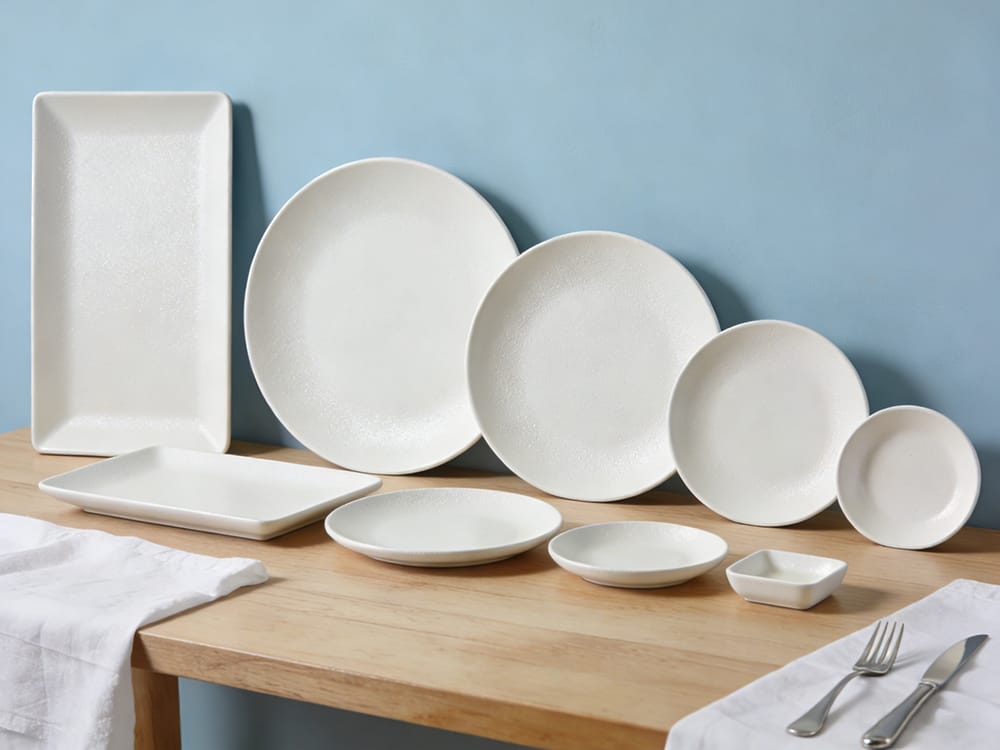
Plate Size By Restaurant
The plate size is one of the least glamorized cost control measures for the food business. Your guests judge the value of the food much longer before they start eating it.
Fine Dining
Usually, in fine dining, these are the plate sizes used:
- Dinner Plate:Dinner plates are typically 9-10 inches. These are ideal for centered presentations too. 30-40% of the plate remains visible with blank white space for a visual impact.
- Salad Plate: Salad plates are usually 7–8 inches. These are used for the appetizers or salad courses, holding 3–5 ounces of salad with 1–2 ounces of dressing.
- Bread plates: These are 5–6 inches. These serve individual portions like a single roll or a few slices.
- Soup bowls: These are 7–8 inches in diameter. They make the soup serving look elegant and balanced.
Upscale Casual Dining
- Dinner Plate:Dinner plates are typically 10.5–11 inches in casual dining. These allow a balanced serving of 5 to 7 ounces of protein, 3 to 4 ounces of starch, and 3 to 4 ounces of vegetables. About 20–30% of the plate remains visible for presentation.
- Salad Plate:Salad plates usually measure 8–9 inches. They are for the appetizers, salads, or shared first courses.
- Bread Plate:Bread plates are 6–7 inches. They serve individual portions, like a single roll or a few slices.
- Soup/Pasta Bowl:These bowls are 8–10 inches. They can have an 8–12 ounce capacity. They serve soups, stews, or pasta dishes.
High-Volume QSR Dinner Plate Sizes
- Dinner Plate:Dinner plates are generally 11–12 inches in high-volume QSR. They can easily accommodate generous portions of meat, vegetables, and sides. Even with a 10-20% free space, they still look a treat for the eyes.
- Salad/Side Plate:These plates are 9 inches, sized for larger portions of sides or salads.
- Soup/Pasta Bowl:These bowls range from 10 to 11 inches. They have a capacity to hold 10–14 ounces.
Portion Control and Its Impact on Cost
Portion control isn’t just for the customer; it directly influences the bottom line. The plate size directly influences the perception of how much food the customer feels they are served.
When we use smaller plates, they make the portion appear larger. Whereas large-sized plates can make the same amount look small.
But slightly changing the serving size, like going from 12 to 10.5 inches as we discussed, can yield huge savings over the long term.
The dinner plate sizes also have a huge effect on how the handler perceives the serving. On a 9-10-inch plate, the portion looks 30-40% larger, making it ideal for fine dining.
While on a standard 10.5-11-inch plate, the 6-7-ounce portion will look balanced and well-proportioned. Hence, it’s the best size for casual restaurants where value and quality are both important.
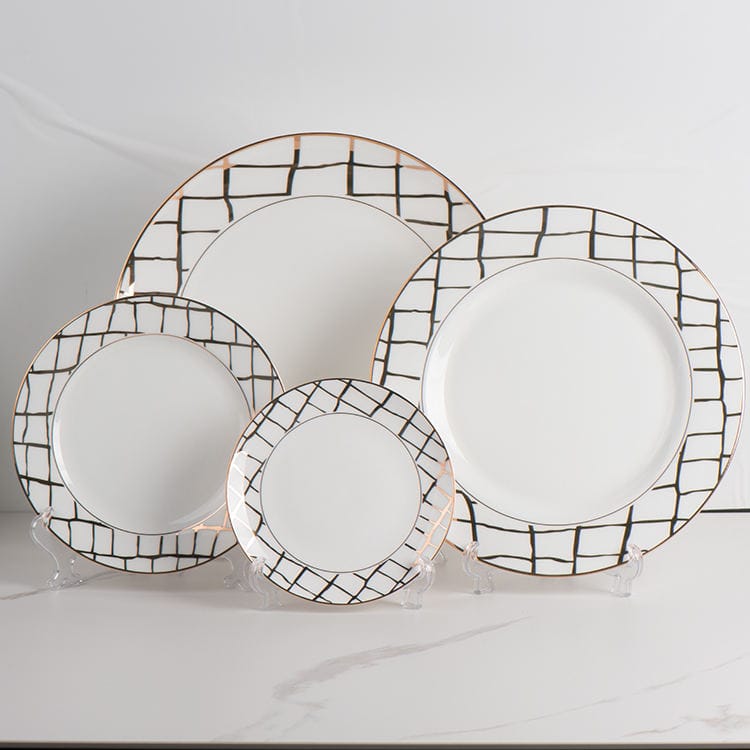
Plating Guidelines for Different Cuisines
The cuisine you intend to serve can dictate a lot about the layout and spacing on a plate.
Most fine-dining and contemporary restaurants rely on 9 to 10-inch plates now. They place everything precisely well-spaced on the plate. Nothing is too much. Even the sauces are not poured, but rather brushed or drizzled.
Upscale casual dining has much looser rules, though. These usually serve in larger sizes, like 10.5 to 11 inches, and have balanced composition. Protein still remains central.
They also play with the height where they stack up starches or place vegetables upright. So the plate feels filled or abundant, but still, there’s a clear portion.
Casual and family-style service has an entirely different take on it. Fuller plates indicate value here. The expectation is for the plates to look satisfying, as people want their money’s worth.
The cultural cuisines vary for different geographies, too. Asians favor small-sized plates and bowls because they have more sauce servings and like to share meals. On the other hand, Mediterranean food is all about large dinner plate sizes and platters that display the food openly.
Indian and Middle Eastern meals require room on the plate. People enjoy multiple items. So, the mid-sized plates are the best bet for them.
Visual Spacing
A plate is like a canvas. The visual appearance matters, but also the way the plate behaves during service is important.
The most effective serving plan is using the rule of thirds. One side anchors the plate, usually having the starch or sauce. The other side has protein as the focus, whereas the third side introduces color, texture, or height through vegetables and garnishes.
The empty space is not wasted space. Rather, it gives control to the hands holding it. It leaves a margin for overflowing sauces and also frames the food.
In fine dining, the chefs play on the height, too. Vertically stacked food indicates prestige and looks aesthetic too. But casual dining is all about ease. Flatter presentations. These are easier to eat and quicker to fill up the space with.
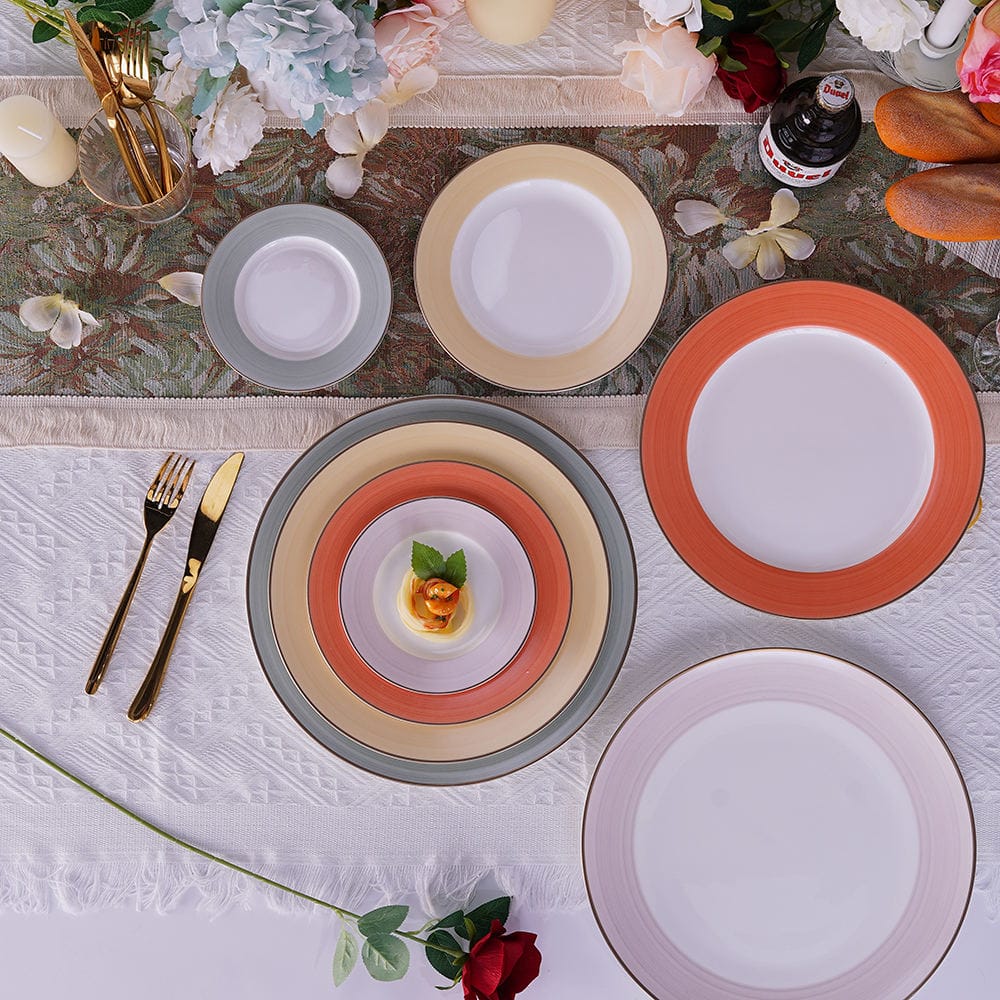
Selecting the Right Plate Sizes of Dinnerware for Your Concept
What size dinner plate should you use for your concept? Here are some key questions that can help.
1. What is your restaurant concept and average check?
If you have a fine restaurant, it will be about USD 75+ per cover. The standard dinner plate sizes will be:
- The dinner plate should be 9 to 10 inches
- The salad plate should be 8 to 9 inches
- Bread plate 6 to 7 inches
- Soup bowl size should be around 8 to 10 inches
For upscale or casual dining, the goal is to give a balanced and quality look. It typically costs around USD 40 to 75 per cover. Here is the guideline for the plate sizes
- The dinner page should measure 10.5 to 11 inches
- The salad plate should be 8 to 9 inches
- Soup bowl sizes should be 8 to 10 inches
- The bread plate should be 6 to 7 inches.
Lastly, if you have casual budget dining, people will perceive larger servings as value. So we need to go for larger plate sizes.
- The dinner plate has to be around 11 to 12 inches
- The salad plate should be 9 inches
- The soup bowl should be 10 to 11 inches
2. What are your typical protein portions?
For smaller portions like 4 to 6 ounces, use 9 to 10-inch plates, which is the standard dinnerware dimension. This creates a look of premium serving. For medium-sized portions, like 5 to 7 inches, use 10.5 to 11-inch plates. Lastly, for larger portions, like 6 to 8 ounces, use 11 to 12-inch plates, which make it look like a generous serving.
3. How many courses do you serve?
In fine dining, four different-sized plates are required. We need the dinner plate, salad plate, bread plate, and bowl. For a two-course upscale casual kind, you will need a dinner plate, a salad plate, and a bread plate.
For single-course meals, we need one main plate, and a bowl can be optional.
4. What is the current portion creep issue?
Potion creep is a silent profit killer. Plate size strategy can combat it, where you switch to smaller-sized plates, like 9 to 10 inches. If the portion control plates are already maintained, you can work on the presentation by giving the food more height and spacing so the food will look better stacked without any extra ounces on it.
5. What is your storage and logistics capacity?
Small-sized plates can save space. You can also use multifunctional plates, like having the same plate for salad, to maximize efficiency.
For the right space, 4 to 5 different-sized plates work best. It gives the liberty to have a better presentation without overloading.
Wrap Up
Across the industry, we see that there are consistent benchmarks for finding dining. Mostly it is centred around the balanced size, which is 9-inch dinner plates. Upscale casual is standardized at 10.5 inches, while casual dining places are more inclined towards 11.5 inches.
Plate sizing is no longer a style or aesthetic. It’s a business strategy. If your concept is looking for quality, durable, and long-term branding dinnerware, Brett comes with SGS and TUV certifications. It ensures safety and consistency for your brand.
Get in touch with Brett today and get personalized plate sizing recommendations.