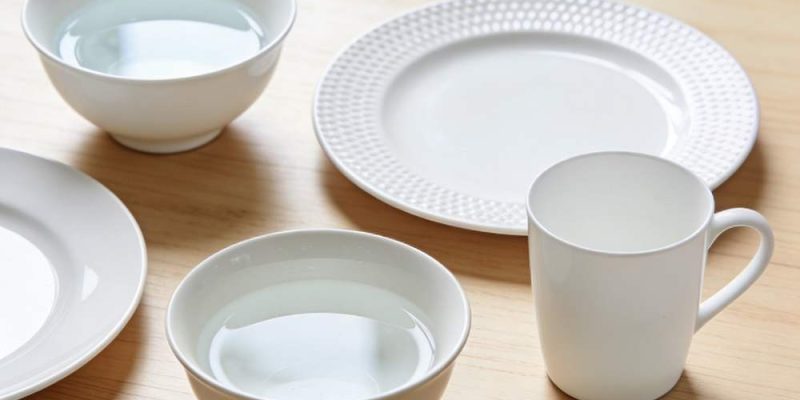
You’ve probably run into this moment while sourcing dinnerware for your hotel or restaurant. One is bone china. The other is porcelain. They look almost identical. Yet the price is different.
The weight feels different, and suppliers keep telling you different stories.
Both materials sit under the ceramic dinnerware umbrella, but they behave very differently once service begins. What matters is how they handle daily washing, fast-paced service, stacking, and years of use.
Bone china dinnerware is known for being lighter and surprisingly strong. Porcelain is valued for its clean look, consistency, and cost efficiency. One may suit fine dining hotels. The other may fit high-volume or casual upscale concepts better.
So, which should your hotel choose?
This guide breaks down the differences that actually affect operations, durability, cost, and guest experience so you can make a practical buying decision.
Bone China vs Porcelain Dinnerware: What’s the Difference?
Identical white plates and almost the same price tags make you pause. But once you start using them day after day, you quickly notice differences.
They’re made differently, and that affects how they perform in hotel service. That difference matters a lot in hotel operations.
What Is Bone China?
Bone china looks delicate, but it is built for strength.
Pick up a plate, and it feels lighter than expected. It is not flimsy but just lighter. That comes from bone ash mixed into the clay. It changes how the plate sets when fired, letting dinnerware manufacturers keep the walls thin without losing strength.
This material was developed in England in the 1700s when makers wanted something refined but tougher than traditional porcelain.
The result was a refined material that handled busy dining rooms better, stacked more safely, and chipped less at the edges. That’s why many luxury hotels still rely on it today. It carries a soft white tone, feels comfortable in the hand, and survives repeated service without looking worn out.
What Is Porcelain?
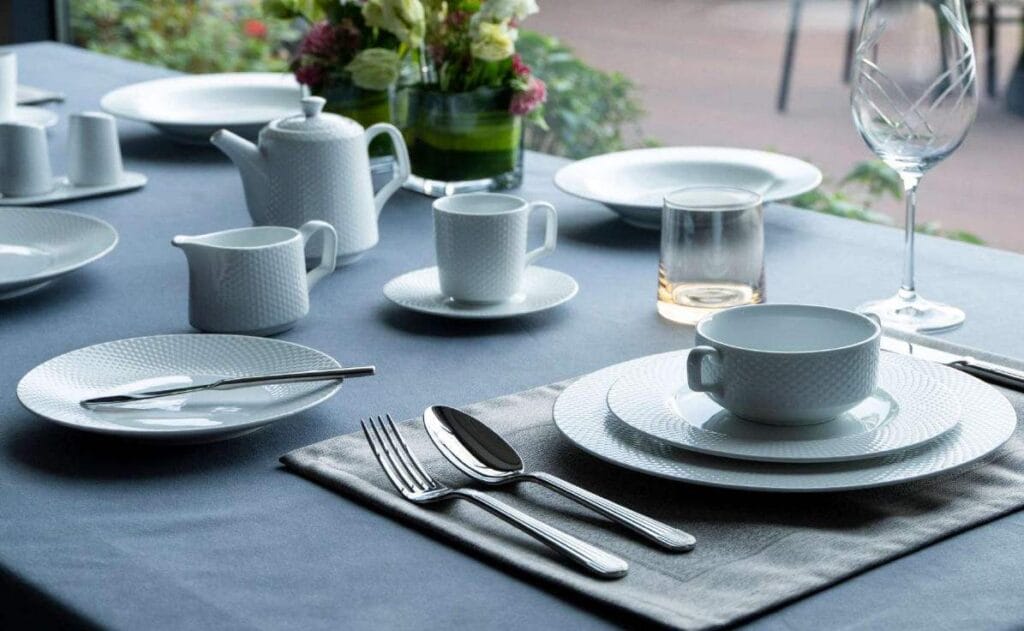
Porcelain is made from very fine clay and fired at extremely high temperatures. The heat turns it dense and smooth, almost glass-like. That’s where the clean white color comes from.
Porcelain was perfected in China long before it reached Europe, and when it did, it became a status symbol. It looked precise, graceful, and formal. In a hospitality setting, porcelain is a better option for presentation, as plates look consistent, and the colors stay sharp.
The surface stays smooth after years of washing. It feels slightly heavier than bone china and doesn’t flex much, which some operators prefer for plating control.
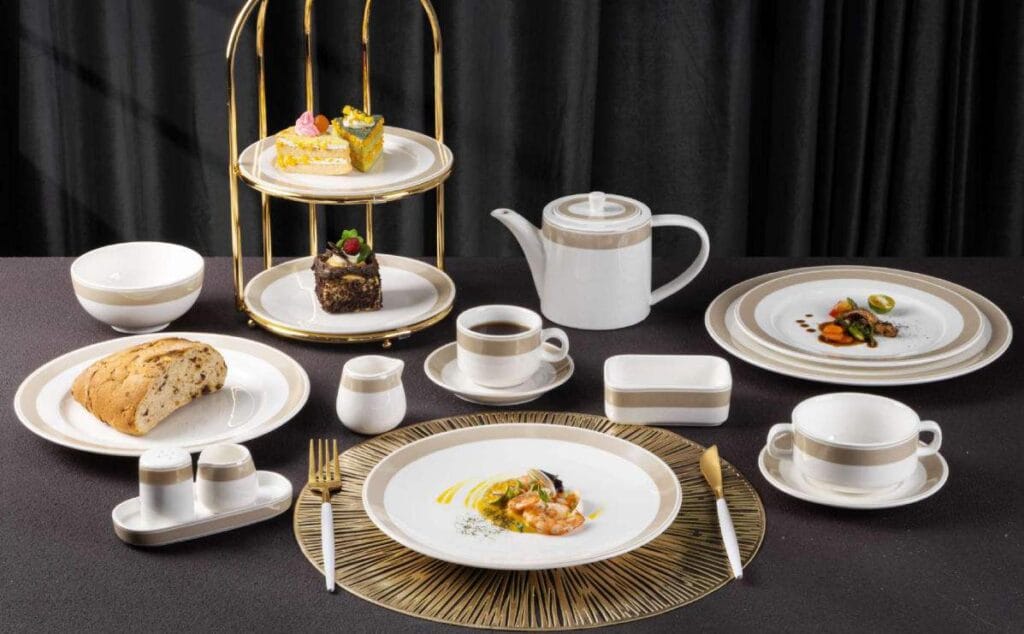
Physical Characteristics: Bone China vs. Porcelain
Both are durable, but they achieve it differently, through different compositions, weight, and the way they handle daily service.
Take a quick look at the physical characteristics of bone china vs porcelain to better understand their texture, feel, strength, and composition.
Physical Characteristic | Bone China | Porcelain |
Appearance | Creamy white to warm ivory tone, softer visual finish | Bright white, crisp and clean; black options available for modern designs |
Translucency | Noticeable warm glow when held to light, even at normal thickness | Minimal translucency unless thin |
Weight | Lighter in hand despite high strength | Generally heavier than bone china at similar sizes; feels more rigid |
Thickness | Thin walls made possible by the added strength from bone ash | Can be produced thin, but durability depends heavily on formulation and design |
Texture | Smooth, refined surface with a soft, glass-like feel | Smooth, polished, glass-like finish |
Porosity | Fully non-porous when properly fired | Fully non-porous when properly fired |
Color Consistency | Slight natural variation between batches | Highly uniform color across batches |
Finishing Options | Accepts logos, decals, and decorative finishes cleanly | Supports logos, decals, and decorative finishes |
Visual Impression | Warm, refined, understated luxury | Sharp, formal, high-contrast presentation |
Dining Association | Premium hospitality and fine dining service | Fine dining and formal table settings |
Hospitality-Specific Durability and Performance
In a hotel or restaurant, dinnerware does not live a gentle life. There is constant handling of plates, the racks stack high, and the dishwasher is run hot.
Here’s how each material holds up when volume is high and breakage becomes expensive.
Durability in High-Volume Use
If your dining room serves hundreds of covers a day, durability becomes a very important aspect to consider when investing in dinnerware.
Bone china dinnerware is a better option in commercial settings because its structure resists edge damage. The material has a bit of flexibility, which helps it survive bumps during service and repeated handling. This is why many fine dining hotels lean towards bone china for long-term use.
Porcelain is also a reliable option. However, thinner rims are more vulnerable when plates knock against each other during stacking or clearing. Over time, you’ll notice small chips that add up across a full service set.
Hospitality supply studies report that bone china experiences lower replacement rates than porcelain in restaurant environments, which is largely due to reduced chipping during service and washing cycles.
Dishwasher Safety and Heat Cycles
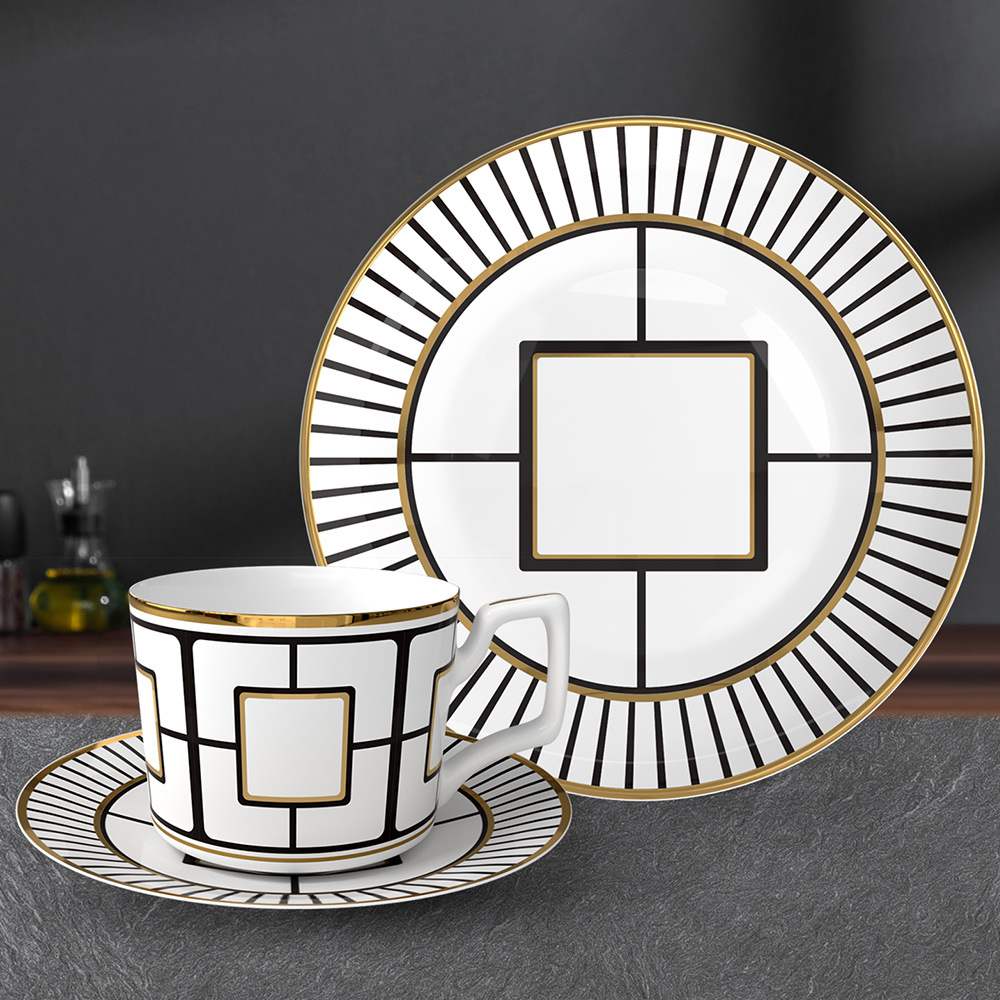
Commercial dishwashers are tough environments for dinnerware. High heat, fast washing cycles, and constant pressure separate durable dinnerware from fragile stock.
Both bone china and porcelain are dishwasher safe when manufactured to commercial standards.
The difference only shows up over time. Bone china handles repeated heat exposure more comfortably that helps it to stay stable through hundreds of wash cycles.
Like any ceramic, porcelain can crack under sudden temperature changes (thermal shock), especially in thinner or stressed pieces when moving straight from a hot oven to a cold prep surface.
In busy kitchens, these transitions happen quickly, which raises the risk of stress cracks. For operations serving hundreds of covers per service, this heat tolerance directly affects replacement costs.
Stain and Odor Resistance
From tomato sauces to citrus dressing, restaurant food challenges dinnerware every day.
Both are fully vitrified and non-porous, which means neither absorbs odors nor stains under normal conditions.
However, you should know that bone china tends to keep its surface appearance cleaner over service cycles, even with acidic foods appearing frequently on the menu.
And while porcelain remains highly resistant, minor surface dulling does appear after many years of heavy use. In fine dining environments where presentation consistency matters, this difference influences your choice of material.
Handling and Staff Considerations
Servers feel the difference long before guests do.
Bone china’s lighter weight reduces strain during long shifts, especially when carrying multiple plates at once. Over time, this improves handling speed and reduces fatigue during peak hours.
Porcelain weighs slightly more in comparable sizes, which may not matter for smaller operations but adds up in large dining rooms.
Both stack well in commercial racks.
Bone china’s strength gives it an edge where racks quickly move between services. In high-volume operations, lighter plates improve workflow and reduce accidental drops, so you make your material choice accordingly.
Cost Analysis for Hospitality Buyers
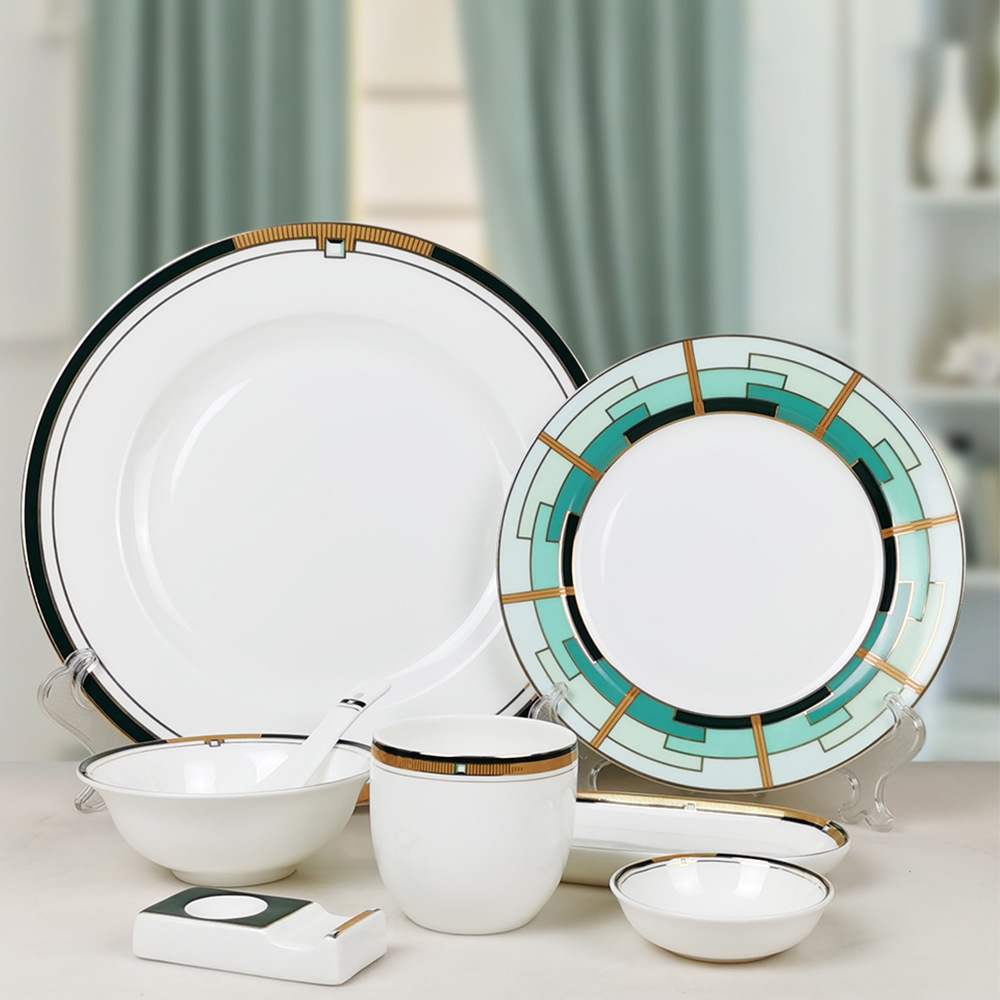
When hotels compare bone china vs porcelain dinnerware, the question is less about the price tag and more about what it costs you after years of service, staff handling, washing cycles, and inevitable breakage.
Let’s take a look at the cost analysis.
Initial Purchase Cost
At the purchasing stage, porcelain feels like the safer option.
Retail pricing varies widely, but a standard service for four in porcelain typically ranges from $80 to $250, depending on the brand, design, and finish.
Bone china costs more upfront. The prices usually start from $80 to about $400 for the same service size, especially when custom shapes or branding are involved.
The price gap exists for a reason.
As bone china has bone ash in its composition, it requires tighter production controls. What does this mean? With material demanding more precision during firing, production cost increases.
Hospitality buyers who’re on tough budgets can find porcelain as a more cost effective option. Bone china, by contrast, positions itself as a premium investment from the start.
Long-Term Cost of Ownership
In high-volume environments, replacement costs matter more than initial cost.
Industry data shows that bone china experiences fewer replacements than porcelain in commercial use. It is becoming more popular due to its durability, strength, and delicate appearance. Over a five-year period, this difference becomes significant.
In high-volume service, porcelain sees higher replacement rates, while bone china can reduce replacements when the main issue is edge chipping.
When you total purchase replacement costs, bone china approaches break-even within 3 to 5 years. For hotels planning long-term use, this changes the cost consideration entirely.
Aesthetic and Styling Considerations
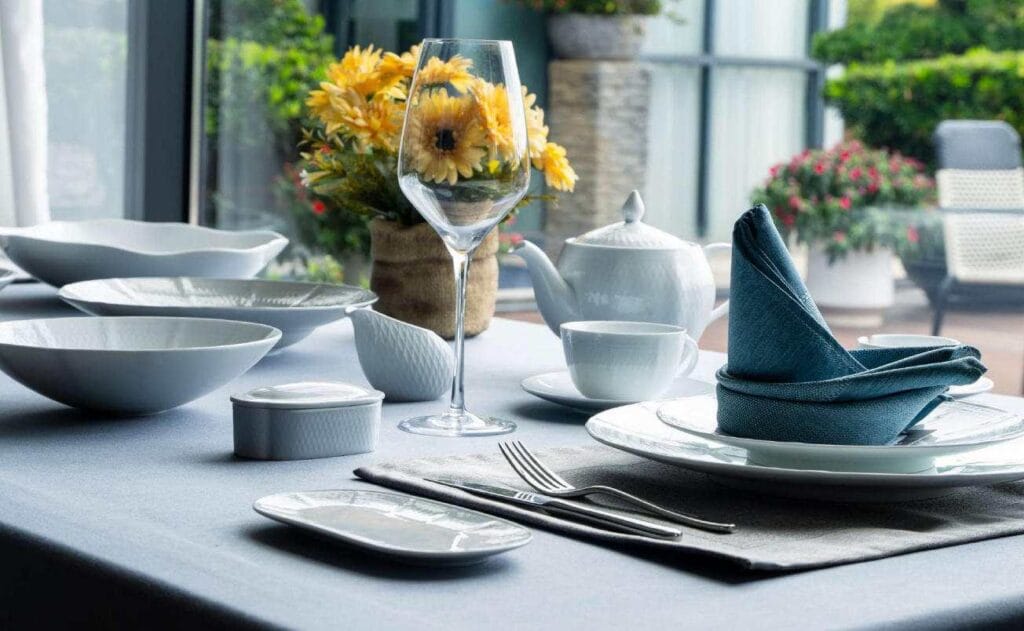
Dinnerware does more than hold food. It sets expectations before the first bite.
The weight in the hand, the color under the light, and the way a plate frames a dish all shape how a guest perceives your space and dining experience.
Fine Dining vs Casual Concepts
Bone china feels right at home in formal settings. Fine dining restaurants and five-star hotels lean towards it because it carries a sense of occasion.
The lighter weight, smooth surface, and soft ivory tone send subtle signals that the meal matters. Guests may not name the material, but they register the refinement. This perception allows operators to support higher menu pricing without saying a word.
Porcelain fits a wider range of concepts; for instance, it works just as well in fine dining as it does in contemporary, casual-upscale restaurants.
Its clean look and consistency make it adaptable, especially for places that refresh menu plating styles or themes throughout the year. Porcelain blends into the experience rather than defining it, which many modern restaurants prefer.
Color and Finish Options
Both materials have gloss, satin, and matte finishes, along with metallic accents and custom artwork.
Bone china leans warm. Shades of white cream and ivory dominate, giving tables a softer feel under ambient lighting.
While it supports logo patterns and decorative accents, color experimentation stays more restrained. That restraint is part of its appeal in luxury environments.
Porcelain opens the door to contrast.
Bone China vs Porcelain: Which Should You Choose?
Choosing between bone china and porcelain feels surprisingly tricky. On the table, both perform well. But in service, speed, staff, fatigue, replacement costs, and guest perception, they differ. The right choice depends on how your hotel operations run.
Choose Bone China
Bone china works best when your hotel operation demands consistency under pressure and long-term value. Here’s how bone china performs in hotels.
- Designed for fine dining restaurants and five-star hotels
- Performs well in high-volume service (100+ covers per service)
- Justifies higher upfront investment through lower replacement rates
- Reduces staff fatigue due to lighter weight during long shifts
- Matches guest expectations in luxury and international hospitality settings
- Holds up better during repeated commercial dishwashing cycles
- Minimizes chipping and breakage over time
- Functions as “investment-grade” dinnerware for a premium concept
For hotels positioning themselves at the top end of the market, bone china reinforces quality at every touchpoint.
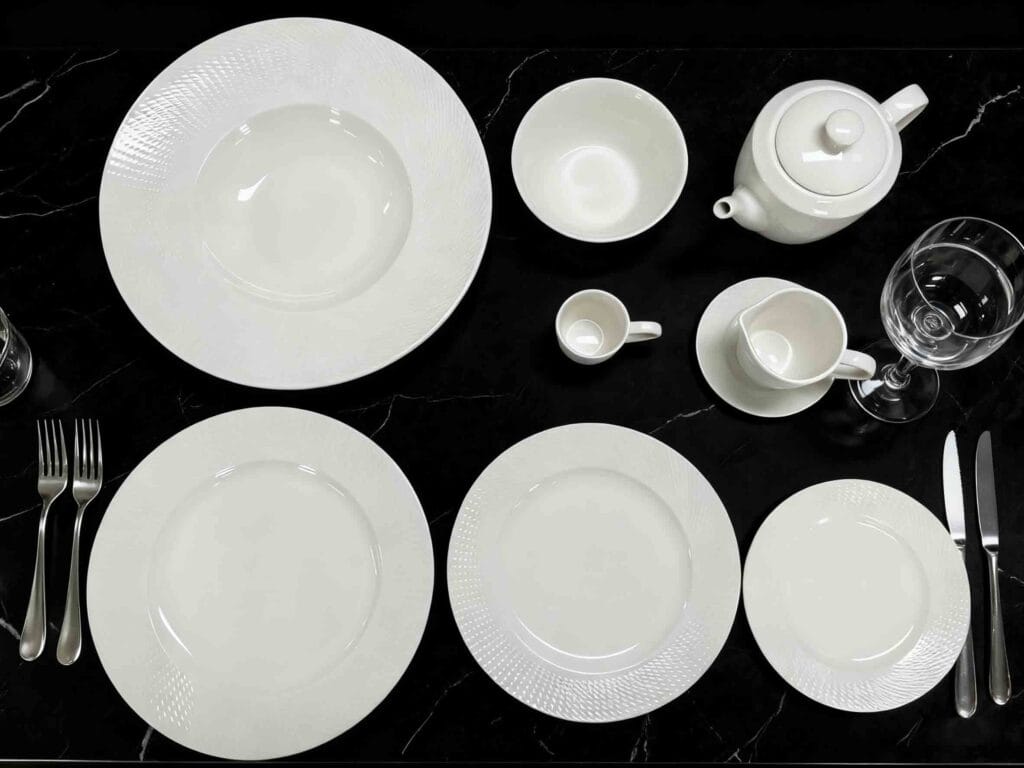
Choose Porcelain
Porcelain offers flexibility, visual consistency, and a lower barrier to entry. Here’s what porcelain dinnerware offers.
- Fits upscale casual and contemporary dining concepts
- Works well for lower-volume service (20 to 50 covers per service)
- Supports tighter budgets without sacrificing professionalism
- Has a clean, modern, bright-white presentation
- Adapts easily to menu changes and evolving plating styles
- Makes sense for new restaurants testing a concept
- Accepts a higher tolerance for replacement over time
- Complements stainless steel and modern table settings
View our custom porcelain dinnerware collection to explore premium options built for hospitality use.
The Hybrid Approach
Many hotels opt for a hybrid approach by using porcelain for everyday service and choosing bone china for private dining and special events. This approach spreads cost, lowers risk, and gives guests a premium experience without locking you into a single material.
It also allows a gradual upgrade path as your business grows. Sometimes the smartest choice isn’t one or the other; it’s knowing when to use both.
FAQs
Is bone china stronger than porcelain?
Yes, bone china is known for an excellent strength-to-weight balance and strong chip resistance in many commercial lines. Many restaurants and hotels report lower replacement rates compared to porcelain over long service periods.
Can bone china be used in commercial dishwashers?
Yes, bone china is dishwasher safe. It tolerates repeated wash cycles well, though checking temperature limits is important.
Wrap Up
Bone china and porcelain are strong contenders for professional dining environments. So, which dinnerware truly fits the way your hotel operates day to day?
Bone china dinnerware stands out for high-volume service, lighter weight, and long-term cost efficiency, while porcelain dinnerware offers a clean, consistent look and strong value, making it a smart choice for modern concepts that need flexibility and visual precision.
The decision isn’t really about which material is “better.” It’s about which one supports your service flow, staff handling, and the experience you want guests to remember.
Ready to make the right decision for your hotel?
Discuss your requirements, request samples, and get practical guidance from an experienced ceramic dinnerware manufacturing partner. Reach out to Brett to start sourcing custom dinnerware built for your hospitality concept.