Choosing restaurant dinnerware sounds simple until you’re faced with dozens of plates that look similar but behave very differently once service starts.
Some feel heavier in the hand. Others chip sooner. A few hold up through years of washing and stacking, while others quietly raise replacement costs over time.
Restaurant dinnerware isn’t just about appearance. It affects service speed, staff handling, durability, and how guests perceive your food.
Materials matter more than most buyers expect. This guide breaks down the most common restaurant dinnerware materials, how they perform in the kitchen, and which options make sense for different concepts, volumes, and budgets, so that you can choose with clarity.
Restaurant Dinnerware Materials (What You’re Really Choosing)
Restaurant dinnerware decisions rarely fail because of looks. They fail when plates chip too quickly, the stack feels heavy during service, or replacement drains the budget.
Before looking at shapes or finishes, it helps to understand the core materials used in commercial kitchens. Each material sorts a different operational problem.
Some favor elegance. Some favor speed. Others protect margins and high-volume dining rooms. Below is a clear breakdown from premium to purely practical.
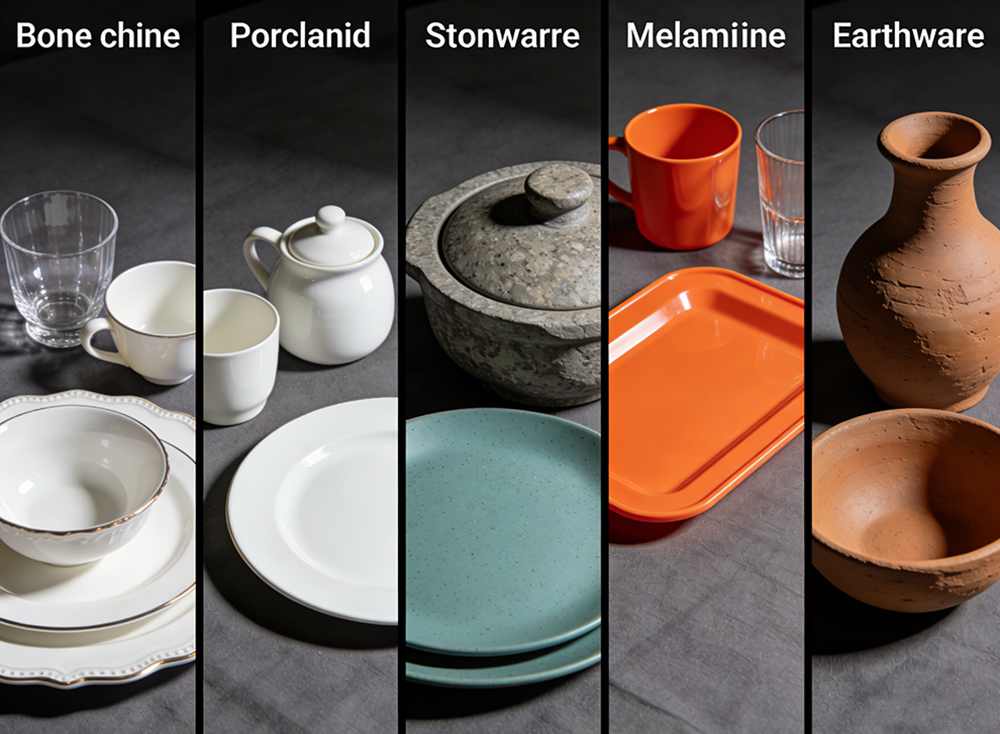
Material | Best For | Average Cost | Durability | Heat Resistance | Aesthetic |
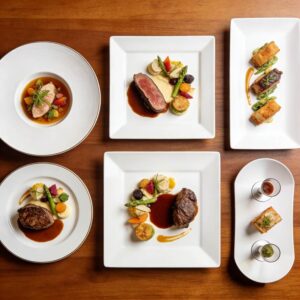
Bone China | Fine dining, luxury hotels | Premium | Highest | Excellent | Elegant |
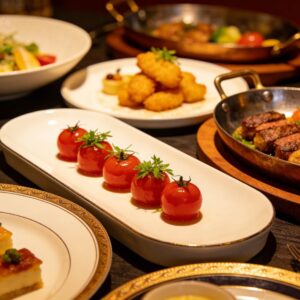
Porcelain | Upscale casual to fine dining | Mid-high | Very high | Very good | Modern/ classic |
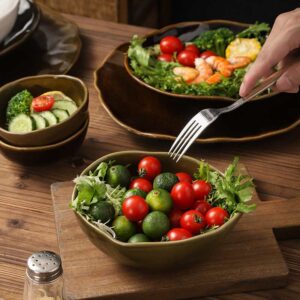
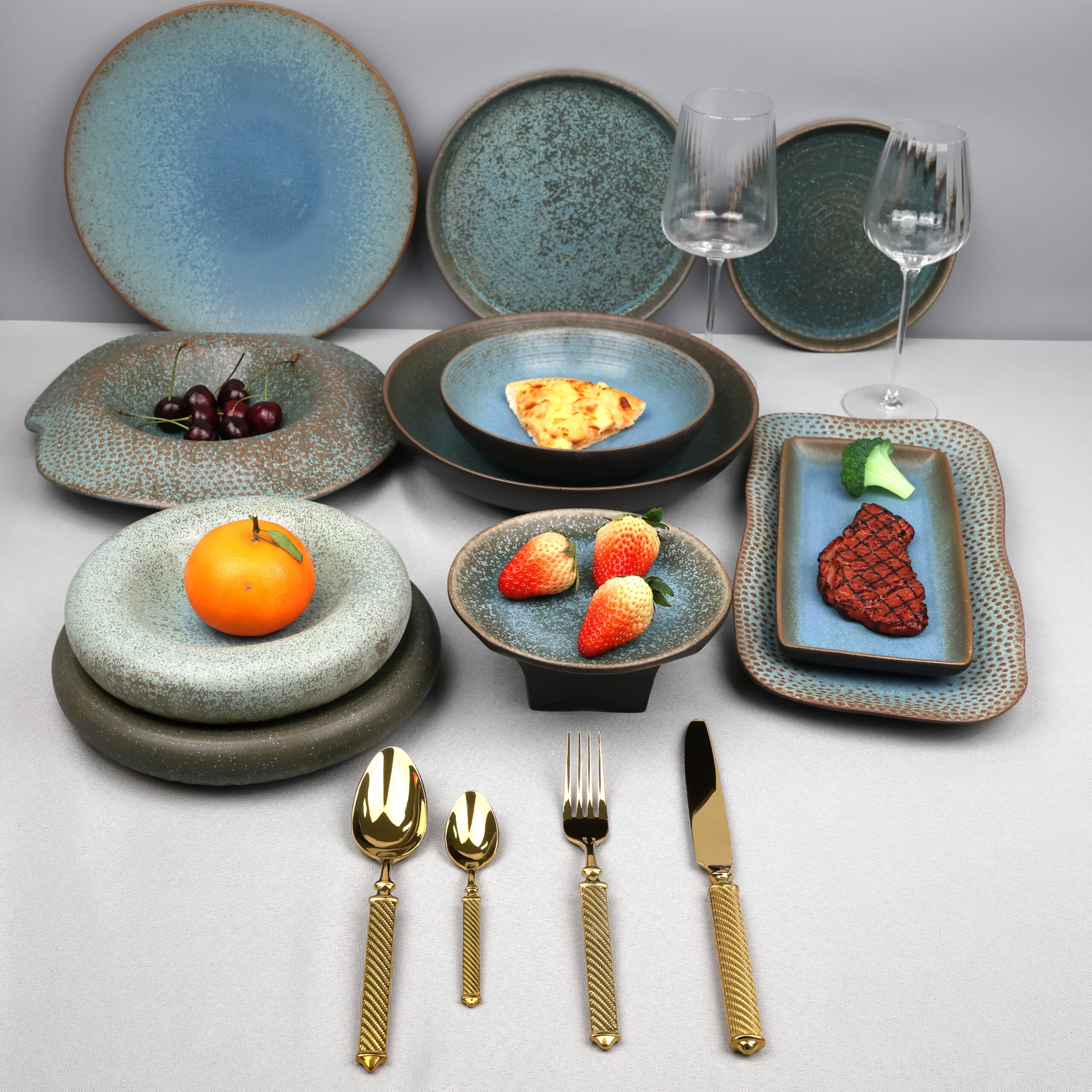
Stoneware | Casual, farm-to-table | Mid | High | Good | Rustic |
Melamine | High-volume casual, buffets | Budget | Medium | Limited | Functional |
Earthenware | Specialty or themed concepts | Mid-low | Medium | Poor | Artisanal |
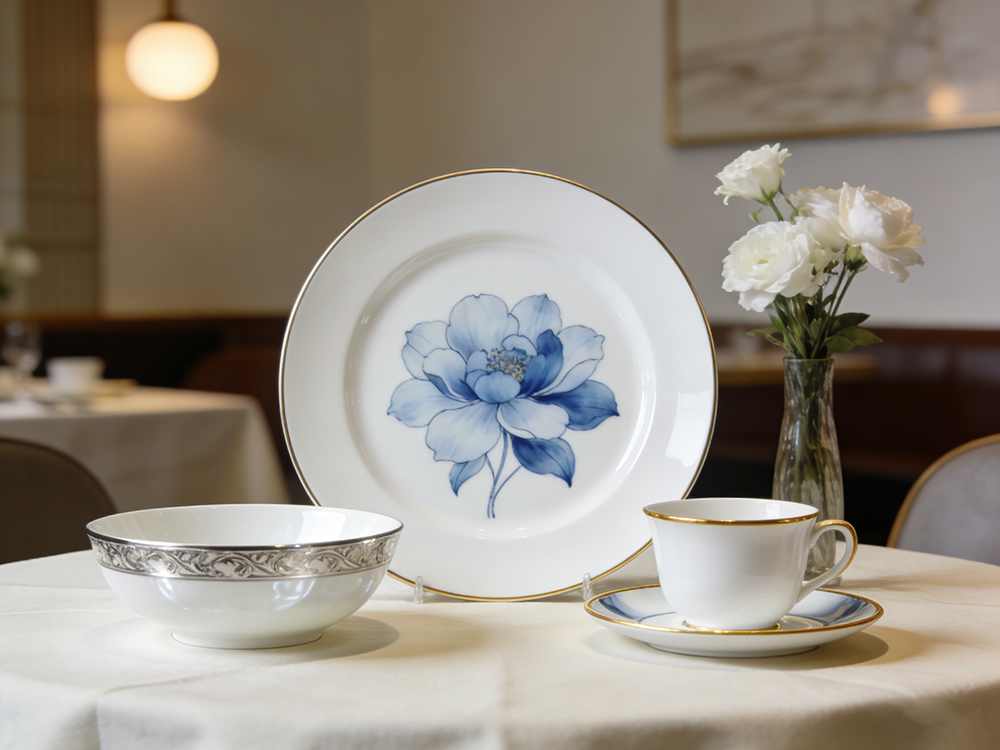
Bone China
At first glance, bone china looks like the kind of plate you’d be afraid to touch. It is thin and pale, almost too polished. Then the service starts, and it surprises people.
Bone china is made by blending bone ash into fine clay before firing. What that does in practical terms is give the plate strength without bulk.
You pick it up expecting weight, and it is lighter than your porcelain stack. That moment matters a lot more in the restaurants than you think.
In a busy dinner service, servers balance four plates at once, move fast, clear tables, and restack racks. A lighter plate means less strain over a long shift and more control when hands are full.
Managers notice another thing over time. When plates meet at the rim during stacking, bone china forgives those knocks better than its delicate look suggests. That’s why bone china is used where service is controlled and presentation matters.
Fine dining rooms, tasting menus, and hotel restaurants are where the plates circulate daily, but chaos isn’t the norm. These kitchens care more about consistency, calm pacing, and tableware that still looks right after years of use. Bone china works there as long as the team isn’t pushing extreme volume or rushing every movement.
When Bone China Is the Right Choice
- Fine dining restaurants with controlled service flow
- Five-star hotel dining rooms and luxury hospitality settings
- Tasting menus, prix fixe, and multi-course formats
- Special event venues where presentation matters
- Restaurants serving 60 to 200 covers per service
- Concepts where staff are trained to handle dinnerware with care
Porcelain
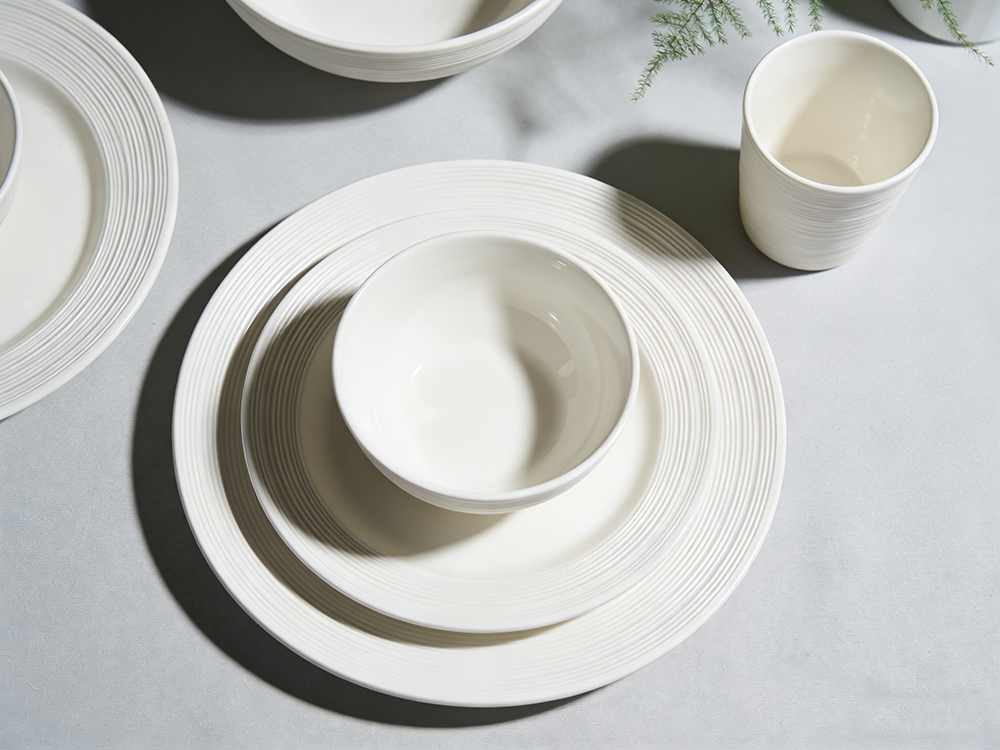
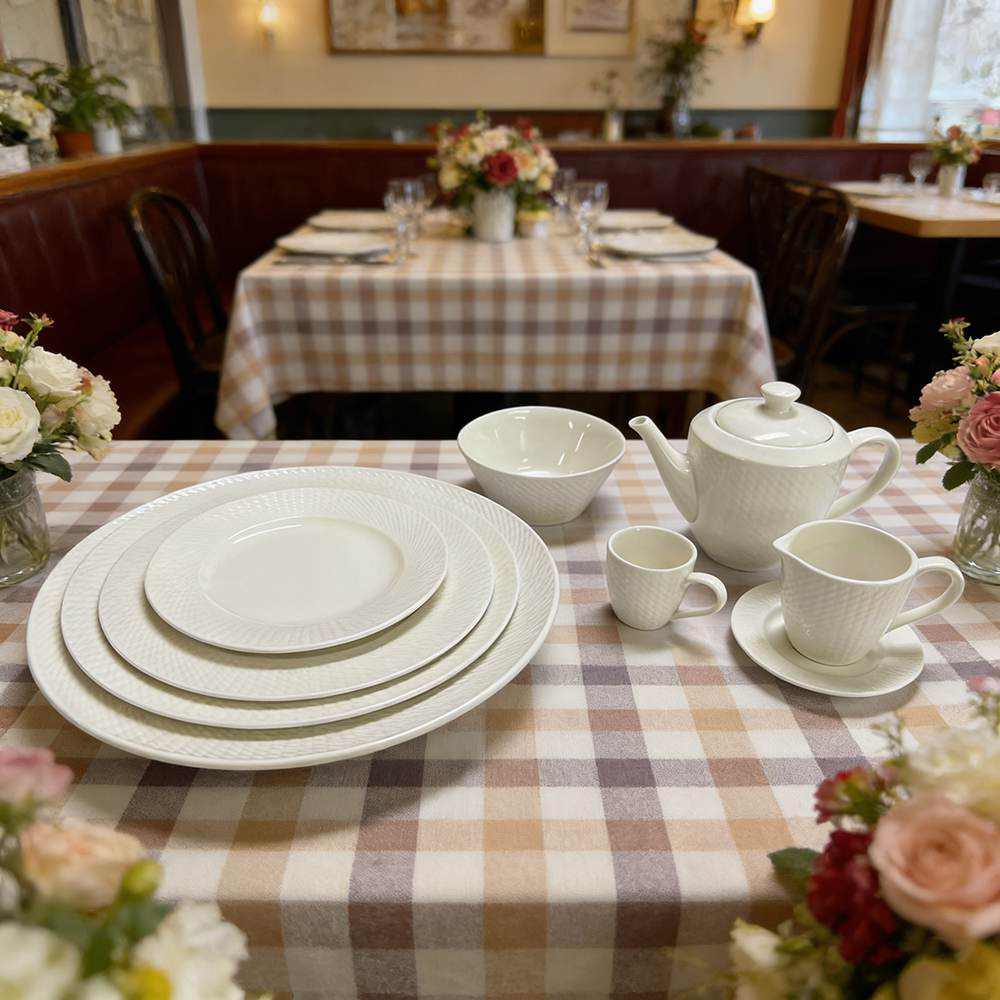
Porcelain is the dinnerware that many restaurant teams trust without thinking twice. It comes from finely refined clay fired at very high heat, which creates a dense, smooth surface that stays bright and clean through years of service. That firing process is what gives porcelain its crisp white look and reliable strength.
In daily restaurant use, porcelain proves itself by staying low-maintenance. It’s easy to handle all the way from the prep to the dishwasher without needing special handling.
Chefs appreciate how food colors stand out clearly against the surface, and managers appreciate that porcelain is easy to reorder and match when pieces need expanding.
Porcelain also adapts well as menus evolve. You can change plating styles, portion sizes, or visual direction without changing materials. The plate stays neutral while the food does the talking.
The main drawback shows up at the rim. The edges are so thin that they chip during rush stacking or clearing. Even so, porcelain remains the most widely used ceramic in professional kitchens because it performs consistently across concepts, volumes, and service styles.
When Porcelain Is the Right Choice
- Upscale, casual, and contemporary dining concepts
- Restaurants serving 120 to 300 covers per service
- Operations with rotating staff or fast-paced service
- Kitchens that value consistency over delicate handling
- Concepts that refresh plating or menu styles regularly
- Restaurant looking for a balance between durability and cost
- Dining rooms that prefer a clean, modern presentation
Stoneware
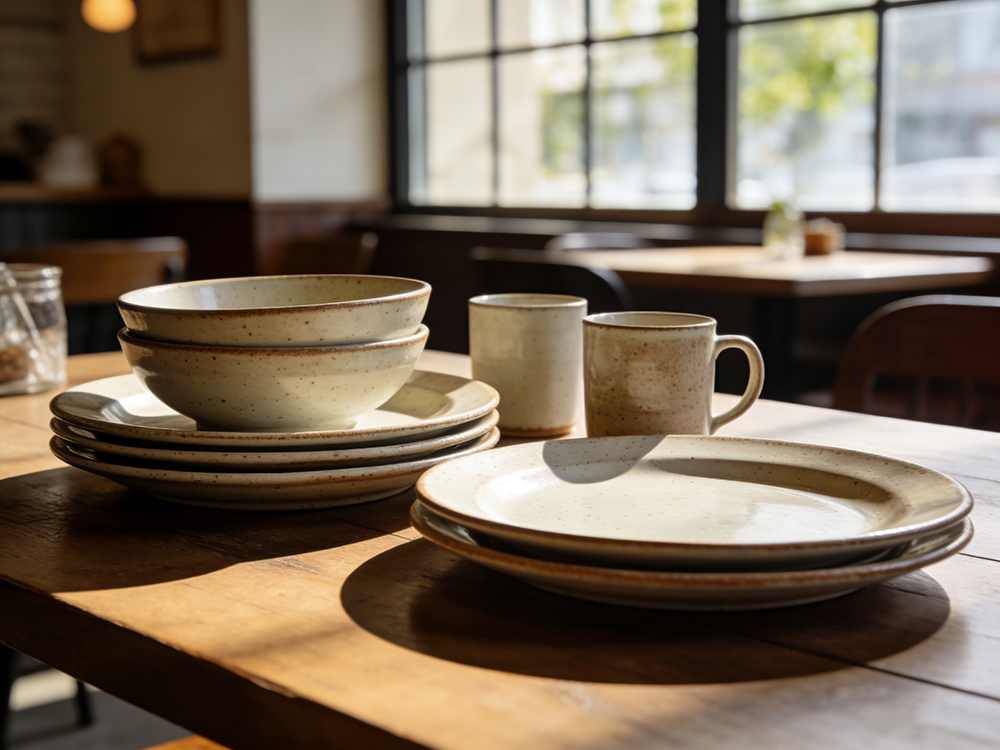
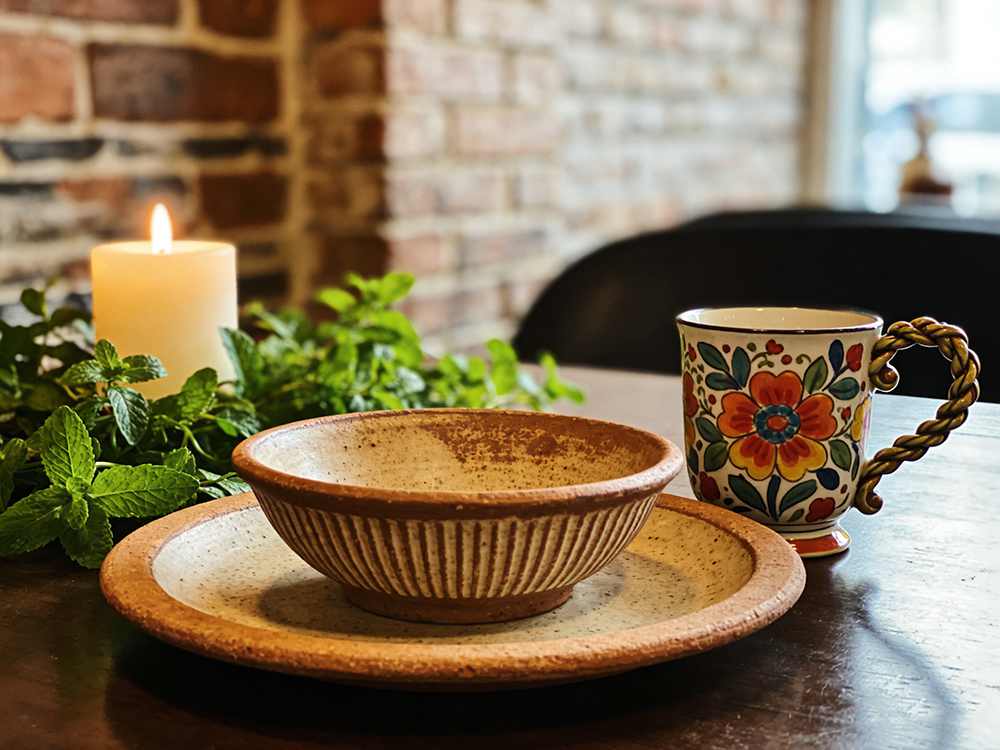
Stoneware starts with natural clay mixed with sand minerals. That’s why the plates feel thicker and more substantial.
When you lift a stoneware plate, the weight is noticeable in a good way. It feels steady and grounded. The surface usually isn’t perfectly uniform either. You’ll see gentle texture, soft color changes, or reactive glazes that give each piece its own character.
In restaurant settings, stoneware fits places where mood matters as much as durability. Farm-to-table dining rooms, neighborhood bistros, and regional kitchens lean towards it because it feels relaxed and intentional.
Guests register it the moment the plate hits the table.
Even before the food, the plate sets expectations. For chefs, that warmth works well with shared dishes, rustic plating, and menus built around comfort and familiarity.
Operationally, stoneware handles daily service well, but it does not enjoy sudden temperature changes or aggressive disc cycles.
When Stoneware Is the Right Choice
- Casual dining rooms and farm-to-table restaurants
- Concepts centred on regional, artisanal, or seasonal cooking
- Menus built around shared plates and relaxed presentation
- Dining rooms serving around 80 to 200 covers per service
- Brands that lean into texture, warmth, and visual depth
- Teams comfortable with natural variation between pieces
- Kitchens with the steady handling and controlled dishwashing routines
Melamine
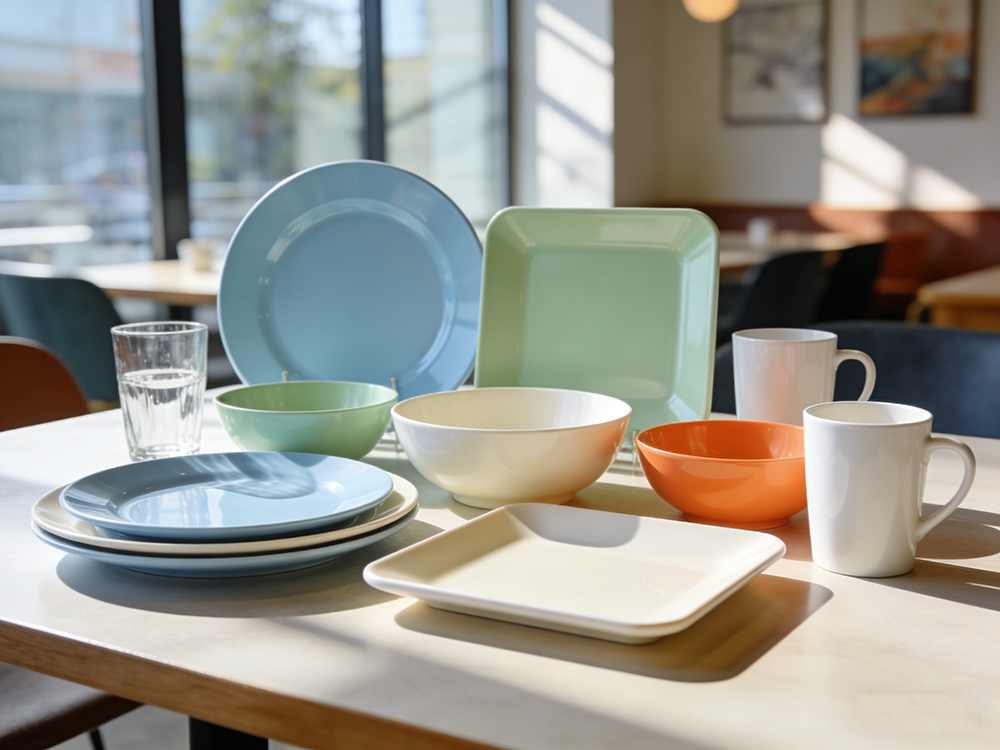
Melamine isn’t ceramic. It’s a molded resin built for restaurants where speed, volume, and break resistance matter most.
Pick up a melamine plate, and it feels light. Drop it, and it stays intact. That’s why it is commonly used in buffets, family dining rooms, cafeterias, food courts, and outdoor seating.
Staff can stack, clear, and reset tables quickly while managers deal with fewer losses and simpler replacement planning.
That durability does come with boundaries, though.
Melamine isn’t built for extreme heat or long contact with very hot, acidic foods. Scratches also matter. Once the surface wears down, food safety becomes part of the conversation, so regular checks and timely replacements are very important.
From a guest’s point of view, melamine feels practical, not polished. That works perfectly well in places where value and efficiency lead the experience, but it feels out of place in dining rooms aiming for a premium setting.
Many operators use melamine on purpose, choosing it for areas where durability matters most and presentation matters less.
When Melamine Is the Right Choice
- High volume restaurants serving 300+ covers per service
- Buffets, cafeterias, self-service, and fast casual set-ups
- Family dining and value-focused brands
- Outdoor patios and poolside service
- Restaurant operations where speed and break-resistance matter daily
- Restaurants with frequent staff turnover
Earthenware and Specialty Ceramics
Earthenware pieces feel handmade, textured, and rooted in tradition. Pick one up and you feel the clay. The weight is uneven. The surface shows natural variation and texture. That’s exactly why some restaurants reach for it.
In the right setting, earthenware adds authenticity.
Think regional cuisine, cultural concepts, or chef-led spaces where the table is part of the narrative. Guests expect plates that feel personal and imperfect.
A handmade bowl under a rustic pasta or a traditional stew makes the experience feel grounded and intentional.
From an operational standpoint, earthenware asks for restraint. It fires at lower temperatures, which leaves the dinnerware more porous and sensitive to heat. Sudden temperature changes cause cracking, and dishwashers, especially the commercial ones, shorten their lifespan.
Staining and moisture absorption also become concerns if glazing isn’t done correctly. In busy kitchens, breakage adds up quickly. Because of this reason, many restaurants don’t rely on earthenware for full service. Instead, use it selectively.
Accent plate and signature dishes or special sections of the menu can make good use of earthenware. When used with care, it builds a strong identity for your restaurant.
But when pushed too far, it drives replacement costs and operational frustration. So, earthenware only works best when creating a restaurant narrative matters more to you than operational efficiency.
When Earthenware Is the Right Choice
- Cultural or regional cuisine concepts
- Chef-driven or tasting-focused restaurants
- Speciality dishes that benefit from handmade presentation
- Low-volume dining rooms with controlled service
- Restaurants building a strong artisanal narrative
- Accent pieces rather than full dinnerware sets
- Operations willing to manage higher breakage risk
Dinnerware Durability and Performance for Restaurants
When restaurant owners talk about durability, they rarely mean theory. They mean the dishwasher is running all day. Racks are getting stacked all the time, and plates are knocking together during table clears.
Let’s take a look at how common commercial-grade dinnerware materials perform under that kind of kitchen pressure.
Commercial Dishwasher Performance
Commercial dishwashers are aggressive by design. They have high heat, alkaline detergents, and strong spray pressure.
NSF/ANSI standards establish a baseline for chemical resistance, heat tolerance, and food safety. But certification alone doesn’t predict how long dinnerware will hold its appearance or resist chipping under daily commercial use.
So what does this mean in practice?
- Bone china holds its finish and structure through the highest number of washing cycles, which makes it a strong option for dinnerware for fine dining restaurants with controlled handling.
- Porcelain performs reliably through years of daily washing, which is why it dominates best restaurant dinnerwarelists across upscale and casual concepts.
- Stoneware lasts well, but glazes may soften or dull earlier, especially under aggressive wash cycles.
- Melamine does not degrade structurally, but surface wear becomes a food safety issue long before ceramics fail.
- Earthenware shows rapid wear and is rarely suited for full commercial dishwashing.
Chip, Fracture, and Handling Stress
Most restaurant damage happens at the rims. Here’s how each dinnerware material performs.
- Bone china shows the lowest rim-chip rates when staff are trained and service volume is controlled.
- Porcelain chips more frequently at thin edges, but it is easy to replace.
- Stoneware handles everyday knocks well because of its weight and thickness, but it cracks with sudden temperature changes.
- Melamine does not chip, but scratches quickly build up.
- Earthenware is the most fragile of the group. It cracks and breaks easily under daily service pressure, which is why most restaurants use it sparingly for accent pieces rather than full table settings.
For operators weighing durability against practicality, porcelain remains the safest all-rounder. It handles volume, stays consistent, and you can customize porcelain dinnerware to fit both service demands and brand identity.
Temperature and Thermal Shock Tolerance
Temperature stress is constant from hot food, cold prep surfaces, and fast plating.
- Bone china and porcelain withstand temperature changes well.
- Stoneware requires gentler transitions.
- Melamine should never be used for very hot foods.
- Earthenware struggles with heat consistency.
For sudden temperature changes, porcelain is the safest dinnerware for restaurants.
Which Dinnerware Material Fits Your Restaurant Best?
The right dinnerware material should support service, protect margins, and match what guests expect when food reaches their table. Here’s how to choose the best material for restaurant dinnerware.
Start With Your Restaurant Concept
Begin by looking at the type of dining experience you offer. A calm, fine dining room with paced service places very different demands on plates than a fast-moving casual space.
Bone china is better suited to controlled premium environments. Porcelain suits restaurants that balance volume with presentation.
Stoneware adds warmth and character, while melamine exists for speed and impact resistance. But earthenware works only when storytelling matters more than operational efficiency.
Consider Your Service Volume
How busy your dining room gets plays a major role in material choice.
A restaurant serving under 100 covers can manage lighter, more refined dinnerware. Once service passes 150 to 250 covers, durability and predictability start to matter more than elegance alone.
Buffet and self-service formats remove most ceramics from the equation and favor materials built to withstand constant handling.
Check the Supplier’s Reliability
Before placing a bulk order, look beyond the plate. Verify FDA and NSF compliance. Ask for samples and test them in your own kitchen. Confirm batch consistency and re-order timelines.
Restaurants run into trouble when they skip this step and end up with mismatched replacements months later. If you want support with sampling, certifications, and long-term reorder planning, Brett helps restaurants source custom dinnerware.
Use a Layered Approach
Many successful operators do not rely on a single material. Porcelain handles everyday service. Bone china comes out for private dining. Stoneware draws attention to signature dishes, while melamine takes care of high-risk areas. This mix controls costs, protects your brand, and gives you room to grow.
FAQs
How long does restaurant dinnerware typically last in commercial use?
In busy kitchens, plates are usually replaced because of chipping or surface wear, not because they fully break. How long they last depends on volume, handling, and material, with many restaurants planning gradual replacements every one to three years.
Does NSF certification guarantee long-lasting dinnerware?
NSF certification confirms food safety and chemical resistance, but it does not predict visual wear or chipping rates. Long-term performance depends on material quality, glaze durability, staff handling, and how aggressively commercial dishwashers are used.
Is it better to stick to one dinnerware material or mix them?
Most restaurants find that mixing materials works better than choosing just one. Using porcelain for everyday service and reserving bone china or stoneware for standout dishes lets you control costs, protect durability, and elevate presentation where it matters most.
Wrap Up
So, which dinnerware actually makes sense for your restaurant?
The answer depends less on trends and more on how your dining room runs every day. Bone china brings refinement and long-term value where service is common and controlled.
Porcelain keeps busy kitchen steady with consistency and flexibility. Stoneware has warmth and personality, and melamine protects speed and volume, while earthenware is best suited to building a cultural restaurant narrative.
The best setups match materials to service conditions and not just looks. Many restaurants even mix materials to get the best of both worlds, and if you’re ready to review samples, plan a bulk order, or want guidance that fits your restaurant operations, reach out to Brett to source custom dinnerware built for your restaurant needs.