
Most hotel procurement teams know to ask about lead when specifying ceramic dinnerware. However, far fewer are aware to ask questions about cadmium because it is regulated along with lead in most food-contact material standards and can be found in the hotel’s most frequently ordered items for presentation: colored rim banding, hand-painted patterns and reactive glaze finishes. The purpose of this guide is to explain why a cadmium-free specification is important, where the risk is really focused, and what to ask to be written before ordering bulk decorated dinnerware.
This is a companion piece to our lead-free ceramic dinnerware guide, which covers the regulation of lead in greater detail. Cadmium is a related but different issue, and this guide is devoted to the application and verification of cadmium.
Cadmium is a heavy metal subject to regulation in food-contact ceramics along with lead, and it is only an issue in warm colour ceramics, such as reds, oranges and yellows, hand-painted, decal-printed and reactive glazes. Hotels ordering dinnerware for their operations should ask for third-party lab test reports that verify dinnerware lead- and cadmium-free status by using the ASTM C738 or ISO 6486 testing methodology; the two reports are equivalent, and many dinnerware suppliers do not report on cadmium when not specifically requested.
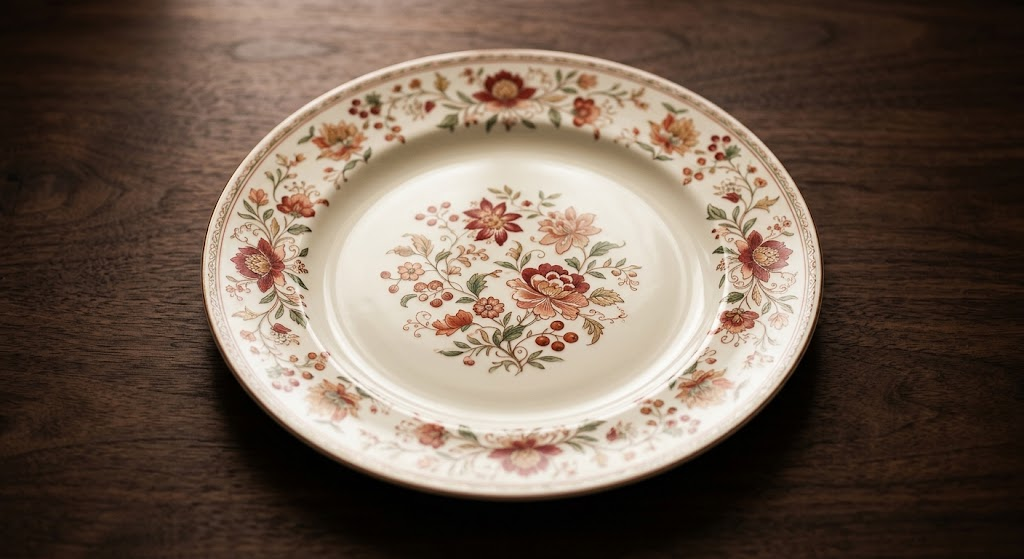
Table of Contents
Why Cadmium Matters for Colored and Decorated Dinnerware
Cadmium-based pigments are one of the most intense and stable ranges of warm colours for ceramic decoration, especially reds, oranges and yellows. It’s therefore popular for hand-painted florals, accent and gold-and-color rim banding, and branded pieces, all things that hotels will order because they’re best suited for fine dining presentation and branded corporate events. This is a concern only with colored and decorated dinnerware, and not with regular, plain white service ware used in a hotel.
This trend has been demonstrated in the real world time and time again. Independent lab tests of ceramic dinnerware have shown higher concentrations of cadmium in yellow and warm-toned glazes than in white or pastel glazes, and have also found that cadmium and lead are sometimes used together in the same glazes and decorations, because they are often used in the same glaze and pigment formulas.
The Regulatory Landscape Buyers Should Know
The FDA has established different action levels for various types of ceramic dinnerware for leaching of lead and cadmium, depending on the type of dinnerware, flatware, small hollowware such as mugs and cups, and large hollowware such as bowls and serving dishes. A blanket statement by the supplier that a product line meets compliance does not indicate which categories and thresholds it covered.
Food-contact ceramics are classified in the EU under EC No. 1935/2004 with some specific directives on ceramics, and the EU Green Claims Directive is emerging as a measure of sustainability and compliance in hotel group supplier questionnaires. Our hotel tableware procurement checklist includes how to incorporate these regulatory requirements in a supplier RFQ, not take it for granted.
In other markets, outside the US and EU, regulations are significantly different, and some markets are much less regulated regarding heavy metal leaching from ceramics as compared to either. This can be important for hotel groups with operations in more than one nation, where a supplier’s compliance with a standard in their home country doesn’t necessarily guarantee compliance with the standard your property must meet to be compliant with your brand’s tagline of sustainable or health-conscious positioning.

How to Write Cadmium Compliance Into Your RFQ
When a supplier is asked in a RFQ for “food safe” or “lead-free” dinnerware, there is plenty of scope for a narrow answer by the supplier. Explicitly, by name, in the written request, say what you want: lead-free and cadmium-free dinnerware. Explicitly state: lead-free and cadmium-free dinnerware in the written request, and request the test report to be sent with the sample shipment and not after a confirmed order.
Specify what decorations (and colors) you would like, rather than just the material. Barely a request for “porcelain dinnerware” will get you back test data on any old plain white piece from the standard catalog from the supplier, and that’s no indication of what you’re looking for to buy.
It is important to ask suppliers to state which specific piece types were included in the test, as flatware, cups, bowls, and service pieces are usually tested separately and a “dinner plate” test result does not necessarily mean a matching cup or bowl, or that a dinner plate is the same as a lunch one or a breakfast one. If your order includes several different types of pieces in the same decorated line, please ask for test coverage for each piece in particular.
Why Cadmium Compliance Affects More Than Regulatory Risk
In addition to the legal liability of using non-compliant dinnerware, cadmium compliance is now a part of the brand and guest trust equation. A guest could be invited to a hotel that markets its sustainability or health-and-wellness offerings, for instance, and then discover that the tableware presented to him is not up to scratch after he arrives at the restaurant, with the results of this discovery rapidly emerging in the hospitality trade press and on online review forums.
Larger hotel groups and franchise operations have insurance and liability considerations as well, and for that, their corporate risk management teams are looking for documented material compliance as part of a property’s normal operating procedures, not as a nice-to-have. It is much easier to provide this type of audit when there is third-party test documentation on file for each line of tableware, as opposed to trying to find it after a company risk review raises a red flag.
What to Ask Suppliers For, in Writing
The top request is a third-party lab test report and not a manufacturer’s own claim. The test should be from a reputable independent testing laboratory like SGS, Eurofins, Bureau Veritas, or Intertek and should be based on an actual testing method; preferred testing methods are ASTM C738 and ISO 6486 (both for ceramic leaching of lead and cadmium).
Verify it is a test report for your particular product category and decoration. There is nothing in a lab report for a plain white dinner plate to confirm the presence of a hand-painted or a rim-banded version of the same shape, as the pigments and glazes applied for decoration are precisely where cadmium risk is located. If you order several decorated SKUs, please ask to have each color/pattern tested, not just one sample.
When a supplier doesn’t provide test results in line with their written “lead and cadmium free” statement, it’s important that it is taken seriously, not lightly. Failure to comply is a real risk factor for a supplier, not just a quality issue, and it’s a good reason to exclude a supplier in the vetting process.

Which Decoration Techniques Carry the Most Risk
Not all decoration techniques involve the same amount of cadmium exposure. The hand-painted and reactive glaze finishes are also likely to be more variable than machine-applied decal printing, where the pigment is formulated in a batch which is then applied to the surface. Gold and silver rim banding alone is not generally as risky as colored body pigments used under or over metal trim, so a white plate with gold rim banding is not as risky as a white plate with gold rim banding and colored body pigments.
Application of the pattern by underglaze technique (under the glaze) is generally safer than onglaze or overglaze decoration (above the glaze), since onglaze and overglaze decoration sit closer to the food-contact surface and may release lead and cadmium compounds into the food. When comparing two similar shaped and decorated items, this is a question to ask your supplier directly.
Firing temperature can also affect the stability of the pigment. A well-fired piece, fired to the proper kiln temperature for the glaze and pigment mixture, will bind cadmium and lead oxides more effectively into the ceramic body, minimizing the ability to leach out into normal use. A piece fired at a temperature that is too low for the piece to be decorated with may appear the same visually, but may also have a significantly greater leaching risk, which is why a visual inspection is no substitute for lab testing.
Common Cadmium Specification Mistakes
The most frequent error is a general “food safe” or “lead-free” statement that implies “cadmium free. In most frameworks, the two are regulated jointly, but tested and reported as separate entities, and a supplier could be lead-compliant but not talk about cadmium.
The second is to only take a plain white sample from a supplier’s catalogue and to assume that this applies to all coloured or decorated variants in the same product line. The third is to take a manufacturer’s own test result as an alternative to the lab report from an independent laboratory. The fourth one is not describing which types of pieces they were testing, because it’s not as if they’re all flatware, or cups, or bowls, and a single test result would apply to all of them.
How Brett Supports Cadmium-Safe Decorated Dinnerware
Brett’s decorated dinnerware is produced to comply with SGS, TÜV, and EC No. 1935/2004 food safety and heavy metal standards across all of our custom decoration techniques. From a new fine dining concept to verifying an existing line with a coloured pattern or confirming before reordering, our team can offer third-party test documentation for your specific product and colour combination, instead of a generic claim from a pattern catalog.
For more on our full range of decoration and customization options, see our custom dinnerware page, and for material-level sourcing questions on bone china specifically, our bone china buying guide covers a related transparency issue, bone ash percentage, worth checking alongside cadmium compliance for decorated bone china pieces.

Frequently Asked Questions
Is cadmium a concern for all ceramic dinnerware, or just colored pieces?
Cadmium risk tends to focus on colored and decorated items, especially red, orange, and yellow where the color is warm-toned, applied in hand-painted patterns and/or in reactive glazes. Typical white dinnerware has virtually no risk of cadmium.
What testing standard should hotels ask suppliers to reference?
Test reports should be from an independent laboratory that could be one of the most widely used standards for ceramic leaching of lead and cadmium, such as ASTM C738 or ISO 6486.
Is a "lead-free" claim applicable to cadmium?
Not automatically. Lead and cadmium are regulated as a unit in most food contact frameworks, but are measured and reported separately, allowing the supplier to be lead compliant without being cadmium compliant.
Does underglaze or onglaze decoration pose less risk of cadmium exposure?
Generally, underglaze decoration is a safer method than onglaze or overglaze decoration, since it is applied and fired beneath the final glaze layer, placing the pigment further from the food-contact surface.
How does EU Green Claims Directive relate to cadmium specification?
It is becoming a more formal part of supplier vetting because it is becoming part of supplier questionnaires in hotel group suppliers. Documentary proof of heavy metal compliance – notably cadmium – is becoming a more formal part of supplier vetting than a few years ago.
Is there any risk of cadmium leaching due to the firing temperature?
Yes. Placing the items in the kiln at the right temperature will lock the pigment compounds into the glaze more securely, which will lessen leaching. Visual inspection is not enough to replace lab testing because the piece may be exactly the same in appearance, but have been fired at a temperature that is too low.
Should hotel groups require cadmium documentation for insurance or corporate compliance purposes?
For hotel companies that promote sustainability or health positioning, there is growing demand for documented material compliance from many corporate risk management teams. Test documentation on file is easier to handle for an audit than looking for it after it’s been identified as missing.
Conclusion
When specifying which dinnerware is lead- and cadmium-free for a hotel property, it is not just a “food safe” statement, but a specific mention of cadmium – especially for any hand-painted or colored dinnerware or any glazed dinnerware that is reactive. Cadmium risk is a real-world worry, not just a theoretical compliance tick box, as it focuses on the types of decoration hotels have the most to order for the presentation of a brand.
The solution is simple: insist that third-party lab test reports be issued that reference ASTM C738 or ISO 6486, and that they relate to your specific product in question (not a plain white one), and treat a supplier’s inability to provide this documentation as a real red flag rather than an oversight. This is the same documentation-first standard that has to be applied to any material specification, including cadmium.
Ceramic dinnerware is decorated and coloured that complies with Cadmium and Lead standards with documentation available on request, certified by SGS, TUV, EC No.1935/2004, FDA, LFGB, ISO 9001, BSCI and Sedex. If you have any questions about compliance documentation for your next order of dinnerware, please contact our team on Cbhoreca or WhatsApp at +86 13535413512.