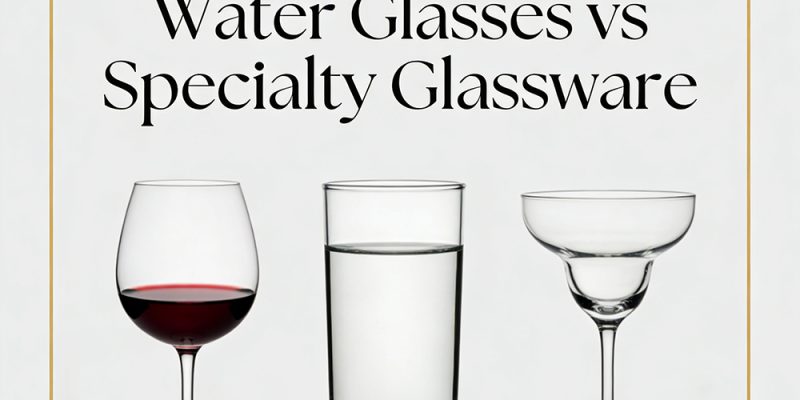
How many wine glasses should your restaurant actually own? How many water glasses are enough? When do specialty glasses make sense, and when do they become excess inventory?
These questions come up once menus are finalized and budgets are set, yet they rarely have clear answers. Restaurant glassware selection depends on the type of operation you’re running.
This guide looks at glassware by concept, helping you decide what to carry, how much to order, and where simplicity works better than excess.
Choosing Glassware by Restaurant Concept
Every restaurant concept places different demands on glassware. The mix that works for a tasting-menu dining room won’t suit a neighborhood bistro or a bar-led space.
Before considering quantities or styles, it helps to anchor decisions in how the restaurant is designed to operate. Take a look at different restaurant concepts and their glassware approach.
Fine Dining
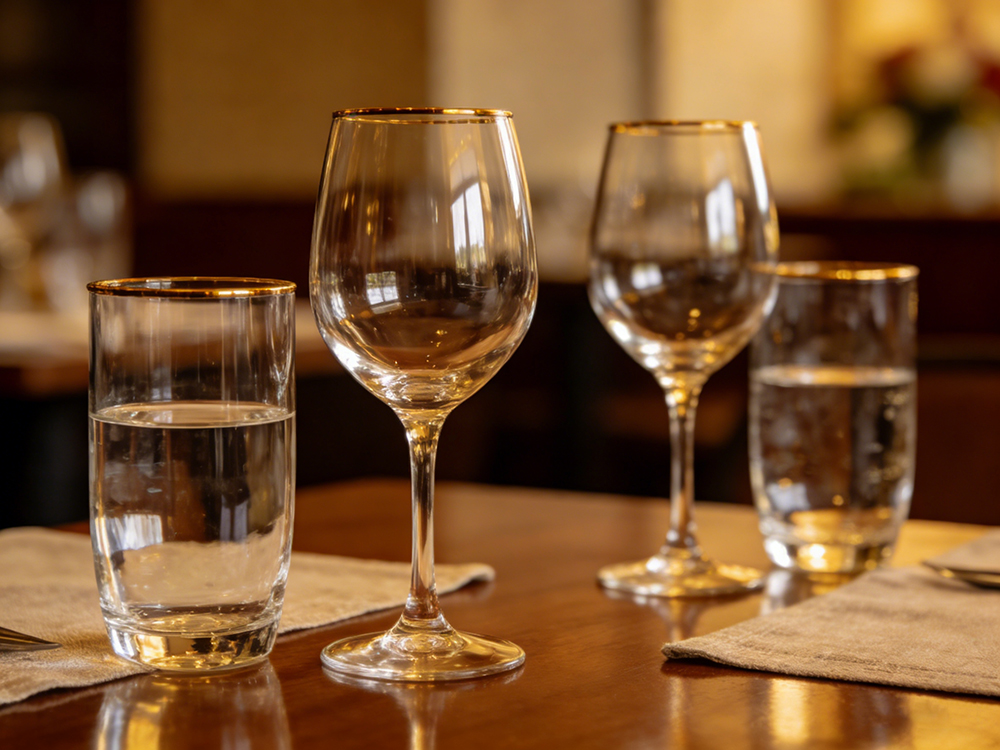
Fine dining tables are planned in advance, but they aren’t static. Glassware varies with the wines served.
Red and white wines are served in separate glasses. Sparkling or dessert wines are added only when they appear on the menu.
In a French-inspired dining room or a tasting-menu restaurant, this setup is normal. Multiple glasses per seat are expected.
Stemmed designs, clear glass, and consistent sizing sit alongside formal plates and linens without competing for space. The result is a table that stays organized even as service progresses, with each glass added for a clear reason rather than decoration.
Casual Dining
Casual dining prioritizes comfort and consistency. Meals are shorter, menus are simpler, and beverage programs are usually limited. Glassware follows that approach.
A neighborhood bistro or casual Italian restaurant typically relies on water tumblers and one practical wine glass. Wine selection exists, but it doesn’t drive table setup. Durability and ease of handling matter more than variety.
Fine-Casual (Contemporary Casual)
In fine-casual restaurants, stemless wine glasses are common because they feel more relaxed and are easier to handle. Water glasses lean toward heavier, design-forward styles rather than formal goblets.
Cocktail glassware shows up selectively, usually tied to a short but intentional drink list. The goal isn’t variety for its own sake. It’s flexibility. Enough range to support the menu, without building a table setup that feels overplanned or precious.
Bar/Lounge
Bars and lounges revolve around beverages. Glassware becomes a defining element of the concept.
A craft cocktail bar or upscale lounge requires a wide range of specialty glasses, rocks, coupes, highballs, and martini glasses, often in larger quantities than wine or water glasses.
Variety reflects the drink menu rather than a fixed table structure.
Fast-Casual
Fast-casual restaurants are built around speed and volume. Glassware stays simple. Multi-purpose tumblers handle most beverages, and wine or specialty glasses only appear when they support the menu.
Choices here are shaped by how quickly tables turn, how easily glasses stack, and how well they hold up through constant use.
Wine Glasses: When to Use Them, How Many to Order, and What to Choose
Wine glasses create some of the biggest planning questions for restaurant buyers. This section helps operators decide whether wine deserves separate glass types, how many pieces are needed, and where simplification makes sense based on the concept.
Fine Dining Wine Strategy
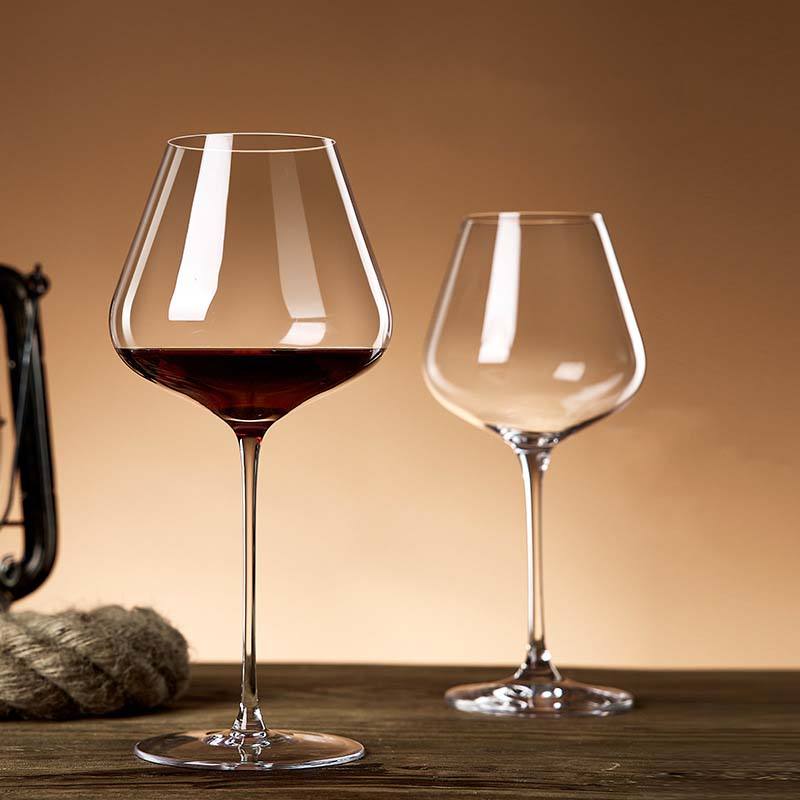
In fine dining, wine service carries weight, so separate glasses for red and white are part of the table from the start.
Red wine glasses typically hold 12-14 oz, while white wine glasses are slightly smaller, at 10-12 oz. If the menu calls for it, dessert wine glasses and champagne flutes round out the selection.
Dessert wine glasses usually hold 3-4 oz, and champagne flutes hold around 6-8 oz. For a 100-seat dining room, many operators plan to use an order factor between 1.5 and 2.0. That translates to roughly 300 red and white wine glasses combined before accounting for replacement needs.
Casual Dining Wine Strategy
In casual dining, wine plays a supporting role. It’s there for guests who want it, but it doesn’t shape the table.
Many operators keep things simple with a single all-purpose wine glass that works for both red and white wines. Others use a basic red-and-white pair with slightly thicker glass, prioritizing durability over variety.
A 1.0 to 1.25 ordering factor typically applies. For a 100-seat space, the total number of wine glasses needed is between 100 and 120 pieces, including a buffer. Pricing usually ranges from $3 to $6.
Fine-Casual Wine Strategy
Fine-casual concepts sit between formality and ease. Stemless wine glasses are common, though some programs retain traditional stems.
For a 100-seat space, an ordering factor between 1.25 and 1.5 is typical, which usually lands around 150 to 155 wine glasses once a replacement buffer is included.
This is also where design choices start to show. Colored glass, recycled materials, or distinctive shapes often fit the concept. Pricing generally sits in the $5 to $10 range per glass.
Bar/Lounge Wine Strategy
In bars and lounges, wine plays a secondary role. Ordering factors between 1.5 and 2.0 apply only when the wine is actively promoted. Otherwise, quantities stay limited and focused, scaled to the menu rather than seating alone.
Water Glasses: The Operational Backbone of the Table
Water glasses do more work than any other glass on the table. They’re set at every place, refilled often, and cycle through dishwashers continuously.
Most restaurants stock two to three times their seating capacity in water glasses. Matching their quality to the rest of the table keeps operations smooth and the setting cohesive.
Fine Dining Water Glasses
Fine dining settings typically use stemmed water goblets. Sizes usually range from 10-14 oz, providing capacity while maintaining formal proportions alongside wine glasses.
Materials lean toward crystal or high-quality clear glass, positioned to the right of the plate above the dinner knife.
Ordering factors range from 2.0 to 3.0.
For a 100-seat dining room, a mid-range estimate is about 250 water glasses. Costs typically range from $6 to $12 per glass, making water glasses a meaningful line item even before wine service begins.
Casual Dining Water Glasses
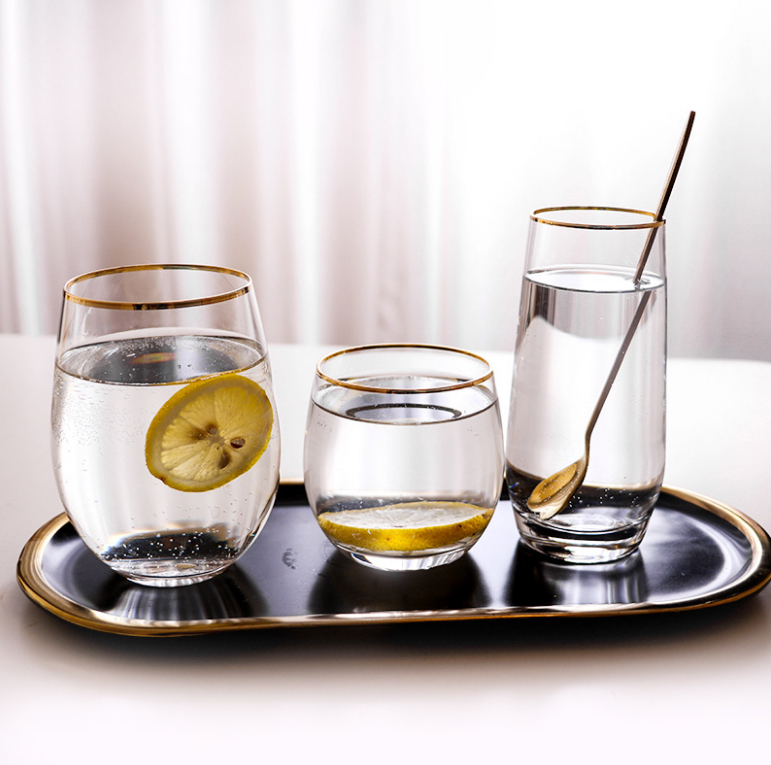
Casual restaurants favor straight-sided tumblers sized 12-16 oz. These glasses prioritize stability, stackability, and ease of refilling. Tempered commercial glass is common.
Ordering usually falls between a 2.0 and 2.5 multiple, so a 100-seat space ends up needing around 200 water glasses. Most land in the $2 to $4 range per glass.
Fine-Casual Water Glasses
Fine-casual concepts split the difference. Some use tumblers, others stemmed designs, depending on brand direction.
Most glasses fall in the 12-14 oz range. Ordering tends to follow casual dining patterns, around a 2.0-2.5 multiple, which puts totals near 200 pieces. Expect pricing around $3 to $6 per glass.
Bar and Lounge Water Glasses
In bars, water glasses play a secondary role and are often shared with highballs or simple tumblers. Ordering factors sit lower, around 1.5 to 2.0, scaled to beverage volume rather than seating alone.
Specialty Glassware: Where the Concept Gets Defined
Specialty glassware covers everything beyond standard wine and water service. Cocktail glasses, beer glasses, champagne flutes, dessert wine stems, and cordials all fall into this category.
These pieces exist for specific drinks, but they also carry the strongest link to a restaurant’s beverage identity. What appears on the bar or table helps define how drinks are presented and how much emphasis the menu places on beverage programs.
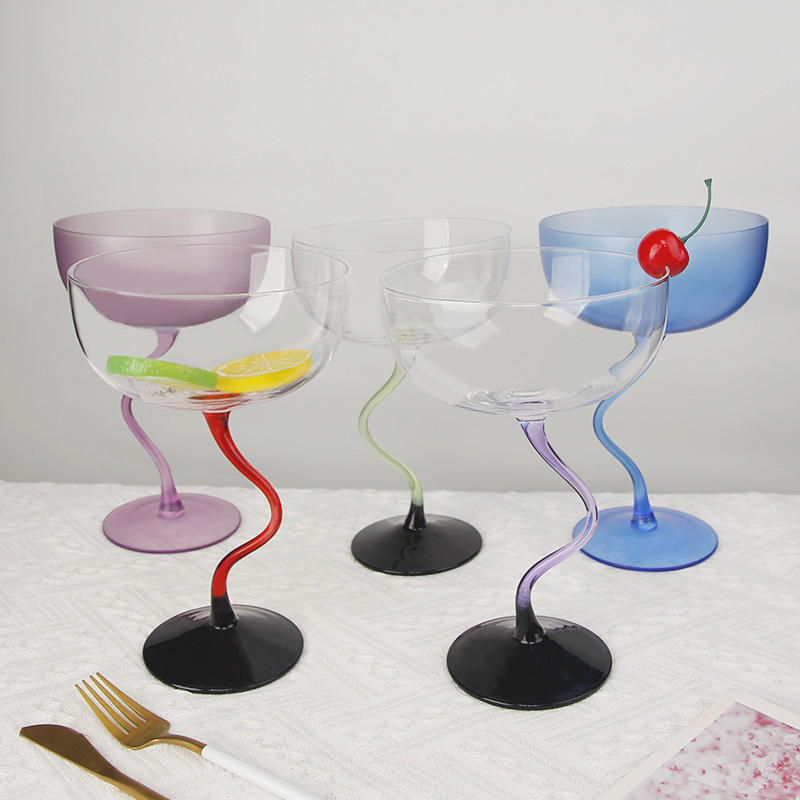
Fine Dining Specialty Glassware
In fine dining, specialty glasses are used selectively. Champagne flutes, typically 6-8 oz, are used when sparkling wine is on the menu.
Dessert wine glasses are small, at 3-4 oz, while cordials are closer to 1-2 oz for ports or liqueurs. Beer glasses only appear when beer receives the same attention as wine.
Most programs plan 0.25 to 0.5 pieces per seat, placing a 100-seat dining room near 40 specialty glasses. At $8 to $15 per glass, the focus stays on refinement and consistency rather than quantity.
Casual Dining Specialty Glassware
Casual restaurants keep things simpler. Pint glasses cover beer. Rocks and highballs handle cocktails if there’s a bar. Champagne and dessert wine glasses usually stay off the list because they don’t fit the way the menu is built.
Ordering typically ranges from 0.5 to 1.0 per seat, which puts a 100-seat restaurant at around 75 specialty glasses. Costs are easier to manage here, generally $3 to $8 per glass, and replacement planning stays straightforward.
Fine-Casual Specialty Glassware
Fine-casual concepts stretch a little further.
Craft cocktail glasses, such as rocks and coupes, or vintage-inspired styles often join the mix, alongside beer glasses tied to the menu. Champagne might appear only for special occasions rather than everyday service.
An average planning range of 1.1 per seat yields about 110 pieces for 100 seats. Pricing usually falls between $4 to $10 per glass. This is also where some operators introduce distinctive or branded glass designs to support the concept without carrying excessive inventory.
Bar and Lounge Specialty Glassware
Bars flip the equation entirely. Martini, rocks, highball, Collins, margarita, coupe, and shot glasses all play specific roles behind the bar. Volumes add up fast, often crossing 1,000 pieces when scaled to a 100-seat equivalent.
Glassware Selection by Concept: A Practical Strategy Framework
Once you’ve defined your concept and understood how wine, water, and specialty glassware function within it, the next step is turning that thinking into a working mix.
As an OEM/ODM partner, Brett coordinates glassware, dinnerware, and flatware from a single source, supporting custom designs, consistent quality, flexible quantities, and volume efficiencies, making long-term reorders and multi-location planning simpler for hospitality operators.
Core selection criteria to balance before ordering:
- Seating capacity and expected daily covers
- Role of beverages in the menu (primary, secondary, minimal)
- Table setting complexity (single glass vs. multiple per seat)
- Replacement tolerance and annual replenishment planning
- Coordination level with dinnerware and flatware
Take a look at this framework, which side-by-side compares the concepts and shows how quantities, materials, and budgets shift depending on how the restaurant operates.
The numbers below are planning ranges, not fixed rules. They represent realistic upper and lower limits that help operators avoid under- or over-ordering.
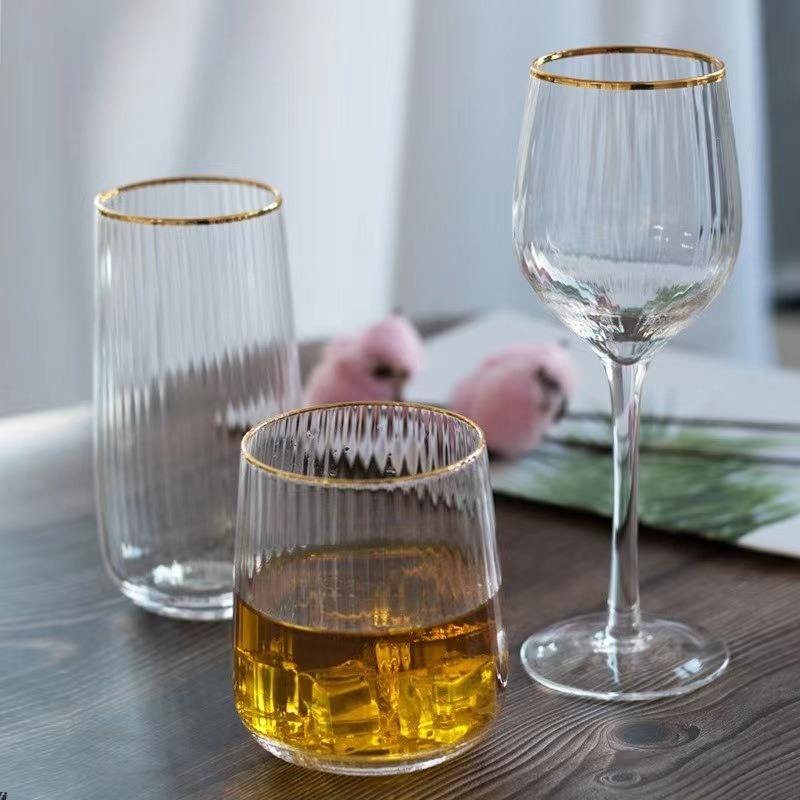
Fine Dining (100 seats)
A fine dining room carries the widest mix: separate red and white wine glasses, stemmed water goblets, and limited specialty pieces.
A typical total lands around 600 to 650 glasses, with higher per-piece costs and lower annual replacement rates. Dinnerware and flatware sit at the same quality tier, reinforcing a formal table.
Casual Dining (100 seats)
Casual concepts simplify. An all-purpose wine glass, durable water tumblers, and a small beer or cocktail set bring totals closer to 400 to 450 pieces. Costs stay controlled, and replacement planning accounts for higher turnover.
Fine-Casual (100 seats)
Fine-casual operations sit between the two. Stemless wine glasses, design-forward water glasses, and an expanded cocktail set typically total 500 to 560 pieces, balancing appearance with flexibility.
Bar/Lounge (50 seats)
Bars invert the model. Specialty glassware dominates, often exceeding 700 pieces, while water and wine play secondary roles. Glassware becomes the primary brand signal, influencing how drinks are perceived and how the bar’s character comes through.
Fast-Casual (50 seats)
Fast-casual programs stay lean. Multi-purpose tumblers and mugs usually keep totals under 200 pieces, with durability and storage efficiency driving decisions in high-turnover, counter-service environments with limited table resets.
Wrapping Up
Planning glassware by concept only works when the pieces actually come together on the table. Brett helps translate that planning into coordinated glassware, dinnerware, and flatware designed to work as a system.
From initial quantities to long-term reorders, Brett supports restaurants, hotels, and multi-unit brands with table solutions built around how they operate and serve. Contact Brett today to review your glassware needs and build a table setup that stays consistent over time.