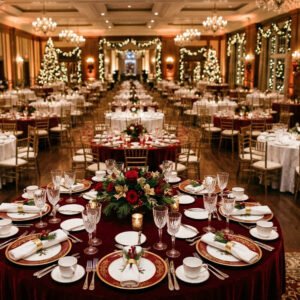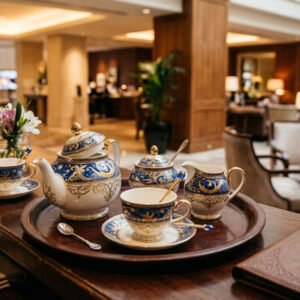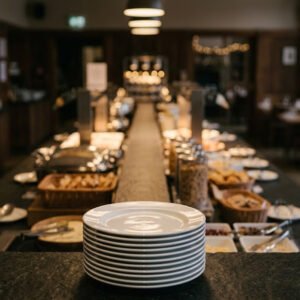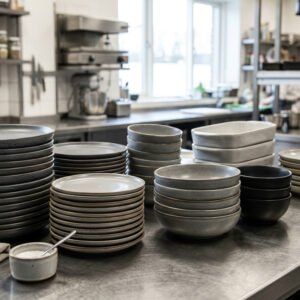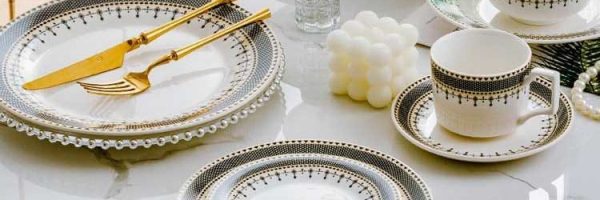

A formal event sets a tone the moment guests take their seats. Lighting, menu choices, and room design all contribute, but the table stays in front of guests from the first course through dessert.
Formal dining dinnerware becomes part of that experience rather than a background element. Its material, weight, and finish communicate the level of care behind the event.
Picture a plated dinner at a black-tie reception, award ceremony, or charity event. Guests remain seated for hours, courses arrive at a measured pace, and the tableware is present throughout. This guide explains how to select luxury event dinnerware for these settings, focusing on material selection and quality standards trusted by experienced planners and venues.
Why Material Quality Matters When Choosing Formal Dining Dinnerware for Upscale Events
At formal dinners, charity galas, and premium receptions, guests spend most of their time seated at the table. Every course arrives on the same plates, and the table stays in view throughout the formal event.
That’s usually where questions about formal dining dinnerware start. Not how decorative it is, but how it holds up once service is underway.
In upscale settings such as a private formal party, corporate reception, or anniversary celebration dinner, the dinnerware needs to feel right as soon as a guest picks it up. The weight, the balance, and the way the surface looks under event lighting all contribute to that impression.
This is why planners working with fine dining plates prefer bone china dinnerware. It feels refined without feeling delicate, and it stays consistent across large guest counts.
Material choice also plays into pricing.
Venues using luxury event dinnerware can support higher package rates because the table feels considered and complete.
Buyers usually look for clear quality markers as well, including food safety approval, commercial durability testing, and consistent manufacturing standards, so replacements later on don’t become a problem.
Material Grades and Quality Standards for Formal Dining Dinnerware
Different dinnerware materials perform differently under repeated service, close inspection, and formal presentation. Choosing formal dining dinnerware for upscale events starts with understanding material quality.
Material Grades to Know When Selecting Luxury Event Dinnerware
When buyers compare luxury event dinnerware, they’re really comparing how different materials feel, age, and hold up over time. Each option has its place, but not all belong in formal settings. Let’s take a look at the material grades to consider.
Bone China (Premium Standard)
Bone china dinnerware is the reference point for luxury formal dining plates. Plates stay thin without feeling fragile due to the bone ash in the clay.
When guests handle the same plate style across multiple courses, bone china keeps its balance and finish.
The color also matters in upscale events, so bone china’s soft white tone works comfortably under both warm and neutral lighting, which is why bone china shows up so often at black-tie receptions, award ceremonies, and formal anniversary celebrations.
Vitrified Porcelain (High-Quality Alternative)
Vitrified porcelain skips the bone ash but makes up for it with high firing temperatures that improve strength and reduce water absorption.
In upscale events with larger guest counts, this material performs consistently through frequent washing and stacking.
Many venues choose premium porcelain dinnerware sets in vitrified porcelain when they want a crisp white look and dependable durability at a lower cost than bone china.
Stoneware (Context-Specific Use)
Stoneware has a thicker body and a heavier feel, which works best for contemporary or chef-led concepts where a grounded, tactile plate fits the presentation.
In traditional formal dining, though, its weight and surface texture usually feel out of place. For most upscale events, stoneware is better treated as a design choice rather than a standard option.
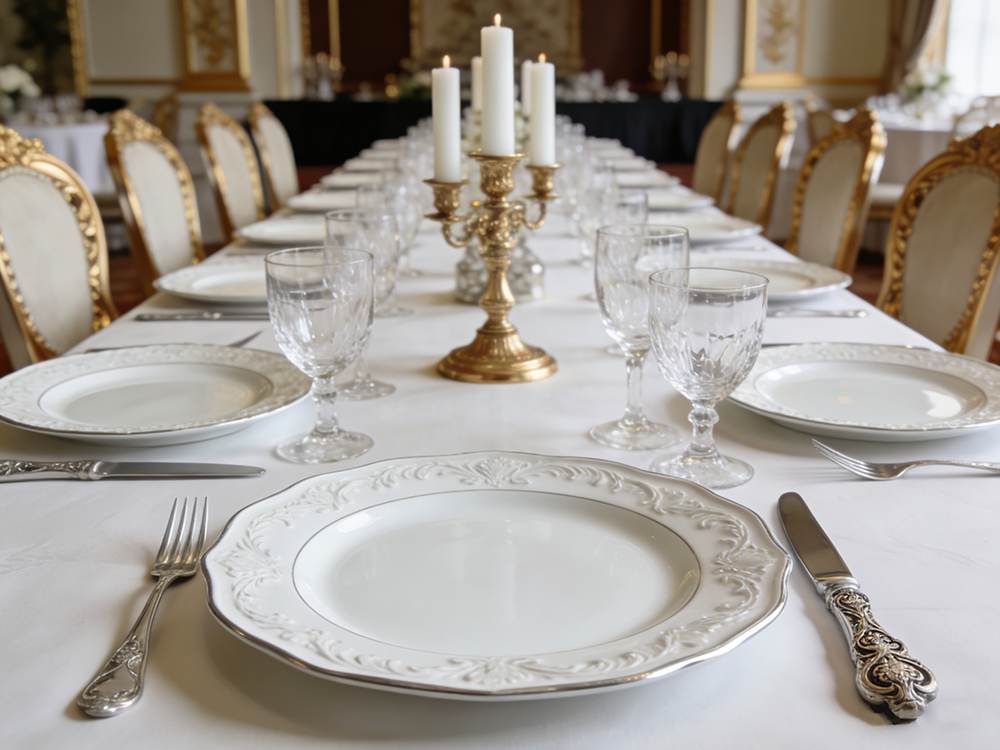
Quality Certification Standards Buyers Should Check
Before you commit to luxury event dinnerware, look into a few certifications.
- FDA Food Safety Compliance:Confirms lead and cadmium levels remain within safe limits for food service.
- NSF/ANSI 2 Certification:Verifies commercial durability through repeated dishwasher and handling tests.
- ISO 9001 Manufacturing Standards:Indicates consistent production and quality control across batches.
Material Grades and What to Specify
Beyond material type, upscale tableware is produced in different grades that affect thickness, consistency, and visual uniformity over time.
- Grade A:High density, refined thickness, minimal defects
- Grade B:Acceptable for standard service, moderate consistency
- Grade C:Budget-focused, not recommended for formal events
The table below sums up the practical differences in materials buyers should know.
Material | Bone China | Vitrified Porcelain | Stoneware |
Ash Content | 45 to 50% | None | None |
Strength | 9/10 | 8/10 | 6-7/10 |
Lifespan | 5-10 years | 4-7 years | 3-5 years |
Formal Perception | Highest | High | Moderate |
Cost | High | Mid to high | Low |
Aesthetic Options for Formal Dining Dinnerware at Upscale Events
Once material is decided, aesthetics are where most buyers stop and second-guess themselves. Color, finish, and detailing all influence how formal dining dinnerware feels during a long seated event. The goal is to choose something that feels right even after three hours, four courses, and a room full of guests.
White Formal Dining Dinnerware for Luxury Event Tables
White remains the default for luxury event dinnerware, and for a good reason. It works with every cuisine, every menu change, and every lighting setup. That said, not all whites behave the same.
Bright white can feel sharp under strong lighting. Off-white and eggshell tones are easier on the eye and feel more considered without drawing attention to themselves.
These tones work especially well for formal receptions, charity events, and anniversary celebrations where photography and lighting play an important role. For buyers looking for longevity and aesthetics, this is usually the safest decision.
Cream and Ivory Luxury Formal Dining Plates
Cream and ivory sit just slightly warmer than white, which is why they feel comfortable in formal settings. These tones work especially well in evening events and pair naturally with metallic accents. For luxury formal dining plates, cream is chosen by venues that want refinement without formality.
Light Neutral Upscale Tableware for Contemporary Events
Soft gray, champagne, and pale taupe have become common in upscale tableware for modern formal events. They look clean and intentional when the rest of the room supports them.
The trade-off is longevity. These colors tend to reflect current design preferences, which means they require more confidence in long-term use.
Custom Color Luxury Event Dinnerware
Custom colors in luxury event dinnerware can work well for hotels and venues with stable branding. The appeal is obvious, but so is the risk.
If branding evolves, the dinnerware may no longer fit. This option works best when visual identity is unlikely to change.
Finish and Details on High-End Event Plates
Gloss finishes remain the standard for high-end event plates because they feel familiar and formal. Matte finishes can work in controlled, contemporary settings but need careful handling. Gold or platinum rims still represent formality when used sparingly, especially on white or cream bases.
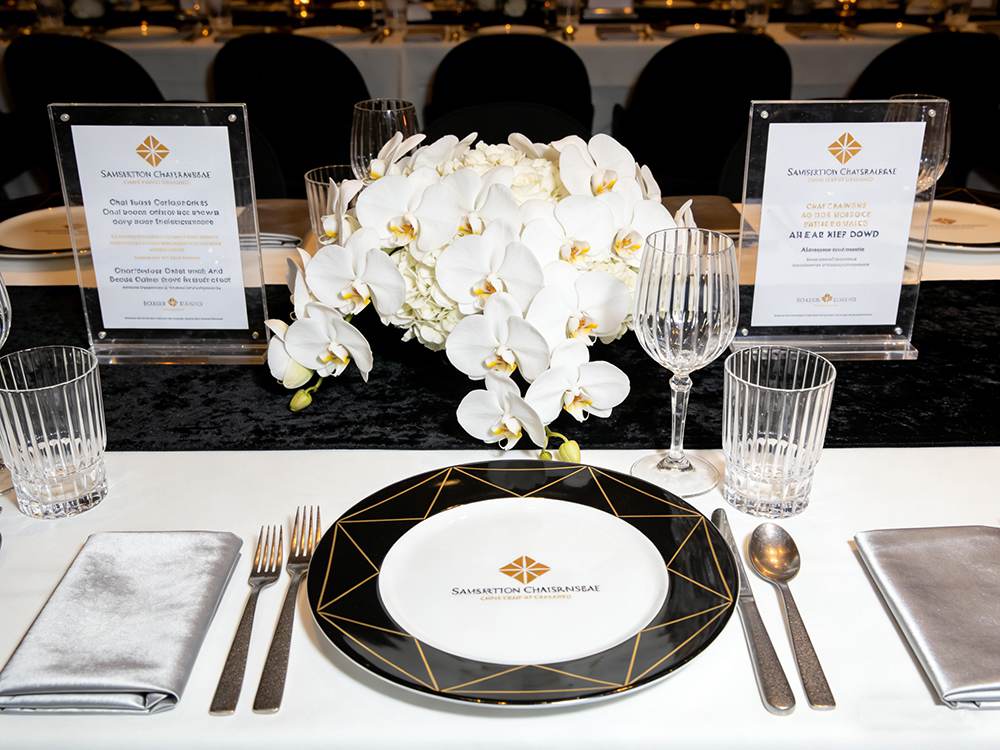
Certification Requirements and Quality Assurance for Formal Dining Dinnerware
Certifications are not about prestige when you’re buying formal dining dinnerware for upscale events. They’re about predictability.
You want to know how the plates perform after months of service. Take a look at the certifications and what they usually mean.
What Certifications Tell You About Luxury Event Dinnerware
Most luxury event dinnerware looks good when it’s new. You only notice the difference over time. Certifications exist to answer practical questions upfront.
Can the plates handle repeated dishwasher cycles without surface wear? Do they stay consistent in color and thickness across production runs? Are they safe for food and service at scale?
When a supplier can show test results, you’re buying based on evidence.
Why Upscale Tableware Needs Heat and Durability Testing
In upscale tableware programs, plates move quickly from the kitchen to the table. Hot entrees go straight onto the surface, often back-to-back across multiple courses. That’s why thermal tolerance matters.
Plates that aren’t tested for heat tend to show problems later, not immediately.
Rim strength matters for the same reason. Chips usually happen during clearing and stacking, not during plating. Certified testing helps reduce those issues over time.
What to Request When Sourcing Premium Dinnerware
Ask suppliers for FDA food safety test results, NSF/ANSI 2 certification for commercial use, and ISO documentation that shows how consistency is controlled during manufacturing.
You should also ask about defect rates and heat limits in plain numbers. Getting clear answers upfront indicates that the supplier works with professional venues.
How to Evaluate High-End Event Plate Suppliers
High-end suppliers share documentation, reference venues, and answer questions directly. If responses feel vague or overly polished, that’s a sign to slow down. In formal dining, confidence comes from knowing what you’re buying will stay consistent, event after event.
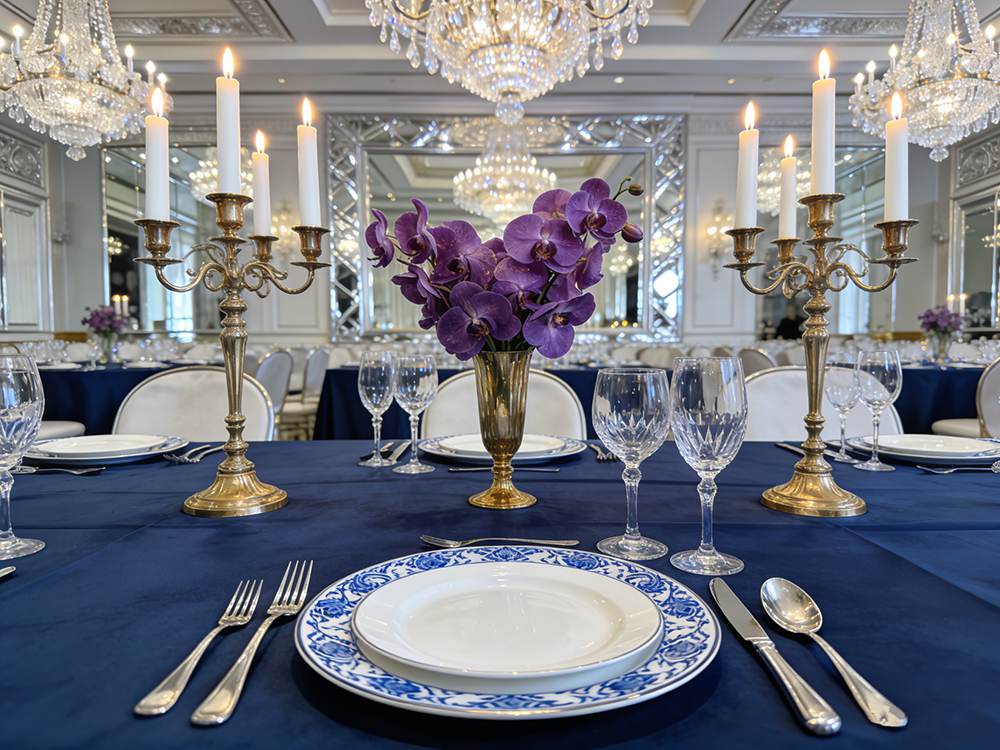
Brand Perception and Guest Experience Impact on Formal Dining
When guests sit down at a formal event, two things start working together right away. The first is what they see. The second is what they feel once they interact with the table. Formal dining dinnerware plays a role in both, even when guests never mention it.
How Dinnerware Influences Guest Perception
The first thing guests register is visual consistency.
Plates that match across the table signal planning and care. The second thing they notice is how the plate feels in their hand. Weight, balance, and surface finish all contribute to whether the table feels premium or ordinary.
This is why luxury event dinnerware, especially bone china, tends to be perceived as higher quality even before food is tasted.
Guests may not analyze dinnerware, but they react to it. The first cue is weight. A well-balanced plate feels deliberate rather than flimsy. The second cue is surface quality. Smooth finishes feel cleaner and more refined during a long seated dinner.
With upscale tableware, the absence of visible flaws also matters. When every place setting looks the same, the table feels intentional.
Why Formal Dining Dinnerware Sets Expectations
Before the first course arrives, the table already sets a standard.
The first signal is how well the dinnerware works with linens, glassware, and service style. The second signal is how it photographs.
Fine dining plates that look consistent under lighting and in images support the idea that the event was carefully planned. That expectation naturally carries over to how guests judge the food.
Price Perception and Luxury Event Dinnerware
Pricing works the same way. The first difference is visibility.
At standard events, plates fade into the background. At premium events, they support the experience. At luxury events, luxury event dinnerware becomes part of what guests remember.
For example, at award ceremonies and charity events, the table often appears in photography, press coverage, and shared images long after the event ends.
The second difference is confidence. When the table looks complete, higher pricing feels justified without explanation.
Why Complete Premium Dinnerware Sets Matter
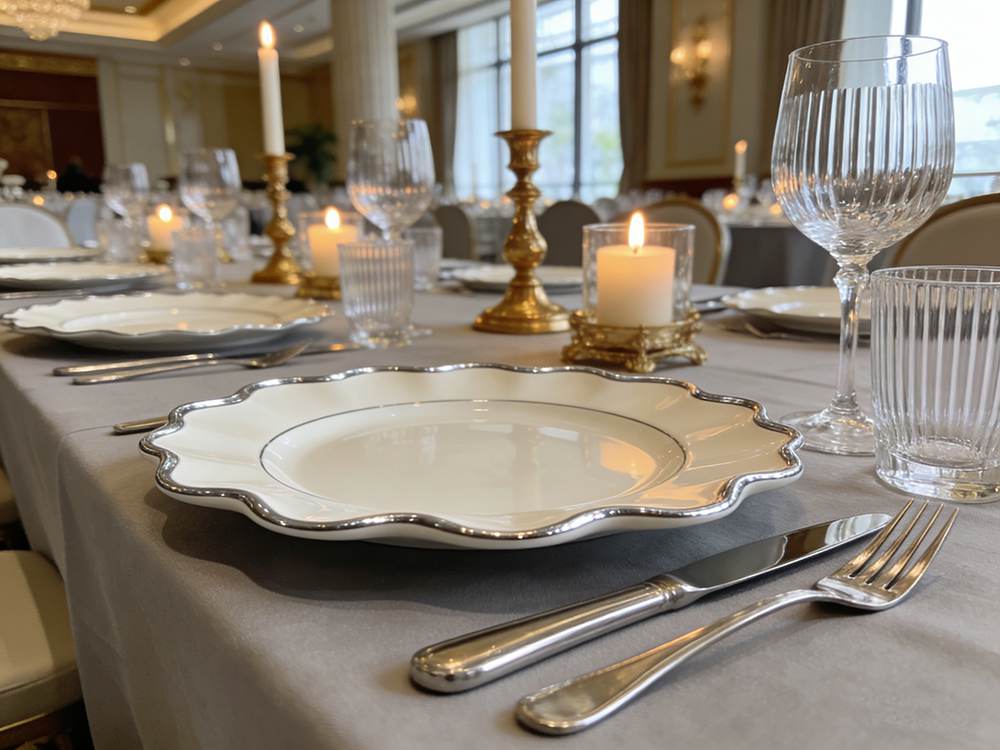
A formal table works best when everything feels connected. Premium dinnerware sets bring visual consistency while making service easier for venues. When plates, chargers, glassware, and flatware are designed to work together, the table feels settled, intentional, and straightforward to manage throughout the event.
Vendor Selection and Implementation for Formal Dining Dinnerware
Once materials and aesthetics are locked in, the supplier decision shapes how smoothly everything runs afterward. With formal dining dinnerware, this step affects consistency, replacements, and whether the table stays cohesive as events repeat.
You’re not just deciding where the plates come from. You’re deciding how manageable they’ll be to use, replace, and maintain over time. This is where short-term savings meet long-term practicality.
That’s why the type of supplier you choose matters just as much as the material itself. It becomes especially important for venues hosting recurring events such as annual award dinners, charity galas, or milestone anniversary celebrations.
- Direct manufacturers usually suit large-volume orders and tighter budgets. They offer competitive pricing, but higher minimums, longer lead times, and limited flexibility can make reorders and small replacements more difficult later.
- Specialized hospitality suppliers focus on how dinnerware is actually used in formal service. They plan for replacements, matching future batches, and coordinating table elements rather than one-off deliveries.
Supplier evaluation basics should include FDA food safety documentation, NSF/ANSI 2 and ISO-certified production, Grade A material specifications, experience with formal events, and clear replacement or warranty policies. The right supplier keeps the table consistent today and manageable years down the line.
Wrap Up
For formal events, the table works best when material quality and coordination are handled as one decision. Brett supports venues with complete formal dining dinnerware solutions, covering material selection, coordinated table pieces, and long-term consistency. Reach out to Brett to plan a table setup that stays cohesive, performs reliably, and works across events over time.