
You’ve seen reactive glaze dinnerware and thought, this looks incredible, but is it practical?
Maybe it caught your attention while sourcing plates for a new restaurant. Or a chef suggested it because it feels more handcrafted and unique. And now you’re wondering what that actually means once the plates actually go through service, dishwashing, and daily handling.
Reactive glaze dinnerware sits between design and operations. It adds personality to the table, but it also raises questions about consistency, food safety, and long-term care.
This guide discusses everything, so you can decide whether reactive glaze fits your kitchen, workflow, service style, and guest expectations beyond just visual appeal.
What Is Reactive Glaze Dinnerware?
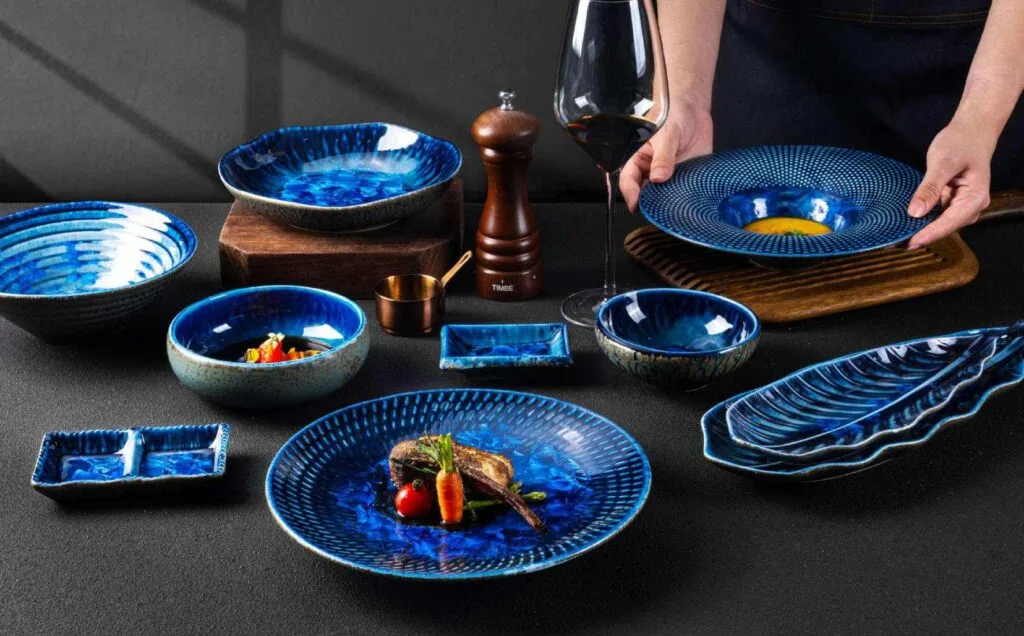
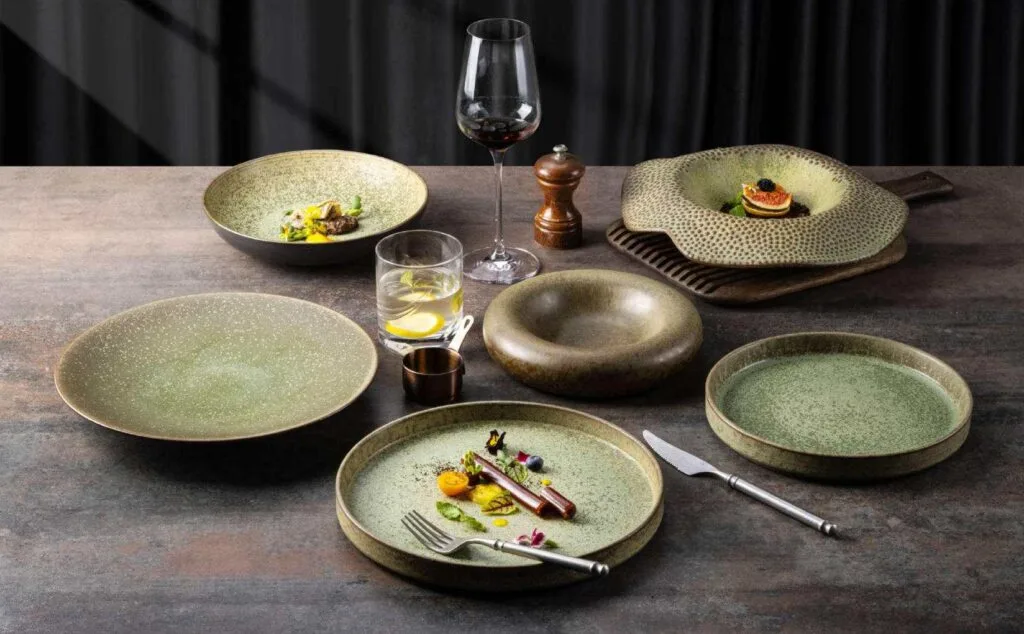
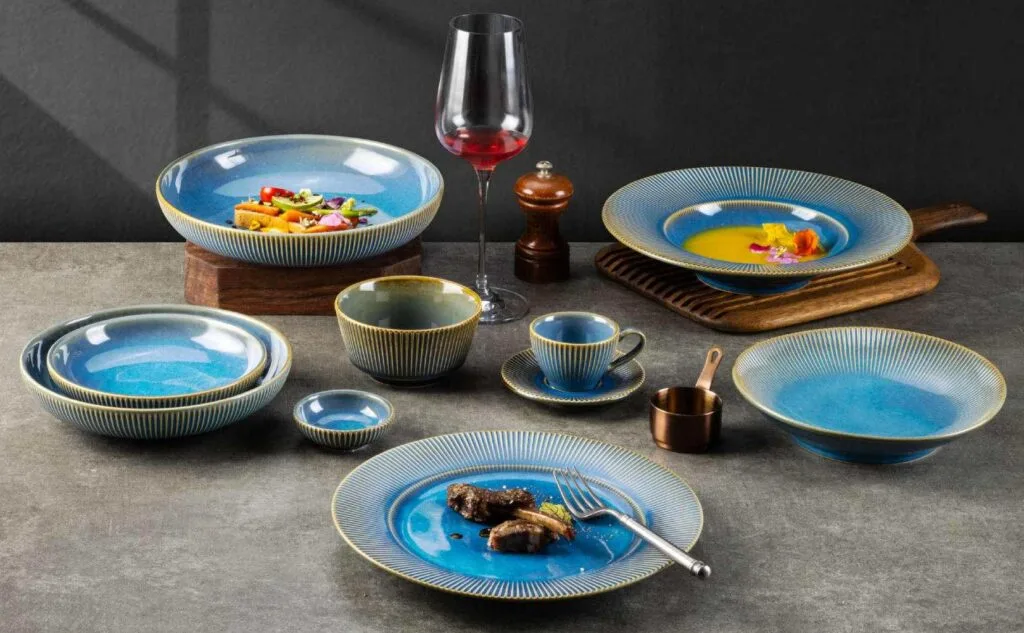
Reactive glaze dinnerware is the kind of tableware that makes people lean in for a second look. At first glance, it feels handcrafted. Look closer, and you’ll notice flowing colors, soft breaks in the glaze, and subtly changing tone that make each plate feel a little different from the next.
That’s the “reactive” part.
The glaze changes while it’s firing, which creates movement instead of a flat, uniform finish.
In a restaurant or hotel dining room, you line plates for service and realize none of them look copied and pasted. They still belong together, but they don’t feel mass-produced. That’s exactly why so many hotel operators choose reactive glaze dinnerware when they want warmth and personality without losing consistency on the table.
There’s also a practical side.
Reactive glaze dinnerware isn’t fragile art pottery. It’s designed for regular service, washing, and everyday use. You get visual depth without committing to fully handmade pieces that are hard to replace later.
For chef-driven concepts, boutique hotels, and restaurants that care about presentation, this balance matches aesthetics and stands out.
Manufacturing Process
The base starts like most ceramic dinnerware, usually porcelain or stoneware. The difference comes in glazing.
Special mineral-rich glazes are applied in layers, then fired at high temperatures. Inside the kiln, heat causes those minerals to react, which creates the color variation you see in patterns.
Good manufacturers control this very carefully so the plates take on a cohesive feel while still feeling naturally unique.
Reactive Glaze Aesthetics and Design Appeal
Reactive glaze dinnerware brings character to the table in a way standard finishes never do. Each piece develops its look inside the kiln, where heat and minerals interact in unpredictable but controlled ways.
For restaurants and hotels, this means plates feel curated rather than uniform. It’s a design choice that supports atmosphere, storytelling, and presentation without needing extra styling on the table.
Why Reactive Glaze Feels Handcrafted
Reactive glaze pottery starts to feel close to hand-painted dinnerware. Even when produced in controlled batches, each piece carries a slight variation. That variation is what catches your guests’ eyes.
In artisan dinnerware restaurants, plates don’t blend into the background. They improve food presentation and make the table feel intentional. Dishes arrive looking thoughtful rather than staged, which matters when experience and presentation support pricing.
How It Elevates Food Presentation
Reactive glaze dinnerware frames food in a softer, more organic way.
Uneven light reflection makes sauces look richer, more textured, and more defined. Colorful ingredients stand out without needing overly styled plating.
Chefs like it because the plate adds character without competing with the dish. For operators, these unique dinnerware designs create an atmosphere without relying on decor alone.
Safety, Finish, and Long-Term Appeal
Design still needs to perform.
Reputable manufacturers use food-safe glazes that fully seal the surface during firing. When done correctly, ceramic glaze food safety isn’t a concern, even in professional kitchens.
The key is proper sourcing and artisan dinnerware care.
Reactive finishes are meant to celebrate variation, not inconsistency. With an experienced dinnerware supplier, you get plates that feel expressive, durable, and suited to hospitality service rather than purely decorative use.
Critical Considerations for Food Safety
Reactive glaze dinnerware looks artistic, but in restaurants and hotels, safety always comes first. The reassuring part is that reactive glaze can be food safe when it’s made for hospitality use.
Everything depends on formulation, firing, and testing.
During proper firing, the glaze melts and bonds to the ceramic body, creating a sealed surface that doesn’t interact with food. Problems usually only appear with decorative-only pieces made for display, not service.
Some handmade or imported items prioritize looks over performance, which raises concerns with heat, acidic foods, and repeated washing. That’s why reactive glaze should be evaluated like any other food-contact surface, instead of being treated as a decorative glazing.
Before you bring reactive glaze into food service, pause and double-check a few details.
- Make sure the glaze is actually certified food safe, not just described that way in the catalog.
- Confirm there’s no lead or cadmium anywhere near regulatory limits.
- Look for a fully vitrified body with a glaze that’s properly sealed, not just pretty on the surface.
- Ask whether the plates have been tested with acidic foods like tomato sauces or citrus-heavy dishes.
- Check that the finish holds up in commercial dishwashers, not just light residential use.
- Work with suppliers who understand hospitality service, not decorative or retail-only ceramics.
When you properly check these details, reactive glaze doesn’t feel risky for your hospitality settings. It becomes dinnerware that brings character to the table.
Reactive Glaze in Hospitality Settings: Where It Fits Best
Reactive glaze looks beautiful on a shelf. But how does it behave once plates start circulating through your dining room?
Different hospitality settings ask for very different things from dinnerware, and this is where reactive glaze either becomes a headache or serves your table.
Fine Dining Restaurants
In fine dining, reactive glaze dinnerware feels right at home.
Picture a tasting menu where every course arrives on a plate that feels intentional, not mass-produced.
Guests notice. They turn the plate slightly. Someone at the table comments on the finish before the food is touched.
That moment adds to your ambience. Reactive glaze supports premium positioning because no two pieces look the same. It turns plating into a visual experience and helps justify higher menu pricing.
For restaurants built around storytelling, seasonal menus, and presentation, the return shows up in guest perception and repeated visits.
Contemporary Casual Concepts
Now think about a modern bistro or chef-led casual spot. The food is thoughtful, but the vibe stays relaxed. Reactive glaze works here as a differentiator. It gives you that handcrafted look without feeling formal.
These are the places where diners photograph plates, share them online, and associate the restaurant with a distinct individual identity. The return isn’t just aesthetic. It’s brand recognition and social visibility.
Boutique Hotels
Boutique hotels love reactive glaze for a very simple reason. It makes the stay memorable.
Breakfast plates feel curated. Room service doesn’t look generic. Guests remember the details, even if they can’t name them.
For design-driven hotels, reactive glaze fits naturally into the experience and supports long-term brand recall.
The Kitchen Test: How Reactive Glaze Really Holds Up
Reactive glaze can look stunning in a showroom, but kitchens have a way of revealing the truth very quickly. This is where design meets your kitchen reality.
Heat, water, detergents, stacking, and constant handling all play a role. Let’s take a look at how reactive glaze dinnerware performs once it’s actually in use.
Durability in Daily Service
Reactive glaze dinnerware is still ceramic at its core. That means the strength comes from the body underneath the glaze, not the pattern itself.
In controlled kitchens, plates hold up well against normal knocks and stacking. Where you’ll notice wear first is at the rims, not because of the glaze, but because rims take the most contact during clearing and storage.
If your team handles plates with the same care they give other premium ceramics, durability stays in line with expectations.
Dishwasher, Heat, and Microwave Use
Commercial dishwashers are unforgiving.
High heat, strong spray, and chemical detergents run back-to-back all day. Properly fired reactive glazes handle this environment, but consistency matters.
Over time, colors may deepen slightly. Many chefs like this lived-in look. Others prefer tighter individual control and plan replacements accordingly.
Another consideration is microwave use. Microwave is usually fine unless metallic oxides are a part of the finish.
Ovens are a whole different story. Reactive glaze plates are meant for plating, not baking. Pulling a stew straight from the oven onto reactive glaze isn’t your best kitchen move.
Cost Over Time
Reactive glaze dinnerware costs more upfront. That’s no secret. The value shows up when you use it where it belongs.
Fine dining, boutique hotels, and chef-driven concepts see returns through stronger presentation and guest perception.
In high turnover environments, replacement costs climb much faster than expected, which is why placement matters more than price.
Sustainability and Longevity
From a usability angle, the reactive glaze sits on solid ground. It is ceramic, not plastic. Long lifespan reduces waste, and fewer replacements mean fewer shipments over time.
But the key to sustainability is sourcing from manufacturers who fire and seal glaze correctly so pieces age gracefully instead of wearing out early.

Reactive Glaze Care and Maintenance
Reactive glaze dinnerware holds up well in hospitality settings, but it does best when it is treated like the premium ceramic it is.
Problems usually start during rush hours.
Plates get slammed into racks. Hot pans come straight out of the oven and land on cold glaze. Dishwashers run hotter than needed, cycle after cycle.
None of these breaks the plate instantly, but over time, they dull the finishes, stress the rims, and shorten the lifespan.
Care and maintenance that actually protects reactive glaze in hospitality settings. Here’s how to protect the glaze from dulling.
- Let plates cool naturally before washing
- Avoid using reactive glaze for oven-to-table service
- Stack carefully to protect rims during clearing
- Use standard commercial detergents, not extra-strength chemicals
Replace worn-off pieces early to keep the set looking cohesive
When Reactive Glaze Isn’t the Right Call
Reactive glaze struggles in environments built purely for speed and uniformity.
High-volume chains, buffet service, institutional dining, and budget-focused concepts tend to need consistency, fast replacement, and zero variation. In those spaces, uniform ceramics perform better and keep operations smoother.
FAQs
Does reactive glaze dinnerware require extra care in commercial kitchens?
Yes, reactive glaze dinnerware requires extra care in commercial kitchens as it is not made for oven-to-table use. Extreme temperature shocks and stacking also dull the finishing. Treating it like a premium ceramic in the kitchen maintains the look.
Does reactive glaze dinnerware scratch?
Yes, it can scratch over time, but not easily. Reactive glaze dinnerware is fired at very high temperatures, which makes the surface hard and durable for daily service. Normal stacking, washing, and plating won’t damage it.
Is reactive glaze food safe?
Yes, professional reactive glazes are made with food safety in mind. When sourced properly, they’re free from lead, cadmium, and other harmful materials, so nothing unwanted transfers from the plate to the food during service.
Wrap Up
Reactive glaze dinnerware brings warmth, individuality, and visual depth to the table when presentation matters as much as performance. It works best when chosen intentionally and sourced correctly.
If you are exploring reactive glaze or custom ceramic options, Brett has a range of shapes, glazes, and finishes, from minimalist matte finishes to hand-painted designs. It makes it easier to match dinnerware to both casual dining rooms and fine dining concepts without compromising consistency or quality.